
Introduction
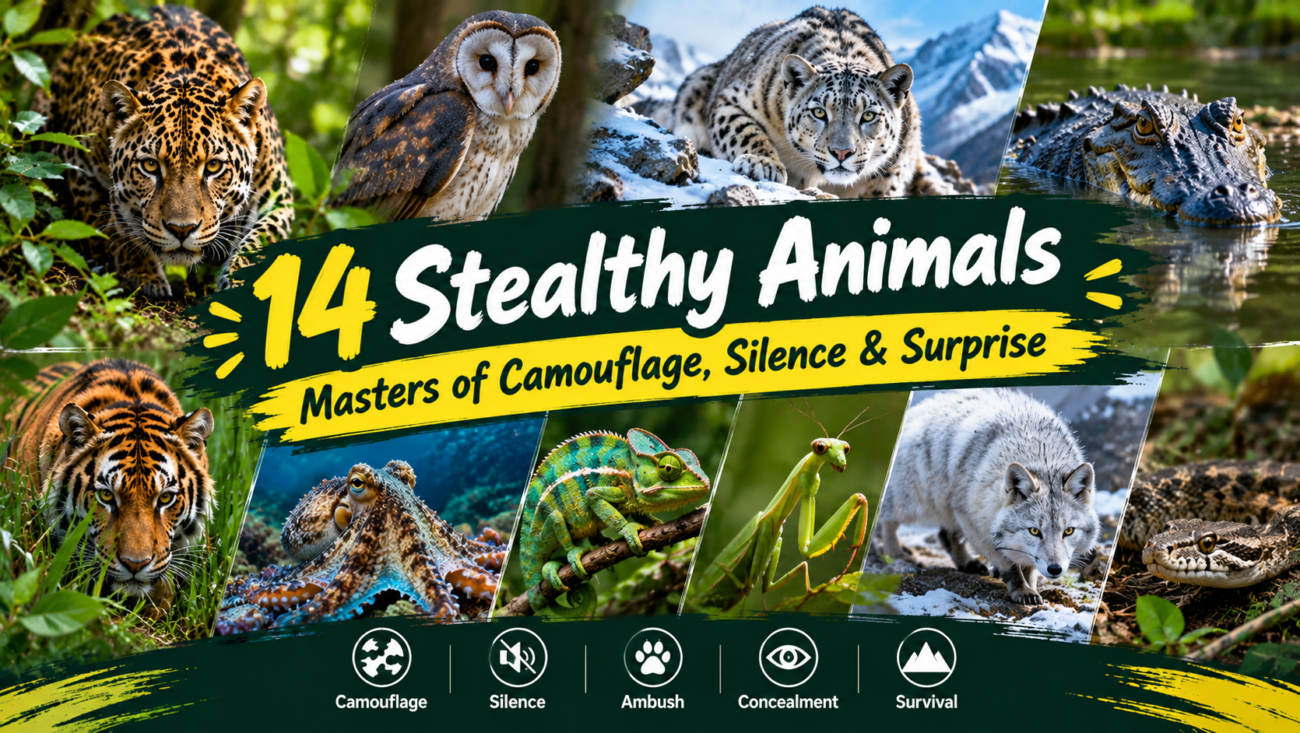
Some animals survive by being fast or powerful. Others succeed by making sure they are barely noticed at all. Stealthy animals use camouflage, patience, silent movement, ambushes, and clever concealment to get close to prey or stay safe from predators.
A leopard can disappear among broken shadows, while an owl can approach prey with remarkably little flight noise. In the ocean, octopuses and cuttlefish can alter their appearance to become difficult to detect. Even a stick insect can look so much like a twig that a predator may pass it without noticing.
Stealth is not one special ability. It is a collection of survival adaptations shaped by habitat and lifestyle. Some animals stalk prey, some remain motionless, and others hide in plain sight. Importantly, stealth is useful to both predators and prey.
Quick Answer
Stealthy animals are animals that use camouflage, concealment, silent movement, patience, mimicry, or ambush tactics to avoid detection. Examples include leopards, owls, snow leopards, octopuses, and chameleons. Predators often use stealth to approach prey, while prey species use it to avoid being detected. Their methods differ greatly depending on their habitat, body structure, and survival needs.
14 Stealthy Animals
| No. | Animal |
| 1 | Leopard |
| 2 | Tiger |
| 3 | Snow Leopard |
| 4 | Owl |
| 5 | Crocodile |
| 6 | Jaguar |
| 7 | Octopus |
| 8 | Chameleon |
| 9 | Praying Mantis |
| 10 | Arctic Fox |
| 11 | Lynx |
| 12 | Snake |
| 13 | Cuttlefish |
| 14 | Stick Insect |
1. Leopard
Scientific Name: Panthera pardus
Class: Mammalia
Diet: Carnivore
Habitat: Forests, grasslands, savannas, and rocky areas
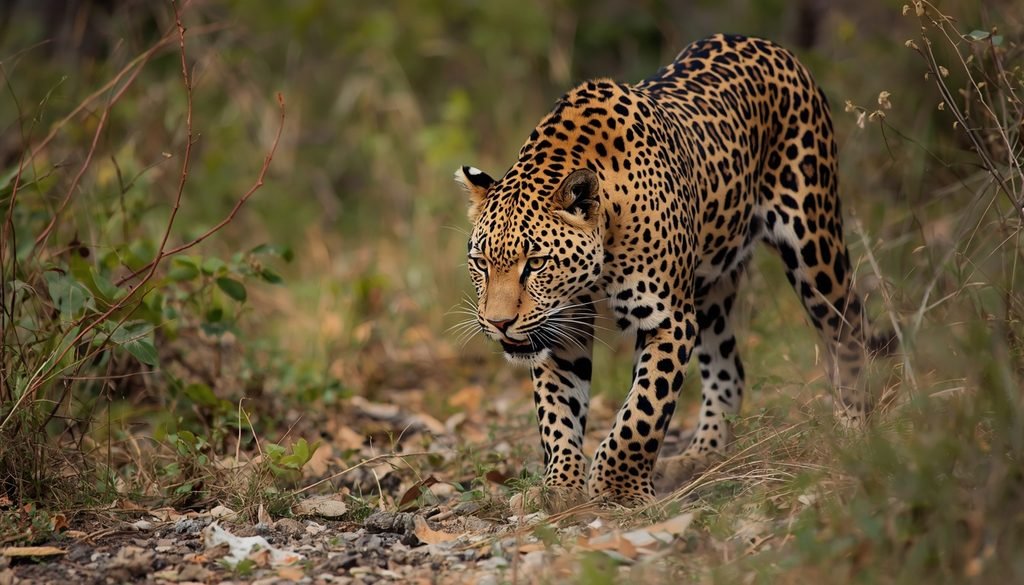
Leopards are skilled at moving through cover without drawing attention. Their rosette patterned coats break up their outline, especially among vegetation, shadows, and dappled light. They often stalk slowly and patiently before making a short, powerful attack rather than chasing prey over long distances. Their flexible bodies and careful foot placement also help them approach quietly. Stealth is mainly a hunting advantage, but staying concealed can also help leopards avoid competitors and larger predators.
2. Tiger
Scientific Name: Panthera tigris
Class: Mammalia
Diet: Carnivore
Habitat: Forests, grasslands, wetlands, and scrublands
A tiger’s orange and black stripes may seem highly visible to humans, but they can help break up its body shape in vegetation and shadow. Tigers commonly use cover while approaching prey, keeping a low profile and avoiding unnecessary movement. They are capable of powerful attacks, but successful hunting often depends on getting close before committing to the final charge. Low light, dense vegetation, and suitable terrain can all improve a tiger’s ability to remain difficult to detect.
3. Snow Leopard
Scientific Name: Panthera uncia
Class: Mammalia
Diet: Carnivore
Habitat: High mountains and rocky alpine regions
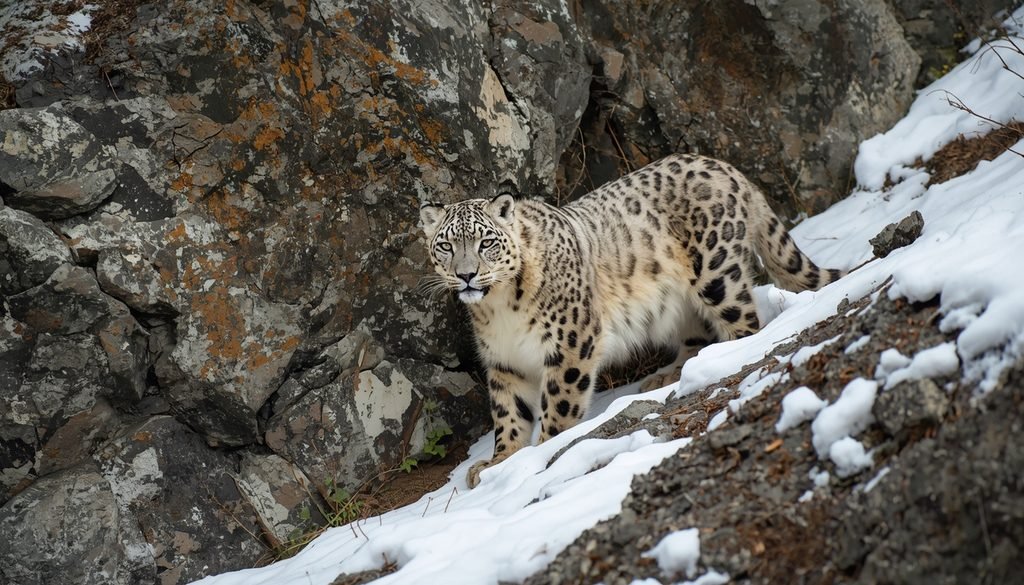
Snow leopards are built for stealth in rugged mountain landscapes. Their pale gray coats with dark markings blend with rocks, snow, and broken shadows. Large paws help them move across difficult terrain, while their long tails provide balance on steep slopes. Instead of relying only on speed, they can patiently approach prey while using rocks and terrain as concealment. Their camouflage is therefore closely connected to their mountain habitat.
4. Owl
Scientific Group: Strigiformes
Class: Aves
Diet: Mostly carnivorous
Habitat: Forests, grasslands, deserts, wetlands, and urban areas
Owls provide one of the clearest examples of acoustic stealth. Specialized feather structures, including soft edges on many flight feathers, help reduce and disperse aerodynamic noise. Their nocturnal lifestyle adds another advantage because darkness makes visual detection harder. Excellent hearing and vision help them locate prey before making a surprise approach. Owl flight is not literally silent, but its specialized feathers can greatly reduce detectable flight noise. This combination makes owls highly effective nocturnal hunters.
5. Crocodile
Scientific Group: Crocodylia
Class: Reptilia
Diet: Carnivore
Habitat: Rivers, lakes, wetlands, swamps, and coastal waters
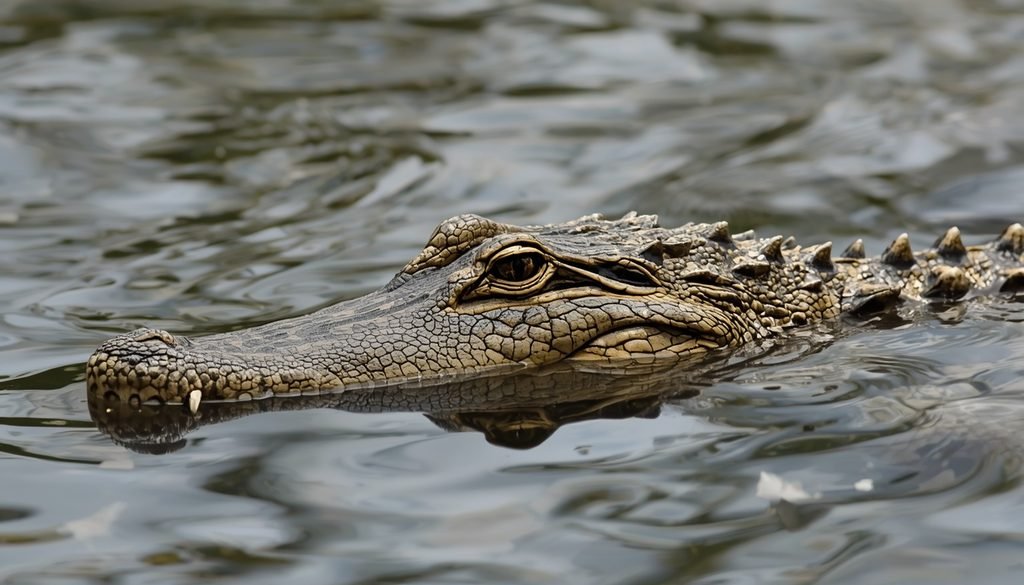
Crocodiles often hunt by waiting rather than chasing. A crocodile can remain almost motionless near the water’s edge while only its eyes and nostrils are visible above the surface. Its coloration can also provide concealment in muddy or vegetated water. When prey comes within range, the crocodile can launch a rapid ambush. This is a form of stealth based on patience, waterline concealment, and surprise rather than complete invisibility.
6. Jaguar
Scientific Name: Panthera onca
Class: Mammalia
Diet: Carnivore
Habitat: Rainforests, wetlands, grasslands, and woodland
The jaguar’s rosette patterned coat works especially well in the patchy light of forests and dense vegetation. It can use shadows, plants, and terrain to reduce its visibility while stalking prey. Jaguars are also strong swimmers, allowing them to approach prey in and around water where many other cats may be less comfortable. Their hunting style often relies on getting close before delivering a powerful attack, making concealment an important part of their strategy.
7. Octopus
Scientific Group: Octopoda
Class: Cephalopoda
Diet: Carnivore
Habitat: Marine environments from shallow reefs to deeper waters
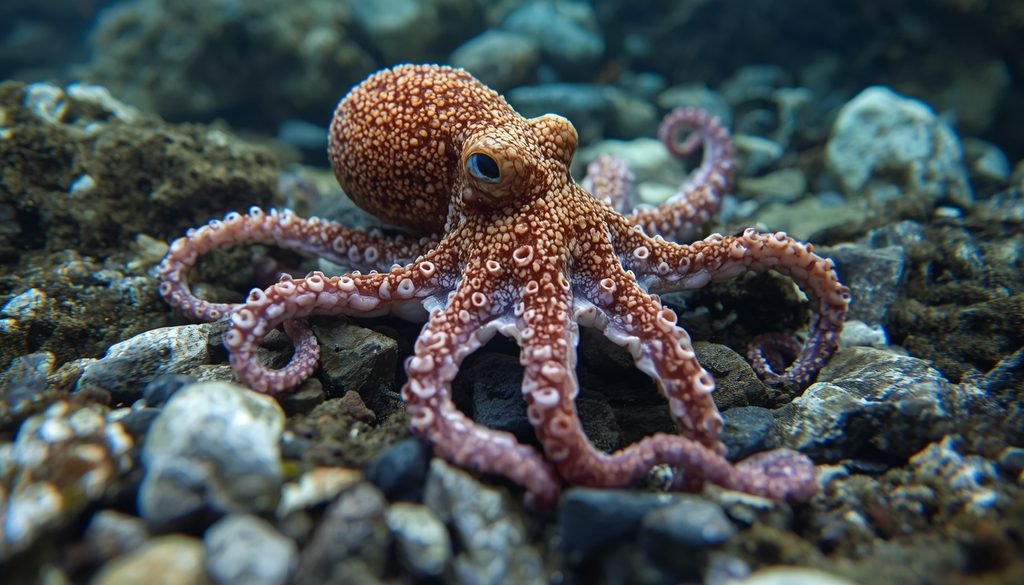
Octopuses are among the most impressive animals when it comes to visual camouflage. Many species can rapidly alter skin color and, in some cases, skin texture. Specialized skin cells called chromatophores contribute to color changes, while structures called papillae can alter the surface appearance. These adaptations can help an octopus blend with rocks, sand, coral, or vegetation. Camouflage may support both hunting and defense, while the animal’s flexible body lets it disappear into narrow shelters.
8. Chameleon
Scientific Family: Chamaeleonidae
Class: Reptilia
Diet: Mostly insects and other small animals
Habitat: Forests, shrublands, savannas, and other warm habitats
Chameleons combine camouflage with remarkably controlled movement. Their ability to change color varies among species and is not simply a mechanism for matching every background. Color can also be involved in communication, social interactions, temperature regulation, and physiological state. Slow movement and body positioning can make a chameleon less conspicuous among leaves and branches. Independent eye movement helps it monitor its surroundings, while its projectile tongue allows it to capture prey without making a long approach.
9. Praying Mantis
Scientific Group: Mantodea
Class: Insecta
Diet: Mostly carnivorous
Habitat: Grasslands, forests, gardens, and shrublands
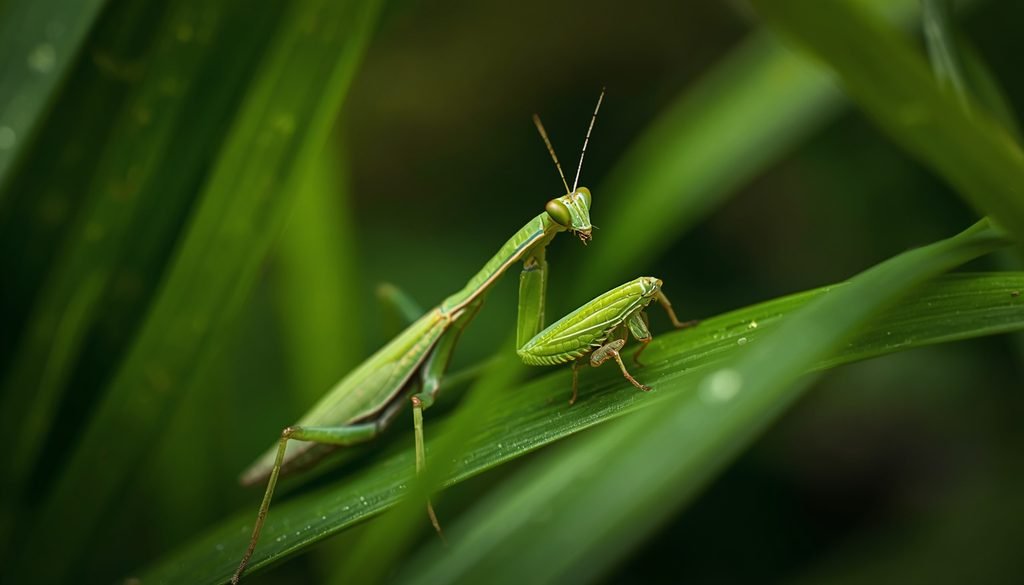
A praying mantis does not need to chase most of its prey. Instead, it can wait motionless among leaves, flowers, or stems until an insect comes within striking distance. Many species have colors and shapes that provide useful camouflage. When the moment arrives, the mantis can extend its specialized forelegs with remarkable speed. Remaining still saves energy and makes detection harder, showing why patience can be one of the most effective stealth strategies.
10. Arctic Fox
Scientific Name: Vulpes lagopus
Class: Mammalia
Diet: Omnivore
Habitat: Arctic tundra and other cold northern environments
The Arctic fox uses seasonal changes in its coat to remain less conspicuous in its surroundings. During winter, many individuals develop predominantly white fur that blends with snowy landscapes, while the coat becomes darker or browner during warmer seasons. Its compact body and low profile also suit the Arctic environment. Stealth can help the fox approach food while reducing the chance of detection, although its strong hearing and adaptability are equally important survival tools.
11. Lynx
Scientific Group: Lynx
Class: Mammalia
Diet: Carnivore
Habitat: Forests, woodland, mountains, and northern regions
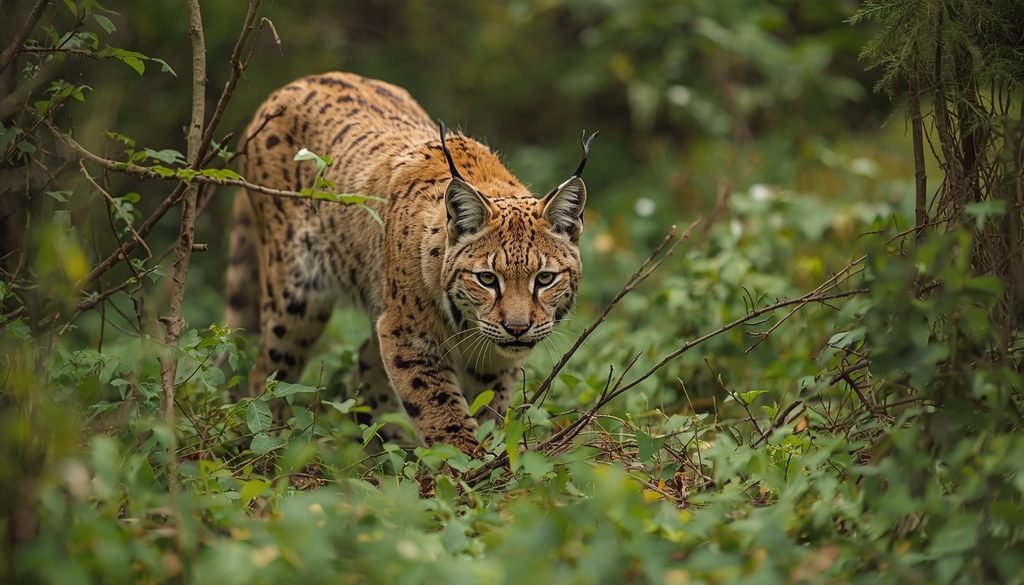
Lynx species are well adapted to hunting in environments where visibility can change quickly. Their patterned coats help break up their outline among vegetation, rocks, and snow. They can stalk prey patiently and use cover rather than exposing themselves in open spaces. Their excellent hearing is another major advantage, helping them detect animals even when visibility is limited. Powerful hind legs then support a sudden pounce once the distance is right.
12. Snake
Scientific Group: Serpentes
Class: Reptilia
Diet: Varies by species
Habitat: Forests, deserts, grasslands, wetlands, and many other habitats
“Snake” describes a huge and diverse group, so stealth strategies differ greatly between species. Many snakes use cryptic coloration to blend with leaves, soil, sand, rocks, or bark. Others remain motionless and wait for prey to approach. Their legless bodies can also move through certain environments without the obvious footsteps produced by walking animals. For ambush hunters, staying still may be more valuable than moving quickly. Stealth can therefore support both hunting and predator avoidance.
13. Cuttlefish
Scientific Group: Sepiida
Class: Cephalopoda
Diet: Carnivore
Habitat: Marine coastal waters
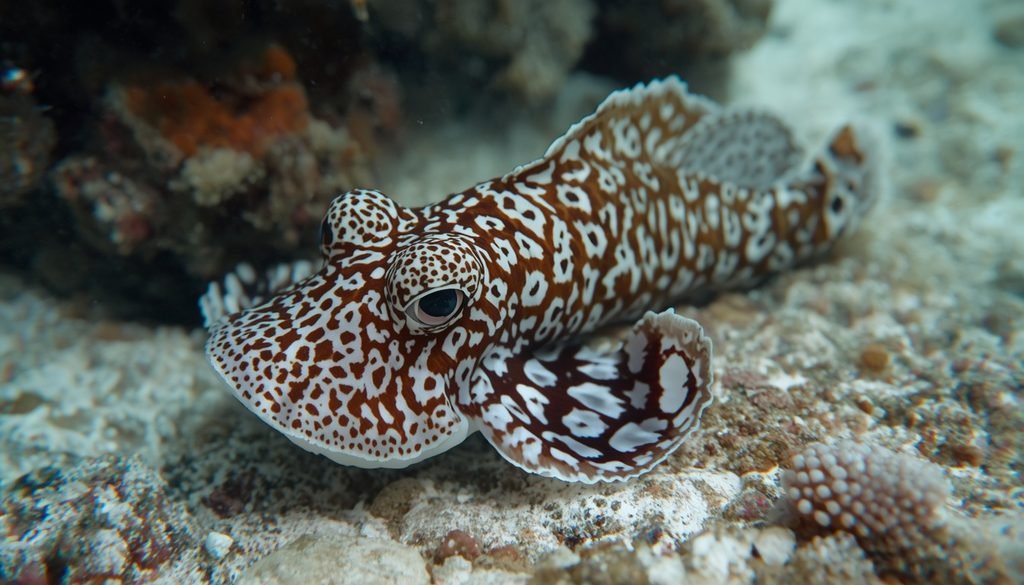
Cuttlefish are exceptional masters of visual disguise. Their skin contains specialized structures that allow rapid changes in color and patterns, while some species can also alter skin texture. This lets them resemble parts of the seafloor, rocks, sand, or vegetation. Smithsonian Ocean describes cephalopods as capable of producing remarkably detailed visual disguises through coordinated skin systems. Cuttlefish use these abilities for concealment, hunting, defense, and communication, making their stealth much more than simple color matching.
14. Stick Insect
Scientific Group: Phasmatodea
Class: Insecta
Diet: Herbivore
Habitat: Forests, woodlands, shrublands, and tropical vegetation
Stick insects rely mainly on defensive stealth. Their long bodies and thin legs can resemble twigs or stems, while their colors often match surrounding vegetation. Remaining completely still is an important part of the disguise. Some species may also sway gently, resembling a branch moving in the breeze. Unlike a leopard or mantis, the stick insect’s camouflage is primarily designed to avoid becoming prey rather than to approach prey. It is a powerful example of hiding in plain sight.
Why Are Some Animals Stealthy?
Stealth provides a major survival advantage because being detected can have a high cost. Predators use it to approach prey without triggering an escape response, while prey animals use concealment to reduce the chance of becoming a meal. A successful ambush can also conserve energy compared with a long chase.
Different habitats create different stealth solutions. A leopard uses broken patterns and vegetation, an owl reduces flight noise, and an octopus changes its appearance. Stick insects and chameleons demonstrate how remaining difficult to notice can be more important than moving quickly. In each case, stealth is an adaptation shaped by ecological pressures.
How Do Animals Stay Hidden?
Animals stay hidden through several forms of concealment. Camouflage can make an animal’s colors resemble its surroundings, while disruptive patterns break up its body outline. Mimicry takes this further by making an animal resemble an object, plant, or another organism.
Some animals simply stop moving. Others hide in vegetation, beneath rocks, inside burrows, or underwater. Nocturnal activity can reduce visual detection, while shadows and terrain provide additional cover. Importantly, camouflage does not make an animal invisible. It simply makes detection more difficult under the right conditions.
What Is the Stealthiest Animal?
There is no scientifically recognized single “stealthiest animal.” Different species excel at different forms of stealth. Owls are remarkable examples of acoustic stealth because their feather structures reduce flight noise. Octopuses and cuttlefish excel at rapid visual camouflage, while big cats specialize in patient stalking and ambush. Crocodiles use motionless concealment around water, and chameleons combine camouflage with slow, controlled movement. The best answer therefore depends on what type of stealth is being measured.
How Do Animals Move Without Making Noise?
Animals reduce detectable noise in several ways. Cats can use soft footpads and controlled steps, while snakes move without legs and can remain motionless for long periods. Owls have specialized flight feathers that help reduce aerodynamic noise. Aquatic animals can move through water without producing the same sounds associated with footsteps on land. Slow movement, flexible bodies, careful terrain selection, and patience all help animals approach without attracting unnecessary attention.
Read more: 12 Animals With the Sharpest Claws
Final Thoughts
Stealth is one of nature’s most useful survival strategies, but it does not look the same in every animal. Leopards and jaguars use cover and patient stalking, owls reduce flight noise, crocodiles wait for the right moment, and octopuses and cuttlefish can transform their appearance. Chameleons, mantises, snakes, Arctic foxes, and stick insects show how camouflage and controlled movement can also prevent detection.
The key lesson is that stealth is not simply about being “sneaky.” It is about adapting to an environment well enough to reduce the chance of being noticed—whether an animal is hunting, hiding, or simply trying to survive.
FAQs About Stealthy Animals
What are stealthy animals?
Stealthy animals are species that use adaptations such as camouflage, silent movement, concealment, mimicry, or ambush tactics to avoid detection. Some use stealth to catch prey, while others use it primarily to escape predators.
What animal is the stealthiest?
There is no officially recognized stealthiest animal because stealth can be measured in different ways. Owls are excellent at reducing flight noise, while octopuses and cuttlefish are exceptional at visual camouflage. Big cats are highly effective at stalking and ambush hunting.
Which animal can hide in plain sight?
Stick insects are excellent examples because their bodies can resemble twigs or branches. Chameleons and some octopuses can also become difficult to detect by using camouflage, although their methods and abilities vary between species.
Which animal hunts silently?
Owls are among the best known silent hunters. Their specialized feathers help reduce flight noise, allowing them to approach prey more quietly than many other flying birds. Their strong hearing and vision further support nocturnal hunting.
Why do animals use camouflage?
Animals use camouflage mainly to reduce detection. Predators can use it to approach prey, while prey species can use it to avoid predators. Camouflage can involve color, patterns, body shape, texture, or positioning within the environment.
Do prey animals also use stealth?
Yes. Stealth is not limited to predators. Stick insects, many snakes, and other prey animals can use camouflage, stillness, concealment, or other forms of stealth to avoid detection. For these animals, remaining unnoticed can be an important defense against predators.

One thought on “14 Stealthy Animals: Masters of Camouflage, Silence & Surprise”