
Introduction
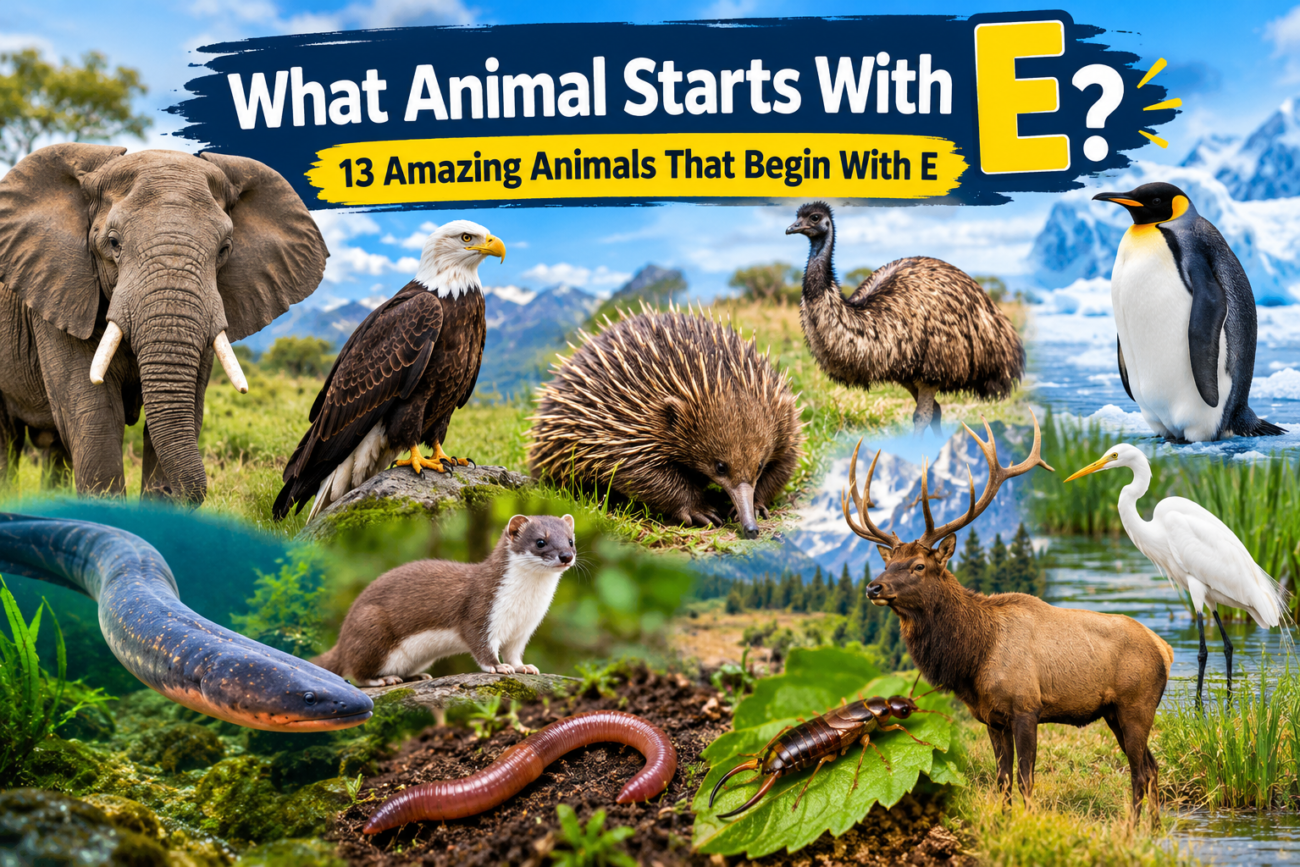
Have you ever wondered what animal starts with E? The animal kingdom has plenty of fascinating answers, ranging from enormous mammals and powerful birds to unusual egg-laying creatures and tiny soil-dwelling animals. Some are easy to recognize, while others are less familiar but equally interesting.
Learning animal names that begin with E is useful for school projects, alphabet activities, trivia games, and anyone who enjoys discovering wildlife. It also reveals how diverse animals can be. An elephant uses its trunk to gather food and water, an eagle relies on excellent eyesight to locate prey, and an echidna uses its strong claws to search for insects.
In this guide, you will discover 13 animals that start with the letter E. Each entry includes its scientific name, habitat, diet, and interesting characteristics to help you understand what makes the animal special.
Quick Answer: What Animal Starts With E?
Many animals start with the letter E, including the elephant, eagle, echidna, eel, egret, eland, elk, emu, emperor penguin, earthworm, earwig, ermine, and electric eel. These animals belong to different groups, including mammals, birds, fish, and invertebrates. They live in habitats ranging from African grasslands and Australian woodlands to Antarctic ice, freshwater rivers, and garden soil. The elephant is one of the most recognizable E animals, while the echidna and electric eel are known for particularly unusual adaptations.
1. Elephant
Scientific Name: Loxodonta africana (African savanna elephant)
Class: Mammalia
Diet: Herbivore
Habitat: African savannas, grasslands, and woodlands
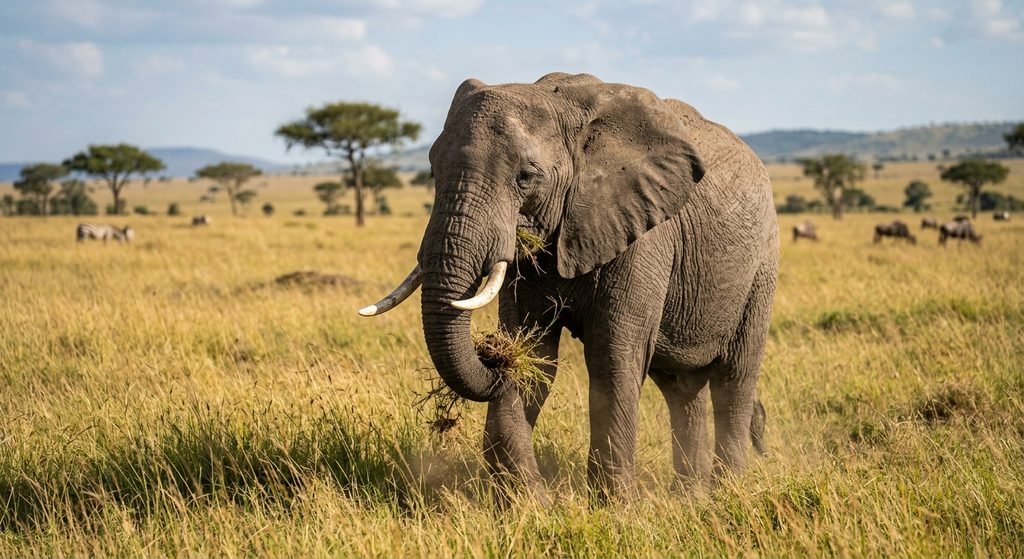
The elephant is one of the most recognizable animals that start with E. African savanna elephants are the largest living land animals and are famous for their enormous bodies, large ears, long trunks, and tusks.
An elephant’s trunk is a highly versatile organ. It helps the animal breathe, smell, collect food, drink water, and communicate through touch and sound. Elephants eat grasses, leaves, bark, roots, and fruit, depending on what is available in their habitat.
These mammals often live in family groups led by an experienced female. Their social relationships can be complex, and individuals communicate using sounds, body movements, touch, and low-frequency calls.
Elephants also influence their ecosystems by creating pathways, dispersing seeds, and changing vegetation as they feed. African forest elephants and Asian elephants are other important members of the elephant family, each with distinctive characteristics and habitat requirements.
2. Eagle
Scientific Name: Aquila chrysaetos (golden eagle)
Class: Aves
Diet: Carnivore
Habitat: Mountains, open country, cliffs, and woodland edges
Eagles are large birds of prey known for their powerful wings, hooked beaks, and sharp talons. Different eagle species live across several continents, occupying habitats that provide suitable nesting sites and enough food.
The golden eagle is a well-known example. It hunts mammals and birds, often using its excellent eyesight to locate prey from a distance. Once it spots a target, it can dive or swoop down to capture it with its strong feet.
Eagles build large nests, often on cliffs or tall trees, and many species use the same nesting territory for years. Their broad wings help them soar on rising air currents, allowing them to travel while conserving energy.
Although eagles are powerful hunters, they depend on healthy ecosystems and adequate prey populations. Habitat disturbance, poisoning, and collisions with human infrastructure can threaten some populations.
3. Echidna
Scientific Name: Tachyglossus aculeatus (short-beaked echidna)
Class: Mammalia
Diet: Mainly ants, termites, and other small invertebrates
Habitat: Australian forests, grasslands, and scrublands
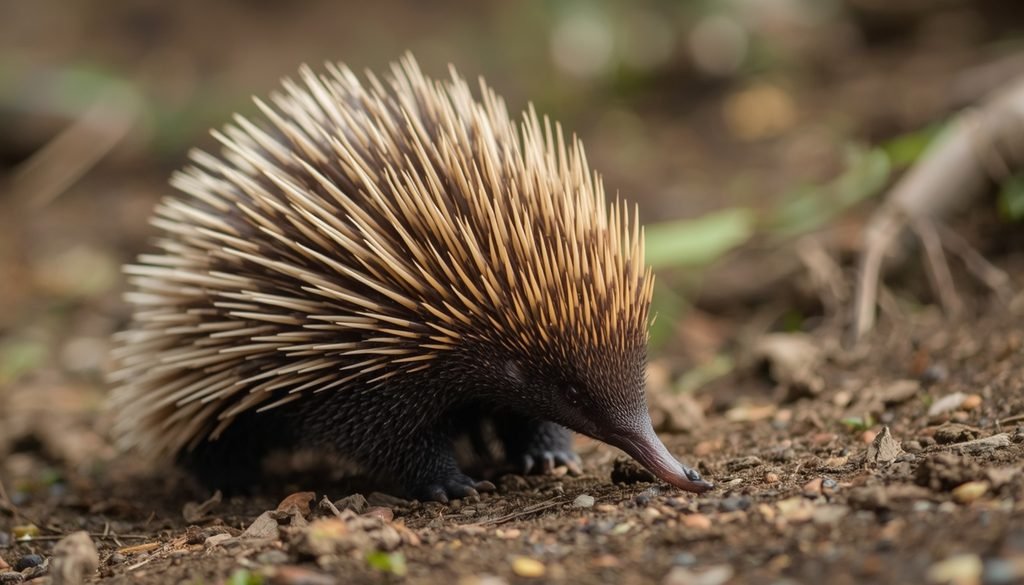
The echidna is an unusual mammal native to Australia and nearby regions. Its body is covered with protective spines, and it has a narrow snout, short legs, and powerful claws for digging.
Echidnas belong to a small group of mammals called monotremes. Unlike most mammals, monotremes lay eggs. After hatching, the young receive milk from their mother, although echidnas do not have the nipples found in many other mammals.
A short-beaked echidna uses its long, sticky tongue to collect ants and termites. Its strong claws help it break into nests and dig for food. When threatened, it may curl into a ball or dig into the ground, making its spines difficult for a predator to approach.
Its unusual combination of mammalian features, egg-laying reproduction, and specialized feeding makes the echidna one of the most fascinating animals beginning with E.
4. Eel
Scientific Group: Anguilliformes (true eels)
Class: Actinopterygii
Diet: Varies by species; often small fish, crustaceans, worms, and other aquatic animals
Habitat: Oceans, rivers, estuaries, and coastal waters
Eels are elongated fish that often resemble snakes because of their long bodies and lack of obvious pelvic fins. Many species move through water with wave-like movements, allowing them to enter narrow spaces between rocks, roots, or coral.
True eels occur in marine environments, and some species spend parts of their lives in freshwater. The European eel, for example, uses both freshwater and marine habitats during its life cycle. It feeds on a variety of aquatic organisms, with its diet changing as it grows.
Some eels hide in burrows or crevices during the day and become more active when hunting. Their body shape helps them move through complex underwater habitats where a deep-bodied fish might struggle.
Not every fish called an eel belongs to the true eel group. Electric eels, for example, are a different type of freshwater fish, despite sharing the name.
5. Egret
Scientific Group: Ardeidae
Class: Aves
Diet: Mainly fish, insects, amphibians, and other small animals
Habitat: Wetlands, marshes, rivers, lakes, and coastal areas
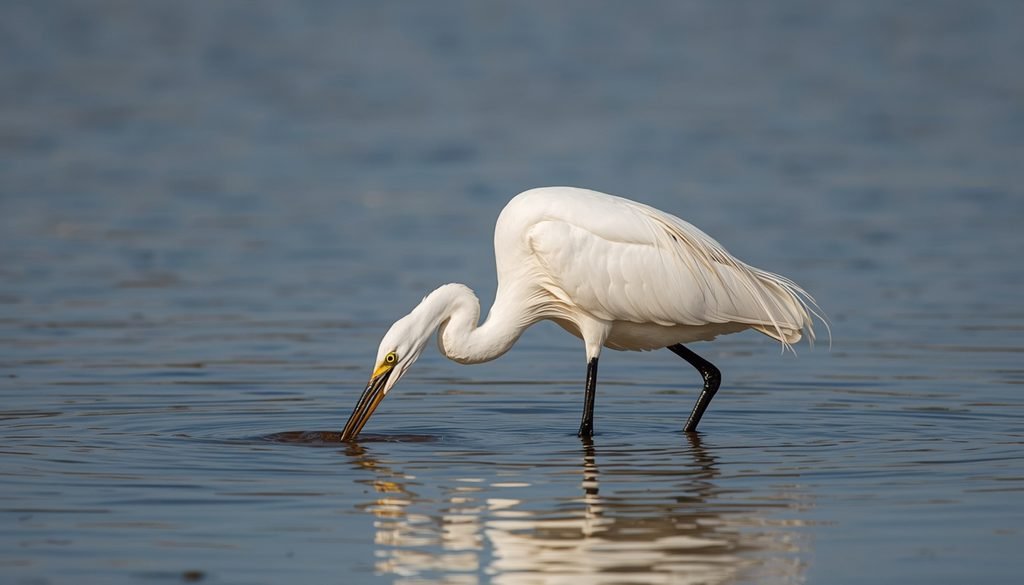
An egret is a long-legged wading bird often recognized by its slender body, pointed bill, and white plumage in many species. Egrets belong to the heron family and are commonly seen in shallow water where prey is easy to find.
The great egret is a familiar example. It stands quietly in the water or walks slowly through wetland vegetation, watching for fish and other small animals. When prey comes within reach, it strikes quickly with its sharp bill.
Long legs allow egrets to wade without submerging their bodies, while their long necks help them reach prey. Some species also forage in grasslands, agricultural fields, or other areas where insects and small vertebrates are available.
Egrets play a role in wetland food webs by feeding on aquatic animals and providing prey for larger predators. Protecting wetlands helps maintain the habitats these birds need for feeding, resting, and nesting.
6. Eland
Scientific Name: Taurotragus oryx (common eland)
Class: Mammalia
Diet: Herbivore
Habitat: African savannas, open woodlands, and shrublands
The eland is a large African antelope known for its sturdy body, long legs, and spiraled horns. Despite its size, it can move surprisingly well across open landscapes and uneven ground.
Common elands eat grasses, leaves, and other vegetation. Their feeding habits vary with the season, as they take advantage of available plants and may move to find food and water.
Elands often live in herds, although group sizes and social patterns can change depending on local conditions. Their senses help them detect danger, and their size offers some protection against predators. Young or vulnerable individuals may still be at risk from large carnivores.
Elands are important grazing and browsing animals in African ecosystems. Their movements and feeding influence vegetation, while their presence supports predators and scavengers within the wider food web.
7. Elk
Scientific Name: Cervus canadensis
Class: Mammalia
Diet: Herbivore
Habitat: Forests, meadows, mountain valleys, and grasslands
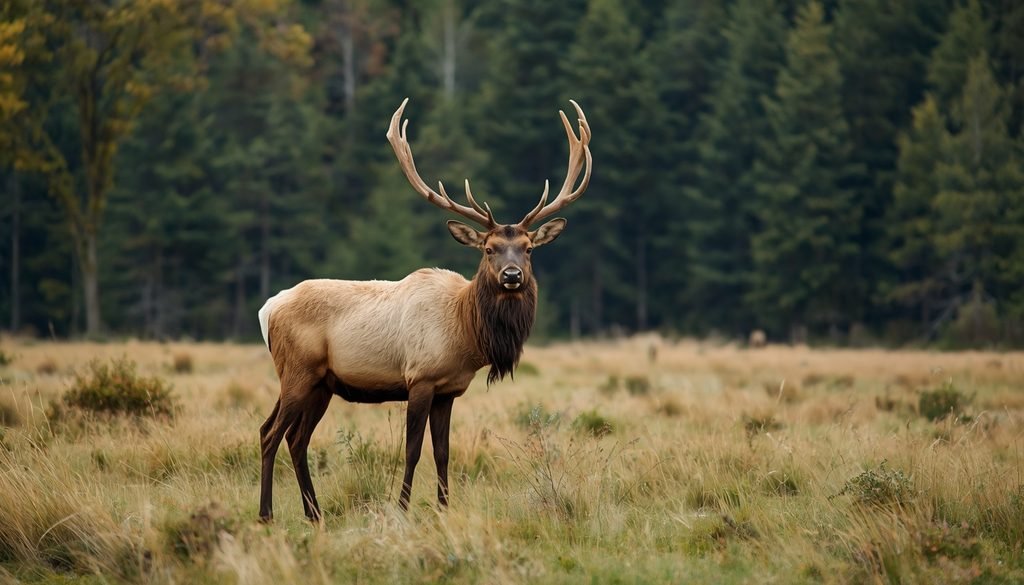
Elk, also called wapiti in some regions, are large members of the deer family. They are native to North America and parts of Asia, where they inhabit forests and open areas that provide food and cover.
Adult males usually grow large antlers, which are shed and regrown each year. During the breeding season, males may produce loud calls known as bugling. They also compete with other males for access to females.
Elk eat grasses, leaves, bark, and other plant material. Many populations move between seasonal habitats to take advantage of changing food availability and weather conditions.
These animals can travel in herds and are an important part of their ecosystems. They provide food for predators such as wolves and can influence plant communities through grazing and browsing. Their large size and seasonal behavior make them a well-known example of wildlife adapted to temperate and mountainous landscapes.
8. Emu
Scientific Name: Dromaius novaehollandiae
Class: Aves
Diet: Omnivore
Habitat: Australian grasslands, open woodlands, and shrublands
The emu is a large flightless bird native to Australia. It has long legs, shaggy brown feathers, and small wings that cannot support flight. Although it cannot fly, it is an effective runner and can travel long distances while searching for food.
Emus eat a varied diet that includes seeds, fruits, shoots, and insects. This flexibility helps them survive in environments where food availability changes with rainfall and season.
One of the emu’s interesting characteristics is its reproductive behavior. After the female lays her eggs, the male generally incubates them and cares for the chicks during their early development.
Emus are well adapted to Australia’s varied landscapes. Their strong legs support ground movement, while their broad diet allows them to use different food sources. They may also help disperse seeds after eating fruits, contributing to plant regeneration in some habitats.
9. Emperor Penguin
Scientific Name: Aptenodytes forsteri
Class: Aves
Diet: Carnivore
Habitat: Antarctic waters and sea ice

The emperor penguin is the largest living penguin species and one of the most recognizable animals beginning with E. It lives in Antarctica, where adults must cope with freezing temperatures, strong winds, and seasonal changes in sea ice.
Emperor penguins are flightless birds, but their wings have evolved into flippers that help them swim underwater. They feed mainly on fish, squid, and crustaceans, diving to catch prey beneath the surface.
During the breeding season, emperor penguins gather in colonies on stable sea ice. Males incubate the eggs on their feet beneath a fold of skin, helping keep them warm during the harsh Antarctic winter.
Their dense feathers and layers of body fat provide insulation. Penguins also huddle together in groups, reducing exposure to the cold. These adaptations make the emperor penguin a remarkable example of how birds can thrive in an extreme environment.
10. Earthworm
Scientific Group: Oligochaeta (traditional grouping)
Class: Clitellata
Diet: Decaying organic matter and soil-associated material
Habitat: Moist soil, gardens, forests, and compost
Earthworms are soft-bodied invertebrates that live in soil and play an important role in healthy ecosystems. Their long, segmented bodies help them move through the ground, where they feed on decaying leaves and other organic material.
As earthworms burrow, they create channels that can improve soil structure and help air and water move through it. Their feeding also helps break down organic matter, returning nutrients to the soil.
Earthworms are important food for birds, amphibians, and several mammals. Their activity can benefit gardens and farmland, although the effects of introduced earthworm species may differ across ecosystems, particularly in places where native soil communities evolved without them.
Earthworms need suitable moisture because they exchange gases through their skin. Dry conditions can make survival difficult, which is why they are often found in damp soil or beneath leaf litter.
11. Earwig
Scientific Order: Dermaptera
Class: Insecta
Diet: Omnivore; includes plant material, small insects, and decaying matter
Habitat: Gardens, leaf litter, soil crevices, and damp hiding places
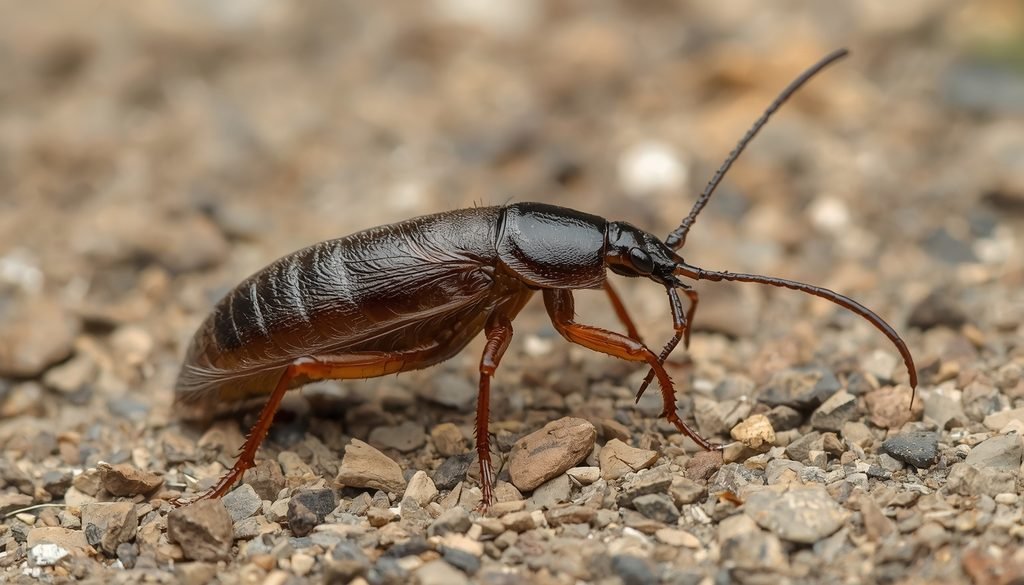
Earwigs are small insects with elongated bodies and a pair of forceps-like pincers at the end of their abdomen. Their unusual appearance sometimes makes people think they are dangerous, but most earwigs are harmless to humans.
They usually hide during the day beneath stones, bark, leaves, or other sheltered objects. Many become active at night, searching for food in gardens and other moist environments.
Depending on the species, earwigs eat decaying plant material, living plants, and small insects. Some can help gardeners by feeding on pests, while others may damage seedlings or flowers when their numbers are high.
The pincers are used for defense, handling prey, and other behaviors. Their presence in a garden is not automatically a sign of a pest problem; their impact depends on species, abundance, and the plants growing nearby.
12. Ermine
Scientific Name: Mustela erminea
Class: Mammalia
Diet: Carnivore
Habitat: Grasslands, forests, scrub, and northern tundra
The ermine, also known as the stoat, is a small member of the weasel family. It has a long, slender body, short legs, and a narrow head that helps it pursue prey through burrows and dense vegetation.
Ermines feed mainly on small mammals, including rodents and rabbits, although they may also hunt birds and other small animals. Their quick movements and flexible bodies make them effective hunters despite their small size.
In colder parts of their range, an ermine may develop a white winter coat, often retaining a black tip on its tail. This seasonal color change can help it blend into snowy surroundings. In milder regions, its coat may remain mostly brown with a pale underside.
Ermines are found across parts of North America, Europe, and Asia. Their ability to hunt small prey and use sheltered spaces helps them survive in a range of environments.
13. Electric Eel
Scientific Name: Electrophorus electricus and related species
Class: Actinopterygii
Diet: Carnivore
Habitat: Freshwater rivers, streams, and floodplain waters of South America
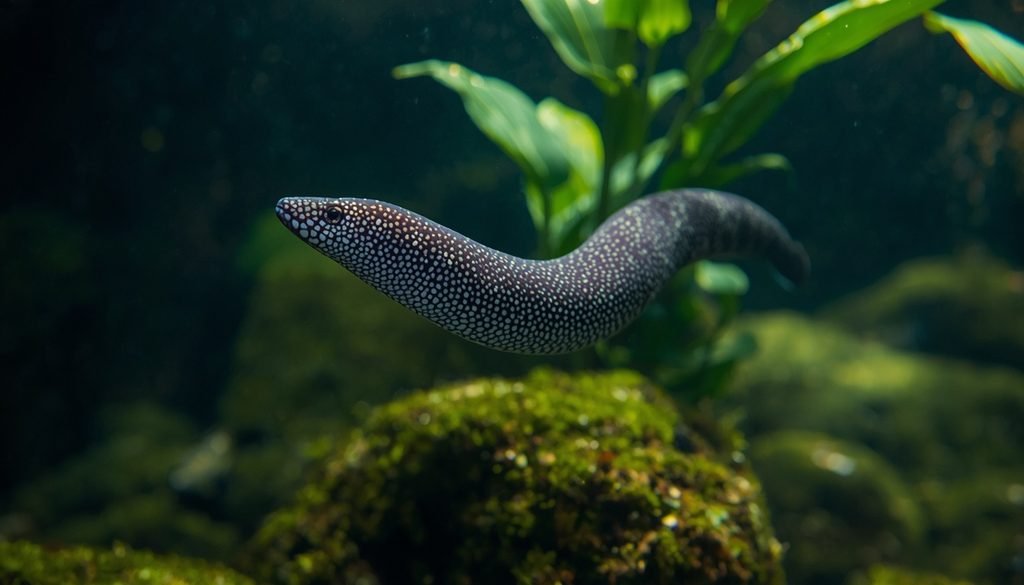
The electric eel is a freshwater fish famous for producing powerful electrical discharges. Despite its common name, it is not a true eel. It belongs to a different group of fishes called gymnotiforms.
Electric eels live in South American freshwater habitats, where they hunt fish and other aquatic animals. Specialized organs made of modified muscle cells generate electricity, which the fish uses for hunting, defense, and sensing its surroundings.
Some electric eel species can produce high-voltage discharges capable of stunning prey. They also use weaker electrical signals to navigate and detect objects in murky water, where visibility may be limited.
Electric eels often need to come to the water surface to gulp air because they rely heavily on atmospheric oxygen. Their unusual physiology makes them one of the most remarkable freshwater predators and an especially memorable answer to the question of what animal starts with E.
Why Are Animals That Start With E So Different?
Animals whose names begin with E do not belong to one scientific family. The letter is simply a way of grouping their common English names. As a result, they show a wide range of body shapes, behaviors, diets, and adaptations.
Elephants and elands are herbivorous mammals, while eagles hunt other animals. Emus and emperor penguins are both flightless birds, but they live in very different environments and use different strategies to survive. Earthworms help process organic matter in soil, while earwigs occupy small sheltered spaces and feed on a varied diet.
The echidna stands out because it is an egg-laying mammal. The electric eel is notable for its ability to generate electricity, while ordinary true eels have elongated bodies suited to aquatic movement. These differences demonstrate how many evolutionary solutions exist within the animal kingdom.
Read More: 13 Amazing Animal Has the Best Eyesight
Frequently Asked Questions
1. What is the most common animal that starts with E?
The elephant is one of the best-known animals beginning with E. Other familiar examples include the eagle, emu, eel, and elk.
2. What are five animals that start with E?
Five examples are elephant, eagle, echidna, emu, and earthworm. They represent different animal groups, from mammals and birds to invertebrates.
3. What is a rare animal that starts with E?
The echidna is an unusual animal because it is a mammal that lays eggs. Depending on the species and location, some animals beginning with E may also be rare or threatened.
4. Is an electric eel a true eel?
No. Electric eels are freshwater fish in the gymnotiform group, not true eels. They are famous for generating electrical discharges.
5. Which bird starts with E and cannot fly?
Both the emu and emperor penguin are flightless birds. The emu lives in Australia, while the emperor penguin lives in Antarctica.
6. Which animal that starts with E helps the soil?
Earthworms help break down organic matter and create channels in soil. Their activity can improve soil structure and nutrient cycling.
Conclusion
There are many fascinating answers to the question, “What animal starts with E?” The elephant, eagle, echidna, eel, egret, eland, elk, emu, emperor penguin, earthworm, earwig, ermine, and electric eel each have distinctive characteristics.
From the Antarctic breeding grounds of emperor penguins to the gardens where earthworms improve soil, these animals occupy very different habitats and perform different roles in nature. Learning their names is a simple way to explore wildlife, build vocabulary, and understand the remarkable diversity of the animal kingdom.

One thought on “What Animal Starts With E? 13 Amazing Animals That Begin With E”