
Introduction
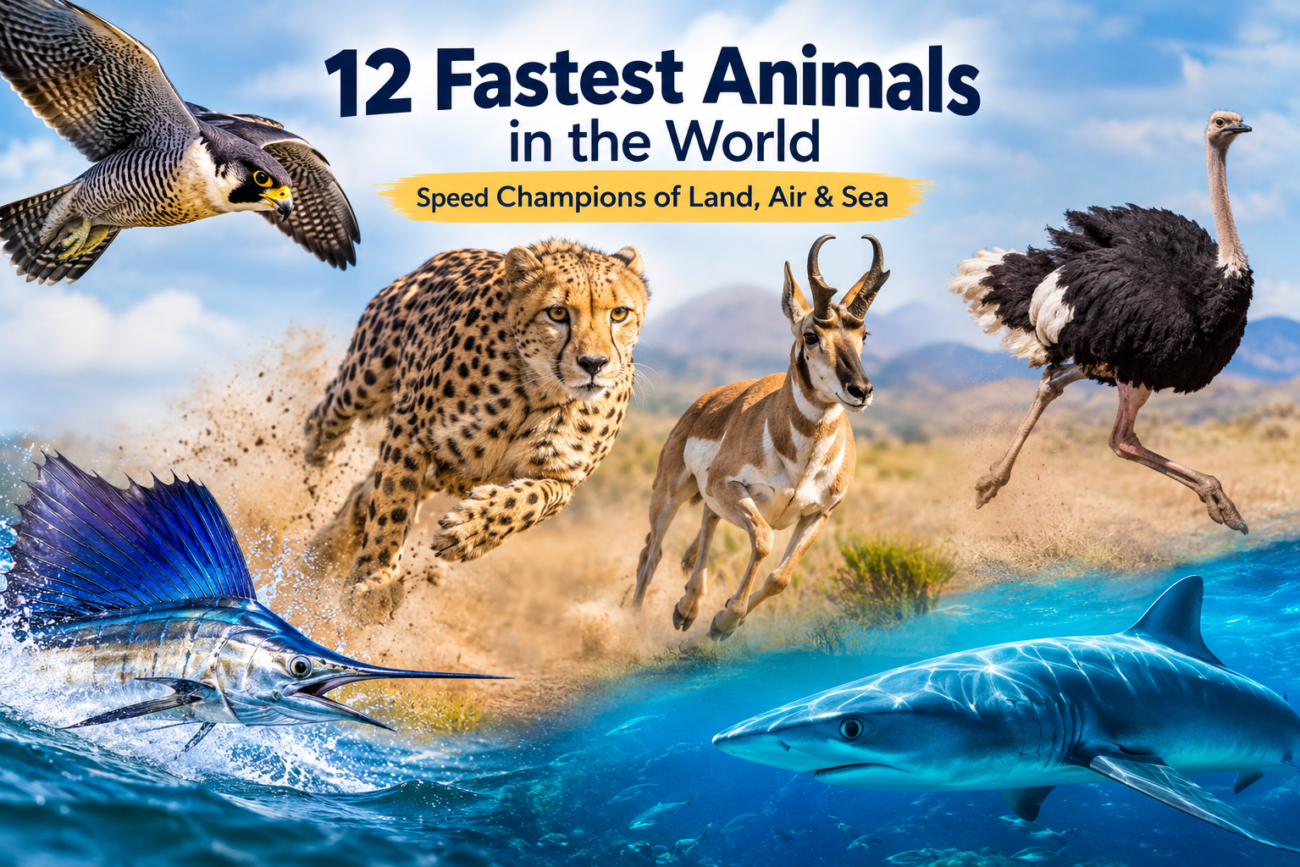
Speed can mean very different things in the animal world. A cheetah accelerates across open ground, a peregrine falcon dives through the air, and a sailfish bursts through the ocean. Each is built for a different kind of high-speed movement, which makes comparing the fastest animals more complicated than simply picking one winner.
Some animals specialize in short bursts, while others can maintain impressive speeds for much longer. Body shape, muscle power, wing design, leg length, oxygen delivery, and even wind or water conditions can influence how quickly an animal moves.
The famous peregrine falcon is known for its extraordinary diving speed, while the cheetah holds the better-known title of fastest land mammal. Pronghorn combine speed with unusual endurance, and ostriches are the fastest running birds.
Here are 12 remarkable speed specialists and the adaptations that allow them to move so quickly.
Quick Answer
The fastest animals depend on how speed is measured. A peregrine falcon can exceed 200 mph (322 km/h) during a steep dive, making it the fastest recorded animal in terms of diving speed. The cheetah is the fastest land mammal, reaching roughly 60–70 mph (96–113 km/h) in short bursts. Pronghorn can approach 55 mph (89 km/h), while ostriches can sprint to about 43 mph (69 km/h). Marine speed estimates vary more because underwater measurements are difficult.
12 Fastest Animals
| No. | Animal | Main Speed Type |
| 1 | Peregrine Falcon | Diving |
| 2 | Cheetah | Land sprint |
| 3 | Golden Eagle | Diving and flight |
| 4 | Sailfish | Swimming |
| 5 | Pronghorn | Sustained running |
| 6 | Spur Winged Goose | Flight |
| 7 | Grey Headed Albatross | Wind assisted flight |
| 8 | Gyrfalcon | Flight and diving |
| 9 | Common Swift | Sustained flight |
| 10 | Ostrich | Running |
| 11 | Quarter Horse | Short distance sprint |
| 12 | Black Marlin | Swimming |
1. Peregrine Falcon
Scientific Name: Falco peregrinus
Class: Aves
Diet: Carnivore
Habitat: Coasts, mountains, tundra, cities, and open landscapes
Top Speed: More than 200 mph (322 km/h) during a dive
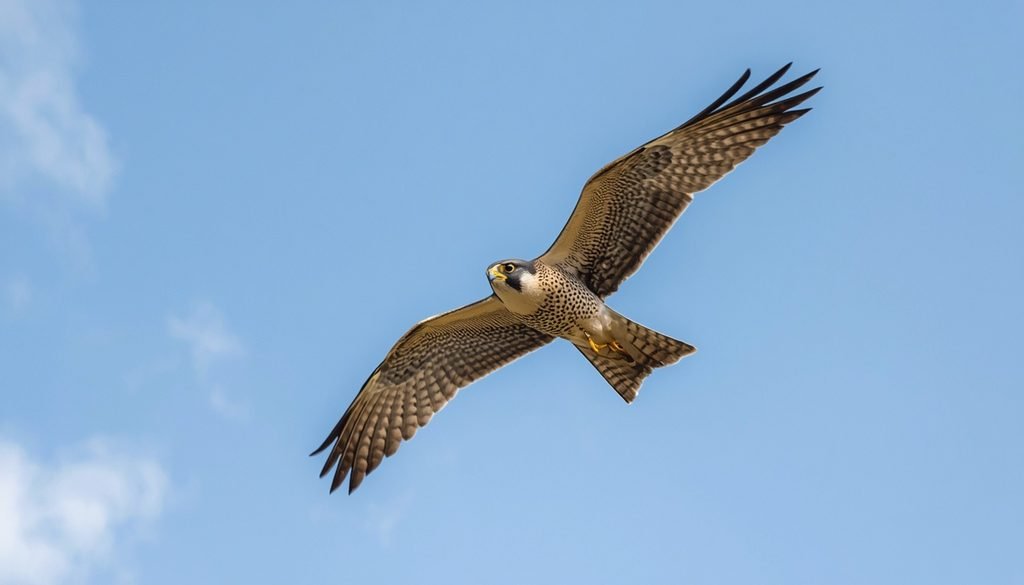
The peregrine falcon is famous for an extraordinary form of speed: the hunting dive. Instead of simply flying rapidly across a horizontal path, it climbs above its target and enters a steep, controlled dive called a stoop. Its streamlined body, pointed wings, powerful muscles, and aerodynamic shape help it move through the air at remarkable velocity. National Geographic reports that peregrines can exceed 200 mph during a dive. This makes the species the leading example when people ask about the fastest animal on Earth, although that distinction specifically refers to diving speed.
2. Cheetah
Scientific Name: Acinonyx jubatus
Class: Mammalia
Diet: Carnivore
Habitat: African grasslands, savannas, and open woodland
Top Speed: Approximately 60–70 mph (96–113 km/h) in short bursts
The cheetah is the fastest land mammal, but its greatest advantage is not simply its top speed. Its flexible spine, long legs, lightweight body, specialized paws, and powerful muscles allow explosive acceleration. The Smithsonian notes that cheetahs can reach roughly 60–70 mph, but they can maintain top speed only for a short distance. Research on wild cheetahs has also shown that acceleration, rapid braking, and sharp changes of direction are crucial to hunting success. Speed therefore works together with agility and timing rather than acting as a single superpower.
3. Golden Eagle
Scientific Name: Aquila chrysaetos
Class: Aves
Diet: Carnivore
Habitat: Mountains, cliffs, grasslands, and open country
Top Speed: Very high speeds during hunting dives
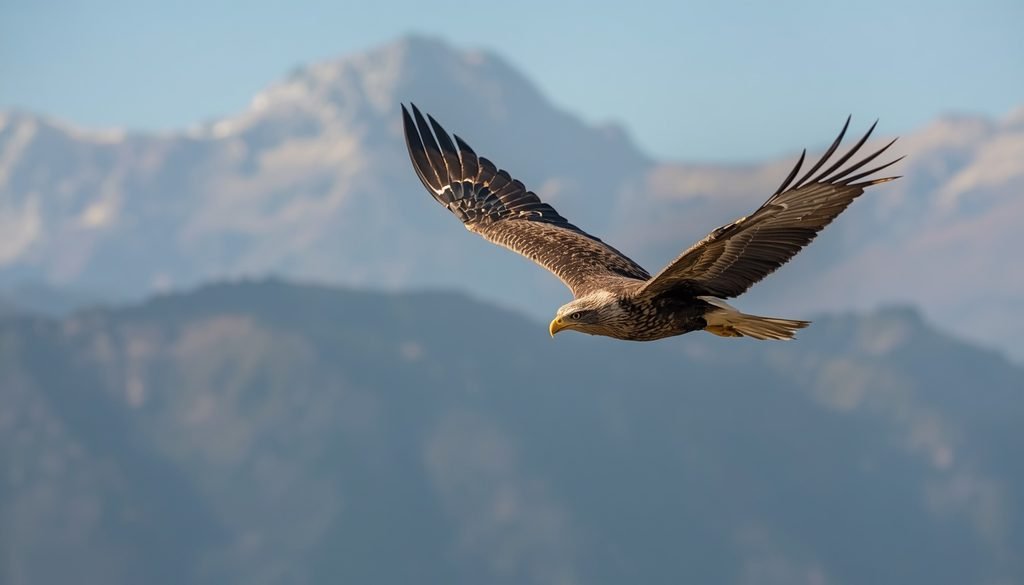
Golden eagles are powerful aerial predators with strong wings, excellent eyesight, and large talons. They can use height and gravity to build speed during a dive toward prey. Their speed is therefore best understood in relation to hunting rather than ordinary level flight. A golden eagle may circle or soar while searching for prey and then accelerate rapidly when attacking. Its broad wings also allow it to maneuver through mountainous landscapes and open terrain. This combination of vision, power, control, and diving ability makes the golden eagle one of the world’s notable high speed birds.
4. Sailfish
Scientific Name: Istiophorus platypterus
Class: Actinopterygii
Diet: Carnivore
Habitat: Tropical and temperate oceans
Top Speed: Exact maximum is debated; experimental estimates are considerably lower than popular claims
Sailfish are among the ocean’s most streamlined predators. Their long bodies, powerful muscles, narrow shape, and large dorsal fin help them maneuver quickly while hunting schooling fish. However, claims that sailfish routinely reach extraordinary speeds of 60 or 70 mph should be treated cautiously. A scientific study estimating maximum swimming performance found a much lower theoretical maximum of about 8.3 ± 1.4 meters per second and argued that earlier extreme estimates were unlikely. This makes sailfish an excellent example of why fastest marine animal rankings should be treated carefully.
5. Pronghorn
Scientific Name: Antilocapra americana
Class: Mammalia
Diet: Herbivore
Habitat: Open plains, grasslands, and prairies of North America
Top Speed: About 50–55 mph (80–89 km/h)
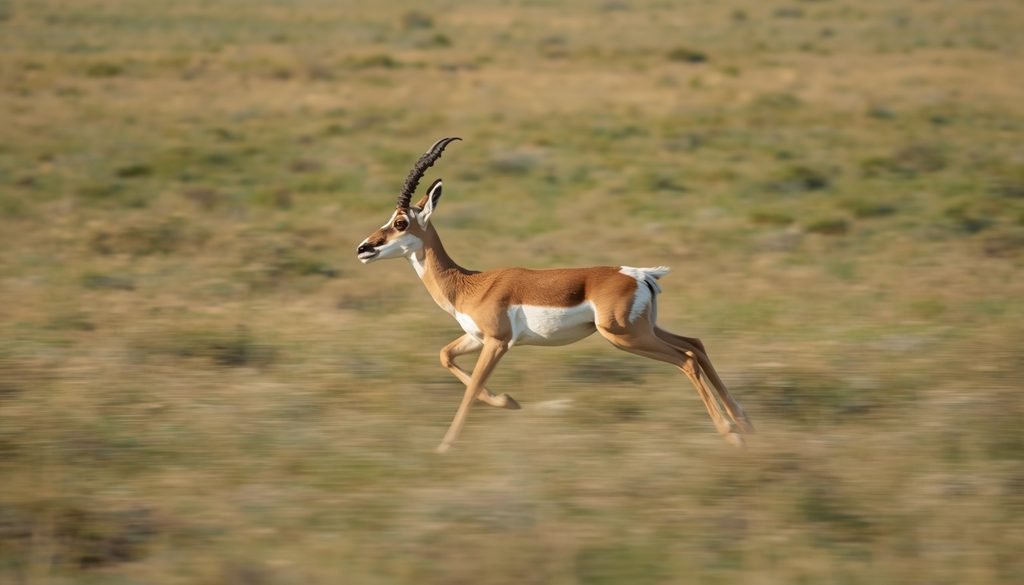
The pronghorn is one of the most remarkable runners in North America. It can reach roughly 50–55 mph and, unlike a cheetah, can maintain high speeds over considerably longer distances. Long legs, a lightweight body, large windpipe, and specialized feet support this ability. The open plains where pronghorn live also favor fast running because there is little vegetation to block movement. The National Park Service notes that pronghorn can sustain around 55 mph for part of a mile and maintain lower high speeds over longer distances.
6. Spur Winged Goose
Scientific Name: Plectropterus gambensis
Class: Aves
Diet: Primarily herbivorous, with some animal matter
Habitat: Wetlands, grasslands, rivers, and lakes of sub-Saharan Africa
Top Speed: Reported flight speeds vary
The spur winged goose is a large African waterfowl species with strong wings and a powerful body built for flight. It spends much of its time around wetlands and open landscapes, where it may need to travel between feeding and resting areas. Its speed should not be treated as a precisely established world record because reported figures vary between sources and measurement methods. What makes this goose interesting among fast animals is the combination of a large body, strong flight muscles, and the ability to cover considerable distances across African wetland habitats.
7. Grey Headed Albatross
Scientific Name: Thalassarche chrysostoma
Class: Aves
Diet: Carnivore
Habitat: Southern Ocean and subantarctic waters
Top Speed: At least 127 km/h average ground speed under favorable wind conditions in one tracked flight
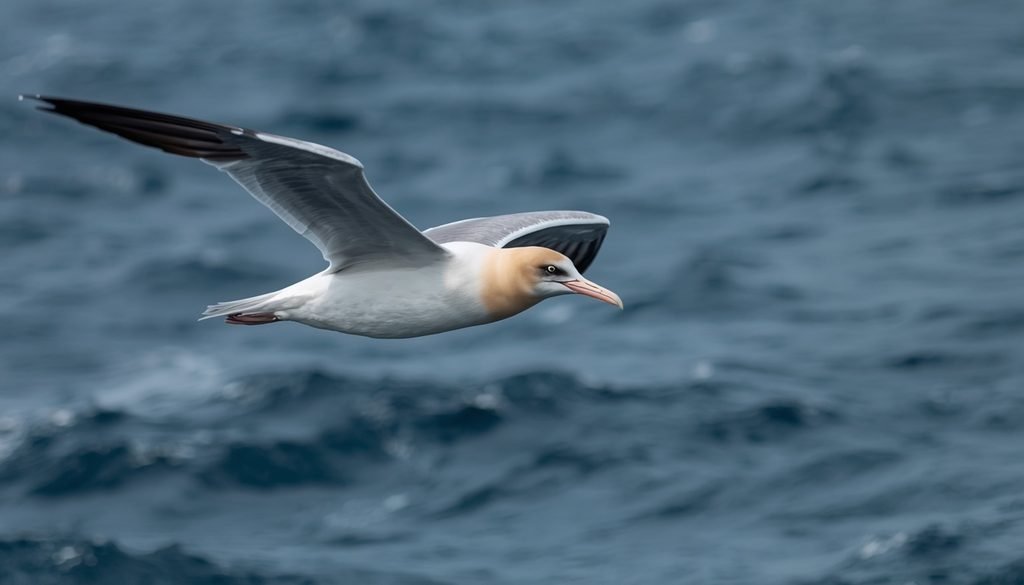
The grey headed albatross demonstrates that speed does not always come from nonstop wingbeats. These oceanic birds use dynamic soaring, taking advantage of powerful winds to travel quickly while conserving energy. In one published study, a grey-headed albatross maintained an estimated mean ground speed of at least 127 km/h for more than eight hours during an Antarctic storm. That remarkable figure was strongly influenced by tailwinds, so it should not be treated as a normal top speed in calm conditions.
8. Gyrfalcon
Scientific Name: Falco rusticolus
Class: Aves
Diet: Carnivore
Habitat: Arctic and subarctic regions
Top Speed: More than 60 mph in level flight has been reported
The gyrfalcon is the largest of the falcons and a powerful hunter of northern landscapes. It can pursue birds through open air and use rapid dives when attacking prey. Unlike the peregrine, which is especially famous for its extreme stoop, the gyrfalcon is also known for powerful direct flight. Its aerodynamic body, strong wings, and muscular build help it maintain impressive speed while hunting. National Geographic reports that wild gyrfalcons can exceed 60 mph in straight flight.
9. Common Swift
Scientific Name: Apus apus
Class: Aves
Diet: Insectivore
Habitat: Europe, Asia, Africa, and open skies over towns and countryside
Top Speed: Often reported at more than 100 km/h in flight
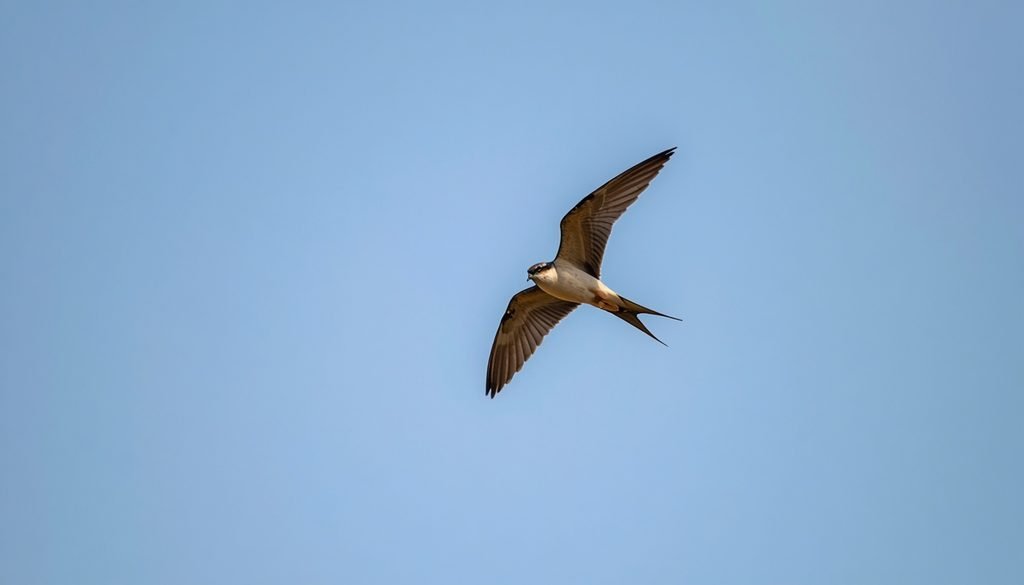
The common swift is built for a life spent largely in the air. Its narrow, curved wings and streamlined body allow efficient flight as it catches insects above the ground. Unlike a cheetah, which depends on a short burst, a swift’s impressive ability lies in sustained aerial movement. Swifts can spend long periods flying, feeding, and traveling without regularly landing. Their speed, endurance, and maneuverability make them some of the most specialized aerial animals, showing that being fast can also mean remaining efficient over time.
10. Ostrich
Scientific Name: Struthio camelus
Class: Aves
Diet: Omnivore
Habitat: African grasslands, savannas, shrublands, and deserts
Top Speed: Up to about 43 mph (69 km/h)
The ostrich cannot fly, but it is an exceptional runner. It is the fastest running bird, with scientists observing sprint speeds of up to about 43 mph. Its long, powerful legs generate enormous strides, while its two toed feet help provide efficient propulsion. The wings also assist with balance and steering during high speed movement. Ostriches can maintain lower speeds for longer periods than their maximum sprint. Their running ability helps them travel across open African landscapes and escape potential predators.
11. Quarter Horse
Scientific Name: Equus caballus
Class: Mammalia
Diet: Herbivore
Habitat: Domestic environments, farms, ranches, and equestrian facilities
Top Speed: Around 55 mph has been reported
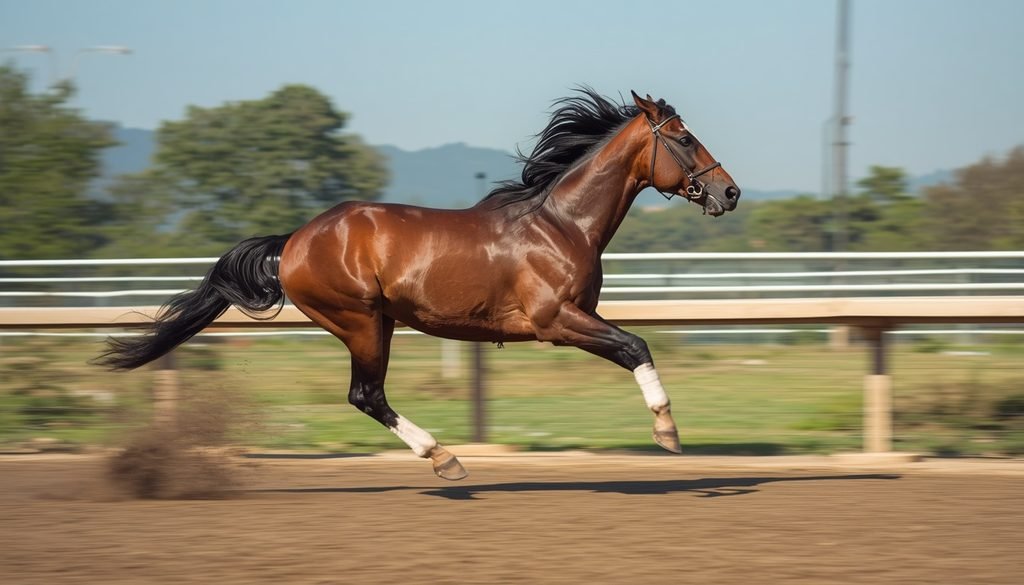
The American Quarter Horse is a domestic breed famous for explosive short distance speed. It was historically developed for sprint races over short distances, particularly the quarter mile, which gave the breed its name. Strong hindquarters, a compact build, and powerful acceleration allow it to move rapidly from a standing start. Unlike the wild animals in this list, the Quarter Horse is a selectively bred domestic animal, so its inclusion highlights specialized athletic performance rather than a natural predator prey adaptation. Its reputation is particularly strong in short sprinting events.
12. Black Marlin
Scientific Name: Istiompax indica
Class: Actinopterygii
Diet: Carnivore
Habitat: Tropical and subtropical oceans
Top Speed: Exact maximum speed remains uncertain
The black marlin is a powerful open ocean predator with a streamlined body and strong swimming muscles. It can make rapid bursts while pursuing fish and other marine prey. However, its exact maximum speed is difficult to establish. Older sources have suggested extremely high speeds, but later research has questioned such estimates and shown why measuring the speed of large fish is challenging. For that reason, black marlin should be described as an exceptionally fast marine predator rather than assigned a precise world record speed without qualification.
What Is the Fastest Animal in the World?
The peregrine falcon is generally recognized as the fastest animal when extreme diving speed is considered. During a steep hunting dive, it can exceed 200 mph. This is very different from ordinary horizontal flight and from running or swimming speeds.
The answer changes when the category changes. The cheetah is the fastest land mammal, while pronghorn are remarkable for combining high speed with greater endurance. Marine animals such as sailfish and black marlin are also exceptionally fast, but underwater speed measurements are much more difficult and some popular figures have been challenged by scientific research.
What Is the Fastest Land Animal?
The cheetah is the fastest land mammal, with short burst speeds commonly placed around 60–70 mph. Its flexible spine, long legs, specialized paws, powerful muscles, and large respiratory system allow it to accelerate extremely quickly.
However, speed alone does not explain its hunting success. Wild cheetahs often rely on acceleration, braking, turning ability, and timing rather than maintaining their absolute maximum speed. This is why a cheetah can be an effective predator even when it does not reach its theoretical top speed during every chase.
What Is the Fastest Bird?
The peregrine falcon is the clearest answer if diving speed is being measured. Its controlled hunting dive can exceed 200 mph.
Other birds specialize in different forms of speed. Gyrfalcons can fly rapidly in pursuit, golden eagles use powerful dives, and grey headed albatrosses can cover huge distances at impressive ground speeds when strong winds assist them. Ostriches hold a different record: they are the fastest running birds on land.
What Is the Fastest Marine Animal?
There is no completely settled answer because underwater speed measurements vary greatly. Sailfish and black marlin are traditionally listed among the fastest marine animals, but some famous speed claims are now considered unrealistic. A peer reviewed study estimated sailfish maximum swimming performance at roughly 8.3 ± 1.4 meters per second and suggested that earlier extreme estimates were too high.
The safest scientific answer is therefore that several large marine predators are exceptionally fast, but exact rankings depend heavily on measurement method.
How Do Animals Become So Fast?
Fast animals usually combine several physical adaptations rather than relying on one feature. Cheetahs have long limbs, flexible spines, specialized paws, and powerful muscles. Birds such as peregrine falcons have streamlined bodies and aerodynamic wings. Ostriches use long, muscular legs and spring like feet to propel their large bodies.
In the ocean, streamlined shapes reduce resistance while strong muscles generate propulsion. Sailfish and marlin also have body designs suited to rapid movement through water. Body size matters too. Research into animal locomotion suggests that medium sized animals can occupy a useful balance between muscle power and body mass, helping explain why some of the world’s fastest animals are neither the largest nor the smallest species.
Read more: 12 Greedy Animals
Final Thoughts
The world’s fastest animals do not all win the same race. Peregrine falcons dominate extreme diving, cheetahs specialize in short land sprints, ostriches excel at running, and pronghorn combine high speed with impressive endurance. In the ocean, sailfish and black marlin show how powerful and streamlined marine predators can be, although their exact speed records remain difficult to measure.
Speed is ultimately an evolutionary solution to a problem. It can help an animal catch prey, escape danger, travel efficiently, or compete in a demanding environment. The most impressive speed champions are not simply fast they are physically designed to turn speed into survival.
FAQs About Fastest Animals
What is the fastest animal in the world?
The peregrine falcon is generally considered the fastest animal when diving speed is measured. It can exceed 200 mph during a steep hunting dive. This record refers to a controlled dive rather than normal horizontal flight.
What is the fastest land animal?
The cheetah is the fastest land mammal. It can reach roughly 60–70 mph during short bursts, although it cannot maintain maximum speed for long. Its acceleration, agility, and ability to change direction are especially important during hunting.
How fast can a cheetah run?
A cheetah can reach approximately 60–70 mph in a short sprint. The animal is built for acceleration rather than endurance, and its maximum speed can only be maintained briefly. Its flexible spine, long legs, specialized paws, and powerful muscles all contribute to its remarkable running ability.
What is the fastest bird?
The peregrine falcon is the fastest bird when diving, with reported diving speeds exceeding 200 mph. However, different birds specialize in different types of flight. Ostriches are the fastest running birds, while albatrosses can achieve remarkable ground speeds when using strong winds.
What is the fastest marine animal?
There is no universally accepted fastest marine animal because underwater speed is difficult to measure accurately. Sailfish and black marlin are often described as extremely fast, but some traditional speed estimates have been challenged by scientific research. Their exact maximum speeds therefore remain uncertain.
Why are some animals so fast?
Animals evolve high speed when it provides a strong survival advantage. Predators may use speed to catch prey, while prey use it to escape. Fast movement can also help animals travel long distances or compete for resources. Body shape, muscles, limbs, wings, oxygen delivery, and energy efficiency all influence speed.

One thought on “12 Fastest Animals in the World: Speed Champions of Land, Air & Sea”