
Introduction
Some animals are rare because they naturally live in tiny areas, while others have become rare after losing habitat, facing hunting pressure, or struggling to reproduce. The Rarest Animals in the world often share one important problem: their populations are small, isolated, or difficult to recover. Climate change, pollution, accidental capture, invasive predators, and human development can make these challenges even worse.
Rarity and endangerment are closely connected, but they are not exactly the same. A species can have a naturally restricted range without being critically threatened, while another may become rare because its population has fallen dramatically. This article looks at 12 species that stand out for their extremely limited populations, restricted habitats, or serious conservation concerns. From the tiny vaquita to the elusive saola and the flightless kākāpō, each shows how quickly wildlife can approach the edge of extinction.
Quick Answer
The rarest animals in the world include the vaquita, saola, Javan rhino, Sumatran rhino, Amur leopard, kākāpō, and Hainan gibbon, among others. There is no single universally accepted “rarest animal” because rarity can be measured by population size, mature individuals, geographic range, confirmed sightings, or the quality of population monitoring. Some species have extremely few known individuals, while others are rare because they survive in only a tiny part of their former range.
12 Rarest Animals
These 12 species are among the world’s rarest or most threatened animals based on factors such as population size, restricted distribution, conservation status, and available scientific evidence. The order is not intended to be an exact scientific ranking because population estimates and monitoring methods vary between species.
1. Vaquita
Scientific Name: Phocoena sinus
Class: Mammalia
Diet: Fish, squid, and crustaceans
Habitat: Northern Gulf of California
Conservation Status: Critically Endangered
Population/Rarity: Extremely small known wild population
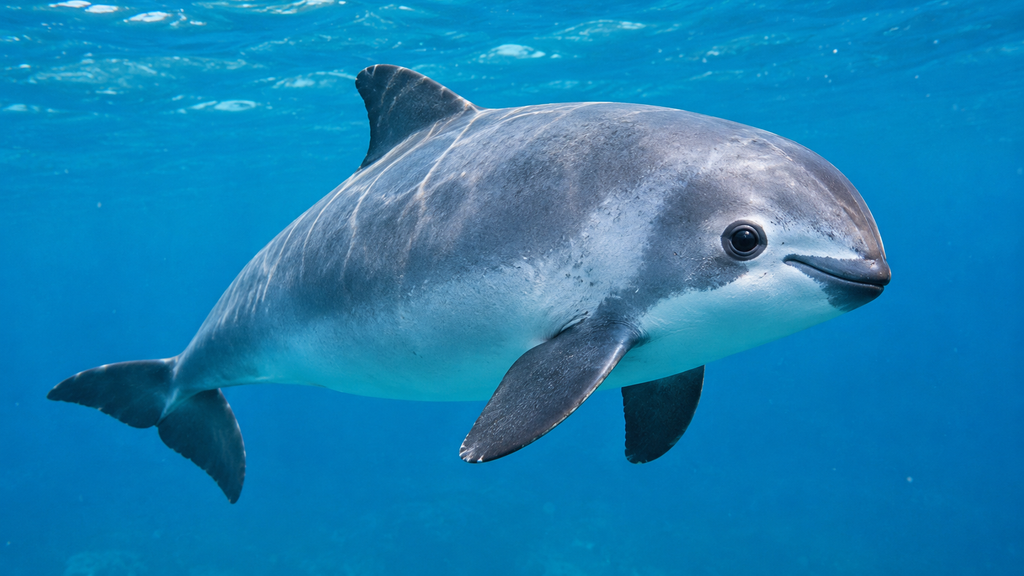
The vaquita is a tiny porpoise found only in the northern Gulf of California in Mexico. It is considered one of the world’s rarest marine mammals. Its greatest threat is accidental entanglement in gillnets, which can kill vaquitas even when they are not the intended target.
The species has an exceptionally restricted range and is also the smallest living cetacean. Because so few remain, every individual is important to the survival of the species. Conservation efforts focus heavily on preventing harmful fishing gear from entering its remaining habitat.
2. Saola
Scientific Name: Pseudoryx nghetinhensis
Class: Mammalia
Diet: Leaves, grasses, and other vegetation
Habitat: Forests of the Annamite Range
Conservation Status: Critically Endangered
Population/Rarity: Extremely rare and rarely observed
Known as the “Asian unicorn,” the saola is one of the least known large mammals on Earth. It lives in forested areas of the Annamite Range between Vietnam and Laos. Scientists have rarely observed the animal directly, making its population difficult to estimate.
Hunting and snaring are major threats. Its remote mountain habitat also makes monitoring challenging. The saola’s long, straight horns and specialized forest lifestyle make it highly distinctive, but its elusive nature means much of its biology remains poorly understood.
3. Javan Rhino
Scientific Name: Rhinoceros sondaicus
Class: Mammalia
Diet: Leaves, shoots, twigs, and other vegetation
Habitat: Tropical forest and lowland habitat
Conservation Status: Critically Endangered
Population/Rarity: Restricted to a single surviving wild population
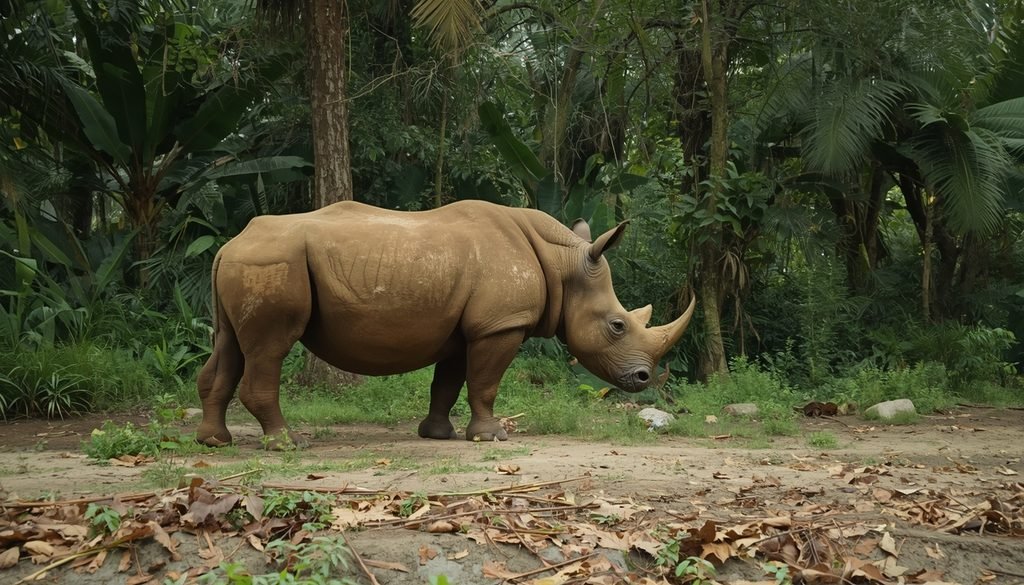
The Javan rhino is one of the rarest large mammals in the world. Today, its remaining wild population is concentrated in Indonesia’s Ujung Kulon National Park, a tiny fraction of its former range.
Its restricted distribution creates serious risks. Disease, natural disasters, habitat limitations, and a lack of alternative populations can all affect the species. Historically, Javan rhinos occupied a much broader area across parts of Asia. Protecting their remaining habitat is therefore essential for preventing further decline.
4. Sumatran Rhino
Scientific Name: Dicerorhinus sumatrensis
Class: Mammalia
Diet: Leaves, fruit, twigs, and vegetation
Habitat: Tropical forests and mountainous forests
Conservation Status: Critically Endangered
Population/Rarity: Highly fragmented and extremely small
The Sumatran rhino is the smallest living rhinoceros and is recognizable by its relatively hairy body. It once ranged widely across Southeast Asia but now survives in small, fragmented populations.
Habitat loss and poaching have contributed heavily to its decline. Reproduction is another challenge because isolated animals may struggle to find mates. Conservation programs use protected areas, breeding management, and intensive monitoring to give this ancient rhino a better chance of survival.
5. Amur Leopard
Scientific Name: Panthera pardus orientalis
Class: Mammalia
Diet: Deer, roe deer, hares, and other prey
Habitat: Temperate forests of the Russian Far East and northeastern China
Conservation Status: Critically Endangered
Population/Rarity: Very small wild population
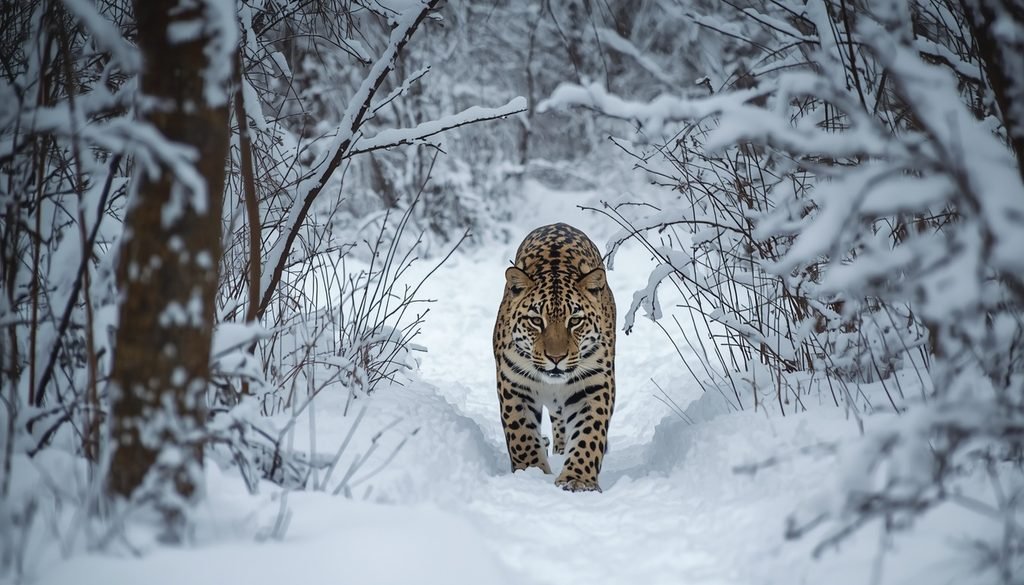
The Amur leopard is among the world’s rarest big cats. It survives in forest habitat in the Russian Far East and northeastern China, where cold winters have helped shape its thick coat and large, furry paws.
Habitat loss, declining prey, and poaching have historically threatened the subspecies. Its ability to climb trees helps it hunt, rest, and avoid competition. Conservation programs have focused on protecting habitat, improving prey populations, reducing poaching, and maintaining connections between suitable forests.
6. Kakapo
Scientific Name: Strigops habroptilus
Class: Aves
Diet: Seeds, fruit, leaves, and plant material
Habitat: Predator free islands and protected sanctuaries in New Zealand
Conservation Status: Critically Endangered
Population/Rarity: A few hundred managed wild birds
The kākāpō is a flightless, nocturnal parrot found only in New Zealand. It climbs trees rather than flying and is famous for its deep booming calls during breeding season.
Intensive conservation has helped the species recover from a dangerously low population. In September 2026, New Zealand’s Department of Conservation reported an official population of 325 birds, a recovery era high. Predator control, careful breeding management, health monitoring, and protected island habitats have all played important roles.
7. Hainan Gibbon
Scientific Name: Nomascus hainanus
Class: Mammalia
Diet: Fruit, leaves, and other plant foods
Habitat: Tropical forest on Hainan Island, China
Conservation Status: Critically Endangered
Population/Rarity: Extremely small surviving population
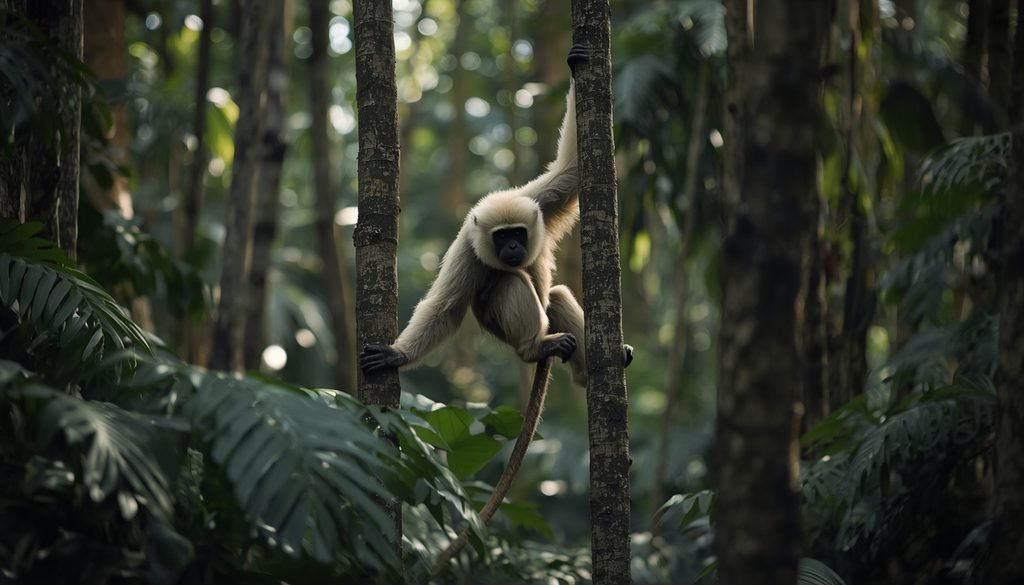
The Hainan gibbon is one of the world’s rarest primates. It survives on Hainan Island in a very limited area of tropical forest. Habitat loss and historical hunting caused a dramatic population decline.
Its survival now depends on protecting forest habitat, maintaining safe movement routes, and carefully monitoring the remaining groups. Like other gibbons, it is highly adapted to life in trees, using long arms for powerful brachiation. Its extremely small population also makes genetic diversity and successful reproduction especially important.
8. Yangtze Finless Porpoise
Scientific Name: Neophocaena asiaeorientalis
Class: Mammalia
Diet: Fish, crustaceans, and other aquatic prey
Habitat: Yangtze River system and connected freshwater and coastal environments
Conservation Status: Endangered
Population/Rarity: Declining and regionally restricted
The Yangtze finless porpoise is a small cetacean associated with the Yangtze River system and nearby waters. It is unusual because some populations are adapted to freshwater environments.
Pollution, habitat degradation, fishing pressure, and heavy boat traffic have all created problems for the species. Conservation requires healthier river ecosystems and better protection of feeding and breeding areas. Its decline is also a warning about how changes to freshwater habitats can affect highly specialized wildlife.
9. Addax
Scientific Name: Addax nasomaculatus
Class: Mammalia
Diet: Grasses, herbs, and desert vegetation
Habitat: Sahara and Sahel desert environments
Conservation Status: Critically Endangered
Population/Rarity: Extremely rare in the wild
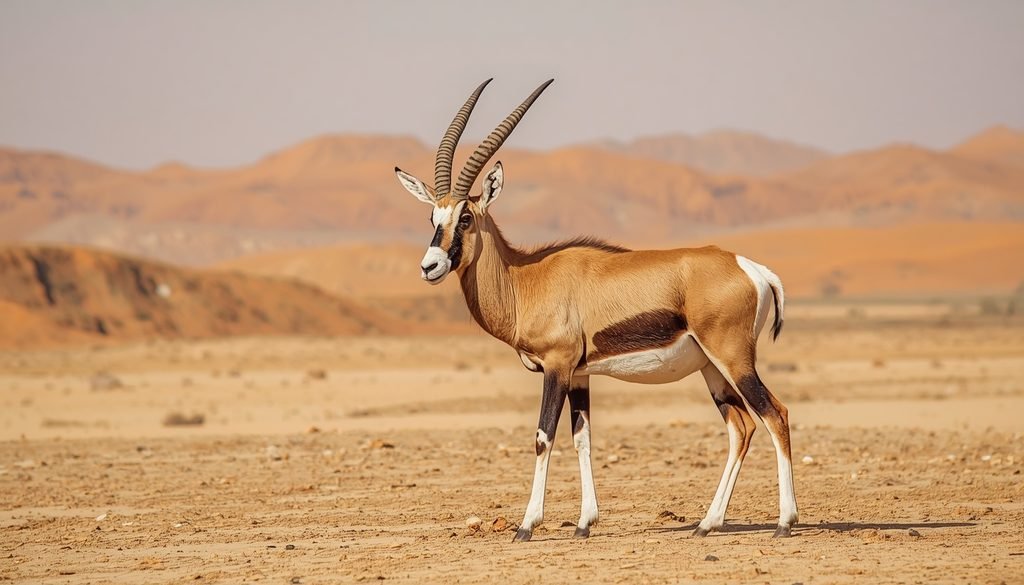
The addax is a pale antelope specially adapted to life in extremely dry environments. Its light colored coat can help reflect heat, while its physiology allows it to survive with very little free water.
Its historical range covered large areas of the Sahara, but hunting, habitat pressure, and human disturbance have greatly reduced its wild distribution. The species illustrates an important point about rarity: an animal can be well adapted to harsh conditions yet still decline rapidly when human pressure becomes too strong.
10. Philippine Crocodile
Scientific Name: Crocodylus mindorensis
Class: Reptilia
Diet: Fish, crustaceans, amphibians, and small animals
Habitat: Freshwater rivers, lakes, marshes, and wetlands
Conservation Status: Critically Endangered
Population/Rarity: Highly restricted and threatened
The Philippine crocodile is a distinct freshwater crocodile native to the Philippines. It should not be confused with the much larger saltwater crocodile.
Habitat destruction, hunting, fishing pressure, and conflict with people have contributed to its decline. Conservation breeding, local protection, and habitat restoration are helping maintain remaining populations. Because healthy wetlands are important to this species, protecting its habitat can also benefit many other freshwater animals.
11. Hirola
Scientific Name: Beatragus hunteri
Class: Mammalia
Diet: Grasses and other vegetation
Habitat: Dry grasslands and scrublands of Kenya and Somalia
Conservation Status: Critically Endangered
Population/Rarity: Extremely restricted population
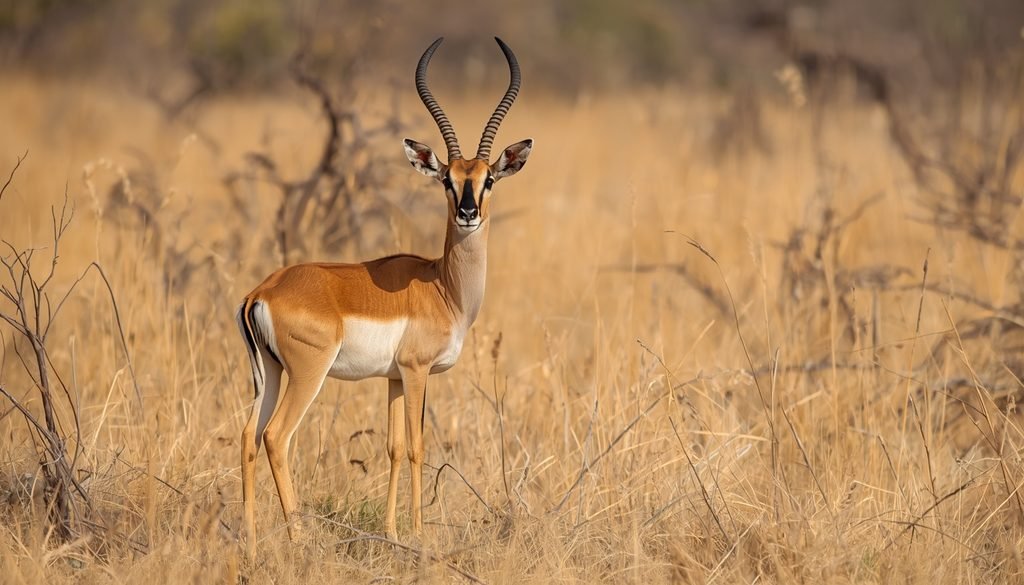
The hirola, also called Hunter’s antelope, is one of the world’s rarest antelopes. Its natural range is limited to areas of eastern Kenya and Somalia, making habitat changes especially dangerous.
Drought, habitat degradation, disease, predation, and competition can all affect the species. Because the hirola occupies such a restricted range, a severe environmental event can have a major impact on the whole population. Protecting grasslands and reducing pressures on its remaining habitat are central to its conservation.
12. Pygmy Three Toed Sloth
Scientific Name: Bradypus pygmaeus
Class: Mammalia
Diet: Leaves and other plant material
Habitat: Mangroves and coastal vegetation on Isla Escudo de Veraguas, Panama
Conservation Status: Critically Endangered
Population/Rarity: Extremely restricted island population
The pygmy three toed sloth is found only on Isla Escudo de Veraguas, a small island off Panama’s Caribbean coast. It is smaller than mainland three toed sloths and is strongly associated with the island’s mangrove habitat.
Its extremely limited geographic range makes it especially vulnerable. Habitat degradation, human pressure, and changes to the island ecosystem can affect the entire population. This sloth is a strong example of how island species can become rare when their specialized habitat is disturbed.
Why Are These Animals So Rare?
Rare species usually face more than one problem at the same time. Habitat loss can remove feeding and breeding areas, while hunting and illegal wildlife trade can reduce already small populations. Fishing bycatch is a major danger for animals such as the vaquita, while pollution and boat traffic can affect aquatic species. Climate change can intensify drought, alter habitats, and change food availability.
Small geographic ranges create another serious risk. A species living on one island, in one forest, or within a small river system has fewer places to move when conditions change. Low reproductive rates, fragmented populations, invasive species, and human wildlife conflict can make recovery even harder.
What Is the Rarest Animal in the World?
There is no universally accepted single “rarest animal” because rarity can be measured in different ways. Population size, number of mature individuals, geographic range, confirmed sightings, and monitoring quality can all produce different answers.
The vaquita is one of the strongest examples of extreme rarity because its remaining wild population is exceptionally small and confined to a tiny area. The Hainan gibbon is another outstanding example because its surviving population is extremely limited. The saola is harder to assess because it is so elusive that scientists have difficulty determining exactly how many remain.
What Makes an Animal Rare?
An animal may be rare because it naturally has a small population or occupies a very limited range. However, rarity can also develop after habitat destruction, hunting, disease, pollution, climate change, or other human pressures.
“Endangered” describes a conservation risk, while “critically endangered” represents an even higher level of extinction risk under the IUCN system. “Extinct in the wild” means a species survives only in captivity or under cultivation, while “extinct” means no living individuals are known to remain. Therefore, rare and endangered are related terms, but they are not interchangeable.
How Can We Protect Rare Animals?
Protecting rare wildlife starts with protecting the habitats they still have. National parks, wildlife reserves, protected forests, wetlands, and marine conservation areas can give threatened populations space to survive. Wildlife corridors can also reconnect fragmented habitats.
Other solutions depend on the species. Reducing fishing bycatch is essential for animals such as the vaquita, while predator control has helped kākāpō recovery. Anti poaching work, community conservation, habitat restoration, scientific monitoring, and responsible conservation breeding can also help.
The most effective conservation programs usually involve local communities as well as scientists, governments, and conservation organizations. Protecting rare species is not only about saving individual animals; it also protects ecosystems and biodiversity.
Read More: 14 Stealthy Animals
Final Thoughts
The world’s rarest animals show how closely wildlife survival is connected to habitat, food, reproduction, and human activity. The vaquita, saola, Javan and Sumatran rhinos, Hainan gibbon, kākāpō, and other species on this list face very different challenges, but all need carefully targeted conservation.
Being rare does not automatically mean a species is doomed. The recovery of the kākāpō demonstrates that intensive conservation can make a measurable difference; New Zealand’s conservation program reported a recovery era high of 325 birds in 2026.
The best way to protect Rarest Animals is to prevent further habitat loss, reduce direct human threats, support responsible conservation, and protect populations before they become too small to recover.
FAQs About Rarest Animals
What is the rarest animal in the world?
There is no scientifically agreed single winner because “rarest” can refer to population size, mature individuals, geographic range, or difficulty of detection. The vaquita is one of the clearest examples of extreme rarity, while species such as the Hainan gibbon and saola are also exceptionally rare.
What are the top rarest animals?
Examples include the vaquita, saola, Javan rhino, Sumatran rhino, Amur leopard, kākāpō, Hainan gibbon, Yangtze finless porpoise, addax, Philippine crocodile, hirola, and pygmy three toed sloth. Their rarity results from different combinations of small populations, restricted ranges, habitat loss, and other threats.
Why are some animals so rare?
Animals can become rare because of habitat destruction, hunting, poaching, pollution, climate change, disease, invasive species, fishing bycatch, and low reproductive rates. Species with very small natural ranges are especially vulnerable because a single environmental problem can affect a large portion of their entire population.
Is the vaquita the rarest animal?
The vaquita is one of the strongest candidates when rarity is considered by remaining wild population size. It survives only in the northern Gulf of California and faces severe pressure from accidental gillnet entanglement. However, scientists avoid declaring it the single “rarest animal” because rarity can be measured in different ways.
What is the rarest mammal?
There is no universally accepted answer. The vaquita, Hainan gibbon, Javan rhino, Sumatran rhino, and other mammals have extremely small or restricted populations. The answer depends on whether rarity means total individuals, mature individuals, geographic range, or another conservation measure.
How can we protect rare animals?
We can protect rare animals by preserving habitat, stopping illegal hunting, reducing bycatch, controlling invasive predators, restoring damaged ecosystems, creating protected areas, and supporting carefully managed conservation breeding. Community involvement and long-term scientific monitoring are also important for keeping conservation programs effective.

One thought on “12 Rarest Animals in the World: Rare & Endangered Species”