
Introduction
The animal kingdom is full of creatures with unusual shapes and sizes. Some animals are enormous, while others have compact bodies, long legs, or remarkably thin frames. These differences are not simply about appearance. An animal’s body shape often helps it find food, escape predators, move through narrow spaces, or survive in a particular habitat.
When people search for the world’s skinniest animal, they may imagine a tiny snake, a threadlike worm, or a fish with an extremely narrow body. However, there is no universally accepted scientific ranking of the skinniest animal because scientists measure body shape in different ways. A creature may be thin compared with its length, while another may have exceptionally slender legs or a narrow body.
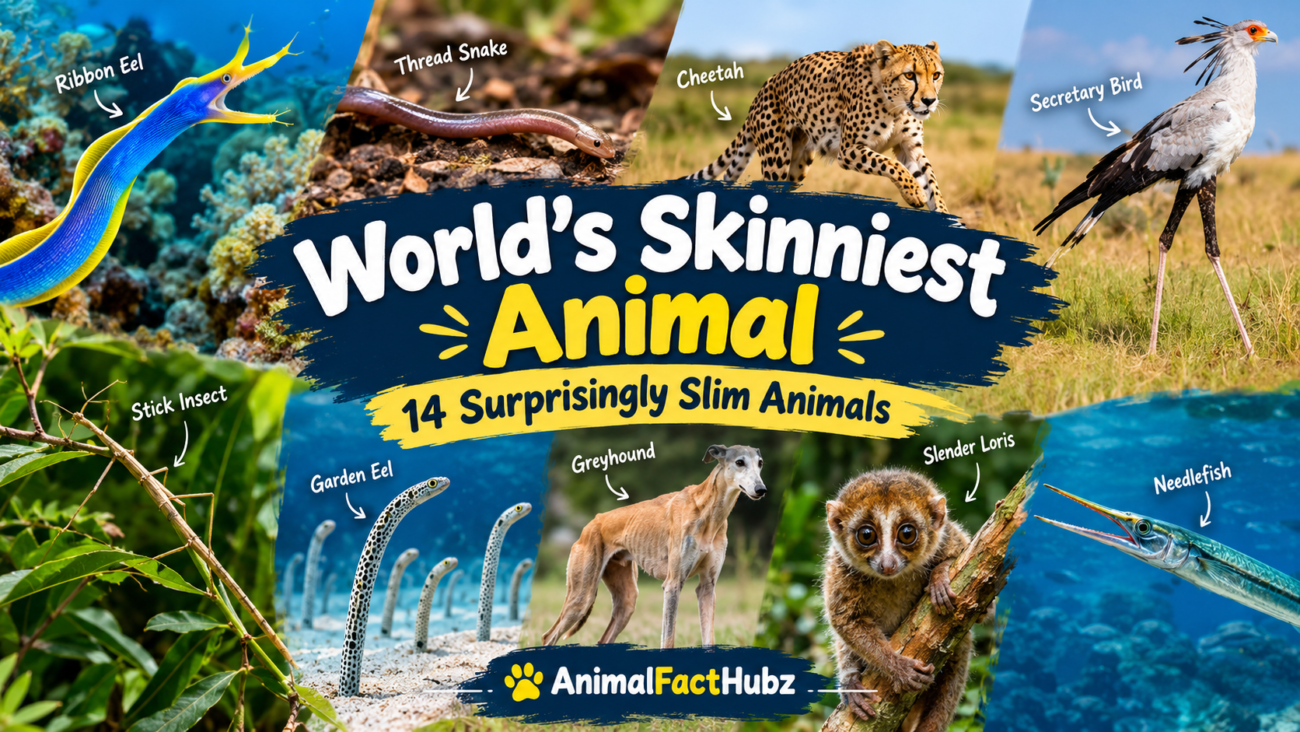
This guide explores 14 fascinating animals known for their slim, elongated, or lightweight appearance. It also explains where they live, what they eat, and how their body shapes help them survive.
Quick Answer: What Is the World’s Skinniest Animal?
There is no officially recognized single winner for the world’s skinniest animal. Thread snakes are among the thinnest vertebrates, while the bootlace worm is famous for its extremely long, narrow body. Other examples include ribbon eels, glass lizards, slender lorises, cheetahs, greyhounds, and stick insects. Each has a different type of slender body adapted to its environment. Some use their narrow shape to move through soil or water, while others rely on long limbs for running or twig-like bodies for camouflage.
1. Bootlace Worm
Scientific name: Lineus longissimus
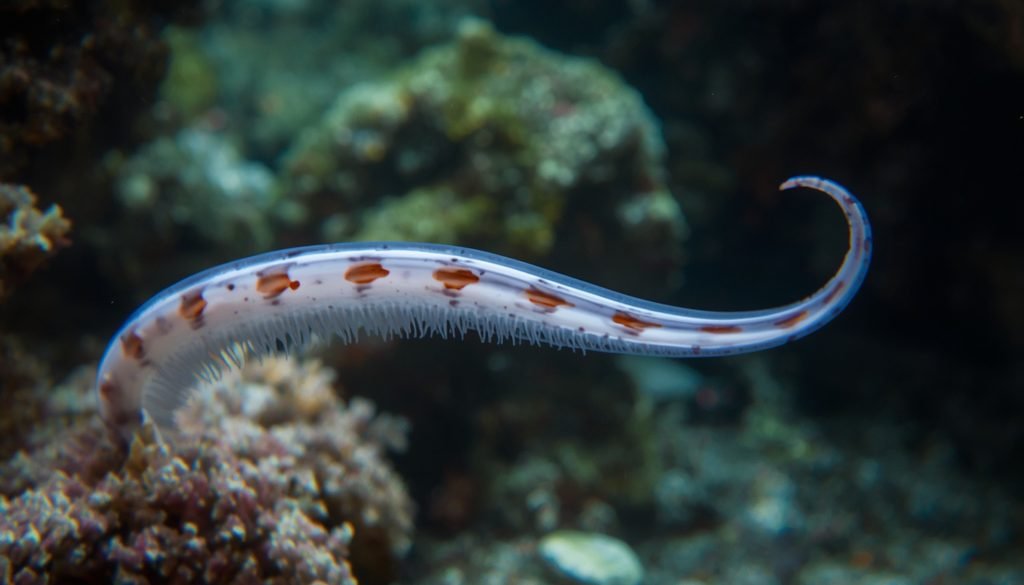
The bootlace worm is one of the most remarkable examples of a long, thin animal. This marine ribbon worm lives along coastal areas, often beneath rocks or among seaweed. Its body is extremely narrow compared with its potential length, giving it a threadlike appearance when stretched out.
Bootlace worms feed on small marine animals and other available prey. They use a flexible body to move through damp coastal environments and explore spaces between rocks. Their soft bodies can stretch and contract, so their apparent length may change considerably.
Although the bootlace worm is sometimes described as the world’s longest animal, claims about extreme lengths should be treated carefully because reliable measurements of unusually long specimens are difficult. Its exceptionally slender shape, however, makes it a fascinating candidate when discussing the thinnest-looking animals.
2. Thread Snake
Scientific group: Leptotyphlopidae
Thread snakes are tiny, slender snakes that look more like moving threads than the snakes many people imagine. Depending on the species, they may be only a few inches long and have smooth, shiny scales and very small eyes.
These reptiles live in warm regions of Africa, Asia, and the Americas. Many spend much of their time underground, beneath stones, or inside loose soil. Their narrow bodies allow them to move through small gaps that would be difficult for larger snakes to enter.
Thread snakes commonly feed on ants, termites, and their eggs or larvae. Their small size and secretive lifestyle help them avoid many predators. They are generally harmless to people and rarely seen because they spend so much time hidden from view.
3. Ribbon Eel
Scientific name: Rhinomuraena quaesita
The ribbon eel is a striking fish with a long, narrow body and flowing dorsal fin. It lives in tropical waters of the Indo-Pacific, where it often occupies a burrow in sandy areas near coral reefs.
Its bright appearance makes it unusual among slender marine animals. Juveniles and males are typically dark with yellow markings, while adult males can develop vivid blue and yellow coloring. Females are generally yellow.
Ribbon eels often keep most of their bodies inside a burrow, extending their heads to watch for small fish and other prey. Their flexible, elongated shape helps them move through narrow spaces and retreat quickly into shelter. Despite their delicate appearance, they are specialized predators with a lifestyle suited to reef environments.
4. Glass Lizard
Scientific group: Anguidae
Glass lizards resemble snakes because they have long, legless bodies. However, they are lizards, not snakes. Many species have movable eyelids and visible external ear openings, features that help distinguish them from true snakes.
They occur in parts of Europe, Asia, and the Americas, depending on the species. Glass lizards often live in grasslands, open woodland, and areas with loose soil or leaf litter. They feed on insects and other small animals, including invertebrates.
Their long bodies help them travel through vegetation and under cover. Some glass lizards can shed part of their tails when threatened, distracting a predator while the lizard escapes. The tail may later regrow to some extent, although it may not look exactly like the original.
5. Slender Loris
Scientific name: Loris lydekkerianus and related species
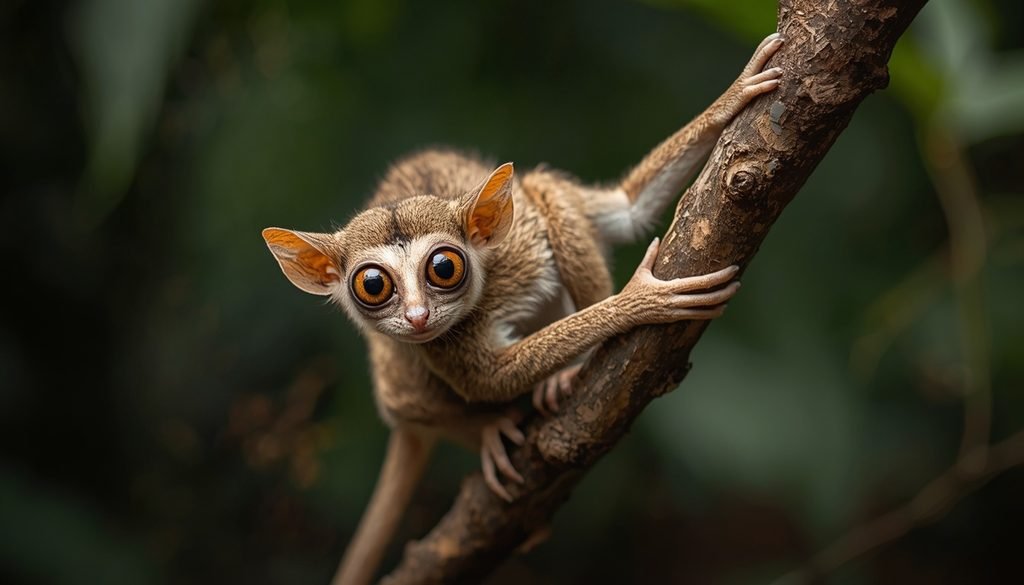
The slender loris is a small primate found in parts of India and Sri Lanka. It has large eyes, a pointed face, and exceptionally slim limbs that give it a delicate appearance.
Unlike fast-moving ground mammals, slender lorises spend much of their lives climbing through trees and shrubs. Their long, narrow hands and feet help them grip branches while moving carefully through vegetation, often at night.
They eat insects and other small animals, along with some plant material depending on the species and local conditions. Their slow, deliberate movements help them navigate narrow branches and search for prey. A slender loris may look fragile, but its limbs are specialized for climbing and gripping rather than speed or strength.
6. Cheetah
Scientific name: Acinonyx jubatus
The cheetah is not the thinnest animal by length-to-width measurements, but it is one of the world’s most recognizable lean-bodied mammals. Its small head, deep chest, long legs, flexible spine, and lightweight frame support its exceptional acceleration.
Cheetahs live mainly in African grasslands and open habitats, with a critically endangered population of Asiatic cheetahs surviving in Iran. They hunt during the day and usually pursue prey such as gazelles over short distances.
A cheetah’s body shape is closely linked to running. Its flexible spine increases stride length, while its long tail helps with balance and sharp turns. The animal must rest after an intense chase because sprinting uses a great deal of energy. Its slim build is therefore a specialized hunting adaptation, not a sign of poor health.
7. Greyhound
Scientific name: Canis lupus familiaris
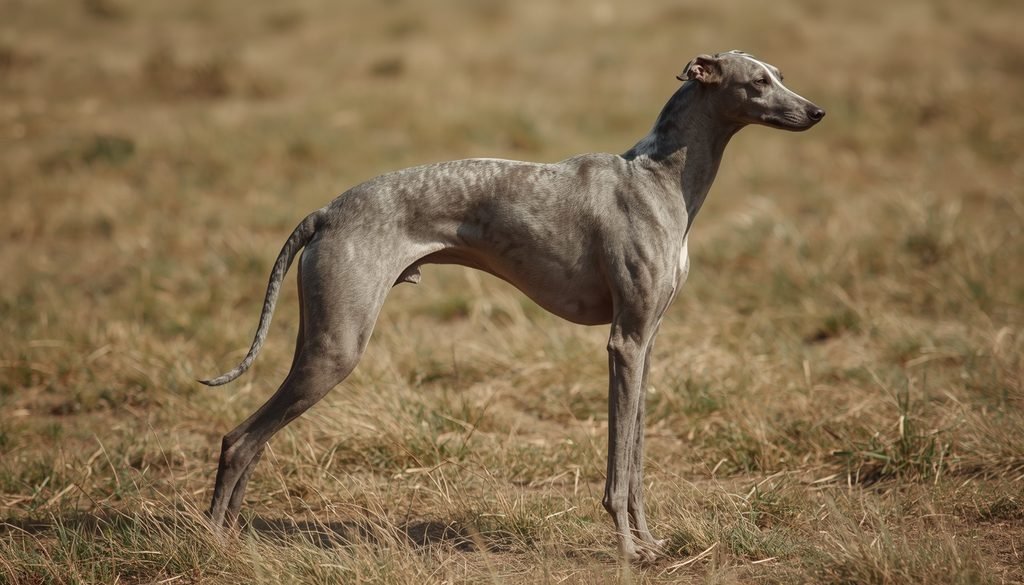
The greyhound is a domestic dog breed famous for its narrow waist, long legs, deep chest, and streamlined body. Its shape developed through selective breeding for speed and racing performance.
Greyhounds can accelerate rapidly and cover ground with long, efficient strides. Their flexible backs and lean muscles contribute to their running ability. Although they look very slim, a healthy greyhound should have appropriate muscle and body condition for its frame.
These dogs are commonly kept as companions as well as racing or sporting animals. Their body shape is quite different from that of heavier breeds, but it does not mean that every thin dog is a greyhound or that excessive thinness is healthy. The breed is a useful example of how body proportions can suit a particular type of movement.
8. Weasel
Scientific group: Mustelidae
Weasels are small carnivorous mammals with elongated bodies, short legs, narrow heads, and flexible spines. Their slender shape allows many species to pursue prey through burrows, crevices, and dense vegetation.
Depending on the species, weasels live in grasslands, forests, farmland, and other habitats across parts of Europe, Asia, Africa, and the Americas. They feed mainly on small animals, including rodents and other mammals, and may also take birds or eggs.
Their body shape is particularly useful when entering narrow hiding places where prey might escape larger predators. Despite their small size, weasels are active hunters with sharp teeth and quick reactions. Their long, low profile is a practical adaptation for searching and chasing prey close to the ground.
9. Secretary Bird
Scientific name: Sagittarius serpentarius
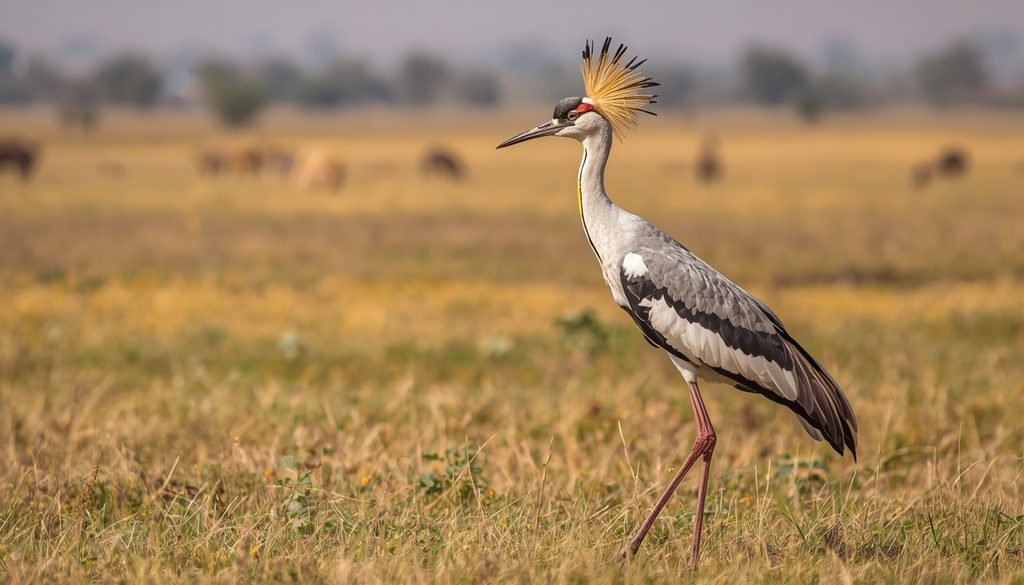
The secretary bird is a tall African bird with unusually long legs, a slender body, and a distinctive crest of feathers at the back of its head. It lives in open grasslands and savannas, where it often walks across the ground rather than searching for food from tree branches.
Its long legs help it move through grass and deliver powerful stomps when hunting prey. Secretary birds eat insects, small mammals, reptiles, and snakes. They use their eyesight to locate prey and their feet to strike or pin it down.
Although the bird looks lanky, it is a capable ground hunter. Its body proportions are suited to walking across open country and spotting animals among grasses. It demonstrates that a slim appearance can result from long limbs rather than an exceptionally narrow torso.
10. Flamingo
Scientific group: Phoenicopteridae
Flamingos are famous for their long, thin legs, long necks, and elegant posture. Their bodies are not extremely narrow in every dimension, but their overall silhouette is one of the most recognizable examples of a slender bird.
They live in wetlands, shallow lakes, lagoons, and saline environments in different parts of the world. Flamingos feed by filtering tiny organisms and organic material from water or mud using their specialized bills.
Their long legs help them wade in shallow water while searching for food. Their flexible necks allow them to position their heads for feeding. Flamingos also gather in large colonies, which can make their bright pink feathers and slim silhouettes especially striking against the water.
11. Stick Insect
Scientific group: Phasmatodea
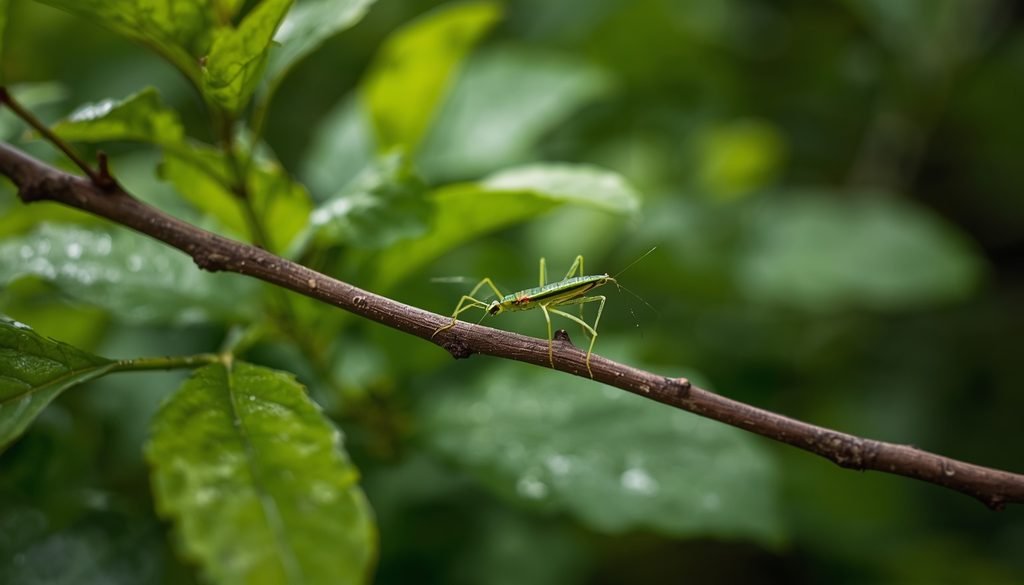
Stick insects are among the most convincing examples of extremely thin animals. Many species have long, narrow bodies and slender legs that make them look like twigs. Their green, brown, or bark-like coloring helps them blend into branches and foliage.
These insects occur in many regions, especially tropical and subtropical habitats. They feed mainly on leaves and are often most active at night. During the day, many remain motionless among plants, reducing the chance of being noticed by birds and other predators.
Some species sway gently, mimicking a branch moving in the breeze. Others drop to the ground or remain still when disturbed. Their stick-like shape is a form of camouflage, showing how an extremely slender body can provide protection without relying on speed or physical strength.
12. Dragonfly
Scientific group: Odonata
Dragonflies have long, narrow abdomens, large eyes, and two pairs of strong wings. Their bodies are not uniformly thin, but the extended abdomen gives many species a distinctive slender profile.
They are found around ponds, lakes, streams, wetlands, and other freshwater habitats. Dragonfly nymphs live underwater, where they hunt small aquatic animals. Adults catch flying insects, including mosquitoes and flies, while moving quickly through the air.
Their body design supports agile flight and precise changes in direction. Large eyes provide a broad field of view, helping them detect moving prey. Their long abdomen also contributes to their recognizable shape. Dragonflies are useful predators in many ecosystems and are a good example of how a narrow body can work alongside specialized wings and sensory organs.
13. Garden Eel
Scientific group: Congridae

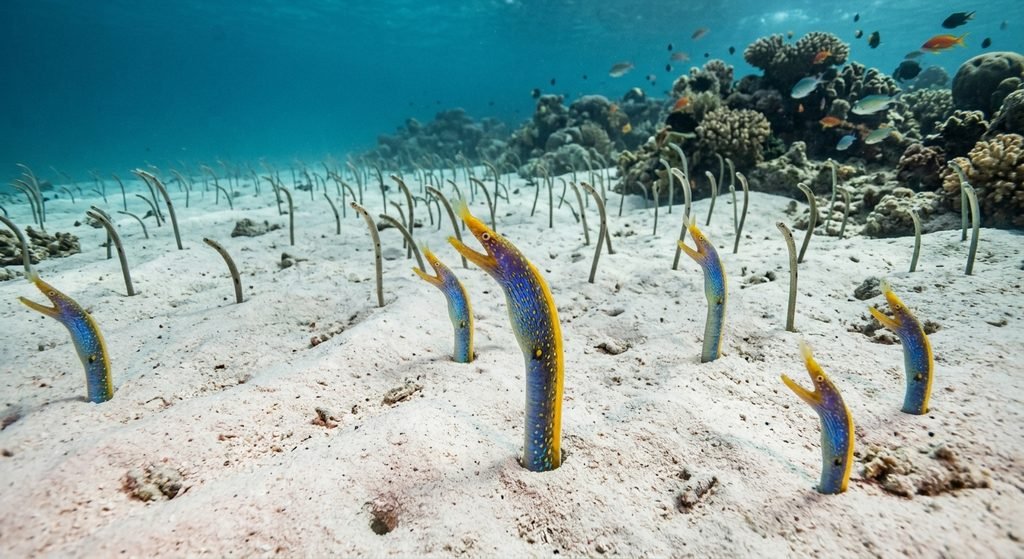
Garden eels are slender marine fish that live in colonies on sandy seabeds, often near coral reefs. They usually anchor their tails in burrows and extend their upper bodies into the water current to catch tiny drifting food particles.
When danger approaches, garden eels quickly retreat into their burrows. Their long, thin bodies allow many individuals to live close together while remaining partially hidden in the sand.
They feed mainly on small planktonic organisms carried by ocean currents. Because they rely on currents for food, garden eels often face the same direction while feeding. Seen from a distance, a colony may resemble a field of swaying plants, although each moving strand is an individual fish.
14. Needlefish
Scientific group: Belonidae
Needlefish have long, narrow bodies and pointed jaws filled with sharp teeth. Many species live near the surface in tropical and temperate marine waters, although some enter brackish or freshwater environments.
Their streamlined shape helps them move quickly through the water while chasing small fish. The long jaws help them seize prey, and their narrow bodies create a distinctive silhouette near the surface.
Needlefish often hunt in shallow coastal waters, where they may follow schools of smaller fish. Some species can leap out of the water when startled or moving rapidly, so people should avoid handling them or approaching them closely. Their body shape is a specialized combination of speed, surface swimming, and fish-catching anatomy.
Why Do Some Animals Have Extremely Slim Bodies?
Slim body shapes have evolved for different reasons. In burrowing animals such as thread snakes, a narrow body helps movement through soil and small spaces. In aquatic animals such as ribbon eels and garden eels, an elongated shape supports movement or feeding in narrow habitats.
For fast runners like cheetahs and greyhounds, a lean frame and long limbs help with stride length and acceleration. For stick insects, the narrow body resembles a twig and helps them disappear among plants. These examples show that body shape is linked to an animal’s lifestyle, food sources, and habitat rather than a single definition of being skinny.
It is also important to distinguish a naturally slender animal from an animal that is underweight. A healthy animal’s body shape depends on its species, age, sex, and overall condition. A naturally lean cheetah or greyhound is not equivalent to a wild or domestic animal suffering from malnutrition.
Read More: top 14 Animal Has the Most Teeth
Frequently Asked Questions
1. What is the world’s skinniest animal?
There is no officially recognized winner. Thread snakes are among the thinnest vertebrates, while bootlace worms have exceptionally long, narrow bodies. The answer depends on whether thinness is measured by width, body length, or body proportions.
2. What is the skinniest snake in the world?
Thread snakes, members of the family Leptotyphlopidae, are among the thinnest snakes. Many are tiny, burrowing species that feed on ants and termites. The exact smallest or thinnest species depends on the measurement used.
3. Are skinny animals naturally thin?
Many animals have naturally slender bodies because of their anatomy and evolutionary adaptations. A thin body can help with running, climbing, burrowing, swimming, or camouflage. However, unusual weight loss in a pet or wild animal may indicate illness or a lack of food.
4. Which skinny animal is the fastest?
The cheetah is the fastest land animal over short distances. Its lean body, flexible spine, long legs, and tail help it accelerate and turn during a chase.
5. Why are stick insects so thin?
Many stick insects evolved narrow bodies that resemble twigs. This camouflage helps them avoid predators by blending into branches and other vegetation.
6. Are ribbon eels and garden eels the same animal?
No. Ribbon eels are moray eels with colorful bodies and a burrow-dwelling lifestyle. Garden eels are a different group of fish that often live in colonies on sandy seabeds and extend their bodies into ocean currents to feed.
Conclusion
The world’s skinniest animal is not easy to identify because thinness can mean different things in different species. Thread snakes and bootlace worms have remarkably narrow bodies, while ribbon eels and garden eels are adapted to marine habitats. Cheetahs and greyhounds have lean frames suited to running, and stick insects use their twig-like shape for camouflage.
These 14 animals demonstrate that a slim body is not simply an unusual appearance. It can be a highly useful adaptation for movement, hunting, feeding, hiding, and survival. The next time you see a long, narrow animal, consider how its shape helps it live in its natural environment.
