
Introduction
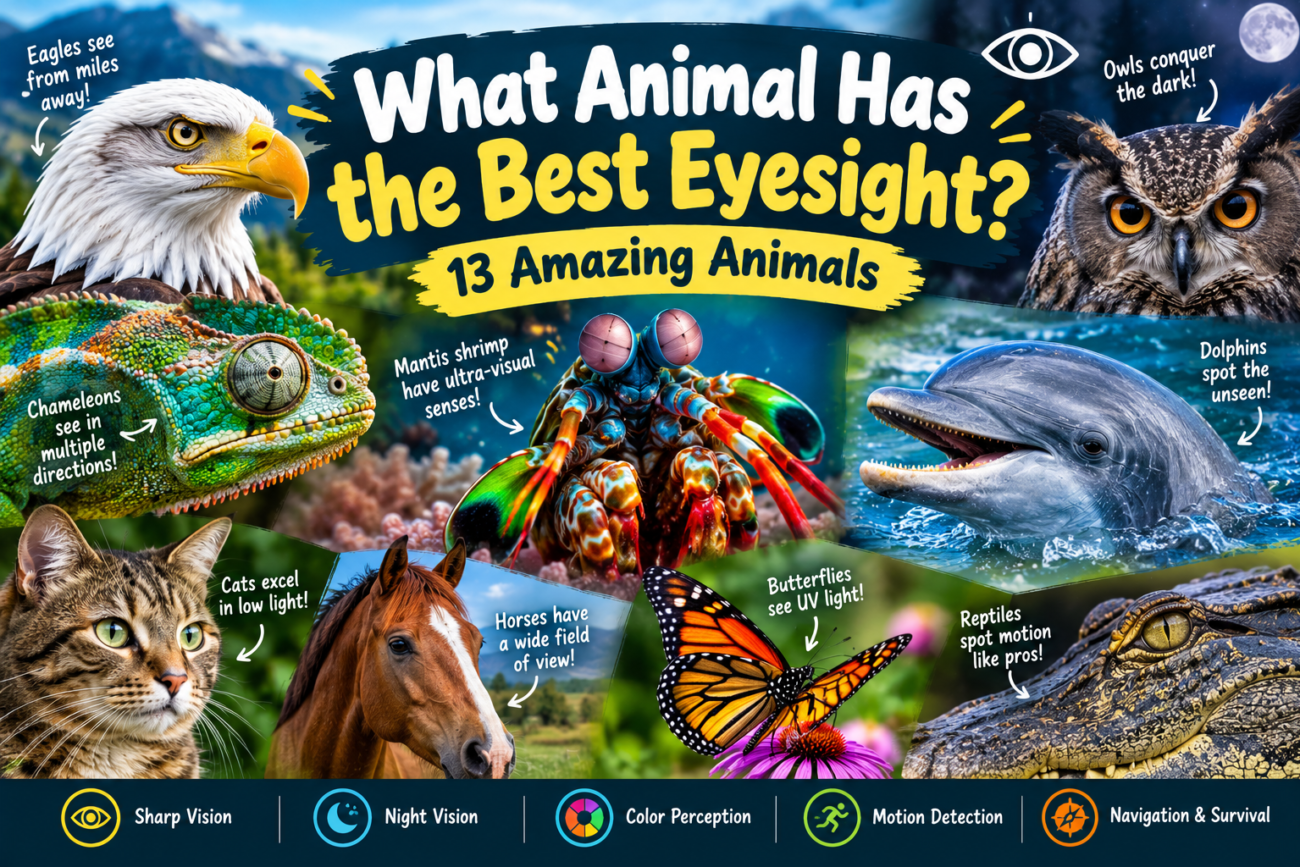
The animal kingdom is full of creatures with extraordinary eyes. Some can spot tiny prey from far above the ground, while others hunt in darkness or detect movements that happen incredibly quickly. Certain animals can also sense types of light that humans cannot see.
But what animal has the best eyesight? The answer depends on what we mean by “best.” Sharp distance vision is different from seeing clearly at night, recognizing colors, or detecting movement. Each animal has evolved a visual system that helps it survive in its particular environment.
Birds of prey, especially eagles and falcons, are among the strongest contenders for the sharpest eyesight. Owls are famous for hunting in low light, while mantis shrimp have an unusually complex visual system. This guide explores 13 animals with remarkable vision and explains what makes each one special.
Quick Answer: What Animal Has the Best Eyesight?
Eagles and falcons are among the leading animals for sharp, long-distance eyesight. Their eyes can resolve fine details that would be difficult for humans to see from the same distance. However, there is no single winner for every type of vision. Owls excel at seeing in dim light, mantis shrimp have an unusually complex system for detecting light and polarization, and dragonflies are excellent at tracking movement. The best animal therefore depends on whether you mean visual sharpness, night vision, color processing, or motion detection.
1. Eagle
Scientific name: Aquila chrysaetos (golden eagle)
Vision specialty: Sharp distance vision
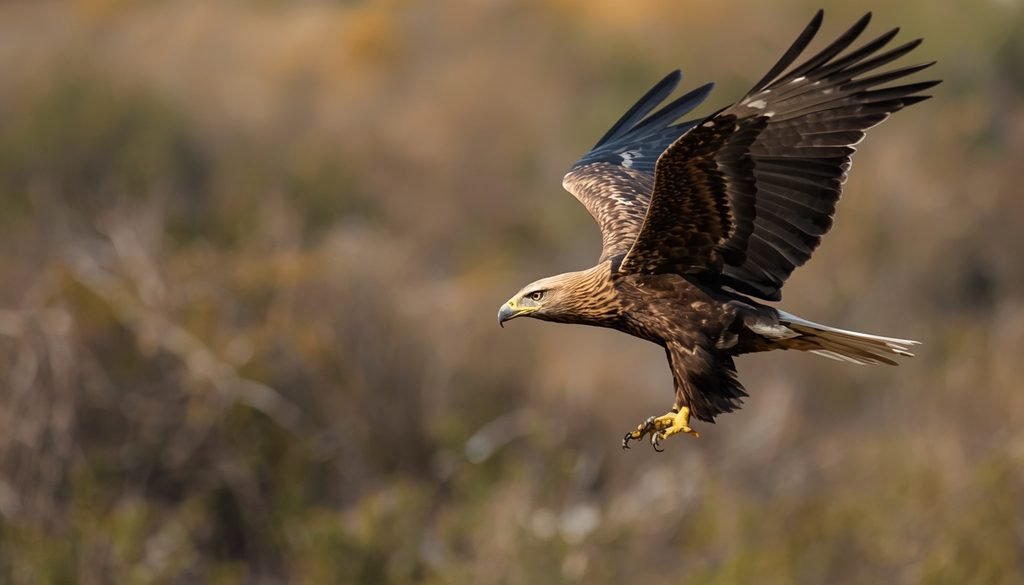
Eagles are famous for their exceptional eyesight. Their large eyes and densely packed retinal photoreceptors help them detect fine details while soaring high above the ground. This ability is valuable when searching for rabbits, fish, and other prey across open landscapes.
Some eagle species have visual acuity several times greater than that of humans under suitable lighting conditions. Their eyes also contain specialized areas that improve detail resolution. This helps an eagle focus on distant objects while remaining in flight.
Although popular accounts sometimes claim an eagle can see every small animal from miles away, actual performance depends on the size of the target, lighting, weather, and the species. Even so, eagles are among the best examples of sharp vision in the animal kingdom.
2. Peregrine Falcon
Scientific name: Falco peregrinus
Vision specialty: High visual acuity and target tracking
The peregrine falcon is famous for its high-speed hunting dives, but its vision is just as remarkable. It must identify and follow moving birds while flying at tremendous speed. Sharp eyesight allows it to judge a target’s position and adjust its flight accordingly.
Research on birds of prey has found exceptionally high visual acuity in peregrine falcons. Their eyes contain specialized retinal regions that help resolve detail, while their visual systems support accurate tracking during fast movements.
The falcon’s eyesight is not simply about seeing far away. It also needs to keep a moving target in view and respond quickly as the distance changes. These abilities make the peregrine falcon one of the most impressive visual hunters in nature.
3. Hawk
Scientific name: Buteo jamaicensis (red-tailed hawk)
Vision specialty: Detecting prey from a distance
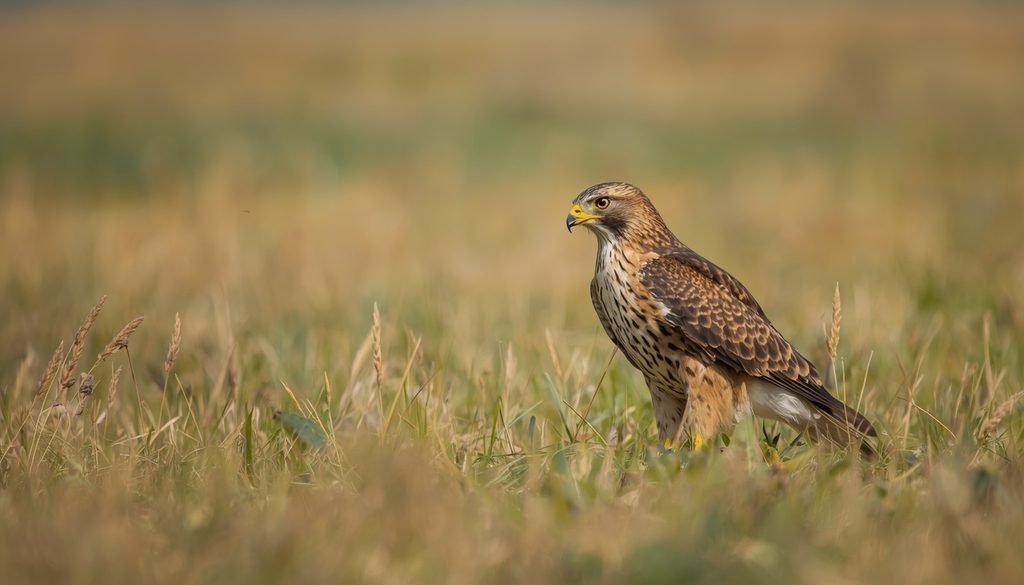
Hawks are skilled daytime hunters that use their eyesight to locate rodents, reptiles, birds, and other small animals. Their visual systems are adapted to spotting prey against complex backgrounds such as grasslands, woodland edges, and open fields.
Like eagles and falcons, hawks have high-density photoreceptors in specialized areas of the retina. This supports detailed vision and helps them identify potential prey before making a hunting approach.
Their success also depends on movement, experience, and hunting strategy. A hawk may circle above a field or sit on a branch while scanning the ground. Its eyesight helps it detect possible prey, but it still needs to judge distance and choose the right moment to strike.
4. Owl
Scientific name: Bubo bubo (Eurasian eagle-owl)
Vision specialty: Seeing in low light
Owls are known for their ability to hunt during the evening and at night. Their large, forward-facing eyes collect available light, while light-sensitive retinal cells help them see when illumination is low.
An owl’s eyes are relatively fixed in their sockets, so it turns its head to look in different directions. Its forward-facing vision also helps with judging distance when approaching prey.
However, owls do not see perfectly in complete darkness. They still need some light to form visual images, and many species also rely heavily on their excellent hearing. Their combination of low-light vision, sound detection, and silent flight makes them effective nighttime hunters.
5. Mantis Shrimp
Scientific name: Odontodactylus scyllarus (peacock mantis shrimp)
Vision specialty: Complex color and polarization detection
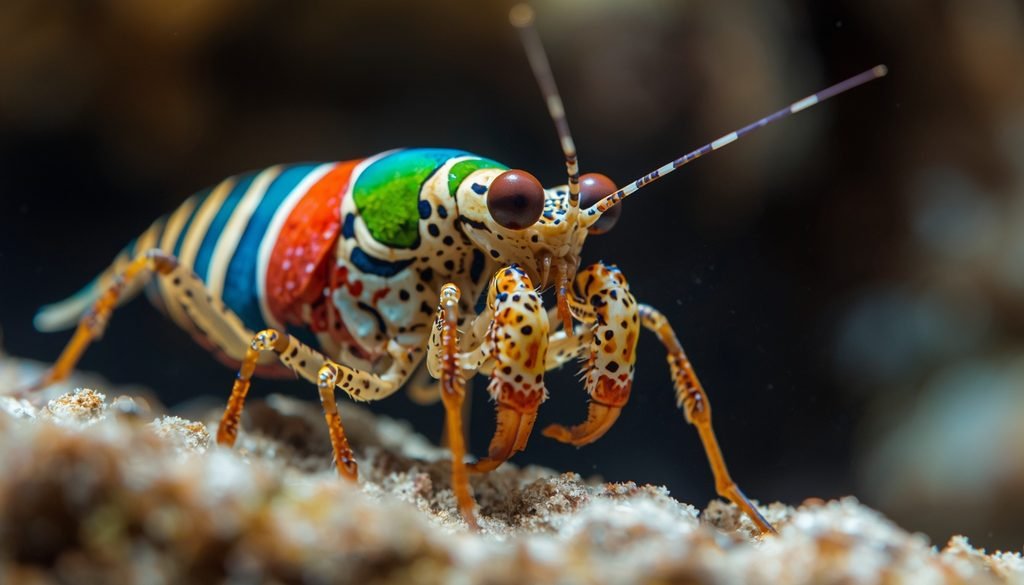
The mantis shrimp has one of the most unusual visual systems known. Its compound eyes move independently and contain multiple types of light-sensitive receptors. These allow it to detect wavelengths and patterns of polarized light that humans cannot perceive directly.
Mantis shrimp are often described as having the best color vision because they possess many types of photoreceptors. Yet having more receptor types does not automatically mean they distinguish every color better than humans. Research suggests their color-processing system works differently from ours.
Their eyes help them respond to visual information in underwater environments. Scientists continue to study how these animals use their complex vision to recognize objects, communicate, and navigate their surroundings.
6. Dragonfly
Scientific name: Anax junius (common green darner)
Vision specialty: Motion detection and a wide visual field
Dragonflies are agile flying insects with large compound eyes made up of many tiny visual units. These eyes give them a broad view of their surroundings and help them detect moving prey while flying.
A dragonfly can track small insects and make rapid changes in direction during a chase. Its visual system processes movement quickly, which is important when both predator and prey are airborne.
Compound eyes do not provide the same fine detail as the eyes of an eagle. Instead, they offer a useful combination of movement detection and broad environmental awareness. This makes dragonflies excellent examples of how vision can be specialized for speed rather than long-distance sharpness.
7. Chameleon
Scientific name: Chamaeleo calyptratus (veiled chameleon)
Vision specialty: Independent eye movement and depth judgment
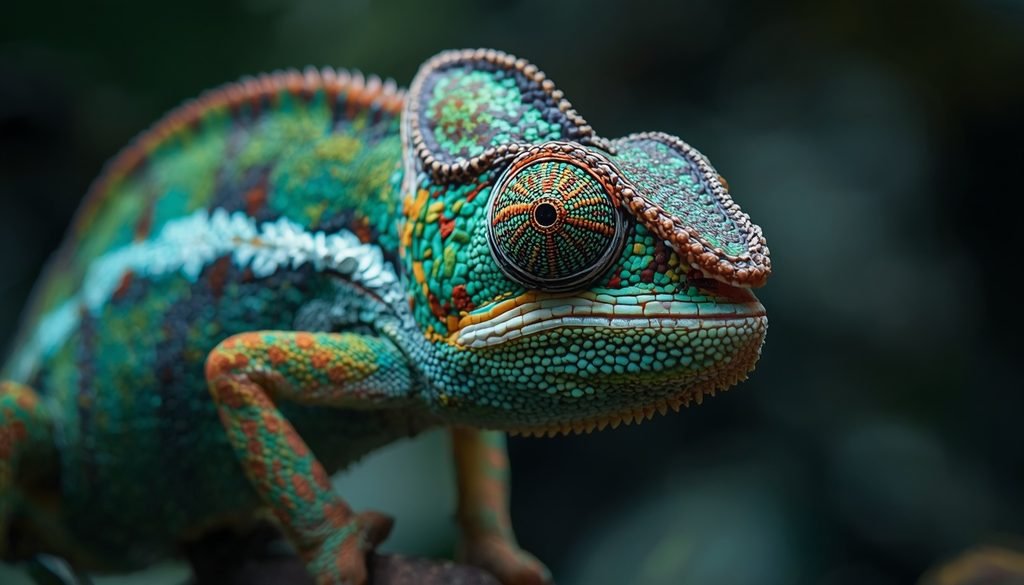
Chameleons have distinctive eyes that can move largely independently of one another. This allows them to survey different parts of their surroundings before focusing both eyes on a target.
When a chameleon prepares to catch an insect, it can direct its gaze toward the prey and use depth information to help judge distance. Its long, fast tongue then captures the target with impressive precision.
Chameleons also have visual adaptations suited to daylight and their natural habitats. Their eye movements may look unusual to humans, but they are useful for an animal that needs to monitor its surroundings while remaining relatively still on a branch.
8. Gecko
Scientific name: Tarentola chazaliae (helmethead gecko)
Vision specialty: Color vision in dim conditions
Many geckos are active at night and have eyes adapted to low-light environments. Some nocturnal geckos can distinguish colors in light levels where human color vision becomes very limited.
Their eyes use specialized light-sensitive cells that help them make use of scarce illumination. This is useful when hunting insects after sunset, when many potential prey animals become active.
Not every gecko has identical visual abilities. Species differ according to their activity patterns and habitats. Nevertheless, nocturnal geckos show that good vision is not always about seeing tiny details from far away; sometimes it is about detecting useful visual information when light is scarce.
9. Domestic Cat
Scientific name: Felis catus
Vision specialty: Seeing in dim light and detecting movement
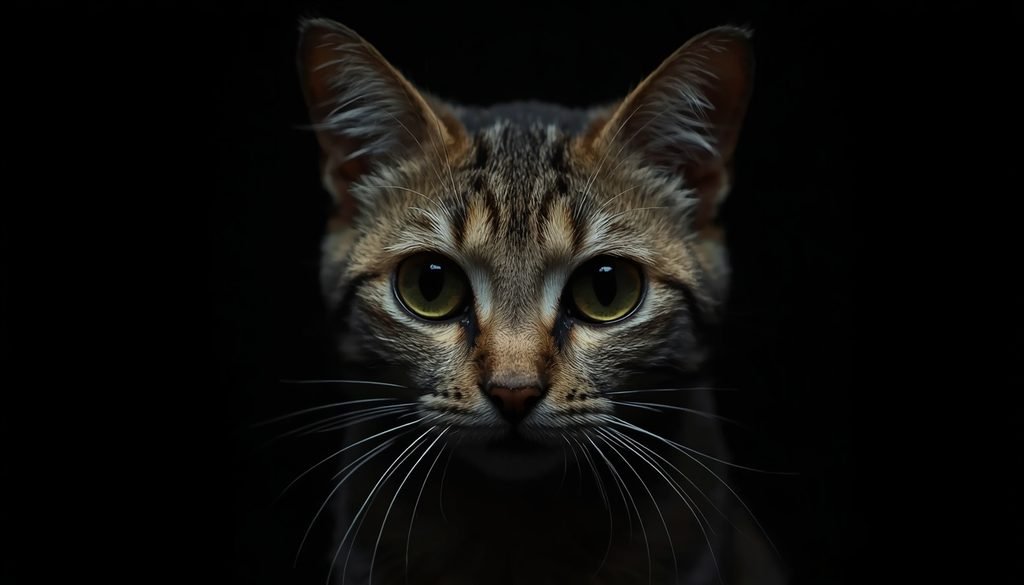
Domestic cats are effective hunters at dawn and dusk. Their eyes have a light-reflecting layer called the tapetum lucidum, which helps available light pass through the retina a second time. This is one reason a cat’s eyes may appear to glow when light shines toward them.
Cats are particularly good at detecting movement, making it easier for them to notice a small animal moving across the floor or through grass. Their pupils can also widen substantially in dim conditions to let in more light.
However, cats do not see in complete darkness, and their ability to distinguish fine details is not as strong as that of many birds of prey. Their eyesight is adapted for hunting in low light rather than identifying distant objects with extreme sharpness.
10. Goat
Scientific name: Capra hircus
Vision specialty: Broad field of view
Goats have horizontally elongated pupils that help them monitor a wide area around their bodies. This is valuable for a prey animal that must watch for predators while feeding or moving across rocky terrain.
Their eye placement and pupil shape allow them to take in much of the surrounding landscape without constantly turning their heads. A broad field of view helps goats detect potential danger approaching from the side.
This does not mean goats have the sharpest eyesight in every situation. Their visual system is specialized for awareness and survival, showing how a wide view can be more useful than extreme detail for animals that are frequently at risk from predators.
11. Horse
Scientific name: Equus caballus
Vision specialty: Wide visual field and movement awareness
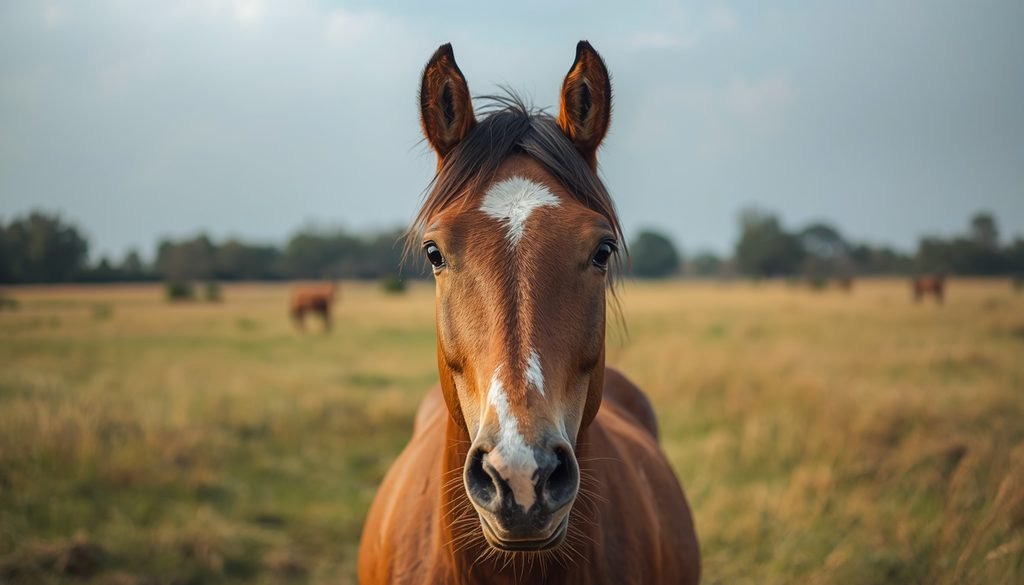
Horses have eyes positioned on the sides of their heads, giving them a broad field of view. This helps them notice movement across open grasslands and recognize potential threats while grazing.
Their vision differs from human vision in several ways. Horses may have blind spots directly in front of their noses and behind their bodies, and they can respond differently to changes in light and contrast.
Horses also use their ears and sense of smell alongside vision when assessing their surroundings. Their eyesight is well suited to detecting danger and navigating open spaces, even though they do not match raptors in fine-detail distance vision.
12. Butterfly
Scientific name: Papilio machaon (Old World swallowtail)
Vision specialty: Detecting a broad range of light and visual signals
Butterflies have compound eyes that help them detect movement, locate flowers, and recognize visual cues in their surroundings. Many butterfly species can perceive ultraviolet light, which humans cannot see without special equipment.
Ultraviolet patterns on flowers can provide information that helps pollinators locate nectar. Butterflies also use visual cues when identifying potential mates and navigating their environments.
Their compound eyes do not resolve fine details in the same way that human or eagle eyes do. Instead, they are suited to detecting movement and visual patterns across a broad field. These abilities help butterflies find food and interact with other members of their species.
13. Pigeon
Scientific name: Columba livia
Vision specialty: Color vision and visual navigation
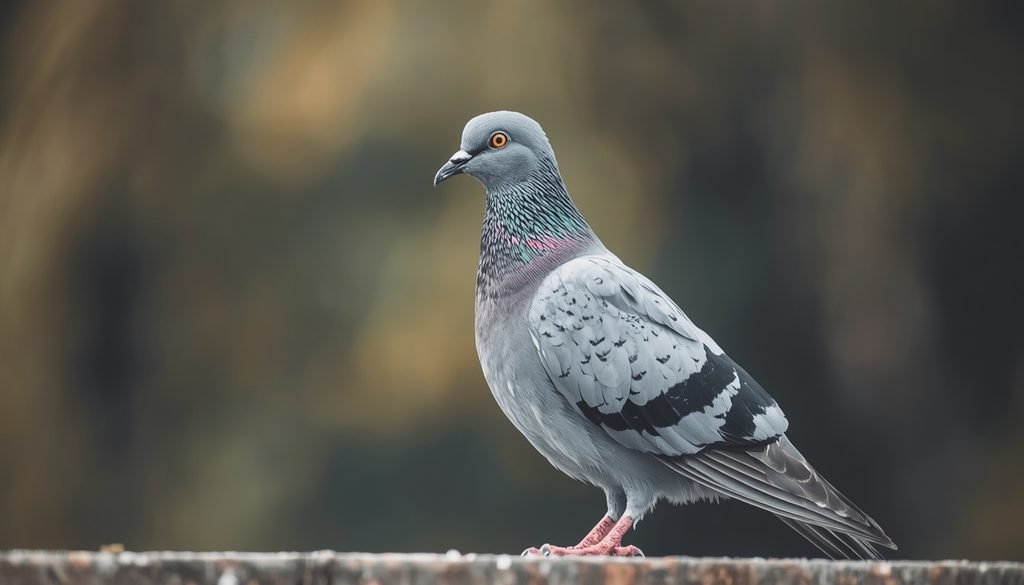
Pigeons have impressive visual abilities that support navigation, food finding, and movement through complex environments. Like many birds, they can perceive ultraviolet wavelengths that are invisible to humans.
Their eyes are adapted to detect visual detail and help them recognize landmarks while traveling. Pigeons also use other sensory cues, including information from the Sun and Earth’s magnetic environment, when navigating over longer distances.
Although pigeons are not typically considered the sharpest-eyed animals, their combination of color perception, movement awareness, and navigation makes them remarkable. Their vision is especially useful for an animal that must find food, avoid obstacles, and return to familiar locations.
What Makes an Animal’s Eyesight Exceptional?
Several features determine how well an animal sees. Visual acuity measures the ability to distinguish fine details. Low-light sensitivity describes how well an animal can use limited light. Color vision depends on the types of photoreceptors and how the brain processes their signals.
Other abilities matter too. A wide field of view helps prey animals monitor their surroundings, while rapid visual processing helps predators track moving targets. Some species can detect ultraviolet or polarized light, revealing information that is unavailable to human eyes.
No single eye design is perfect for every task. Evolution shapes each visual system to suit an animal’s diet, behavior, and environment.
Read More: What Animal Has the Best Hearing
Frequently Asked Questions
Which animal has the sharpest eyesight?
Eagles and falcons are among the leading animals for visual acuity. Their eyes can resolve fine details at long distances, helping them locate prey from the air.
Which animal has the best night vision?
Owls are among the best-known animals for hunting in low light. Cats and some nocturnal geckos also have adaptations that help them use dim light effectively.
Can any animal see ultraviolet light?
Yes. Many birds and insects can detect ultraviolet wavelengths that humans cannot see with unaided eyes. These wavelengths can help animals find food or recognize visual signals.
Do mantis shrimp have the best eyesight?
Mantis shrimp have a highly complex visual system and can detect certain forms of polarized light. However, their large number of photoreceptor types does not automatically make them the best at every aspect of vision.
Can eagles really see miles away?
Eagles can detect objects at impressive distances, but visibility depends on the object’s size, contrast, weather, and lighting. Claims about exact distances should be treated as estimates rather than universal rules.
Do animals with large eyes always see better?
No. Eye size is only one factor. The retina, photoreceptors, lens, brain, and the animal’s behavior all affect visual performance.
Conclusion
So, what animal has the best eyesight? For sharp distance vision, eagles and falcons are among the strongest contenders. Owls are impressive low-light hunters, mantis shrimp have an unusual visual system, and dragonflies excel at tracking movement.
Each animal’s eyesight reflects the challenges it faces in nature. Some need to identify prey from far away, others must navigate in darkness, and some benefit from detecting light humans cannot see. Rather than one universal winner, the animal kingdom offers many different vision specialists.
Explore more animal facts to learn how wildlife uses its remarkable senses to find food, avoid danger, and survive.

One thought on “What Animal Has the Best Eyesight? 13 Amazing Animals”