
Introduction
Birds with long necks are some of the most recognizable animals in the natural world. From elegant Great Egrets standing in shallow wetlands to towering ostriches crossing open African landscapes, these birds use their elongated necks in surprisingly different ways.
A long neck is not simply a feature that makes a bird look tall. For many species, it is an important adaptation for reaching food, hunting prey, feeding underwater, or moving through particular habitats. Wading birds such as herons, cranes, storks, and spoonbills often combine long necks with long legs so they can search for food in shallow water without submerging their bodies.
Other long-necked birds, including swans, flamingos, ostriches, emus, and cassowaries, have different lifestyles and feeding strategies. In this guide, we explore 16 long-necked bird species, including their scientific names, diets, habitats, appearance, and the ways their long necks help them survive.
Quick Answer: What Are Birds With Long Necks?
Birds with long necks are species whose elongated, flexible necks help them perform activities such as feeding, hunting, reaching aquatic plants, scanning their surroundings, or moving through wetlands and open habitats. Long-necked birds occur in many different bird groups, including herons, cranes, storks, flamingos, swans, ratites, and other species.
List of Birds With Long Necks
| # | Bird | Scientific Name |
| 1 | Great Egret | Ardea alba |
| 2 | Great Blue Heron | Ardea herodias |
| 3 | Greater Flamingo | Phoenicopterus roseus |
| 4 | Whooping Crane | Grus americana |
| 5 | Sarus Crane | Antigone antigone |
| 6 | Black-necked Stork | Ephippiorhynchus asiaticus |
| 7 | Marabou Stork | Leptoptilos crumenifer |
| 8 | Trumpeter Swan | Cygnus buccinator |
| 9 | Roseate Spoonbill | Platalea ajaja |
| 10 | Anhinga | Anhinga anhinga |
| 11 | Goliath Heron | Ardea goliath |
| 12 | Ostrich | Struthio camelus |
| 13 | Emu | Dromaius novaehollandiae |
| 14 | Southern Cassowary | Casuarius casuarius |
| 15 | American White Pelican | Pelecanus erythrorhynchos |
| 16 | Giant Ibis | Thaumatibis gigantea |
Quick Comparison of Long-Necked Birds
| Bird | Typical Habitat | Main Diet | Long-Neck Advantage |
| Great Egret | Wetlands | Fish and small animals | Reaching prey |
| Great Blue Heron | Wetlands | Fish and animals | Striking prey |
| Greater Flamingo | Lakes and lagoons | Algae and small organisms | Feeding in shallow water |
| Whooping Crane | Wetlands and grasslands | Plants and animals | Foraging reach |
| Sarus Crane | Wetlands and grasslands | Plants and animals | Reaching ground food |
| Black-necked Stork | Wetlands | Aquatic animals | Searching shallow water |
| Marabou Stork | African wetlands and savannas | Carrion and animals | Feeding and scavenging |
| Trumpeter Swan | Lakes and wetlands | Aquatic plants | Reaching underwater food |
| Roseate Spoonbill | Marshes and coastal wetlands | Aquatic organisms | Sweeping for prey |
| Anhinga | Freshwater wetlands | Fish | Underwater hunting |
| Goliath Heron | African wetlands | Fish | Reaching aquatic prey |
| Ostrich | African open habitats | Plants and small animals | Feeding and vigilance |
| Emu | Australian habitats | Plants and insects | Foraging |
| Cassowary | Tropical rainforest | Mainly fruit | Reaching forest foods |
| American White Pelican | Lakes and wetlands | Fish | Feeding and fishing |
| Giant Ibis | Wetlands and forest edges | Animals and plants | Ground and wetland foraging |
1. Great Egret
Scientific Name: Ardea alba
Class: Aves
Diet: Carnivore
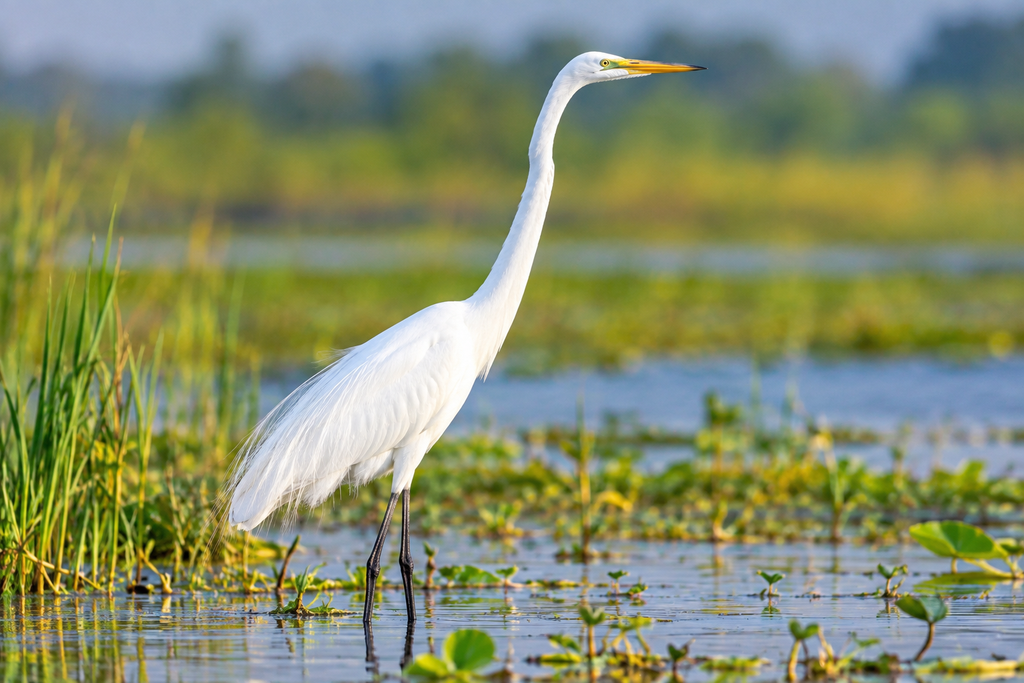
The Great Egret is one of the most familiar birds with a long neck. Its tall white body, long black legs, pointed bill, and flexible neck make it easy to recognize around marshes, ponds, rivers, and other wetlands.
Its neck helps the bird reach prey while standing in shallow water. A Great Egret can remain almost motionless before quickly extending its head and neck toward fish, frogs, insects, and other small animals.
2. Great Blue Heron
Scientific Name: Ardea herodias
Class: Aves
Diet: Carnivore
The Great Blue Heron is a large North American wading bird with a long neck and long legs. Its gray-blue body contrasts with its long, pointed bill and distinctive neck posture.
It commonly hunts around shallow water, where it waits patiently before striking at fish and other prey. The long neck provides extra reach, allowing the heron to keep its body relatively still while moving its head rapidly toward prey.
3. Greater Flamingo
Scientific Name: Phoenicopterus roseus
Class: Aves
Diet: Filter-feeding omnivore
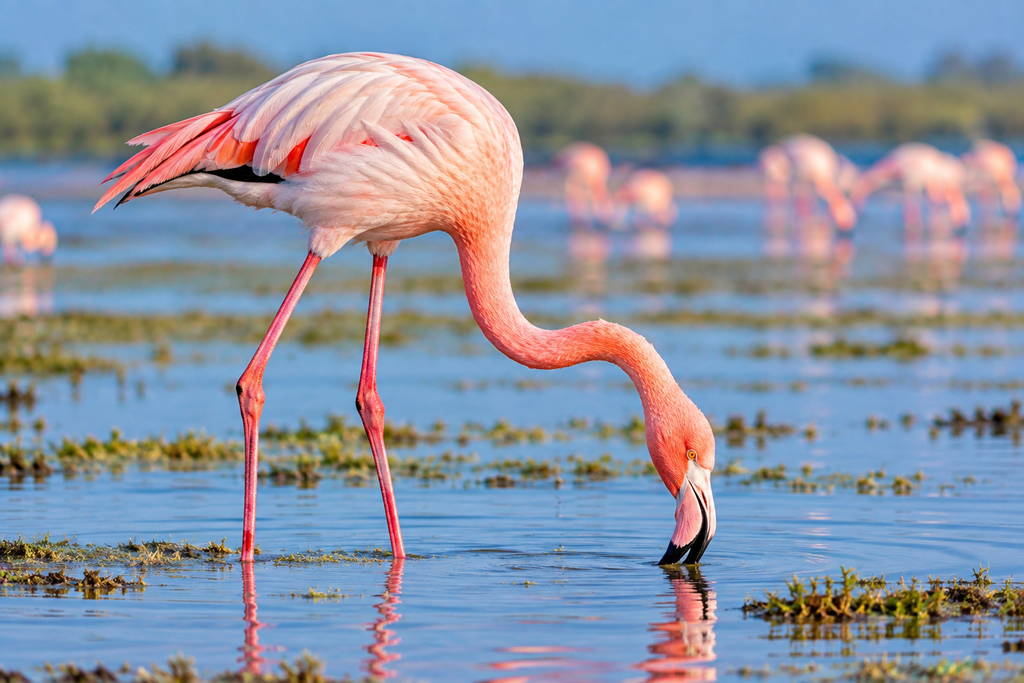
The Greater Flamingo is famous for its pink plumage, long legs, and graceful neck. It lives around wetlands, lagoons, lakes, and other shallow-water environments.
Its flexible neck is particularly useful while feeding. Flamingos often position their heads close to the water surface and use their specialized bills to filter small organisms and algae from the water and mud.
4. Whooping Crane
Scientific Name: Grus americana
Class: Aves
Diet: Omnivore
The Whooping Crane is a very tall North American bird recognized by its white body, black wing tips, red facial markings, long legs, and long neck.
It uses its neck while searching for food in wetlands and open habitats. Its diet includes both plant material and animal prey, so its long neck provides useful reach during different types of foraging.
5. Sarus Crane
Scientific Name: Antigone antigone
Class: Aves
Diet: Omnivore
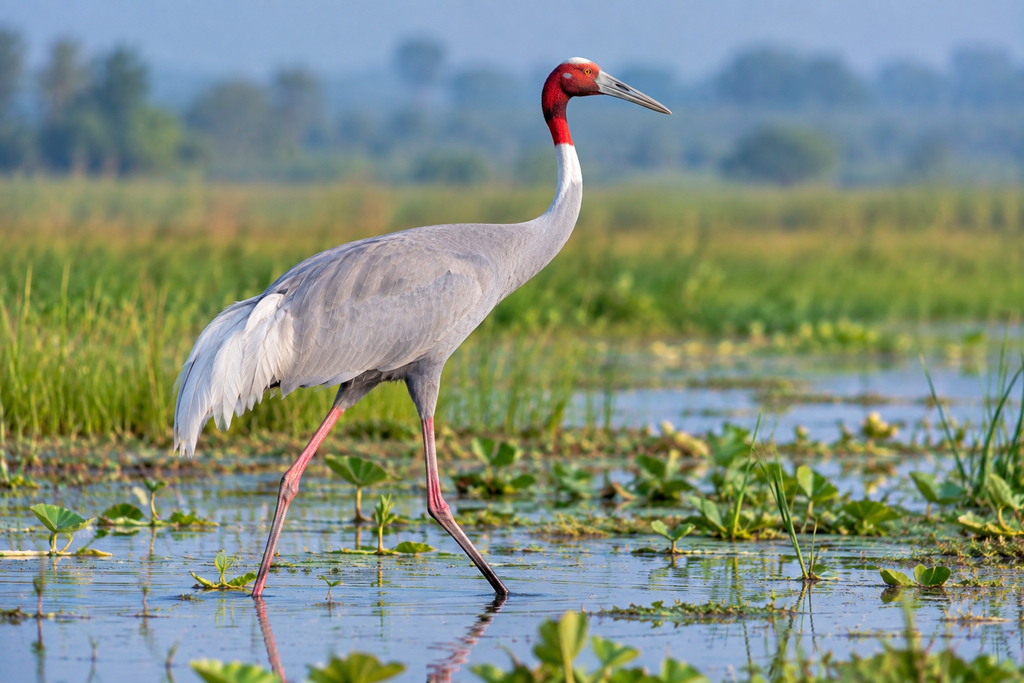
The Sarus Crane is among the tallest flying birds and has a striking combination of long legs and an elongated neck. Its gray body and red head and upper-neck area make it especially distinctive.
This crane uses its long neck to reach food on the ground and around wetlands. It can feed on plant material as well as insects, small animals, and other available foods.
6. Black-necked Stork
Scientific Name: Ephippiorhynchus asiaticus
Class: Aves
Diet: Carnivore
The Black-necked Stork has a tall, elegant body, long legs, a long neck, and contrasting black-and-white plumage. It occurs around wetlands and other suitable habitats in parts of South Asia and Australia.
Its long neck and bill are useful for searching shallow water for aquatic prey. Fish, frogs, reptiles, and other small animals can form part of its diet.
7. Marabou Stork
Scientific Name: Leptoptilos crumenifer
Class: Aves
Diet: Carnivore and scavenger
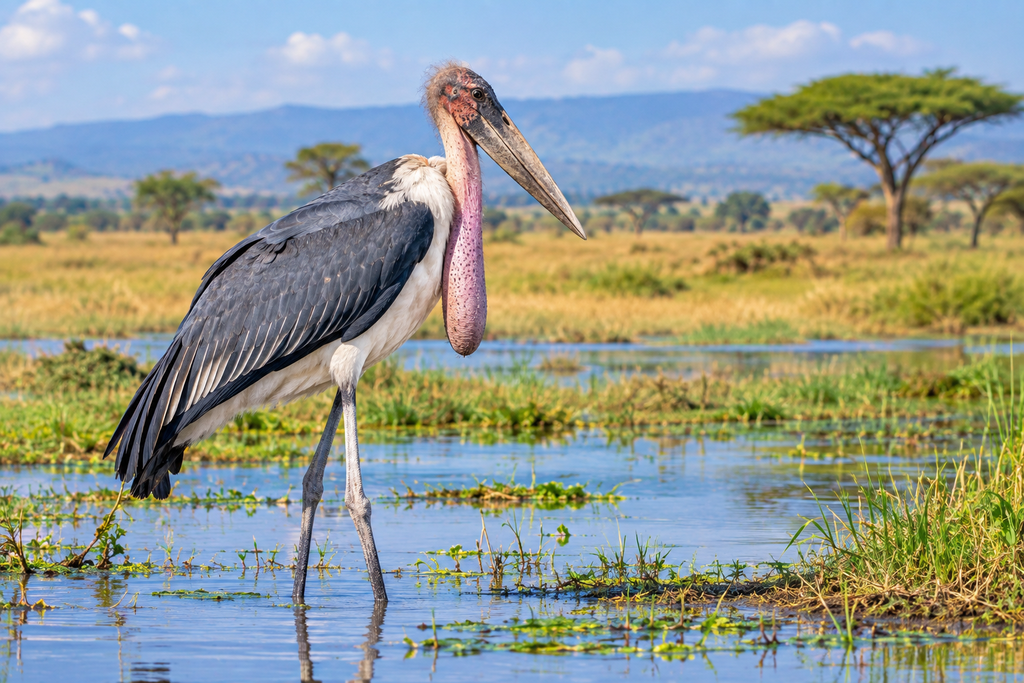
The Marabou Stork is a very large African bird with long legs and a long, mostly bare neck. Its unusual appearance is closely connected with its feeding habits.
As a scavenger and predator, it can feed on carrion as well as animal prey. Its bare head and neck are useful adaptations for a bird that may place its head close to carcasses while feeding.
8. Trumpeter Swan
Scientific Name: Cygnus buccinator
Class: Aves
Diet: Herbivore
The Trumpeter Swan is a massive white water bird with a long, curved neck and broad body. It inhabits lakes, rivers, marshes, and other wetland environments.
Its neck allows it to reach underwater vegetation while the bird remains afloat. This is a different use of a long neck from the striking motion seen in herons, showing how similar anatomy can support different feeding strategies.
9. Roseate Spoonbill
Scientific Name: Platalea ajaja
Class: Aves
Diet: Omnivore
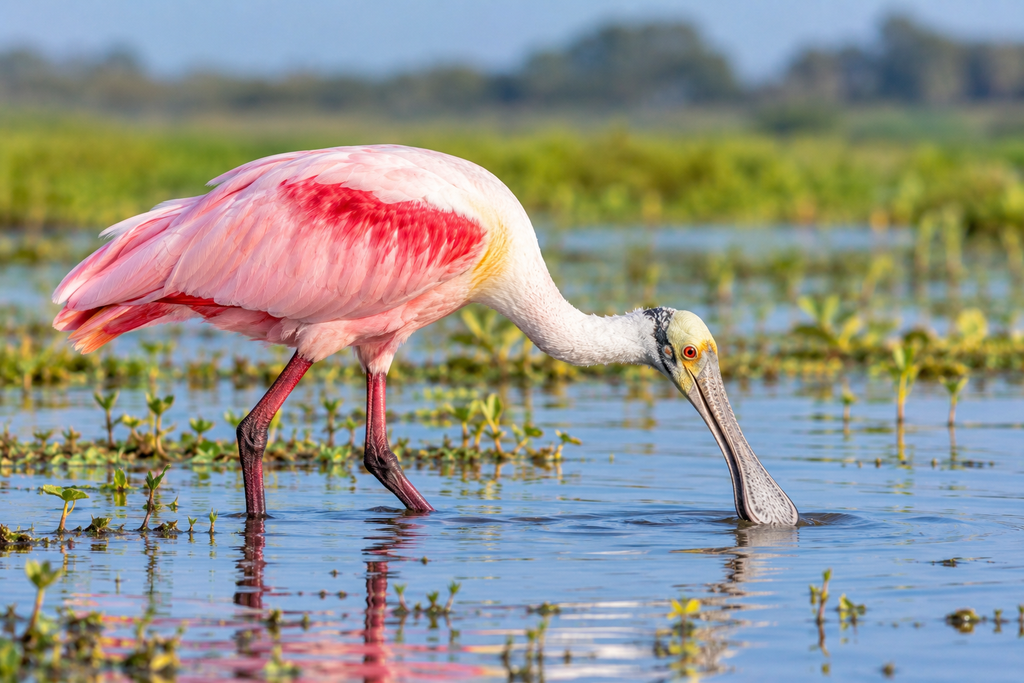
The Roseate Spoonbill combines a long neck with striking pink plumage and a unique spoon-shaped bill. It is commonly associated with marshes, coastal wetlands, and shallow-water habitats.
While feeding, it moves its bill from side to side through shallow water. Its long neck gives the head a broad working range while the specialized bill helps locate and capture aquatic prey.
10. Anhinga
Scientific Name: Anhinga anhinga
Class: Aves
Diet: Carnivore
The Anhinga is sometimes called a snakebird because its long, narrow neck can appear like a snake when the rest of its body is underwater.
Unlike wading birds, the Anhinga spends considerable time swimming and diving. Its long neck helps position the head and bill while hunting fish and other aquatic prey.
11. Goliath Heron
Scientific Name: Ardea goliath
Class: Aves
Diet: Carnivore
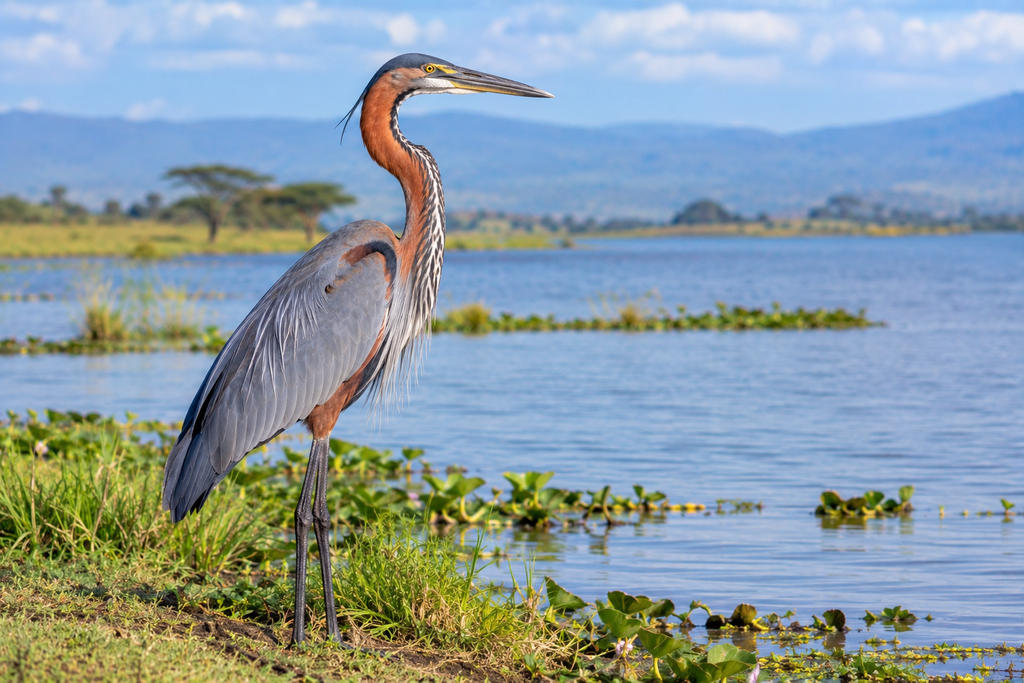
The Goliath Heron is one of the largest herons in the world. It has a huge body, long legs, a powerful bill, and an elongated neck.
It is strongly associated with wetlands and shallow water in Africa and nearby regions. Like other herons, it can use its long neck to extend the head toward prey, particularly fish, without moving its entire body.
12. Ostrich
Scientific Name: Struthio camelus
Class: Aves
Diet: Omnivore
The Ostrich is the world’s largest living bird and is instantly recognizable by its huge body, extremely long legs, and long bare neck.
Unlike a heron, an ostrich does not use its neck primarily for striking aquatic prey. Its long neck helps it feed on vegetation and other foods close to the ground while its height also gives it a broad view across open landscapes.
13. Emu
Scientific Name: Dromaius novaehollandiae
Class: Aves
Diet: Omnivore

The Emu is a large flightless Australian bird with a long neck, powerful legs, and shaggy feathers. It is smaller than an ostrich but shares the general tall-body design of other ratites.
Emus eat a mixture of plant material, fruits, seeds, and insects. Their long necks help them reach food while walking through open habitats and woodland environments.
14. Southern Cassowary
Scientific Name: Casuarius casuarius
Class: Aves
Diet: Omnivore, mainly fruit
The Southern Cassowary is a distinctive rainforest bird with a dark body, bright blue neck, red wattles, and a helmet-like casque. Its long neck is clearly visible above its large body.
It feeds heavily on fruit and plays an important ecological role as a seed disperser. Its neck helps position its head while foraging among rainforest vegetation and fallen fruit.
15. American White Pelican
Scientific Name: Pelecanus erythrorhynchos
Class: Aves
Diet: Carnivore, mainly fish
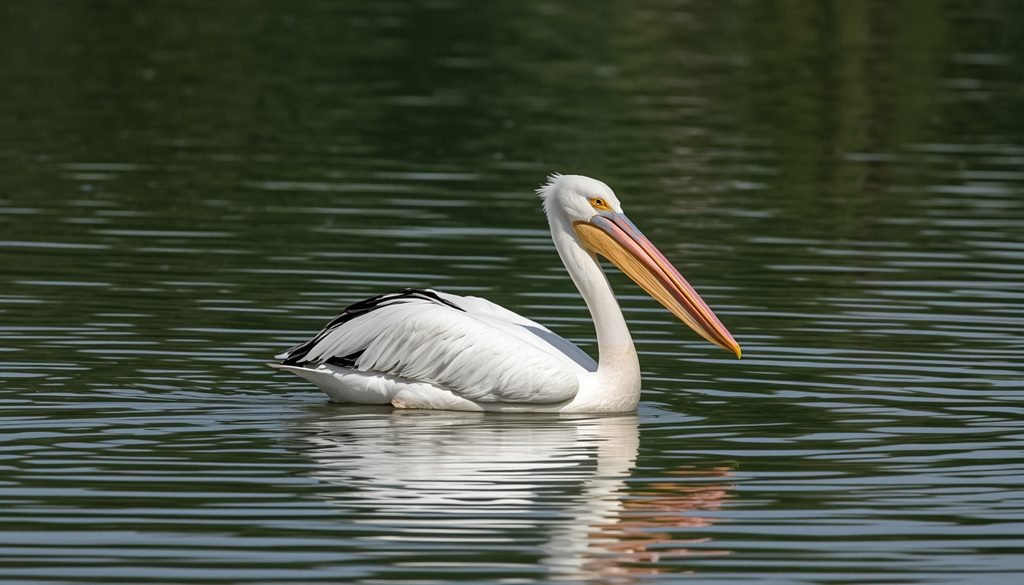
The American White Pelican is a very large water bird with a long neck, huge bill, and expandable throat pouch. It is commonly seen on lakes, rivers, marshes, and coastal areas.
Its long neck works together with its large bill during feeding. Unlike herons that often stab prey individually, pelicans use their specialized bills and pouches to capture aquatic prey.
16. Giant Ibis
Scientific Name: Thaumatibis gigantea
Class: Aves
Diet: Omnivore
The Giant Ibis is a large, relatively dark ibis native to parts of mainland Southeast Asia. It has a long neck and a long, curved bill that make it well suited to searching for food around wetlands and forest-edge habitats.
It can forage for aquatic animals, insects, and other food items in muddy or shallow environments. Its long neck gives the bird additional reach while searching the ground and water.
Why Do Birds Have Long Necks?
Long necks provide different advantages depending on the bird and its habitat. For many wading birds, a long neck increases the distance between the body and the head, allowing the bird to reach prey while standing in shallow water.
Herons and egrets use their necks for rapid strikes. Swans can use their long necks to reach vegetation beneath the water. Spoonbills use neck movement while sweeping their bills through shallow water.
Scientific research also shows that neck length in birds is closely associated with leg length in many species, reflecting the way body proportions work together during feeding and movement.
How Do Long Necks Help Birds Survive?
Feeding
A long neck increases the bird’s feeding reach. This is particularly valuable when food is below the bird, underwater, or farther away from its feet.
Hunting
Predatory birds such as herons and anhingas can move their heads independently of their bodies when approaching prey. A flexible neck can help them make quick movements while keeping the rest of the body relatively stable.
Foraging
Long-necked birds use different techniques. Swans reach underwater vegetation, while spoonbills sweep their bills through shallow water and cranes search across wetlands and grasslands.
Visibility
For tall terrestrial birds such as ostriches and emus, an elevated head can provide a wider view across open surroundings. However, long necks should not automatically be attributed to predator detection; feeding and foraging are major explanations for long-neck evolution.
Are All Long-Necked Birds Related?
No.
Birds with long necks come from several different evolutionary groups. Herons, cranes, storks, flamingos, swans, ibises, pelicans, and flightless ratites are not simply members of one single “long-necked bird family.”
Their similar appearance is partly an example of how different birds can develop similar body features in response to ecological demands. This is often discussed in terms of convergent evolution.
Research on bird neck anatomy also shows that neck structure and mobility are closely connected with different foraging behaviors.
Birds With Long Necks and Long Legs
Some of the most recognizable long-necked birds also have long legs. These include Great Egrets, Great Blue Herons, Whooping Cranes, Sarus Cranes, Black-necked Storks, and Goliath Herons.
This combination is especially useful for wading. Long legs keep much of the bird’s body above shallow water, while the long neck allows its head and bill to reach the feeding zone.
In other words, the legs and neck work together rather than functioning as completely separate adaptations. Wading birds commonly rely on this body design to search for food in shallow water.
Long-Necked Water Birds
Many famous long-necked birds are associated with water.
Examples include:
- Great Egret
- Great Blue Heron
- Greater Flamingo
- Whooping Crane
- Black-necked Stork
- Trumpeter Swan
- Roseate Spoonbill
- Anhinga
- Goliath Heron
- American White Pelican
- Giant Ibis
However, these birds do not all feed in the same way. Some hunt fish, some filter tiny organisms, some search for plants, and others use their bills to probe mud or shallow water.
How to Identify a Bird With a Long Neck
A long neck alone is not enough to identify a bird. Look at several features together:
- Bill shape: Herons have long pointed bills, while spoonbills have broad spoon-shaped bills.
- Leg length: Long legs often indicate a wading lifestyle.
- Body size: Ostriches, emus, cranes, and herons have very different body proportions.
- Color: Plumage can quickly narrow down possible species.
- Habitat: Consider whether the bird is in a marsh, lake, rainforest, grassland, or coastal wetland.
- Feeding behavior: Watch whether it dives, wades, filters water, sweeps its bill, or feeds on land.
- Neck posture: Some birds hold the neck upright, while others curve or retract it during feeding and flight.
Combining these features makes long-necked bird identification much more reliable.
Read More: Animals Like Weasels
FAQs
What birds have long necks?
Many species have noticeably long necks, including Great Egrets, Great Blue Herons, flamingos, cranes, storks, swans, spoonbills, anhingas, ostriches, emus, cassowaries, pelicans, and ibises. Their necks serve different purposes, including feeding, hunting, reaching underwater vegetation, and moving through specific habitats.
Which bird has the longest neck?
There is no single simple answer because “longest neck” can be measured in different ways, such as absolute length or neck length relative to body size. Several large birds have exceptionally elongated necks, including herons, cranes, swans, and some flightless birds.
Why do birds have long necks?
Long necks commonly help birds reach food without moving their entire bodies. Wading birds can use their necks to reach fish and other prey, while swans can reach underwater vegetation. Long necks may also contribute to other behaviors such as displays and environmental awareness.
What bird has a long neck and long legs?
Great Egrets, Great Blue Herons, Whooping Cranes, Sarus Cranes, Black-necked Storks, and Goliath Herons are good examples. Their long legs and necks work together particularly well for feeding in shallow water and wetland environments.
Are flamingos the only birds with long necks?
No. Flamingos are only one group of long-necked birds. Herons, egrets, cranes, storks, swans, spoonbills, ibises, pelicans, anhingas, ostriches, emus, and cassowaries can also have prominent long necks.
Which long-necked birds live near water?
Many long-necked birds are associated with aquatic habitats. Great Egrets, Great Blue Herons, flamingos, cranes, storks, swans, spoonbills, anhingas, pelicans, and ibises can all be found in or around wetlands, lakes, rivers, marshes, or coastal environments.
Can long-necked birds live outside wetlands?
Yes. Not every long-necked bird depends on wetlands. Ostriches and emus live primarily in terrestrial environments, while cassowaries are associated with tropical forests. Their long necks support different feeding and survival strategies than those of wading birds.
What is a famous long-necked bird?
The Great Blue Heron, Great Egret, flamingo, swan, and ostrich are among the most recognizable examples. Each has a very different body shape and lifestyle, showing that long necks have evolved in multiple bird groups.
Final Thoughts
Birds with long necks are a diverse group rather than one closely related family. From the fishing Great Blue Heron and elegant Great Egret to the filter-feeding flamingo and towering Ostrich, these birds use their necks in remarkably different ways.
For many species, the main advantage is improved feeding reach. In wetlands, a long neck can help a bird reach prey or plants without moving its entire body into deeper water. In terrestrial birds, the same general body feature can support foraging and other behaviors.
Whether you are interested in bird identification, wildlife photography, or animal adaptations, these 16 long-necked birds show how anatomy and habitat can work together to shape survival.

One thought on “16 Birds With Long Necks: Beautiful Long-Necked Birds”