
Introduction
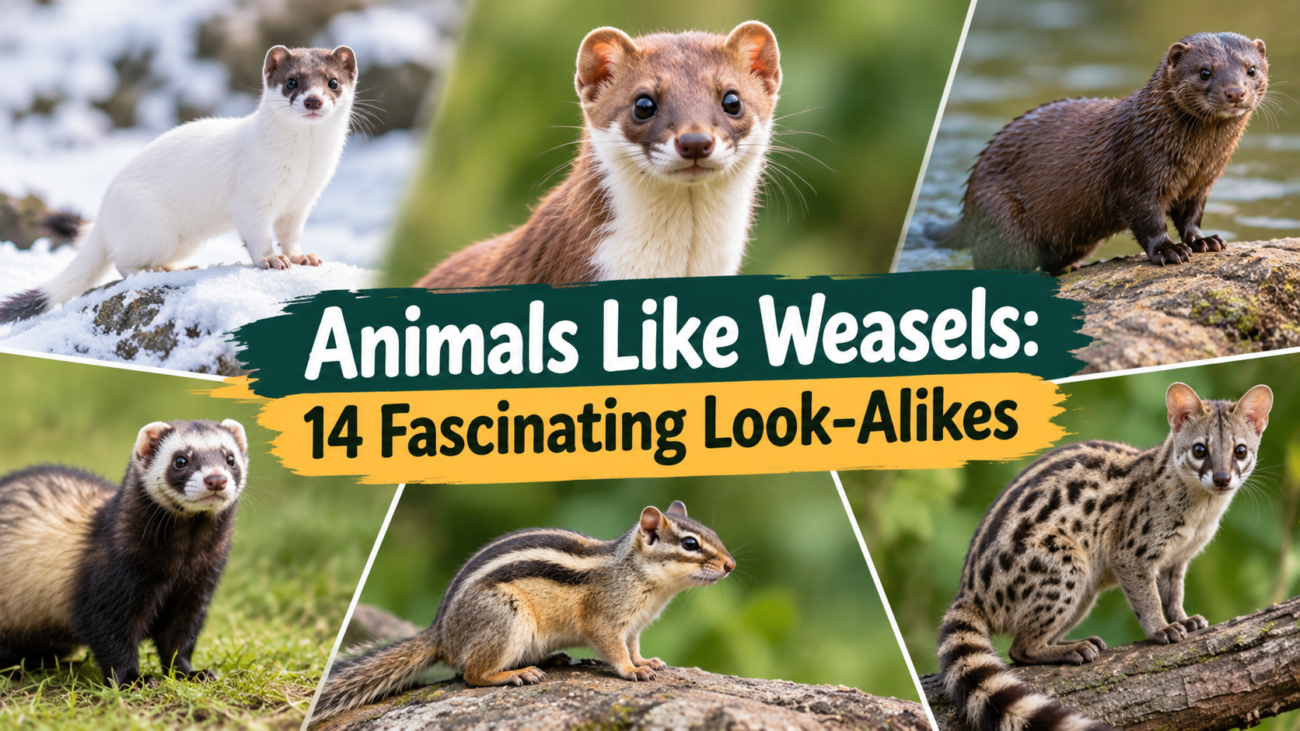
Weasels are small, slender mammals known for their long bodies, short legs, pointed faces, and impressive hunting abilities. But they are not the only animals with this distinctive body shape. If you have ever wondered about animals like weasels, you will find many fascinating examples among the mustelids and a few other mammals that share similar physical or ecological traits.
Some of the closest relatives include stoats, ferrets, polecats, mink, martens, fishers, badgers, otters, and wolverines. They all belong to the broader mustelid group, although their sizes, habitats, diets, and lifestyles can be very different. Other animals, such as skunks, may look somewhat similar but belong to a different family. Here are 14 interesting animals that resemble weasels or share important traits with them.
What Animals Are Similar to Weasels?
Short answer: Some of the closest animals to weasels are stoats, ferrets, European polecats, mink, martens, fishers, badgers, wolverines, otters, tayras, grisons, and sables. Most are members of the Mustelidae family and share traits such as elongated bodies, short legs, specialized teeth, and carnivorous or opportunistic diets. Skunks can look similar but belong to a different family.
List of Animals Like Weasels
Here are 14 animals that are similar to weasels in appearance, ancestry, behavior, or ecological role:
- Stoat
- Ferret
- European Polecat
- American Mink
- Pine Marten
- Fisher
- American Badger
- Wolverine
- River Otter
- Tayra
- Grison
- Sable
- Striped Skunk
- Black-footed Ferret
Quick Comparison
| Animal | Scientific Name | Class | Diet | Main Similarity |
| Stoat | Mustela erminea | Mammalia | Carnivore | Slender body |
| Ferret | Mustela furo | Mammalia | Carnivore | Long body and short legs |
| European Polecat | Mustela putorius | Mammalia | Carnivore | Body shape and mustelid traits |
| American Mink | Neogale vison | Mammalia | Carnivore | Long body and short legs |
| Pine Marten | Martes martes | Mammalia | Omnivore | Slender mustelid body |
| Fisher | Pekania pennanti | Mammalia | Carnivore | Larger weasel-like build |
| American Badger | Taxidea taxus | Mammalia | Carnivore | Close mustelid relative |
| Wolverine | Gulo gulo | Mammalia | Carnivore | Largest terrestrial mustelid |
| River Otter | Lontra canadensis | Mammalia | Carnivore | Elongated mustelid body |
| Tayra | Eira barbara | Mammalia | Omnivore | Long body and short legs |
| Grison | Galictis vittata | Mammalia | Carnivore/Omnivore | Weasel-like shape |
| Sable | Martes zibellina | Mammalia | Omnivore | Slender body and bushy tail |
| Striped Skunk | Mephitis mephitis | Mammalia | Omnivore | Similar low-slung body |
| Black-footed Ferret | Mustela nigripes | Mammalia | Carnivore | Very close weasel relative |
1. Stoat
Scientific Name: Mustela erminea
Class: Mammalia
Diet: Carnivore
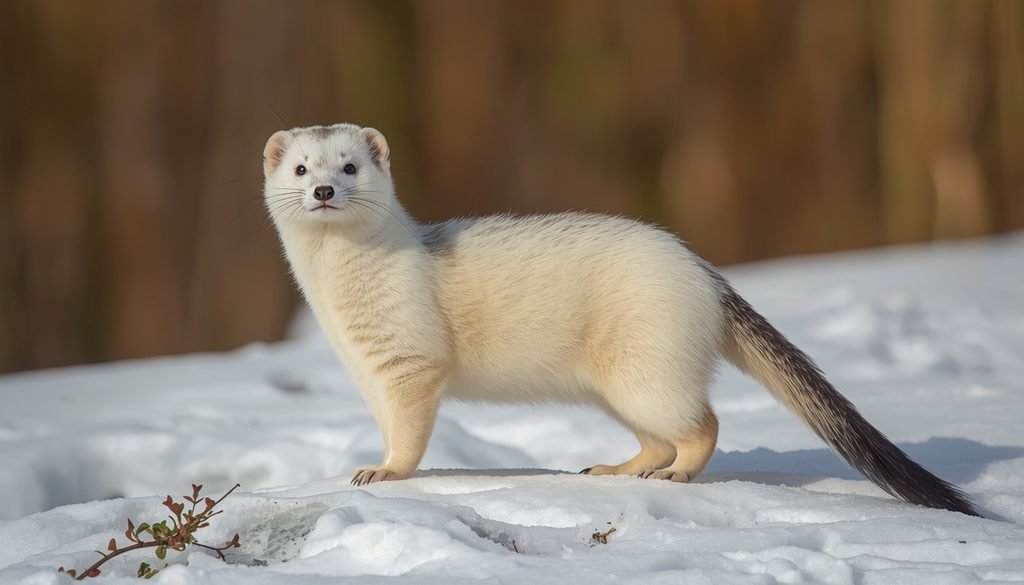
The stoat is one of the animals most similar to a weasel. It has the same general combination of a long, flexible body, short legs, small ears, and a pointed face. Stoats are closely related to other members of the genus Mustela and are sometimes called ermines when they develop their white winter coat.
Their seasonal color change is especially noticeable in snowy regions. Stoats hunt small mammals and other prey and use their slender bodies to move through vegetation and narrow spaces.
2. Ferret
Scientific Name: Mustela furo
Class: Mammalia
Diet: Carnivore

Ferrets are among the most familiar animals like weasels, especially because of their long bodies and short legs. They are domesticated mustelids associated with the European polecat and have been kept by people for centuries.
Unlike wild weasels, domestic ferrets are commonly kept as pets and have been selectively bred for different coat colors and patterns. Their narrow body allows them to investigate small spaces, while their playful behavior makes them popular companion animals.
3. European Polecat
Scientific Name: Mustela putorius
Class: Mammalia
Diet: Carnivore
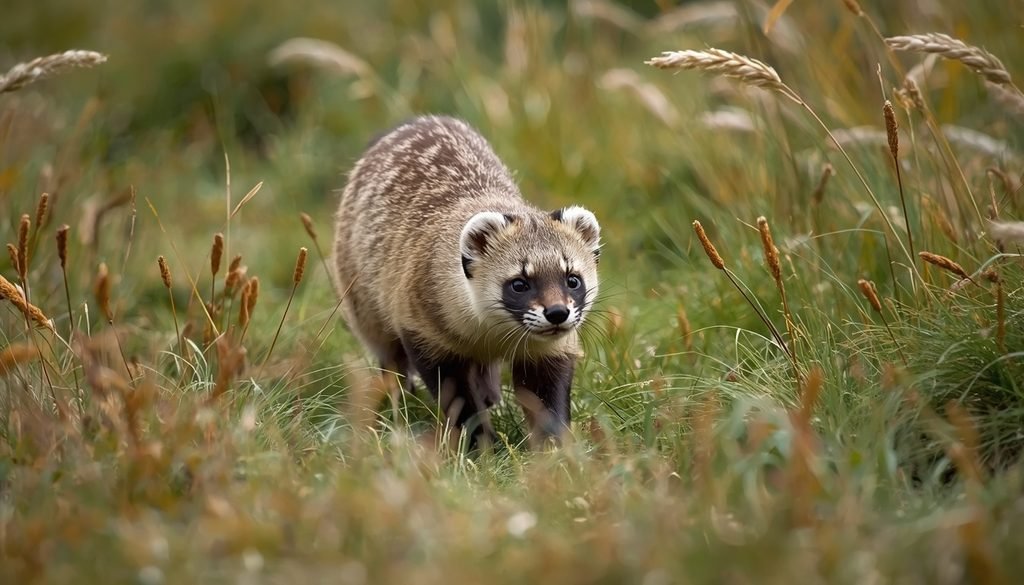
The European polecat is another close relative of the weasel. It has an elongated body, short legs, a broad head, and dark fur with a characteristic facial pattern. It is also the wild ancestor of the domestic ferret.
European polecats generally hunt small mammals, amphibians, birds, and other available prey. Their body shape and hunting lifestyle make them easy to compare with weasels, although polecats are generally more robust.
4. American Mink
Scientific Name: Neogale vison
Class: Mammalia
Diet: Carnivore
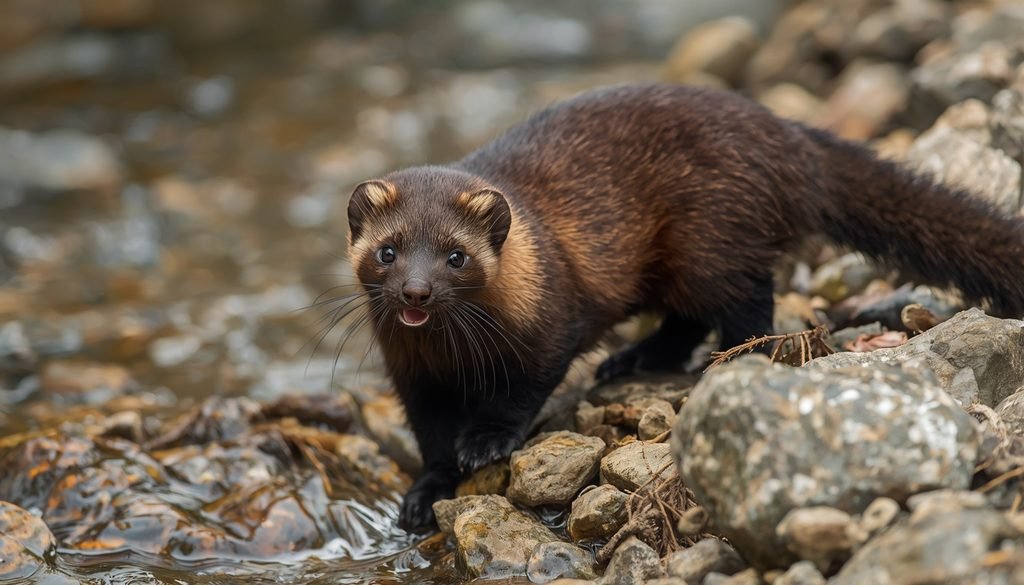
The American mink is a sleek mustelid with a long body, short legs, dense fur, and a relatively long tail. It resembles a larger, darker version of a weasel, but its lifestyle is strongly connected with water.
Mink commonly live around rivers, wetlands, lakes, and other waterways. They are capable swimmers and feed on a variety of prey, including fish, amphibians, birds, and small mammals. Their semi-aquatic lifestyle is one of the easiest ways to distinguish them from typical terrestrial weasels.
5. Pine Marten
Scientific Name: Martes martes
Class: Mammalia
Diet: Omnivore
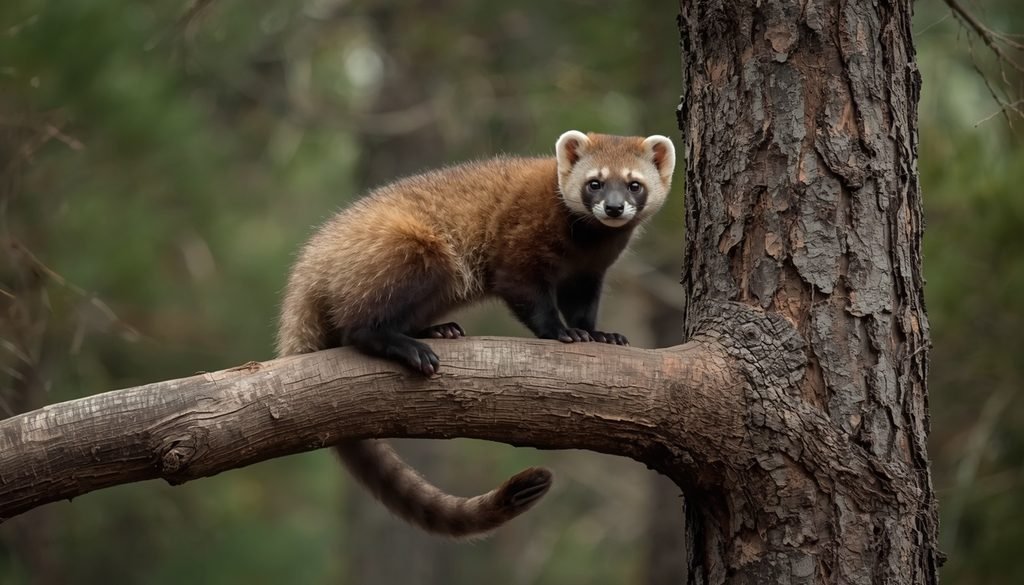
Pine martens are slender forest-dwelling mustelids with pointed faces, relatively short legs, and long bushy tails. These characteristics give them a clear resemblance to weasels, although martens are generally larger and have much fuller tails.
They are excellent climbers and spend considerable time moving through woodland habitats. Their diet can include small mammals, birds, insects, fruits, and other foods. The combination of a narrow body and climbing ability makes the pine marten a distinctive weasel relative.
6. Fisher
Scientific Name: Pekania pennanti
Class: Mammalia
Diet: Carnivore
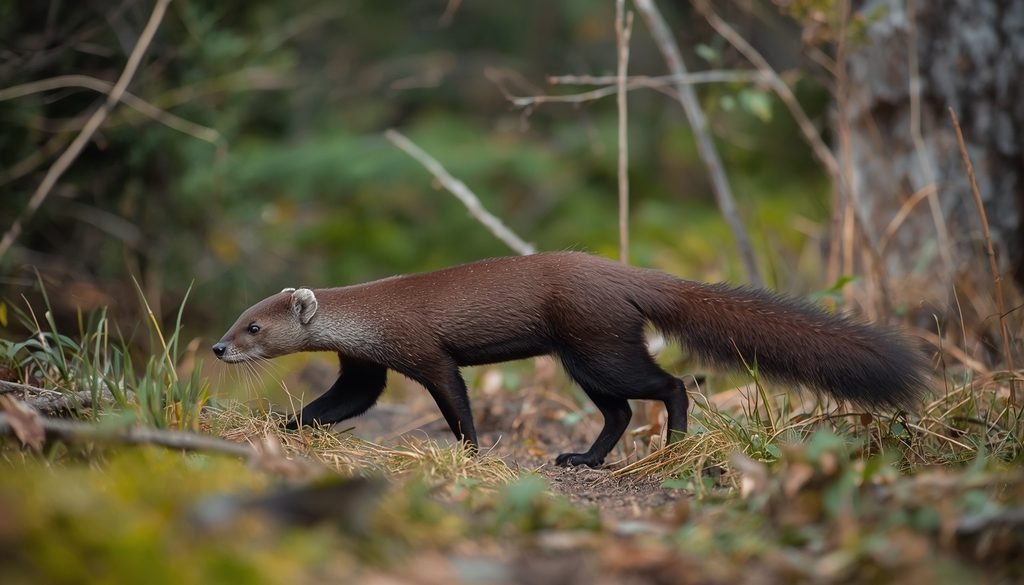
Fishers are medium-sized North American mustelids that can look like oversized weasels. They have elongated bodies, short legs, dark fur, and long tails, but their overall build is considerably heavier.
Fishers live primarily in forested habitats and are skilled predators. Despite their name, fish are not their defining food source. They eat a variety of mammals and other prey and are known for their ability to move through rugged woodland environments.
7. American Badger
Scientific Name: Taxidea taxus
Class: Mammalia
Diet: Carnivore
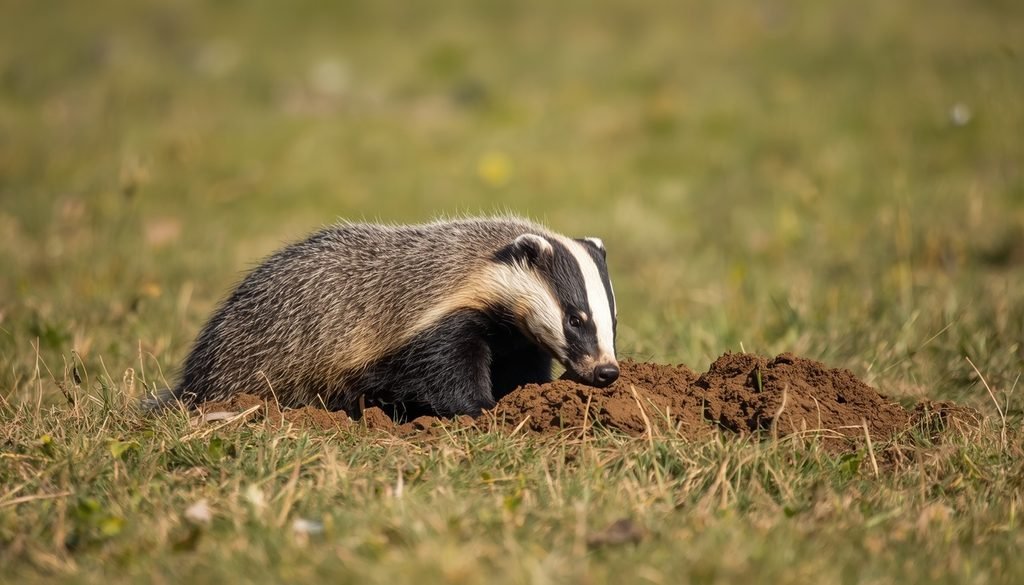
The American badger is a close relative of the weasel, but its body looks very different. Instead of being narrow and lightweight, it has a broad, muscular body, powerful forelimbs, and large claws adapted for digging.
American badgers commonly hunt rodents and other underground or ground-dwelling prey. Their relationship with weasels is easier to understand through taxonomy than appearance: both belong to Mustelidae, but badgers are specialized for a much more powerful digging lifestyle.
8. Wolverine
Scientific Name: Gulo gulo
Class: Mammalia
Diet: Carnivore
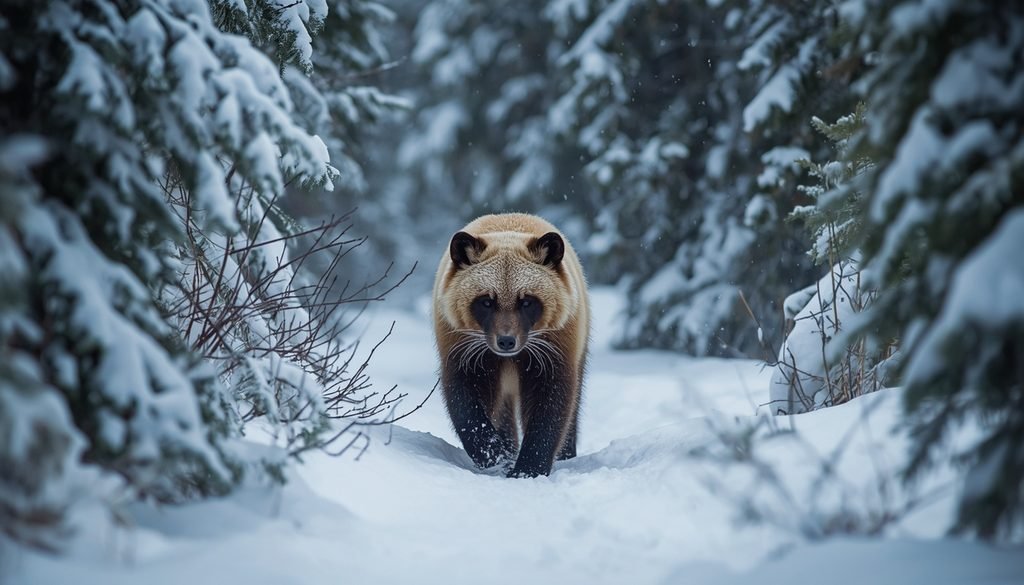
The wolverine is one of the most powerful members of the weasel family and can be thought of as a much larger, stockier relative. It has a broad head, strong jaws, short legs, dense fur, and a muscular body.
Wolverines are adapted to cold environments and can travel across large areas while searching for food. Their appearance is quite different from a small weasel, but their family relationship makes them an important example of mustelid diversity.
9. River Otter
Scientific Name: Lontra canadensis
Class: Mammalia
Diet: Carnivore
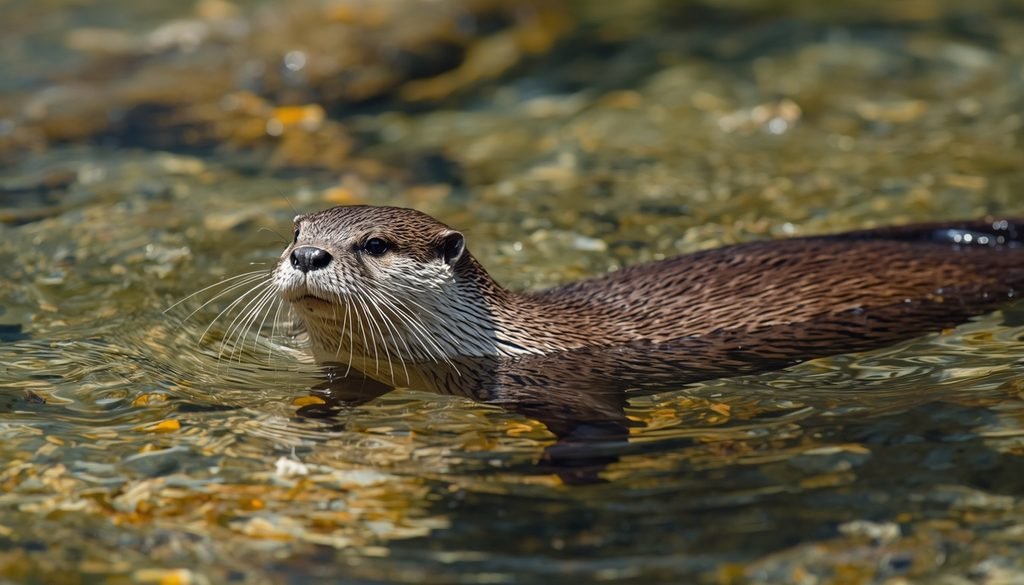
River otters are another member of the weasel family. Their long, flexible bodies and short legs give them a recognizable mustelid shape, but their anatomy is heavily adapted for swimming.
River otters have streamlined bodies, webbed feet, and strong tails that help them move through water. They commonly feed on fish, amphibians, crustaceans, and other aquatic prey. Compared with weasels, their greatest difference is their strong dependence on aquatic environments.
10. Tayra
Scientific Name: Eira barbara
Class: Mammalia
Diet: Omnivore
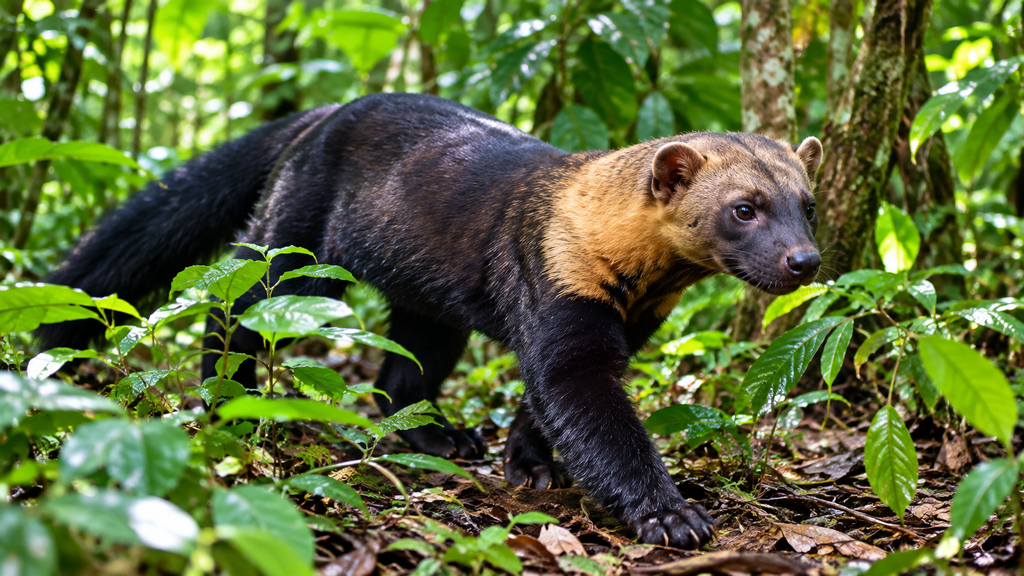
The tayra is a tropical member of the weasel family found in parts of Central and South America. Its long body, short legs, small ears, and elongated head give it a distinctly mustelid appearance.
Tayras are adaptable animals that can eat fruit, insects, small vertebrates, and other foods. They can move through forests and other habitats with considerable agility. Their tropical distribution also makes them quite different from the familiar temperate-zone weasels.
11. Grison
Scientific Name: Galictis vittata
Class: Mammalia
Diet: Carnivore/Omnivore
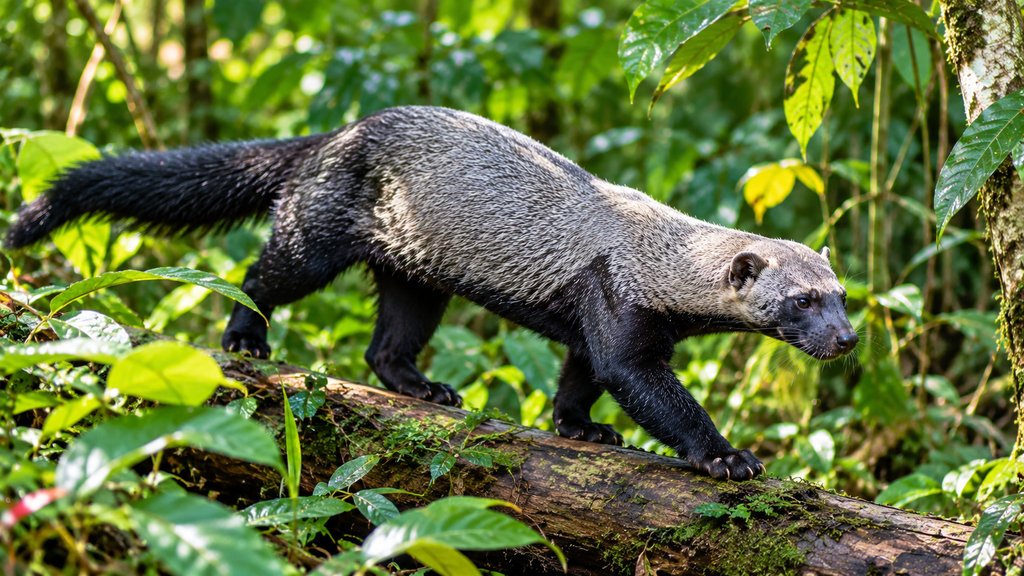
The greater grison is a lesser-known mustelid with a long body, short legs, small rounded ears, and a distinctive head pattern. Its overall build makes it easy to recognize as a relative of weasels, ferrets, and other mustelids.
Grisons occur in parts of Central and South America and use a variety of habitats. Their diet can include small vertebrates, insects, and other available foods. Their unusual appearance makes them an interesting example of the diversity within the weasel family.
12. Sable
Scientific Name: Martes zibellina
Class: Mammalia
Diet: Omnivore
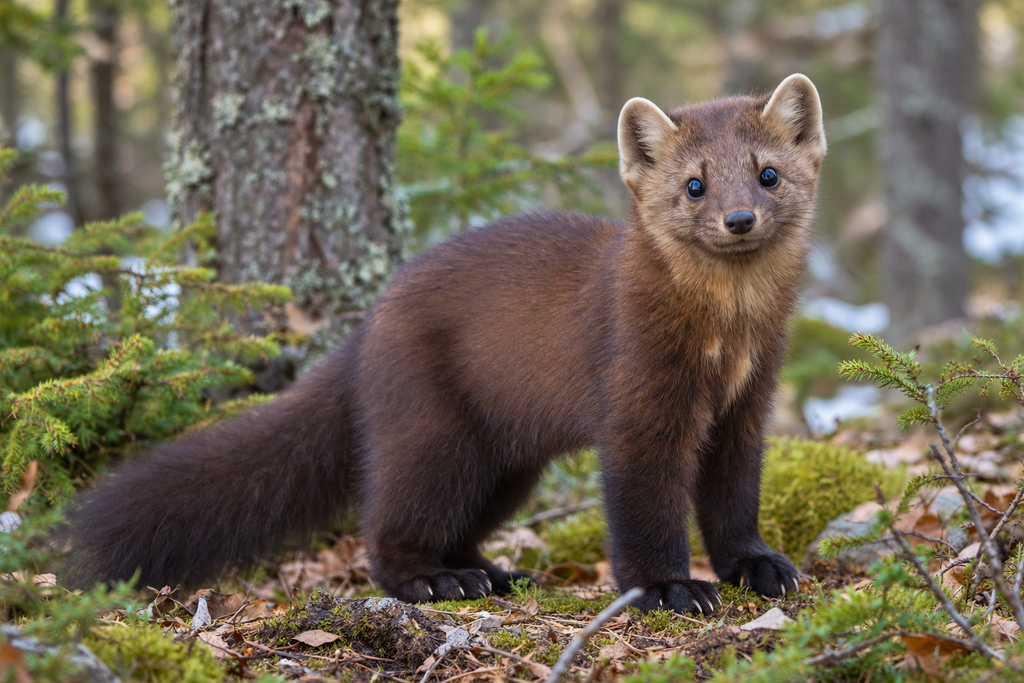
The sable is a forest-dwelling mustelid closely related to martens. It has a slender body, short legs, a pointed face, and a thick bushy tail. Its dense brown fur is one of its most recognizable characteristics.
Sables inhabit forests across parts of northern Asia and are adapted to cold environments. They feed on small mammals, birds, insects, fruits, and other foods. Their body shape resembles that of a large weasel, while their fuller tail helps distinguish them.
13. Striped Skunk
Scientific Name: Mephitis mephitis
Class: Mammalia
Diet: Omnivore
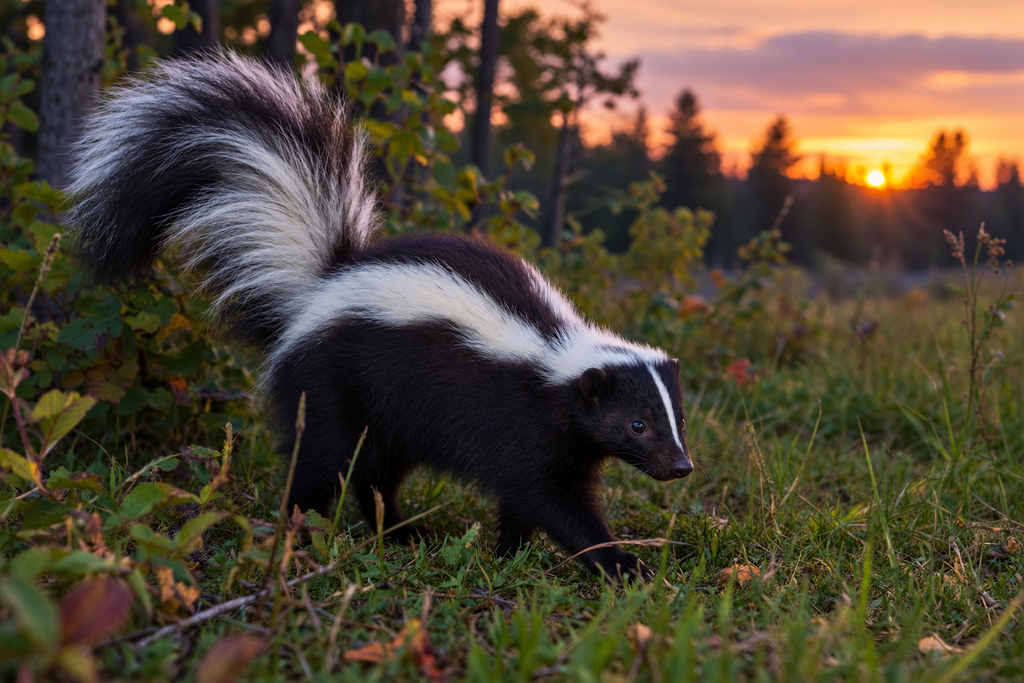
The striped skunk can sometimes appear on lists of animals that look like weasels because it has a low-slung body, short legs, and a relatively elongated shape. However, there is an important taxonomic difference: skunks are not members of the Mustelidae family. They belong to Mephitidae.
Their most famous adaptation is their chemical defense, which they use to discourage predators. Their black-and-white coat also makes them easy to distinguish from most true weasels.
14. Black-footed Ferret
Scientific Name: Mustela nigripes
Class: Mammalia
Diet: Carnivore
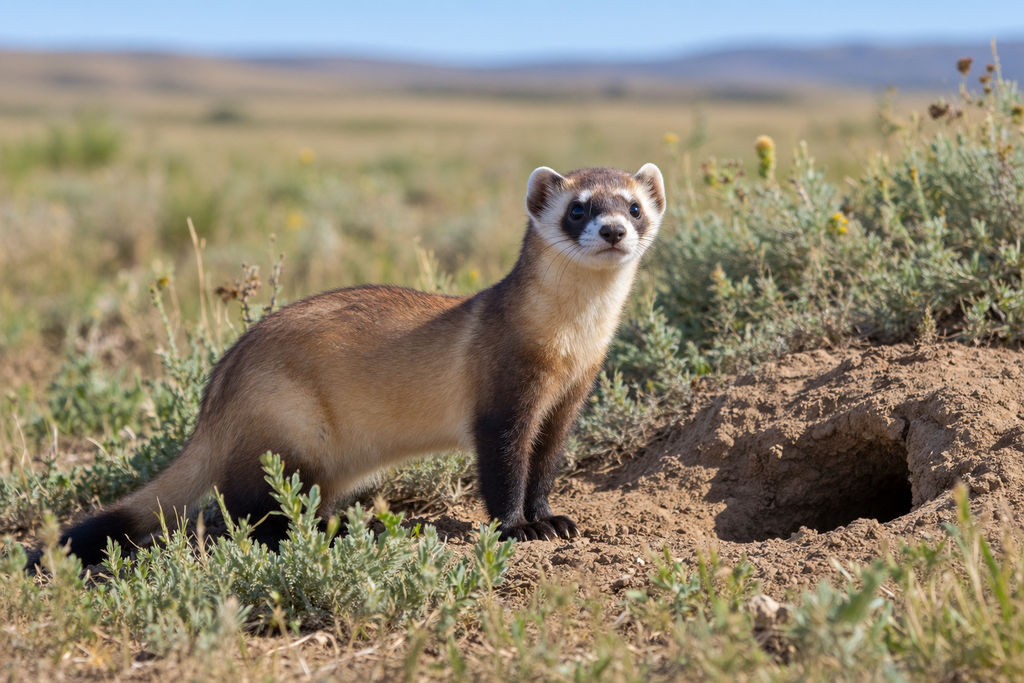
The black-footed ferret is one of the closest animals to a weasel in this list because it belongs to the same genus, Mustela. It has a long, slender body, short legs, a dark facial mask, black feet, and a black-tipped tail.
This North American species is strongly associated with prairie ecosystems and relies heavily on prairie dogs for habitat and food. It is also an important conservation species, making it a particularly interesting member of the mustelid family.
Why Do These Animals Look Like Weasels?
Many animals like weasels look similar because they share evolutionary relationships or adaptations. Members of the Mustelidae family commonly have flexible bodies, relatively short legs, strong jaws, specialized teeth, and hunting behaviors suited to catching small prey.
Some similarities can also result from similar ecological pressures. A long, flexible body can help a predator move through vegetation, burrows, or narrow spaces. Other mustelids have evolved in different directions: otters became highly adapted to water, martens became excellent climbers, and badgers developed powerful digging abilities.
This means that “weasel-like” can refer to appearance, behavior, habitat, or evolutionary relationship—not necessarily all four.
How to Identify a Weasel-Like Animal
When identifying an unfamiliar animal, look at several features rather than relying on body shape alone.
Body: Weasels usually have long, narrow bodies and short legs.
Face: A pointed muzzle is common among many mustelids.
Tail: Tail length and thickness can help distinguish species.
Fur: Color and markings vary widely among mustelids.
Habitat: A water-loving animal may be an otter or mink, while a forest climber may be a marten.
Movement: Quick ground movement can suggest a weasel or related species, while swimming points toward aquatic mustelids.
Location: Geographic range is one of the most useful clues when identifying wild animals.
Never approach or attempt to handle an unfamiliar wild mammal.
Weasel vs Similar Animals
| Animal | Why It Looks Similar | Main Difference |
| Stoat | Long body and short legs | Usually larger with a black tail tip |
| Ferret | Slender mustelid body | Domesticated animal |
| Mink | Long body and short legs | Strongly adapted to water |
| Pine Marten | Slender body | Bushier tail and climbing lifestyle |
| Fisher | Long mustelid body | Much larger and heavier |
| Badger | Same family | Broad, powerful digging body |
| Wolverine | Same family | Much larger and stockier |
| Otter | Same family | Strongly aquatic |
| Skunk | Low-slung body | Different family, Mephitidae |
Read More: Animals With Down Syndrome
FAQs
What animals are similar to weasels?
The closest animals include stoats, ferrets, polecats, mink, martens, fishers, badgers, wolverines, otters, tayras, grisons, sables, and black-footed ferrets. Most of these belong to the Mustelidae family and share some combination of an elongated body, short legs, specialized teeth, and carnivorous or opportunistic feeding habits.
What animal looks like a weasel but is bigger?
Several mustelids can look like larger versions of a weasel. Fishers, pine martens, and some other martens have elongated bodies but are generally larger. Wolverines and badgers are also weasel relatives, although their stockier bodies make them look less like typical small weasels.
What animal looks like a weasel but is smaller?
Stoats are extremely similar to weasels and can be small, slender predators with short legs and pointed faces. The exact size depends on the species being compared, since “weasel” can refer to several related species.
Are ferrets related to weasels?
Yes. Ferrets are mustelids and are closely associated with the European polecat. Their long bodies, short legs, pointed faces, and hunting ancestry give them a strong resemblance to weasels. Domestic ferrets, however, have been bred and kept by humans and should not be confused with wild weasels.
Are otters related to weasels?
Yes. Otters are members of the Mustelidae family, the same family that includes weasels, ferrets, martens, badgers, and wolverines. Their elongated bodies reflect their mustelid ancestry, but their webbed feet, streamlined shape, and swimming adaptations make them highly specialized for aquatic life.
Are badgers part of the weasel family?
Yes. Badgers are members of Mustelidae, the weasel family. American badgers, however, look much stockier than small weasels because they are specialized for digging. Their powerful forelimbs and large claws are very different from the lightweight build of a typical weasel.
Is a skunk a weasel?
No. Skunks are not members of the Mustelidae family. Modern classification places them in the family Mephitidae. They may look somewhat similar because of their low body shape and short legs, but their chemical defense system and distinctive black-and-white markings make them easy to distinguish from most weasels.
What is the closest relative of a weasel?
Other members of the genus Mustela, such as stoats and related species, are among the closest relatives of true weasels. Ferrets and polecats are also closely related within the same genus or closely associated lineages, depending on the species being compared.
Final Thoughts
The world of animals like weasels is much more diverse than it may first appear. Stoats, ferrets, polecats, mink, martens, fishers, badgers, wolverines, otters, tayras, grisons, sables, and black-footed ferrets demonstrate how varied the Mustelidae family can be.
Some share the classic long body and short legs of weasels, while others have evolved specialized features for swimming, climbing, digging, or surviving cold environments. Even animals outside the family, such as striped skunks, can have a somewhat similar body profile.
Understanding these differences makes wildlife identification more accurate and shows how evolution has produced many different solutions to survival.

One thought on “Animals Like Weasels: 14 Fascinating Look-Alikes”