
Introduction
Webbed feet are one of the most useful physical adaptations found in animals that spend time in or around water. A webbed foot has skin connecting two or more toes, creating a broader surface that can push against water. This helps many animals swim, steer, dive, or move through wet environments more effectively.
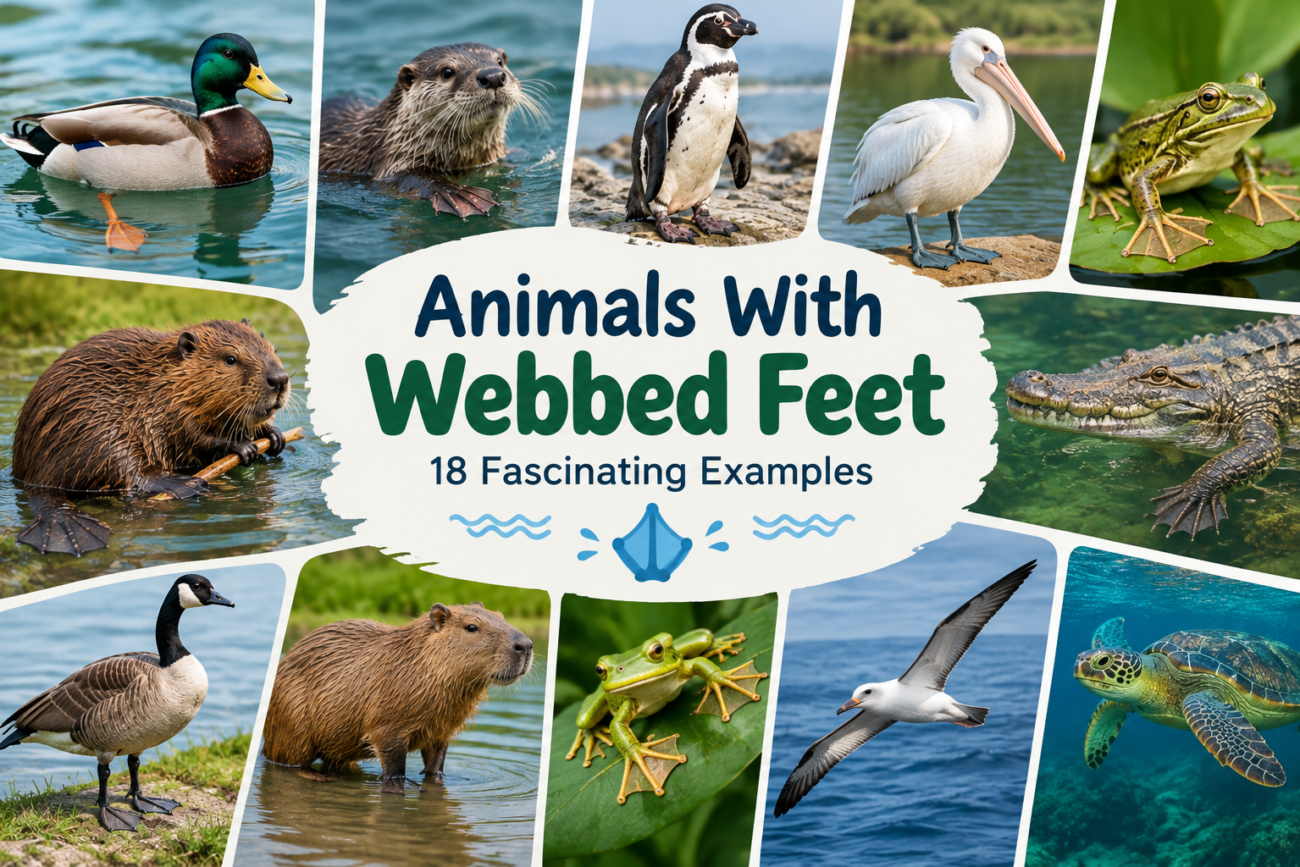
Animals with webbed feet are found in several groups, including birds, mammals, amphibians, and reptiles. Ducks, geese, penguins, otters, beavers, platypuses, frogs, crocodiles, and alligators are some familiar examples. However, webbing does not look or function exactly the same in every species.
What Animals Have Webbed Feet?
Animals with webbed feet include ducks, geese, swans, penguins, pelicans, cormorants, puffins, loons, otters, beavers, platypuses, capybaras, frogs, crocodilians, and some reptiles. The webbing connects the toes and can increase the foot’s surface area, helping animals paddle, swim, steer, or move across wet and soft habitats.
List of 18 Animals With Webbed Feet
- North American Beaver
- North American River Otter
- Platypus
- Duck
- Canada Goose
- Swan
- Penguin
- Brown Pelican
- Double-Crested Cormorant
- Atlantic Puffin
- Common Loon
- Wandering Albatross
- American Bullfrog
- Wallace’s Flying Frog
- American Alligator
- American Crocodile
- Capybara
- Green Iguana
1. North American Beaver
Scientific name: Castor canadensis
Animal group: Mammal
Diet: Herbivore
Habitat: Rivers, streams, ponds, and wetlands
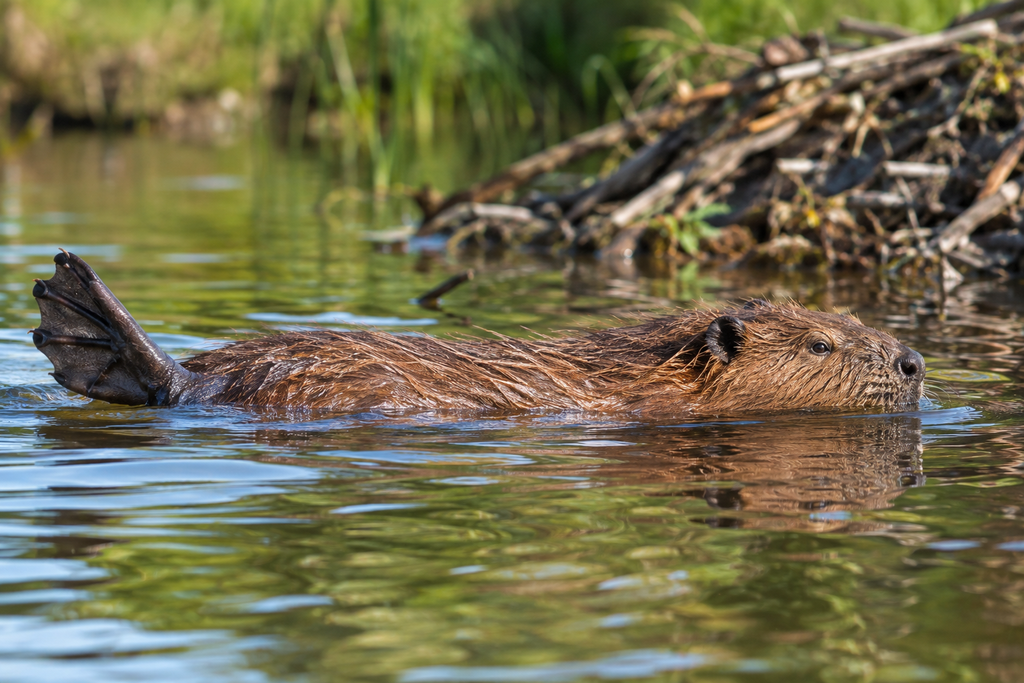
The North American beaver has large, webbed hind feet that work like paddles in the water. These feet provide strong propulsion while swimming and help the beaver move efficiently between its lodge, feeding areas, and dam. Its hind feet combine webbing with long claws, allowing the animal to function both in aquatic habitats and on land.
2. North American River Otter
Scientific name: Lontra canadensis
Animal group: Mammal
Diet: Carnivore
Habitat: Rivers, lakes, streams, and wetlands
The North American river otter has fully webbed feet with non-retractable claws. Its streamlined body, muscular tail, and webbed feet work together to make it an excellent swimmer. The webbing increases the area of each foot that can push against water, helping the otter maneuver while hunting and diving.
3. Platypus
Scientific name: Ornithorhynchus anatinus
Animal group: Mammal
Diet: Carnivore
Habitat: Freshwater rivers, streams, wetlands, and billabongs
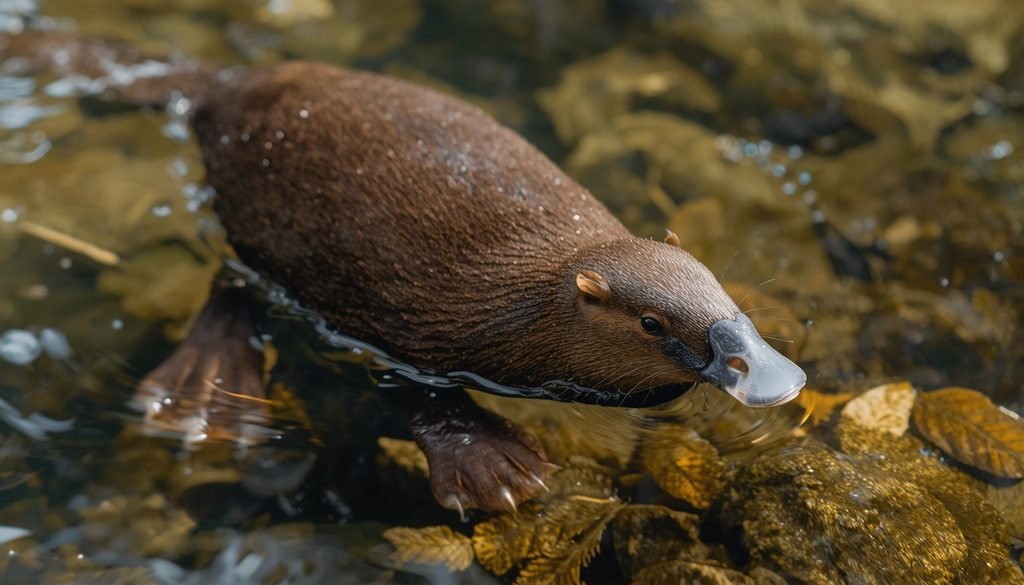
The platypus is a semi-aquatic mammal with broad, webbed front feet. These feet act as paddles and provide propulsion while the animal searches underwater for food. Its hind feet are partially webbed and can help with steering. The platypus is especially well adapted to freshwater environments in eastern and southern Australia.
4. Duck
Scientific name: Anas platyrhynchos
Animal group: Bird
Diet: Omnivore
Habitat: Lakes, ponds, rivers, wetlands, and coastal areas
Ducks are among the best-known animals with webbed feet. Their three front toes are connected by a flexible membrane that acts like a paddle. When a duck pushes its foot backward, the webbing provides a broad surface against the water. Ducks can also walk on land despite having these specialized feet.
5. Canada Goose
Scientific name: Branta canadensis
Animal group: Bird
Diet: Herbivore
Habitat: Wetlands, lakes, rivers, grasslands, and parks
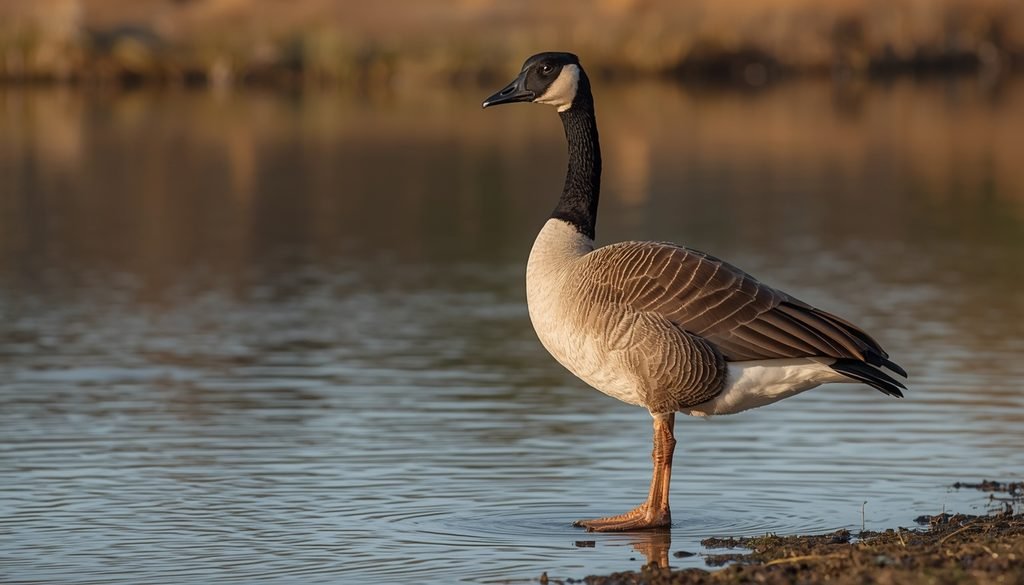
Canada geese have webbed feet that help them paddle across ponds and lakes. Their feet are also useful when entering and leaving the water and when walking around wetland habitats. The webbing connects three forward-pointing toes, giving the bird an efficient way to push against water while swimming.
6. Swan
Scientific name: Cygnus olor
Animal group: Bird
Diet: Herbivore
Habitat: Lakes, ponds, rivers, and wetlands
Swans have large webbed feet suited to their aquatic lifestyle. Their powerful legs and broad feet allow them to move through water while searching for aquatic vegetation. The feet also help provide stability as swans move through shallow water. Their long necks and webbed feet work together to make them effective aquatic foragers.
7. Penguin
Scientific name: Spheniscus demersus
Animal group: Bird
Diet: Carnivore
Habitat: Coastal marine environments
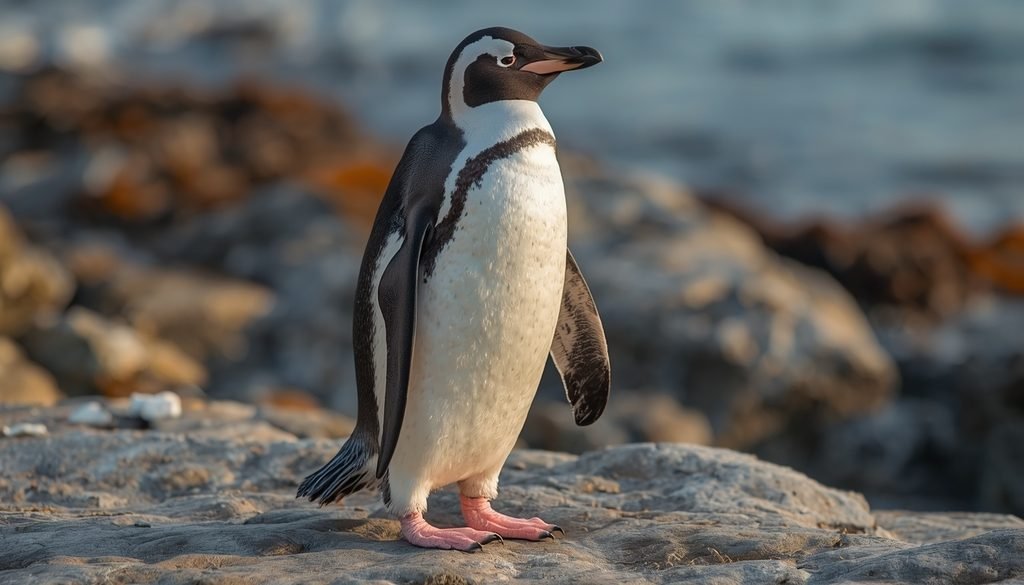
Penguins have webbed feet that are useful for swimming and steering. Their bodies are highly specialized for marine life, with strong flippers providing most of the underwater propulsion while the feet assist with direction and balance. On land, penguins use their feet for walking and maintaining stability around rocky or sandy breeding areas.
8. Brown Pelican
Scientific name: Pelecanus occidentalis
Animal group: Bird
Diet: Carnivore
Habitat: Coastal waters, estuaries, bays, and islands
Pelicans have broad webbed feet with four toes connected by skin. This type of foot is particularly effective for swimming. Brown pelicans spend considerable time around coastal waters and use their feet to paddle and maneuver on the surface. Their webbed feet complement their large wings and specialized bill during their aquatic lifestyle.
9. Double-Crested Cormorant
Scientific name: Phalacrocorax auritus
Animal group: Bird
Diet: Carnivore
Habitat: Lakes, rivers, estuaries, and coastal waters
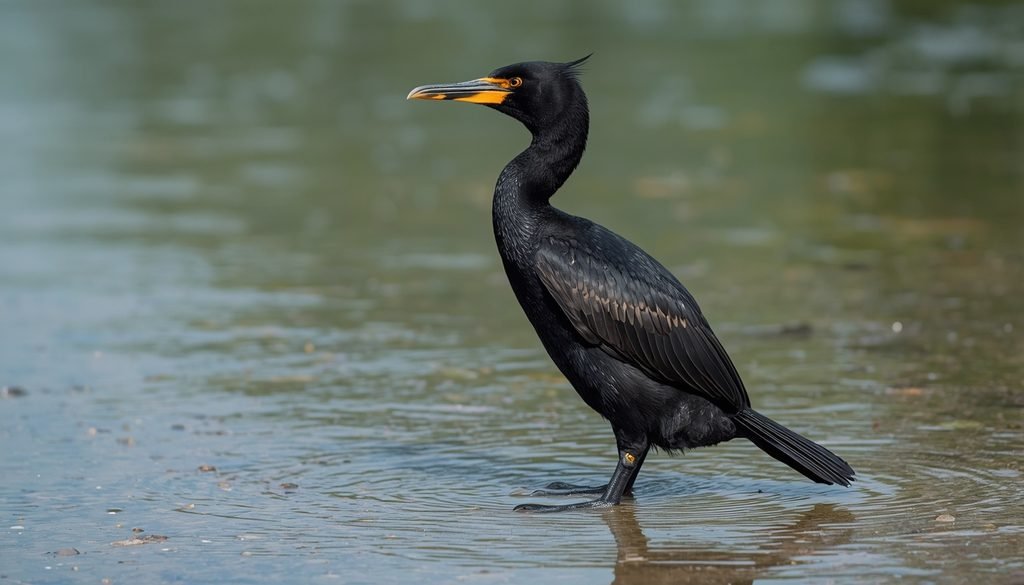
Cormorants have an unusual type of webbed foot called a totipalmate foot. Unlike ducks, their four toes are connected by webbing. This structure helps them move through water while pursuing fish. Their feet work alongside their strong legs and streamlined bodies, making them highly capable underwater hunters.
10. Atlantic Puffin
Scientific name: Fratercula arctica
Animal group: Bird
Diet: Carnivore
Habitat: North Atlantic coastal regions
Atlantic puffins have orange-colored webbed feet that are useful both in water and on land. Puffins spend much of their lives at sea and can dive underwater in search of small fish. Their wings provide powerful underwater strokes, while their webbed feet contribute to steering and maneuverability.
11. Common Loon
Scientific name: Gavia immer
Animal group: Bird
Diet: Carnivore
Habitat: Lakes and freshwater bodies
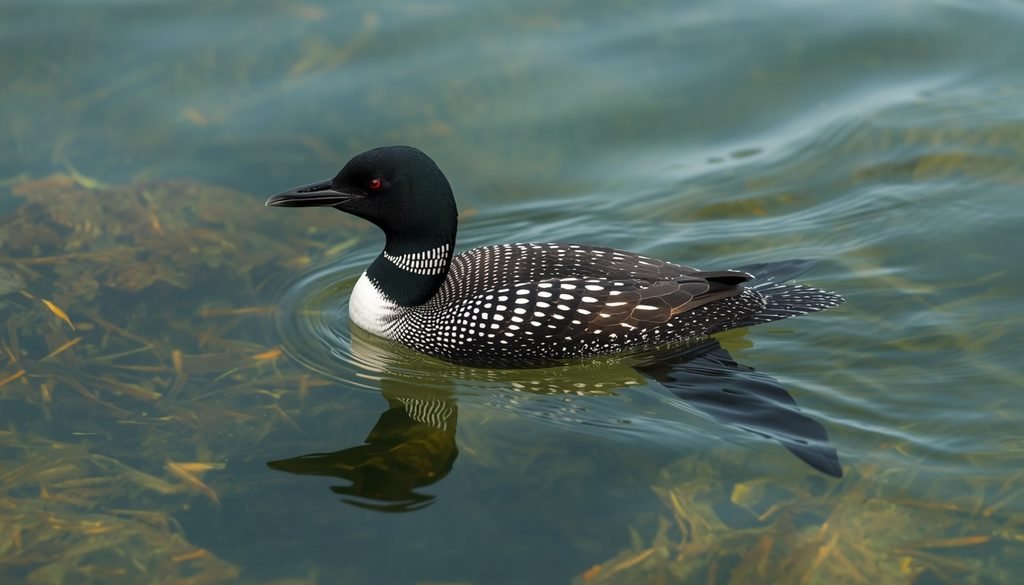
The common loon has webbed feet positioned far back on its body. This arrangement is excellent for swimming and diving because the feet act as powerful underwater paddles. However, their rearward position makes walking on land awkward. It is a good example of how an animal’s anatomy can become highly specialized for aquatic movement.
12. Wandering Albatross
Scientific name: Diomedea exulans
Animal group: Bird
Diet: Carnivore
Habitat: Open ocean and coastal waters
The wandering albatross has webbed feet adapted to its marine lifestyle. Albatrosses spend enormous amounts of time over the open ocean, and their feet help with movement when they land on or take off from the water. Their webbing is useful in an environment where swimming and surface movement can be important parts of life at sea.
13. American Bullfrog
Scientific name: Lithobates catesbeianus
Animal group: Amphibian
Diet: Carnivore
Habitat: Ponds, lakes, marshes, and slow-moving water
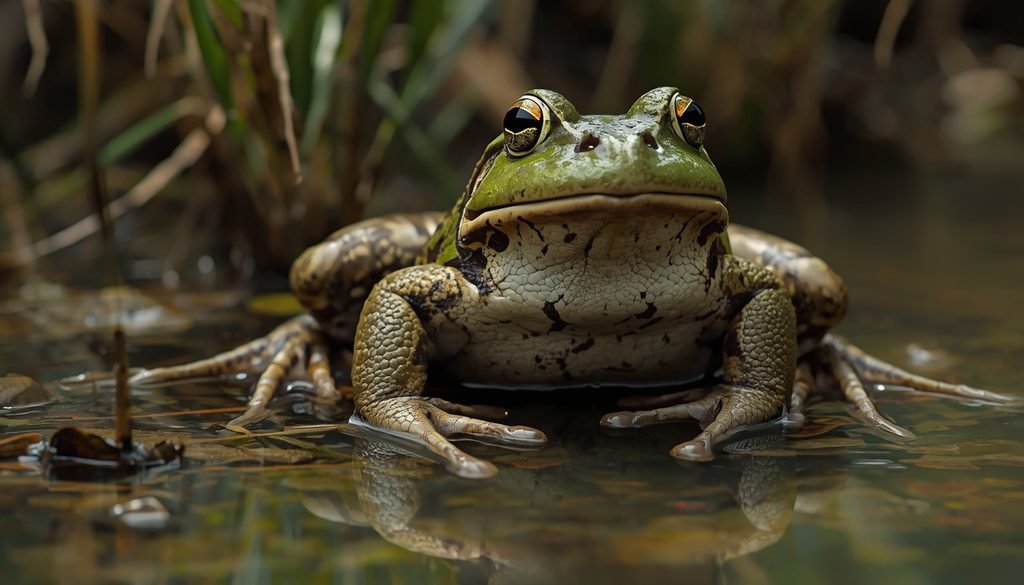
American bullfrogs have webbed hind feet that provide strong propulsion in water. When threatened, a bullfrog can use its powerful hind legs to make rapid jumps or escape through water. Its webbed toes are therefore useful for an amphibious lifestyle in which the animal regularly moves between land and water.
14. Wallace’s Flying Frog
Scientific name: Rhacophorus nigropalmatus
Animal group: Amphibian
Diet: Carnivore
Habitat: Tropical forests of Southeast Asia
Wallace’s flying frog demonstrates that webbed feet are not exclusively about swimming. Its extensive webbing helps the frog spread its toes and glide between trees. The frog is adapted to an arboreal environment, where moving safely from one branch or tree to another can be essential for feeding and avoiding predators.
15. American Alligator
Scientific name: Alligator mississippiensis
Animal group: Reptile
Diet: Carnivore
Habitat: Swamps, marshes, lakes, rivers, and wetlands
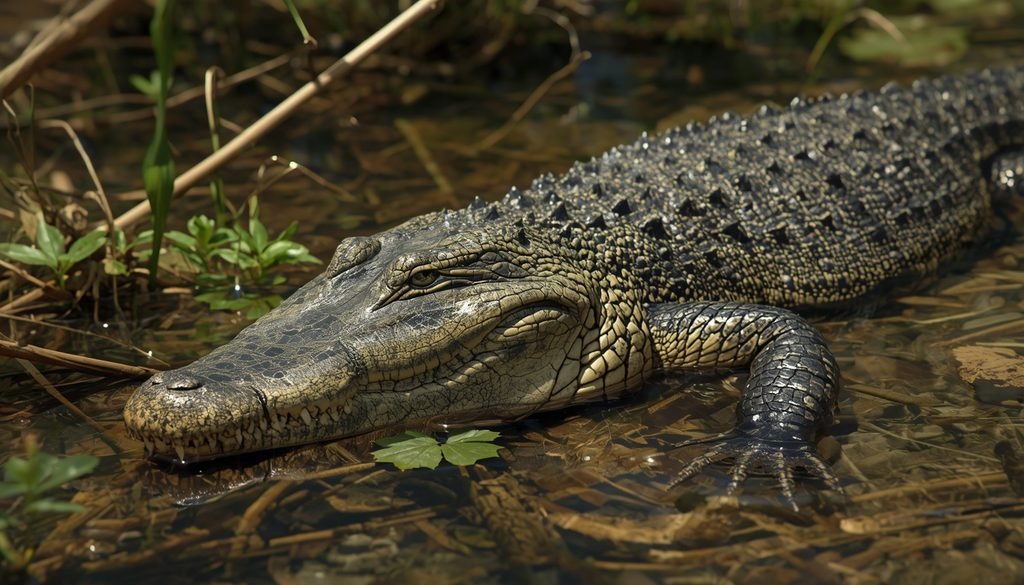
American alligators have webbed feet that help them move through freshwater habitats. Their powerful tails provide most of the thrust during swimming, while their feet contribute to maneuvering and movement in shallow water. On land, their limbs are also important for walking between basking areas, nesting sites, and water.
16. American Crocodile
Scientific name: Crocodylus acutus
Animal group: Reptile
Diet: Carnivore
Habitat: Coastal wetlands, rivers, lagoons, and estuaries
American crocodiles have partially webbed feet suited to their semi-aquatic lifestyle. Their webbing helps them move through water, while their muscular bodies and tails provide additional swimming power. Crocodiles frequently move between land and water, so their feet need to support both aquatic movement and terrestrial locomotion.
17. Capybara
Scientific name: Hydrochoerus hydrochaeris
Animal group: Mammal
Diet: Herbivore
Habitat: Rivers, lakes, marshes, and wetlands
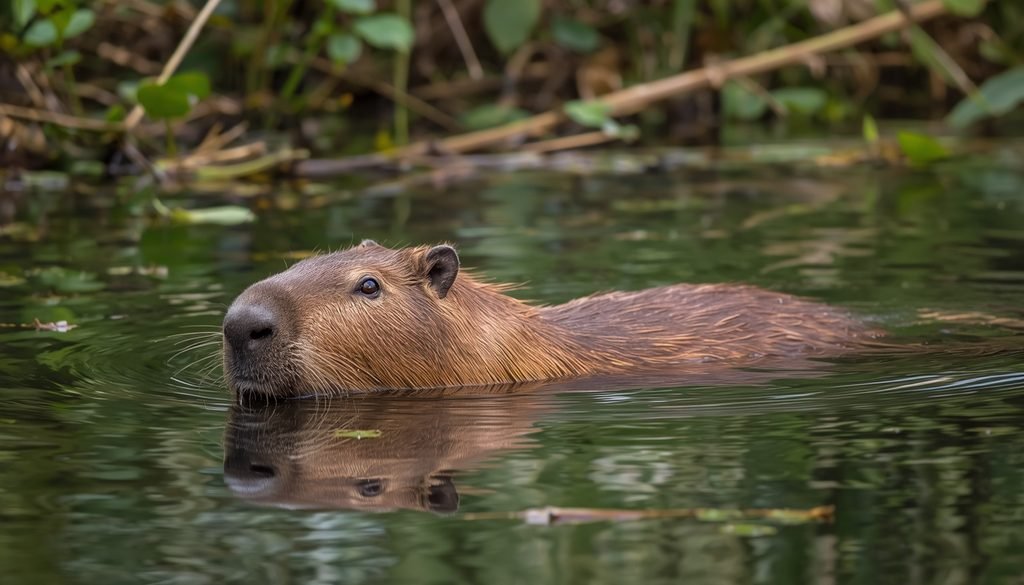
Capybaras are the world’s largest living rodents and are strongly associated with freshwater habitats. Their feet have some webbing between the toes, which helps them swim and move through shallow water. Capybaras often enter water to escape predators, cool themselves, or rest, making their partially webbed feet a useful adaptation.
18. Green Iguana
Scientific name: Iguana iguana
Animal group: Reptile
Diet: Herbivore
Habitat: Tropical forests, river edges, and areas near water
Green iguanas are primarily tree-dwelling reptiles, but they are also capable swimmers. Their toes have some webbing that assists movement through water. When threatened, a green iguana may enter water and swim away from danger. This demonstrates that webbed toes can provide a useful secondary adaptation even in animals that are not primarily aquatic.
Animals With Webbed Feet at a Glance
| Animal | Group | Habitat | Main Function of Webbed Feet |
| North American Beaver | Mammal | Rivers and wetlands | Swimming |
| River Otter | Mammal | Rivers and lakes | Swimming and diving |
| Platypus | Mammal | Freshwater | Propulsion |
| Duck | Bird | Ponds and lakes | Swimming |
| Canada Goose | Bird | Wetlands | Paddling |
| Swan | Bird | Lakes and ponds | Swimming |
| Penguin | Bird | Marine habitats | Steering and swimming |
| Brown Pelican | Bird | Coastal waters | Swimming |
| Cormorant | Bird | Freshwater and marine | Diving |
| Atlantic Puffin | Bird | North Atlantic | Swimming and steering |
| Common Loon | Bird | Freshwater lakes | Diving |
| Wandering Albatross | Bird | Open ocean | Surface movement |
| American Bullfrog | Amphibian | Ponds and marshes | Swimming |
| Wallace’s Flying Frog | Amphibian | Tropical forests | Gliding and movement |
| American Alligator | Reptile | Wetlands | Swimming and maneuvering |
| American Crocodile | Reptile | Rivers and coastal wetlands | Swimming |
| Capybara | Mammal | Wetlands | Swimming |
| Green Iguana | Reptile | Tropical forests | Swimming |
Why Do Animals Have Webbed Feet?
Webbed feet are a physical adaptation that can make movement through water more efficient. The membrane between the toes increases the effective surface area of the foot, allowing the animal to push against a larger amount of water during a stroke. This can generate useful forward movement.
For aquatic birds such as ducks and geese, webbed feet function much like paddles. For semi-aquatic mammals such as otters and beavers, webbing contributes to propulsion and maneuverability. Amphibians can use webbed toes to move quickly through ponds and marshes, while some reptiles use webbing when swimming.
Webbed feet can therefore support several activities, including swimming, diving, steering, escaping predators, reaching food, and moving between land and water.
How Do Webbed Feet Help Animals Swim?
Webbed feet help animals swim by increasing the surface area available to push against water. During a swimming stroke, the toes spread and the webbing forms a broad paddle. When the animal moves its foot backward, water is pushed in the opposite direction and the animal moves forward.
Webbing can also contribute to steering and maneuverability. The exact swimming technique depends on the animal. Ducks and geese rely heavily on their feet for paddling, while penguins use their flippers as their primary underwater propulsion and use their feet for additional control.
The design of webbed feet therefore varies according to the animal’s habitat, body shape, and lifestyle.
Do All Animals With Webbed Feet Live in Water?
No. Webbed feet do not automatically mean that an animal is completely aquatic.
Many animals with webbed feet spend time on land. Ducks, geese, and swans regularly walk on land, while otters and beavers move between terrestrial and aquatic habitats. Some frogs use their webbed toes for swimming, but also spend time on land.
Webbing can also have specialized functions. Wallace’s flying frog, for example, has extensive webbing that helps it glide between trees. This shows that animal adaptations can have different functions depending on the environment and species.
Read More: Birds With Long Necks
Frequently Asked Questions About Animals With Webbed Feet
What animals have webbed feet?
Many birds, mammals, amphibians, and reptiles have webbed feet. Common examples include ducks, geese, swans, penguins, pelicans, cormorants, otters, beavers, platypuses, frogs, alligators, crocodiles, and capybaras. Webbing connects the toes and can help animals swim, steer, dive, or move through wet habitats.
Why do animals have webbed feet?
Animals have webbed feet because the skin between their toes can create a broader surface for pushing against water. This helps many aquatic and semi-aquatic species swim more effectively. Depending on the animal, webbing can also contribute to steering, diving, stability, or movement through muddy and wet environments.
What is the purpose of webbed feet?
The primary purpose of webbed feet in many aquatic animals is to improve movement through water. The webbing increases the surface area of the foot and allows it to work like a paddle. However, the exact purpose varies by species, and some animals use webbing for specialized movements beyond swimming.
Which mammals have webbed feet?
Several semi-aquatic mammals have webbed feet, including North American river otters, beavers, platypuses, and capybaras. These animals use their feet in different ways. Otters use fully webbed feet for swimming, while beavers have especially prominent webbing on their hind feet.
Which birds have webbed feet?
Many water-associated birds have webbed feet, including ducks, geese, swans, pelicans, puffins, cormorants, and loons. The shape of their feet differs between species. Cormorants, for example, have all four toes connected by webbing, while typical ducks have three forward-facing webbed toes.
Do frogs have webbed feet?
Yes, many frogs have webbed toes, particularly on their hind feet. Webbing can help frogs move through ponds, streams, and other aquatic environments. Some species also have extensive webbing adapted for gliding, showing that webbed toes can have functions beyond simply swimming.
Do reptiles have webbed feet?
Some reptiles have webbed feet or partially webbed toes. Crocodilians such as alligators and crocodiles are well-known examples. Their webbed feet help them maneuver in water. Some other reptiles, including certain iguanas and turtles, also have varying degrees of toe webbing associated with aquatic movement.
Do all animals with webbed feet live in water?
No. Some animals with webbed feet are semi-aquatic or primarily terrestrial. They may use their feet for swimming only when necessary. Wallace’s flying frog is an unusual example because its extensive webbing helps it glide between trees. Therefore, webbed feet can have different functions depending on the animal and its habitat.
Final Thoughts
Animals with webbed feet demonstrate how body structure can be closely connected to habitat and survival. From ducks and geese to river otters, beavers, frogs, penguins, and crocodilians, webbing can provide important advantages in water. In some animals, it is mainly used for paddling and propulsion, while in others it also supports steering, diving, stability, or specialized movement.
The most important point is that webbed feet are not identical across the animal kingdom. Their shape and function vary according to each species’ lifestyle, showing how diverse animal adaptations can be.

One thought on “Animals With Webbed Feet: 18 Fascinating Examples”