
Introduction
Fish are an important food source for many birds around the world. Some birds specialize in catching fish, while others eat fish along with frogs, insects, crustaceans, carrion, or other aquatic prey.
Birds that eat fish can be found in many habitats, including lakes, rivers, ponds, marshes, estuaries, coastlines, and open oceans. They have developed different ways to find and capture their prey. Ospreys plunge feet-first into water, herons wait patiently in shallow areas, kingfishers dive from perches, and cormorants pursue fish underwater. Penguins have taken this adaptation even further by becoming specialized underwater swimmers.
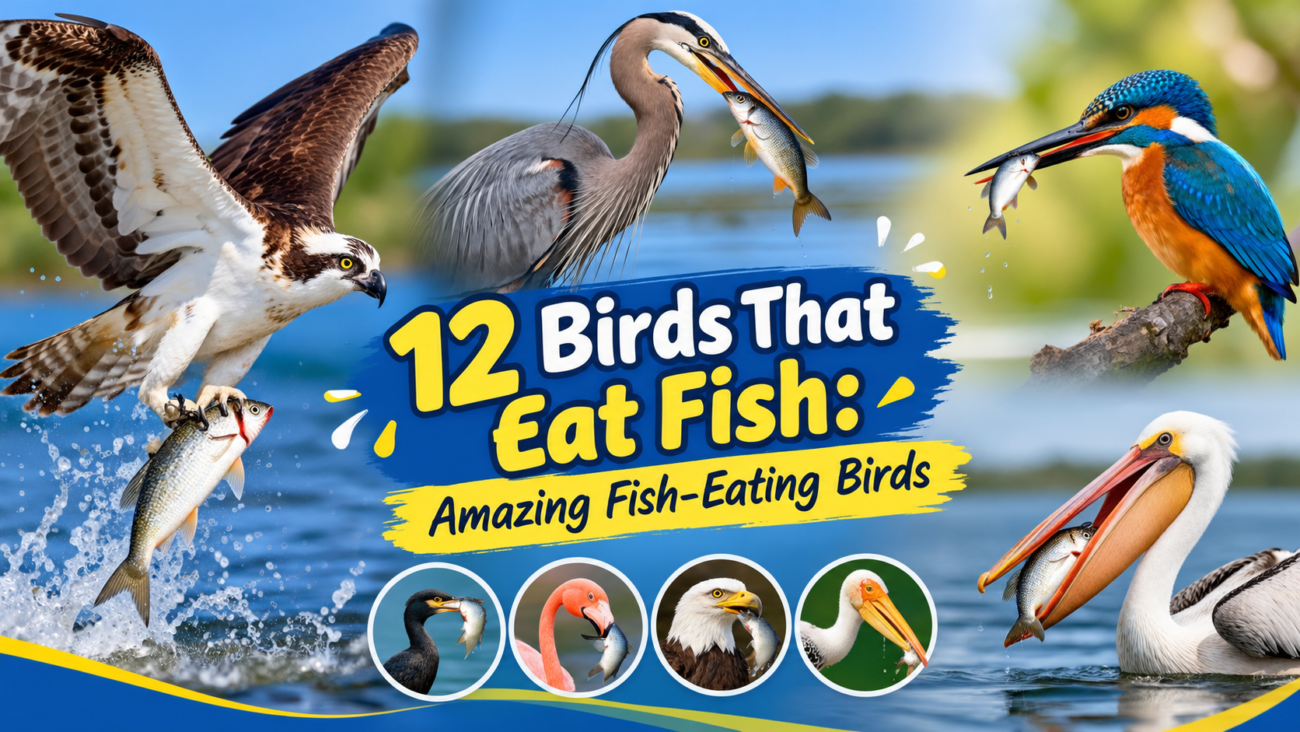
In this guide, we explore 12 fascinating fish-eating birds, their scientific names, diets, habitats, fishing methods, and the physical adaptations that help them catch slippery aquatic prey.
Quick Answer: What Birds Eat Fish?
Many birds eat fish, including ospreys, Great Blue Herons, Bald Eagles, cormorants, Belted Kingfishers, mergansers, pelicans, Common Loons, Atlantic Puffins, Northern Gannets, African Penguins, and Black Skimmers. Some are highly specialized fish hunters, while others eat fish as one part of a broader diet.
List of 12 Birds That Eat Fish
| # | Bird | Scientific Name |
| 1 | Osprey | Pandion haliaetus |
| 2 | Great Blue Heron | Ardea herodias |
| 3 | Bald Eagle | Haliaeetus leucocephalus |
| 4 | Double-crested Cormorant | Nannopterum auritum |
| 5 | Belted Kingfisher | Megaceryle alcyon |
| 6 | Common Merganser | Mergus merganser |
| 7 | Brown Pelican | Pelecanus occidentalis |
| 8 | Common Loon | Gavia immer |
| 9 | Atlantic Puffin | Fratercula arctica |
| 10 | Northern Gannet | Morus bassanus |
| 11 | African Penguin | Spheniscus demersus |
| 12 | Black Skimmer | Rynchops niger |
Quick Comparison Table
| Bird | Habitat | Fishing Method | Main Adaptation |
| Osprey | Lakes, rivers, coasts | Plunge diving | Powerful talons |
| Great Blue Heron | Wetlands, rivers, coasts | Ambush hunting | Long bill and neck |
| Bald Eagle | Lakes, rivers, coasts | Surface grabbing | Strong talons |
| Cormorant | Freshwater and coasts | Underwater pursuit | Strong swimming ability |
| Belted Kingfisher | Rivers and lakes | Plunge diving | Heavy pointed bill |
| Common Merganser | Rivers and lakes | Underwater pursuit | Serrated bill |
| Brown Pelican | Coastal waters | Plunge diving | Large bill and pouch |
| Common Loon | Lakes and coastal waters | Underwater pursuit | Powerful diving body |
| Atlantic Puffin | North Atlantic waters | Diving | Specialized bill |
| Northern Gannet | Open ocean | Plunge diving | Streamlined body |
| African Penguin | Coastal marine waters | Underwater pursuit | Flipper-like wings |
| Black Skimmer | Coastal and inland waters | Surface skimming | Unequal bill |
1. Osprey
Scientific Name: Pandion haliaetus
Class: Aves
Diet: Primarily fish
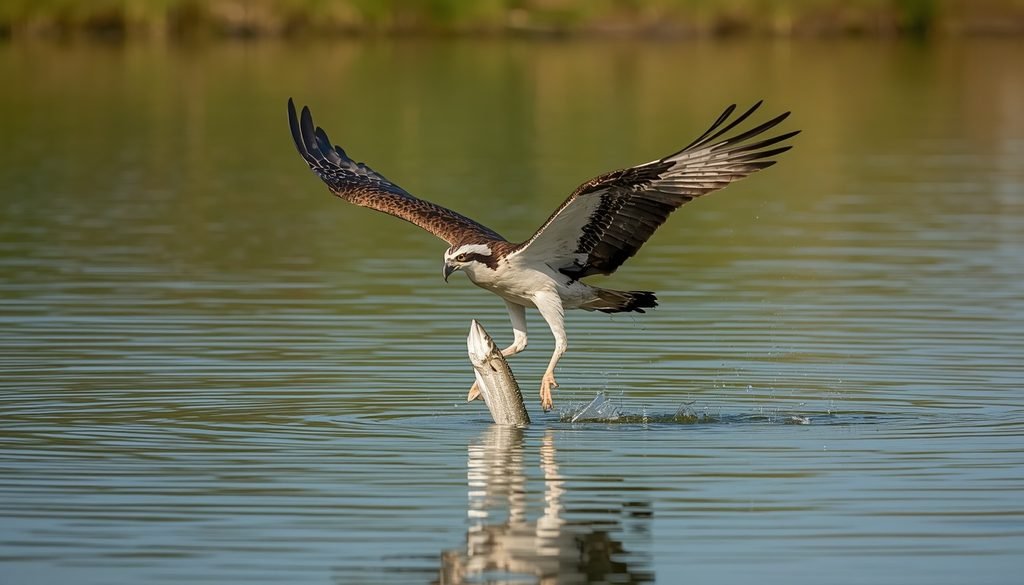
The Osprey is one of the most specialized fish-eating birds in the world. Unlike many birds that only occasionally eat fish, Ospreys are strongly associated with a fish-based diet and are often seen patrolling shorelines and waterways.
Their hunting technique is especially impressive. An Osprey can hover or circle above water before diving toward a fish with its feet extended. Its powerful talons and specialized feet help it grasp slippery prey. Ospreys occur around lakes, rivers, reservoirs, estuaries, and coastal waters where fish are available.
2. Great Blue Heron
Scientific Name: Ardea herodias
Class: Aves
Diet: Carnivore
The Great Blue Heron is a classic fish-eating wading bird. It has long legs, a sinuous neck, and a strong dagger-like bill that make it well suited to hunting around water.
Instead of diving from the air, the heron often stands motionless or moves slowly through shallow water while watching for prey. When a fish comes within range, it rapidly extends its neck and bill to seize it. Fish are important prey, although Great Blue Herons also eat amphibians, reptiles, mammals, insects, and other animals.
3. Bald Eagle
Scientific Name: Haliaeetus leucocephalus
Class: Aves
Diet: Carnivore and opportunistic feeder
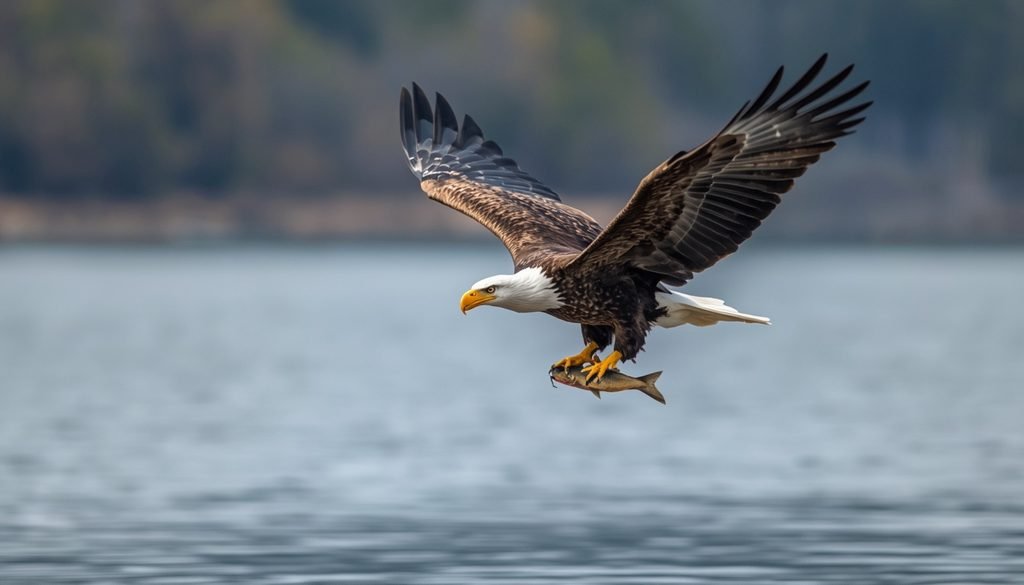
Bald Eagles are powerful birds of prey that frequently eat fish. They are commonly associated with lakes, rivers, reservoirs, coastal areas, and other habitats where fish are available.
Their excellent eyesight helps them locate prey, while their powerful talons allow them to seize fish. Bald Eagles may take fish from near the water’s surface and can also feed opportunistically on other animals or carrion. Therefore, they are important fish predators but should not be described as completely dependent on fish.
4. Double-crested Cormorant
Scientific Name: Nannopterum auritum
Class: Aves
Diet: Carnivore
The Double-crested Cormorant uses a very different fishing strategy from an Osprey or heron. Instead of grabbing fish from above, it dives into the water and pursues prey underwater.
Its streamlined body, strong feet, and diving ability allow it to chase fish beneath the surface. Cormorants can live around freshwater lakes and rivers as well as coastal environments. After swimming, they are often seen resting with their wings spread, a familiar behavior that makes them easy to recognize.
5. Belted Kingfisher
Scientific Name: Megaceryle alcyon
Class: Aves
Diet: Carnivore
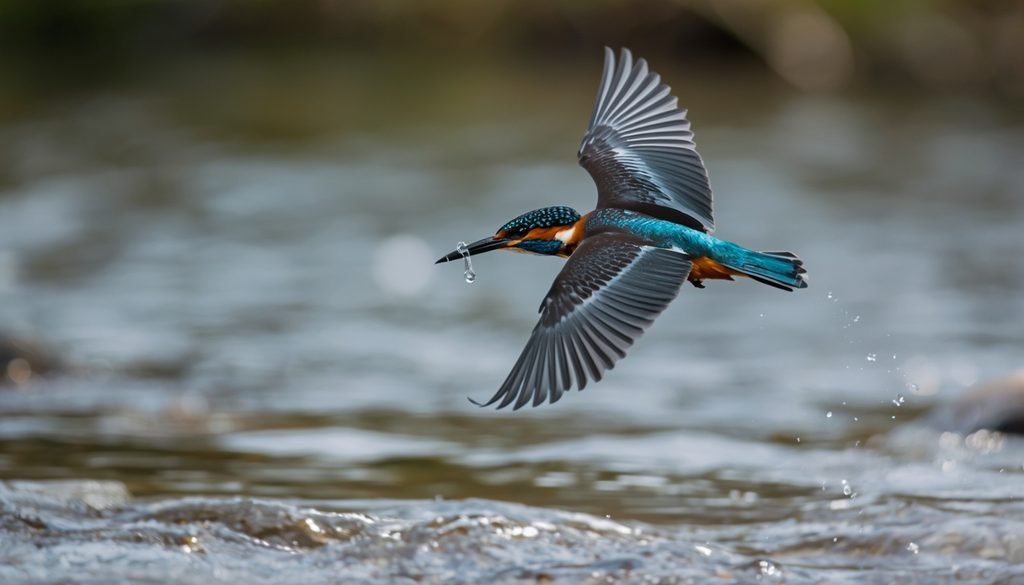
The Belted Kingfisher is a well-known fishing bird of North America. It often sits on branches or other elevated perches beside rivers, streams, lakes, ponds, and estuaries while searching for small fish.
It can dive directly from a perch or hover above water before plunging downward. Its large, straight bill is adapted for grabbing aquatic prey. Although fish are important food, Belted Kingfishers can also take crayfish and other aquatic animals.
6. Common Merganser
Scientific Name: Mergus merganser
Class: Aves
Diet: Carnivore
The Common Merganser is a fish-eating diving duck found around rivers, lakes, and other freshwater habitats. It has a long, narrow bill with tooth-like projections along the edges.
These serrated edges help the bird grip slippery prey. Instead of diving from the sky, a merganser enters the water and uses its strong swimming ability to chase fish underwater. Its streamlined body allows it to move efficiently beneath the surface.
7. Brown Pelican
Scientific Name: Pelecanus occidentalis
Class: Aves
Diet: Carnivore, mainly fish
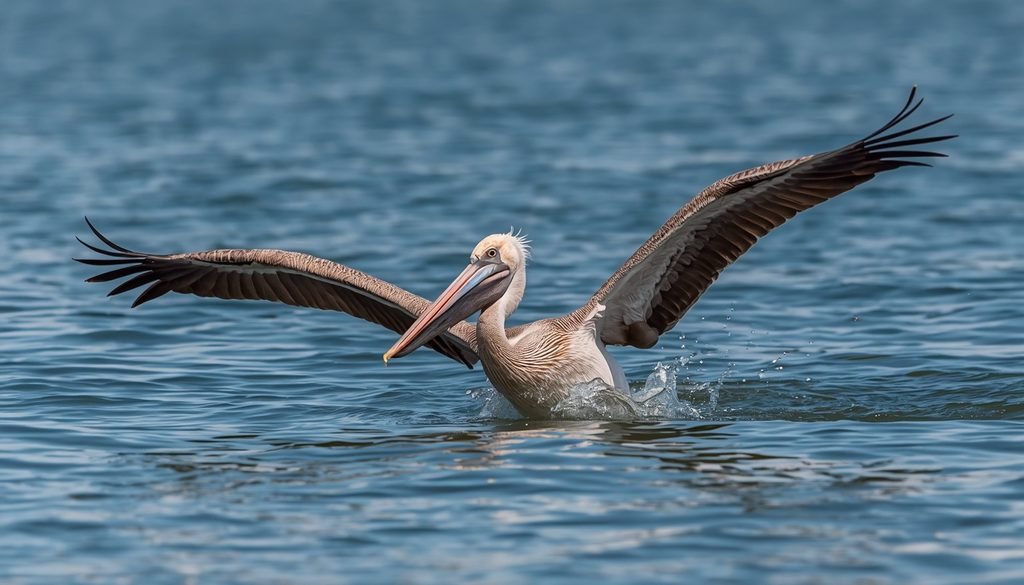
The Brown Pelican is one of the most recognizable coastal birds that eat fish. Its enormous bill and expandable throat pouch are specialized for catching aquatic prey.
One of its most dramatic hunting techniques is plunge diving. The pelican can dive from above the water and use its bill to scoop up fish. The throat pouch temporarily holds the captured prey and water, while the bird drains excess water before swallowing its meal.
8. Common Loon
Scientific Name: Gavia immer
Class: Aves
Diet: Carnivore
The Common Loon is a powerful diving waterbird that catches fish through underwater pursuit. During the breeding season, it is strongly associated with clear freshwater lakes, while it can also be found around coastal waters at other times.
Its body is well adapted for swimming, and its powerful legs propel it underwater. Once it spots a fish, the loon can chase it beneath the surface. Its pointed bill is useful for capturing small aquatic prey.
9. Atlantic Puffin
Scientific Name: Fratercula arctica
Class: Aves
Diet: Carnivore
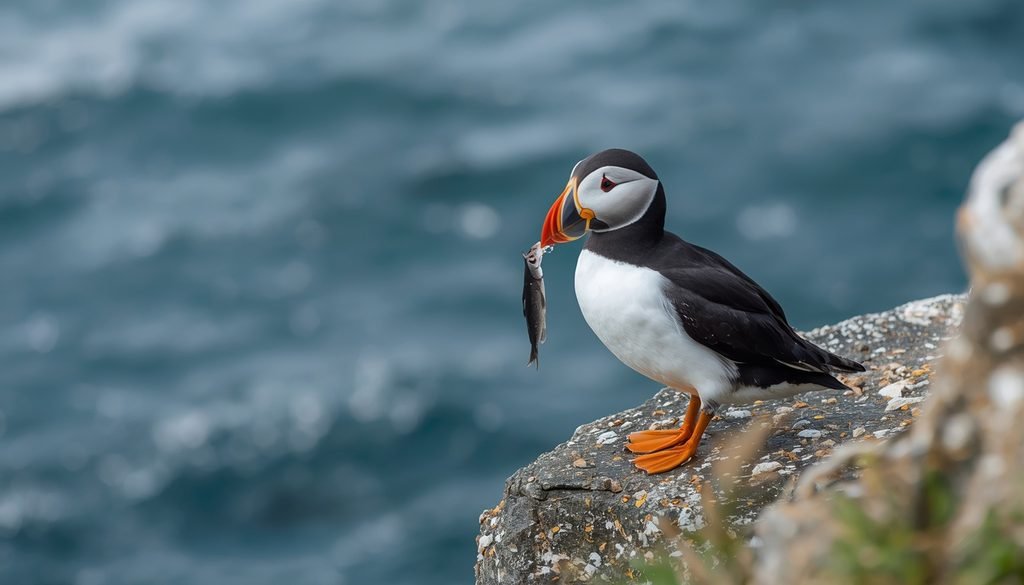
The Atlantic Puffin is a small seabird famous for its colorful bill and ability to catch fish underwater. It breeds along rocky coastal areas of the North Atlantic and spends much of its life at sea.
Puffins use their wings to help propel themselves underwater while pursuing small fish. Their specialized bills allow them to carry captured prey back toward their nesting areas. Small schooling fish can form an important part of their diet.
10. Northern Gannet
Scientific Name: Morus bassanus
Class: Aves
Diet: Carnivore, mainly fish and marine prey
The Northern Gannet is a large seabird and spectacular plunge diver. It spends much of its life around the North Atlantic and searches for fish in marine waters.
When a gannet spots prey, it can dive from above and enter the water at high speed. Its streamlined body and specialized anatomy help it handle this type of fishing. Gannets often target fish associated with schools or productive areas of the ocean.
11. African Penguin
Scientific Name: Spheniscus demersus
Class: Aves
Diet: Carnivore
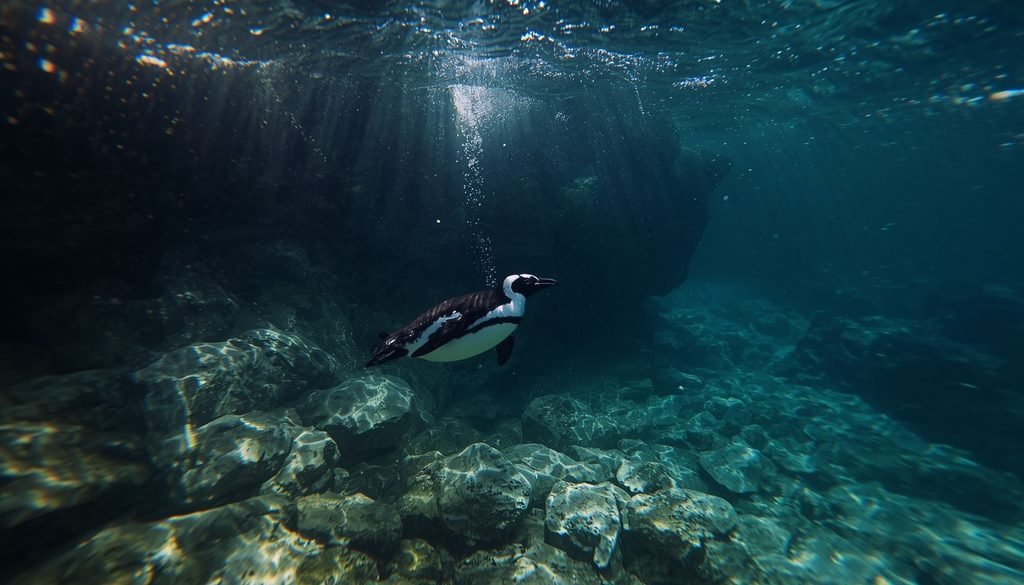
African Penguins are flightless marine birds that depend on the ocean for food. Unlike flying fish-eating birds such as Ospreys and gannets, penguins catch fish primarily by swimming underwater.
Their wings have evolved into flipper-like structures that provide powerful underwater propulsion. They can pursue fish such as sardines and anchovies in coastal marine environments. Their streamlined bodies reduce resistance as they move through the water.
12. Black Skimmer
Scientific Name: Rynchops niger
Class: Aves
Diet: Carnivore
The Black Skimmer has one of the strangest fishing adaptations among birds that eat fish. Its lower bill extends farther than its upper bill, creating a specialized tool for surface feeding.
The bird flies low over water with its lower mandible cutting through the surface. When it contacts a small fish or other prey, the bird snaps its bill shut. This technique allows Black Skimmers to feed without diving completely underwater.
How Do Birds Catch Fish?
Fish-eating birds use several different fishing techniques.
Plunge Diving
Ospreys, Belted Kingfishers, Brown Pelicans, and Northern Gannets can use aerial diving to reach fish. Some plunge from a height, while others dive from a perch or hover before entering the water.
Wading and Ambush Hunting
Great Blue Herons use a patient strategy. They may stand quietly in shallow water and wait for prey to approach before making a rapid strike with their bill.
Underwater Pursuit
Cormorants, Common Loons, Common Mergansers, and African Penguins hunt fish beneath the water. Their bodies, feet, wings, and swimming abilities allow them to pursue aquatic prey.
Surface Hunting
Bald Eagles can capture fish near the water surface using their powerful talons. This method allows them to hunt without becoming fully submerged.
Skimming
Black Skimmers have an especially unusual technique. They fly close to the water and use their specialized lower bill to detect prey at the surface.
Why Do Birds Eat Fish?
Fish provide a concentrated source of nutrients and energy for many aquatic and coastal birds. In places where fish are abundant, they can become an important part of the food supply.
However, not every bird in this article is a strict fish specialist. Ospreys have an especially fish-focused diet, while Great Blue Herons and Bald Eagles have broader diets.
Fish availability can also vary with season, water conditions, habitat, and prey abundance. This is why different fish-eating birds have developed different strategies for finding and capturing aquatic prey.
What Are Piscivorous Birds?
Piscivorous birds are birds that eat fish as an important part of their diet.
The word “piscivorous” is useful when describing fish-eating birds, but it does not necessarily mean that a species eats nothing except fish.
Ospreys are highly specialized fish hunters, while species such as Great Blue Herons and Bald Eagles have more varied diets. Piscivorous birds occur across several unrelated bird groups, showing that fish hunting has evolved repeatedly in birds.
Where Do Fish-Eating Birds Live?
Freshwater Habitats
Many fish-eating birds live around:
- Lakes
- Rivers
- Streams
- Reservoirs
- Ponds
- Marshes
Examples include Ospreys, Great Blue Herons, Common Loons, Belted Kingfishers, cormorants, and mergansers.
Coastal Habitats
Coastal waters provide abundant fish for species such as:
- Brown Pelicans
- Bald Eagles
- Black Skimmers
- African Penguins
Open Ocean
Some birds spend much of their lives at sea. Northern Gannets and Atlantic Puffins are examples of marine birds that travel over open water in search of fish and other prey.
Adaptations That Help Birds Catch Fish
Fish are slippery and fast-moving, so birds that hunt them need specialized adaptations.
Sharp Talons
Ospreys and Bald Eagles use strong talons to grab fish.
Specialized Bills
Herons have long pointed bills, kingfishers have strong straight bills, mergansers have serrated bills, and Black Skimmers have uniquely shaped bills.
Diving Bodies
Cormorants, loons, mergansers, puffins, and penguins have body structures that help them move through water.
Expandable Throat Pouch
Brown Pelicans use their large throat pouch to scoop up fish and water during feeding.
Excellent Vision
Many fishing birds need to locate prey through or near the water surface. Ospreys are especially adapted to spotting fish while hunting above water.
Read More: Animals With Webbed Feet
FAQs
Do birds eat fish?
Yes. Many birds eat fish, including Ospreys, herons, eagles, cormorants, kingfishers, mergansers, pelicans, loons, puffins, gannets, penguins, and skimmers. Some species specialize heavily in fish, while others include fish as one part of a broader diet.
What birds eat fish?
Some of the best-known fish-eating birds are Ospreys, Great Blue Herons, Bald Eagles, Double-crested Cormorants, Belted Kingfishers, Common Mergansers, Brown Pelicans, Common Loons, Atlantic Puffins, Northern Gannets, African Penguins, and Black Skimmers.
What bird mostly eats fish?
The Osprey is one of the strongest examples of a bird with a highly specialized fish-based diet. It is well adapted for catching live fish and commonly hunts by diving feet-first into water.
What birds catch fish with their feet?
Ospreys and Bald Eagles are notable examples. Their strong talons allow them to grasp fish. Ospreys are especially specialized for catching fish with their feet during aerial dives.
What birds dive underwater for fish?
Cormorants, Common Loons, Common Mergansers, Atlantic Puffins, and African Penguins can pursue fish underwater. Their body shapes and swimming adaptations allow them to remain beneath the surface while chasing aquatic prey.
Are all fish-eating birds water birds?
No. Many fish-eating birds live around water, but they do not all spend their lives swimming or diving. Ospreys and Bald Eagles, for example, are flying birds that can catch fish from above the water.
What birds eat fish from ponds?
Great Blue Herons, Belted Kingfishers, Ospreys, and cormorants may use ponds or other inland waters when suitable fish are available. The species present depends on geographic location, habitat conditions, and food availability.
What are piscivorous birds?
Piscivorous birds are birds that eat fish as an important part of their diet. Some are highly specialized fish hunters, while others eat fish along with amphibians, insects, crustaceans, mammals, birds, or other prey.
Final Thoughts
Birds that eat fish have evolved some of the most fascinating hunting techniques in the animal world. An Osprey can dive feet-first toward a fish, a Great Blue Heron can strike from shallow water, and a Belted Kingfisher can plunge from above.
Underwater hunters such as cormorants, loons, mergansers, puffins, and penguins take a completely different approach. Pelicans use their enormous bills and throat pouches, while Black Skimmers use a uniquely specialized bill to feed at the water’s surface.
These differences show that there is no single way to be a successful fish-eating bird. Different habitats have produced different adaptations, making piscivorous birds an especially interesting part of aquatic ecosystems.

One thought on “12 Birds That Eat Fish: Amazing Fish-Eating Birds”