
Introduction
Some animals have earned a reputation for being silly, slow, or not very bright. Koalas spend much of the day resting, sloths move at an unusually slow pace, and ostriches are famously said to hide their heads in the sand. These behaviors can make people wonder: What is the stupidest animal in the world?
The truth is more interesting than the popular jokes. Scientists do not have an official list of the world’s least intelligent animals. Different species have different brains, senses, lifestyles, and survival challenges. A behavior that seems strange to people may help an animal find food, avoid danger, or conserve energy.
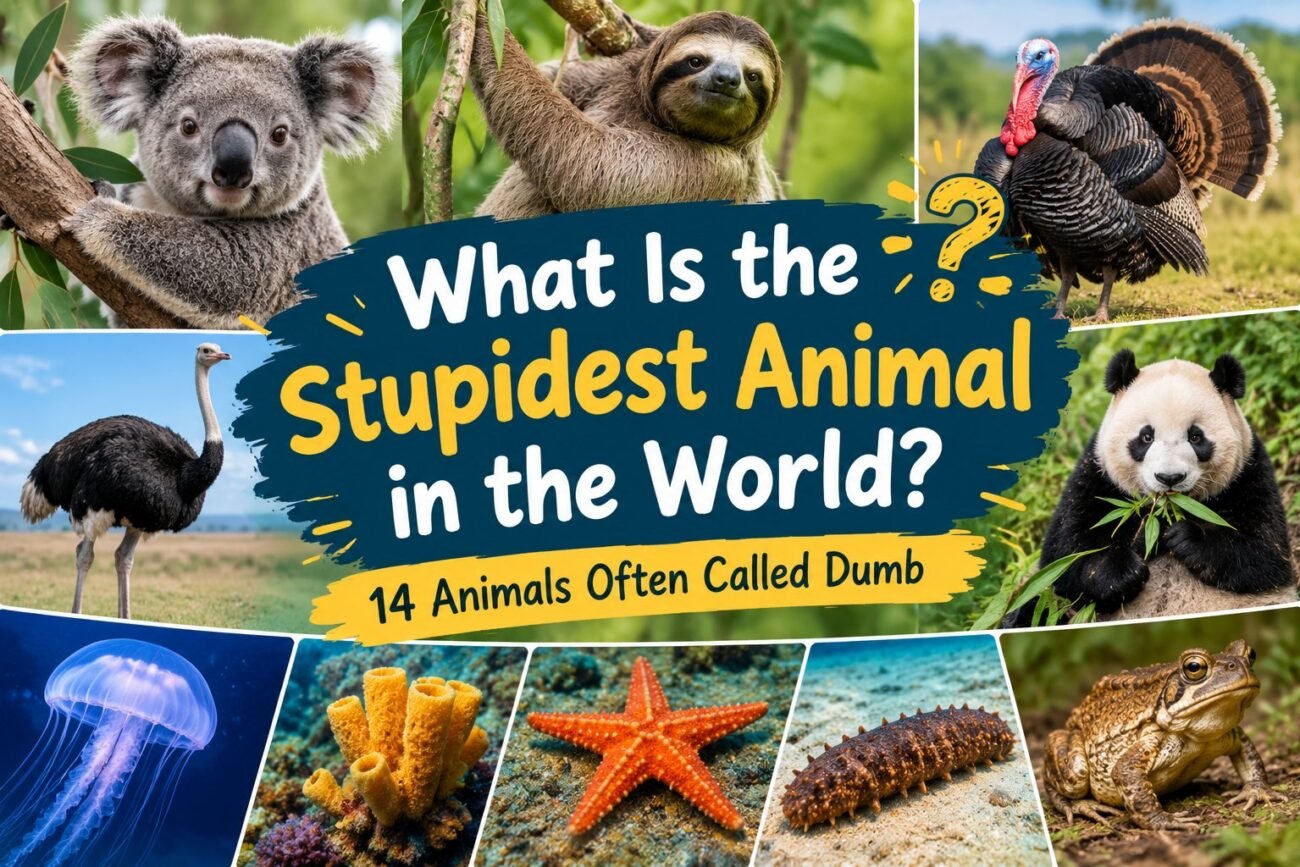
This guide explores 14 animals that are sometimes called dumb or unintelligent. Along the way, we’ll separate popular myths from known behavior and see why animal intelligence is more complicated than a simple ranking.
Quick Answer: What Is the Stupidest Animal in the World?
There is no scientifically confirmed stupidest animal in the world. Koalas, sloths, turkeys, and animals with simple nervous systems are sometimes described that way in popular discussions, but those labels are not scientific measurements. Each species has adaptations suited to its environment, and intelligence cannot be judged fairly from one behavior alone.
14 Animals Often Called Stupid
| No. | Animal | Class or Group | Diet |
| 1 | Koala | Mammal | Eucalyptus leaves |
| 2 | Sloth | Mammal | Mainly leaves |
| 3 | Turkey | Bird | Omnivore |
| 4 | Ostrich | Bird | Plants and small animals |
| 5 | Giant Panda | Mammal | Mainly bamboo |
| 6 | Kakapo | Bird | Plant material |
| 7 | Lemming | Mammal | Plants, seeds, and roots |
| 8 | Domestic Sheep | Mammal | Grass and other vegetation |
| 9 | Chicken | Bird | Omnivore |
| 10 | Cane Toad | Amphibian | Insects and other small prey |
| 11 | Jellyfish | Marine invertebrate | Plankton and small animals, depending on species |
| 12 | Sea Sponge | Marine invertebrate | Filtered microscopic food |
| 13 | Starfish (Sea Star) | Echinoderm | Mollusks and other food, depending on species |
| 14 | Sea Cucumber | Echinoderm | Organic material and small particles |
1. Koala
Scientific Name: Phascolarctos cinereus
Class: Mammalia
Diet: Mainly eucalyptus leaves
Habitat: Eucalyptus forests and woodlands of eastern Australia
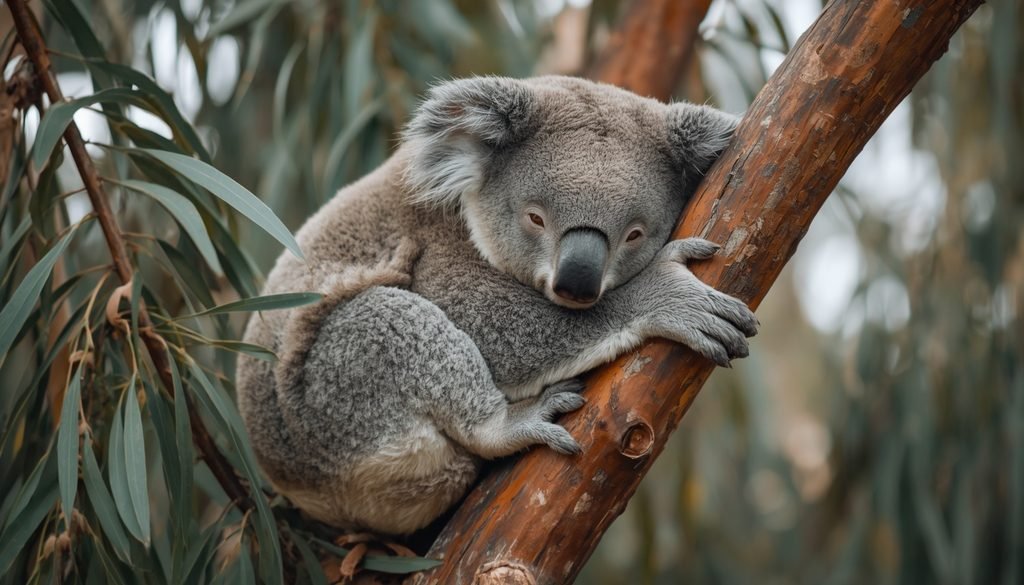
Koalas are sometimes called unintelligent because they sleep for many hours and eat a highly specialized diet. However, their lifestyle is closely tied to eucalyptus leaves, which provide limited energy and contain compounds that many animals cannot tolerate. Resting helps koalas conserve energy while their bodies process this food. Their quiet, slow routine is not proof of poor intelligence; it is part of a specialized way of life.
Interesting Fact: Koalas have strong limbs and sharp claws that help them climb trees.
2. Sloth
Scientific Name: Bradypus or Choloepus species
Class: Mammalia
Diet: Mainly leaves, with some species eating other plant material
Habitat: Tropical forests of Central and South America
Sloths are often described as dumb because they move slowly and spend much of their time hanging from branches. Their slow pace is linked to a low-energy lifestyle and a leaf-based diet. Moving carefully can also help them avoid attracting attention in the forest canopy. Sloths are adapted to a particular ecological niche, so judging their abilities by how quickly they move gives an incomplete picture.
Interesting Fact: Sloths have long claws that help them hang securely from branches.
3. Turkey
Scientific Name: Meleagris gallopavo
Class: Aves
Diet: Omnivorous; seeds, plants, insects, and other small foods
Habitat: Forests, grasslands, and open woodland in North America
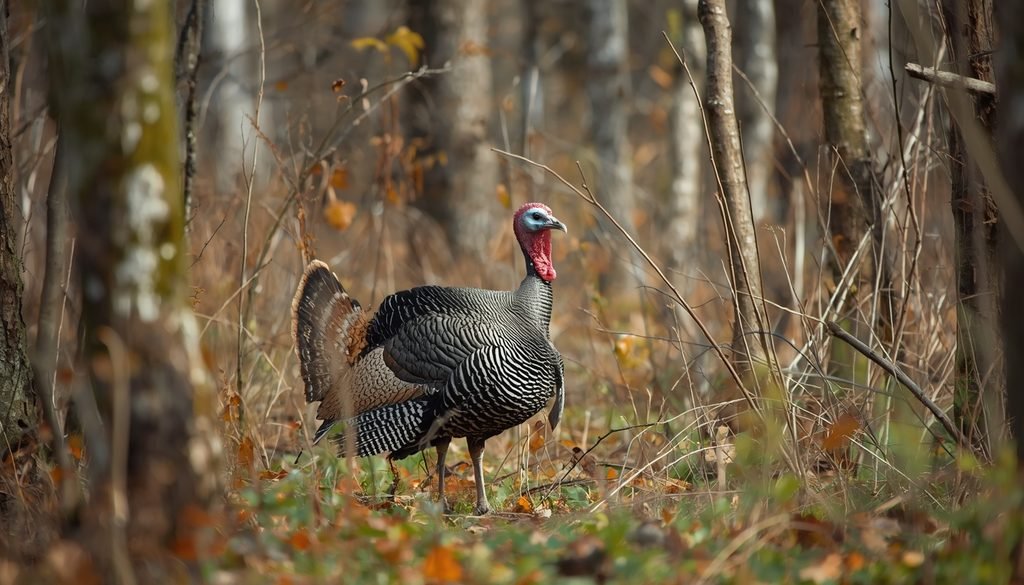
Turkeys are sometimes used as examples of birdbrain behavior, especially in jokes about their reactions to unfamiliar objects. But a surprising response does not establish that an animal lacks intelligence. Turkeys use their senses to locate food, detect threats, and interact with other birds. Their behavior should be understood in the context of their environment rather than measured against human expectations.
Interesting Fact: Wild turkeys can fly short distances, especially when escaping danger or reaching a roost.
4. Ostrich
Scientific Name: Struthio camelus
Class: Aves
Diet: Mainly plants, with insects and other small animals
Habitat: African savannas, grasslands, and semi-arid regions
Ostriches are sometimes called stupid because of the familiar story that they bury their heads in sand when frightened. This is a myth. Ostriches may lower their heads while tending eggs or lie close to the ground when threatened, which can help them blend into their surroundings. They are powerful runners adapted to open habitats. Their behavior is better understood as a survival strategy than as foolishness.
Interesting Fact: Ostriches are the largest living birds and can run at high speeds.
5. Giant Panda
Scientific Name: Ailuropoda melanoleuca
Class: Mammalia
Diet: Mostly bamboo
Habitat: Mountain forests in central China
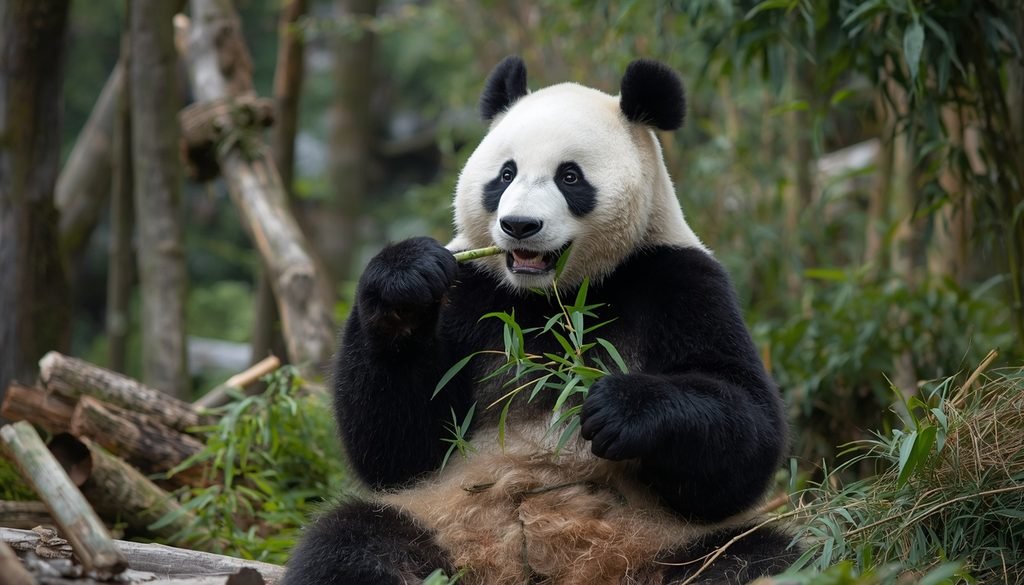
Giant pandas are sometimes portrayed as clumsy or slow, leading people to call them dumb. Their diet is unusually specialized: they eat large amounts of bamboo, a food source that provides relatively little energy. Pandas therefore spend much of their day feeding and resting. Their rounded bodies and occasional awkward-looking movements can seem comical, but these traits do not provide a reliable measure of cognitive ability.
Interesting Fact: Pandas have a wrist bone adapted to help them grip bamboo.
6. Kakapo
Scientific Name: Strigops habroptilus
Class: Aves
Diet: Plant material, including leaves, seeds, fruits, and shoots
Habitat: Forest habitats of New Zealand; now managed in protected areas and islands
The kakapo is a large, flightless parrot sometimes described as poorly adapted because it evolved without many native mammalian predators. When introduced predators arrived, its ground-nesting habits and limited ability to escape became serious disadvantages. That history does not mean the bird is unintelligent. Its traits developed in a different ecological setting, and conservation efforts now protect this unusual parrot from threats it did not evolve alongside.
Interesting Fact: Kakapos are nocturnal parrots and are among the heaviest parrot species.
7. Lemming
Scientific Name: Lemmus and other genera, depending on species
Class: Mammalia
Diet: Grasses, sedges, mosses, roots, and other plant material
Habitat: Arctic and subarctic tundra
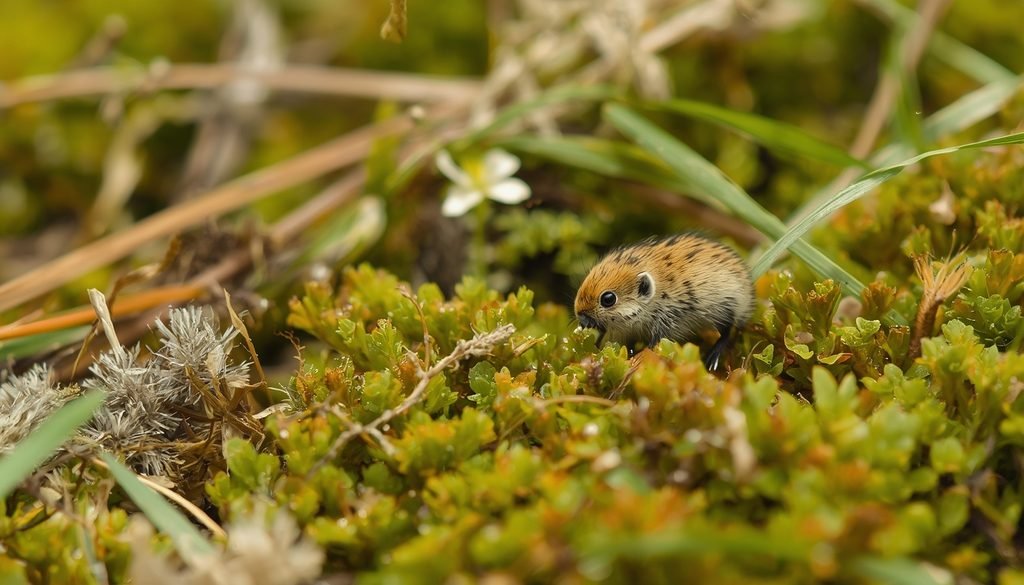
Lemmings became famous for the false idea that they deliberately jump off cliffs in groups. In reality, lemming populations can rise and fall dramatically, and individuals moving through unfamiliar or difficult terrain may face risks. The popular suicide story was reinforced by media portrayals, not by evidence that lemmings intentionally destroy themselves. Their movements are part of population and habitat dynamics, not proof of stupidity.
Interesting Fact: Lemmings are important prey for several Arctic predators, including owls and foxes.
8. Domestic Sheep
Scientific Name: Ovis aries
Class: Mammalia
Diet: Grass, herbs, and other vegetation
Habitat: Farms, pastures, and grasslands worldwide
Sheep are often called dumb because they move in flocks and may follow other members of their group. Yet flocking is a useful defense against predators, and sheep can learn routines and recognize familiar individuals. Their social behavior helps them stay together in open landscapes. Following a group is not the same as being unable to learn; it is one strategy shaped by their history as social grazing animals.
Interesting Fact: Sheep have strong social bonds and can recognize familiar sheep and people.
9. Chicken
Scientific Name: Gallus gallus domesticus
Class: Aves
Diet: Omnivorous; seeds, grains, insects, and plant material
Habitat: Domestic farms and managed environments worldwide; wild ancestors lived in Asian forests
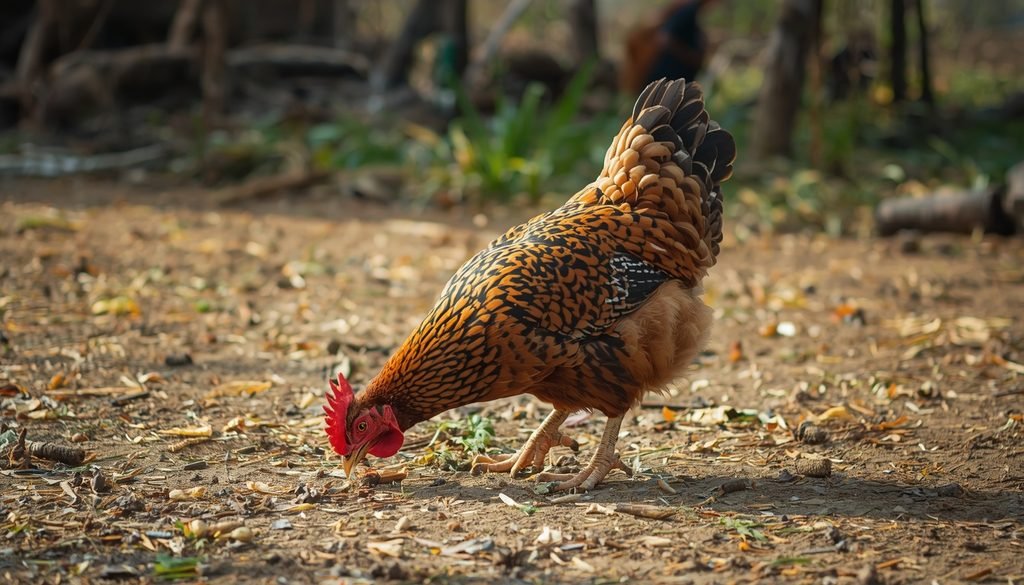
Chickens are sometimes dismissed as unintelligent because they are common farm animals and have been associated with the phrase birdbrain. However, chickens learn from experience, communicate through calls and body signals, and respond to social relationships. Their everyday behavior may look simple, but familiarity should not be confused with a lack of ability. A fair understanding of chicken cognition requires observing what matters in their social and feeding environments.
Interesting Fact: Chickens use different calls in different situations, including warnings and contact with their flock.
10. Cane Toad
Scientific Name: Rhinella marina
Class: Amphibia
Diet: Insects and other small animals
Habitat: Native to Central and South America; introduced populations occur in other regions
Cane toads may seem indiscriminate because they eat many kinds of small prey and can approach food opportunities quickly. Their feeding behavior is shaped by available prey and their ecological role as predators of invertebrates. Calling this behavior stupid overlooks how animals respond to food, risk, and opportunity. In places where cane toads have been introduced, their effects on local ecosystems are a separate conservation concern.
Interesting Fact: Cane toads have toxic skin secretions that can harm predators that try to eat them.
11. Jellyfish
Scientific Name: Many species; examples include Aurelia species
Class or Group: Cnidaria
Diet: Plankton and small aquatic animals, depending on species
Habitat: Marine environments worldwide
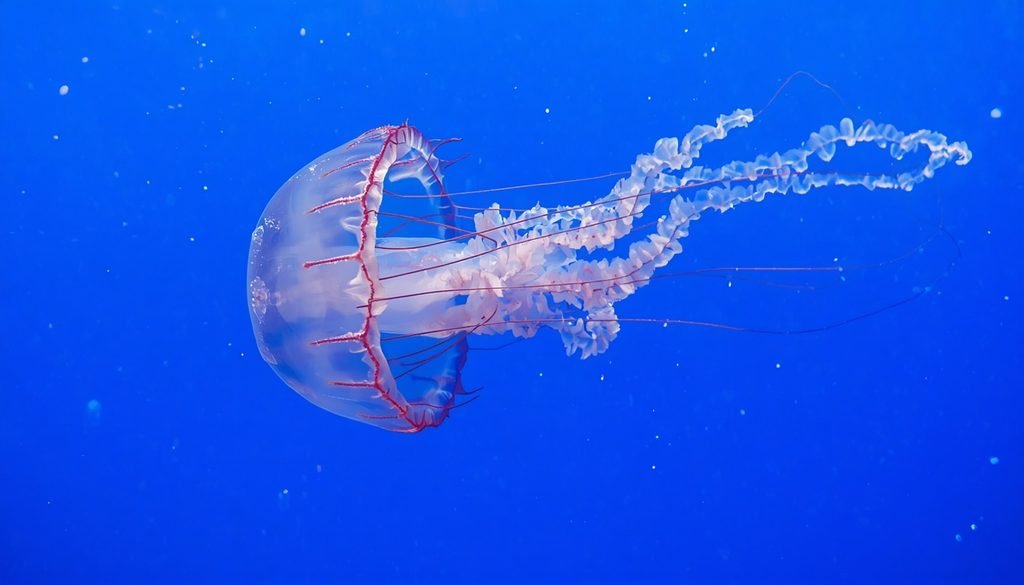
Jellyfish are sometimes called unintelligent because they do not have a centralized brain like mammals and birds. Instead, many have a nerve net and sensory structures that help them respond to light, touch, and water movement. Their bodies are adapted for drifting, swimming, and capturing prey. A different nervous system does not mean an animal has no way to sense or respond to its surroundings.
Interesting Fact: Jellyfish are not fish; they are invertebrates belonging to the phylum Cnidaria.
12. Sea Sponge
Scientific Name: Many species; examples include Spongia officinalis
Class or Group: Porifera
Diet: Filter feeder; captures microscopic food particles from water
Habitat: Marine habitats, from shallow reefs to deep ocean environments
Sea sponges are sometimes described as extremely simple animals because they lack a brain and nervous system. They feed by filtering water through their bodies, capturing tiny food particles as water passes through specialized cells. Their simple body organization is effective for their way of life. Calling a sponge stupid applies a human idea of intelligence to an animal that survives through a very different biological design.
Interesting Fact: Water movement through a sponge helps it obtain food and oxygen while removing waste.
13. Starfish (Sea Star)
Scientific Name: Many species; examples include Asterias rubens
Class: Asteroidea
Diet: Mollusks and other food sources, depending on species
Habitat: Marine environments, including rocky shores and seafloors
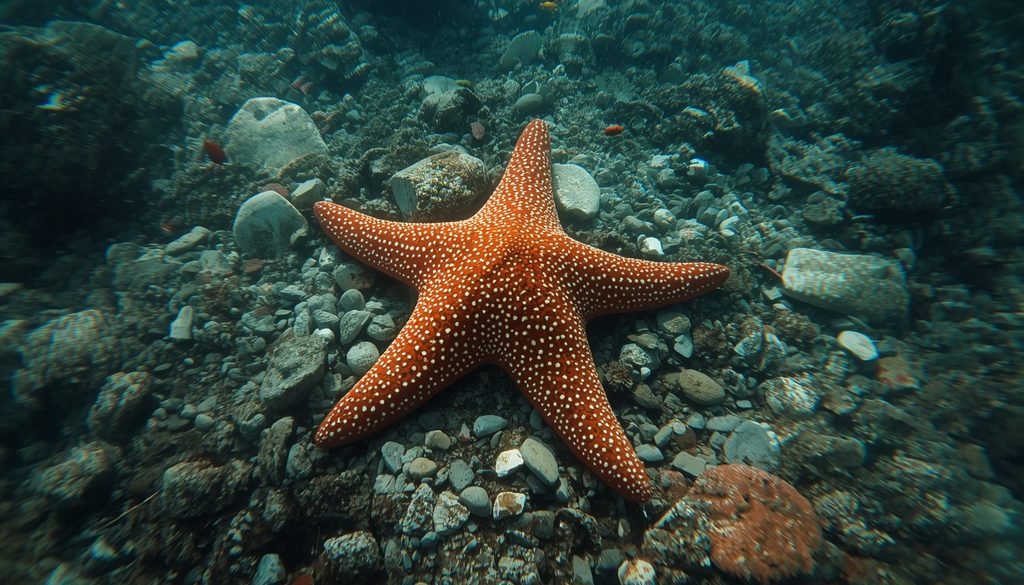
Sea stars are often called brainless because they do not have a centralized brain. However, they have a nervous system and sensory structures that help coordinate movement and responses to their surroundings. Many species use tube feet to move and interact with surfaces. Their feeding strategies also vary by species. Lack of a human-like brain does not mean a sea star is simply an unresponsive object.
Interesting Fact: Many sea stars can regenerate lost arms, although the ability varies among species.
14. Sea Cucumber
Scientific Name: Many species; examples include Holothuria species
Class: Holothuroidea
Diet: Organic material and small particles from sediment or water, depending on species
Habitat: Seafloors in oceans worldwide
Sea cucumbers may look unusual and simple, leading some people to underestimate them. Many feed on organic particles in sediment, helping recycle nutrients on the seafloor. Some species also have defensive responses, including releasing internal structures when threatened. This is not a foolish act; it is a biological defense found in certain sea cucumbers. Their ecological role is important even though their bodies differ greatly from familiar animals.
Interesting Fact: Sea cucumbers help process seafloor sediments and contribute to nutrient cycling.
What Is the Stupidest Animal in the World?
There is no scientific answer naming one species as the stupidest animal in the world. Animal cognition includes different abilities, such as learning, memory, navigation, communication, and problem-solving. Researchers often study specific abilities in relation to an animal’s environment instead of assigning one overall intelligence score. Comparisons can also be affected by motivation, sensory differences, and the kind of task used in a study.
Why Are Some Animals Called Stupid?
Animals may receive a “dumb” label because their behavior looks strange to people. Slow movement, unusual feeding habits, strong instincts, or reactions to unfamiliar objects can be misunderstood. Popular myths also influence how people view species, as seen in stories about ostriches and lemmings.
Another reason is that people often judge animals by human abilities. A species that does not solve a human-designed puzzle may still be well adapted to finding food, avoiding predators, or navigating its habitat. Animal behavior is shaped by evolutionary history and ecological needs. A fair explanation asks what a behavior accomplishes in nature rather than whether it resembles human reasoning.
Do Animals Have Different Types of Intelligence?
Yes. Animal cognition includes several abilities, and different species show different combinations of them. These may include learning, memory, recognizing individuals, finding food, communicating, navigating, and responding flexibly to new situations.
A bird may rely on visual information, while a marine animal may use chemical or touch-based cues. Some animals depend heavily on social learning, while others are adapted to more solitary lifestyles. Scientists therefore consider the species’ ecology and sensory abilities when designing comparisons. Research on animal cognition emphasizes that behavior must be studied in context, including the conditions and experiences of the individual animal.
Are Animals Without Brains Stupid?
No. Some animals, such as sea sponges, lack a nervous system, while jellyfish have nerve nets and sea stars have nervous systems without a centralized brain. These body plans differ from those of mammals, but each supports the functions needed for that animal’s way of life. It is more accurate to describe their anatomy and behavior than to label them stupid simply because they do not have a human-like brain.
Read more: 12 Animals That Look Like Capybara
Final Thoughts
So, what is the stupidest animal in the world? There is no scientifically established answer. Koalas, sloths, turkeys, and other animals may look unusual to us, but their behaviors often reflect specialized diets, survival strategies, sensory systems, or evolutionary histories.
The word stupid is a human judgment, not a biological category. Understanding an animal means looking at how it learns, finds food, responds to danger, and survives in its own environment. Even species with simple nervous systems have important roles in nature. Explore more fascinating wildlife facts on Animalfacthubz.com and discover how much there is to learn about the animal world.
FAQs
1. What is the stupidest animal in the world?
There is no scientifically confirmed stupidest animal. The label is informal and often reflects how humans interpret a behavior rather than a reliable comparison of intelligence across species.
2. What is the stupidest bird?
No bird is scientifically classified as the stupidest. Turkeys, ostriches, and kakapos sometimes appear in popular discussions, but each has behaviors and adaptations suited to its environment.
3. Are koalas really stupid?
Koalas are not scientifically classified as stupid. Their long resting periods and specialized eucalyptus diet are linked to energy conservation and their ecological niche, not proof of low intelligence.
4. Are sloths unintelligent?
Slow movement does not demonstrate low intelligence. Sloths have a low-energy lifestyle associated with their diet and rainforest habitat. Their behavior should be understood in that context.
5. Are sheep stupid?
Sheep are social animals that can learn routines and recognize familiar individuals. Their tendency to stay in flocks is a protective social behavior, not evidence that they cannot learn.
6. Are animals without brains stupid?
Not necessarily. Animals without centralized brains may still sense and respond to their surroundings through other biological systems. Sea sponges, jellyfish, and sea stars have different body organizations.
7. Why are some animals called dumb?
People may use the label when animals move slowly, behave unexpectedly, or do not respond as humans expect. Popular myths and human-centered assumptions can also shape these impressions.
8. Can scientists accurately compare intelligence between different animal species?
Scientists can compare specific abilities under carefully designed conditions, but broad rankings are difficult. Species differ in senses, motivation, ecology, and evolutionary history, all of which affect test results.

One thought on “What Is the Stupidest Animal in the World? 14 Animals Often Called Dumb”