
Introduction
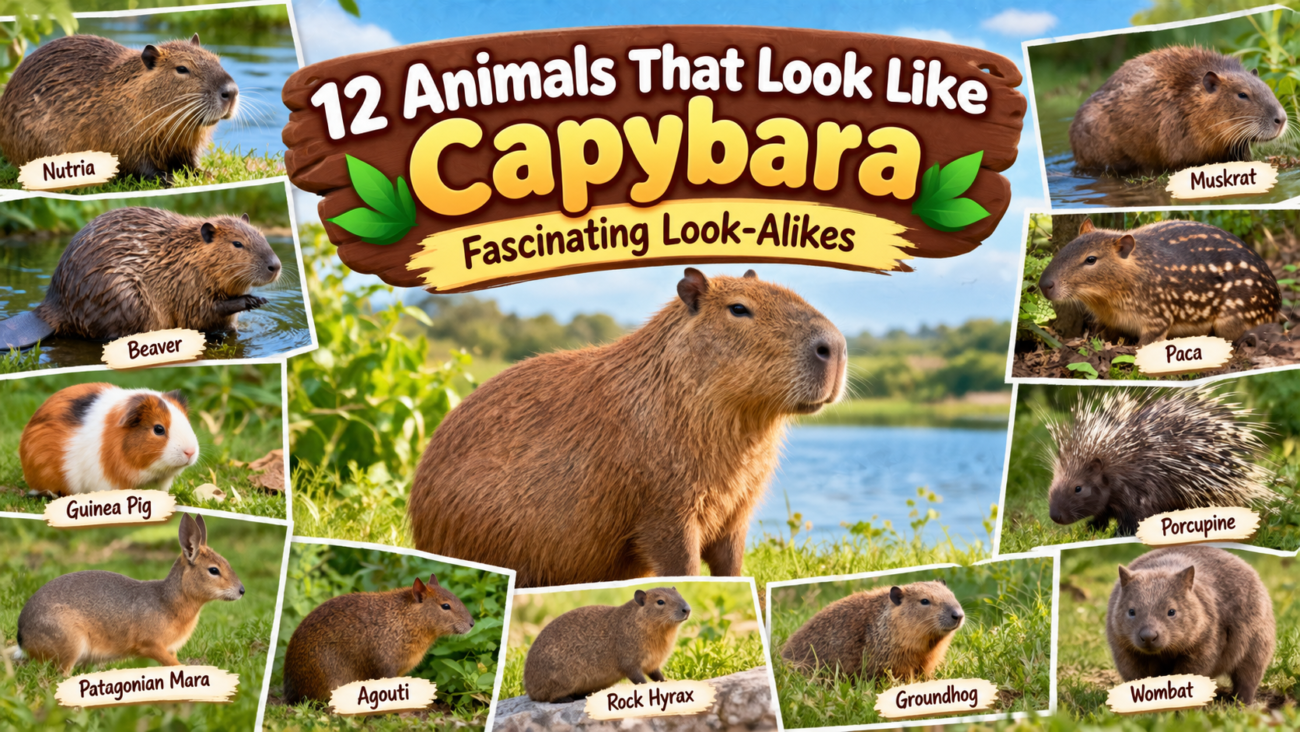
Capybaras are hard to mistake for ordinary rodents. Their huge rounded bodies, short legs, small ears, blunt faces, and calm appearance make them look almost like a giant guinea pig. As the world’s largest living rodents, capybaras have a distinctive appearance that naturally makes people wonder which other animals look similar.
Some capybara look-alikes are actually related to them. Guinea pigs and maras, for example, belong to the cavy family, Caviidae, which also includes capybaras. Other animals only share certain features, such as a stocky body, brown fur, short legs, or a semi-aquatic lifestyle.
In this guide, we will explore 12 animals that look like capybara and explain exactly what makes each one similar. We will also look at which animals are genuine relatives and which ones simply have a surprisingly similar appearance.
What Animals Look Like Capybaras?
Several animals resemble capybaras because they have rounded or stocky bodies, short legs, brown fur, rodent-like features, or semi-aquatic lifestyles. Some of the best-known examples include nutria, beavers, guinea pigs, Patagonian maras, agoutis, muskrats, and pacas. Their similarities can come from shared ancestry, body structure, or similar habitats.
Why Do Some Animals Look Like Capybaras?
Capybaras have a combination of features that can also appear in other mammals. Their large, barrel-shaped body, short limbs, small rounded ears, blunt muzzle, and coarse brownish coat create the basic look people associate with them.
Rodents are especially likely to remind us of capybaras because they share features such as continuously growing incisors and similar general body structures. Some aquatic rodents, including beavers, muskrats, and nutria, also have adaptations for swimming and living around freshwater.
However, appearance does not always indicate close evolutionary relationships. A wombat, for example, can have a similarly heavy body and short legs but is a marsupial rather than a rodent. The same idea applies to the rock hyrax, which is not a rodent at all.
Quick List of Capybara Look-Alikes
| No. | Animal | Scientific Name | Main Similarity |
| 1 | Nutria | Myocastor coypus | Semi-aquatic rodent body |
| 2 | Beaver | Castor canadensis | Large aquatic rodent |
| 3 | Guinea Pig | Cavia porcellus | Close cavy relationship |
| 4 | Patagonian Mara | Dolichotis patagonum | Cavy relative |
| 5 | Agouti | Dasyprocta spp. | Compact rodent body |
| 6 | Paca | Cuniculus paca | Stocky forest rodent |
| 7 | Muskrat | Ondatra zibethicus | Semi-aquatic lifestyle |
| 8 | Porcupine | Erethizon dorsatum | Robust rodent shape |
| 9 | Gopher | Geomys spp. | Compact body and incisors |
| 10 | Rock Hyrax | Procavia capensis | Rounded mammal body |
| 11 | Groundhog | Marmota monax | Stocky, short-legged body |
| 12 | Wombat | Vombatus ursinus | Heavy body and short legs |
1. Nutria
Scientific Name: Myocastor coypus
Class: Mammalia
Diet: Herbivore
Habitat: Wetlands, marshes, ponds, rivers
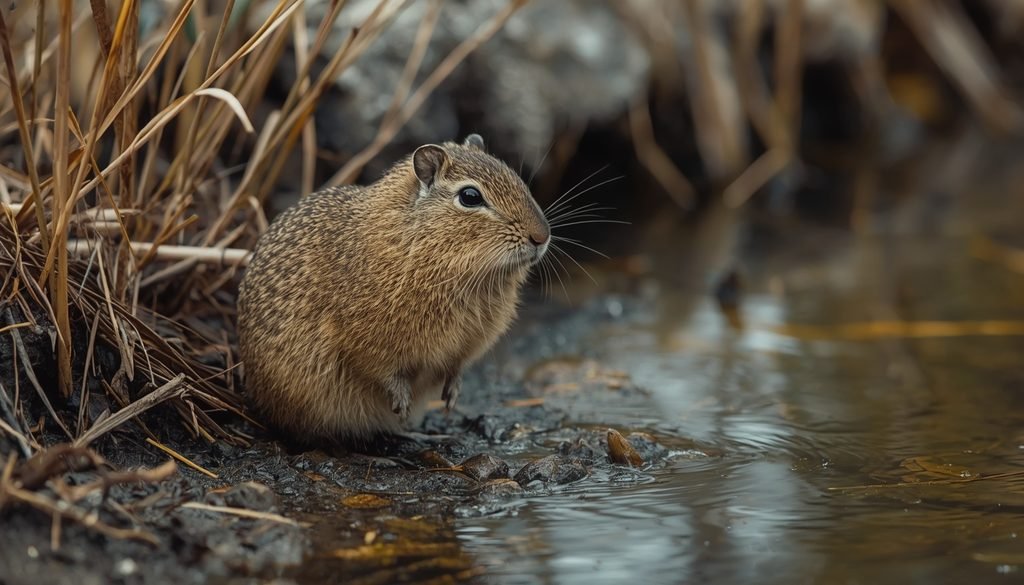
Nutria, also called coypu, are among the strongest visual capybara look-alikes. They have a chunky body, small ears, brown fur, large incisors, and a semi-aquatic lifestyle. They are excellent swimmers and are commonly associated with wetlands. Despite their resemblance, nutria are not close capybara relatives; they belong to the family Myocastoridae.
Interesting Fact: Nutria have webbed hind feet that help them move through water.
2. Beaver
Scientific Name: Castor canadensis
Class: Mammalia
Diet: Herbivore
Habitat: Rivers, ponds, lakes, marshes
Beavers can look surprisingly similar to capybaras because they are large, heavy-bodied rodents with brown fur and small ears. Both are strongly associated with water and have powerful teeth. The biggest difference is the tail: beavers have a broad, flat tail, while capybaras have only a tiny tail. North American beavers are the largest rodents in North America and are second in global size to capybaras.
Interesting Fact: Beavers use their teeth to cut branches and build dams.
3. Guinea Pig
Scientific Name: Cavia porcellus
Class: Mammalia
Diet: Herbivore
Habitat: Domestic environments
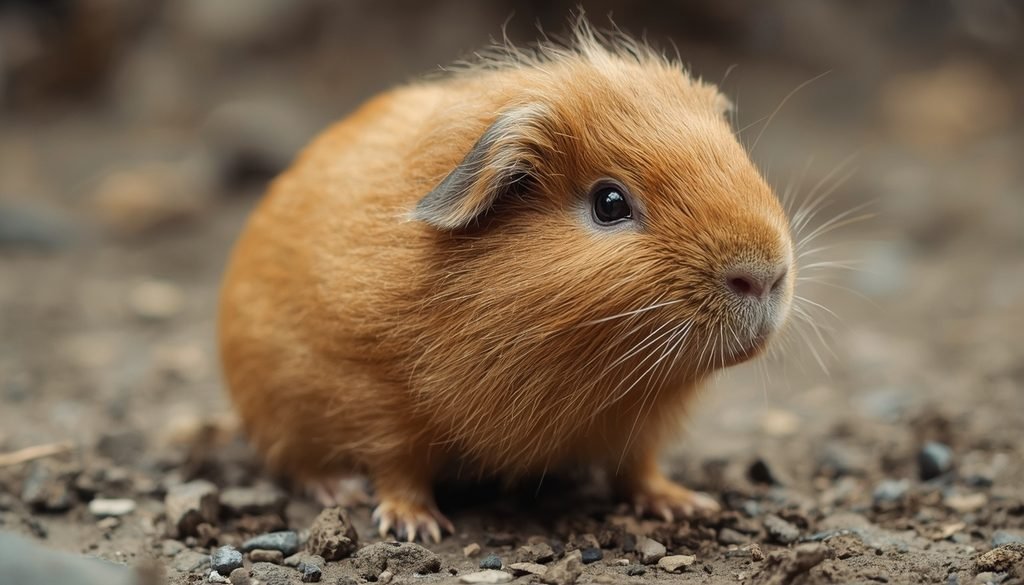
The guinea pig is one of the most meaningful capybara relatives on this list. Both belong to the family Caviidae, a rodent group that includes guinea pigs, cavies, maras, and capybaras. Guinea pigs have compact rounded bodies, short legs, small ears, and blunt faces, making them look like miniature versions of some capybara features. They are much smaller, however, and domestic guinea pigs are different from their wild relatives.
Interesting Fact: Guinea pigs have no tails.
4. Patagonian Mara
Scientific Name: Dolichotis patagonum
Class: Mammalia
Diet: Herbivore
Habitat: Grasslands and open areas of Argentina
The Patagonian mara is another genuine member of the capybara’s family. It belongs to Caviidae, but its appearance is quite different in several ways. Maras have long rabbit-like legs, large ears, and a short tail. Their gray-brown coat and cavy body structure can still remind people of a smaller, more athletic capybara. Smithsonian describes them as long-legged rodents with a body form that resembles hoofed mammals.
Interesting Fact: Patagonian maras can hop, gallop, and even perform a bouncing movement called stotting.
5. Agouti
Scientific Name: Dasyprocta spp.
Class: Mammalia
Diet: Herbivore and frugivore
Habitat: Tropical forests and woodland
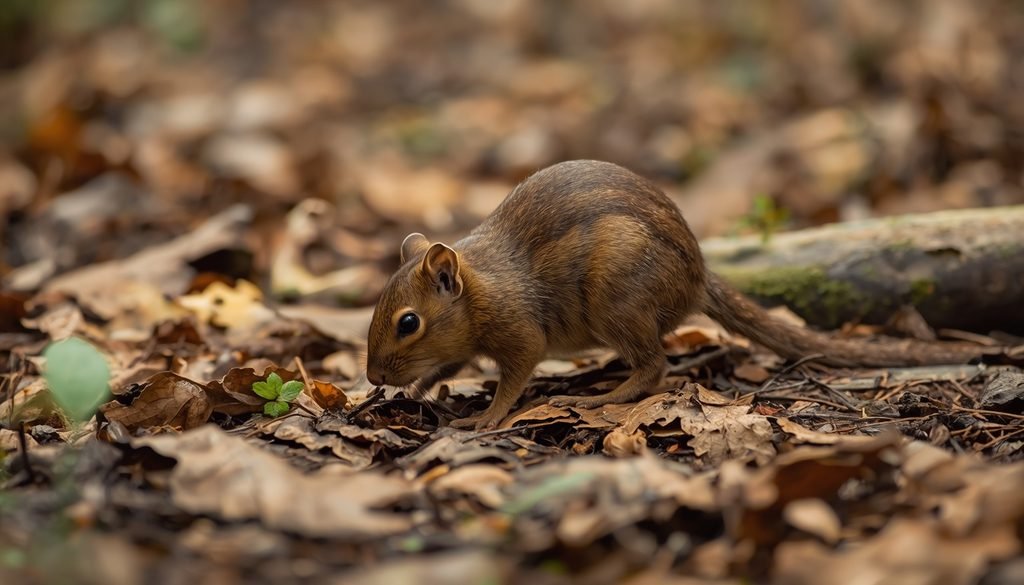
Agoutis are smaller and slimmer than capybaras, but their rodent features can create a familiar resemblance. They have compact bodies, short ears, strong incisors, and brown or reddish coats. Agoutis spend much of their time searching for fruits, seeds, and plant material in tropical environments. Their smaller size and more delicate build make them easy to distinguish from a capybara.
Interesting Fact: Agoutis are important seed dispersers in many tropical forests.
6. Paca
Scientific Name: Cuniculus paca
Class: Mammalia
Diet: Herbivore and frugivore
Habitat: Tropical forests, often near water
The paca is a sturdy forest rodent with a large head, short legs, and a compact body. These features can make it look somewhat like a smaller capybara. Pacas are usually brown and have rows of distinctive pale spots along their sides. They are generally nocturnal and are more solitary than capybaras, which are well known for their social groups.
Interesting Fact: Pacas have strong jaws and large incisors that help them process hard plant foods.
7. Muskrat
Scientific Name: Ondatra zibethicus
Class: Mammalia
Diet: Primarily herbivore
Habitat: Marshes, ponds, lakes, streams
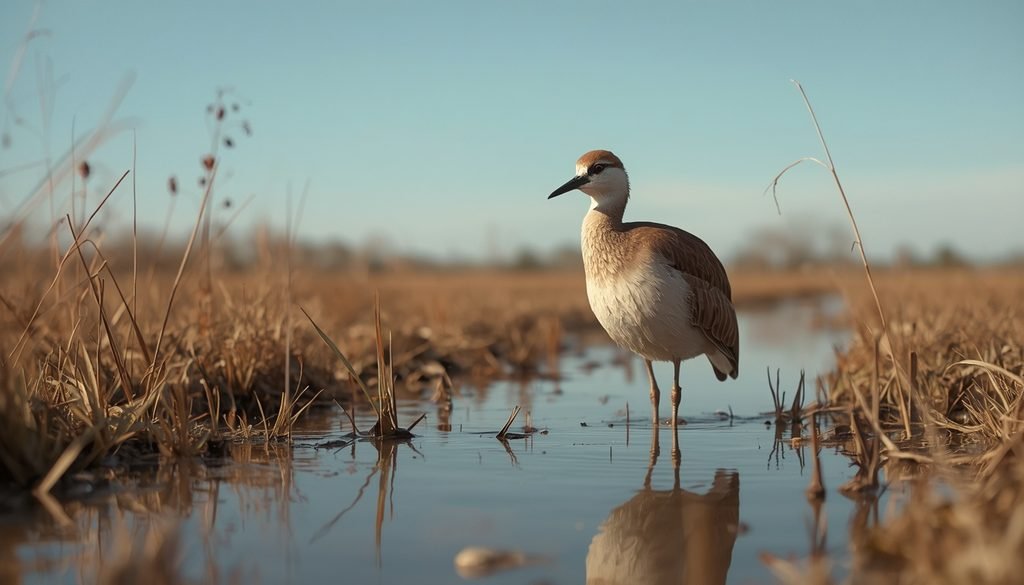
Muskrats are much smaller than capybaras, but they share several characteristics that make them recognizable as aquatic rodents. Their rounded bodies, brown fur, small ears, and preference for wetlands can create a similar impression. They are adapted to swimming and spend considerable time around water. Unlike capybaras, muskrats have a laterally flattened tail that assists with swimming.
Interesting Fact: Muskrats can build shelters in wetlands using vegetation.
8. Porcupine
Scientific Name: Erethizon dorsatum
Class: Mammalia
Diet: Herbivore
Habitat: Forests, woodlands, and rocky areas
Porcupines have a robust, rounded body and short legs that can remind people of a capybara. Their brown fur and rodent anatomy add to the comparison. However, their most obvious feature is something capybaras completely lack: defensive quills. North American porcupines can also climb trees and have a lifestyle that is very different from the semi-aquatic capybara.
Interesting Fact: A porcupine’s quills are modified hairs used for defense.
9. Gopher
Scientific Name: Geomys spp.
Class: Mammalia
Diet: Herbivore
Habitat: Grasslands, fields, meadows, and loose soils
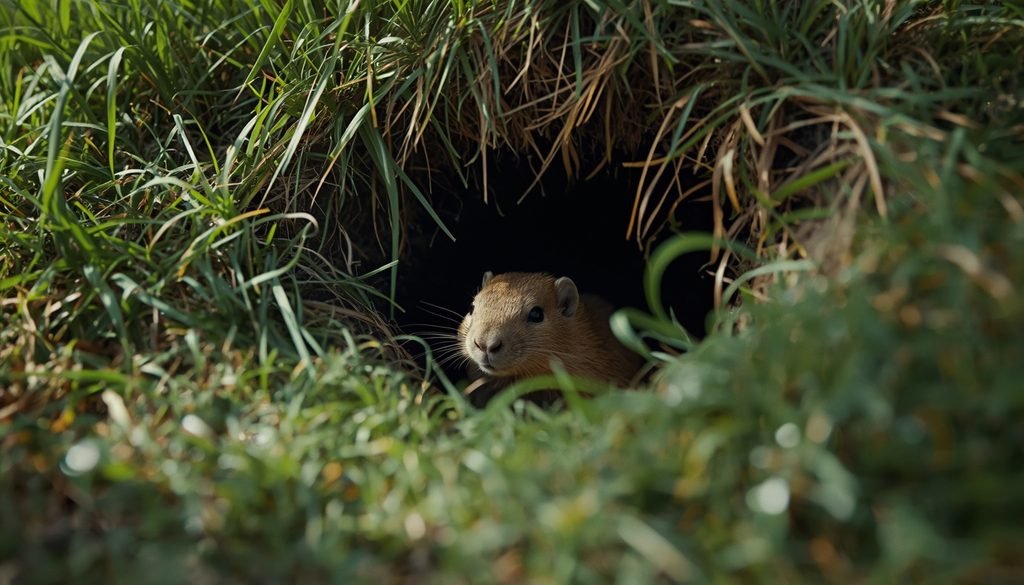
Gophers are tiny compared with capybaras, but they share a compact rodent appearance. They have short legs, small ears, strong incisors, and relatively stocky bodies. Their lifestyle is one of the biggest differences. Gophers are specialized burrowers and spend much of their lives underground, while capybaras often stay near water and open vegetation.
Interesting Fact: Pocket gophers are named for fur-lined cheek pouches used to carry food.
10. Rock Hyrax
Scientific Name: Procavia capensis
Class: Mammalia
Diet: Herbivore
Habitat: Rocky outcrops, cliffs, and dry regions
The rock hyrax is a fascinating example of superficial resemblance. Its rounded body, short legs, small ears, and blunt face may remind people of a small capybara. But the resemblance can be misleading: a rock hyrax is not a rodent. Hyraxes belong to a different mammalian lineage. Their closest living relatives are much more closely associated with elephants and sea cows than with capybaras.
Interesting Fact: Rock hyraxes are excellent climbers and use rocky surfaces for shelter.
11. Groundhog
Scientific Name: Marmota monax
Class: Mammalia
Diet: Herbivore and occasional omnivore
Habitat: Meadows, fields, woodland edges, gardens
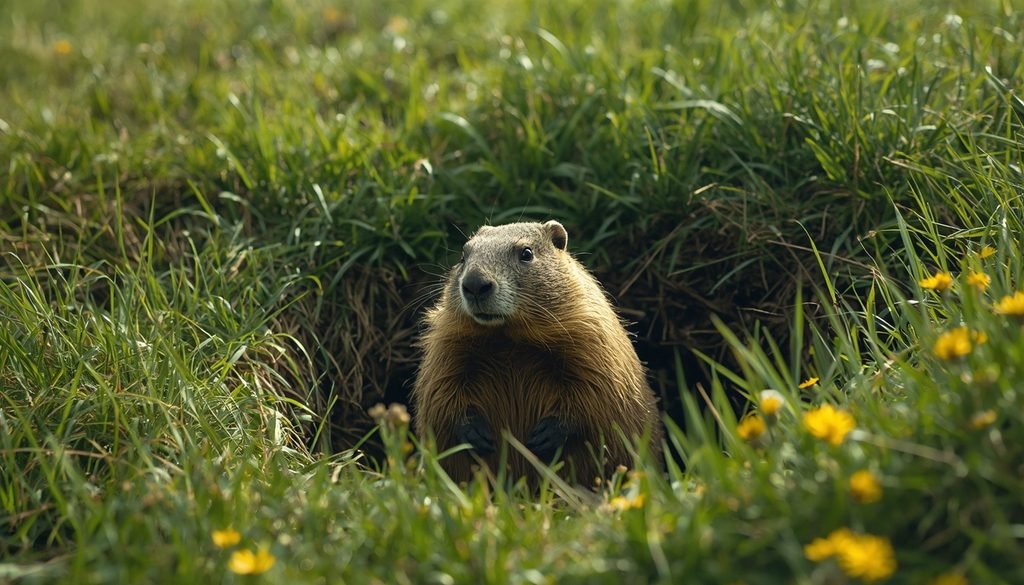
Groundhogs, also called woodchucks, have a stocky body, short legs, rounded head, and brown fur. At a glance, their body shape can remind people of a smaller terrestrial capybara. The two animals are not close relatives, however. Groundhogs belong to the squirrel family and are specialized burrowing mammals rather than semi-aquatic rodents.
Interesting Fact: Groundhogs create extensive burrow systems that can contain several entrances and chambers.
12. Wombat
Scientific Name: Vombatus ursinus
Class: Mammalia
Diet: Herbivore
Habitat: Australian forests, grasslands, and woodlands
Wombats are not rodents, but their heavy bodies, short legs, small ears, and blunt heads make them one of the more interesting capybara look-alikes. Their thick-set shape gives them a chunky appearance similar to the capybara. The major difference is taxonomy: wombats are marsupials. They also live on land and dig burrows rather than following a semi-aquatic lifestyle.
Interesting Fact: Wombats produce distinctive cube-shaped droppings.
Which Animals Are Closely Related to Capybaras?
Not every animal on this list is a capybara relative. The strongest evolutionary connections come from the family Caviidae, which includes capybaras, guinea pigs, cavies, and maras. Animal Diversity Web places capybaras in the subfamily Hydrochoerinae and guinea pigs in Caviinae, while maras belong to Dolichotinae.
This means a guinea pig or Patagonian mara has a meaningful evolutionary relationship with a capybara. By comparison, a beaver belongs to Castoridae, while nutria are currently placed in Myocastoridae.
In simple terms, looking alike and being closely related are two different things.
Capybara vs Similar Animals
Capybaras stand out because of their combination of size, body shape, and semi-aquatic lifestyle. The animals below share selected characteristics but also have important differences.
| Animal | Why It Looks Similar | Major Difference |
| Nutria | Semi-aquatic rodent body | Much smaller |
| Beaver | Large aquatic rodent | Broad flat tail |
| Guinea Pig | Same cavy family | Much smaller |
| Patagonian Mara | Cavy relative | Much longer legs |
| Agouti | Compact rodent body | Smaller and slimmer |
| Muskrat | Semi-aquatic lifestyle | Much smaller |
| Paca | Stocky rodent body | Spotted and nocturnal |
| Porcupine | Robust body | Has defensive quills |
| Gopher | Compact rodent shape | Burrowing lifestyle |
| Rock Hyrax | Rounded body | Not a rodent |
| Groundhog | Stocky body | Terrestrial burrower |
| Wombat | Heavy body and short legs | Marsupial |
Why Do Unrelated Animals Sometimes Look Similar?
Animals do not always need to be closely related to develop similar-looking features. Similar environments and survival pressures can favor similar body shapes. This process is often discussed in terms of convergent evolution, although not every superficial resemblance is necessarily an example of convergence.
For example, several rodents living around water have adaptations that help them swim, while unrelated mammals may independently develop compact bodies that work well for their lifestyles. In other cases, the resemblance is simply the result of sharing broad mammalian characteristics.
That is why an animal can look remarkably similar to a capybara without being part of the same close evolutionary group.
Read More: 8 Animals That Are Deaf
Final Thoughts
There are many fascinating animals that look like capybara, but their similarities do not all have the same explanation. Guinea pigs and Patagonian maras are meaningful relatives because they belong to the cavy family with capybaras. Nutria, beavers, muskrats, pacas, and other rodents share different physical or ecological characteristics.
Even more surprising are animals such as rock hyraxes and wombats. Their rounded bodies and short legs can create a capybara like appearance despite their very different evolutionary histories.
The next time you see a chunky mammal that reminds you of a capybara, look beyond its shape. Its teeth, feet, habitat, behavior, and taxonomy can reveal whether you are looking at a true relative or simply a remarkable look alike.
FAQs
What animal looks most like a capybara?
Nutria are among the strongest visual look-alikes because they have a rounded body, brown fur, small ears, large incisors, and a semi-aquatic lifestyle. Guinea pigs are also highly relevant because they belong to the same cavy family as capybaras.
What animals look like capybaras?
Several animals can resemble capybaras, including nutria, beavers, guinea pigs, Patagonian maras, agoutis, muskrats, pacas, porcupines, gophers, groundhogs, rock hyraxes, and wombats. Their similarities can come from body shape, rodent features, habitat, or evolutionary relationships.
What is the closest relative to a capybara?
Capybaras belong to Caviidae, a rodent family that includes cavies, guinea pigs, maras, and capybaras. Their close evolutionary relationships are therefore found within this cavy group rather than among unrelated mammals that merely resemble them.
Are guinea pigs related to capybaras?
Yes. Guinea pigs and capybaras are both members of the family Caviidae. They are different animals and differ greatly in size, but their shared family relationship makes the guinea pig one of the more scientifically meaningful capybara relatives.
Is a nutria related to a capybara?
Nutria and capybaras are both rodents, but they are not close relatives within the same family. Nutria are currently classified in Myocastoridae, while capybaras belong to Caviidae. Their similar appearance is largely associated with shared rodent features and semi-aquatic lifestyles.
Is a beaver like a capybara?
Beavers and capybaras share several traits, including large rodent bodies, brown fur, strong incisors, and an association with freshwater. However, beavers have a broad flat tail and belong to the family Castoridae, making them quite different from capybaras.
Is a wombat a rodent?
No. A wombat is a marsupial, not a rodent. Its heavy body, short legs, small ears, and blunt head can make it look somewhat capybara-like, but its evolutionary history is completely different.
Is a rock hyrax related to capybaras?
No, not closely. Rock hyraxes are not rodents. They are members of a separate mammalian lineage, so their rounded body and short legs represent superficial similarities rather than a close capybara relationship.

One thought on “12 Animals That Look Like Capybara: Fascinating Look-Alikes”