
Introduction
Some animals are built for speed, while others survive by taking life slowly. Cheetahs race across grasslands, falcons dive through the air, and dolphins move quickly through the water. However, many fascinating creatures rely on slow movement to find food, conserve energy, and avoid danger.
So, what is the slowest animal in the world? The answer depends on how speed is measured and whether we compare animals that crawl, swim, or remain attached to a surface. Sloths, snails, sea anemones, and other creatures are well known for their unhurried lifestyles. Their slow movements may seem unusual, but these adaptations often help them survive in their natural habitats.
Quick Answer: What Is the Slowest Animal in the World?
There is no universally accepted winner for the slowest animal in the world because animals move in different ways. The three-toed sloth is widely recognized as one of the slowest mammals, while garden snails and banana slugs crawl very slowly. Sea anemones can remain attached to rocks for long periods and move only occasionally. The slowest animal depends on whether scientists measure crawling speed, swimming speed, or overall movement.
1. Three-Toed Sloth
Scientific name: Bradypus species
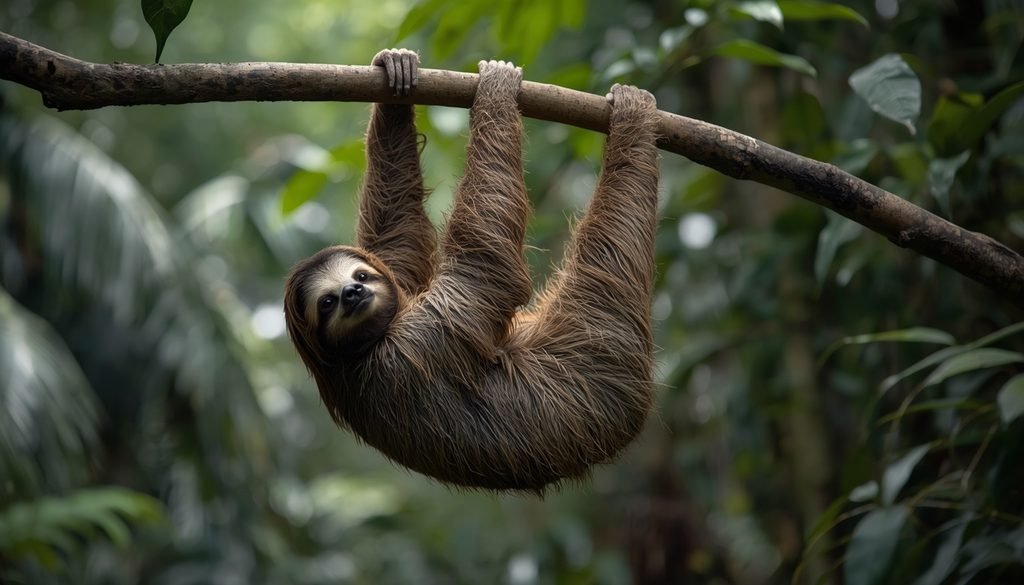
The three-toed sloth is one of the most famous slow-moving animals on Earth. It lives in tropical forests of Central and South America, where it spends much of its time hanging from tree branches. Its long limbs and curved claws help it grip branches while moving through the forest canopy.
Sloths mainly eat leaves, which provide relatively little energy. Their slow metabolism helps them survive on this limited diet. Instead of constantly searching for food, they conserve energy by resting for long periods and moving carefully between branches.
Although sloths are famously slow on the ground, they are well adapted to life in trees. Their movement speed can change depending on the activity and situation. Their quiet behavior and ability to blend into the canopy can also make them harder for predators to notice.
2. Banana Slug
Scientific name: Ariolimax species
The banana slug is a soft-bodied land mollusk known for its bright yellow or yellow-brown appearance. It is commonly found in moist forests along the Pacific coast of North America. Its slow, gliding movement makes it one of the most recognizable examples of a slow-moving land animal.
A banana slug moves by contracting muscles along the underside of its body. It produces mucus that helps it glide over leaves, soil, and other surfaces. Moisture is important because these animals can lose water through their soft bodies.
Banana slugs feed on fungi, decaying plant material, leaves, and other organic matter. Their diet helps recycle nutrients in forest ecosystems. They do not need to chase fast-moving prey, so their slow lifestyle suits the food they eat and the damp habitats they occupy.
3. Garden Snail
Scientific name: Cornu aspersum
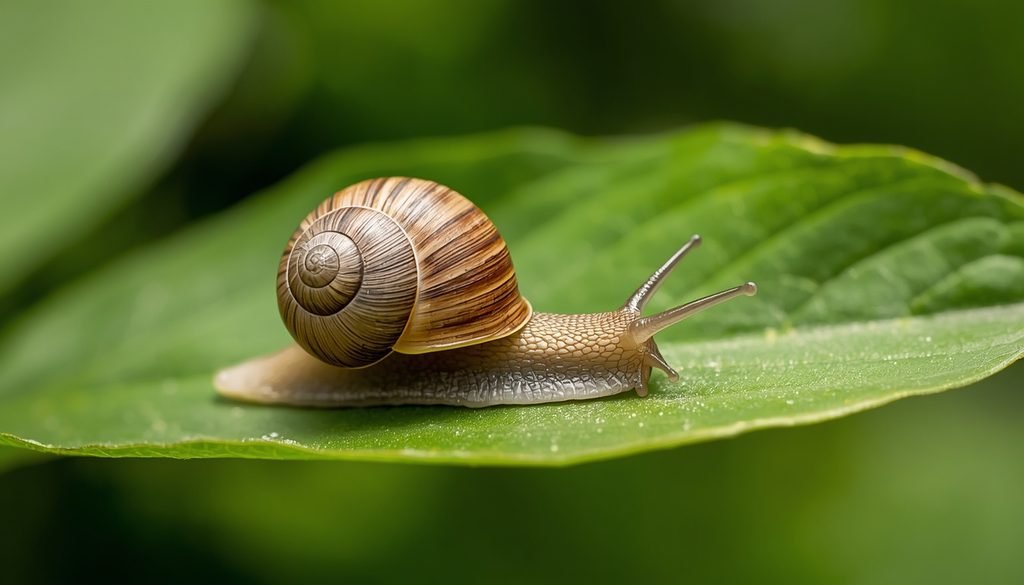
The garden snail is a familiar creature in gardens, parks, and other places with suitable moisture and vegetation. Its coiled shell protects its soft body, while its muscular foot helps it move across surfaces. Compared with most animals, its crawling speed is extremely slow.
Garden snails travel by producing mucus and moving their foot in coordinated muscular waves. The mucus reduces friction and helps protect the animal while it glides across rough surfaces. Damp conditions often encourage activity, while hot, dry weather can cause snails to retreat into sheltered places.
These snails eat a variety of plant material, including leaves and tender vegetation. They may also consume decaying organic matter. Their slow movement is not necessarily a disadvantage because their food is often nearby. The protective shell and habit of hiding during unfavorable conditions also help them survive.
4. Sea Anemone
Scientific classification: Order Actiniaria
Sea anemones are marine animals that resemble underwater flowers. They live in oceans around the world and commonly attach themselves to rocks, reefs, and other firm surfaces. Because many stay in one place for long periods, they are often included in discussions of the slowest animals.
Sea anemones use tentacles containing specialized stinging cells to capture small prey. Depending on the species, they may feed on tiny fish, plankton, and other small marine organisms. Their tentacles can also help them respond to water movement and nearby food.
Unlike animals that regularly travel across the ground or swim through open water, many sea anemones spend most of their lives attached to a surface. Some can slowly relocate by gliding along it or detaching and moving under particular conditions. Their limited movement helps them remain in suitable feeding areas.
5. Dwarf Seahorse
Scientific name: Hippocampus zosterae
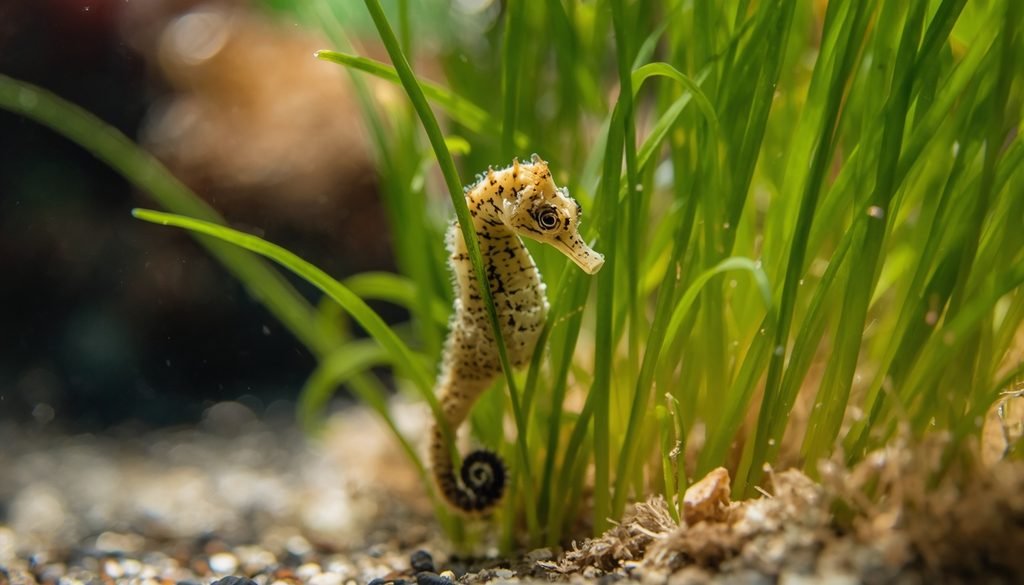
The dwarf seahorse is a tiny fish found in shallow marine habitats, including seagrass beds around the Gulf of Mexico and nearby waters. It uses its curled tail to hold onto underwater vegetation, helping it remain steady as water moves around it.
Unlike streamlined fish that swim quickly through open water, seahorses move with small fins and an upright posture. The dwarf seahorse is particularly small, and its swimming is generally suited to short movements rather than long, fast journeys.
It feeds on tiny crustaceans and other small prey that it draws into its snout. Its body shape and ability to cling to seagrass help it remain in a suitable feeding area. The dwarf seahorse is a useful example of how a fish can survive without relying on high swimming speed.
6. Galápagos Giant Tortoise
Scientific name: Chelonoidis niger species complex
The Galápagos giant tortoise is one of the world’s most recognizable giant reptiles. It lives on the Galápagos Islands, where different populations have adapted to local environments. Its large body, sturdy legs, and heavy shell make it well suited to a slow, steady lifestyle.
These tortoises eat grasses, leaves, cactus, and other vegetation depending on their habitat. Their plant-based diet and ability to survive with relatively modest energy demands help explain why they do not need to move quickly throughout the day.
Giant tortoises can travel to find food, water, or suitable resting places, but they generally move at a deliberate pace. Their long lifespan is another remarkable feature. Slow movement does not mean they are poorly adapted; instead, it suits their environment and feeding habits.
7. Starfish (Sea Star)
Scientific classification: Class Asteroidea
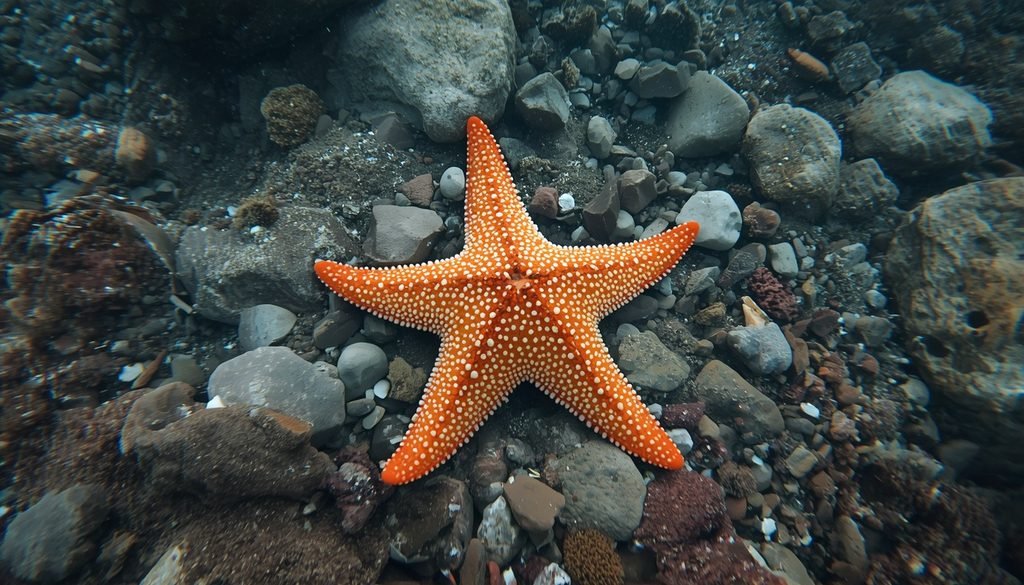
Sea stars, commonly called starfish, are marine invertebrates found in oceans around the world. They have arms arranged around a central body, although the number of arms differs among species. Their movement is slow compared with that of many fish and other active swimmers.
Sea stars use hundreds or sometimes thousands of tiny tube feet to move across rocks and the seafloor. These structures help them grip surfaces and travel toward food. Depending on the species, sea stars may feed on mussels, clams, small animals, or organic material.
Their slow pace is suitable for a life spent exploring the seabed rather than chasing fast prey. Some species can exert considerable force when opening shellfish. This shows that an animal can move slowly yet still be an effective predator.
8. Slow Loris
Scientific classification: Family Lorisidae, genus Nycticebus
The slow loris is a small primate native to parts of South and Southeast Asia. It has large forward-facing eyes, strong hands, and a firm grip that helps it climb through trees. Unlike monkeys that leap rapidly between branches, slow lorises often move deliberately.
Slow lorises are nocturnal, meaning they are mainly active at night. Their diet varies by species but can include insects, tree gum, nectar, and small animals. Moving slowly and quietly may help them approach food and avoid attracting attention from predators.
One surprising fact is that slow lorises have a venomous bite, an unusual trait among primates. They should never be treated as ordinary pets or handled by untrained people. Habitat loss and the illegal wildlife trade threaten many populations.
9. Koala
Scientific name: Phascolarctos cinereus
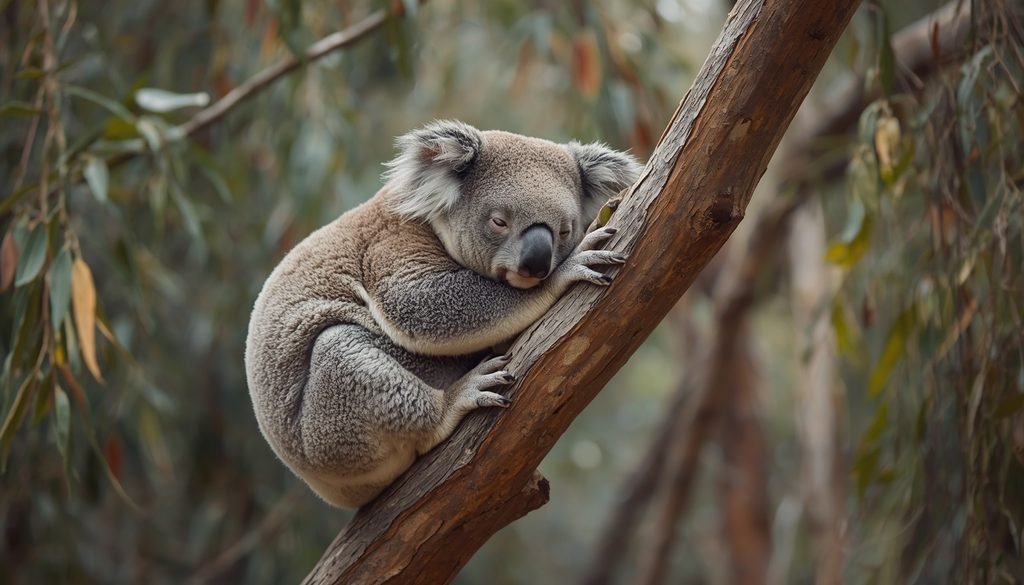
Koalas are tree-dwelling marsupials native to Australia. They spend much of their time resting in eucalyptus trees, where they feed on selected eucalyptus leaves. Their relaxed behavior and long resting periods make them seem like some of the slowest animals in the world.
Eucalyptus leaves are fibrous and relatively low in available energy. Koalas have a specialized digestive system that helps them process this food, but they still conserve energy by resting for much of the day. They use strong limbs and sharp claws to climb and grip tree trunks.
Koalas are not always slow. They can climb effectively and move more quickly when necessary. Their usual low-activity lifestyle is largely an energy-saving strategy, rather than an inability to move faster.
10. Manatee
Scientific classification: Family Trichechidae
Manatees are large aquatic mammals found in warm coastal waters, rivers, and estuaries. Sometimes called sea cows, they spend much of their time grazing on aquatic vegetation. Their rounded bodies and broad tails help them swim steadily through their watery habitats.
Manatees are herbivores that feed on seagrasses and other aquatic plants. They must surface regularly to breathe air, but they can remain underwater for several minutes between breaths. Their gentle swimming style suits their feeding habits because they do not need to chase prey.
Although manatees often move slowly, they can swim faster for short periods when needed. Their slow lifestyle should not be confused with a lack of ability. Boat strikes, habitat changes, and loss of warm-water refuges are important threats to these vulnerable animals.
11. Gila Monster
Scientific name: Heloderma suspectum
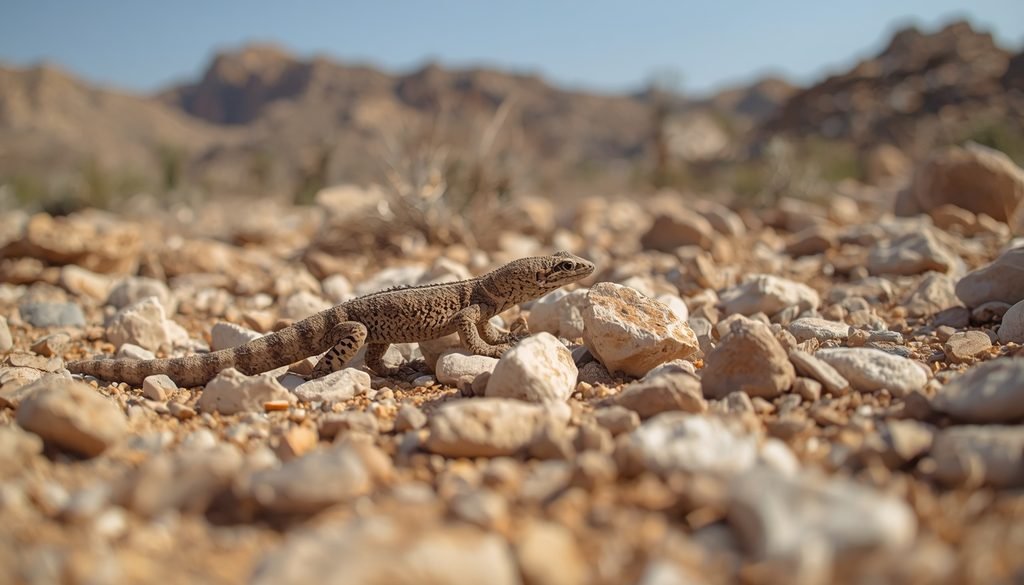
The Gila monster is a large, venomous lizard found in parts of the southwestern United States and northwestern Mexico. Its thick body, short legs, and distinctive patterned skin give it a striking appearance. It usually moves deliberately rather than racing across the desert.
Gila monsters eat small animals, including eggs and young mammals, depending on what is available. They can store fat in their tails, which helps them survive periods when food is scarce. This energy reserve supports a lifestyle that does not require constant activity.
Despite its slow appearance, the Gila monster can respond when threatened or searching for food. It is best observed from a safe distance because its bite is venomous and can cause serious pain. Its survival depends on suitable desert habitat and access to food and shelter.
12. Sea Cucumber
Scientific classification: Class Holothuroidea
Sea cucumbers are soft-bodied marine animals found on the seafloor, from shallow coastal waters to deep ocean habitats. Their elongated bodies can look very different from the familiar shapes of fish and crabs. Many species move slowly over sand, mud, or rocky surfaces.
Depending on the species, sea cucumbers use tube feet and body contractions to move. Many feed by collecting tiny organic particles from sediment or filtering material from the water. This feeding behavior helps recycle nutrients and supports healthy marine ecosystems.
Some sea cucumbers remain in a small area for long periods, while others travel more actively across the seabed. Their movement speed varies widely, so it is not accurate to name every sea cucumber as the slowest marine animal. Their unusual bodies and ecological role make them fascinating examples of slow-moving ocean life.
13. Nudibranch (Sea Slug)
Scientific classification: Clade Nudibranchia
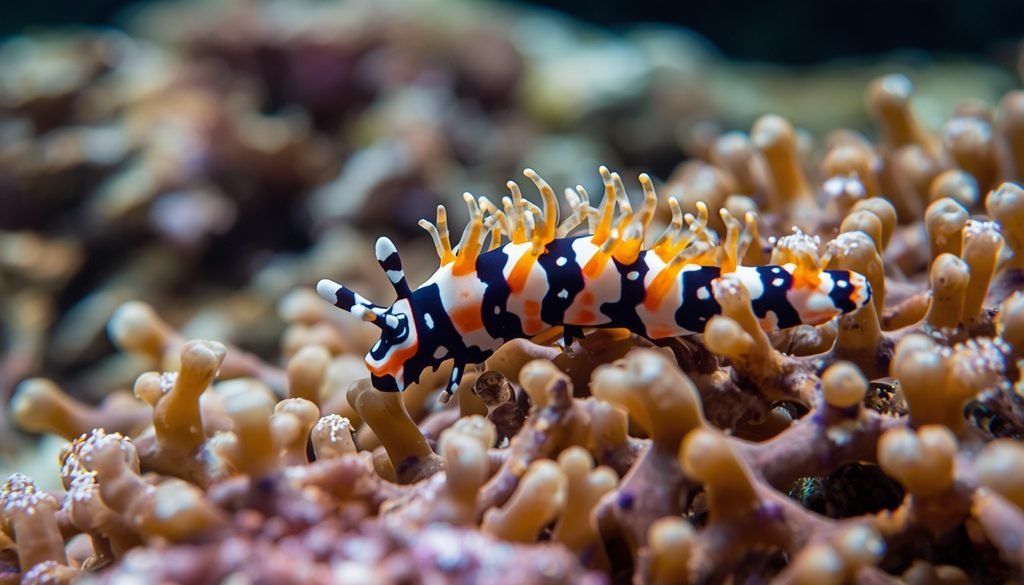
Nudibranchs are colorful marine mollusks often called sea slugs. They live in oceans around the world and are known for their bright patterns, unusual shapes, and lack of an external shell in their adult stage. They glide slowly across rocks, reefs, and other underwater surfaces.
A nudibranch moves using a muscular foot and a layer of mucus, much like a land snail. Its diet varies by species and may include sponges, hydroids, and other small marine animals. Some species can store defensive chemicals from their prey, while others use bright colors to warn predators.
Their slow movement works because they often search for food directly on the surfaces where they live. They do not need to swim constantly through open water. Their colorful appearance also makes nudibranchs popular subjects for underwater photographers and marine biology enthusiasts.
Why Are Some Animals So Slow?
Slow movement can help animals survive when speed is not necessary for finding food or avoiding danger. Sloths conserve energy because their leafy diet provides limited calories. Snails and slugs glide over surfaces to reach plants and other food sources, while sea anemones can remain attached to a suitable location for long periods.
Body structure also plays an important role. Heavy tortoises move differently from tiny mollusks, and aquatic animals use their bodies and fins in ways suited to their habitats. Slow movement may reduce energy use, support camouflage, or help an animal feed efficiently. However, not every slow animal moves slowly for the same reason.
What Is the Slowest Land Animal?
The three-toed sloth is widely recognized as one of the slowest land-dwelling mammals. However, banana slugs and garden snails are also among the slowest animals when crawling speed is considered. There is no single universal winner because comparisons depend on the species, conditions, and type of movement being measured.
What Is the Slowest Animal in the Ocean?
Sea anemones are strong contenders because they usually remain attached to rocks or other surfaces and may move only a few inches per hour when relocating. Dwarf seahorses also swim slowly compared with many fish. The comparison is not exact, however, because a sea anemone creeping along a surface and a fish swimming through water use different types of movement.
Is a Sloth Slower Than a Snail?
It depends on the species and how their speeds are measured. Sloths are famous for their slow movement, especially on the ground, while garden snails and banana slugs crawl at very low speeds. A fair comparison requires measuring the animals under similar conditions rather than assuming one is always slower than the other.
How Do Slow Animals Protect Themselves?
Slow animals use several survival strategies that do not depend on running away. Sloths blend into leafy branches, snails retreat into their shells, and some sea slugs use warning colors or chemical defenses. Sea anemones have stinging cells, while tortoises carry protective shells. These adaptations help animals survive despite their limited speed.
Read More: What Is the Smallest Animal in the World
Frequently Asked Questions
1. What is the slowest animal in the world?
The three-toed sloth is widely described as one of the slowest animals and is often named the slowest mammal. However, sea anemones, snails, and banana slugs may move more slowly under particular measurements. The answer depends on whether crawling, swimming, or occasional movement is being compared.
2. What is the slowest animal on land?
The three-toed sloth is one of the slowest land mammals, while banana slugs and garden snails are extremely slow crawlers. Since they move differently, scientists cannot always rank them using one simple speed comparison.
3. Is a sloth the slowest mammal?
Sloths are widely recognized as the slowest mammals. Their low-energy diet, slow metabolism, and specialized tree-dwelling lifestyle allow them to survive while moving very little. They can nevertheless swim and climb effectively when needed.
4. Are snails slower than sloths?
Garden snails move extremely slowly by gliding on a muscular foot covered with mucus. Sloths also move slowly, particularly on the ground. Which animal is slower depends on the individual species, conditions, and measurement method.
5. What is the slowest animal in the ocean?
Sea anemones are often considered among the slowest-moving marine animals because many remain attached to surfaces and relocate very slowly. Dwarf seahorses and other marine creatures also have slow movement patterns, but they should not be compared without considering how each animal moves.
6. Why do some animals move so slowly?
Some animals move slowly to conserve energy, while others have body structures suited to crawling or remaining in one place. Slow movement can also help animals feed efficiently, stay camouflaged, or avoid drawing attention from predators. It is often an adaptation to their environment rather than a weakness.
Conclusion
The slowest animals in the world show that speed is not the only way to survive in nature. Sloths conserve energy in tropical forests, snails and banana slugs glide across moist surfaces, and sea anemones can remain attached to underwater rocks for long periods. Each animal has developed behaviors and physical adaptations that suit its environment.
Although the three-toed sloth is widely recognized as one of the slowest mammals, there is no universally accepted slowest animal across every type of movement. Understanding these remarkable creatures helps us appreciate the diversity of wildlife. Explore more fascinating animal facts and wildlife guides on AnimalFactHubz.com.

One thought on “What Is the Slowest Animal in the World? 13 Remarkably Slow Animals”