
Introduction
Some animals seem almost built for protection. Their skin can be unusually thick, tough, loose, wrinkled, or reinforced with specialized structures that help them survive harsh environments, predators, fights, sunlight, and everyday physical wear. From the enormous African elephant to the surprisingly tough honey badger, these adaptations serve very different purposes.
However, “thickest skin animals” is not a formal scientific ranking. Skin thickness varies between species, body regions, age, and environmental conditions. Some animals on this list also have blubber, scales, osteoderms, bony plates, fur, or other protective tissues, which should not be confused with skin itself.
In this guide, we explore 15 animals known for remarkably thick or tough skin and explain their scientific name, class, diet, habitat, and the survival advantages of their unusual body covering.
Quick Answer: Which Animals Have the Thickest Skin?
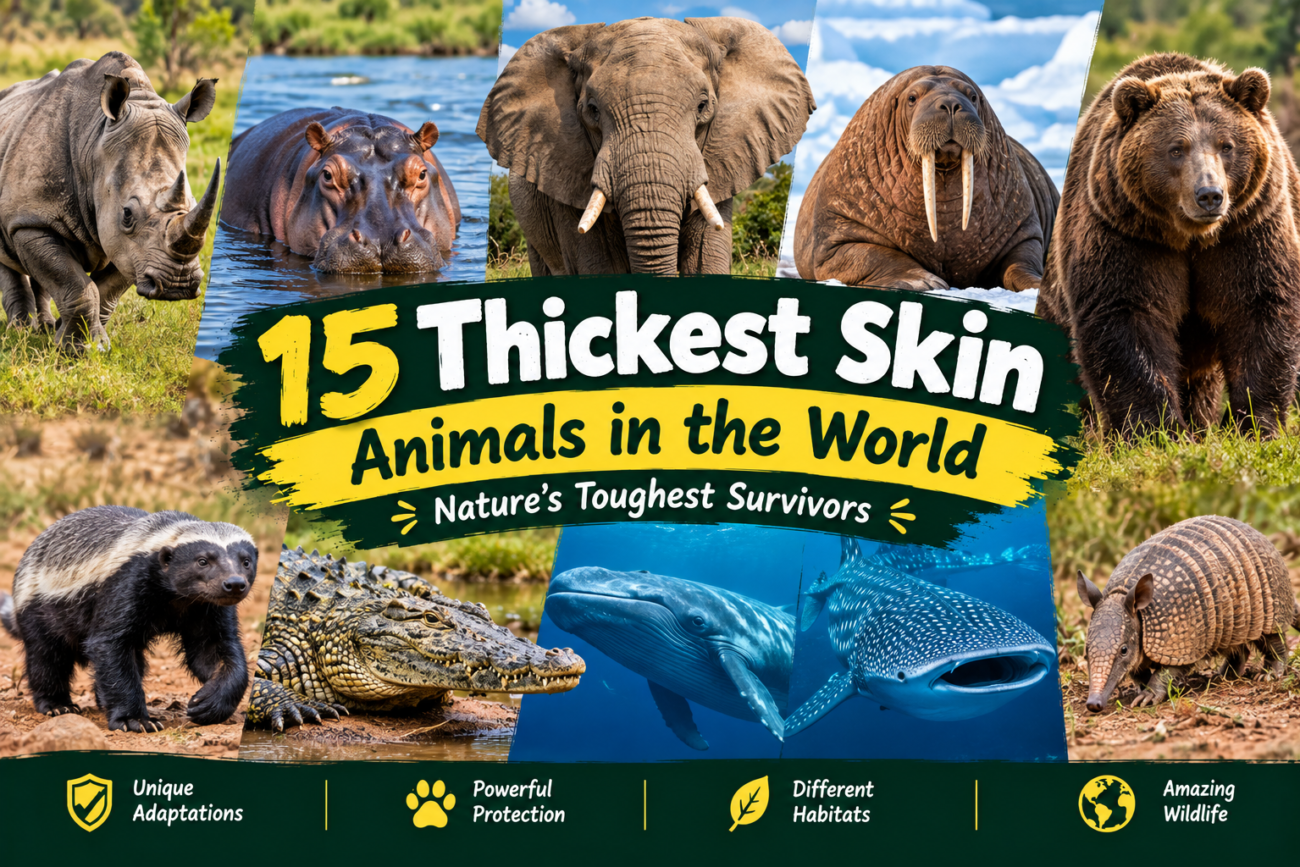
Animals commonly associated with very thick or tough skin include the walrus, honey badger, manatee, wild boar, grizzly bear, African elephant, Cape buffalo, sperm whale, Nile crocodile, American bison, rhinoceros, hippopotamus, blue whale, armadillo, and whale shark. Their protective coverings help with defense, temperature regulation, physical protection, parasites, abrasion, or life in demanding habitats.
1. Walrus
Scientific Name: Odobenus rosmarus
Class: Mammalia
Diet: Clams, mussels, worms, snails, and other marine invertebrates
Habitat: Arctic and sub Arctic coastal waters
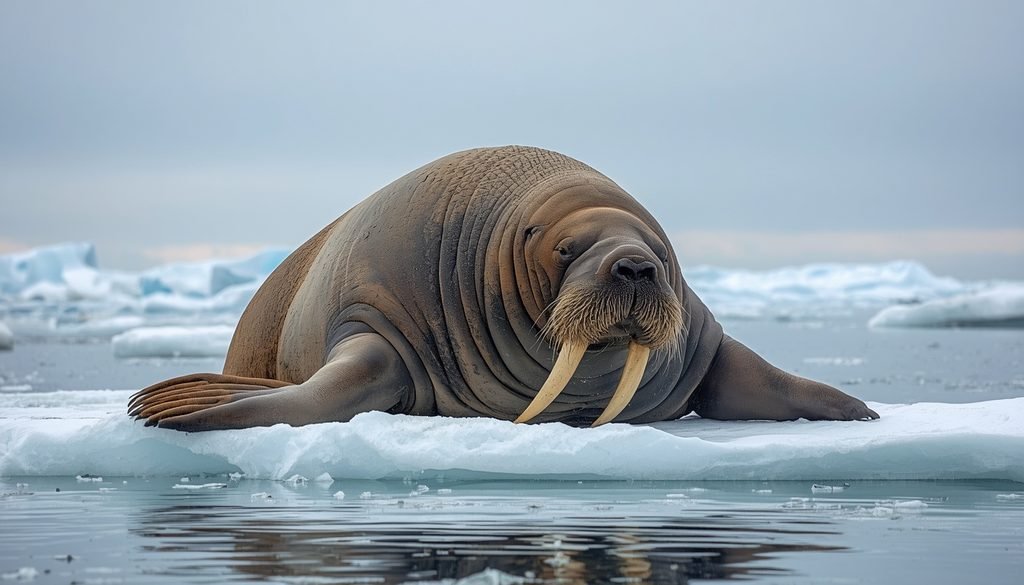
The walrus is one of the most recognizable animals with a tough outer body covering. Its skin is thick and rugged, providing protection while the animal moves across ice, rocky shorelines, and crowded haul out sites.
Walruses also have a substantial layer of blubber beneath the skin. This distinction is important because blubber is fatty tissue, not skin. Together, the skin and blubber help protect the animal from cold water and physical impacts.
Their thick whiskers, called vibrissae, are also highly useful. Walruses use them to locate food on the seafloor, especially when visibility is poor. Their body adaptations demonstrate how protection and survival can work together in an extreme Arctic environment.
2. Honey Badger
Scientific Name: Mellivora capensis
Class: Mammalia
Diet: Insects, rodents, reptiles, birds, eggs, honey, and other foods
Habitat: Grasslands, savannas, forests, and semi arid regions of Africa and Asia
The honey badger is famous for its toughness, but its reputation is not simply based on aggression. It has coarse, loose fitting skin that provides an important physical advantage when confronted by predators or struggling with prey.
The looseness of the skin allows the animal considerable freedom of movement even when another animal gets a grip. Its thick skin and underlying tissues provide additional protection against bites and scratches.
Honey badgers are opportunistic feeders and have a broad diet. Their skin is only one part of their defensive toolkit, alongside powerful jaws, claws, muscular bodies, and behavioral adaptations. Their toughness should not be interpreted as complete immunity to bites, venom, or other injuries.
3. Manatee
Scientific Name: Trichechus manatus
Class: Mammalia
Diet: Aquatic plants and vegetation
Habitat: Warm coastal waters, rivers, estuaries, and freshwater systems
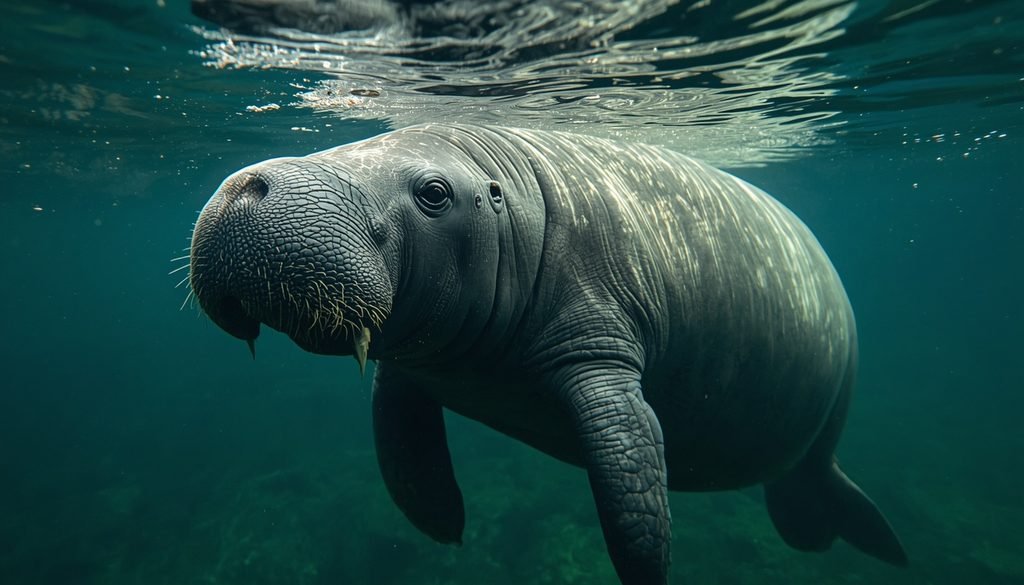
Manatees have thick, wrinkled skin that helps them cope with their aquatic lifestyle. Their skin is constantly exposed to water, vegetation, submerged objects, and other physical challenges.
Their large bodies also contain a substantial layer of body fat that contributes to insulation and energy storage. Again, this fatty tissue should not be confused with skin.
Manatees are slow moving herbivores, spending much of their time feeding on aquatic plants. Their thick skin can provide useful protection from minor abrasions as they move through vegetation and shallow environments.
Although they look heavily protected, manatees are still vulnerable to serious injuries, especially from human activities such as boat strikes.
4. Wild Boar
Scientific Name: Sus scrofa
Class: Mammalia
Diet: Roots, fruits, insects, small animals, crops, and other foods
Habitat: Forests, grasslands, wetlands, and agricultural areas
Wild boars have tough skin that contributes to their rugged appearance and helps protect their bodies while moving through dense vegetation. Their coarse hair provides another layer of physical protection.
Adult males can also develop a thickened region of tissue around the shoulders and neck, sometimes called a shield. This is more accurately understood as specialized tissue beneath and around the skin rather than simply an extremely thick layer of skin.
These adaptations are especially useful during fights between males, where tusks can cause serious wounds. Their strong bodies, coarse hair, thickened tissues, and defensive behavior make wild boars particularly well adapted to rough environments.
5. Grizzly Bear
Scientific Name: Ursus arctos horribilis
Class: Mammalia
Diet: Omnivorous; plants, berries, fish, insects, and meat
Habitat: Forests, mountains, meadows, and tundra
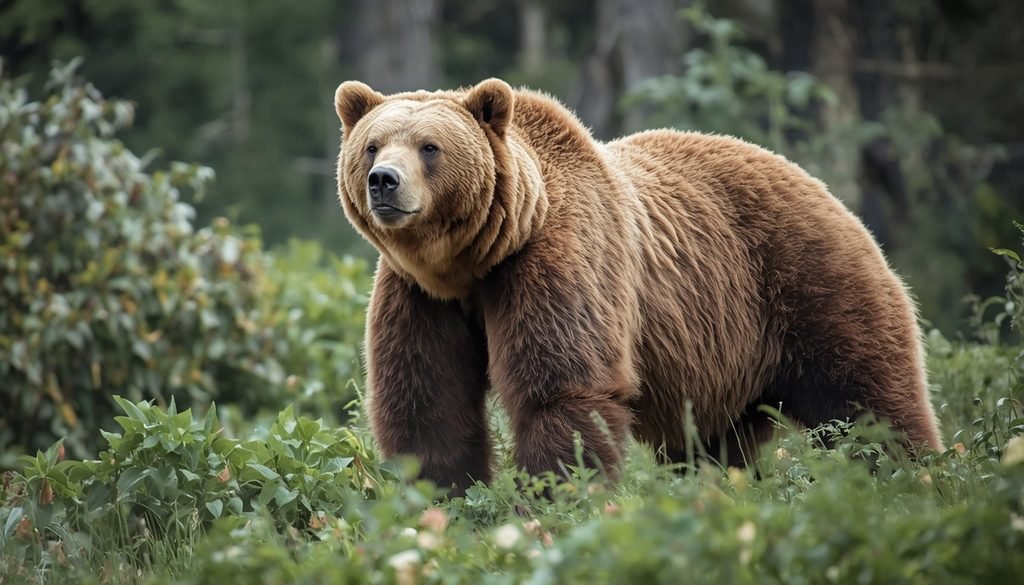
Grizzly bears have a powerful combination of thick skin, dense fur, body fat, and muscle. Their protective covering is therefore more than just skin thickness.
The skin helps provide physical protection, while the thick coat protects against cold and environmental abrasion. Beneath the skin, substantial muscle and fat add to the bear’s overall resilience.
Grizzlies are omnivores with flexible diets, allowing them to survive across diverse North American habitats. Their powerful forelimbs, claws, teeth, and large body size are also important defensive adaptations.
Rather than thinking of a grizzly as having “bulletproof skin,” it is more accurate to describe its body as heavily built and well protected by several layers of tissue.
6. African Elephant
Scientific Name: Loxodonta africana
Class: Mammalia
Diet: Grass, leaves, bark, roots, fruits, and other vegetation
Habitat: Savannas, woodlands, forests, and wetlands
The African elephant is one of the best known animals with exceptionally thick skin. On some areas of the body, its skin can reach around 2.5 centimeters or more, while other regions are much thinner.
Its wrinkles and folds are especially useful. They can trap water and mud, helping the elephant cool itself and protect its skin from the intense African sun and parasites.
Despite its thickness, elephant skin is sensitive. Elephants regularly use mud, dust, and water to care for their skin. This shows that thick skin is not the same as insensitive or invulnerable skin.
7. Cape Buffalo
Scientific Name: Syncerus caffer
Class: Mammalia
Diet: Grass and other vegetation
Habitat: Savannas, grasslands, woodlands, and wetlands
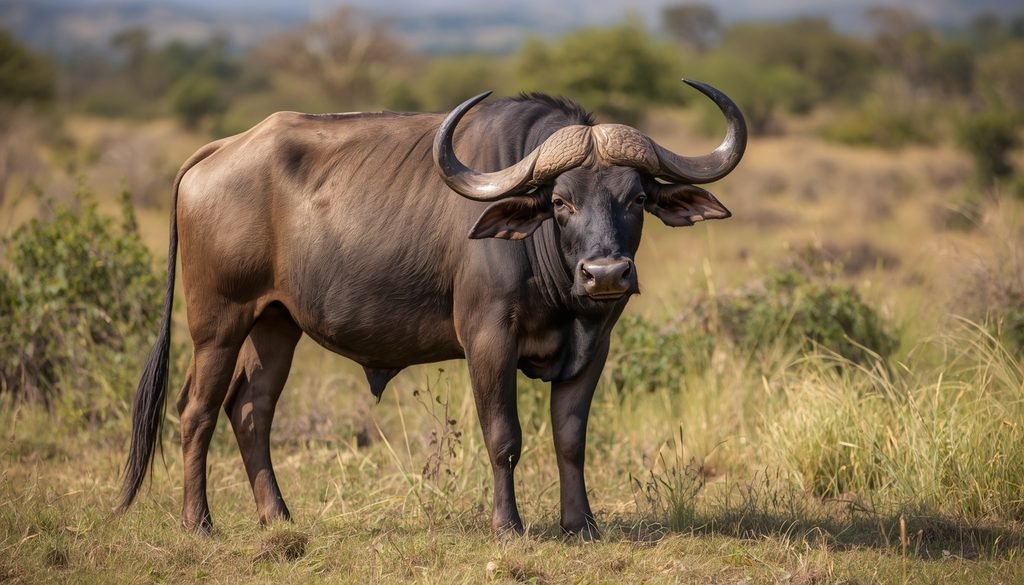
The Cape buffalo has a heavily built body with tough skin that contributes to its ability to withstand the physical demands of life in African habitats.
Its massive shoulders, strong neck, horns, and muscular body are especially important during defensive encounters and fights between individuals. The skin works as part of this broader physical protection system.
Cape buffalo often live in herds and spend much of their time grazing. Their strong bodies help them move through rough vegetation and defend themselves when threatened.
Their skin should not be described as armor in the literal sense. Instead, it is one component of a powerful combination of anatomy and behavior.
8. Sperm Whale
Scientific Name: Physeter macrocephalus
Class: Mammalia
Diet: Mainly squid, including large deep sea squid
Habitat: Deep ocean waters worldwide
Sperm whales are deep diving marine mammals with skin that can appear wrinkled, particularly behind the head. They also possess a substantial layer of blubber beneath the skin.
The blubber is crucial for insulation and energy storage, while the skin forms the animal’s outer protective barrier. These two tissues should not be treated as the same structure.
Sperm whales are specialized deep water predators and can dive to remarkable depths in search of prey. Their large bodies and marine adaptations allow them to live in environments that would be challenging for most mammals. NOAA describes their skin as wrinkled behind the head and notes their strong association with deep water squid feeding.
9. Nile Crocodile
Scientific Name: Crocodylus niloticus
Class: Reptilia
Diet: Fish, birds, mammals, reptiles, and other prey
Habitat: African rivers, lakes, wetlands, and waterways
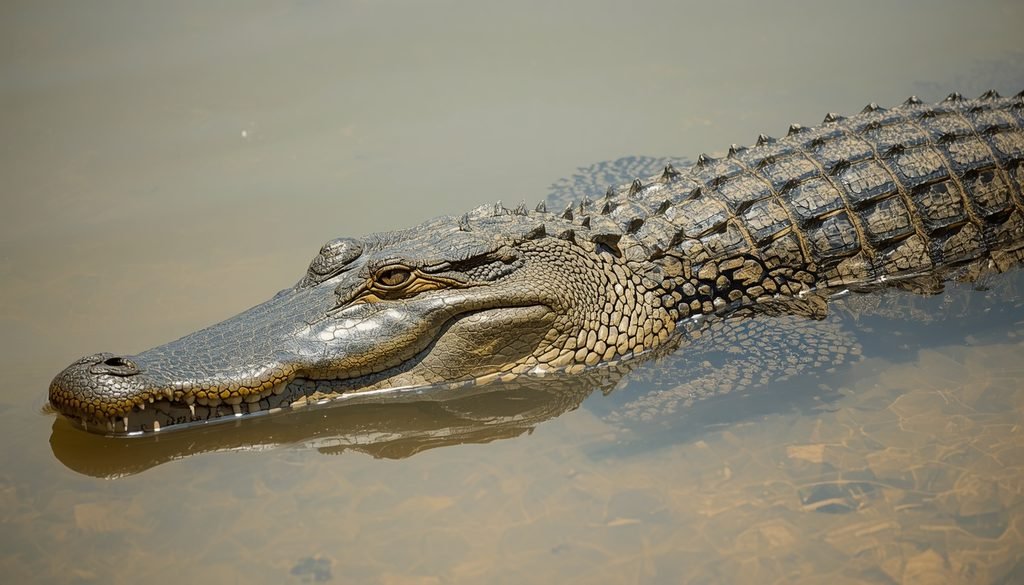
The Nile crocodile has a highly specialized outer body covering made up of tough skin and scales. Beneath portions of the skin are osteoderms, bony structures that add further protection.
This means crocodile protection should not simply be described as “very thick skin.” Its defensive body covering combines several specialized structures.
The heavily armored back protects important areas, while the crocodile’s powerful tail and jaws provide additional advantages. Its body is particularly suited to ambush hunting in rivers and wetlands.
10. American Bison
Scientific Name: Bison bison
Class: Mammalia
Diet: Grasses and other vegetation
Habitat: Grasslands, prairies, and open woodland
American bison have tough skin combined with dense fur, substantial muscle, and a massive body. Their shoulder region is particularly powerful, helping them push through snow and vegetation and engage in physical contests.
Their winter coat provides insulation, while their skin forms an important protective barrier against environmental conditions. During cold seasons, their dense fur becomes especially important.
Bison are primarily grazers and are highly adapted to open grassland ecosystems. Their impressive size can make them appear heavily armored, but their protection comes from several tissues and anatomical features rather than skin alone.
11. Rhinoceros
Scientific Name: Rhinocerotidae
Class: Mammalia
Diet: Mainly grasses or leaves depending on species
Habitat: African and Asian grasslands, savannas, forests, and wetlands
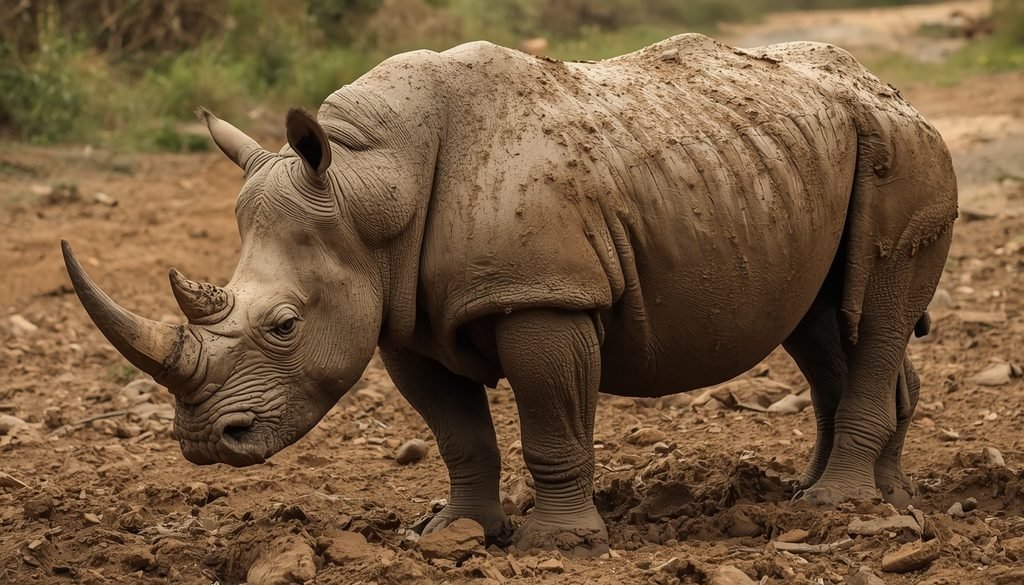
Rhinoceroses are among the most famous animals associated with thick skin. Their skin is strong and collagen rich, forming folds and creases that can make the animal look as if it is wearing natural armor.
Mud wallowing is an important behavior for rhinos. Mud can help protect exposed skin from sunlight, insects, and other environmental stresses.
Despite its impressive appearance, rhino skin is not literally armor or bulletproof. Rhinos can suffer wounds and skin injuries. Their horns, size, muscles, and behavior are also major parts of their defense system.
12. Hippopotamus
Scientific Name: Hippopotamus amphibius
Class: Mammalia
Diet: Mainly grass
Habitat: Rivers, lakes, wetlands, and nearby grasslands in sub Saharan Africa
The hippopotamus has remarkably thick skin that can help protect its large body from environmental wear and physical contact. Its skin is also associated with distinctive secretions that contribute to protection from sunlight and may have antimicrobial properties.
A common myth calls these secretions “blood sweat,” but they are not blood or sweat. They are specialized skin secretions.
Hippos spend significant amounts of time in water during the hottest parts of the day and generally feed on land at night. Their thick skin works alongside their enormous size, powerful jaws, and muscular body.
13. Blue Whale
Scientific Name: Balaenoptera musculus
Class: Mammalia
Diet: Primarily krill
Habitat: Oceans worldwide
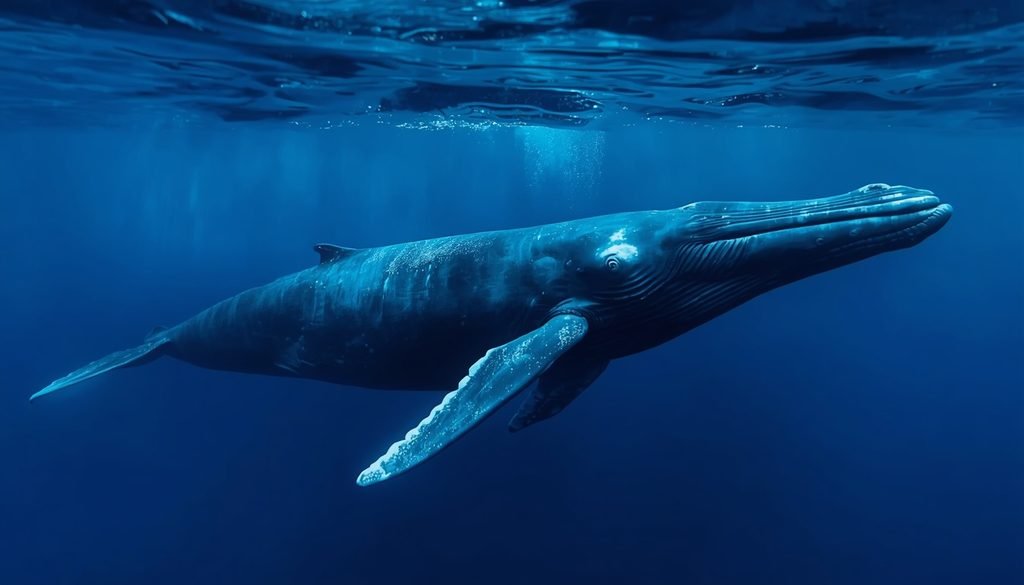
The blue whale is the largest animal known to have lived, and its body has specialized adaptations for life in the ocean. Its skin forms the outer barrier, while a deep layer of blubber lies underneath.
Blubber is not skin. It is specialized fatty tissue that provides insulation, energy storage, and other physiological benefits. This distinction matters when discussing the thickest skin animals.
Blue whales regularly shed outer skin cells, demonstrating that their skin is active living tissue rather than a permanent protective shell.
Their enormous body, streamlined shape, skin, and blubber together support life in cold and productive ocean environments.
14. Armadillo
Scientific Name: Dasypodidae
Class: Mammalia
Diet: Insects, larvae, worms, plants, and other foods depending on species
Habitat: Grasslands, forests, scrublands, and semi arid habitats of the Americas
Armadillos are unusual because their protection involves more than thick skin. Their body is covered by bony plates embedded within the skin, creating a specialized armored covering.
These plates are made from bone and are connected by flexible areas in many species. This allows armadillos to move while still receiving protection from predators and environmental hazards.
Not every armadillo species can completely roll into a ball. The three banded armadillos are particularly famous for this behavior, while many other species rely on digging, armor, and other defensive strategies.
15. Whale Shark
Scientific Name: Rhincodon typus
Class: Chondrichthyes
Diet: Plankton, small fish, krill, and other tiny organisms
Habitat: Warm and tropical oceans
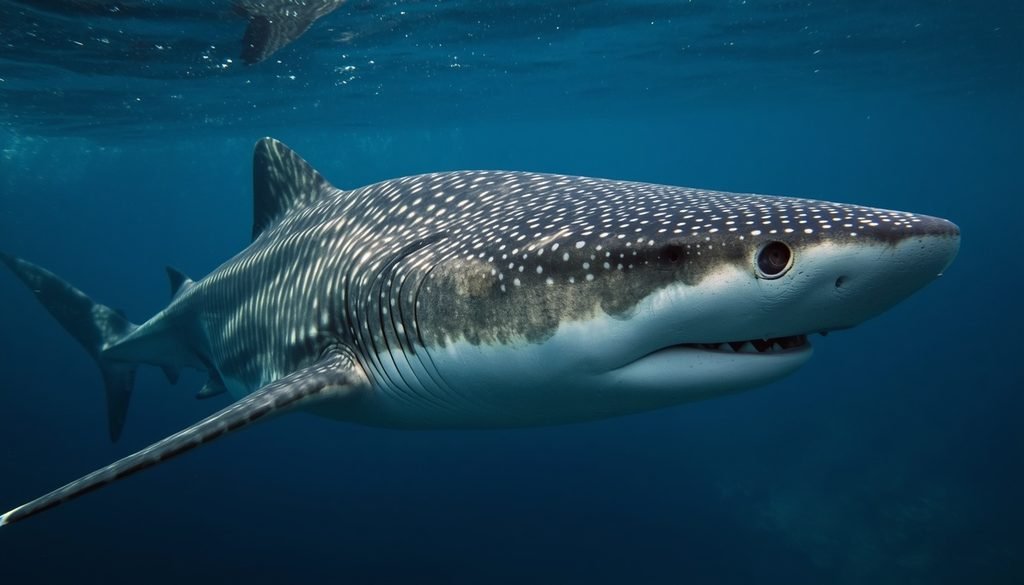
The whale shark has remarkably tough skin for a fish. Its body is covered with specialized structures called dermal denticles, which are tiny tooth like structures associated with shark skin.
These structures are different from the scales found on many bony fish. Dermal denticles can help reduce drag and protect the shark’s body while moving through seawater.
Whale sharks are filter feeders and generally pose little threat to humans despite their enormous size. Their tough skin and denticles are excellent examples of how marine animals can evolve specialized external structures for both protection and efficient movement.
Why Do Some Animals Have Thick Skin?
Thick or tough skin can evolve for several different reasons. In large land mammals, it may provide protection from scratches, bites, vegetation, parasites, sunlight, and physical contact. Elephants, for example, use mud and dust on their skin to help manage heat and parasites, while rhinos frequently wallow in mud.
In other animals, loose skin can be useful during fights. The honey badger’s flexible skin can make it harder for an opponent to maintain a secure grip.
Aquatic animals have different requirements. Marine mammals such as whales combine skin with blubber, while sharks have dermal denticles that contribute to protection and hydrodynamic performance.
Therefore, “thick skin” is not one universal adaptation. It can be part of a much larger survival system involving body fat, fur, scales, armor, behavior, and habitat.
Does Thick Skin Make Animals Invulnerable?
No. Even animals with exceptionally thick or tough skin can be injured. Thick skin may reduce the impact of some physical threats, but it does not make an animal immune to bites, weapons, disease, extreme temperatures, or serious wounds.
It is also important to distinguish skin from other protective structures. Crocodiles have scales and osteoderms, armadillos have bony plates, and whales have blubber beneath their skin. These structures provide different functions.
The best way to understand thick skin is as one useful adaptation among many, rather than as natural body armor that makes an animal impossible to hurt.
Read More: 14 Animals That Have Stripes
Final Thoughts
The world’s thickest skin animals show just how diverse animal adaptations can be. Elephants and rhinos use thick, specialized skin to cope with heat, sunlight, insects, and physical wear. Honey badgers benefit from loose, tough skin, while armadillos take protection much further with bony plates embedded in their skin.
Marine animals demonstrate another approach. Walruses, sperm whales, and blue whales combine skin with blubber, while whale sharks use dermal denticles for protection and efficient swimming.
There is no universally accepted scientific ranking of the “15 thickest skin animals.” Instead, these species are valuable examples of how evolution has modified skin and related tissues to meet the challenges of different environments.
Frequently Asked Questions
1. Which animal has the thickest skin?
There is no universally accepted scientific winner for the thickest skin. Skin thickness varies between species and body regions. African elephants, rhinoceroses, hippos, and several other animals are well known for exceptionally thick or tough skin, but direct comparisons are difficult.
2. Is elephant skin the thickest skin in the world?
Elephant skin is among the thickest known mammalian skin, with some areas of an African elephant reaching about 2.5 centimeters or more. However, other parts of the body are much thinner, so it is inaccurate to describe the entire animal as having uniformly thick skin.
3. Are rhinos covered in natural armor?
Rhino skin is extremely tough and thick, but calling it literal armor is an oversimplification. Their protection comes from skin, muscle, body size, horns, and behavior. Mud wallowing also helps protect exposed skin from environmental stresses.
4. Does a honey badger have bulletproof skin?
No. Honey badgers have tough, loose skin that can provide useful protection during fights, but it is not bulletproof. Their reputation for toughness comes from a combination of skin, muscle, claws, jaws, behavior, and other adaptations.
5. Is whale blubber the same as thick skin?
No. Blubber is a specialized layer of fatty tissue beneath the skin. It provides insulation, energy storage, and other functions. Whales such as blue whales and sperm whales have both skin and blubber, but these are anatomically different tissues.
6. Why do sharks have rough skin?
Shark skin contains tiny tooth like structures called dermal denticles. These structures give many sharks a rough, sandpaper like texture and can reduce drag as the animal moves through water. They are specialized skin structures rather than ordinary fish scales.

One thought on “Thickest Skin Animals: 15 Animals With Remarkably Tough Skin”