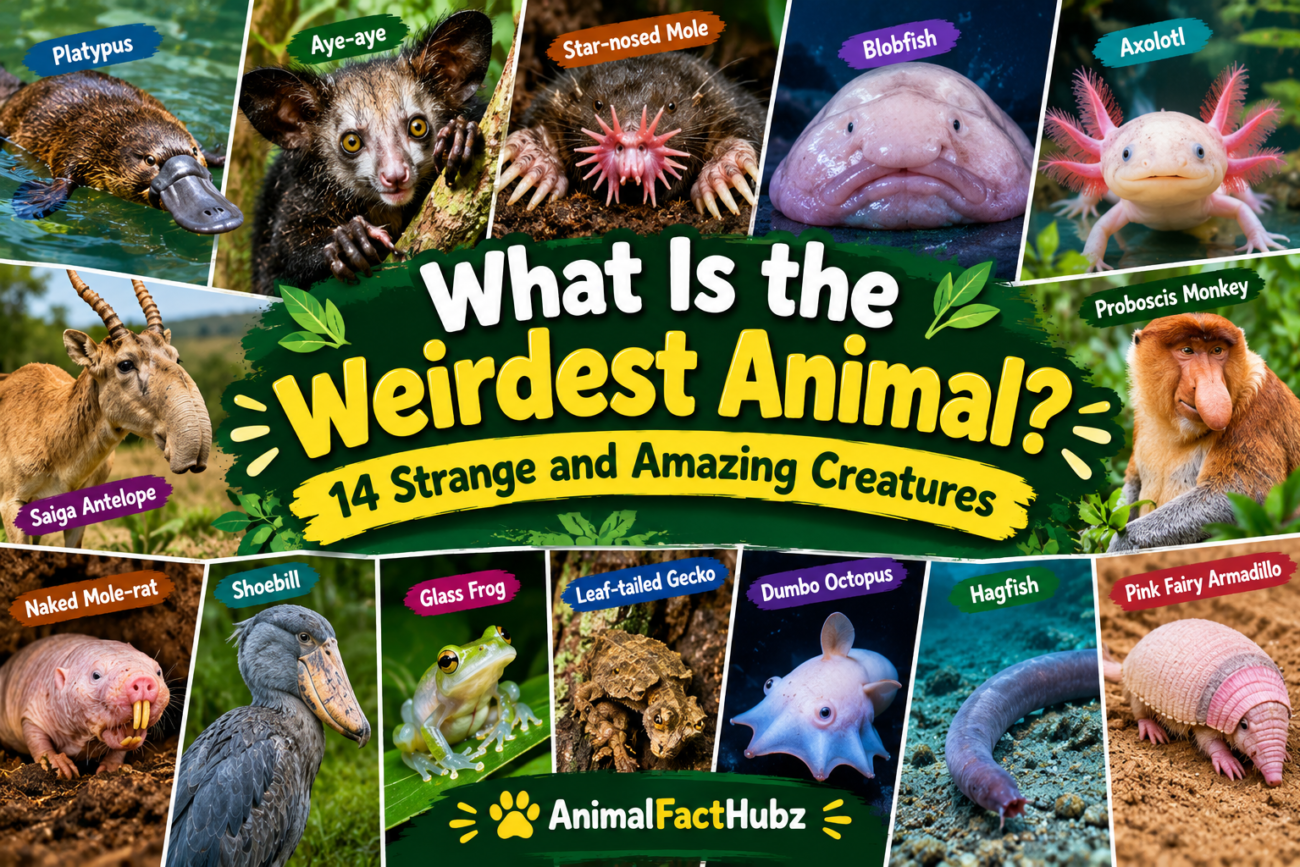
Nature is full of animals that look as if they came from a science-fiction movie. Some have unusual noses, others have transparent skin, and a few possess body parts that seem almost impossible. From deep-sea creatures with strange shapes to mammals with remarkable sensory abilities, the animal kingdom is far more surprising than many people imagine.
But what is the weirdest animal in the world? The answer depends on what you find unusual. An animal might look strange because of its appearance, behave differently from other species, or have a special adaptation that helps it survive in a challenging habitat.
In this guide, we explore 14 of the weirdest animals on Earth, including where they live, what they eat, and what makes each one extraordinary.
Quick Answer: What Is the Weirdest Animal?
There is no scientifically recognized single winner for the weirdest animal in the world. However, the platypus, aye-aye, blobfish, star-nosed mole, and axolotl are strong contenders because of their unusual appearances and remarkable adaptations. The platypus is an egg-laying mammal with a duck-like bill, the aye-aye has an extremely long middle finger for finding insect larvae, and the star-nosed mole has 22 fleshy appendages around its nose. The weirdest animal ultimately depends on whether you judge animals by their appearance, behavior, or unique survival abilities.
1. Platypus
Scientific name: Ornithorhynchus anatinus
Habitat: Freshwater rivers, streams, and wetlands in eastern Australia and Tasmania.
Diet: Aquatic insect larvae, worms, small crustaceans, and other invertebrates.
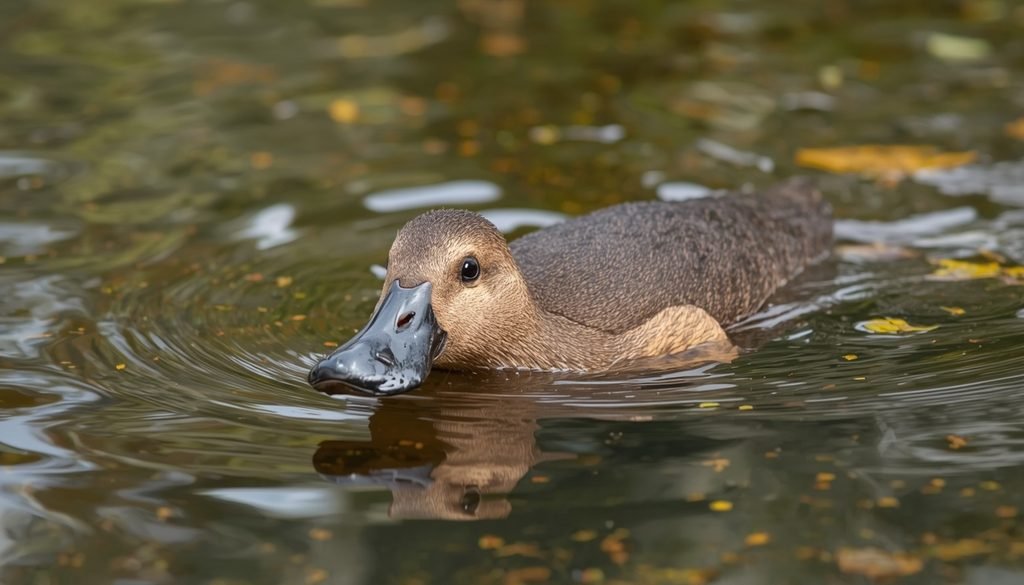
The platypus looks like several animals combined into one. It has a broad, duck-like bill, dense brown fur, webbed feet, and a flat tail that resembles a beaver’s. When early European scientists first examined a specimen, some suspected that different animal parts had been stitched together.
Its unusual appearance is only part of the story. The platypus is a monotreme, meaning it is one of the few living mammals that lay eggs. After hatching, its young drink milk produced by the mother.
The platypus also has special receptors in its bill that detect electrical signals generated by prey. This ability, known as electroreception, helps it locate food underwater, even when visibility is poor.
Male platypuses have venom-delivering spurs on their hind legs. These features make the platypus one of the strangest mammals alive and a remarkable example of evolutionary adaptation.
2. Aye-Aye
Scientific name: Daubentonia madagascariensis
Habitat: Forests and other wooded habitats in Madagascar.
Diet: Insect larvae, grubs, fruit, nuts, and nectar.
The aye-aye is a nocturnal lemur with large eyes, prominent ears, long fingers, and continuously growing front teeth. Its appearance can seem unusual, but each feature has a practical purpose.
One of its most remarkable adaptations is an elongated, thin middle finger. The aye-aye taps tree bark with this finger and listens for signs of hollow spaces where insect larvae may be hiding. It then gnaws into the wood and uses the same finger to pull out its meal.
This feeding technique allows the animal to find food concealed beneath tree bark. Its large ears help it detect subtle sounds, while its strong incisors can break through tough plant material.
Aye-ayes are native to Madagascar and face threats from habitat loss and human persecution. Their unusual appearance has sometimes contributed to negative beliefs about them, even though they play a natural role in their forest ecosystem.
3. Star-Nosed Mole
Scientific name: Condylura cristata
Habitat: Wet soils, marshes, and damp areas of eastern North America.
Diet: Earthworms, insects, aquatic invertebrates, and other small prey.
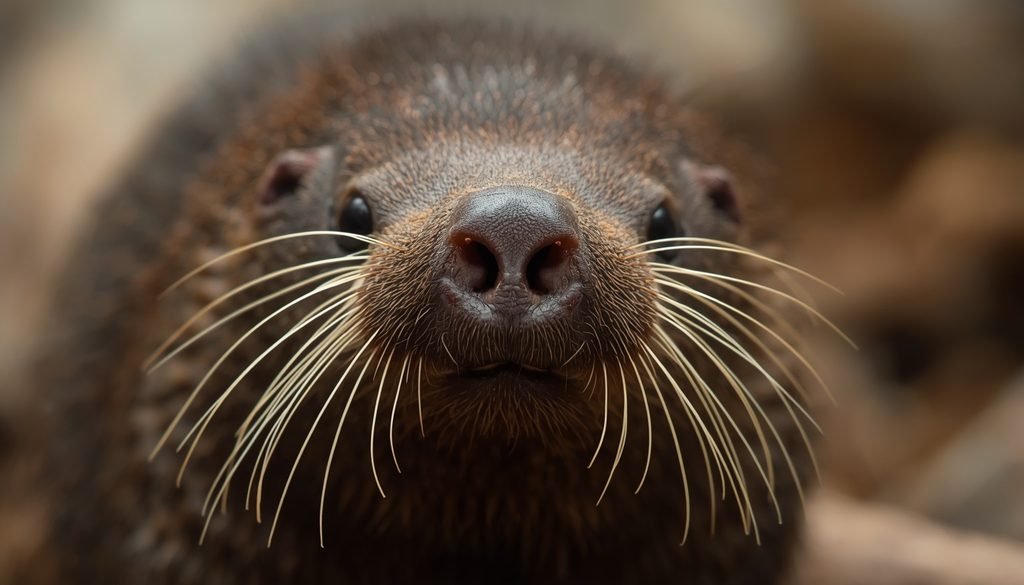
The star-nosed mole has one of the strangest noses in the animal kingdom. Around the end of its snout are 22 fleshy appendages arranged in a star-like pattern. These structures are covered with extremely sensitive touch receptors.
The mole uses this unusual nose to explore its surroundings and locate food, often in dark underground tunnels or muddy environments. Because its eyesight is limited, touch plays a particularly important role in finding prey.
The star-shaped nose is not a decoration or a weapon. It is a highly specialized sensory organ that helps the mole investigate tiny objects and identify edible prey quickly.
This animal can also forage underwater, making it well adapted to wet habitats. Its unusual facial structure demonstrates how evolution can produce specialized body parts that look strange to humans but are extremely useful for survival.
4. Blobfish
Scientific name: Psychrolutes marcidus
Habitat: Deep waters off parts of Australia and New Zealand.
Diet: Small marine animals and other food sources available on the deep-sea floor.
The blobfish is famous for its drooping face and soft, gelatinous appearance. Photographs of specimens brought to the surface often show a sagging body that has made the animal an internet sensation.
However, its appearance outside the water can be misleading. Blobfish are adapted to deep-sea conditions, where water pressure is much greater than at the surface. Their bodies are soft and contain relatively little dense bone, helping them live in their deep-water environment.
When a deep-sea fish is brought to the surface, the change in pressure can alter its shape and appearance. The familiar sad-looking face seen in photographs does not necessarily represent how the fish looks in its natural habitat.
Blobfish are a useful reminder that unusual-looking animals are often adapted to conditions that humans rarely experience. Their deep-sea environment remains difficult to study, and many details about their natural behavior are still not fully understood.
5. Axolotl
Scientific name: Ambystoma mexicanum
Habitat: Native to freshwater habitats around Xochimilco in Mexico City, Mexico.
Diet: Worms, insect larvae, small crustaceans, and small aquatic animals.
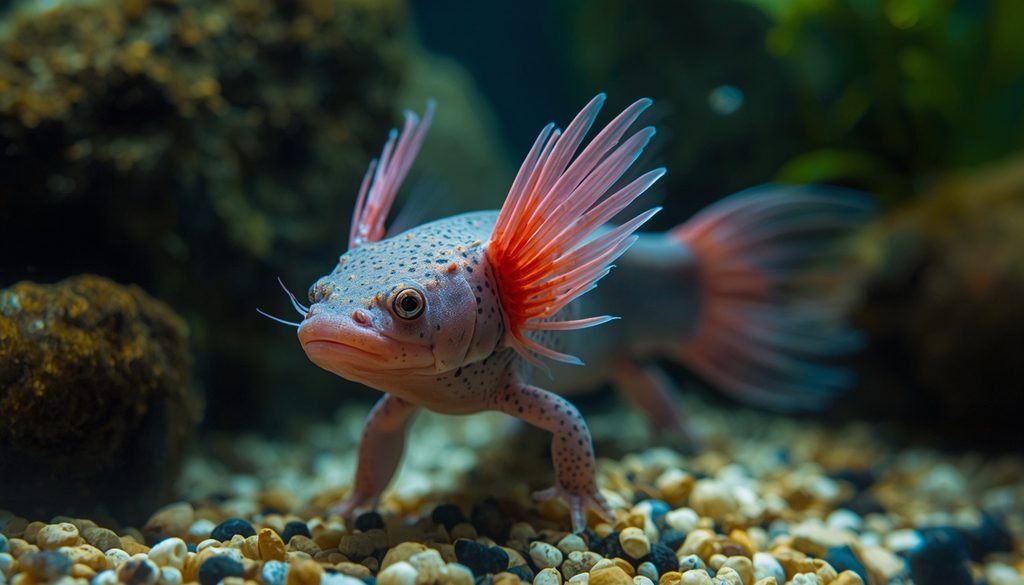
The axolotl is a salamander famous for its feathery external gills and wide, smiling-looking face. Unlike most amphibians, it normally retains many juvenile features throughout adulthood, including its external gills and aquatic lifestyle.
This condition is called neoteny. Instead of completing the usual transformation into a land-dwelling adult form, the axolotl generally remains in the water.
Its most extraordinary ability is regeneration. Axolotls can regrow limbs and repair several types of damaged tissues, including parts of their spinal cord and other organs. Scientists study these abilities to better understand tissue repair and regeneration.
Axolotls are also popular in scientific research and captivity, but their natural populations are critically endangered. Pollution, habitat loss, and introduced fish have contributed to their decline.
Their unusual appearance and remarkable biology make them one of the best-known strange animals in the world.
6. Saiga Antelope
Scientific name: Saiga tatarica
Habitat: Open steppes and grasslands in parts of Central Asia.
Diet: Grasses, herbs, and other vegetation.
The saiga antelope looks unlike most familiar antelopes because of its large, flexible nose. Its bulbous snout hangs over its mouth, giving the animal a distinctive appearance.
This nose is not simply an unusual feature. Its internal structure helps warm and moisten cold, dry air during winter. It may also help filter dust during dry and windy conditions.
Saigas live in open landscapes where temperatures can change dramatically between seasons. They often travel in herds and undertake migrations in search of suitable food and habitat.
Despite their sturdy bodies, saiga populations have experienced serious declines due to poaching, disease outbreaks, and other pressures. Conservation work is important for protecting this unusual antelope.
The saiga demonstrates that some of the weirdest animal features are practical adaptations to demanding environments rather than random differences in appearance.
7. Proboscis Monkey
Scientific name: Nasalis larvatus
Habitat: Mangrove forests, riverine forests, and coastal wetlands of Borneo.
Diet: Leaves, seeds, unripe fruit, and other plant material.
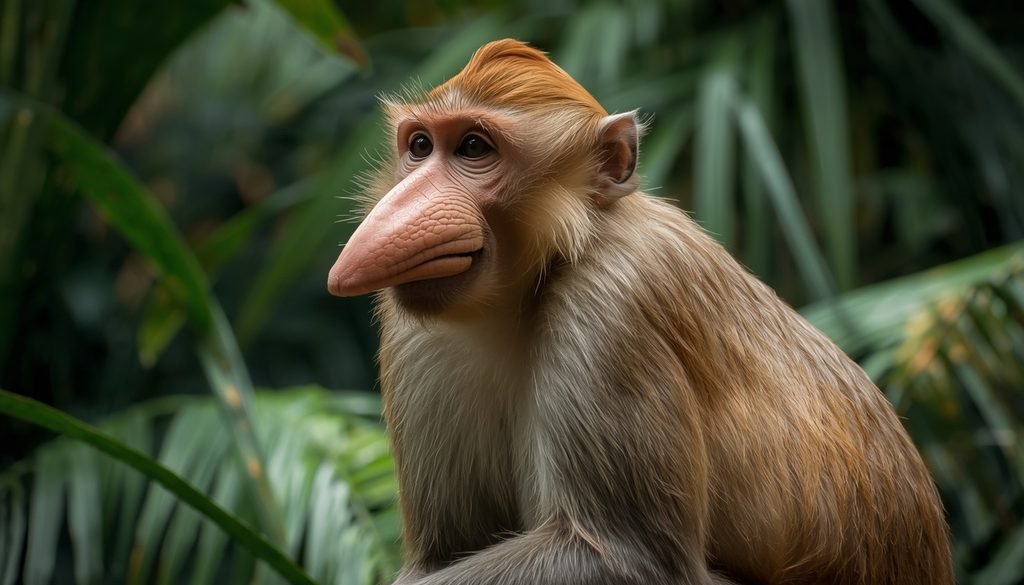
The proboscis monkey is easy to recognize because of its large, pendulous nose, especially in adult males. Its unusual facial feature has made it one of the most distinctive primates in the world.
Scientists believe the enlarged nose of male proboscis monkeys plays a role in vocal communication and sexual selection. It may help amplify calls, although the exact functions of the nose are still studied.
These monkeys are also excellent swimmers. They often live near rivers and wetlands, where they can leap into water to escape danger or move between areas.
Their diet consists mainly of plant material, and their digestive system is adapted to processing leaves and other vegetation. Habitat loss, particularly the destruction of mangrove and riverine forests, threatens their populations.
The proboscis monkey proves that even an unusual-looking body part can be connected to communication, feeding, and survival.
8. Naked Mole-Rat
Scientific name: Heterocephalus glaber
Habitat: Underground burrow systems in dry regions of East Africa.
Diet: Underground plant parts, especially tubers and roots.
The naked mole-rat has wrinkled skin, very little body hair, small eyes, and large front teeth that extend outside its lips. Its appearance is certainly unusual, but its social behavior is just as fascinating.
These rodents live in complex underground colonies. Their social structure resembles that of some social insects, with a reproductive queen and other colony members performing different roles.
Naked mole-rats use their large incisors to dig tunnels and access underground food. Their lips close behind their teeth, helping prevent soil from entering their mouths while digging.
They are also adapted to low-oxygen conditions that would be difficult for many other mammals to tolerate. Researchers study their physiology and unusual longevity to better understand mammalian biology.
Although they are often described as hairless, they do have some sensory hairs. These help them navigate their dark underground environment.
9. Shoebill
Scientific name: Balaeniceps rex
Habitat: Tropical freshwater swamps and wetlands of central and eastern Africa.
Diet: Lungfish, other fish, amphibians, and small aquatic animals.
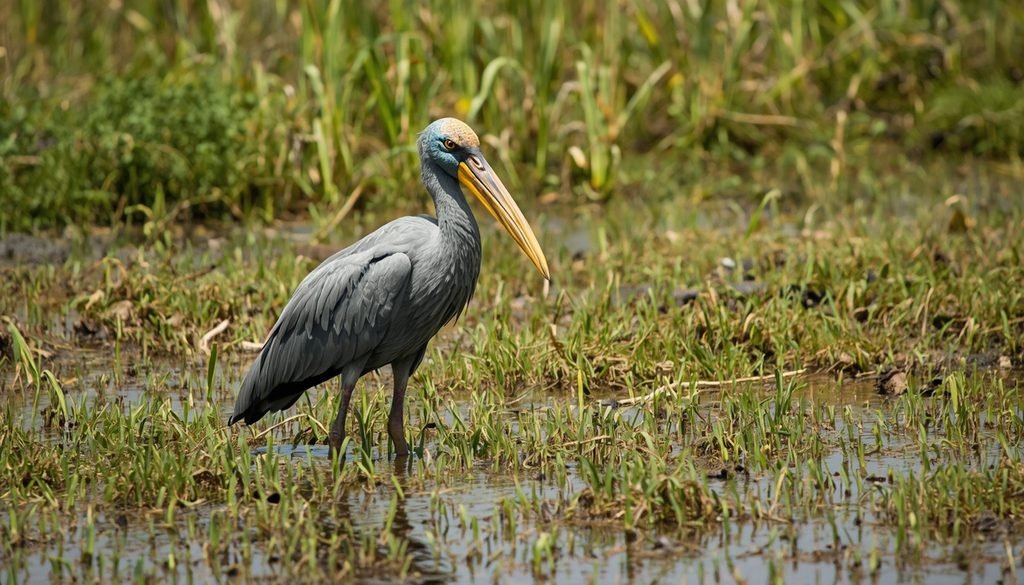
The shoebill is a large African bird with a massive bill shaped somewhat like a wooden shoe. Its intense stare, tall body, and slow movements give it a prehistoric appearance.
It hunts by standing still among wetland vegetation and waiting for prey to come within reach. When an opportunity appears, the shoebill can strike quickly with its powerful bill.
Its diet often includes lungfish and other fish, although it may also eat amphibians and other small animals. Its large bill helps it grasp slippery prey in muddy water.
Shoebills generally rely on patience rather than constant movement when hunting. Their stillness can make them difficult to notice in dense wetland vegetation.
Wetland drainage, habitat disturbance, and other human pressures threaten their future in some areas. Their distinctive appearance and specialized hunting behavior make them one of Africa’s most unusual birds.
10. Glass Frog
Scientific name: Hyalinobatrachium fleischmanni (a species of glass frog)
Habitat: Humid tropical forests of Central America.
Diet: Small insects and other invertebrates.
Glass frogs are small amphibians famous for their translucent skin. In several species, the skin on the underside of the body is so transparent that internal organs can be seen through it.
This feature is particularly noticeable when a glass frog rests on a leaf. Depending on the species and lighting, its heart and other internal structures may be visible.
Glass frogs usually live in humid forests near streams. Many lay their eggs on leaves that hang over water, allowing tadpoles to drop into the stream after hatching.
Scientists continue to study how transparency helps these frogs avoid predators. Research suggests that their body appearance can help them blend into their surroundings rather than simply appearing invisible.
Their delicate appearance makes glass frogs some of the most unusual amphibians on Earth. However, they are real animals with specialized adaptations, not fragile glass-like creatures.
11. Leaf-Tailed Gecko
Scientific name: Uroplatus phantasticus
Habitat: Forests of Madagascar.
Diet: Insects and other small invertebrates.
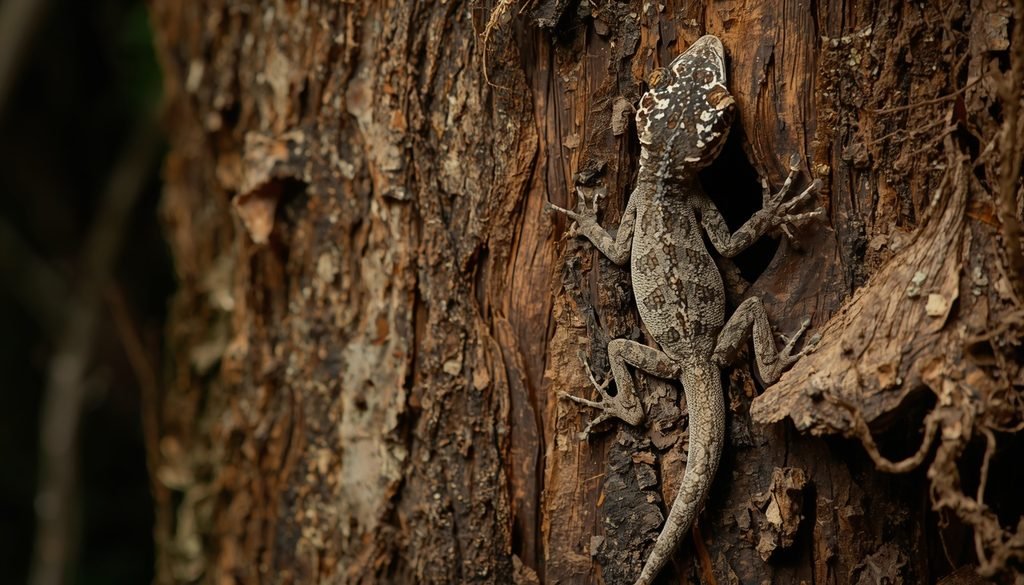
The satanic leaf-tailed gecko is a small reptile whose body and tail resemble a dead leaf. Its rough skin, unusual edges, and natural coloring help it blend into forest vegetation.
This camouflage is useful during the day, when the gecko rests on branches or among leaves. Predators may overlook it because its body shape resembles part of the surrounding plant material.
At night, the gecko becomes active and searches for insects. Its large eyes help it detect prey in low light, while its specialized feet allow it to grip surfaces.
The gecko’s leaf-like tail is especially striking because it has irregular edges that look like a damaged or decaying leaf. This disguise demonstrates how natural selection can favor shapes that make an animal difficult to detect.
Forest destruction threatens many Madagascar species, including unusual geckos that depend on specific woodland habitats.
12. Dumbo Octopus
Scientific name: Grimpoteuthis species
Habitat: Deep parts of the ocean, often hundreds to thousands of meters below the surface.
Diet: Small crustaceans, worms, and other deep-sea animals.
Dumbo octopuses are named after the rounded, ear-like fins on their heads. They move these fins to help swim through deep water, creating a distinctive appearance that resembles a cartoon character.
Unlike many familiar octopuses, dumbo octopuses live in deep-sea environments where sunlight is extremely limited. They can move above the seafloor while searching for small prey.
Their bodies are soft, and they do not have the same ink-defense behavior associated with many shallow-water octopuses. Living deep underwater means they face a different set of challenges from animals near the surface.
Scientists still have much to learn about the behavior and life cycles of dumbo octopuses because deep-sea research is difficult and expensive.
Their unusual fins and deep-ocean lifestyle make them some of the strangest marine animals known.
13. Hagfish
Scientific name: Myxine glutinosa
Habitat: Cold and temperate marine waters, usually near the seafloor.
Diet: Dead or dying fish and other marine animal material.
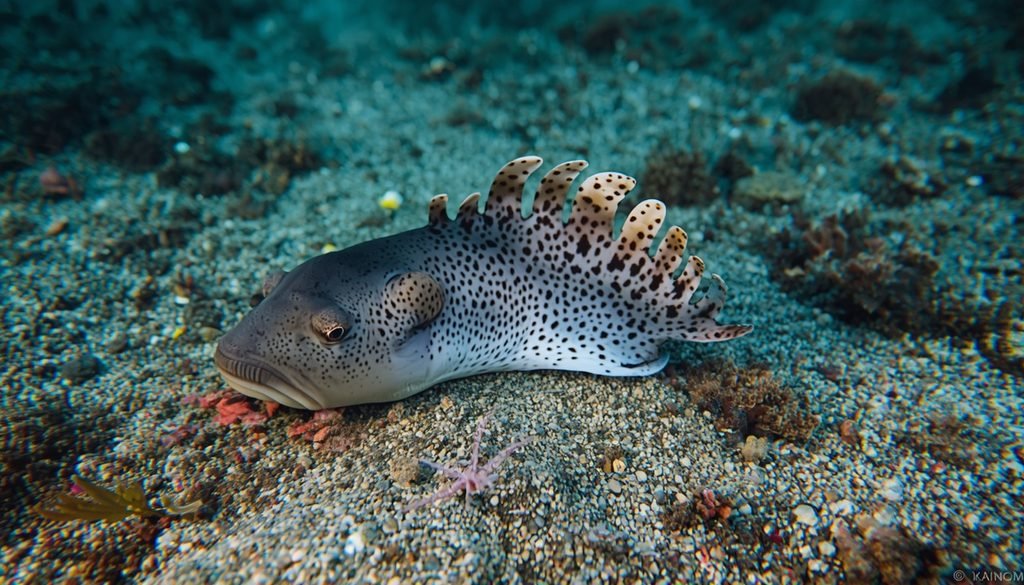
Hagfish are eel-shaped marine animals with soft bodies, simple eyes, and a mouth surrounded by sensory structures. They are not true eels, despite their similar appearance.
Their most famous defense is the production of large amounts of slime. When threatened, a hagfish can release slime-producing material that rapidly expands in seawater, making it difficult for a predator to grip or swallow it.
Hagfish also feed on carcasses and help recycle nutrients on the ocean floor. They can enter dead animals through openings and use their specialized mouth structures to remove tissue.
Their unusual feeding habits and slime defense make them stand out among marine vertebrates. Rather than chasing fast-moving prey, many hagfish take advantage of food that reaches the seafloor.
14. Pink Fairy Armadillo
Scientific name: Chlamyphorus truncatus
Habitat: Dry grasslands and sandy plains of central Argentina.
Diet: Ants, other insects, and small invertebrates.
The pink fairy armadillo is the smallest armadillo species and one of the least familiar mammals in the world. It has pale pink armor, silky white fur, small eyes, and powerful digging claws.
Its shell is unusual because it is not as rigidly attached to the body as the armor of many other armadillos. The animal spends much of its time underground, digging through loose soil in search of food.
Its small size and underground lifestyle make it difficult to study. Researchers know less about its population trends and behavior than they do about many more familiar mammals.
The pink fairy armadillo is adapted to sandy environments where digging helps it find food and avoid threats. Habitat changes can make survival more difficult, so protecting its native landscape is important.
Its tiny body, pale armor, and secretive behavior make it a strong contender for one of the weirdest animals in the world.
Why Do Some Animals Look So Weird?
Animals develop unusual features through evolution. A strange nose might help warm air or detect prey, while transparent skin can help an animal blend into its surroundings. Long fingers, unusual bills, and specialized fins can all improve an animal’s ability to feed, communicate, or survive.
These features are not necessarily signs that an animal is poorly adapted. In many cases, what looks strange to humans is a highly effective solution to a specific environmental challenge.
Habitat also plays an important role. Animals living underground, in deep oceans, or in dense tropical forests face very different survival challenges. Over many generations, those challenges can shape distinctive body forms and behaviors.
Read more: What Animal Has the Biggest Brain
Frequently Asked Questions
What is the weirdest animal in the world?
There is no official scientific ranking. The platypus, aye-aye, blobfish, and star-nosed mole are popular choices because they have unusual physical features and specialized adaptations.
What is the weirdest mammal?
The platypus is a strong contender because it lays eggs, has a duck-like bill, and detects electrical signals from prey. The aye-aye and naked mole-rat are also remarkable mammals.
Which weird animal can regrow body parts?
The axolotl is well known for regenerating limbs and repairing several tissues. Scientists study its regenerative abilities to understand how animals repair injuries.
Are weird animals rare?
Not all unusual animals are rare. Some have wide distributions, while others, such as the axolotl in the wild, face serious conservation challenges. Unusual appearance alone does not determine how common a species is.
Why do deep-sea animals look so strange?
Deep-sea animals have evolved to cope with darkness, cold temperatures, high pressure, and limited food. Their unusual body shapes and sensory adaptations can help them survive in these conditions.
Conclusion
The weirdest animals in the world show just how creative nature can be. The platypus combines features rarely seen together in mammals, the aye-aye uses a specialized finger to find hidden insects, and the axolotl can regenerate several body parts. Meanwhile, creatures such as the blobfish, dumbo octopus, and star-nosed mole demonstrate how unusual appearances can be linked to specialized environments and ways of life.
There is no single answer to what is the weirdest animal because every species has its own remarkable adaptations. Looking beyond appearances helps us understand why these animals matter and why protecting their habitats is essential for preserving Earth’s extraordinary biodiversity.
