
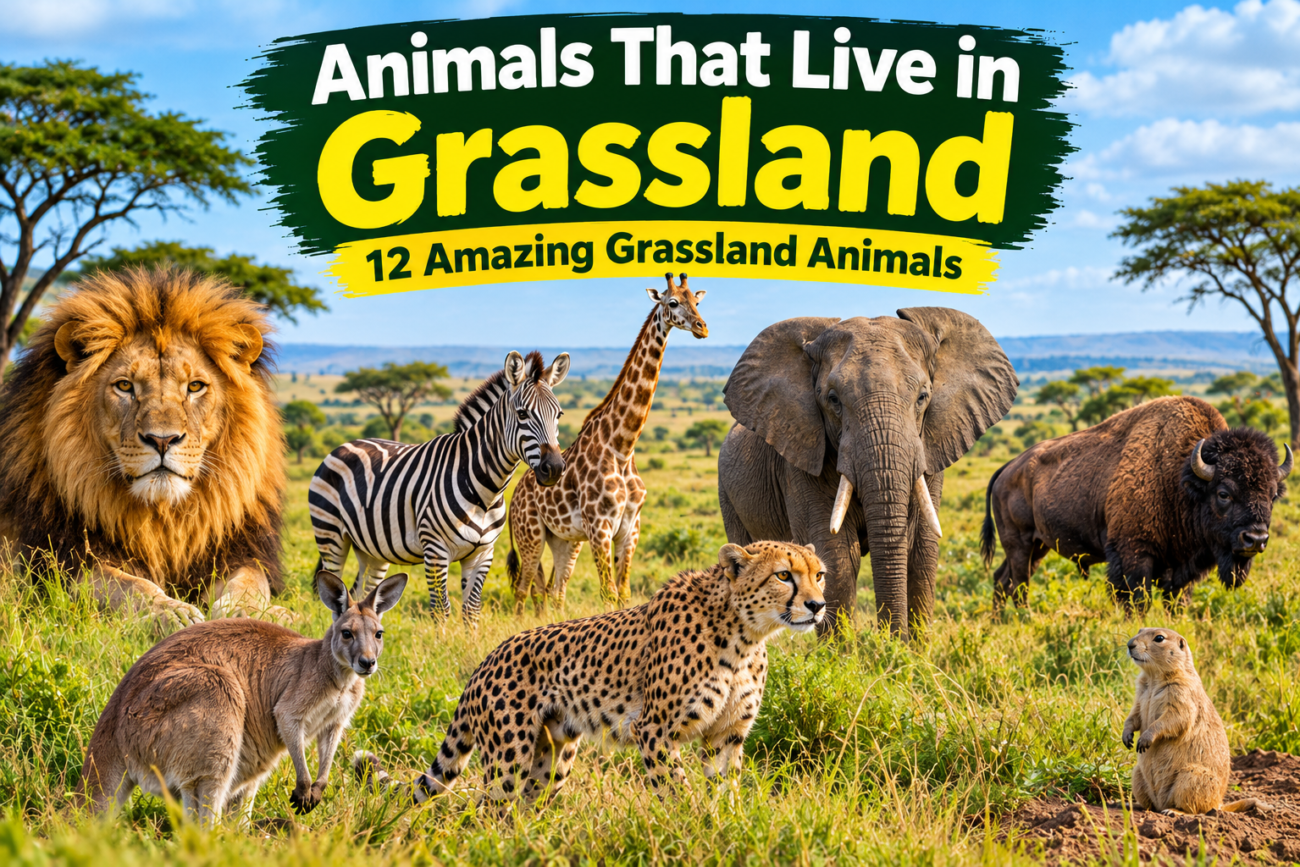
Grasslands are some of the most fascinating ecosystems on Earth. These wide-open landscapes are dominated by grasses, wildflowers, and scattered shrubs or trees. They may look simple at first, but grasslands support an incredible variety of wildlife, from powerful predators and enormous herbivores to tiny burrowing mammals and fast-running birds.
Different types of grasslands occur around the world. African savannas are famous for their lions, zebras, and giraffes, while North American prairies support bison and prairie dogs. In Australia, open grasslands provide food and shelter for kangaroos and other native wildlife.
Animals living in these environments must adapt to seasonal rainfall, changing temperatures, limited shade, and the constant search for food. Some travel long distances to find fresh grass, while others hide underground or rely on speed to escape predators.
Quick Answer: What Animals Live in Grassland?
Common animals that live in grassland include lions, zebras, giraffes, African elephants, wildebeest, cheetahs, African buffalo, American bison, prairie dogs, kangaroos, ostriches, and black rhinoceroses. These animals inhabit grasslands and related open habitats such as savannas, prairies, and grassy plains. Herbivores feed on grasses, leaves, and other plants, while predators hunt other animals. Their adaptations, including speed, camouflage, herding, and burrowing, help them survive in landscapes where shelter can be limited.
1. Lion
Scientific name: Panthera leo
Habitat: African savannas, open grasslands, and scrublands.
Diet: Zebras, wildebeest, buffalo, and other medium to large animals.
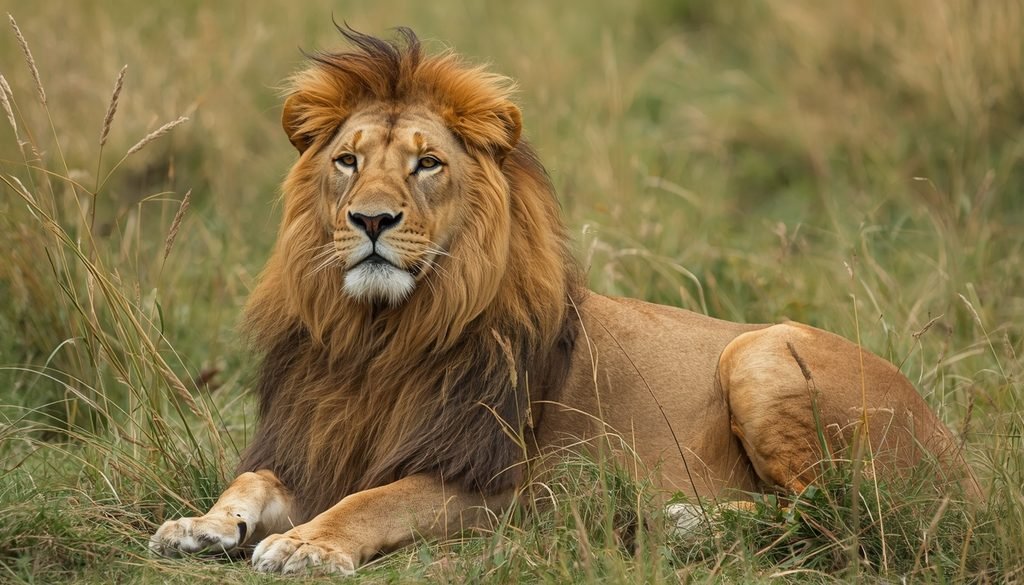
The lion is one of the best-known predators of African grasslands. Its powerful body, sharp claws, strong jaws, and excellent hunting instincts help it capture large prey. Lions often rest in shade during the hottest parts of the day and become more active during cooler hours.
Unlike most wild cats, lions live in social groups called prides. Group living can help them defend territories and cooperate during some hunts. Lionesses commonly do much of the hunting, using teamwork and surrounding movements to approach prey.
Grasslands provide lions with access to grazing animals, although tall grass and scattered bushes also offer places to hide. Their survival depends on healthy prey populations, suitable habitat, and enough space to move.
2. Zebra
Scientific name: Equus quagga (plains zebra)
Habitat: African grasslands, savannas, and open woodland edges.
Diet: Grasses and other low-growing vegetation.
Zebras are grazing mammals recognized by their distinctive black-and-white stripes. Plains zebras are particularly common in African savannas, where they feed on grasses and often travel in groups.
Their digestive systems allow them to use fibrous grasses that some other large herbivores cannot digest as efficiently. This helps zebras survive in areas where food quality changes with the seasons.
Zebras rely on strong legs and speed to escape predators. Living in groups can also help them notice danger, as several animals can watch their surroundings while others feed.
Their movements sometimes overlap with those of wildebeest and other grazing animals. Different species may use the same grassland resources in slightly different ways, helping them share a complex ecosystem.
3. Giraffe
Scientific name: Giraffa camelopardalis (species classification varies among modern systems)
Habitat: African savannas, open woodlands, and grasslands with scattered trees.
Diet: Leaves, shoots, flowers, and other plant material.
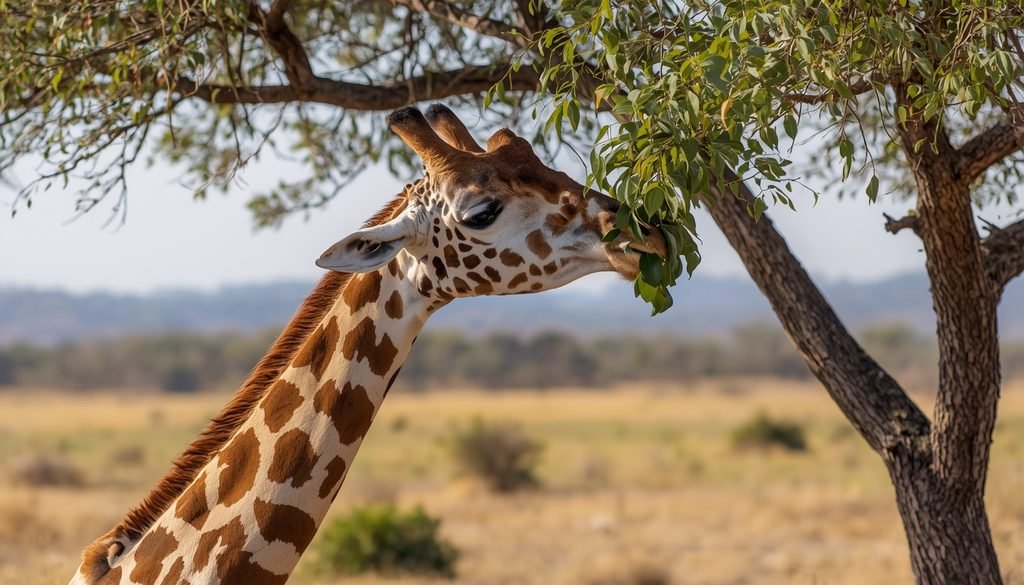
Giraffes are the tallest living land animals. Their long necks and legs allow them to reach leaves high above the ground, giving them access to food that many other herbivores cannot easily reach.
Although giraffes are associated with grasslands, they often depend on scattered trees and shrubs rather than feeding mainly on grass. Acacia trees are an important food source in many parts of their range.
Their height also gives them a broad view of the surrounding landscape. However, young giraffes can be vulnerable to lions and other predators.
Giraffes usually move through open habitats while browsing on vegetation. Their feeding habits contribute to the structure of savanna plant communities and demonstrate how grassland animals can depend on a mixture of grasses and woody plants.
4. African Elephant
Scientific name: Loxodonta africana
Habitat: African savannas, grasslands, woodlands, and areas near water.
Diet: Grasses, leaves, bark, roots, and fruit.
The African savanna elephant is the largest living land animal. Its trunk, tusks, and enormous body help it obtain food and interact with its environment. The trunk can grasp vegetation, pull up grasses, collect water, and communicate through touch and sound.
Elephants eat a wide range of plants. In some seasons, they graze on grass; at other times, they browse on leaves, bark, and branches. They need large quantities of food and water, so access to suitable habitat is essential.
As elephants move through grasslands and savannas, they can alter vegetation by breaking branches, pushing over small trees, and creating pathways. These activities can influence how other species use the landscape.
Elephants are intelligent and social animals that often live in family groups led by an experienced female. Protecting their habitat helps maintain the wider grassland ecosystem.
5. Wildebeest
Scientific name: Connochaetes taurinus (blue wildebeest)
Habitat: Eastern and southern African savannas and open grasslands.
Diet: Mainly grasses.
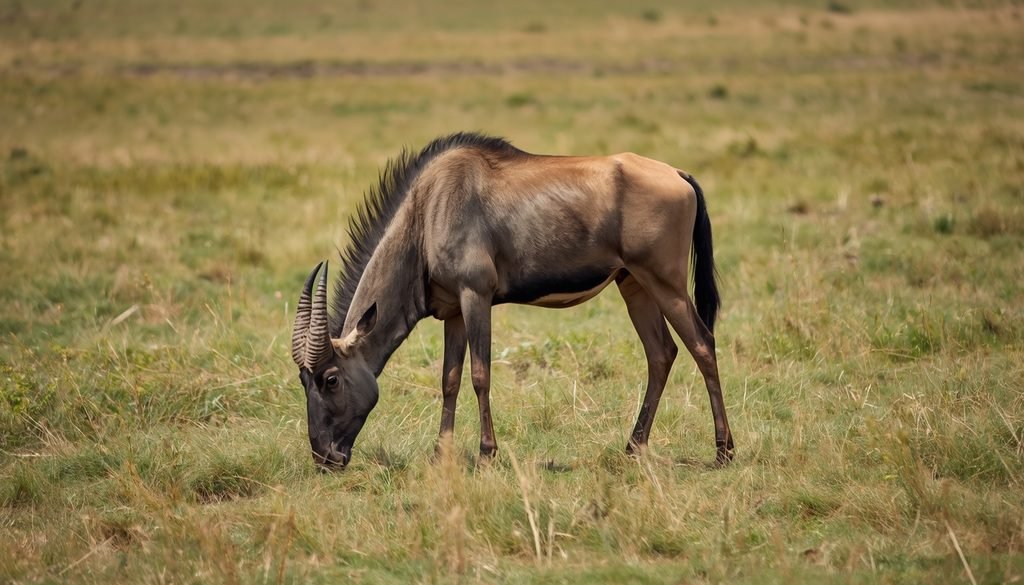
Wildebeest are large antelopes with sturdy bodies, curved horns, and sloping backs. They are especially famous for their seasonal migrations across parts of East Africa, where enormous herds travel in search of fresh grass and water.
These movements follow changing rainfall and vegetation. When grazing conditions deteriorate in one area, herds may move to another region with better food supplies. The timing and distance of migration depend on local environmental conditions.
Wildebeest are important prey for lions, spotted hyenas, and other large carnivores. Their grazing also influences grassland vegetation and helps transfer nutrients through the ecosystem.
Calves must become mobile soon after birth because predators pose a constant risk. Herds provide some protection through numbers and collective awareness, although migration across rivers and open plains can be dangerous.
6. Cheetah
Scientific name: Acinonyx jubatus
Habitat: African savannas, open grasslands, and dry plains; a small population also survives in Iran.
Diet: Gazelles, young antelopes, and other suitably sized prey.
The cheetah is the fastest land animal, adapted for rapid acceleration and short bursts of high-speed running. Its long legs, flexible spine, lightweight body, and long tail help it chase prey across open ground.
Grasslands are useful hunting environments because they allow cheetahs to spot animals from a distance and pursue them without dense vegetation blocking their path. However, tall grass can also help prey hide, so hunting success depends on the terrain.
Unlike lions, cheetahs generally hunt alone or in small male coalitions. They usually target smaller antelopes rather than the largest grazing animals.
Cheetahs cannot maintain top speed for long periods, and a chase uses considerable energy. They must approach prey carefully before beginning a sprint. Habitat loss, declining prey, and human conflict threaten their survival in many areas.
7. African Buffalo
Scientific name: Syncerus caffer
Habitat: African savannas, grasslands, floodplains, and woodland areas.
Diet: Grasses and other vegetation.
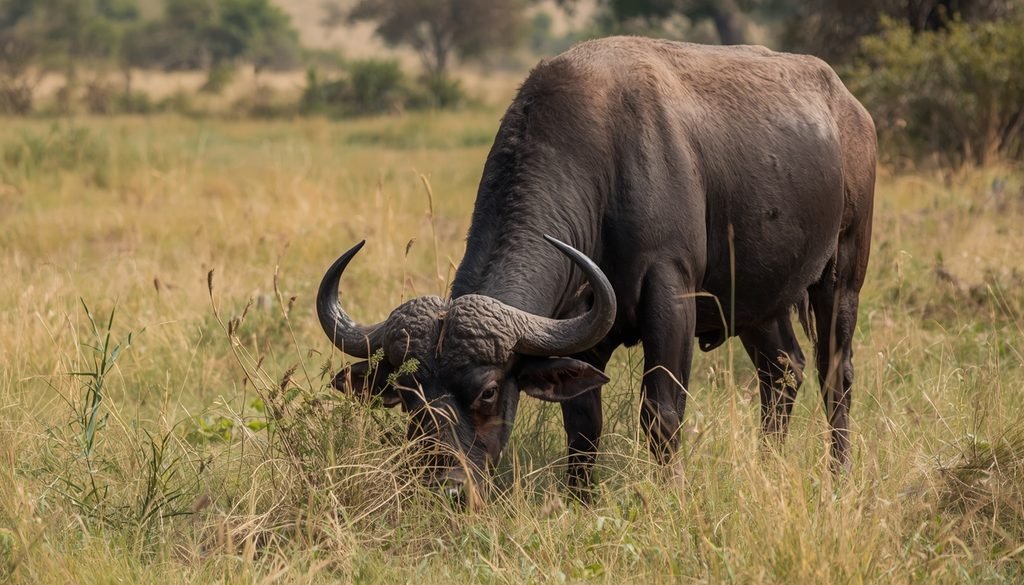
The African buffalo is a large, powerful herbivore that often lives in herds. Its broad body, sturdy legs, and heavy horns help it defend itself against predators.
Buffalo spend much of their time grazing and need regular access to water. They often gather near rivers, waterholes, or wetlands, especially during dry periods when water becomes scarce.
Lions sometimes hunt buffalo, but adult animals can be dangerous prey. Herd members may form a defensive group or use their horns to confront attackers. Their behavior shows that grassland herbivores can be formidable animals in their own right.
African buffalo contribute to the movement of nutrients through grassland ecosystems by grazing, defecating, and traveling between feeding areas. Their presence also supports predators and scavengers that depend on large mammals for food.
8. American Bison
Scientific name: Bison bison
Habitat: North American prairies, grasslands, and open plains.
Diet: Grasses, sedges, and other low-growing plants.
The American bison is an iconic grassland mammal of North America. It has a large shoulder hump, thick fur around the head and neck, and strong legs that help it move through snow and rough terrain.
Bison graze on grasses and other plants, often forming herds. Their feeding behavior can influence the distribution of vegetation, while their movements help maintain a dynamic prairie environment.
Historically, millions of bison roamed North American grasslands. Commercial hunting and habitat changes caused dramatic population declines, but conservation efforts have helped restore some herds.
Bison remain important to prairie ecosystems and Indigenous cultures. Their survival depends on habitat protection, responsible herd management, and the preservation of connected grassland landscapes.
9. Prairie Dog
Scientific name: Cynomys ludovicianus (black-tailed prairie dog)
Habitat: Shortgrass prairies and other open grasslands of central North America.
Diet: Grasses, herbs, seeds, and other plant material.
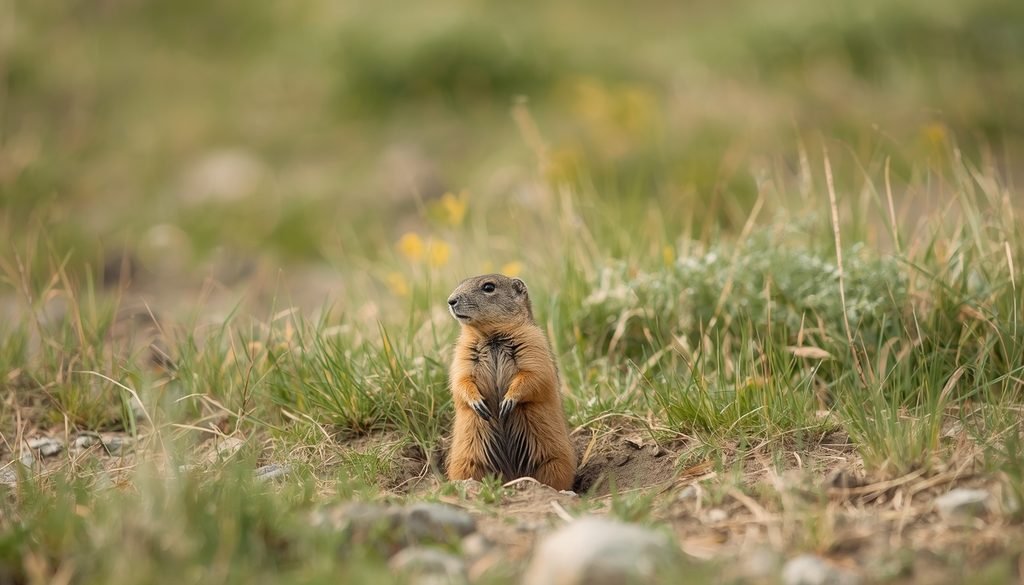
Prairie dogs are small, social rodents that live in extensive underground burrow systems. Their colonies, sometimes called towns, can include many connected tunnels and chambers.
Burrows provide shelter from predators and extreme weather. Prairie dogs also use warning calls to alert nearby colony members when danger approaches. Their ability to communicate and cooperate helps them survive in exposed landscapes.
Although they are small, prairie dogs can influence entire grassland communities. Their grazing changes plant growth, while their burrowing disturbs soil and creates shelter opportunities for other animals.
Predators such as hawks, eagles, coyotes, and badgers may hunt prairie dogs. Their colonies therefore support food webs that include animals from several different groups.
10. Kangaroo
Scientific name: Osphranter rufus (red kangaroo)
Habitat: Arid and semi-arid grasslands, shrublands, and open plains of Australia.
Diet: Grasses and other vegetation.
Red kangaroos are Australia’s largest living marsupials and are well adapted to open, dry landscapes. Their powerful hind legs allow them to travel efficiently by hopping, while their long tails help with balance and movement.
They feed mainly on grasses and other plants, often becoming more active during cooler parts of the day. Their ability to obtain water from food and conserve moisture helps them cope with dry environments, although they still need suitable water sources when conditions are harsh.
Red kangaroos may gather in groups where food is available. Their numbers and movements can change with rainfall because fresh plant growth is closely tied to water availability.
Kangaroos are an important part of Australian grassland and open-country ecosystems, serving as grazers and as prey for some native predators.
11. Ostrich
Scientific name: Struthio camelus
Habitat: African savannas, open grasslands, and semi-arid plains.
Diet: Seeds, grasses, leaves, insects, and other small animals.
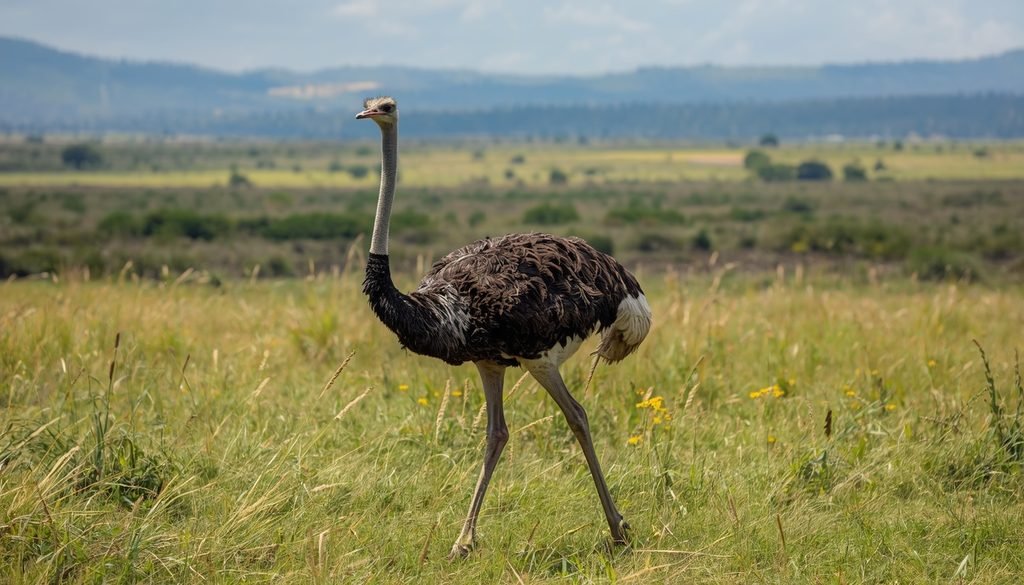
The ostrich is the world’s largest living bird. It cannot fly, but its long legs and powerful muscles make it an excellent runner. When threatened, it can cover ground quickly and use strong kicks to defend itself.
Ostriches live in open environments where their height helps them scan for danger. They may feed alongside grazing mammals, taking advantage of a landscape that supports a variety of plants and small animals.
Their diet is flexible, allowing them to eat plant material and occasionally insects or other small creatures. This flexibility is valuable in dry habitats where food availability changes with rainfall.
Ostriches lay large eggs, and their breeding behavior varies with local conditions. As residents of African open country, they demonstrate how birds can thrive in grassland environments without being able to fly.
12. Black Rhinoceros
Scientific name: Diceros bicornis
Habitat: African savannas, scrublands, and grasslands with bushes and other woody vegetation.
Diet: Leaves, shoots, twigs, and other browse.
The black rhinoceros is a large herbivore known for its two horns and pointed, prehensile upper lip. Despite being associated with grassland wildlife, it is mainly a browser rather than a grass-eating specialist. It uses its flexible lip to grasp leaves and twigs from shrubs.
Black rhinos often use a mixture of open areas and thicker vegetation. Bushes and trees provide food and can offer cover from heat. Their habitat therefore includes savanna mosaics rather than only treeless plains.
These rhinos have poor eyesight but strong senses of smell and hearing. They may react defensively when they detect a possible threat, so people should never approach them in the wild.
Black rhinos are critically endangered. Poaching and habitat pressures have severely affected their populations, making conservation programs and protected habitats essential for their future.
How Do Animals Survive in Grasslands?
Grassland animals have developed different adaptations to survive in open environments. Many herbivores, such as zebras and wildebeest, travel in herds to find fresh food and improve their chances of detecting predators. Cheetahs rely on speed, while prairie dogs escape danger through underground burrows.
Some animals use camouflage to blend into dry grass, and others migrate when rainfall changes the availability of food and water. Large herbivores often travel long distances, whereas smaller mammals may remain close to a network of burrows.
Grasslands also experience seasonal changes. In some regions, wet seasons produce fresh plant growth, while dry seasons reduce food and water availability. Animals that can adjust their diets, movement, or activity patterns are often better equipped to cope with these changes.
Read More: What Animal Eats Snakes
Frequently Asked Questions
What is the most common animal in grasslands?
There is no single most common grassland animal worldwide. The answer depends on the continent, habitat, and local conditions. Zebras and wildebeest are well known in some African savannas, while bison historically played a major role in North American prairies.
What do grassland animals eat?
Grassland animals have different diets. Herbivores eat grasses, leaves, seeds, and shrubs; carnivores hunt other animals; and omnivores consume both plant and animal matter.
Do grasslands have trees?
Some grasslands have very few trees, while savannas contain scattered trees and shrubs. Rainfall, soil conditions, fire, and grazing all influence how much woody vegetation can grow.
Why are grasslands important for wildlife?
Grasslands provide food, breeding areas, shelter, and migration routes. They also store carbon in their soils and support ecological relationships among plants, herbivores, predators, and decomposers.
Conclusion
Animals that live in grassland environments come in many shapes and sizes, from enormous elephants and bison to small prairie dogs. Some graze on grasses, some browse on leaves, and others hunt the herbivores that depend on these landscapes.
Each species has adaptations that help it survive changing rainfall, open terrain, and the presence of predators. Protecting grasslands is important because these ecosystems support wildlife, preserve biodiversity, and provide essential benefits to the natural world.

One thought on “Animals That Live in Grassland: 12 Amazing Grassland Animals”