
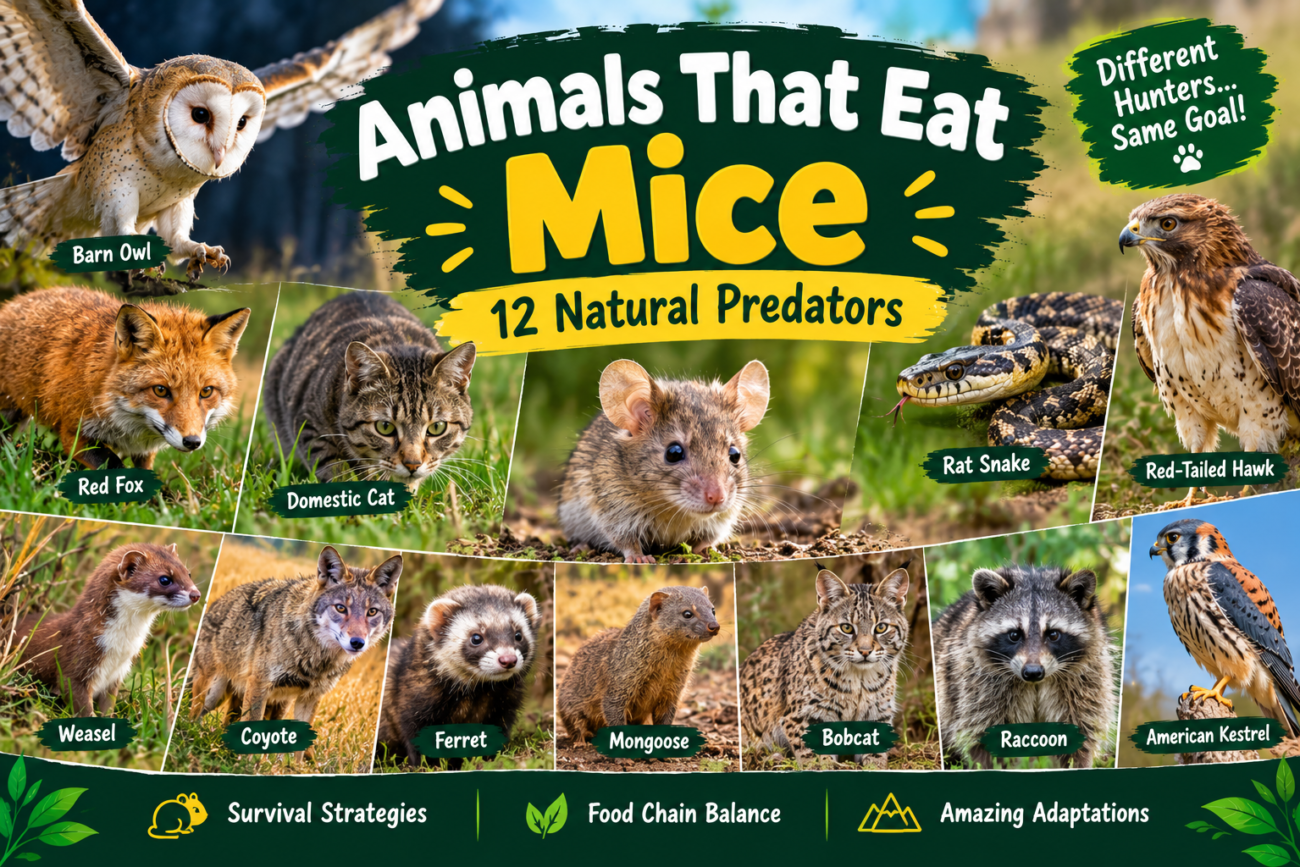
Mice are small mammals that live in forests, grasslands, fields, deserts, and even homes. Although they are excellent at hiding in narrow spaces and escaping danger, they are also an important food source for many other animals. From silent owls flying through the night to snakes waiting near rodent burrows, mouse predators use different hunting techniques to find their next meal.
These predator-prey relationships are important for maintaining healthy ecosystems. Mice eat seeds, plants, and insects, while the animals that hunt them obtain energy from this abundant food source. Understanding which animals eat mice also reveals how nature balances populations and transfers energy through the food chain.
Quick Answer: What Animals Eat Mice?
Animals that eat mice include barn owls, red foxes, domestic cats, weasels, rat snakes, red-tailed hawks, coyotes, ferrets, mongooses, bobcats, raccoons, and American kestrels. These predators use different strategies to catch mice. Owls and hawks rely on sharp senses and powerful talons, while foxes and cats stalk and pounce on rodents. Weasels can follow mice into narrow spaces, and snakes swallow suitable prey whole. Not every predator eats mice regularly; its diet depends on its species, habitat, prey availability, and body size.
1. Barn Owl
Scientific name: Tyto alba
Class: Aves
Diet: Carnivore, including mice, voles, and other small mammals
Habitat: Grasslands, farmland, open country, and areas near human settlements
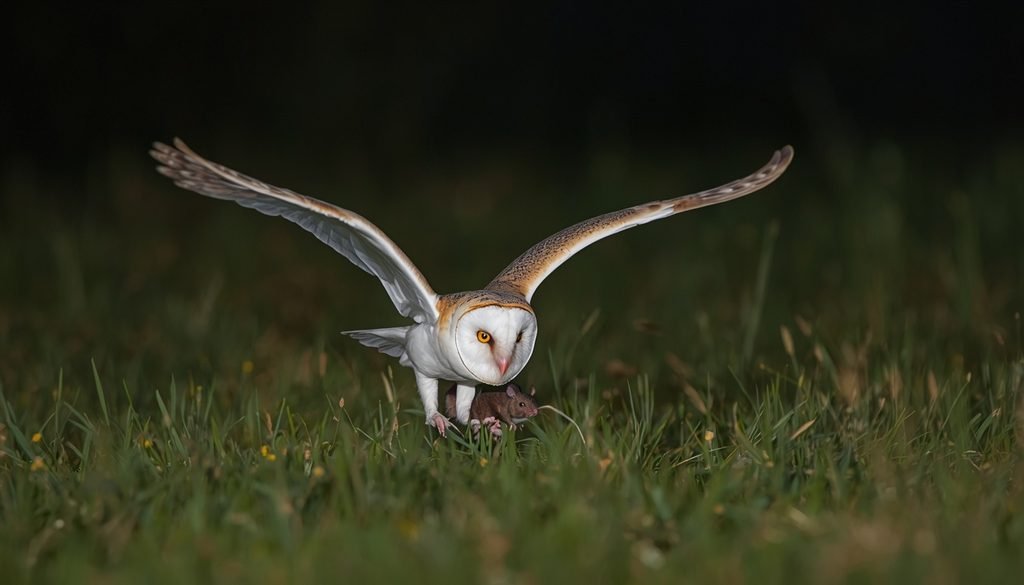
The barn owl is one of the most effective natural predators of mice. It is recognized by its pale heart-shaped face, long wings, and silent flight. Barn owls often hunt at night, when mice leave their hiding places to search for seeds, insects, and other food.
How Do Barn Owls Catch Mice?
Barn owls rely on exceptional hearing and good low-light vision to locate prey. Their facial feathers help direct sound toward their ears, allowing them to detect small movements in grass or beneath vegetation. Specially adapted flight feathers reduce the noise produced by their wings, helping them approach prey quietly.
Once a barn owl identifies a mouse, it swoops down and captures it with its sharp talons. It may then swallow smaller prey whole and later regurgitate a pellet containing indigestible material, such as bones and fur.
Barn owls are particularly useful predators in agricultural landscapes, where mice and other rodents may be abundant. However, their impact varies with local conditions, and they should not be considered a complete solution for a rodent infestation.
2. Red Fox
Scientific name: Vulpes vulpes
Class: Mammalia
Diet: Omnivore
Habitat: Forests, grasslands, farmland, mountains, and suburban areas
The red fox is a highly adaptable mammal found across much of the Northern Hemisphere. Its reddish coat, pointed ears, bushy tail, and narrow muzzle make it easy to recognize. Although foxes eat fruits, insects, birds, and other small animals, mice can be an important part of their diet.
How Does a Fox Hunt Mice?
Red foxes often listen for rodents moving beneath grass, leaves, or shallow snow. Once a fox detects a sound, it may pause, focus its attention, and leap forward to catch the hidden mouse.
This pouncing technique helps the fox capture prey that cannot easily be seen. Foxes also search through fields, hedgerows, and woodland edges where small rodents find food and shelter.
Their flexible diet is one reason red foxes can survive in so many different environments. When mice are plentiful, they may provide an accessible source of protein. When rodents become scarce, foxes can switch to other available foods.
By eating mice and other small mammals, red foxes contribute to the natural food web while also serving as prey for larger predators in some ecosystems.
3. Domestic Cat
Scientific name: Felis catus
Class: Mammalia
Diet: Carnivore
Habitat: Homes, farms, villages, towns, and wild or feral environments
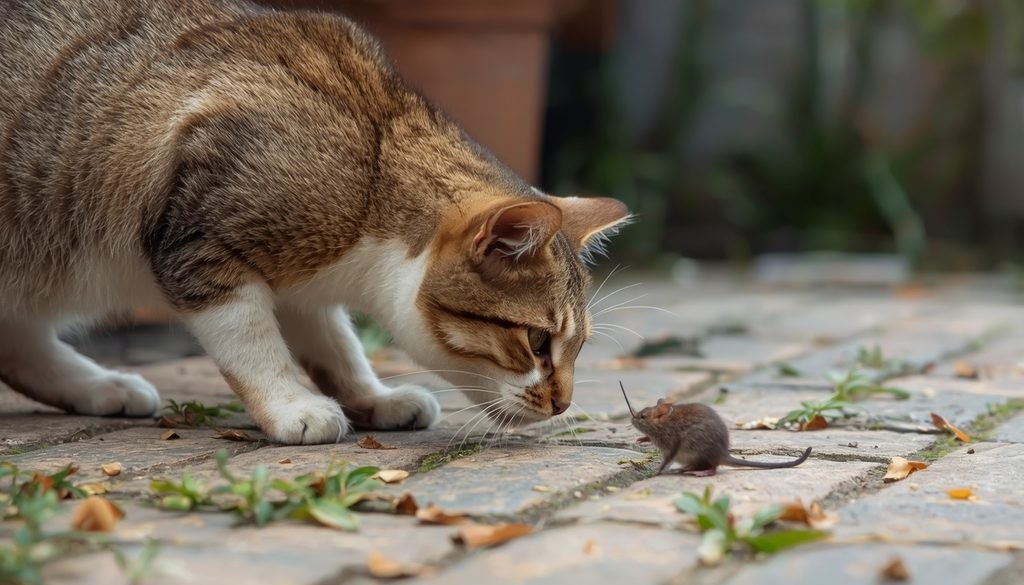
Domestic cats are among the best-known animals that hunt mice. Their ancestors evolved as small predators, and modern cats retain many of the physical and behavioral traits needed to catch rodents.
Cats have flexible bodies, retractable claws, sharp teeth, and sensitive hearing. Their whiskers help them judge nearby spaces, while their eyes support movement detection in low light.
Why Do Cats Catch Mice?
A cat often hunts by watching, stalking, and approaching a mouse slowly before making a sudden pounce. It may detect the mouse through rustling sounds or movement near walls, cupboards, sheds, and vegetation.
However, not every cat catches or eats mice. Some have stronger hunting instincts than others, and a well-fed cat may still hunt without consuming its prey.
Cats can help catch individual rodents, but they are not a reliable way to eliminate a serious mouse infestation. Rodents may reproduce quickly, hide in inaccessible areas, or avoid places where cats are active. Outdoor cats can also harm native birds and other wildlife, so their effects on ecosystems are not always beneficial.
4. Weasel
Scientific name: Mustela species
Class: Mammalia
Diet: Carnivore, including mice and other small animals
Habitat: Woodlands, grasslands, hedgerows, farms, and other habitats depending on species
Weasels are small, slender mammals belonging to the mustelid family. Their long bodies, short legs, and flexible movements make them particularly suited to searching for prey in tight spaces.
Many weasel species eat mice regularly. Depending on the species, they may also hunt voles, small birds, insects, and other animals.
How Do Weasels Find Mice?
A weasel can investigate narrow gaps, dense vegetation, and parts of a burrow system that larger predators cannot easily enter. It uses its sense of smell, hearing, and quick movements to locate rodents hiding nearby.
When a weasel catches a mouse, it uses its teeth to subdue the animal. Because weasels are small and active predators, they need to find food frequently relative to their body size.
Their hunting behavior can make them important predators of small rodents in rural environments. Nevertheless, mice are not the only animals they eat, and the exact proportion of mice in their diet depends on local prey availability.
5. Rat Snake
Scientific name: Pantherophis species, including the eastern rat snake
Class: Reptilia
Diet: Carnivore, including mice, rats, and other small vertebrates
Habitat: Varies by species; forests, farmland, grasslands, and areas near buildings
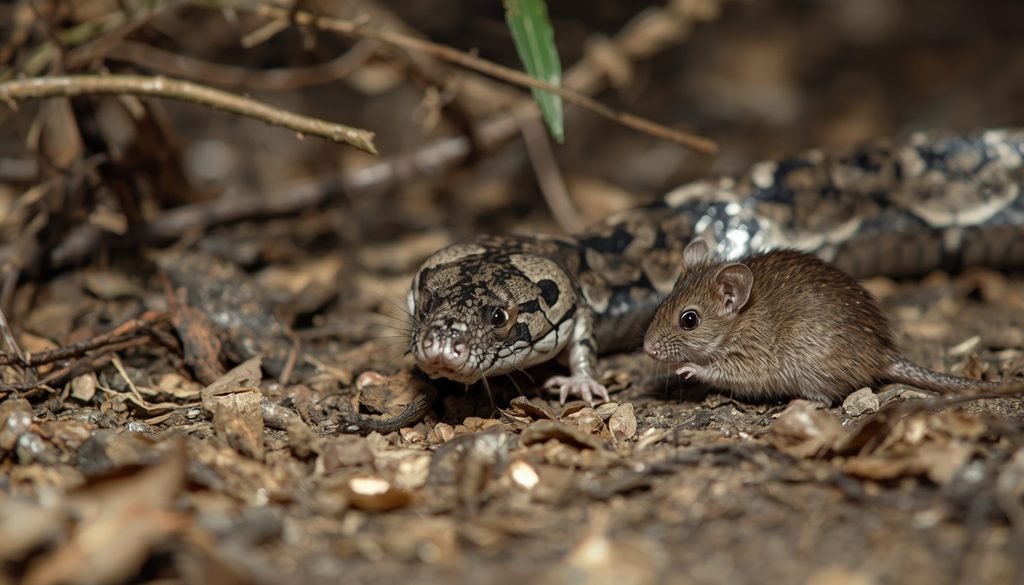
Rat snakes are nonvenomous snakes known for feeding on rodents. Different species occur across parts of North America, Asia, and other regions, and their diets vary with their size and local environment.
Their ability to climb, move quietly, and enter small openings can help them find rodents around trees, barns, rock piles, and other sheltered places.
How Do Rat Snakes Eat Mice?
A rat snake may locate prey by following chemical cues with its forked tongue and specialized sensory system. Once it catches a mouse, many rat snake species use constriction to restrain the prey before swallowing it whole.
Snakes do not chew their food like mammals. Instead, their flexible jaws and expandable bodies allow them to swallow appropriately sized prey.
Rat snakes can help limit rodent numbers in some habitats, particularly where mice are abundant. However, they also eat other animals, and they should never be handled simply because they are found near a home or farm. Even nonvenomous snakes can bite when threatened.
6. Red-Tailed Hawk
Scientific name: Buteo jamaicensis
Class: Aves
Diet: Carnivore, including mice, voles, rabbits, and other small animals
Habitat: Open fields, grasslands, woodlands, farmland, and roadside areas
The red-tailed hawk is a large bird of prey commonly found in North America. It is known for its broad wings, strong feet, and reddish tail feathers in adults. These hawks often perch on trees, fence posts, or utility poles while scanning the ground for prey.
How Do Red-Tailed Hawks Catch Mice?
Red-tailed hawks have excellent eyesight, which helps them spot rodents moving through open vegetation. When a mouse becomes visible, the hawk may swoop down and grasp it with its powerful talons.
They often hunt in places where the ground is relatively open, making it easier to detect small mammals. However, they can also hunt along woodland edges and other habitats.
Mice are only one part of the red-tailed hawk’s diet. Depending on the season and location, it may eat other rodents, rabbits, reptiles, and birds.
By capturing small mammals, red-tailed hawks transfer energy from prey populations to higher levels of the food web. Their hunting success depends on habitat, weather, prey availability, and the behavior of the rodents themselves.
7. Coyote
Scientific name: Canis latrans
Class: Mammalia
Diet: Omnivore
Habitat: Deserts, grasslands, forests, farmland, and urban edges across North America
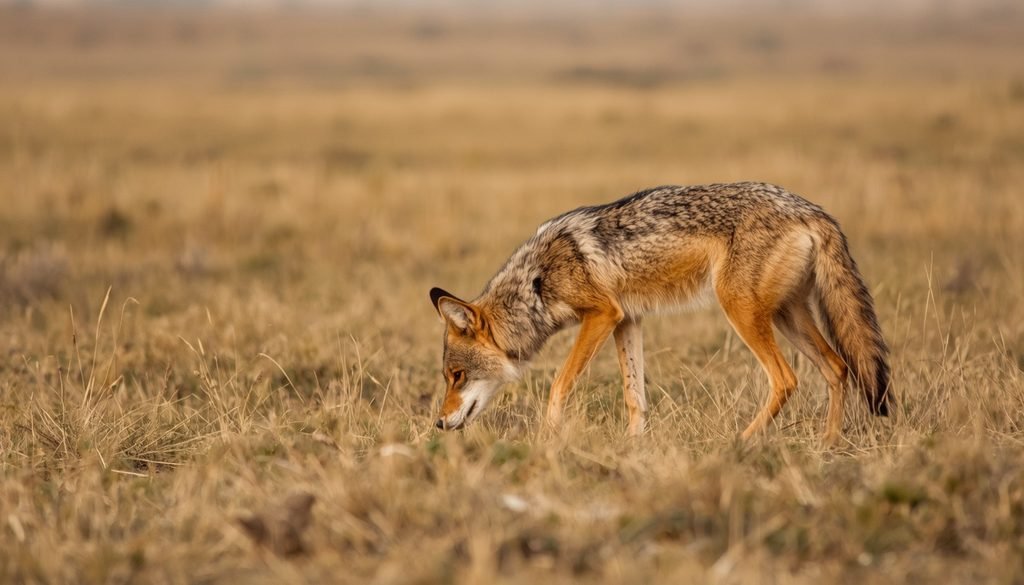
Coyotes are adaptable wild canids that eat a wide variety of foods. Their diet includes small mammals, rabbits, insects, fruits, carrion, and occasionally larger prey. Mice and other rodents can be an important food source, particularly in habitats where they are plentiful.
Do Coyotes Hunt Mice?
Yes. Coyotes may search through fields, brush, and open ground for small rodents. They use their senses of smell, hearing, and sight to detect prey, then chase or pounce when the opportunity arises.
Unlike predators that specialize in very small animals, coyotes can adjust their feeding habits according to what is available. If mice are scarce, they may rely more on rabbits, fruit, insects, or other food sources.
Coyotes can live in rural and suburban environments, but their presence does not mean they will remove all mice from an area. They are opportunistic hunters whose diets shift with seasons and local conditions.
Their flexible feeding behavior is one reason they have adapted to so many landscapes across North America.
8. Ferret
Scientific name: Mustela putorius furo
Class: Mammalia
Diet: Carnivore
Habitat: Domesticated environments; the domestic ferret is descended from the European polecat
Ferrets are long-bodied mammals related to weasels and polecats. Domestic ferrets have been kept by people for centuries, including for hunting rabbits and managing certain pests. Their slender shape and curiosity allow them to explore tunnels and small spaces.
Wild relatives of ferrets prey on mice and other small animals, while domestic ferrets may also chase rodents if they encounter them.
Can Ferrets Catch Mice?
Ferrets have sharp teeth, flexible bodies, and a strong instinct to investigate narrow spaces. These traits can help them pursue small prey in burrows or sheltered areas.
However, a pet ferret should not be treated as a household mouse-control method. A mouse can bite or injure a ferret, and wild rodents may carry parasites or diseases. Domestic ferrets also require appropriate food, housing, and veterinary care.
Their connection to mouse predation reflects the hunting behavior of the mustelid family, but the diet and activity of a domestic ferret depend on its care and environment.
9. Mongoose
Scientific name: Family Herpestidae
Class: Mammalia
Diet: Carnivore or omnivore, depending on species
Habitat: Africa, Asia, and parts of southern Europe, depending on species
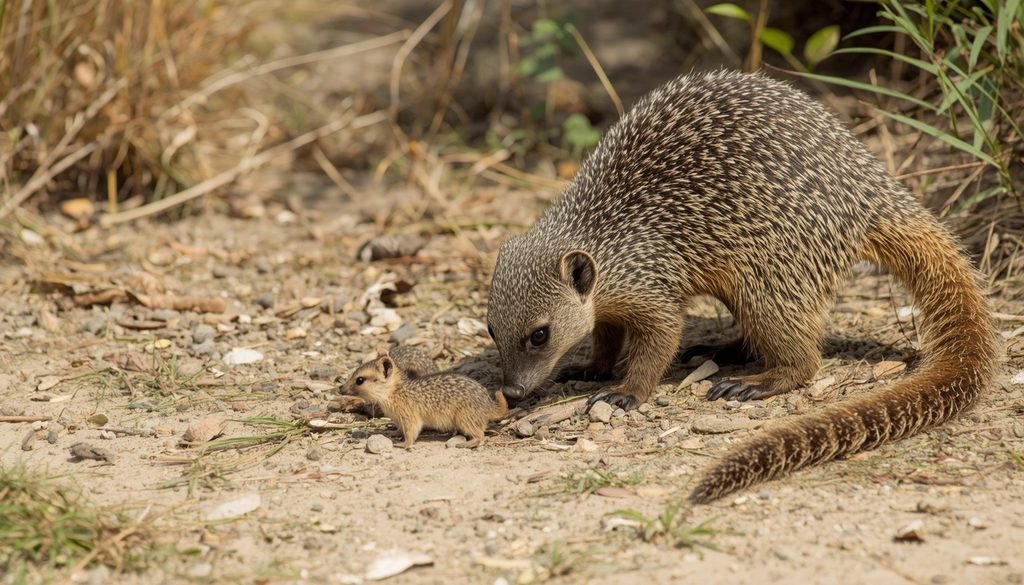
Mongooses are small to medium-sized mammals with pointed faces, agile bodies, and short legs. Many species feed on insects, reptiles, eggs, and small mammals. Mice may be eaten when they are available and suitable to the mongoose’s size.
Because the mongoose family includes many species, their diets and hunting methods differ. Some are mainly insect-eaters, while others regularly consume a wider range of prey.
How Do Mongooses Hunt Small Rodents?
Mongooses often forage close to the ground, searching among rocks, vegetation, and leaf litter. They use smell and movement to locate food and can quickly chase or grab small animals.
A mouse may become prey when it crosses an exposed area or is found in a hiding place. Yet mongooses do not all specialize in catching mice; insects, crabs, reptiles, and other foods may be more important for some species.
Mongooses play different ecological roles across their ranges. In places where they are native, they form part of local food webs. Introduced mongoose populations have caused ecological problems on some islands, where they can prey on vulnerable native wildlife.
10. Bobcat
Scientific name: Lynx rufus
Class: Mammalia
Diet: Carnivore, including rabbits, rodents, birds, and other small animals
Habitat: North America, including forests, deserts, scrublands, and brushy areas
The bobcat is a medium-sized wild cat with tufted ears, spotted fur, and a short tail. Although it is well known for hunting rabbits, it can also eat mice and other small mammals when opportunities arise.
Bobcats are solitary hunters that often use cover to approach prey. Their excellent vision, hearing, and stealth allow them to hunt in a range of environments.
Do Bobcats Eat House Mice?
Bobcats may capture mice and other rodents, particularly when these prey are readily available. However, their diet often includes larger animals such as rabbits and hares, so mice may not be their main food source.
A bobcat typically stalks prey and then uses a short burst of speed to catch it. Dense vegetation, rocky cover, and woodland edges can provide good places to ambush animals.
Bobcats are part of the natural predator community across much of North America. Their diet helps transfer energy through the food web, but they are not specialized mouse hunters and generally avoid regular contact with people.
11. Raccoon
Scientific name: Procyon lotor
Class: Mammalia
Diet: Omnivore
Habitat: Forests, wetlands, farmland, suburbs, and urban areas in North America
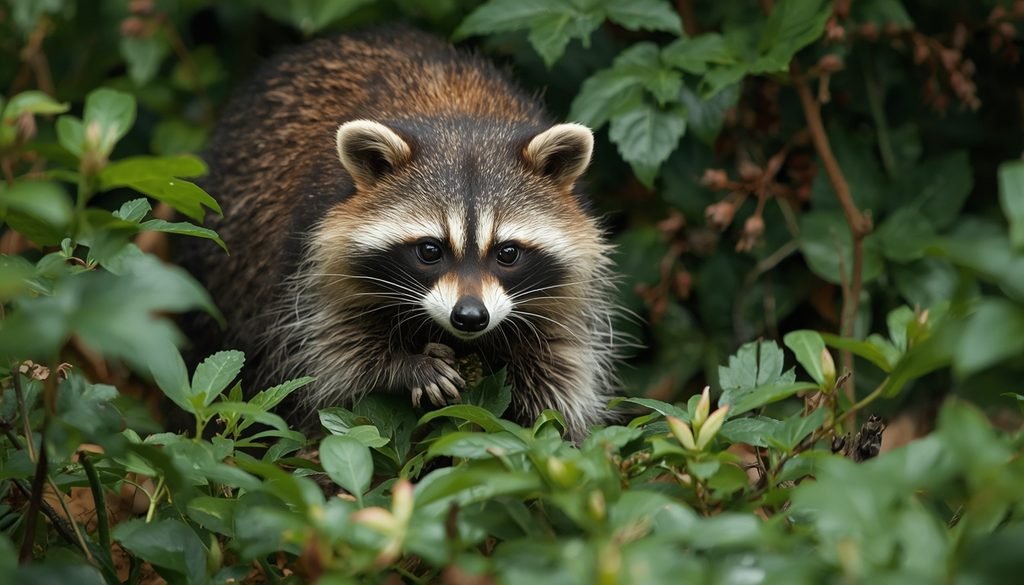
Raccoons are recognizable by their black facial markings, ringed tails, and dexterous front paws. They eat fruits, nuts, insects, aquatic animals, eggs, carrion, and other foods. Small mammals, including mice, may also be eaten when encountered.
Unlike specialized hunters, raccoons often search for food opportunistically. Their adaptable diet allows them to live in natural habitats as well as places where human food is accessible.
How Do Raccoons Catch Mice?
A raccoon may find a mouse while searching beneath logs, among vegetation, or around buildings. If the opportunity arises, it can catch and eat the rodent, but mice are only one potential food source.
Raccoons are mostly active at night and use touch, smell, and other senses to explore their surroundings. Their front paws help them handle food and investigate objects, although the idea that they literally wash all their food is misleading.
Because raccoons readily use human environments, they may be attracted to unsecured rubbish, pet food, and other food sources. Keeping these sources contained is more effective for preventing wildlife visits than relying on predators to control mice.
12. American Kestrel
Scientific name: Falco sparverius
Class: Aves
Diet: Carnivore, including insects, small birds, and small mammals
Habitat: Open fields, grasslands, farmland, and other open habitats across the Americas
The American kestrel is a small falcon with colorful plumage and a distinctive hunting style. It often perches on wires or posts, scans the ground, and may hover briefly while searching for prey.
Although insects form an important part of its diet, American kestrels also capture small vertebrates, including mice and voles.
How Does the American Kestrel Hunt Mice?
Kestrels use sharp eyesight to locate prey in open areas. When a mouse moves through grass or crosses bare ground, the bird may dive down and catch it with its talons.
Their small size makes them particularly suited to hunting insects and small animals rather than large prey. They may change their diet depending on the season and what is available.
American kestrels are useful examples of how different birds of prey occupy different ecological niches. A large hawk may capture a range of medium-sized prey, while a kestrel can hunt smaller animals and insects.
Their presence in open landscapes helps maintain the complex relationships between predators, rodents, and other prey species.
Why Are Mice Important in the Food Chain?
Mice are small, but they play an important role in many ecosystems. They feed on seeds, plant material, and insects, and some species store food for later use. Their activities can influence plant communities and provide food for numerous predators.
- They support predators: Owls, hawks, foxes, snakes, and other animals depend on small mammals as part of their diets.
- They transfer energy: Food energy stored in seeds and plants moves through mice to the predators that eat them.
- They influence plant life: By eating and carrying seeds, mice can affect how some plants spread, although their effects vary by species and environment.
- They reproduce quickly: Many mouse species can produce multiple litters under favorable conditions, allowing populations to recover despite predation.
Natural predators can influence mouse populations, but the relationship is complex. Food supply, shelter, weather, disease, and breeding rates also affect how many mice live in an area.
Read More: Animals With Big Ears
Frequently Asked Questions About Animals That Eat Mice
What animal eats the most mice?
There is no single predator that eats the most mice everywhere. Barn owls and some other owls can consume many small rodents in suitable habitats, while weasels, foxes, and snakes may also rely heavily on mice where they are abundant.
Do snakes eat mice?
Yes. Many snake species eat mice. Rat snakes and other rodent-eating snakes may use constriction before swallowing prey whole. However, not every snake species eats mice; diets depend on the species and its size.
Do all cats eat mice?
No. Many cats have the instinct to chase mice, but their interest and hunting success vary. Some cats catch rodents without eating them, while others rarely hunt.
Do hawks and owls eat mice?
Yes. Many hawks hunt mice during daylight, while numerous owl species hunt rodents at night. Both use specialized senses and powerful feet to capture prey.
Do natural predators completely eliminate mice?
No. Predators can help influence rodent populations, but mice reproduce quickly and often hide in protected places. A serious mouse problem around a building usually requires removing food sources, sealing entry points, and using suitable pest-management methods.
Conclusion
Many animals eat mice, including birds of prey, wild and domestic mammals, and several kinds of snakes. Barn owls use sensitive hearing to locate rodents at night, red foxes rely on stealth and pouncing, and weasels can investigate narrow spaces where mice hide. Hawks and kestrels hunt from above, while rat snakes capture suitable rodents and swallow them whole.
These 12 mouse predators demonstrate how different hunting strategies fit different habitats. Mice, in turn, provide an important source of energy for predators and help connect plants and insects to higher levels of the food chain. This relationship is a natural part of healthy ecosystems, although predators alone are not a dependable way to control mice around homes.

One thought on “Animals That Eat Mice: 12 Natural Predators of Mice”