
Introduction
Animals come in many shapes and sizes, and their eyes are just as diverse as their bodies. Some creatures have enormous eyes that help them see in dim light, while others have tiny eyes that are difficult to notice. From underground mammals to large land animals, many species have evolved small eyes that suit their habitats, feeding habits, and survival needs.
When people search for animals with small eyes, they may imagine creatures that cannot see well. However, eye size alone does not tell the whole story. Some animals with tiny eyes can detect light and movement, while others rely more heavily on their sense of smell, hearing, or touch. Their unusual eye structures are often connected to millions of years of adaptation.
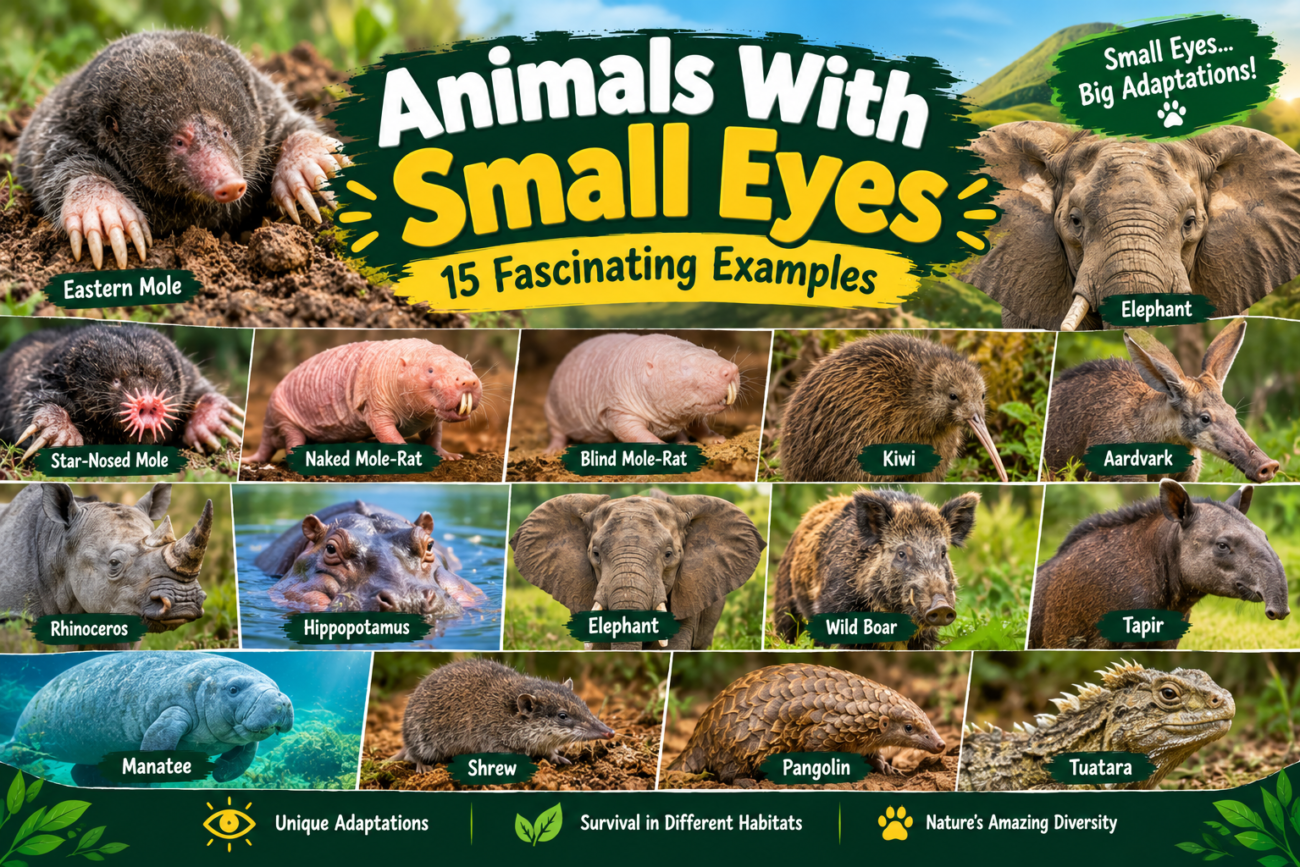
In this guide, we explore 15 animals with small eyes, including moles, naked mole-rats, kiwis, rhinoceroses, and hippopotamuses. You will learn about their scientific names, habitats, diets, physical characteristics, and the ways their eyes help or play a limited role in their daily lives.
Quick Answer: What Animals Have Small Eyes?
Animals with small eyes include the eastern mole, star-nosed mole, naked mole rat, blind mole-rat, kiwi, aardvark, rhinoceros, hippopotamus, elephant, wild boar, tapir, manatee, shrew, pangolin, and tuatara. Many burrowing animals have small eyes because they spend much of their lives underground, where touch and smell are often more useful than detailed vision. Other species, such as rhinoceroses and elephants, have eyes that appear relatively small compared with their large bodies. However, small eyes do not automatically mean an animal is blind or has poor eyesight.
1. Eastern Mole
Scientific name: Scalopus aquaticus
Class: Mammalia
Diet: Earthworms, insects, and other soil invertebrates
Habitat: Underground tunnels in lawns, fields, forests, and meadows
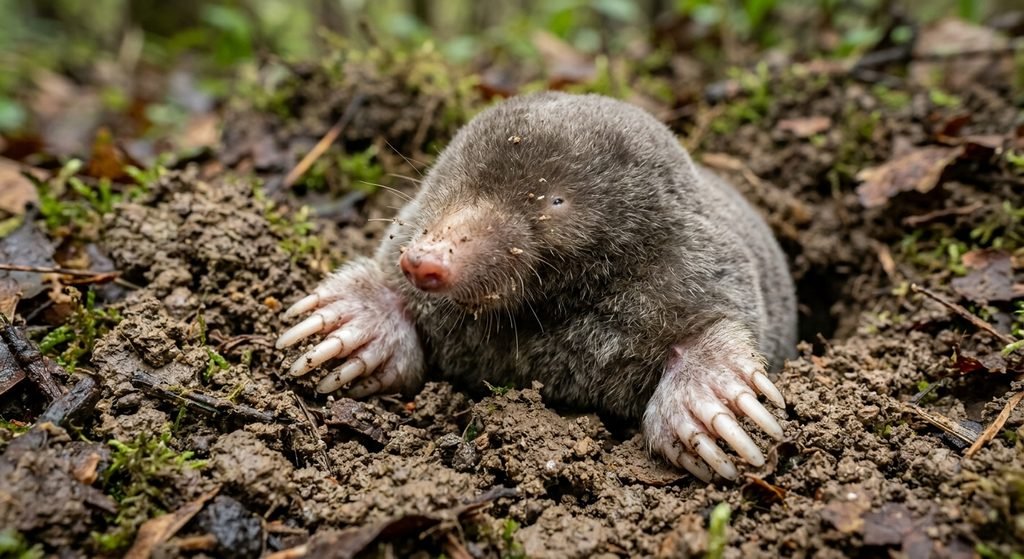
The eastern mole is a small mammal famous for digging extensive tunnel systems beneath the ground. Its body is covered in soft fur, and its front feet are broad and powerful, making them ideal for moving soil. Its eyes are extremely small and hidden beneath the fur, so they can be difficult to see.
Living underground means the eastern mole rarely needs to identify distant objects or recognize colors. Instead, it searches for earthworms and other invertebrates through its tunnels, using sensitive touch and other senses to locate food. Although its eyesight is limited, the mole is not necessarily completely blind. Its eyes can detect light, and this ability may help it respond when its underground surroundings are disturbed.
The eastern mole demonstrates how an animal can survive successfully without relying on sharp vision. Its digging ability, sensitive snout, and specialized front limbs are much more important to its underground lifestyle.
2. Star-Nosed Mole
Scientific name: Condylura cristata
Class: Mammalia
Diet: Aquatic insects, worms, and small invertebrates
Habitat: Wetlands, marshes, stream edges, and damp soils in eastern North America
The star-nosed mole is one of the most unusual mammals in the world. It has a ring of 22 fleshy appendages surrounding its nose, creating a star-shaped structure that helps it explore its environment and locate prey. Its eyes are tiny, and its vision is relatively weak compared with that of many surface dwelling mammals.
Rather than depending on eyesight, this mole uses its highly sensitive nose to investigate objects and identify food. The star-shaped appendages contain thousands of sensory structures that provide detailed information about nearby surroundings. This adaptation is especially useful in dark tunnels and murky wetlands.
Star-nosed moles are also remarkably fast feeders. They can identify and consume tiny prey in fractions of a second. Their small eyes do not prevent them from being effective hunters because their sensitive nose performs much of the work normally associated with vision.
3. Naked Mole-Rat
Scientific name: Heterocephalus glaber
Class: Mammalia
Diet: Underground roots, tubers, and other plant material
Habitat: Underground burrow systems in eastern Africa
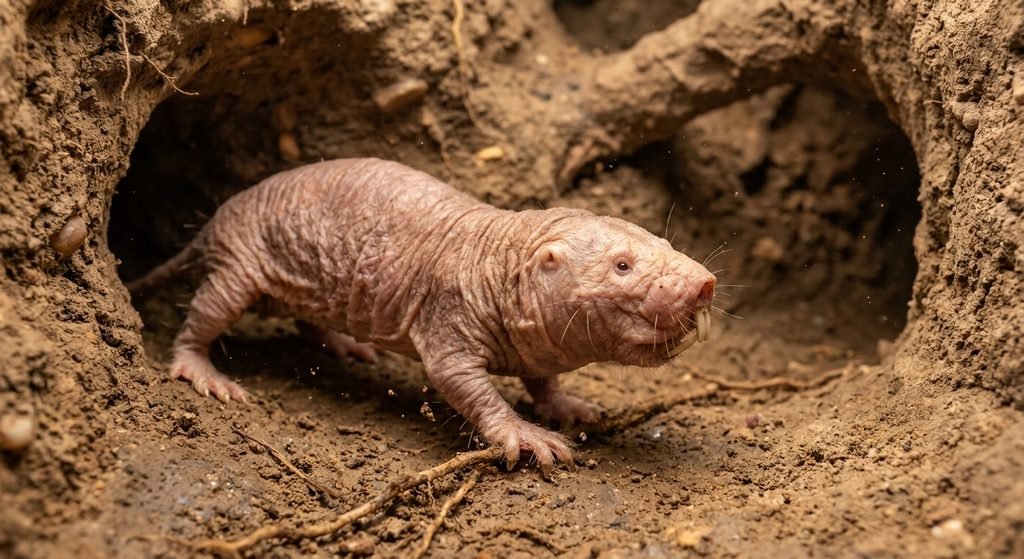
The naked mole-rat is a nearly hairless rodent with wrinkled skin, prominent front teeth, and exceptionally small eyes. It lives in extensive underground tunnels, where colonies can contain many related individuals. Because sunlight rarely reaches its home, detailed vision is not essential for most everyday activities.
These rodents rely heavily on touch, smell, hearing, and sensitivity to vibrations. Their strong incisors help them dig through hard soil and reach underground plant parts. They also communicate using a variety of sounds and work together to maintain their burrow systems.
Although naked mole-rats are often described as blind, they can detect some light. Their vision is extremely limited, but their eyes still have biological functions. This is a useful example of how small eyes can be an adaptation to a dark environment rather than simply a physical disadvantage.
Their social behavior is equally remarkable: naked mole-rats live in organized colonies with a reproductive queen and numerous workers, a social arrangement unusual among mammals.
4. Blind Mole-Rat
Scientific name: Spalax species
Class: Mammalia
Diet: Roots, bulbs, tubers, and other underground plant parts
Habitat: Underground tunnels in parts of Europe, western Asia, and the Middle East
Blind mole-rats are specialized underground rodents with cylindrical bodies, powerful digging teeth, and eyes that are greatly reduced. In some species, the eyes are covered by skin and are not visible externally. These animals spend most of their lives in dark tunnel systems, where ordinary visual abilities provide limited benefits.
Instead of using sight to search for food, blind mole-rats locate underground plant material while moving through their burrows. Their teeth and strong muscles allow them to excavate soil and reach roots and tubers. Their sensory systems are adapted to life in enclosed spaces, where touch and other signals are more useful than distant vision.
The name “blind mole-rat” can create the impression that the eyes have no purpose at all. However, research on some species suggests that reduced eyes can retain functions related to detecting environmental light. The exact abilities vary by species, so it is important not to assume that every mole-rat has identical vision.
5. Kiwi
Scientific name: Apteryx species
Class: Aves
Diet: Worms, insects, larvae, and other small soil animals
Habitat: Forests and other vegetated habitats in New Zealand
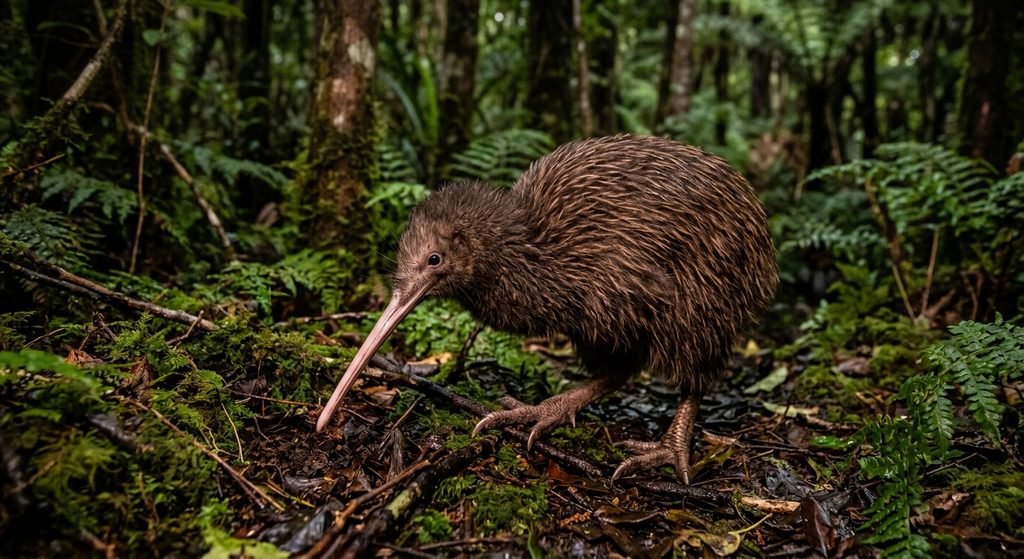
Kiwis are flightless birds native to New Zealand. They have rounded bodies, shaggy feathers, strong legs, and long bills. Their eyes are unusually small for birds, and their vision is not as dominant a sense as it is in many other bird species.
Kiwis generally forage at night, probing the ground and leaf litter for invertebrates. Their nostrils are located near the tip of the bill, an unusual feature among birds that helps them detect food through smell. Touch and hearing also contribute to their ability to investigate their surroundings.
Their small eyes are associated with a lifestyle in which detailed daytime vision is less important than finding prey close to the ground. Nevertheless, kiwis are not simply helpless in low light; they use several senses together to move and feed.
These distinctive birds are an excellent example of how evolution can produce a successful animal whose sensory priorities differ from those of most other birds.
6. Aardvark
Scientific name: Orycteropus afer
Class: Mammalia
Diet: Primarily ants and termites
Habitat: Savannas, grasslands, woodlands, and scrublands in sub-Saharan Africa
The aardvark is a nocturnal mammal with a long snout, large ears, a muscular body, and powerful claws. Its eyes are relatively small, especially when compared with its long face and overall body structure. Since it is most active after dark, it relies on more than eyesight to locate its food.
Aardvarks use their keen sense of smell to find termite mounds and ant nests. Once they discover a suitable feeding site, they dig into it with their strong claws and use a long, sticky tongue to collect insects. Their large ears also help them detect sounds in their surroundings.
The aardvark’s feeding behavior explains why its small eyes are not a major obstacle. It does not need to chase fast-moving prey across open ground or recognize distant objects in detail. Instead, it searches for insect colonies using smell, hearing, and digging skills.
Its unusual appearance reflects a highly specialized diet and a lifestyle built around nighttime foraging.
7. Rhinoceros
Scientific name: Rhinocerotidae family
Class: Mammalia
Diet: Plant material, including grasses, leaves, shoots, and shrubs
Habitat: African savannas and grasslands, as well as Asian forests and grasslands, depending on the species
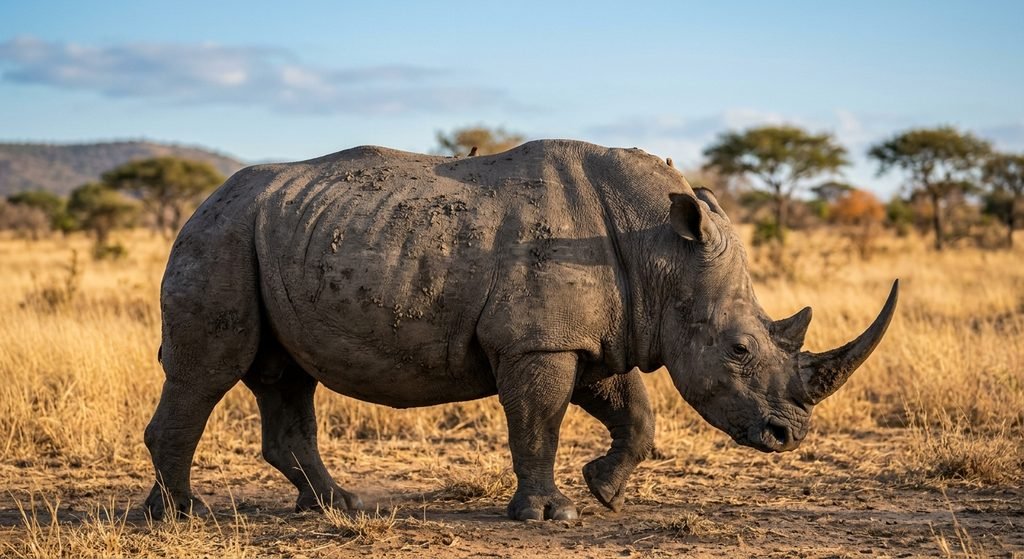
Rhinoceroses are among the largest land mammals, yet their eyes look small in proportion to their massive heads and bodies. Their thick skin, heavy build, and prominent horns make their eyes seem even less noticeable. Rhinoceroses do have vision, but it is generally considered less important to them than smell and hearing.
A rhinoceros can use its sense of smell to investigate its environment, detect other animals, and recognize scent markings. Its ears can rotate to pick up sounds from different directions. These senses help it remain aware of potential threats, even when its eyesight does not provide a clear view.
Rhinoceroses are herbivores, and different species have different feeding preferences. Some graze on grasses, while others browse on leaves and branches. Their small-looking eyes do not prevent them from navigating their habitat or finding food.
Because rhinoceroses are large and powerful, people sometimes assume they have very poor vision. A more accurate explanation is that their senses work together, with smell and hearing playing important roles in their daily lives.
8. Hippopotamus
Scientific name: Hippopotamus amphibius
Class: Mammalia
Diet: Mainly grasses
Habitat: Rivers, lakes, wetlands, and nearby grasslands in sub-Saharan Africa
The hippopotamus is a huge, semi-aquatic mammal with a broad head, enormous mouth, and barrel-shaped body. Its eyes are relatively small compared with its overall size, although they are positioned high on the head. This placement allows a hippo to keep much of its body submerged while its eyes, ears, and nostrils remain above the water.
Hippos spend much of the day resting in water to help regulate their body temperature and protect their skin from the sun. They usually leave the water at night to graze on land. Their vision, hearing, and sense of smell help them respond to their surroundings in both aquatic and terrestrial environments.
Small-looking eyes do not mean a hippo cannot see. Its eye position is a particularly useful adaptation for an animal that spends so much time in water. By keeping most of its body underwater, it can remain alert while exposing relatively little of itself above the surface.
Despite their bulky appearance, hippos can move quickly on land and are powerful swimmers in suitable water.
9. Elephant
Scientific name: Elephantidae family
Class: Mammalia
Diet: Grasses, leaves, bark, roots, fruits, and other vegetation
Habitat: African savannas and forests, and Asian forests and grasslands, depending on the species
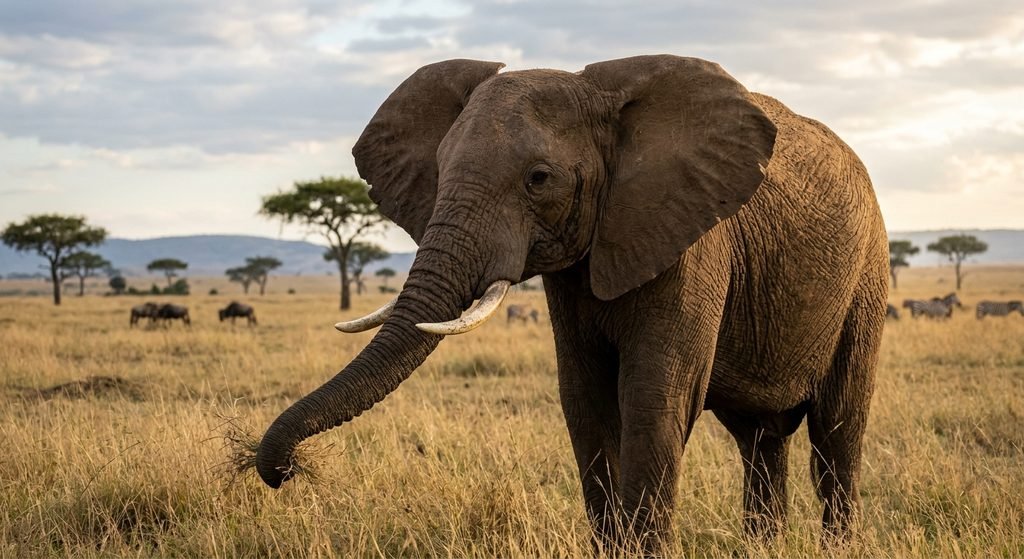
Elephants are the largest living land animals, and their eyes can appear surprisingly small compared with their enormous heads. Their long trunks, large ears, tusks in some individuals, and thick skin draw attention away from their eyes.
Elephants have functional eyesight, but they also depend heavily on smell, hearing, touch, and social communication. Their trunks are especially versatile, helping them smell, grasp food, drink water, and explore objects. Their sensitive feet can also detect certain vibrations in the ground.
Elephants live in complex social groups and communicate through sounds, body movements, and scent. These abilities help them coordinate their movements, maintain social relationships, and respond to changing conditions in their habitats.
Their relatively small eyes are not evidence of poor intelligence or an inability to navigate. Instead, elephants have a combination of sensory abilities suited to their size, social behavior, and environment.
10. Wild Boar
Scientific name: Sus scrofa
Class: Mammalia
Diet: Omnivorous; roots, tubers, fruits, seeds, insects, and small animals
Habitat: Forests, grasslands, wetlands, and agricultural landscapes across parts of Europe, Asia, and introduced regions
The wild boar is a sturdy mammal with a bristly coat, strong snout, and small-looking eyes set into the sides of its head. Its eyes may seem especially small beneath its forehead and coarse facial hair. This animal uses a range of senses to locate food and detect danger.
Wild boars often root through soil and leaf litter with their snouts, searching for underground plant parts, insects, and other edible material. Their sense of smell is highly useful during foraging, while hearing helps them notice activity nearby. Their vision contributes to awareness, but it is not the only tool they use to survive.
Wild boars can live in a variety of environments, from woodland to agricultural areas. Their flexible diet allows them to take advantage of seasonal food sources.
Their small eyes fit into a face designed for rooting, digging, and investigating the ground. The animal’s strong snout and sense of smell are particularly valuable when food is hidden beneath soil or vegetation.
11. Tapir
Scientific name: Tapiridae family
Class: Mammalia
Diet: Leaves, shoots, fruits, and other plant material
Habitat: Tropical forests, wetlands, and forested areas of Central and South America and Southeast Asia, depending on the species
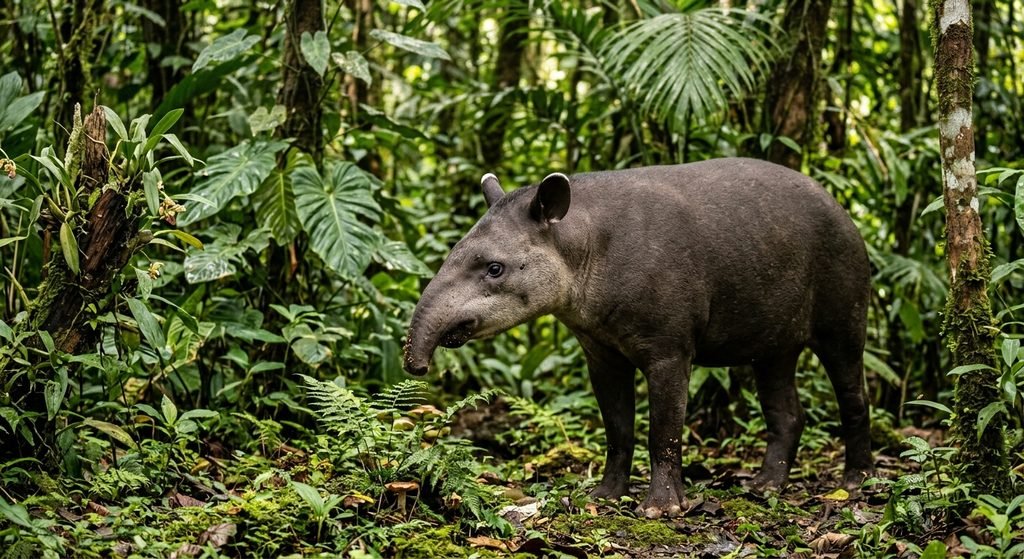
Tapirs are large, plant-eating mammals with rounded bodies, short legs, and flexible snouts. Their eyes are relatively small compared with their heads, and their eyesight is not considered their strongest sense. Tapirs depend substantially on smell and hearing to explore their forest habitats.
Their flexible snouts help them grasp leaves and locate fruits among vegetation. Many tapirs are most active during the evening or night, although their activity patterns can vary with habitat and disturbance. Their senses help them move through dense forest where visibility may be limited by plants and low light.
Tapirs are important parts of their ecosystems because they eat fruit and can disperse seeds through their droppings. This makes them contributors to forest regeneration.
Their small eyes do not stop them from moving through thick vegetation. Their snouts, noses, and ears provide additional information about nearby food, obstacles, and other animals.
12. Manatee
Scientific name: Trichechus species
Class: Mammalia
Diet: Aquatic plants and other vegetation
Habitat: Shallow coastal waters, rivers, estuaries, and warm freshwater systems
Manatees are gentle aquatic mammals sometimes called sea cows. They have rounded bodies, paddle-shaped flippers, and small eyes located on the sides of their heads. Their eyes are small in relation to their bodies, but they are functional and adapted to life underwater.
Manatees feed on aquatic vegetation, using their flexible lips and flippers to help gather plants. They can live in rivers, coastal waters, and estuaries, depending on the species. Their sensory abilities help them detect their surroundings while moving through water where visibility can change.
Their small eyes do not mean that manatees are unable to see. They can use vision underwater, while touch, hearing, and other senses also contribute to their awareness. Their eyes are adapted to an aquatic environment rather than to the demands of a land-dwelling mammal.
Manatees face threats from habitat loss, watercraft collisions, and changes in water conditions in some regions. Their survival depends on suitable aquatic habitats and effective conservation measures.
13. Shrew
Scientific name: Soricidae family
Class: Mammalia
Diet: Insects, worms, spiders, and other small invertebrates
Habitat: Forests, grasslands, gardens, wetlands, and other habitats around the world
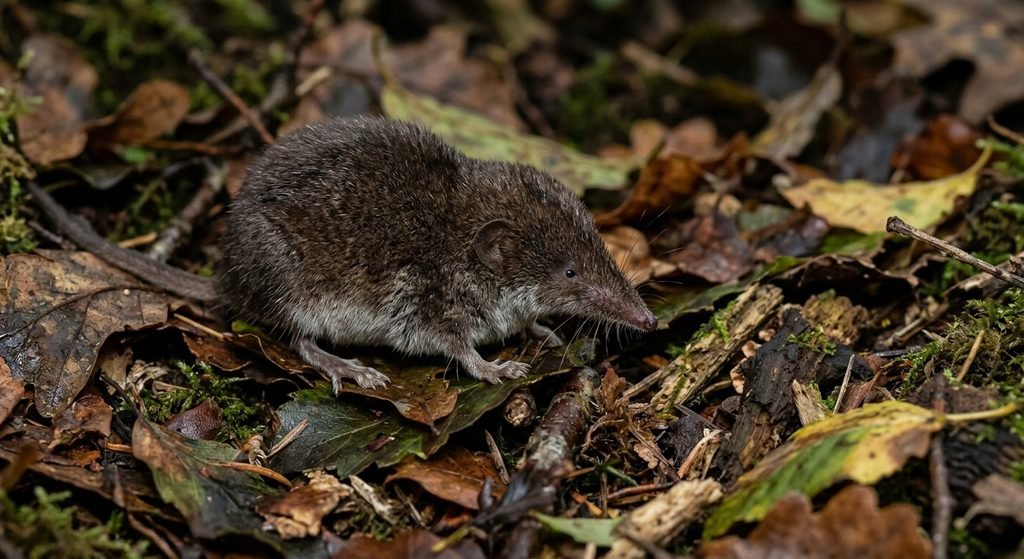
Shrews are tiny mammals with pointed snouts, short legs, and very small eyes. Their bodies are often covered in dense fur, and their eyes can be difficult to notice because of their small size. Although shrews resemble mice in some ways, they are not rodents; they belong to a separate mammalian family.
Many shrews have fast metabolisms and need to eat frequently. They search through leaf litter, soil, and vegetation for insects and other small prey. Their sensitive snouts and whiskers help them explore close surroundings, while hearing and smell contribute to their ability to detect food and danger.
Shrews do have vision, but they generally rely on other senses to investigate their immediate environment. Their small eyes are compatible with a lifestyle focused on moving through vegetation and searching for tiny prey.
Different shrew species live in different environments, and their exact diets and behaviors vary. Still, their small eyes and pointed snouts are recognizable features of this diverse group of mammals.
14. Pangolin
Scientific name: Manidae family
Class: Mammalia
Diet: Mainly ants and termites
Habitat: Forests, savannas, and other habitats in Africa and Asia, depending on the species
Pangolins are unusual mammals covered in overlapping keratin scales. They have elongated bodies, strong claws, and narrow snouts that help them reach ants and termites. Their eyes are relatively small, and their vision is not their main tool for finding food.
Pangolins rely heavily on their sense of smell to locate insect nests. Once they find a feeding site, they use their powerful claws to break into it and collect insects with a long, sticky tongue. Their scales provide protection, and many species can curl into a ball when threatened.
Their small eyes suit a feeding strategy that depends more on locating scents and accessing insect colonies than on spotting prey from a distance. Pangolins are generally solitary, and their activity patterns vary among species.
All pangolin species face serious conservation concerns, particularly from illegal wildlife trafficking and habitat loss. Their unusual appearance and specialized diet make them fascinating animals, but their protection is essential for their continued survival.
15. Tuatara
Scientific name: Sphenodon punctatus
Class: Reptilia
Diet: Insects, spiders, worms, and other small animals; sometimes small vertebrates
Habitat: Islands and protected habitats in New Zealand
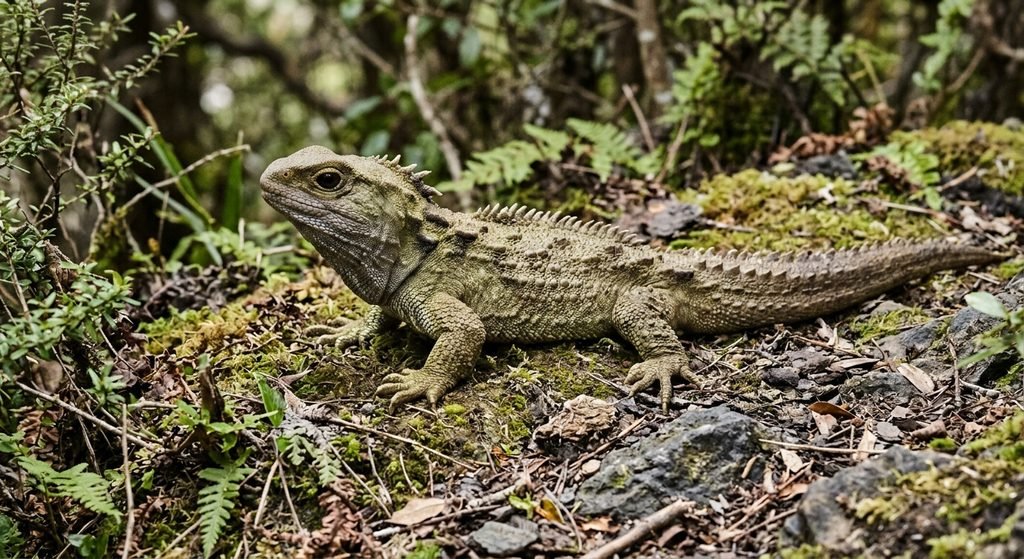
The tuatara is a distinctive reptile native to New Zealand. It resembles a lizard, but it belongs to a separate surviving lineage of reptiles. Its eyes are relatively small compared with its head, and it has several unusual anatomical features that make it especially interesting to scientists.
Tuatara are generally active during cooler periods and can feed on insects and other small animals. Their vision is useful, but they also depend on smell, hearing, and other sensory information to explore their surroundings and locate prey.
One of the tuatara’s best-known features is its so-called “third eye,” a light-sensitive structure found in young animals. This structure becomes covered by scales as the animal matures and is not equivalent to a fully functioning third eye used for ordinary vision.
The tuatara shows that reptile eyes and sensory systems can differ significantly from those of familiar lizards. Its small-looking eyes are only one part of a distinctive biology shaped by its long evolutionary history.
Why Do Some Animals Have Small Eyes?
Small eyes can develop for several different reasons. The explanation depends on the species, its ancestry, and the environment in which it lives.
1. Living Underground
Animals such as moles and naked mole-rats spend much of their lives in dark tunnels. Detailed vision is less useful in this environment, so other senses can become more important for finding food and moving around.
2. Depending on Smell and Touch
Aardvarks, pangolins, and wild boars use their noses to investigate the ground and locate food. When smell and touch provide valuable information, vision may play a less dominant role in daily activities.
3. Large Body Size
In animals such as elephants and rhinoceroses, eyes may appear small because the head and body are enormous. This visual impression does not automatically indicate a severe limitation in eyesight.
4. Aquatic or Specialized Habitats
Manatees and hippopotamuses have eyes adapted to their particular ways of life around water. Their eye placement, surrounding facial structures, and other senses help them function in aquatic environments.
5. Evolutionary Adaptation
Eye size is shaped by a combination of evolutionary history, body size, habitat, and behavior. There is no single rule that explains every small-eyed animal. In some species, reduced eyes are associated with limited vision; in others, small-looking eyes remain functional.
Read more: Animals That Eat Mice
Frequently Asked Questions
Which animal has the smallest eyes?
There is no single answer without specifying how eye size is measured and which animals are being compared. Some underground mammals, including certain blind mole-rats, have extremely reduced eyes. Scientists distinguish between absolute eye size and eye size relative to body size.
Are all animals with small eyes blind?
No. Many animals with small eyes can see, although the sharpness and range of their vision vary. Moles, for example, have eyes and can detect light, while naked mole-rats have very limited vision but are not completely unable to respond to light.
Why do moles have such small eyes?
Moles spend much of their lives underground, where there is little light and detailed vision is not especially useful. Their small eyes are consistent with this lifestyle, while their powerful forelimbs, sensitive snouts, and other senses help them dig and locate prey.
Do elephants have poor eyesight because their eyes are small?
Small-looking eyes do not, by themselves, prove that an animal has poor eyesight. Elephants use vision alongside smell, hearing, touch, and social communication. Their sensory abilities work together to help them navigate and interact with their surroundings.
What is the difference between small eyes and reduced eyes?
Small eyes are simply smaller in appearance or measurement. Reduced eyes have undergone structural or functional reduction, which can be associated with a limited role in vision. Some underground animals have strongly reduced eyes, while other small-eyed animals retain useful eyesight.
Which animals rely more on smell than sight?
Many animals rely heavily on smell, including aardvarks, pangolins, wild boars, and several burrowing mammals. The importance of each sense varies by species, and smell usually works alongside hearing, touch, or vision rather than replacing every other sense.
Conclusion
Animals with small eyes show how differently species can adapt to their surroundings. From the underground tunnels of moles to the forests explored by tapirs and the waterways inhabited by manatees, small eyes appear in animals with very different bodies, diets, and lifestyles.
For some species, tiny or reduced eyes are linked to life in darkness. Others have eyes that simply look small compared with their large bodies. Many still use vision, while smell, hearing, and touch provide additional information that helps them survive.
The key lesson is that eye size alone does not determine an animal’s abilities. Each species has a combination of physical features and senses shaped by its evolutionary history. Understanding these differences helps us appreciate the remarkable variety of adaptations found throughout the animal kingdom.
