Some animals are famous for running at incredible speeds, but others survive by moving slowly and conserving energy. From tree-dwelling sloths to tiny garden snails and long-lived tortoises, slow animals have developed remarkable ways to live in their environments. Their unhurried movements may look unusual, but they often serve an important purpose.
Understanding slow-moving animals also reveals how differently species have adapted to life on land, in trees, and underwater. Some depend on low-energy diets, while others use protective shells, camouflage, or a lifestyle that requires very little movement.
Quick Answer: What Are the Slowest Animals in the World?
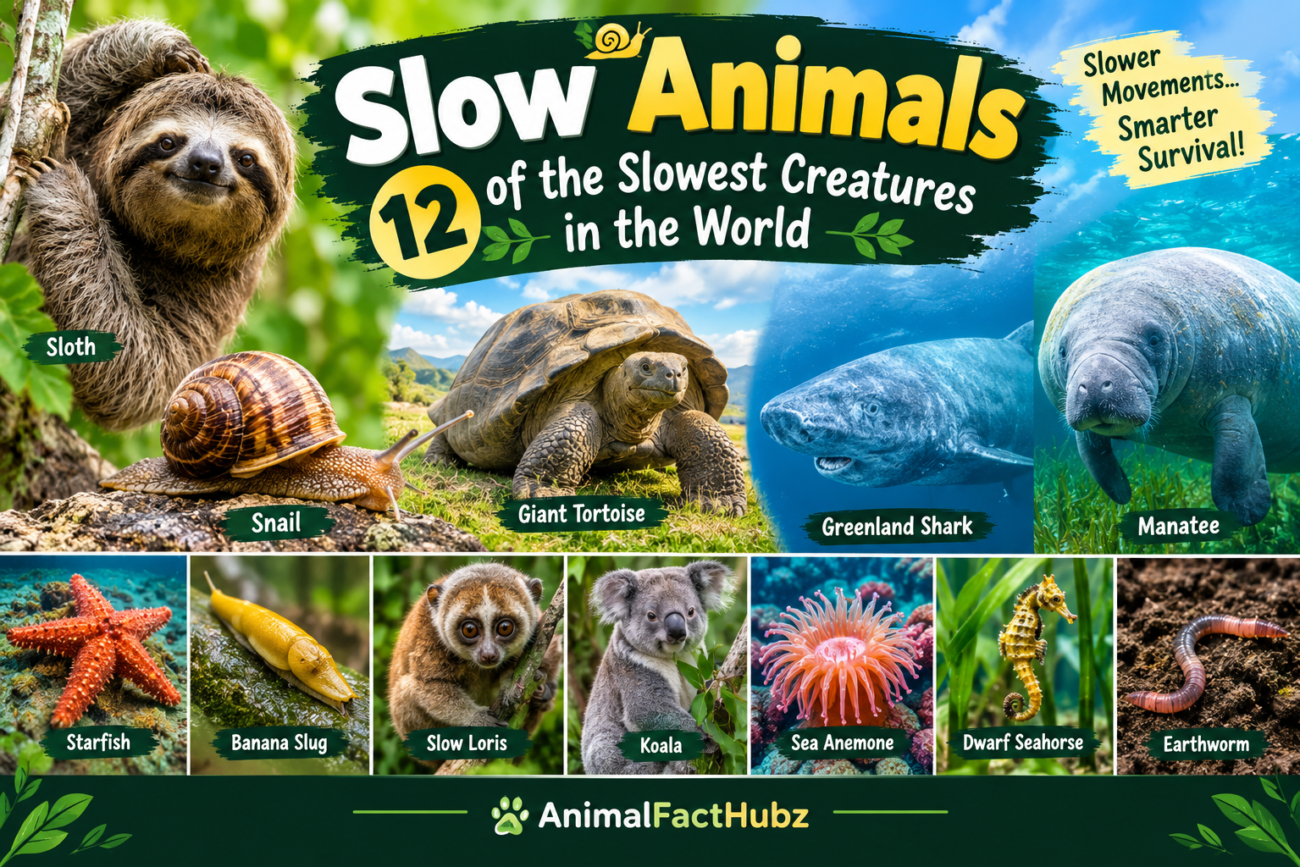
Some of the best-known slow animals include the three-toed sloth, garden snail, banana slug, giant tortoise, starfish, Greenland shark, manatee, slow loris, koala, sea anemone, dwarf seahorse, and earthworm. Sloths are widely recognized as the slowest mammals, while snails and slugs are among the slowest mobile land animals. Certain marine animals move extremely slowly, and sea anemones can remain attached to one place for long periods. Their slow movements are linked to factors such as energy conservation, feeding habits, body structure, and survival strategies.
1. Three-Toed Sloth
Scientific name: Bradypus tridactylus
Class: Mammalia
Diet: Primarily leaves and other plant material
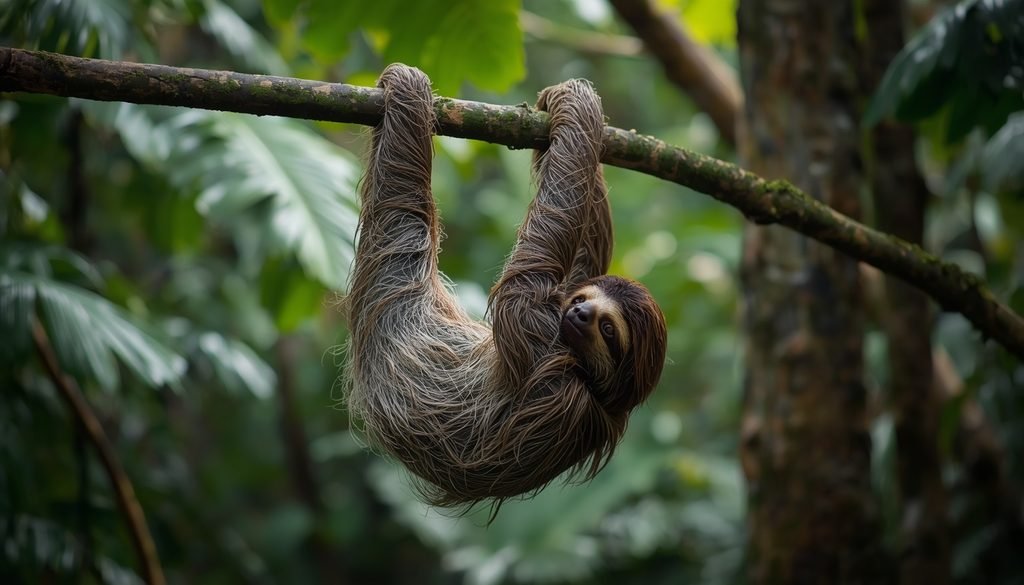
The three-toed sloth is one of the most famous slow animals in the world. Native to tropical forests of South America, this unusual mammal spends much of its life hanging upside down from tree branches. Its long limbs and curved claws help it grip branches securely while feeding, resting, and moving through the forest canopy.
Why Is the Three-Toed Sloth So Slow?
Sloths eat a diet dominated by leaves, which generally provide limited usable energy compared with many other foods. Their bodies are adapted to conserve that energy, and their movements are deliberately slow. Rather than rushing between trees, they often remain in a relatively small area where food and shelter are available.
Their slow movement can also help them avoid detection. Their fur may support algae that gives it a greenish tint, helping them blend into leafy surroundings. However, sloths are not completely helpless: they have strong gripping limbs and can swim when necessary.
Sloths are vulnerable to predators such as large cats and eagles, so their survival depends on more than speed. Camouflage, energy efficiency, and a life spent high in the trees all play important roles.
2. Garden Snail
Scientific name: Cornu aspersum
Class: Gastropoda
Diet: Leaves, decaying plant material, and other organic matter
The garden snail is a familiar example of a slow-moving animal. It has a soft body, a muscular foot, and a hard shell that protects its delicate internal organs. Instead of walking or running, it glides across surfaces using waves of muscular contractions.
A layer of mucus reduces friction between the snail’s body and the ground. This helps it travel over rough surfaces, including leaves, soil, and garden walls, without moving quickly.
How Does a Garden Snail Survive So Slowly?
Garden snails often feed on plant material and become more active when conditions are damp. Dry weather can cause them to retreat into their shells or seek sheltered places to reduce moisture loss.
Their shells provide protection against some predators, while their ability to hide in small spaces helps them avoid danger. Although a snail cannot escape most threats through speed, its body is designed for a different strategy: slow movement, moisture conservation, and protection.
The garden snail demonstrates that moving slowly does not prevent an animal from finding food or surviving in a changing environment.
3. Banana Slug
Scientific name: Ariolimax species
Class: Gastropoda
Diet: Fungi, decaying leaves, and other organic material
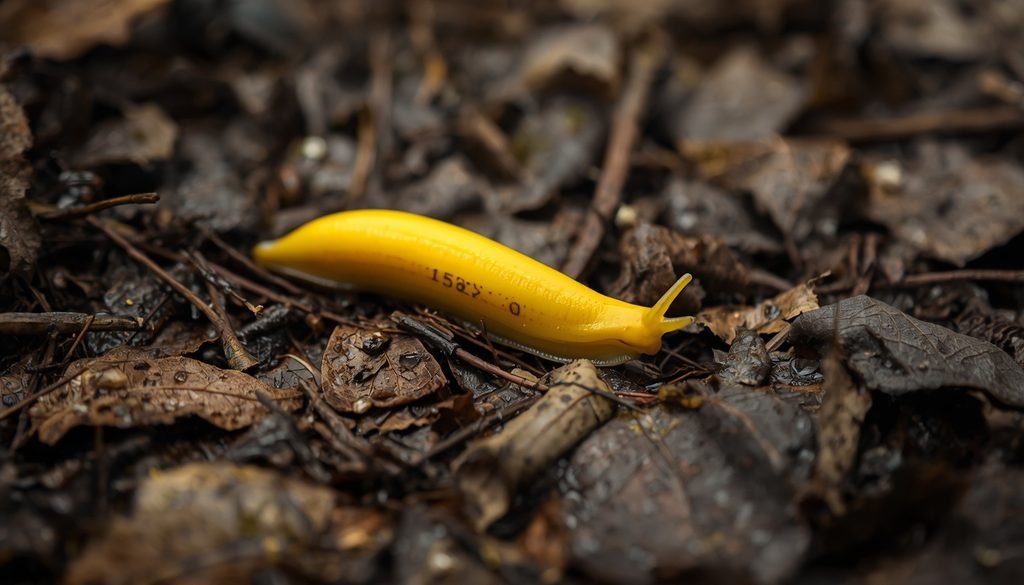
Banana slugs are large, soft-bodied land mollusks found in moist forests along the Pacific coast of North America. Their yellow bodies give them their common name, although some individuals appear greenish, brown, or spotted.
Like snails, banana slugs travel using a muscular foot. They release mucus that helps them glide across damp surfaces, including fallen logs, forest litter, and living vegetation. Their movement is extremely slow compared with animals that walk or run.
Why Is the Banana Slug Important?
Banana slugs play a useful role in forest ecosystems by feeding on decaying plant matter and fungi. This feeding helps break down organic material and return nutrients to the environment.
Their soft bodies lose moisture easily, so they are particularly suited to cool, damp habitats. They often become less active during dry conditions and seek shelter beneath logs or leaves.
Banana slugs also use mucus as part of their defense. The slippery coating can make them difficult for some predators to handle. Instead of relying on speed, they depend on moisture, chemical defenses, and their role within the forest’s natural recycling system.
4. Giant Tortoise
Scientific name: Chelonoidis niger (Galápagos giant tortoise)
Class: Reptilia
Diet: Grasses, leaves, fruits, and other vegetation
Giant tortoises are among the most recognizable slow-moving land animals. The Galápagos giant tortoise, in particular, is known for its enormous shell, sturdy legs, and long lifespan. These reptiles inhabit the Galápagos Islands, where different populations have adapted to local environments and food sources.
Their heavy bodies and protective shells are not designed for speed. Instead, their strong legs support their weight as they slowly travel in search of vegetation, water, and suitable resting places.
What Makes Giant Tortoises Move Slowly?
Giant tortoises are ectothermic, meaning their body temperature depends largely on external conditions. They regulate their activity by responding to warmth, shade, and available resources rather than maintaining a constant internal temperature like mammals.
Their plant-based diet and slow-paced lifestyle fit their ecological needs. A tortoise does not need to chase prey, and its shell offers a strong defense against many potential threats.
Giant tortoises can still travel meaningful distances over time. Their slow pace is a reminder that survival does not always require quick movement; longevity, efficient energy use, and physical protection can be equally valuable.
5. Starfish (Sea Star)
Scientific name: Asterias rubens (common starfish)
Class: Asteroidea
Diet: Mollusks and other small marine animals, depending on species
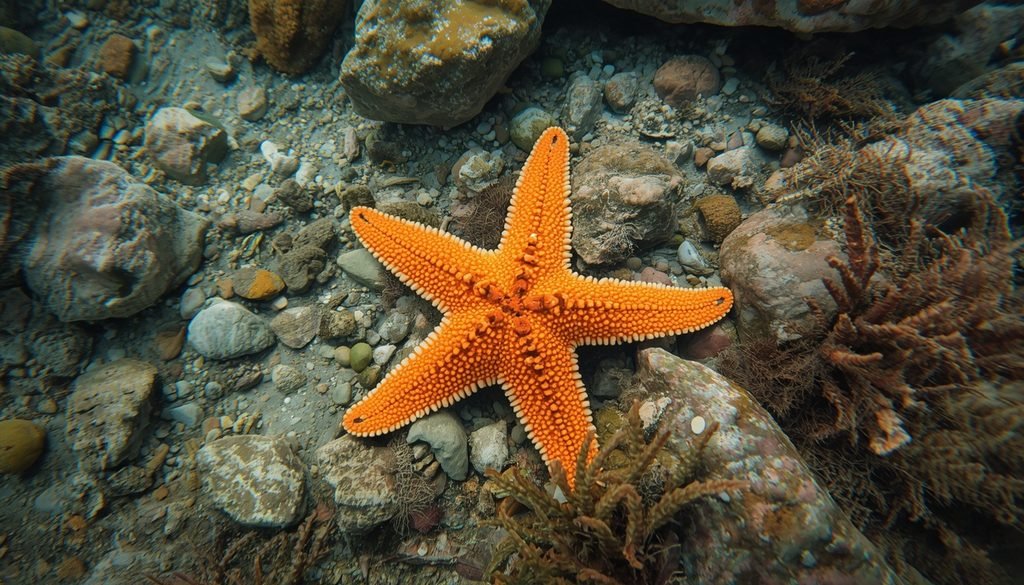
Starfish, more accurately called sea stars, are marine invertebrates with arms extending from a central body. Many species move slowly along the seafloor using hundreds of tiny tube feet. These structures operate through a water-based hydraulic system that helps the animal grip surfaces and move.
A sea star may travel across rocks, sand, or coral habitats while searching for food. Its movement is usually gradual, making it a good example of a slow-moving marine animal.
How Do Sea Stars Feed Without Speed?
Many sea stars do not need to chase fast prey. Some species feed on mussels and clams, using their tube feet to pull at shells. Certain sea stars can extend part of their stomach outside the body to digest food externally.
Their slow movement suits a lifestyle based on finding food on the seafloor rather than pursuing it over long distances. Some species can also regenerate lost arms, although the ability and extent of regeneration vary.
Sea stars show how marine animals can use specialized anatomy to survive without speed. Their tube feet, feeding adaptations, and ability to navigate underwater surfaces are more important than rapid movement.
6. Greenland Shark
Scientific name: Somniosus microcephalus
Class: Chondrichthyes
Diet: Fish, squid, and other marine animals, including carrion
The Greenland shark lives in the cold waters of the North Atlantic and Arctic regions. It is a large shark known for its slow cruising speed and remarkable longevity. Scientists believe it can live for several centuries, making it one of the longest-lived vertebrates known.
Unlike fast-swimming sharks that rely on rapid pursuit, Greenland sharks often move slowly through deep, cold water. Their physiology is adapted to a demanding environment where conserving energy can be beneficial.
Why Does the Greenland Shark Swim Slowly?
Cold temperatures influence many biological processes, and the Greenland shark has a slow metabolism compared with many other active marine predators. It does not need to swim rapidly at all times to locate food.
Its diet can include fish and squid, as well as animals it encounters as carrion. Researchers have also investigated how Greenland sharks may feed on marine mammals under particular circumstances.
Although it is sometimes described as the slowest shark, swimming speed varies with conditions and behavior. Its most extraordinary feature may be its combination of slow movement, deep-water living, and exceptional lifespan.
7. Manatee
Scientific name: Trichechus manatus (West Indian manatee)
Class: Mammalia
Diet: Aquatic vegetation
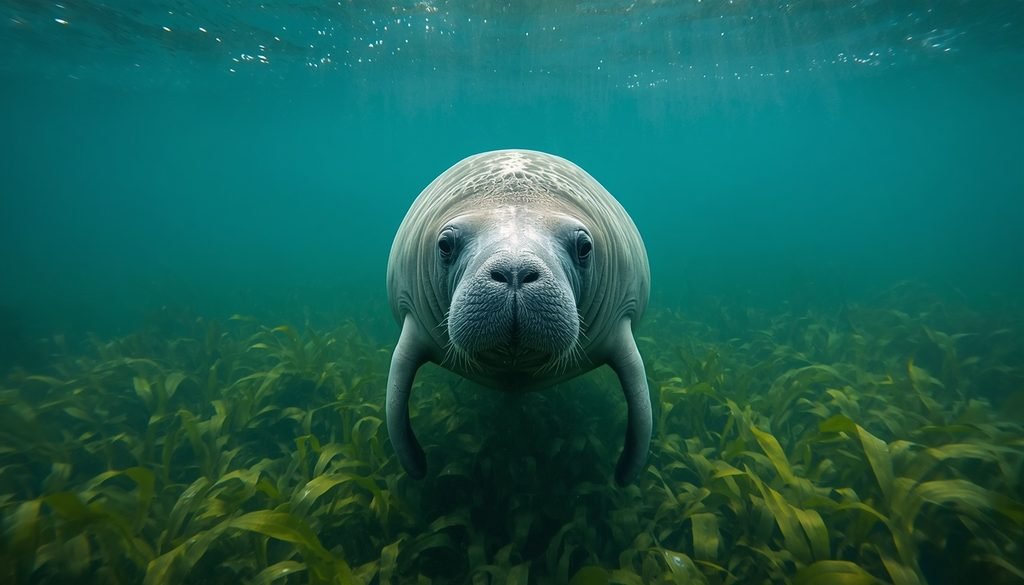
Manatees are large aquatic mammals found in warm coastal waters, rivers, and estuaries. Often called sea cows, they feed mainly on seagrasses and other aquatic plants. Their rounded bodies, paddle-shaped tails, and gentle swimming style make them appear unhurried.
Despite their large size, manatees are generally not built for high-speed swimming over long periods. They spend much of their time feeding, resting, and moving between areas where aquatic vegetation is available.
How Does a Manatee Survive Without Speed?
Manatees benefit from their size and aquatic habitat. Their large bodies make them difficult for many potential predators to attack, although young manatees may face greater risks. They can also swim faster for short periods when disturbed.
Their plant-based diet means they do not need to sprint after prey. Instead, they graze on vegetation and travel between feeding areas.
Human activities, including boat strikes and habitat degradation, are major threats to manatees in some regions. Their slow, surface-oriented movements can make them especially vulnerable to fast-moving boats, demonstrating that a slow lifestyle can be effective in nature but risky in human-altered environments.
8. Slow Loris
Scientific name: Nycticebus species
Class: Mammalia
Diet: Insects, tree gum, nectar, and fruit, depending on species
The slow loris is a small, nocturnal primate found in parts of South and Southeast Asia. It has large forward-facing eyes, a rounded head, and strong hands and feet that help it grip branches. Unlike monkeys that leap rapidly through trees, slow lorises often move with deliberate, careful steps.
Their slow climbing behavior helps them navigate branches and foliage while searching for food. They are usually active at night, when darkness can provide some protection from predators.
Is the Slow Loris Really Slow?
Slow lorises are not simply inactive animals. They can move through trees and respond to threats, but they often avoid sudden, conspicuous movements. Their strong grip lets them hold onto branches for long periods and move carefully through the canopy.
An unusual feature of slow lorises is their venomous bite, produced through a combination of secretions from a gland near the elbow and saliva. This defense is rare among mammals and can help deter predators.
Slow lorises face serious pressures from habitat loss and illegal wildlife trade. Their distinctive appearance should not be mistaken for suitability as pets; they have specialized needs and are best protected in the wild.
9. Koala
Scientific name: Phascolarctos cinereus
Class: Mammalia
Diet: Mainly eucalyptus leaves
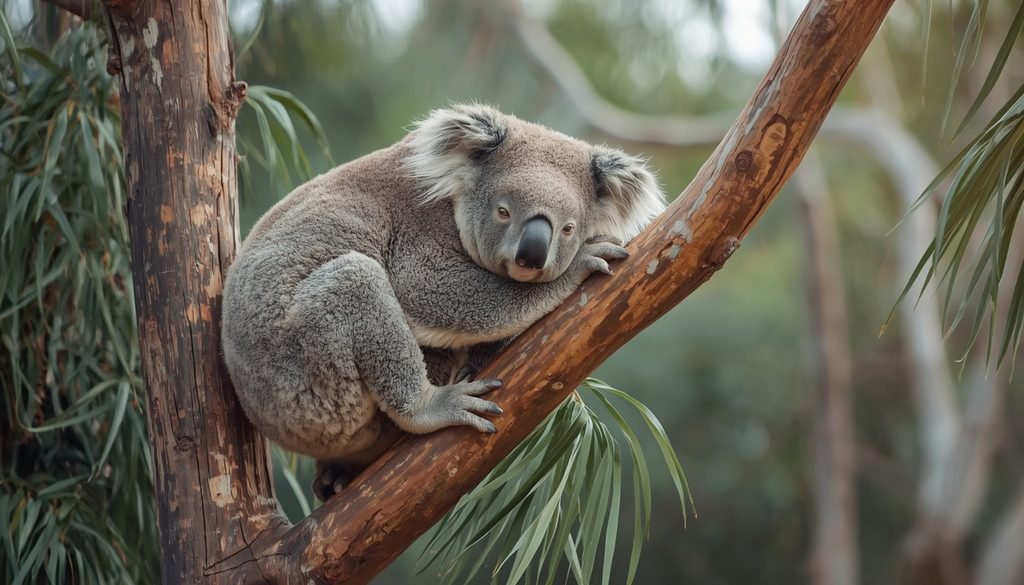
Koalas are tree-dwelling marsupials native to Australia. They spend much of their time resting in eucalyptus trees and feed on leaves that many other mammals cannot efficiently digest. Their diet is low in energy and contains compounds that require specialized digestion.
Koalas often sleep or rest for much of the day, although activity levels vary with weather, food availability, and individual behavior. Their slow-paced routine is closely connected to the nutritional limitations of their diet.
Why Do Koalas Rest So Much?
Eucalyptus leaves are fibrous and relatively low in usable energy. Koalas have a specialized digestive system that helps process this challenging food, and conserving energy is an important part of their lifestyle.
Their strong limbs and sharp claws help them climb and hold onto tree trunks. They may move between trees when necessary to find suitable food or mates, but they generally do not need to travel constantly.
Koalas are not bears; they are marsupials, meaning females raise their young in a pouch. Their lifestyle illustrates how a specialized diet can influence an animal’s daily activity and movement.
10. Sea Anemone
Scientific name: Actinia species (genus example)
Class: Anthozoa
Diet: Small fish, plankton, and other tiny marine animals, depending on species
Sea anemones resemble underwater flowers, with a central body surrounded by tentacles. They are marine animals related to corals and jellyfish. Many attach themselves to rocks or other stable surfaces and remain in one location for long periods.
Because they spend much of their lives attached to a surface, sea anemones are not comparable to animals that actively walk or swim. Some can slowly move by gliding along a surface, while others may detach and relocate under particular circumstances.
How Does a Sea Anemone Get Food?
Sea anemones use their tentacles to capture passing prey. Many species have stinging cells called cnidocytes, which help immobilize small animals and move food toward the mouth.
Their feeding method reduces the need to chase prey. Instead, water movement brings food within reach, and the anemone uses its tentacles to capture it.
This largely stationary lifestyle works well in suitable marine habitats. Sea anemones demonstrate that not all slow animals move slowly in the usual sense: some spend most of their lives anchored in place and rely on the environment to deliver food.
11. Dwarf Seahorse
Scientific name: Hippocampus zosterae
Class: Actinopterygii
Diet: Tiny crustaceans and other small planktonic animals
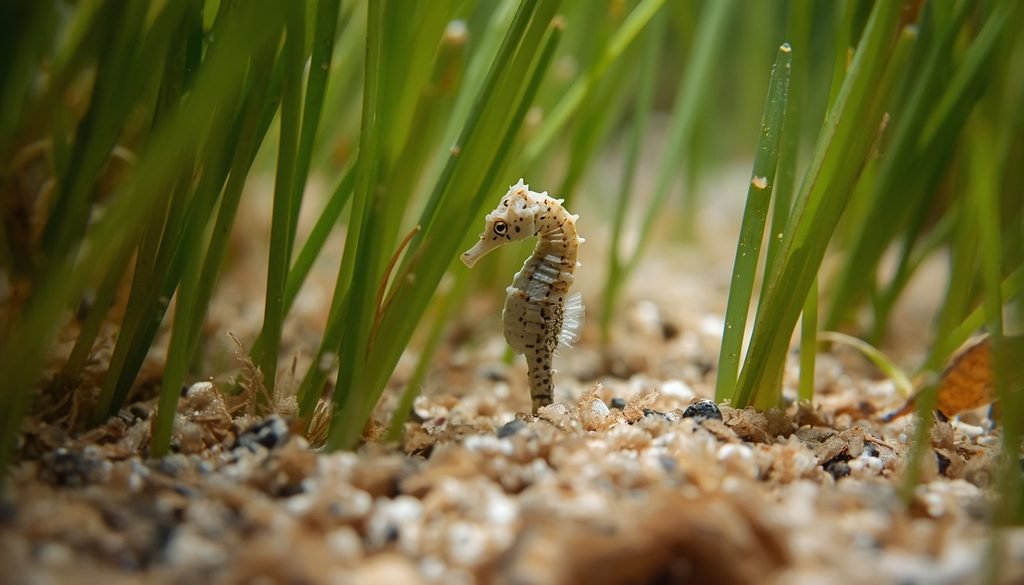
The dwarf seahorse is a very small marine fish found in shallow waters of the western Atlantic, including seagrass habitats around the Gulf of Mexico. It has a distinctive upright posture, a curled tail, and a long snout used to suck up tiny prey.
Seahorses are not strong, fast swimmers compared with many other fish. They rely on small fins for movement and often use their tails to anchor themselves to seagrass or other underwater plants.
Why Is the Dwarf Seahorse Such a Slow Swimmer?
Its small size and body shape make rapid swimming less practical. Rather than chasing prey over long distances, the dwarf seahorse feeds on tiny organisms that drift nearby or occur among vegetation.
Its prehensile tail helps it remain attached to plants when currents move through its habitat. This anchoring behavior can reduce the effort required to maintain position.
Seahorses can be affected by habitat loss, especially damage to seagrass beds. Their slow, specialized lifestyle depends on the presence of suitable vegetation where they can shelter, anchor themselves, and find food.
12. Earthworm
Scientific name: Lumbricus terrestris (common earthworm)
Class: Clitellata
Diet: Decaying organic matter and soil containing decomposed material
Earthworms are soft-bodied invertebrates that live in soil and help maintain healthy ecosystems. They move by alternately extending and shortening their bodies, using tiny bristles called setae to grip the soil. Their movement is slow, especially when they travel through dense earth.
Earthworms do not need to run after food. They consume soil and organic material, helping break down dead plant matter and making nutrients available to other organisms.
Why Are Earthworms Important Despite Their Slow Movement?
Earthworms create tunnels that can improve soil aeration and water movement. Their feeding and burrowing help mix organic matter into the ground, supporting soil structure and plant growth.
They are also an important food source for birds, amphibians, and other animals. Although they are vulnerable when exposed on the soil surface, living underground provides shelter from many threats and helps prevent moisture loss.
Earthworms show that slow movement can have an ecological benefit. By steadily burrowing and processing organic matter, they contribute to the health of soil ecosystems without needing speed or complex defensive equipment.
Why Are Some Animals So Slow?
Slow movement has developed for different reasons across the animal kingdom. There is no single explanation that applies to every species.
- Energy conservation: Sloths and koalas rely on diets that provide limited usable energy, so their bodies benefit from economical movement.
- Protective structures: Tortoises use shells for defense, reducing their dependence on escaping danger quickly.
- Specialized feeding: Sea anemones capture prey with tentacles, while sea stars can feed on animals found along the seafloor.
- Habitat and body structure: Snails and slugs use muscular feet and mucus to move across surfaces, while seahorses use small fins and anchoring tails.
- Cold-water adaptations: Greenland sharks live in cold environments and have a slow metabolism compared with many active predators.
- Reduced need to travel: Some animals can remain near reliable food sources or spend much of their lives attached to one location.
Slow movement is not always an advantage. It can make animals vulnerable to vehicles, predators, or sudden environmental changes. However, it can also help conserve energy, support specialized feeding, and fit the demands of a particular habitat.
Read More: Lizards of Florida
Frequently Asked Questions About Slow Animals
What is the slowest animal in the world?
There is no single answer for every definition of “slowest.” Three-toed sloths are among the slowest mammals, while snails and slugs are extremely slow mobile land animals. Some stationary marine animals barely move from their attachment points, so comparisons depend on whether the question is about walking speed, swimming speed, or overall movement.
What is the slowest mammal?
Three-toed sloths are widely recognized as the slowest mammals. Their low-energy, leaf-based diet and specialized metabolism help explain their very slow movement.
Why do sloths move so slowly?
Sloths eat leaves that provide relatively little usable energy. Their bodies conserve energy through a slow metabolism and economical movements. Their behavior and camouflage also help them live in forest canopies.
Are tortoises slower than snails?
Tortoises move slowly, but snails and slugs generally travel much more slowly over the ground. Exact comparisons depend on the species, conditions, and how speed is measured.
Can slow animals defend themselves?
Yes. Different species use different defenses. Tortoises have protective shells, slow lorises have a venomous bite, slugs produce mucus, and sloths rely partly on camouflage and strong claws. Slow movement does not mean an animal has no way to protect itself.
Are all slow animals herbivores?
No. Many slow animals eat plants, such as koalas and tortoises, but others eat animals or a mixture of foods. Greenland sharks eat marine animals, sea stars feed on various marine organisms, and slow lorises consume insects and other foods.
Conclusion
Slow animals reveal that speed is only one of many ways to survive in nature. The three-toed sloth conserves energy in the forest canopy, the garden snail glides with the help of mucus, and the giant tortoise relies on its protective shell and steady lifestyle. Underwater, Greenland sharks, sea stars, and dwarf seahorses demonstrate how different body structures and habitats shape movement.
These 12 slow animals show that survival depends on the right adaptations for each environment not simply on moving faster than everything else.
