
Introduction
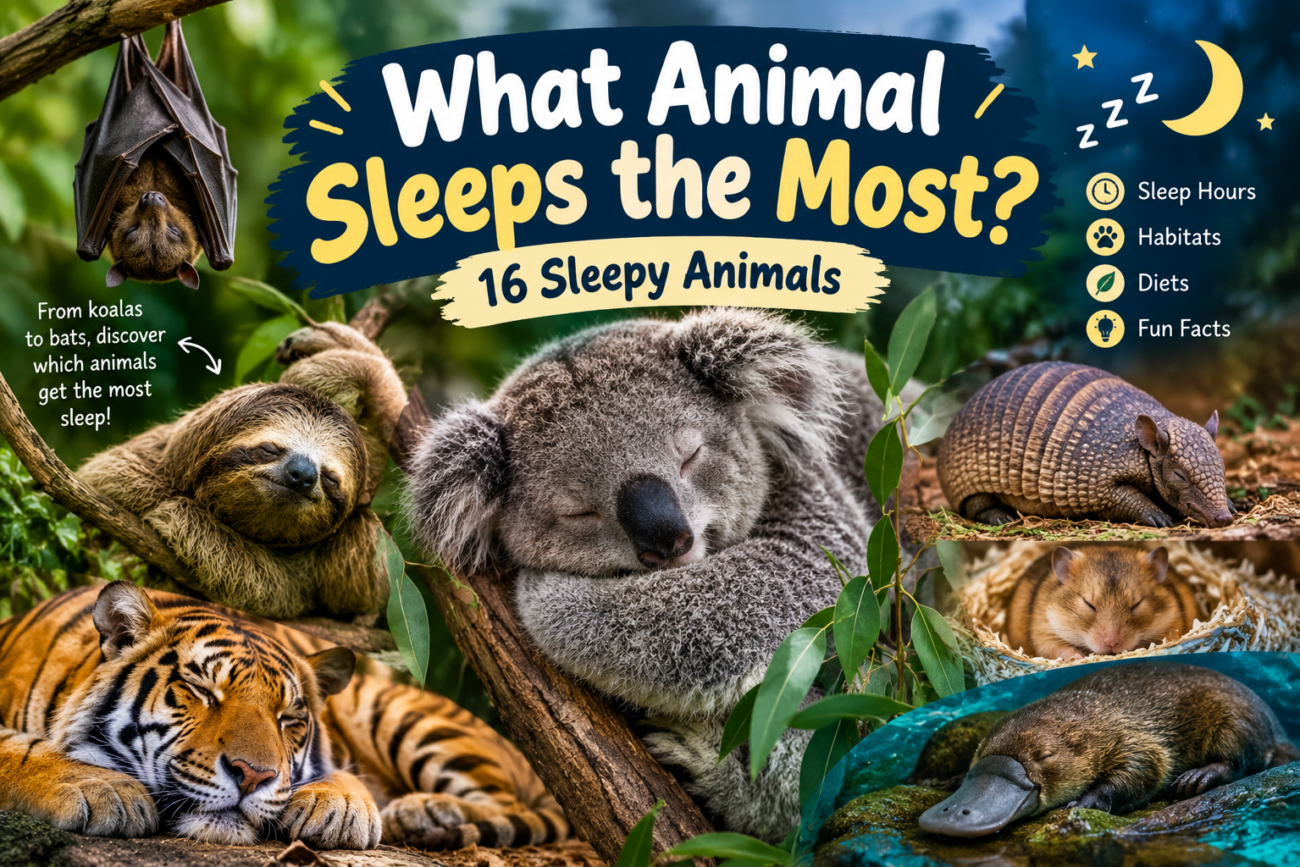
Some animals spend almost their entire day resting, while others need only a few hours of sleep. A koala can sleep for much of the day, a bat may remain asleep for around 20 hours, and a tiger can spend long periods resting between meals. These different habits show how sleep is connected to an animal’s lifestyle, diet, and environment.
But what animal sleeps the most? The answer depends on the species being studied and how researchers measure sleep. Time spent resting is not always the same as time spent truly asleep. For example, an animal may stay still to conserve energy without being in a deep sleep.
In this guide, you will discover 16 of the world’s sleepiest animals, how long they may sleep, and why they need so much rest. From familiar pets to unusual wild creatures, each has its own way of balancing sleep, survival, and daily activity.
Quick Answer: What Animal Sleeps the Most?
The little brown bat is one of the longest-sleeping animals measured in scientific studies, averaging about 20 hours of sleep per day. Koalas are also famous for sleeping or resting for approximately 18–22 hours daily. Other long sleepers include the giant armadillo, North American opossum, and sloth. However, sleep estimates vary by species, environment, and research method, so there is no single ranking that fits every animal perfectly.
1. Koala
Scientific name: Phascolarctos cinereus
Average sleep or rest: Around 18–22 hours a day
Habitat: Eucalyptus forests and woodlands in Australia
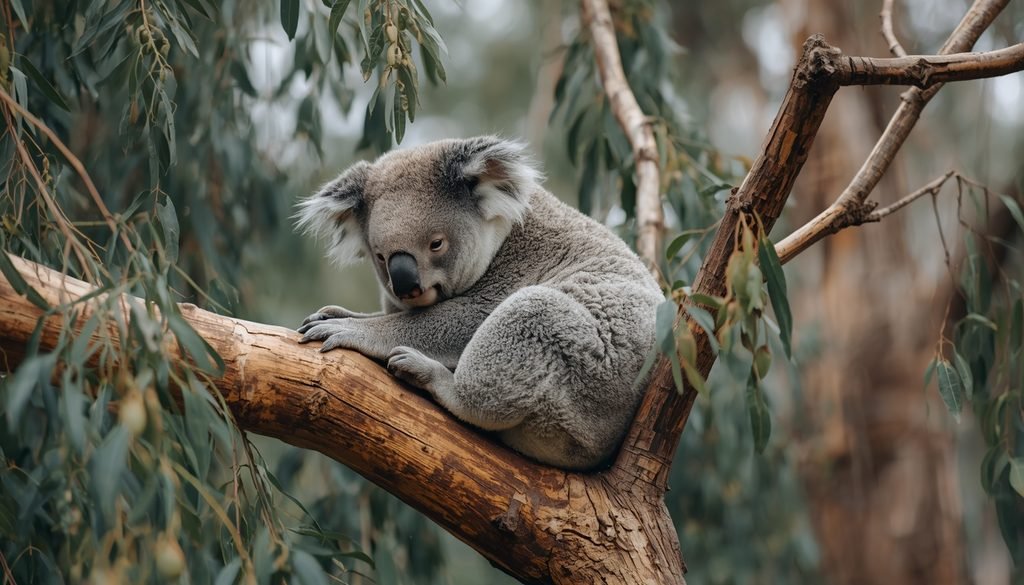
Koalas are among the animals most closely associated with long sleep. They spend much of their time resting in trees, often curled around a branch. Their diet consists mainly of eucalyptus leaves, which provide relatively little usable energy and take time to digest.
Long periods of rest help koalas conserve energy. They become more active when feeding or moving between trees, often during cooler parts of the day or night. Although people commonly say koalas sleep for 22 hours, the exact amount varies, and resting time should not always be treated as confirmed sleep.
Interesting fact: Koalas have strong limbs and sharp claws that help them climb and hold onto tree trunks
2. Little Brown Bat
Scientific name: Myotis lucifugus
Average sleep: About 20 hours a day in studied conditions
Habitat: North America, including forests and areas near water
The little brown bat is a leading contender for the title of the animal that sleeps the most. Research has recorded approximately 19.9 hours of daily sleep in this species. It usually hunts insects at night and spends daylight hours in protected roosts.
Sleeping during the day matches its nighttime feeding routine. It also helps the bat conserve energy between hunting periods. Bats may use torpor, a state in which body temperature and metabolism drop, especially in cold conditions. Torpor is different from ordinary sleep, so the two should not be counted as exactly the same thing.
Interesting fact: A little brown bat may eat many small flying insects during its active hours.
3. Sloth
Scientific name: Three-toed sloths, genus Bradypus
Average sleep or rest: Varies; older estimates can be higher than measurements in the wild
Habitat: Tropical forests of Central and South America
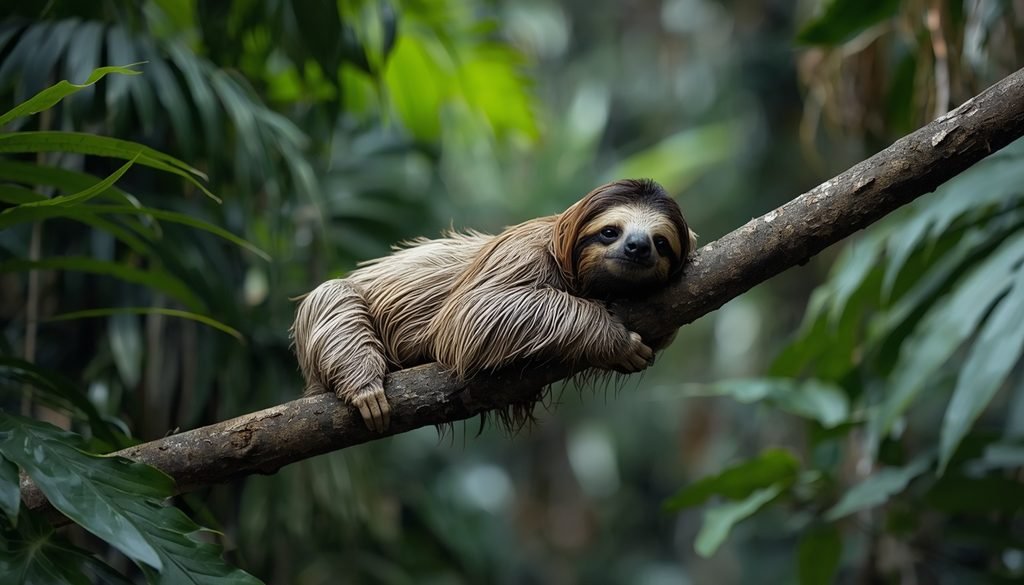
Sloths move slowly and spend much of their lives in trees. Their low-energy lifestyle, plant-based diet, and limited need for rapid movement make frequent rest useful. They use long, curved claws to hang from branches and can remain still for extended periods.
Sloths are often said to sleep for 15–20 hours a day, but that figure can be misleading. Research on wild sloths has found substantially less actual sleep than some older estimates from captive animals. Their quiet behavior may look like sleep even when they are awake and resting.
Interesting fact: Sloths can turn their heads remarkably far, helping them look around without moving their whole bodies.
4. Giant Armadillo
Scientific name: Priodontes maximus
Average sleep or rest: Often reported at around 18 hours a day
Habitat: Parts of South and Central America
The giant armadillo is the largest living armadillo species. It has a powerful body, a long snout, and large claws for digging. It feeds mainly on ants and termites, using its claws to open insect nests and reach food.
This animal is mostly nocturnal and often rests in burrows during the day. Its underground shelter provides protection and helps it avoid extreme temperatures. Reports of long sleep periods should be interpreted carefully because time spent in a burrow may include inactivity, not just sleep.
Interesting fact: Giant armadillos have unusually large front claws that help them break into termite mounds.
5. North American Opossum
Scientific name: Didelphis virginiana
Average sleep or rest: Often reported at around 18–19 hours a day
Habitat: North America, in woodlands, wetlands, and suburban areas
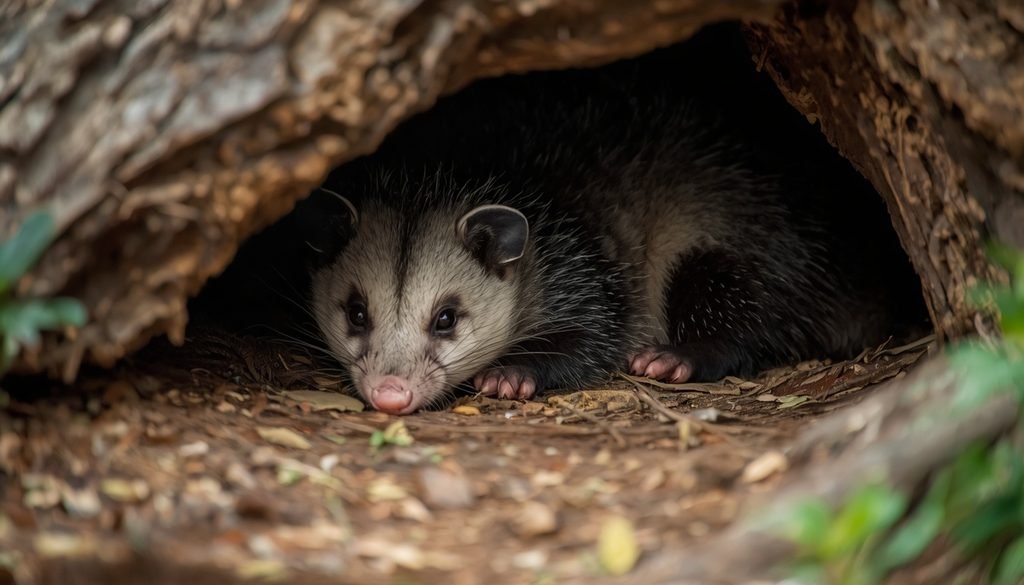
The North American opossum is a nocturnal marsupial that searches for food after dark. It eats a varied diet, including insects, fruit, eggs, and small animals. During daylight, it usually hides in a den, hollow tree, or other sheltered location.
Opossums may spend many hours resting because their activity is concentrated at night. Their actual sleep duration varies, and estimates can differ according to how the animals are observed. They are adaptable foragers and often live near people when food and shelter are available.
Interesting fact: Opossums have prehensile tails that can help them balance, although they do not normally hang from them for long periods.
6. Python
Scientific name: Family Pythonidae
Average sleep or rest: Some lists report around 18 hours, but reliable species-wide figures are limited
Habitat: Africa, Asia, and Australia, depending on species
Pythons are nonvenomous snakes that kill prey by constriction. They eat birds and mammals, with larger species capable of taking substantial meals. After feeding, a python may remain inactive for an extended period while its body digests the meal.
That inactivity can be mistaken for sleep. Snakes do have sleep-like states, but it is difficult to compare their sleep directly with mammalian sleep. The amount of rest varies by species, temperature, feeding schedule, and other conditions.
Interesting fact: After swallowing a large meal, a python can undergo major changes in metabolism to help digest it.
7. Owl Monkey
Scientific name: Aotus species
Average sleep or rest: Around 17 hours in some published comparisons
Habitat: Forests of Central and South America
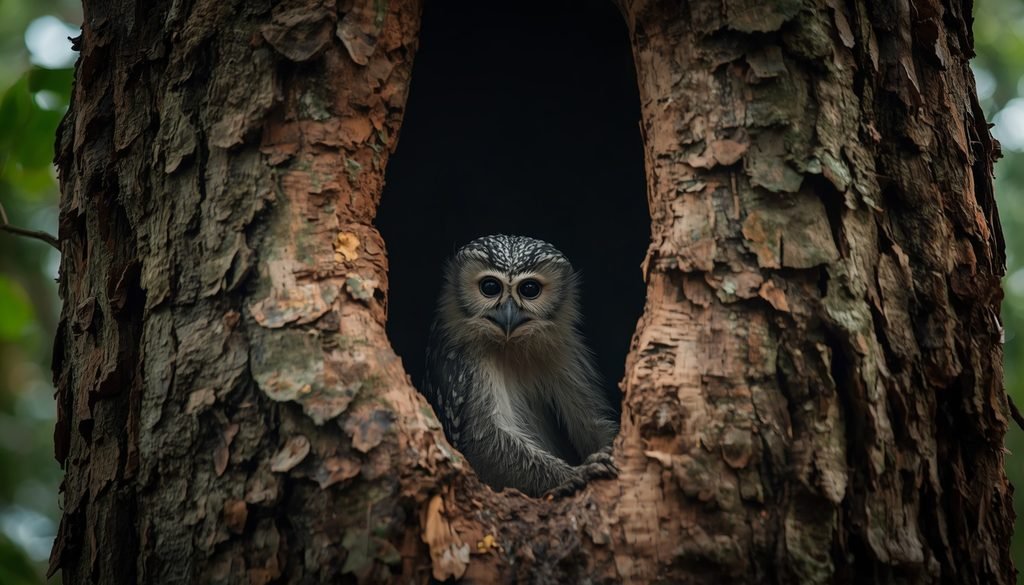
Owl monkeys are unusual primates because many species are active at night. Their large eyes help them see in dim light, and they use the forest canopy to move around in search of fruit, flowers, and small animal prey.
During the day, owl monkeys generally rest in tree cavities or dense vegetation. Their long resting periods fit their nighttime schedule, although daily sleep varies among species and conditions. They often live in family groups, with parents sharing important roles in caring for their young.
Interesting fact: Owl monkeys are among the few monkeys with a predominantly nocturnal lifestyle.
8. Tiger
Scientific name: Panthera tigris
Average sleep or rest: Often around 12–16 hours of rest daily
Habitat: Forests, grasslands, and wetlands across parts of Asia
Tigers are powerful predators, but they do not spend every hour hunting. They rest between periods of walking, stalking, and catching prey. Hunting takes energy, and a tiger may not make a successful kill every time it tries.
Resting helps the animal conserve energy for short bursts of speed and strength. Tigers may be active at different times depending on the habitat, prey availability, and human disturbance. Their schedule is flexible rather than strictly limited to nighttime.
Interesting fact: Every tiger has a unique stripe pattern, much like a fingerprint.
9. Lion
Scientific name: Panthera leo
Average sleep or rest: Around 13–16 hours, sometimes longer
Habitat: Mainly African savannas and grasslands, with a small population in India
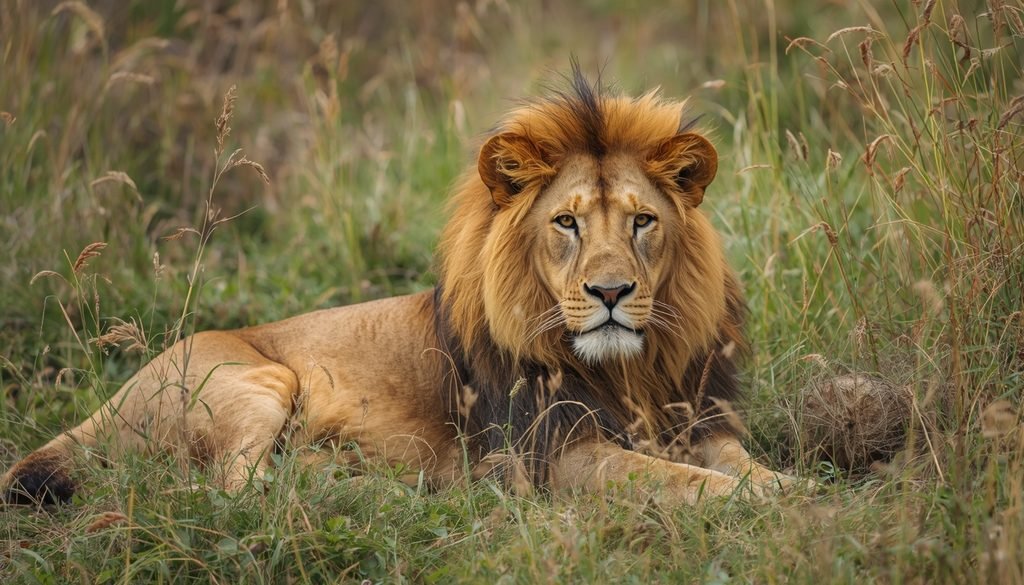
Lions are famous for long periods of resting. Much of their day may be spent lying in shade, especially during hot weather. Hunting and social activity often happen when temperatures are lower, such as in the evening or at night.
A lion’s daily routine depends on food availability, temperature, age, and whether it is caring for cubs. Resting conserves energy for chasing prey and defending territory. Lions are social cats, so time spent resting can also occur close to other members of the pride.
Interesting fact: Lions are the most social of the big cats, commonly living in groups called prides.
10. Domestic Cat
Scientific name: Felis catus
Average sleep or rest: Commonly around 12–16 hours daily
Habitat: Homes and human settlements worldwide
Domestic cats sleep in several short periods rather than one long stretch. They often nap during the day and become active around dawn or dusk. This pattern reflects the hunting behavior of their wild ancestors, which frequently hunted small prey during low-light hours.
Kittens and older cats may sleep even more than healthy adult cats. Cats also spend time in light sleep, staying alert to sounds and movement. Their total daily rest depends on age, health, activity, and environment.
Interesting fact: A cat’s ears can turn toward sounds while the rest of its body remains relaxed.
11. Squirrel
Scientific name: Varies by species; for example, Sciurus carolinensis
Average sleep or rest: Some species are reported to rest or sleep around 13–15 hours
Habitat: Forests, parks, and wooded neighborhoods
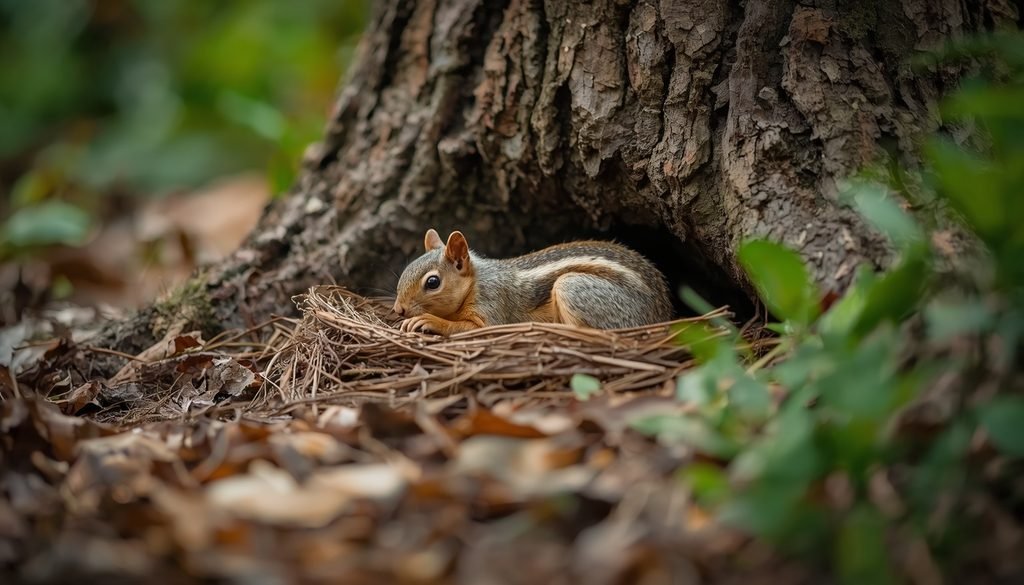
Squirrels are active rodents that search for nuts, seeds, fruits, and other food. Many tree squirrels are active during daylight and return to nests or tree cavities to rest at night. Their activity can change with the season and local weather.
Squirrels need time to recover from climbing, jumping, and gathering food. Some species also store food to use when resources are harder to find. Sleep figures vary widely among squirrel species, so a single number should not be treated as universal.
Interesting fact: Many squirrels use their sharp memory and sense of smell to help locate food they have hidden.
12. Golden Hamster
Scientific name: Mesocricetus auratus
Average sleep or rest: Often around 12–14 hours daily
Habitat: Naturally dry areas of Syria and nearby regions; also kept as a pet
Golden hamsters are small rodents with a mostly nocturnal or crepuscular routine. They often rest during daylight and become active in the evening, when they search for food, explore, and use their exercise wheel if kept as pets.
In the wild, hamsters use burrows for shelter and food storage. Their daytime rest reduces exposure to heat and predators. Pet hamsters may adjust their activity somewhat to their surroundings, but waking them repeatedly during the day can cause stress.
Interesting fact: Hamsters have expandable cheek pouches that allow them to carry food back to their nests.
13. Ferret
Scientific name: Mustela putorius furo
Average sleep or rest: Often around 14–18 hours daily
Habitat: Domesticated environments; related wild polecats inhabit parts of Europe and Asia
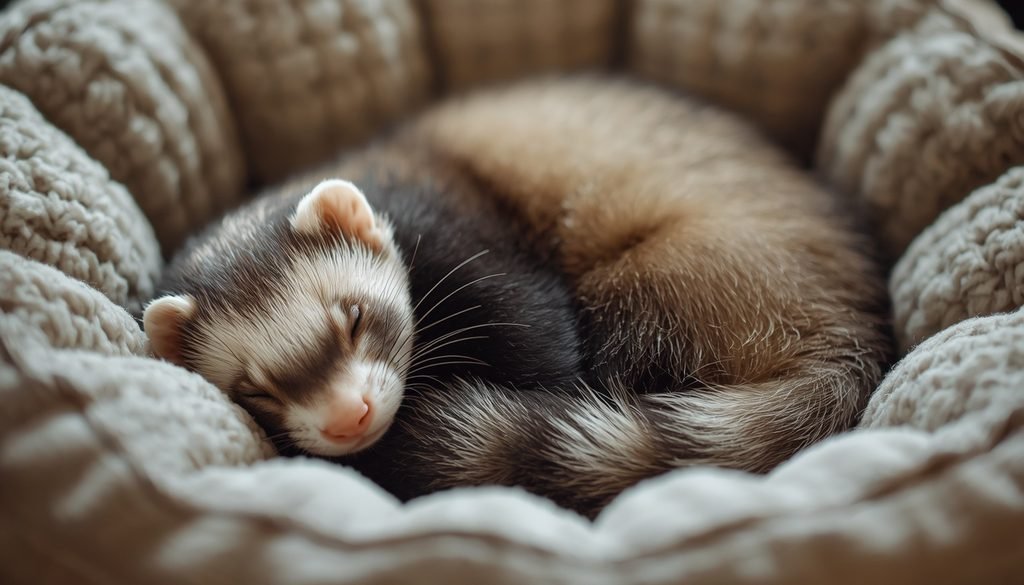
Ferrets are playful, curious mammals that alternate energetic bursts with long periods of rest. A ferret may race around, investigate objects, and play before settling down for a long nap. Its sleep pattern is usually divided into multiple periods across the day and night.
The amount of sleep varies with age, health, activity, and environment. Young ferrets can be particularly energetic when awake, while older animals may spend more time resting. A comfortable, quiet sleeping area helps a pet ferret rest without frequent interruptions.
Interesting fact: Ferrets often sleep so deeply that they may be slow to respond immediately after waking.
14. Dog
Scientific name: Canis lupus familiaris
Average sleep or rest: Commonly around 10–14 hours daily for many adult dogs
Habitat: Homes and human environments worldwide
Dogs need regular rest to support learning, movement, and general health. Many adult dogs sleep through the night and take naps during the day. Puppies, senior dogs, and very active working dogs may have different sleep needs.
Dogs often adjust their schedule to match the routines of the people around them. Their sleep can be interrupted by noises, activity, or discomfort. A consistent routine and a comfortable resting place can help a dog settle down.
Interesting fact: Dogs can experience REM sleep, a stage associated with dreaming in humans. Paw movements and small sounds sometimes occur while they sleep.
15. Platypus
Scientific name: Ornithorhynchus anatinus
Average sleep or rest: Estimates vary; sleep duration is less firmly established than for some commonly studied mammals
Habitat: Freshwater rivers and streams in eastern Australia and Tasmania
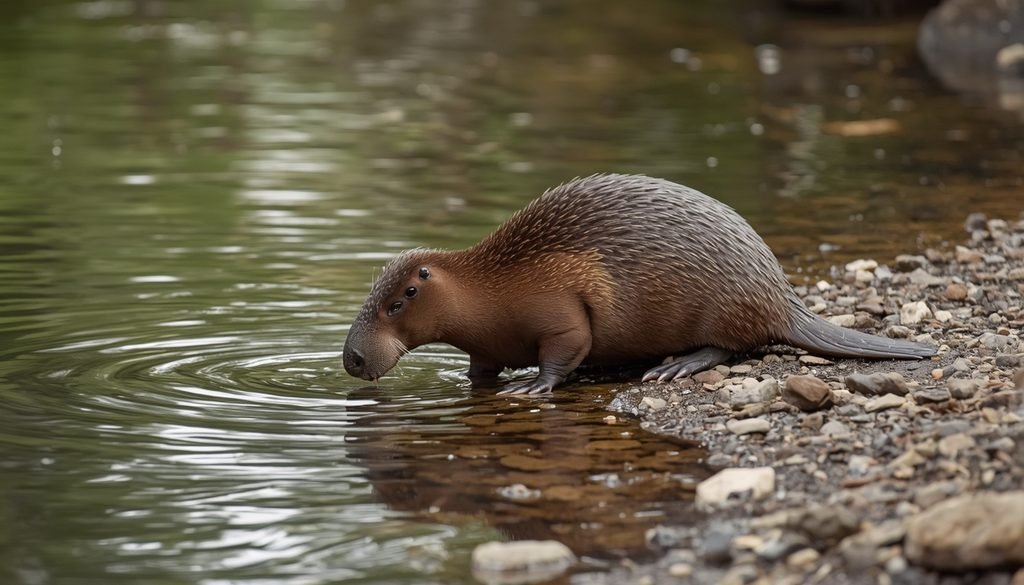
The platypus is a distinctive egg-laying mammal with a broad bill, webbed feet, and a flattened tail. It spends much of its active time searching underwater for small invertebrates, using sensory abilities to find food in murky water.
After foraging, a platypus may rest in a burrow along a riverbank. Its daily routine is influenced by local conditions and food availability. Older animal sleep lists sometimes assign platypuses a specific high number of hours, but estimates should be treated cautiously because not all species have been studied equally.
Interesting fact: A platypus can detect electrical signals produced by prey, helping it find food underwater.
16. Tree Shrew
Scientific name: Several species belong to the family Tupaiidae
Average sleep or rest: Some older comparisons report around 15–16 hours, but values vary
Habitat: Forests and plantations in South and Southeast Asia
Tree shrews are small mammals that may resemble squirrels, although they belong to a different group. They move quickly through vegetation and feed on insects, fruit, and other small food items. Many species are active during the day, so their rest periods differ from those of nocturnal animals.
Tree shrews need energy for constant movement and searching for food. Their sleep duration depends on the species and conditions under which it is measured. Because scientific sleep data are not equally available for every animal, figures in popular rankings should be considered approximate rather than definitive.
Interesting fact: Despite their name and appearance, tree shrews are not true shrews and are not rodents.
Why Do Some Animals Sleep So Much?
Animals sleep or rest for different reasons. Diet is one important factor: koalas eat energy-poor eucalyptus leaves, while predators such as lions and tigers may rest between demanding hunts. Temperature, predators, and the availability of safe shelters can also influence when animals become active.
Scientists must also distinguish actual sleep from quiet rest and torpor. Torpor is a temporary state in which an animal lowers its body temperature and metabolic rate to conserve energy. It can look like sleep, but it is not the same process. This is one reason animal sleep rankings can differ between sources.
Read More: What Is the Slowest Animal in the World
Frequently Asked Questions
1. What animal sleeps the most in the world?
The little brown bat is among the longest-sleeping animals measured in scientific studies, averaging close to 20 hours daily in studied conditions. Koalas are also famous for spending much of the day asleep or resting. Exact rankings depend on the species and measurement method.
2. Do koalas really sleep for 22 hours a day?
Koalas are often reported to sleep or rest for 18–22 hours daily. The upper end of that range is a popular estimate, and not every hour of inactivity necessarily represents confirmed sleep. Their low-energy eucalyptus diet helps explain their long resting periods.
3. Why do bats sleep during the day?
Many bats hunt insects at night, when their prey is active. They rest in protected roosts during daylight, which matches their feeding schedule and helps reduce exposure to predators. Some bats also use torpor to conserve energy when conditions are cold or food is scarce.
4. Do sloths sleep more than cats?
It depends on how sleep is measured. Sloths are often described as sleeping for up to 15–20 hours, but research on wild sloths has found less actual sleep than some older captive-animal estimates. Cats commonly sleep or rest around 12–16 hours a day.
5. Why do big cats sleep so much?
Lions and tigers spend long periods resting to conserve energy between hunting, feeding, and other activities. Hunting can require intense bursts of effort, and success is not guaranteed. Heat, prey availability, age, and individual behavior also affect their daily routine.
6. Do all animals need the same amount of sleep?
No. Sleep duration differs greatly between species. Some bats and small mammals spend much of the day asleep, while horses, giraffes, and elephants can manage with far less sleep than many other mammals. Their biology, environment, and survival needs all play a role.
Conclusion
So, what animal sleeps the most? The little brown bat is a leading answer based on measured sleep duration, while the koala is one of the best-known long sleepers. Giant armadillos, opossums, sloths, and several other mammals also spend long periods resting.
However, there is no perfect sleep ranking for every animal. Scientists measure sleep differently across species, and rest, inactivity, and torpor are not interchangeable. The most useful takeaway is that each animal has a sleep pattern suited to its way of life.
From the tree-dwelling koala to the nocturnal bat and the resting tiger, these 16 animals show just how varied sleep can be in the natural world.
Want to discover more fascinating wildlife facts? Explore more animal guides on AnimalFactHubz.com!

One thought on “What Animal Sleeps the Most? 16 Sleepy Animals in the World”