
Introduction
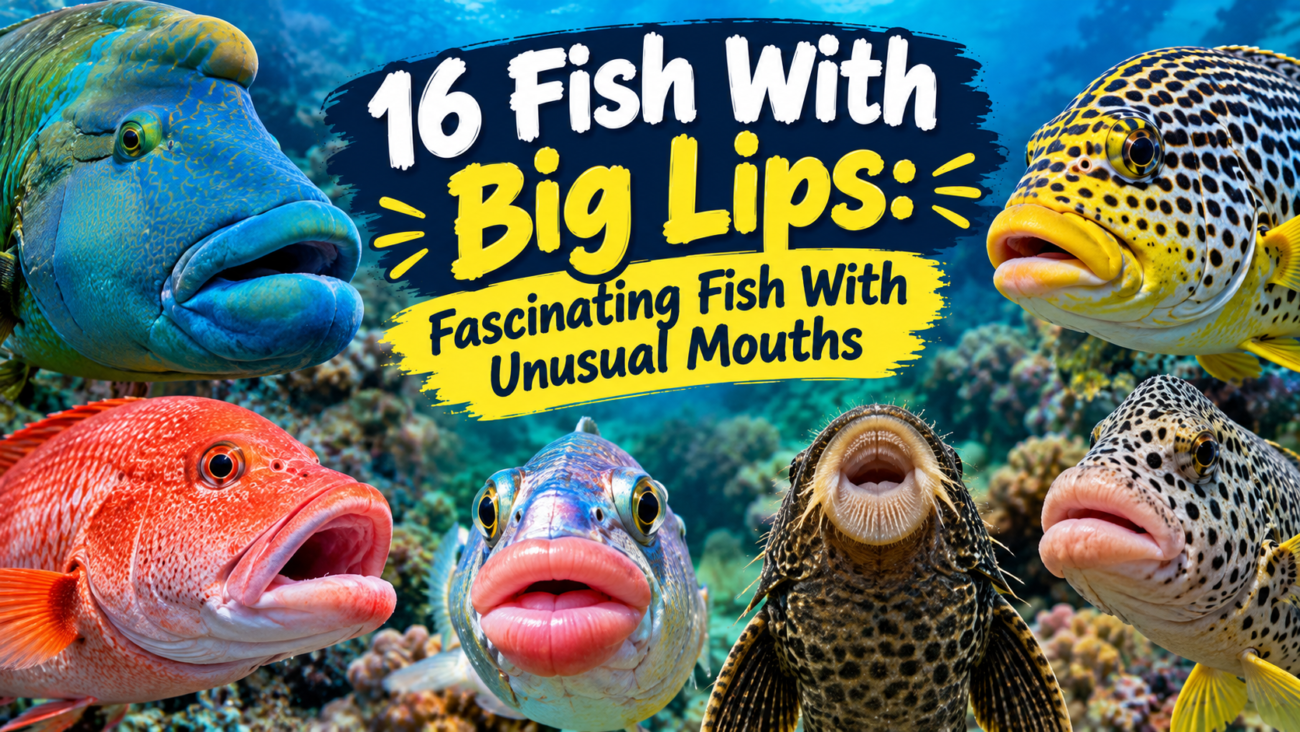
Some fish have surprisingly large, fleshy lips that make their faces instantly recognizable. Others have oversized mouths, protruding jaws, or specialized oral structures that can look like big lips to human observers. These unusual features are not just for appearance. In many species, the shape and size of the mouth are closely connected to feeding, communication, defense, or life in a particular habitat.
From colorful reef fish and freshwater gouramis to the famous red-lipped batfish, the fish world contains many species with unusual mouths. Some scrape algae from surfaces, while others use suction, large jaws, or specialized teeth to capture food.
In this guide, we explore 16 fish with big lips or unusually prominent mouths, including their scientific names, habitats, diets, physical features, and the biological reasons behind their distinctive appearance.
What Fish Has Big Lips?
Several fish are known for prominent fleshy lips or unusual mouths, including the humphead wrasse, sweetlips, big-lip damselfish, kissing gourami, and other species. Their mouth structures serve different purposes, from grazing and manipulating food to suction feeding and territorial displays. “Big lips” is a descriptive term rather than a formal scientific classification.
16 Fish With Big Lips
Prominent lips and unusual mouths appear in both marine and freshwater fish. The shape of a fish’s mouth is often closely related to what it eats and how it finds food.
Some fish use fleshy lips to graze or manipulate food, while others have enlarged jaws or mouths that help them capture prey. The 16 species and groups below show just how varied fish mouth adaptations can be.
1. Humphead Wrasse
Scientific Name: Cheilinus undulatus
Appearance
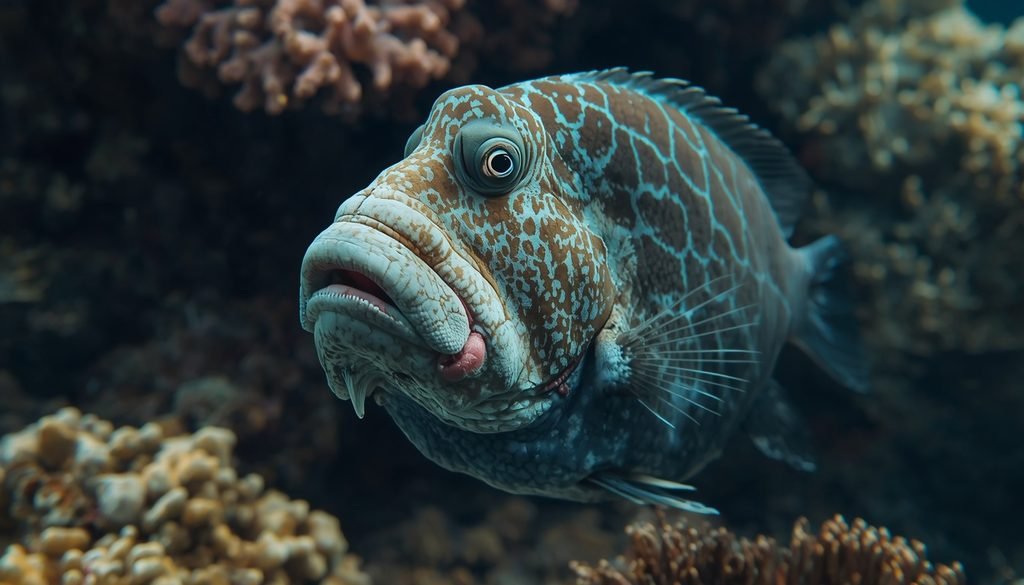
The humphead wrasse is one of the largest reef-dwelling wrasses and has thick, prominent lips that give its face a distinctive appearance. It also develops a large hump above its eyes as it matures.
Habitat
It is a tropical marine fish associated with coral reefs across the Indo-Pacific. It can occur from shallow reef areas to deeper reef habitats.
Diet
Its diet includes hard-bodied reef animals such as mollusks and crustaceans, along with other prey.
Why Does It Have Big Lips?
Its fleshy lips help it manipulate food and investigate prey around complex reef surfaces. Its powerful jaws also allow it to handle hard-shelled prey.
Interesting Fact
The species name Cheilinus is derived from a Greek word associated with lips, fitting its distinctive facial structure.
2. Sweetlips
Scientific Name: Plectorhinchus species
Appearance
Sweetlips are famous for thick, fleshy lips and colorful bodies. Different species can have stripes, spots, or contrasting patterns. In some species, the lips become noticeably swollen as the fish ages.
Habitat
Sweetlips are primarily marine reef fish found in tropical and subtropical waters.
Diet
They commonly feed on small crustaceans, mollusks, worms, and other bottom-dwelling organisms.
Why Does It Have Big Lips?
Their fleshy mouths are useful when searching around reef surfaces and manipulating small prey.
Interesting Fact
FishBase specifically describes Oriental sweetlips as having lips that become greatly swollen with age.
3. Red Snapper
Scientific Name: Lutjanus campechanus
Appearance
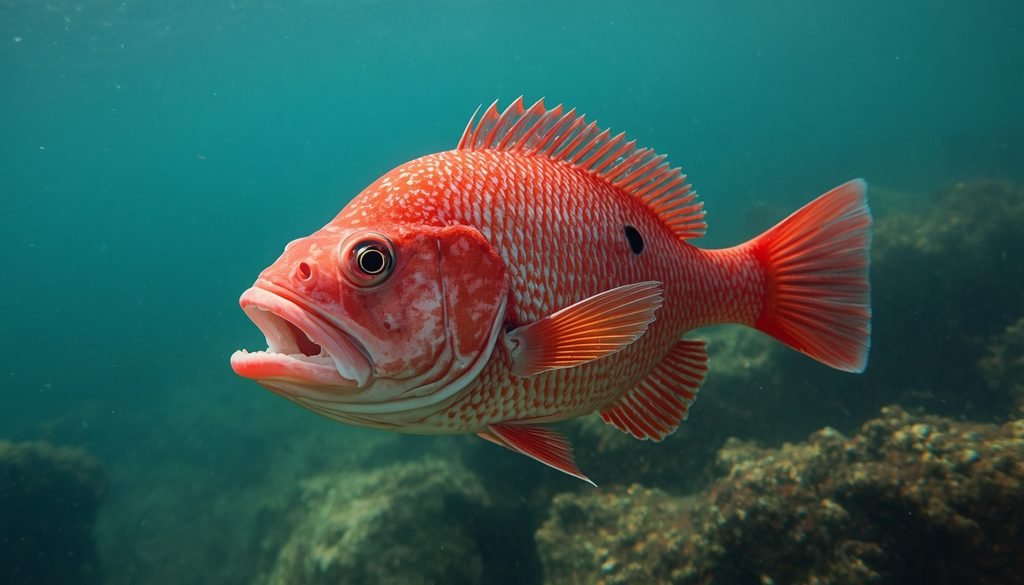
Red snapper have a relatively large mouth with thick mouth margins and strong jaws. Their red or pinkish body and sharp profile make them easy to recognize.
Habitat
They are marine fish associated with coastal waters, reefs, rocky structures, and offshore habitats in the western Atlantic and Gulf of Mexico.
Diet
Red snapper eat fish, crustaceans, squid, and other marine animals.
Why Does It Have Big Lips?
Its broad mouth and strong jaws help it seize and hold prey rather than functioning like soft human-style lips.
Interesting Fact
This is a good example of why “fish with big lips” can also refer to fish with prominent mouth structures rather than unusually fleshy lips.
4. Common Pleco
Scientific Name: Hypostomus plecostomus
Appearance
The common pleco has a sucker-like mouth positioned on the underside of its head. Its thick lips and oral structures help it attach to surfaces.
Habitat
It is a freshwater fish associated with rivers and other aquatic environments in tropical South America.
Diet
Plecos consume algae, plant material, detritus, and other food sources depending on conditions.
Why Does It Have Big Lips?
Its sucker-shaped mouth is a specialized feeding structure. It allows the fish to cling to surfaces while scraping or consuming food.
Interesting Fact
The pleco’s mouth is one reason it is frequently recognized as an aquarium fish with a very unusual facial structure.
5. Red-Lipped Batfish
Scientific Name: Ogcocephalus darwini
Appearance
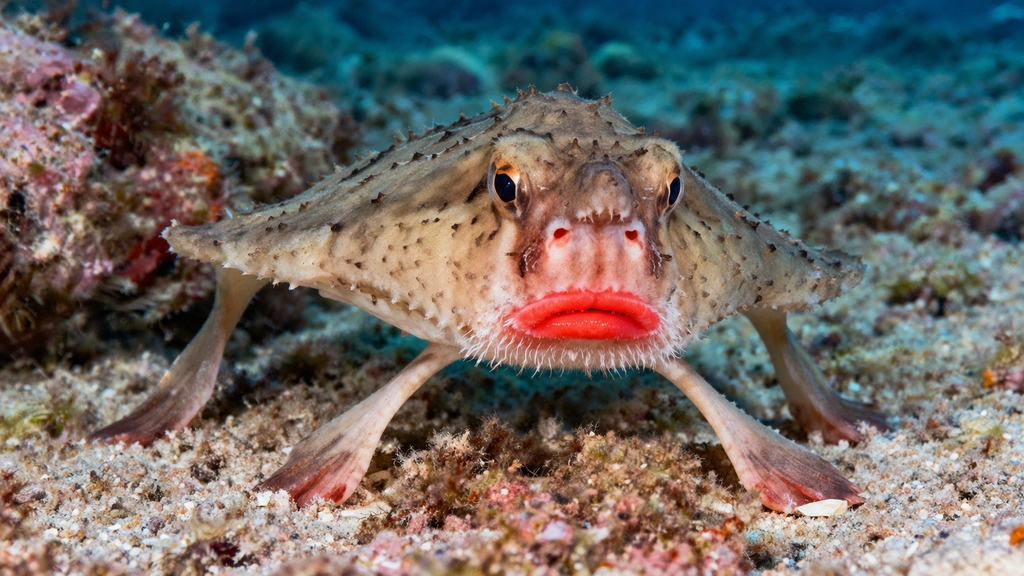
The red-lipped batfish has a flattened body, unusual pectoral fins, and striking bright red lips. Its bizarre face makes it one of the most recognizable unusual fish in the eastern Pacific.
Habitat
It is a marine, reef-associated species found around the Galápagos Islands and south toward Peru, including sandy-bottom habitats.
Diet
It is believed to be predatory and feeds on small invertebrates.
Why Does It Have Big Lips?
Its bright lips are mainly a distinctive anatomical feature rather than a simple feeding adaptation that can be summarized as “big lips.” Its feeding strategy involves capturing small prey from the seafloor.
Interesting Fact
The red-lipped batfish is a bottom-associated fish rather than a strong open-water swimmer.
6. Big-Lip Damselfish
Scientific Name: Cheiloprion labiatus
Appearance
The big-lip damselfish has noticeably enlarged lips compared with many other damselfish. Its compact body and prominent mouth give it a distinctive profile.
Habitat
It is a marine tropical fish associated with reef environments.
Diet
Its feeding behavior is associated with small food items and organisms available around reef habitats.
Why Does It Have Big Lips?
Its enlarged mouth structures are part of its feeding and foraging adaptations. The exact role of the lips should not be separated from the overall structure of the jaws and mouth.
Interesting Fact
Its scientific name and common name both draw attention to its unusually prominent lip structure.
7. Giant Gourami
Scientific Name: Osphronemus goramy
Appearance
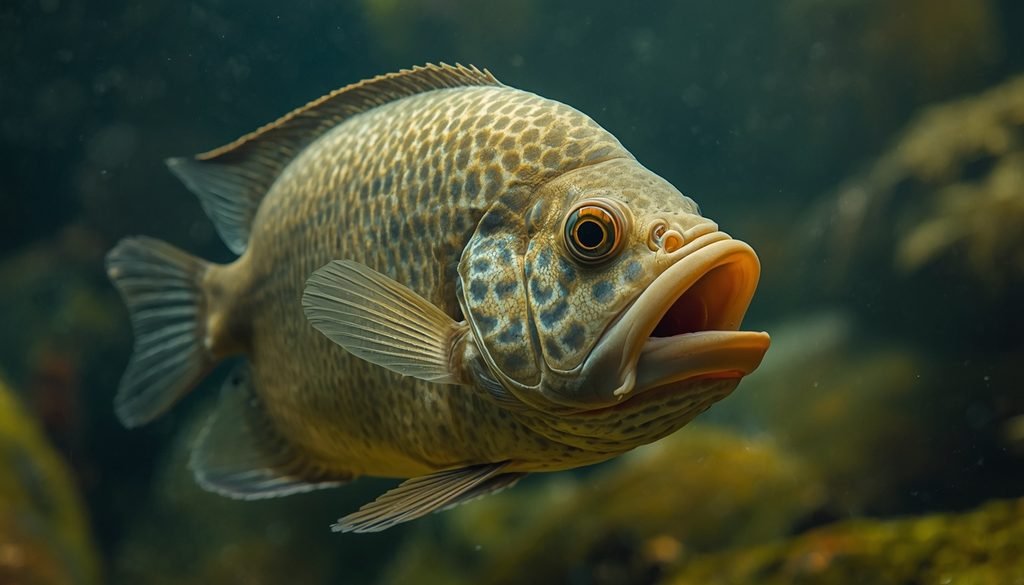
The giant gourami has a deep-bodied shape and a broad mouth. Its thick mouth area can make it look like a freshwater fish with large lips.
Habitat
It occurs in freshwater environments in Southeast Asia, including slow-moving waters.
Diet
It feeds on plant material as well as other available foods.
Why Does It Have Big Lips?
Its broad mouth helps it browse and manipulate food. The mouth is adapted to a varied freshwater diet rather than simply being a decorative feature.
Interesting Fact
Despite its name, the giant gourami is not a small aquarium fish; adult size is an important consideration for responsible fish keeping.
8. Kissing Gourami
Scientific Name: Helostoma temminckii
Appearance
The kissing gourami has thick, puckered lips that give it one of the most unusual mouths among freshwater aquarium fish.
Habitat
It occurs in freshwater lakes, rivers, swamps, and slow-moving vegetated waters from Thailand through Indonesia.
Diet
It feeds on plant material, green algae, zooplankton, and some small aquatic organisms.
Why Does It Have Big Lips?
Its lips form part of a specialized feeding structure used to scrape and process food. The species is also famous for its “kissing” behavior, in which fish press their mouths against one another or objects.
Interesting Fact
FishBase notes that the species is popular with aquarists but requires substantial space, with a minimum aquarium length of about 150 cm listed in its husbandry information.
9. Asian Sheepshead Wrasse
Scientific Name: Semicossyphus reticulatus
Appearance
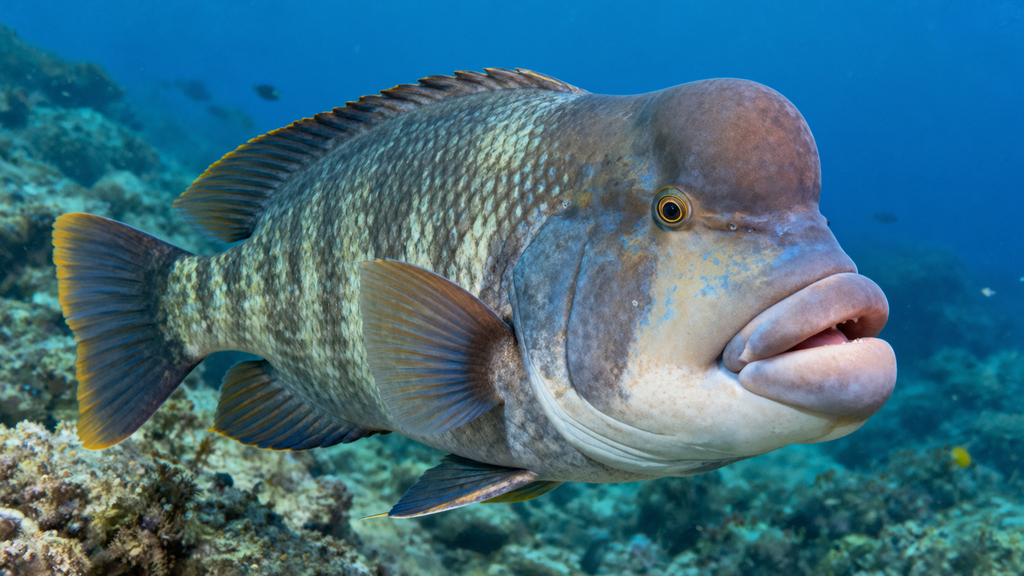
The Asian sheepshead wrasse has thick lips, a powerful jaw, and a large head. Mature individuals develop an especially distinctive facial profile.
Habitat
It is a marine fish associated with rocky reefs and coastal waters of the western Pacific.
Diet
Its diet includes hard-shelled invertebrates and other organisms found around rocky habitats.
Why Does It Have Big Lips?
Its thick lips and powerful jaws help it manipulate prey and forage around hard reef surfaces.
Interesting Fact
The species demonstrates how large lips can occur alongside strong jaw structures designed for handling tough prey.
10. Parrotfish
Scientific Name: Family Scaridae
Appearance
Parrotfish have fused, beak-like teeth that create a powerful mouth structure. Their lips can appear prominent around this hard feeding apparatus.
Habitat
They are mainly tropical marine fish associated with coral reefs and rocky coastal environments.
Diet
Many parrotfish species graze on algae growing on reef surfaces.
Why Does It Have Big Lips?
Their mouths are specialized for scraping and biting food from hard surfaces. The beak-like teeth are more important to their feeding strategy than the lips themselves.
Interesting Fact
Parrotfish are important reef herbivores because their grazing can influence the growth of algae on reef surfaces.
11. Triggerfish
Scientific Name: Family Balistidae
Appearance
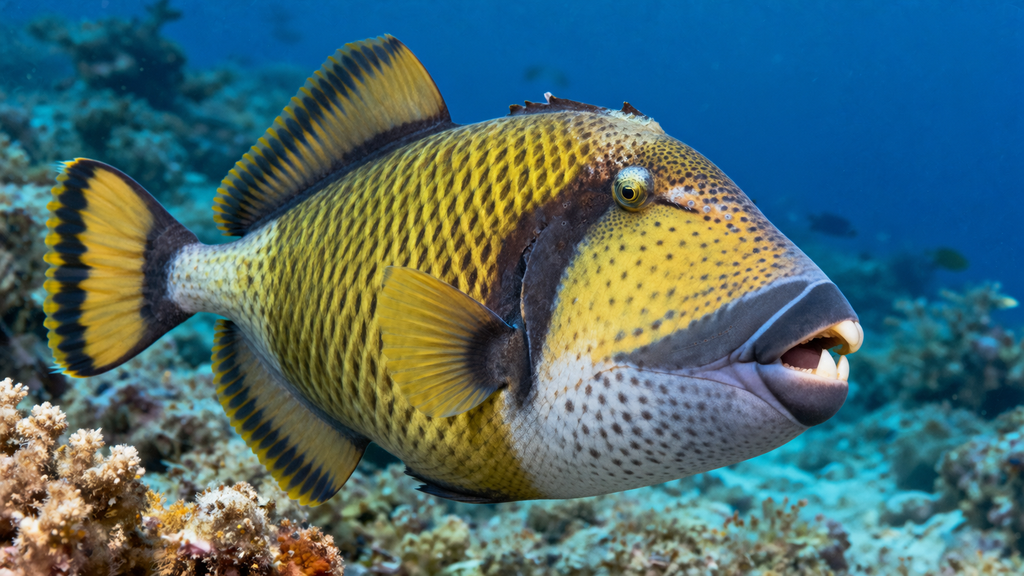
Triggerfish generally have strong jaws, relatively small but powerful mouths, and prominent teeth. Some species may appear thick-lipped because of the shape of their mouth margins.
Habitat
Most triggerfish are marine reef-associated fish found in tropical and subtropical oceans.
Diet
Depending on the species, they may eat crustaceans, mollusks, sea urchins, small fish, and other invertebrates.
Why Does It Have Big Lips?
Their mouth structure is mainly adapted for biting, crushing, and manipulating hard prey.
Interesting Fact
Their powerful teeth allow some species to tackle prey protected by shells or hard external structures.
12. Piranha
Scientific Name: Family Serrasalmidae
Appearance
Piranhas have compact but powerful jaws with sharp teeth. Their mouths can look large relative to their heads, although their most notable feature is their dentition rather than large fleshy lips.
Habitat
They are freshwater fish found primarily in South American rivers, floodplains, and related aquatic environments.
Diet
Depending on the species, piranhas may eat fish, insects, crustaceans, plant material, fruits, and other foods.
Why Does It Have Big Lips?
Their mouth is primarily adapted for biting and processing food. This makes piranhas an example of a fish sometimes included in “big mouth” searches rather than a classic fleshy-lipped fish.
Interesting Fact
Not all piranhas have the same diet or feeding behavior, so it is inaccurate to describe the entire group simply as aggressive meat-eaters.
13. Giant Grouper
Scientific Name: Epinephelus lanceolatus
Appearance
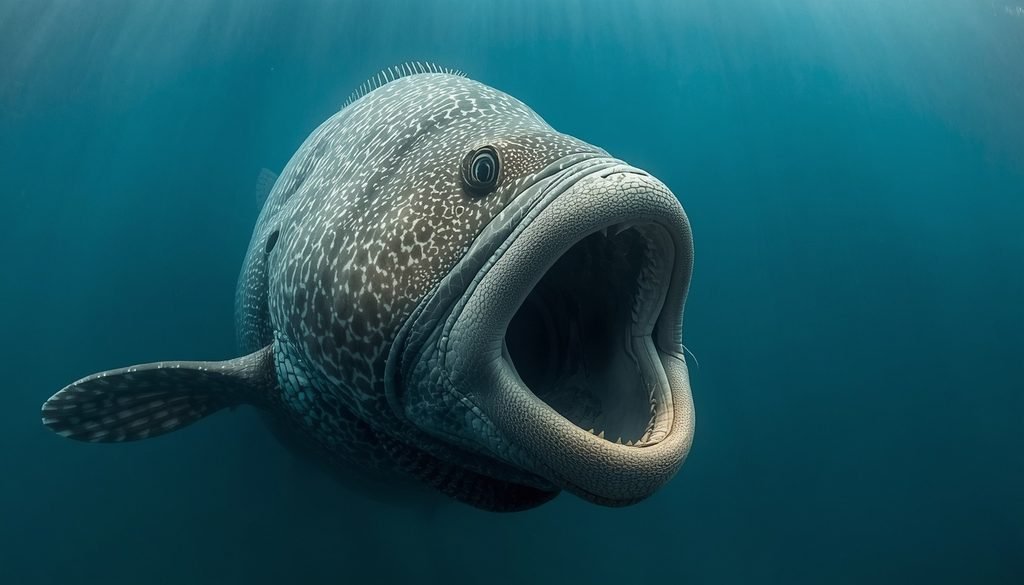
The giant grouper has a huge mouth relative to its head, thick lips, and a powerful jaw structure.
Habitat
It is a large marine fish associated with tropical Indo-Pacific waters, reefs, rocky areas, and coastal habitats.
Diet
It is a predator that feeds on fish, crustaceans, and other marine animals.
Why Does It Have Big Lips?
Its large mouth helps it create suction and rapidly engulf prey. This is an example where a large mouth is more important than human-like lips.
Interesting Fact
Groupers are ambush predators, so mouth size can be closely linked to their feeding strategy.
14. Carp
Scientific Name: Cyprinus carpio
Appearance
Common carp have a protrusible mouth with fleshy lips and small barbels around the mouth. The mouth can extend outward when the fish feeds.
Habitat
They live in freshwater environments including ponds, lakes, rivers, and reservoirs.
Diet
Carp are flexible feeders and consume plant material, small invertebrates, detritus, and other food found near the bottom.
Why Does It Have Big Lips?
Its protrusible mouth helps it suck food from sediments and manipulate material near the bottom.
Interesting Fact
Carp can turn their mouth outward to help search through bottom sediments for food.
15. Surgeonfish
Scientific Name: Family Acanthuridae
Appearance
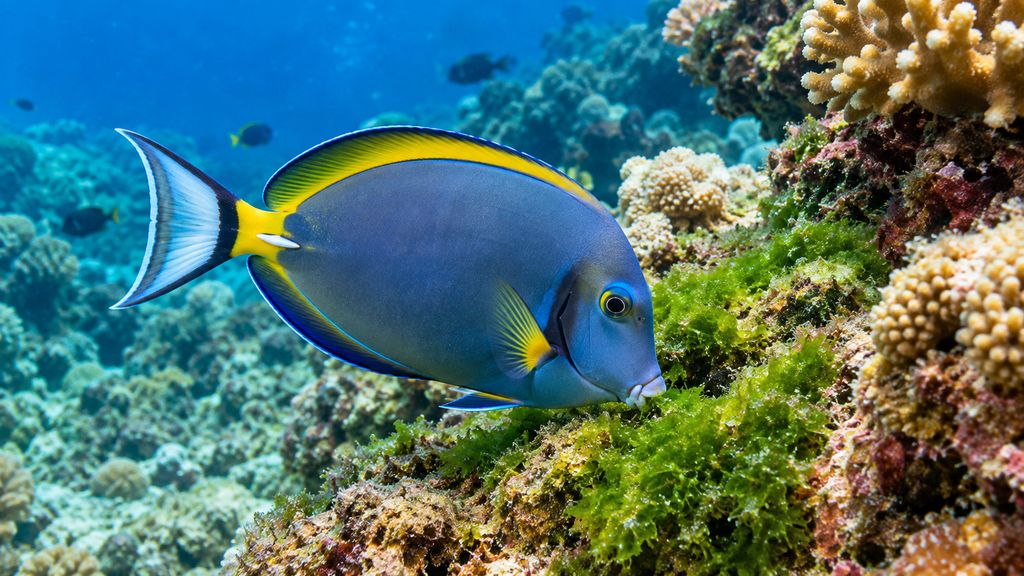
Surgeonfish usually have small to moderately sized mouths, but their thickened lips and specialized teeth can make the mouth especially noticeable in close-up photographs.
Habitat
They are primarily tropical and subtropical marine fish associated with coral reefs and rocky coastal habitats.
Diet
Many surgeonfish species graze on algae and other plant material growing over reef surfaces.
Why Does It Have Big Lips?
Their mouth structures are adapted for grazing. Strongly specialized lips and teeth help some species scrape food from hard surfaces.
Interesting Fact
The family gets its common name from sharp defensive spines located near the base of the tail, not from its mouth.
16. Sarcastic Fringehead
Scientific Name: Neoclinus blanchardi
Appearance
The sarcastic fringehead is small, but its mouth is anything but ordinary. When threatened, it can rapidly expand its jaws into a dramatically oversized display.
Habitat
It lives along the Pacific coast of North America, especially around rocky crevices, holes, and other sheltered structures.
Diet
It is an ambush predator that waits for prey and then attacks quickly.
Why Does It Have Big Lips?
This fish is better described as having an extremely expandable mouth rather than simply big lips. The mouth is used in territorial displays as well as feeding.
Interesting Fact
The Monterey Bay Aquarium notes that males may confront one another by opening their enormous mouths, with mouth size playing a role in territorial displays.
Comparison Table
| Fish | Scientific Name | Habitat | Main Mouth/Lip Feature | Diet |
| Humphead Wrasse | Cheilinus undulatus | Marine reefs | Thick fleshy lips | Reef prey |
| Sweetlips | Plectorhinchus spp. | Marine reefs | Swollen lips | Invertebrates |
| Red Snapper | Lutjanus campechanus | Marine waters | Large mouth and jaws | Fish and invertebrates |
| Common Pleco | Hypostomus plecostomus | Freshwater | Sucker mouth | Algae and detritus |
| Red-Lipped Batfish | Ogcocephalus darwini | Marine seafloor | Bright red lips | Small invertebrates |
| Big-Lip Damselfish | Cheiloprion labiatus | Marine reefs | Enlarged lips | Small reef foods |
| Giant Gourami | Osphronemus goramy | Freshwater | Broad mouth | Plants and other foods |
| Kissing Gourami | Helostoma temminckii | Freshwater | Puckered lips | Algae and small organisms |
| Asian Sheepshead Wrasse | Semicossyphus reticulatus | Marine reefs | Thick lips and jaws | Hard-bodied prey |
| Parrotfish | Family Scaridae | Coral reefs | Beak-like mouth | Algae |
| Triggerfish | Family Balistidae | Marine reefs | Strong jaws | Invertebrates |
| Piranha | Family Serrasalmidae | Freshwater | Powerful toothed mouth | Varied |
| Giant Grouper | Epinephelus lanceolatus | Marine | Huge mouth | Fish and crustaceans |
| Carp | Cyprinus carpio | Freshwater | Protrusible lips | Bottom food |
| Surgeonfish | Family Acanthuridae | Marine reefs | Specialized grazing mouth | Algae |
| Sarcastic Fringehead | Neoclinus blanchardi | Coastal marine | Expandable mouth | Small prey |
Why Do Some Fish Have Big Lips?
Fish do not develop prominent lips simply to look unusual. Their mouth structures are usually connected to feeding, defense, communication, or habitat.
A fish that grazes algae may need a mouth capable of scraping food from rock or coral. A bottom feeder may benefit from a protrusible mouth that can suck material from sediment. Predatory fish may instead have large jaws that allow them to create suction and capture prey.
In some species, mouth structures also play a role in social behavior. The sarcastic fringehead is a particularly dramatic example because it expands its huge mouth during territorial confrontations.
The exact function therefore varies from one species to another. A fish with thick lips is not necessarily using them for the same purpose as another fish with a similar appearance.
Big Lips vs Big Mouths in Fish
The phrase fish with big lips can be confusing because several different anatomical features may look similar in photographs.
Big Lips
Big lips generally refer to noticeably fleshy tissue surrounding the mouth. Sweetlips are a strong example because their lips can become greatly swollen with age.
Big Mouths
A big mouth means that the oral opening or jaw structure is unusually large. Giant groupers and sarcastic fringeheads fit this description better than the classic “big lips” category.
Specialized Mouths
Some fish have highly specialized feeding structures. Parrotfish have beak-like teeth, plecos have sucker-like mouths, and carp have protrusible mouths.
Understanding this difference makes it easier to search for and identify fish with unusual mouths without assuming that every prominent structure is technically a lip.
Marine Fish With Big Lips vs Freshwater Fish
Marine Fish
Many unusual-lipped fish live in tropical marine habitats. Humphead wrasse, sweetlips, red-lipped batfish, parrotfish, triggerfish, surgeonfish, giant grouper, and sarcastic fringeheads all demonstrate different types of marine mouth adaptations.
Coral reefs are particularly diverse environments, so reef fish have evolved many feeding strategies. Some graze surfaces, some search through crevices, and others ambush prey.
Freshwater Fish
Freshwater examples include common plecos, giant gourami, kissing gourami, carp, and piranhas.
Their mouth structures reflect different lifestyles. Plecos attach to surfaces, carp search through bottom sediments, and gouramis use specialized mouths to process food in freshwater environments.
Kissing gourami, for example, occurs in freshwater lakes and rivers and feeds on algae, zooplankton, plants, and other small food items.
Fish With Big Lips in Aquariums
Not every fish in this article belongs in a home aquarium. Some are large marine predators or specialized wild species that require conditions most hobbyists cannot provide.
Plecos, gouramis, and carp are more familiar in aquarium or ornamental-fish contexts, but even these species require careful consideration.
Before keeping a fish, consider:
- Adult size
- Tank length and volume
- Water parameters
- Filtration
- Diet
- Temperament
- Compatibility
- Long-term care requirements
The kissing gourami illustrates why size matters. FishBase lists it at up to around 30 cm and notes that a substantial aquarium is required.
Responsible fish keeping means researching the adult animal rather than choosing a species simply because its unusual lips look interesting.
Read More: What animal has the best sense of smell
Frequently Asked Questions
What fish has big lips?
Several fish have prominent lips, including sweetlips, humphead wrasse, big-lip damselfish, kissing gourami, and common carp. However, some popular examples described as having big lips actually have unusually large mouths or jaws. The exact appearance and function of the mouth differ between species.
What are fish with big lips called?
There is no scientific group called “big-lip fish.” It is a descriptive phrase used to identify fish with prominent fleshy lips, thick mouth margins, or unusually large mouths. Species such as sweetlips and kissing gourami are commonly associated with this description.
Why do some fish have big lips?
Large lips or unusual mouth structures can help fish feed, graze algae, manipulate prey, search through sediment, or communicate. The function depends on the species. Some fish have true fleshy lips, while others have large jaws, protrusible mouths, or specialized teeth.
Which fish has the biggest lips?
There is no accepted scientific ranking for the fish with the “biggest lips.” Sweetlips are among the most obvious examples of fish with prominent fleshy lips, while other species such as the sarcastic fringehead are better known for enormous expandable mouths.
What freshwater fish have big lips?
Freshwater fish with prominent or unusual mouth structures include common plecos, kissing gourami, giant gourami, and carp. Plecos have sucker-like mouths, kissing gourami have distinctive puckered lips, and carp have protrusible mouths adapted for bottom feeding.
What saltwater fish have big lips?
Marine examples include humphead wrasse, sweetlips, big-lip damselfish, Asian sheepshead wrasse, and red-lipped batfish. Other marine fish, such as giant grouper and sarcastic fringehead, are better described as having very large or expandable mouths rather than exceptionally large lips.
Are big lips useful for fish?
Yes. Prominent lips can be part of a feeding adaptation. Depending on the species, they can help with grazing, scraping, manipulating food, or handling prey. In other species, the most important structure may actually be the jaws, teeth, or expandable mouth.
What fish has the most unusual mouth?
Several species have remarkable mouths. The sarcastic fringehead can dramatically expand its mouth during territorial displays, while parrotfish have beak-like teeth and plecos have sucker-like mouths. These structures show how differently fish mouths can evolve for feeding and survival.
Final Thoughts
Fish with big lips show just how diverse aquatic anatomy can be. Some species have genuinely fleshy lips, while others simply have large mouths, powerful jaws, protrusible lips, or specialized feeding structures.
Sweetlips, humphead wrasse, kissing gourami, and big-lip damselfish are especially recognizable for their prominent mouth areas. Meanwhile, plecos, parrotfish, carp, and sarcastic fringeheads demonstrate how different mouth adaptations can become.
Whether a fish lives around a coral reef, on the ocean floor, in a river, or in a freshwater lake, its mouth is closely connected to the way it survives. These unusual fish are therefore more than visually interesting they are examples of how evolution shapes animals for different aquatic environments.

One thought on “16 Fish With Big Lips: Fascinating Fish With Unusual Mouths”