
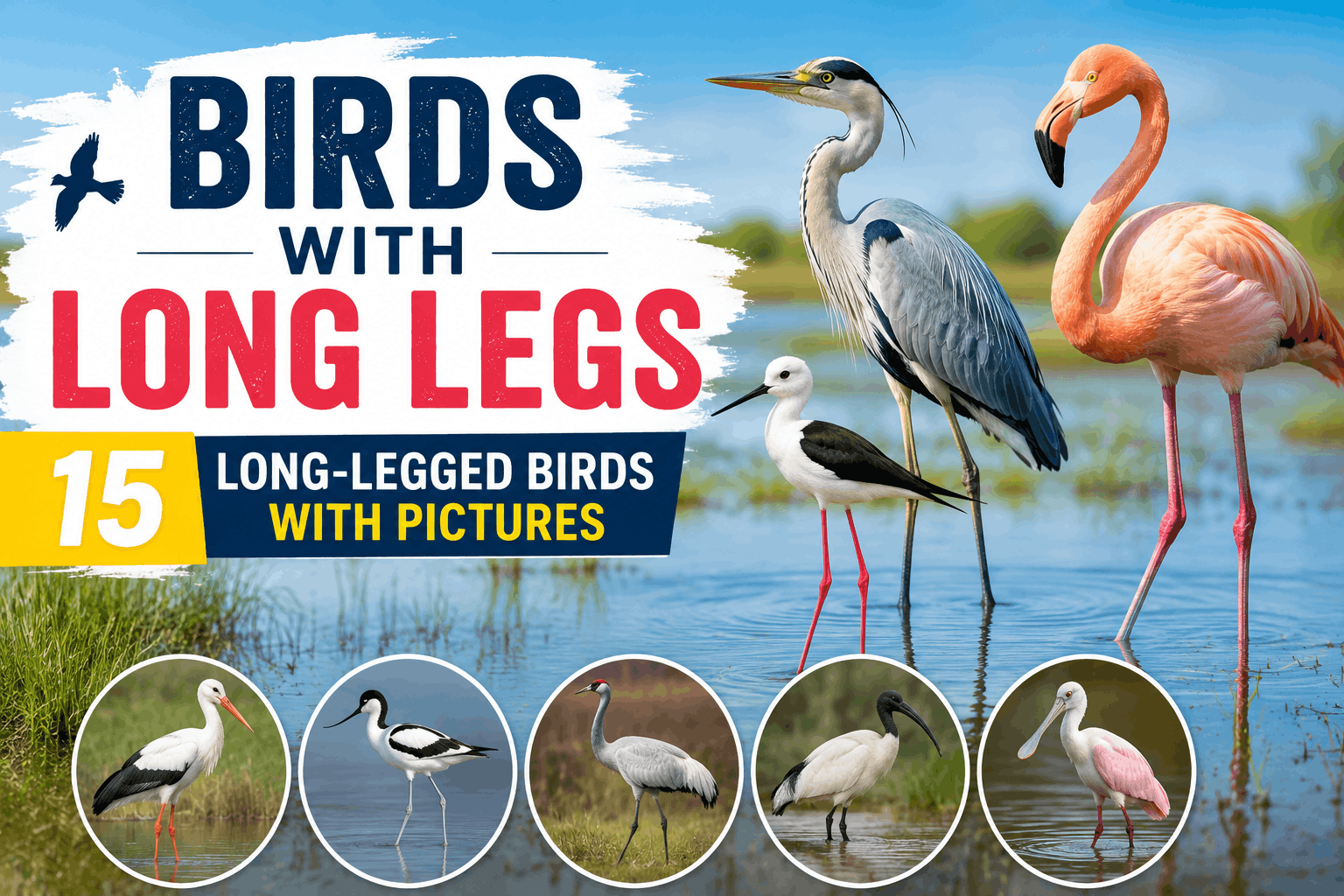
Birds come in many shapes and sizes, but some species stand out because of their remarkably long legs. From elegant egrets walking through shallow wetlands to cranes crossing open grasslands, birds with long legs have developed special body structures that help them feed, hunt, escape danger, and move through their habitats.
Long legs are especially useful for birds that spend time in water. They allow birds to walk through shallow ponds, marshes, rivers, and mudflats without putting their entire bodies into the water. However, not every long-legged bird is a wader. Some, such as the secretary bird, use their long legs to walk across grasslands and hunt prey on land.
In this guide, we’ll look at 15 long-legged birds, including their scientific names, habitats, diets, appearance, and the special adaptations that make their legs so useful.
Quick List of Birds With Long Legs
| # | Bird | Scientific Name | Main Habitat | Main Diet |
| 1 | Great Egret | Ardea alba | Wetlands, marshes | Fish, frogs, insects |
| 2 | Sarus Crane | Antigone antigone | Wetlands, grasslands | Plants, insects, small animals |
| 3 | Secretary Bird | Sagittarius serpentarius | African savannas | Snakes, insects, rodents |
| 4 | Great Blue Heron | Ardea herodias | Wetlands, rivers, coasts | Fish, frogs, small animals |
| 5 | Shoebill | Balaeniceps rex | Freshwater swamps | Fish, amphibians |
| 6 | Jabiru | Jabiru mycteria | Wetlands, floodplains | Fish, frogs, reptiles |
| 7 | Flamingo | Phoenicopterus spp. | Lakes, lagoons, mudflats | Algae, small aquatic organisms |
| 8 | Black-winged Stilt | Himantopus himantopus | Wetlands, mudflats | Insects, crustaceans |
| 9 | Sandhill Crane | Antigone canadensis | Wetlands, grasslands | Seeds, plants, insects |
| 10 | Whooping Crane | Grus americana | Wetlands, grasslands | Plants, insects, small animals |
| 11 | Roseate Spoonbill | Platalea ajaja | Coastal wetlands | Fish, crustaceans, insects |
| 12 | Wood Stork | Mycteria americana | Wetlands, swamps | Fish, frogs, aquatic animals |
| 13 | Gray Heron | Ardea cinerea | Wetlands, rivers, lakes | Fish, amphibians, small animals |
| 14 | Ostrich | Struthio camelus | African grasslands | Plants, seeds, insects |
| 15 | Emu | Dromaius novaehollandiae | Australian grasslands, woodland | Plants, fruits, insects |
1. Great Egret
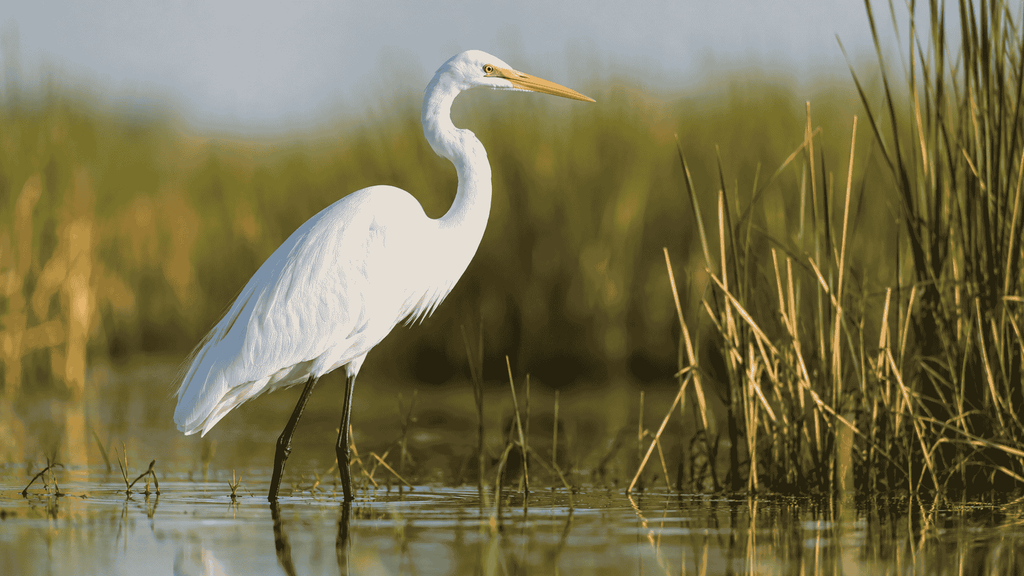
The Great Egret is one of the most recognizable birds with long legs. Its scientific name is Ardea alba, and it belongs to the heron family, Ardeidae. Cornell Lab of Ornithology describes it as a large wading bird commonly associated with marshes and other wetlands.
The bird has brilliant white plumage, a long neck, a straight pointed bill, and long dark legs. These features give it the classic appearance of a long-legged wading bird.
Habitat and Diet
Great Egrets can be found around freshwater and coastal wetlands, marshes, ponds, rivers, and other shallow-water environments. They mainly eat fish but also capture frogs, insects, and other small aquatic animals.
How Its Long Legs Help
Its long legs allow the egret to walk through shallow water while keeping most of its body above the surface. It can stand almost motionless before quickly thrusting its bill forward to catch prey.
Fun Fact: Great Egrets were once heavily hunted for their ornamental breeding plumes, and their decline helped encourage early bird-protection efforts.
2. Sarus Crane
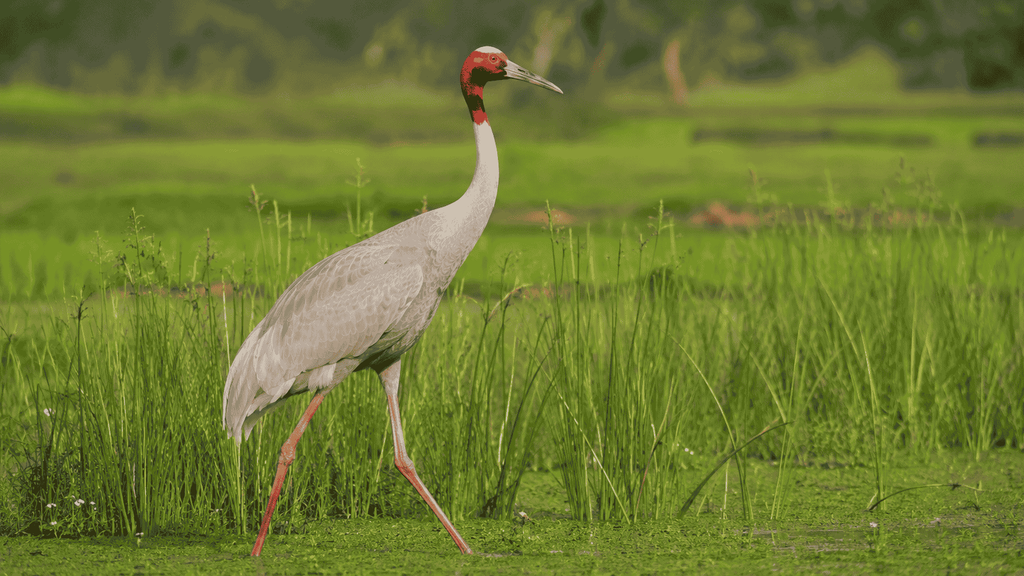
The Sarus Crane is an impressive tall bird with extremely long legs and a long neck. Its accepted scientific name is Antigone antigone. Taxonomic databases recognize the older combination Grus antigone as a synonym, while Antigone antigone is the current name.
Sarus Cranes are associated with wetlands, agricultural landscapes, grasslands, and other open habitats. Their tall bodies help them see over vegetation and move through wet environments.
Diet and Feeding
These cranes have an omnivorous diet. They can eat aquatic plants, grains, seeds, insects, frogs, and other small animals depending on the habitat and season.
Long-Leg Adaptation
Their long legs are particularly useful when walking through shallow water and tall vegetation. Their height also gives them an excellent view of their surroundings.
The Sarus Crane is famous for its elegant appearance and dramatic courtship displays, during which pairs can stretch their necks, call, and leap into the air.
3. Secretary Bird
The Secretary Bird looks very different from typical wetland birds. Its scientific name is Sagittarius serpentarius, a name verified by the Integrated Taxonomic Information System and Smithsonian records.
Instead of spending most of its time wading in water, this unusual bird walks across African grasslands and savannas.
What Does the Secretary Bird Eat?
Secretary Birds are famous for hunting snakes, but their diet is broader than snakes alone. They can also feed on insects, lizards, rodents, and other small animals.
Why Does It Have Long Legs?
Its long legs allow it to walk efficiently over large areas while searching for prey. The bird is also known for using its powerful legs and feet to strike prey.
This makes the secretary bird one of the most interesting birds with really long legs, even though it is not a traditional wading bird.
4. Great Blue Heron
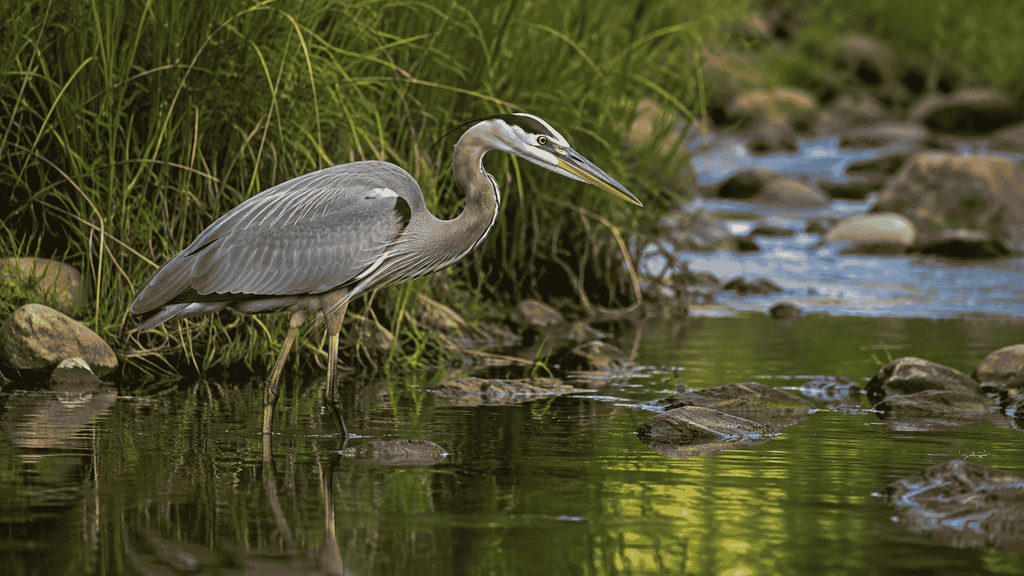
The Great Blue Heron is a classic long-legged water bird. It has a tall body, long neck, long legs, and a strong pointed bill designed for catching prey.
It commonly lives around rivers, lakes, marshes, ponds, estuaries, and coastal areas.
Feeding Behavior
Great Blue Herons often hunt by standing still in shallow water. When a fish or other animal comes within range, the heron rapidly extends its neck and bill to capture it.
Fish are an important part of its diet, but it may also eat frogs, insects, reptiles, and small mammals.
Long Legs and Survival
Long legs allow this heron to enter shallow water while keeping its body relatively dry. Its height also helps it move through vegetation and scan the water for prey.
5. Shoebill
The Shoebill is one of the strangest-looking birds in Africa. It has long legs, a large body, a massive shoe-shaped bill, and a distinctive prehistoric appearance.
Its scientific name is Balaeniceps rex.
Habitat
Shoebills are strongly associated with freshwater swamps and wetlands in parts of tropical Africa. They often stand quietly among reeds and aquatic vegetation.
Diet
The bird is a powerful predator. Its large bill is particularly useful for catching sizable fish, although it may also consume amphibians, reptiles, and other aquatic prey.
Long-Leg Adaptation
Long legs help the Shoebill move through shallow swamp water and dense wetland vegetation. Its tall body gives it a useful hunting position while it waits for prey.
The combination of long legs, long toes, and a huge bill makes the Shoebill one of the most unusual birds in the world.
6. Jabiru
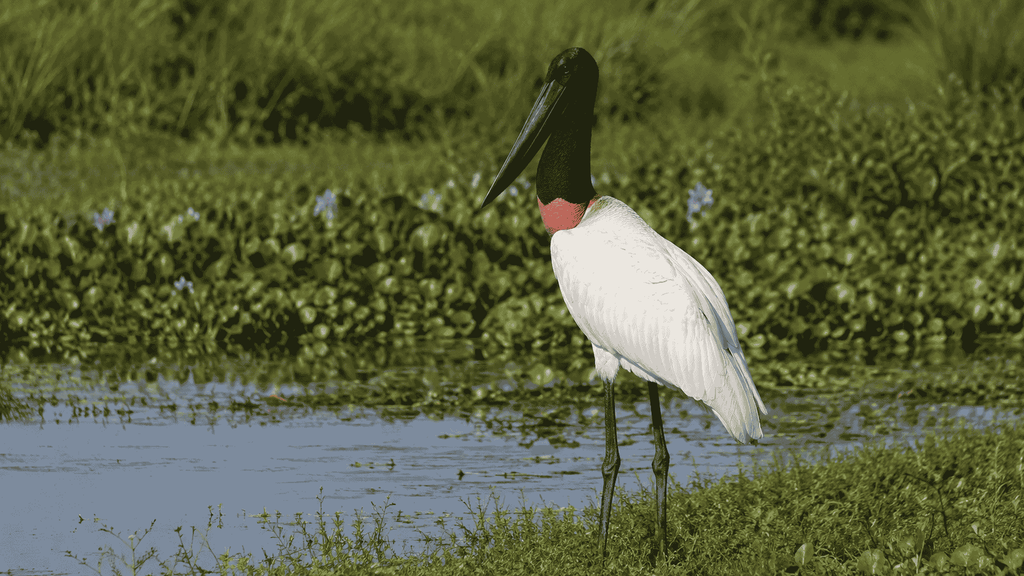
The Jabiru is a huge stork found in parts of the Americas. Its scientific name is Jabiru mycteria.
This tall bird has a long neck, long legs, broad wings, and a large black bill. It is strongly associated with wetlands and floodplains.
Diet
Jabirus eat a variety of aquatic and terrestrial prey, including fish, frogs, insects, reptiles, and other small animals.
Their long legs allow them to walk through shallow water while searching for food.
Why Are Jabiru Legs So Useful?
Wetlands can be difficult environments for short-legged animals. Long-legged birds such as the Jabiru can move through shallow water and soft wetland areas while keeping their bodies elevated.
7. Flamingo
Flamingos are among the most famous pink birds with long legs. Their tall bodies, curved necks, long legs, and unusual downward-curved bills make them easy to recognize.
Several flamingo species belong to the genus Phoenicopterus, while other flamingos are placed in related genera.
Where Do Flamingos Live?
Flamingos are commonly associated with shallow lakes, lagoons, mudflats, coastal wetlands, and saline or alkaline water environments.
Feeding Adaptation
Their bills are specially adapted for filter feeding. Flamingos can use their bills to separate small food particles from water.
Long Legs
Their long legs allow them to walk through shallow water and muddy areas while searching for food.
Flamingos also have specialized feet that help them move across soft surfaces. Their combination of long legs and specialized feeding behavior makes them a fascinating example of bird adaptation.
8. Black-winged Stilt
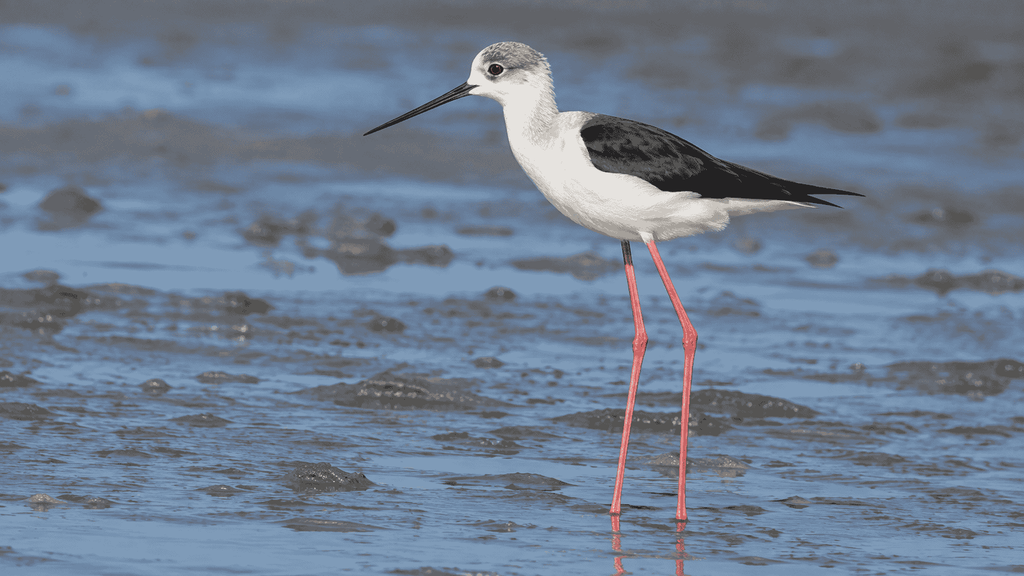
The Black-winged Stilt is a small-to-medium-sized bird with remarkably long, thin legs. Its scientific name is Himantopus himantopus.
Compared with its body size, its legs appear exceptionally long, which is why it is one of the best examples of a bird with a high leg-to-body ratio.
Habitat
It can be found around shallow freshwater and saltwater wetlands, lagoons, mudflats, and other open watery habitats.
Diet
Black-winged Stilts feed on small aquatic insects, crustaceans, larvae, and other tiny organisms.
How Its Legs Help
The bird uses its long legs to walk through shallow water while searching for prey. Its narrow body and long legs also give it a distinctive elegant appearance.
9. Sandhill Crane
The Sandhill Crane is a tall North American crane known for its long legs and long neck. Its scientific name is Antigone canadensis.
It can live in wetlands, grasslands, agricultural areas, and open landscapes.
What Does It Eat?
Sandhill Cranes are flexible feeders. Their diet can include seeds, grains, roots, berries, insects, and small animals.
Long Legs and Movement
Their long legs are useful for walking through wetlands and tall grasses. Unlike many smaller water birds, cranes can also travel considerable distances across land.
During migration, large groups of Sandhill Cranes can gather in impressive numbers, making them a spectacular sight.
10. Whooping Crane
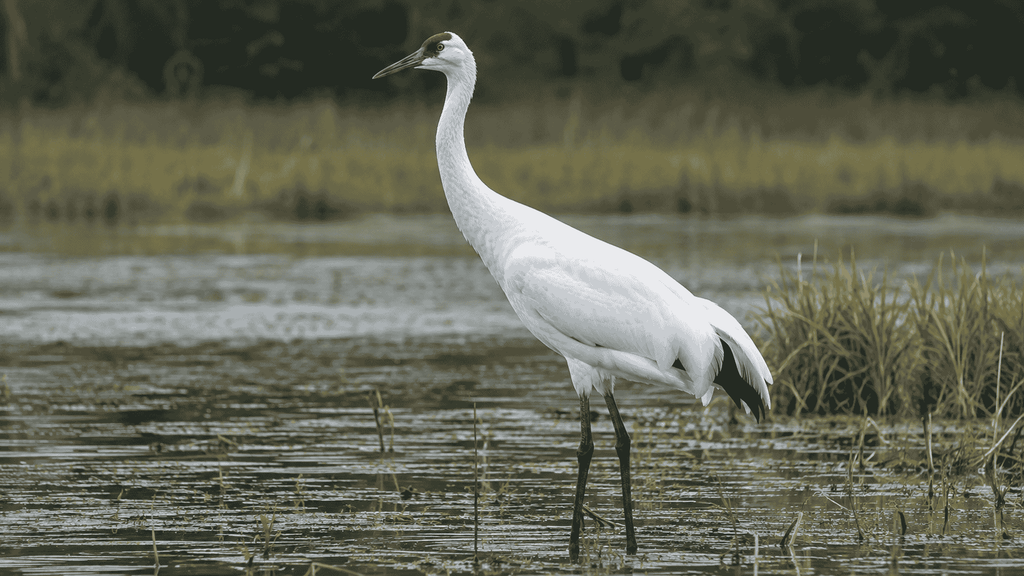
The Whooping Crane is one of North America’s most iconic tall birds. It has a mostly white body, black wing tips, a red crown, a long neck, and long dark legs.
Its scientific name is Grus americana.
Habitat
Whooping Cranes use wetlands, shallow ponds, marshes, and grasslands during different parts of their life cycle.
Diet
They feed on insects, frogs, small aquatic animals, grains, and plant material.
Long-Leg Adaptation
Long legs help Whooping Cranes move through shallow wetlands and tall vegetation. Their height also allows them to look over grasses and detect possible threats.
The species has also become an important symbol of bird conservation because of its history of severe population decline and recovery efforts.
11. Roseate Spoonbill
The Roseate Spoonbill is a striking pink bird with long legs and a uniquely shaped spoon-like bill. Its scientific name is Platalea ajaja.
It is found in wetlands, coastal marshes, lagoons, and shallow waters.
Feeding Behavior
Instead of relying only on eyesight, the spoonbill can move its unusual bill through shallow water to locate small prey. Its diet includes small fish, crustaceans, aquatic insects, and other tiny organisms.
Why Are Its Legs Long?
Long legs allow the spoonbill to wade through shallow water while searching for food.
Its pink coloration and spoon-shaped bill make it one of the easiest long-legged birds to recognize.
12. Wood Stork
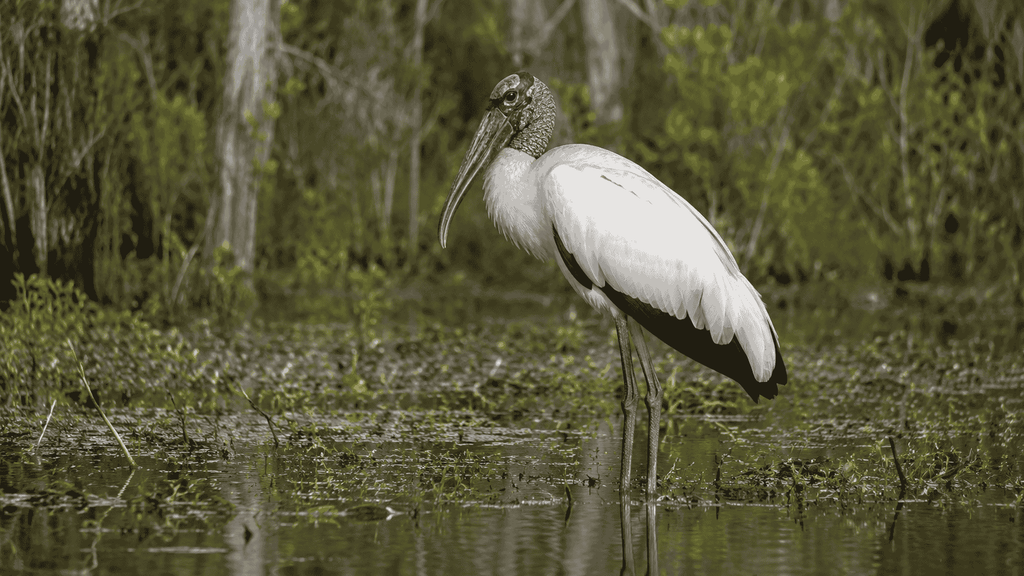
The Wood Stork is another tall wading bird with long legs, a long bill, and a large body. Its scientific name is Mycteria americana.
It commonly uses wetlands, swamps, marshes, and shallow waters.
Diet
Wood Storks mainly feed on fish and other small aquatic animals. They may also consume frogs, crustaceans, and other prey.
Feeding With Long Legs
The bird’s long legs help it move through shallow water. Its long bill is then used to capture prey.
This combination of long legs and a long beak is common among wading birds because it allows them to forage efficiently in shallow aquatic environments.
13. Gray Heron1a
The Gray Heron is a tall, elegant wading bird found across large parts of Europe, Asia, and Africa. Its scientific name is Ardea cinerea.
It has gray plumage, a long neck, long legs, and a sharp bill.
Habitat
Gray Herons commonly live around rivers, lakes, ponds, marshes, canals, estuaries, and other wetlands.
What Does It Eat?
Fish are an important food source, but Gray Herons can also catch frogs, insects, small mammals, and other animals.
Long-Legged Hunting
The heron may stand still in shallow water and wait for prey. Its long legs let it reach feeding areas that would be difficult for shorter-legged birds to access.
14. Ostrich
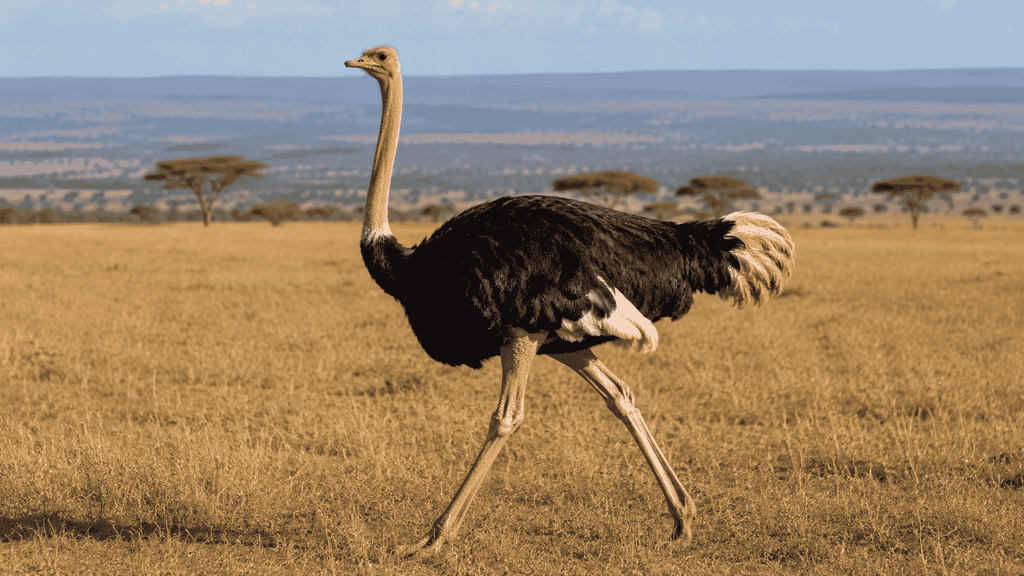
The Ostrich is very different from most birds on this list because it does not use its long legs for wading. Instead, its legs are specialized for running.
Its scientific name is Struthio camelus, and it is the world’s largest living bird.
Why Does the Ostrich Have Long Legs?
Ostriches live in open environments where running is extremely important. Their long, powerful legs allow them to cover large distances quickly.
Each leg has two toes, an unusual feature among modern birds.
Diet
Ostriches primarily eat plant material, seeds, and other vegetation, although they can also consume insects and other small food items.
Their long legs also give them a high viewpoint, allowing them to see across open grasslands.
The ostrich shows that birds with long legs are not necessarily water birds. Long legs can evolve for running, walking, hunting, or wading.
15. Emu
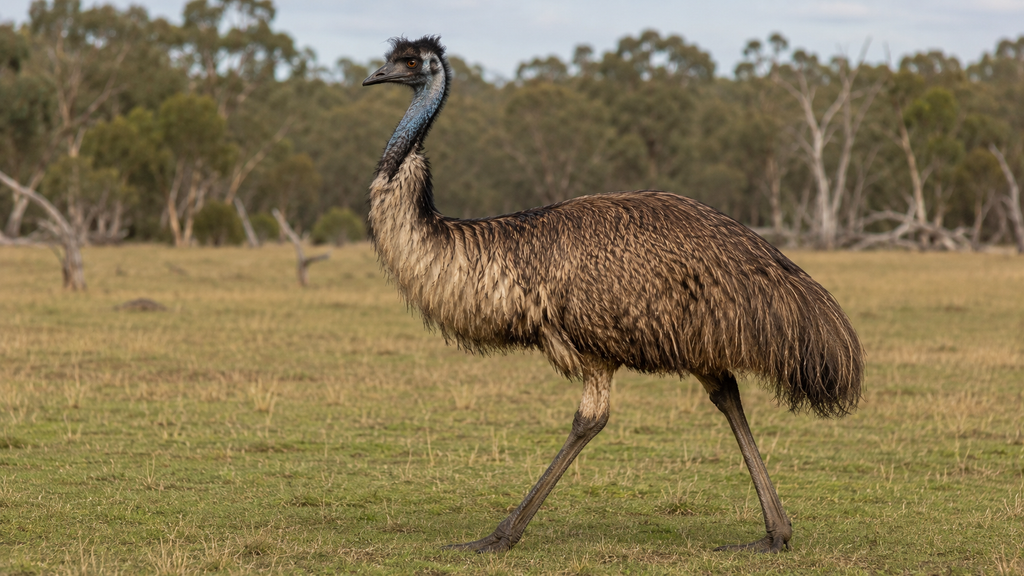
The Emu is Australia’s largest native bird and another excellent example of a flightless bird with long, powerful legs. Its scientific name is Dromaius novaehollandiae.
Emus have a tall body, long neck, small wings, and strong legs.
Habitat and Diet
They live in a variety of Australian environments, including grasslands, woodlands, shrublands, and open areas.
Emus are omnivorous. They eat plants, fruits, seeds, flowers, and insects.
Long-Leg Adaptation
Unlike egrets and herons, emus do not need long legs for wading. Their legs are adapted for walking and running across large areas.
Their long stride helps them travel efficiently while searching for food.
Why Do Some Birds Have Long Legs?
Long legs provide different advantages depending on the bird’s lifestyle.
For wading birds, long legs are particularly useful because they allow the bird to enter shallow water without submerging its body. This gives species such as egrets, herons, storks, and stilts access to aquatic prey.
For birds living on land, long legs can have completely different functions.
Secretary Birds use their legs while walking across African grasslands and hunting. Ostriches and emus use powerful legs for efficient movement across open habitats.
In simple terms, long legs can help birds:
- Walk through shallow water
- Reach aquatic prey
- Move through tall vegetation
- See over grass
- Travel across open landscapes
- Run from predators
- Chase or strike prey
- Search for food in difficult environments
Long-Legged Birds vs. Short-Legged Birds
| Feature | Long-Legged Birds | Short-Legged Birds |
| Water movement | Excellent in shallow water | Usually less suited to wading |
| Tall vegetation | Easier to move through | More difficult |
| Running | Some species are excellent runners | Depends on species |
| Feeding height | Can reach prey farther from the body | Usually feed closer to ground |
| Typical habitats | Wetlands, grasslands, marshes | Very diverse |
| Examples | Egret, crane, stilt, ostrich | Sparrow, pigeon, woodpecker |
Not every long-legged bird lives near water, and not every water bird has extremely long legs. Leg shape is closely connected to the bird’s lifestyle and habitat.
How Long Legs Help Birds Survive
Long legs are an excellent example of an evolutionary adaptation.
Birds living in wetlands often face a problem: food is available in shallow water, but entering the water can make movement difficult. Longer legs provide a simple solution.
A heron can walk into shallow water while keeping its body elevated. A stilt can move through water that would be difficult for a shorter-legged bird to cross.
On land, long legs can provide other benefits. Ostriches and emus use their powerful legs for running, while secretary birds use their legs while hunting.
This shows why there is no single reason why birds have long legs. The same basic body feature can serve very different purposes in different species.
Birds With Long Legs and Long Beaks
Many long-legged birds also have long bills or beaks.
Examples include:
- Great Egret
- Great Blue Heron
- Gray Heron
- Wood Stork
- Jabiru
- Roseate Spoonbill
- Shoebill
The combination of long legs, long necks, and long beaks is particularly useful for wading birds.
Long legs keep the body above the water, while a long neck and bill extend the bird’s reach toward prey.
This body design is one reason herons, egrets, storks, and spoonbills are such successful wetland hunters.
Tall Birds With Long Legs
Some of the tallest birds in the world also have very long legs.
Examples include:
- Ostrich
- Emu
- Sarus Crane
- Whooping Crane
- Great Egret
- Jabiru
- Secretary Bird
However, tallest bird and longest legs do not mean exactly the same thing.
A bird may have a high standing height because of its long neck, body, or legs. Another species may have an especially high leg-to-body ratio without being one of the tallest birds overall.
That is why it is better to describe each bird using accurate measurements and proportions rather than simply calling one species the “bird with the longest legs.”
Why Are Wading Birds So Often Long-Legged?
Wading birds usually feed in shallow water, marshes, mudflats, or wetlands.
Long legs provide them with extra clearance from the water and muddy ground. This allows them to search for fish, frogs, insects, crustaceans, and other prey without swimming.
Different species have developed different combinations of body features.
Herons and egrets often combine long legs with long necks and sharp bills. Stilts have extremely slender legs relative to their body size. Storks may have long legs and strong bills for catching aquatic prey.
These differences show how birds can adapt their body structure to specific feeding strategies.
Read More: Scavenger Birds
Frequently Asked Questions About Birds With Long Legs
What bird has the longest legs?
There is no single simple answer because “longest legs” can refer to absolute leg length, leg-to-body ratio, or overall standing height. Different birds excel under different measurements.
Ostriches have extremely long and powerful legs for running, while stilts are famous for exceptionally long, slender legs relative to their body size.
What are birds with long legs called?
Many birds with long legs are called wading birds when they commonly feed in shallow water. Examples include herons, egrets, storks, and stilts.
However, not every long-legged bird is a wader. Ostriches, emus, and secretary birds have long legs but are primarily land-dwelling birds.
Which birds have very long legs?
Examples include the Black-winged Stilt, Great Egret, Sarus Crane, Secretary Bird, Great Blue Heron, flamingos, ostriches, and emus.
Why do birds have long legs?
Birds develop long legs for different reasons. In wetland birds, long legs help them wade through shallow water and reach aquatic prey. In land birds, long legs can help with walking, running, hunting, or seeing across vegetation.
What small birds have long legs?
The Black-winged Stilt is a good example of a relatively small bird with exceptionally long legs. Its slender legs make it appear much taller than its compact body would suggest.
What are the pink birds with long legs?
Flamingos and Roseate Spoonbills are two famous pink birds with long legs. Flamingos are especially well known for their bright pink coloration and tall, slender appearance.
What black and white birds have long legs?
The Black-winged Stilt is a strong example. It has a mostly black-and-white body combined with very long pinkish or reddish legs.
Are ostriches wading birds?
No. Ostriches are land-dwelling, flightless birds. Their long, powerful legs are mainly adapted for walking and running rather than wading.
Which long-legged bird has a huge bill?
The Shoebill is famous for its enormous shoe-shaped bill. Its large bill is an important adaptation for catching prey in freshwater wetlands.
Why do herons have long legs?
Herons have long legs because they commonly forage in shallow water. Their legs allow them to walk through aquatic habitats while keeping most of their bodies above the water.
Final Thoughts
Birds with long legs are found in wetlands, rivers, lakes, coastal marshes, grasslands, savannas, and even dry open landscapes. Their long legs are not simply a visual feature; they are important adaptations that help them survive.
Great Egrets, herons, storks, flamingos, cranes, and stilts use their legs to move through shallow water and search for prey. Secretary Birds use their legs while hunting on land, while ostriches and emus rely on their powerful legs for walking and running.
From the delicate Black-winged Stilt to the enormous Ostrich, these birds demonstrate how different species can develop similar body features for very different purposes.
If you enjoy learning about unusual birds, exploring topics such as birds with long beaks, birds that live in wetlands, birds of prey, largest birds in the world, and flightless birds can reveal even more fascinating examples of bird adaptation.

One thought on “Birds With Long Legs: 15 Long-Legged Birds With Pictures”