
Rabbits are fast, alert mammals that live in grasslands, forests, deserts, wetlands, and even suburban gardens. Their long ears help them detect danger, while their powerful hind legs allow them to escape quickly. However, speed and camouflage do not always protect them from hungry predators.
From foxes stalking through fields to owls hunting after dark, many animals depend on rabbits as a source of food. Some predators catch adult rabbits, while others mainly target young rabbits in nests. The risks rabbits face depend on their species, habitat, age, and the predators living nearby.
Understanding what animals eat rabbits also helps explain how natural food chains work. Predators influence rabbit populations, while rabbits provide energy to animals higher up the food web. Here are 15 animals known to hunt rabbits or prey on them when the opportunity arises.
Quick Answer: What Animals Eat Rabbits?
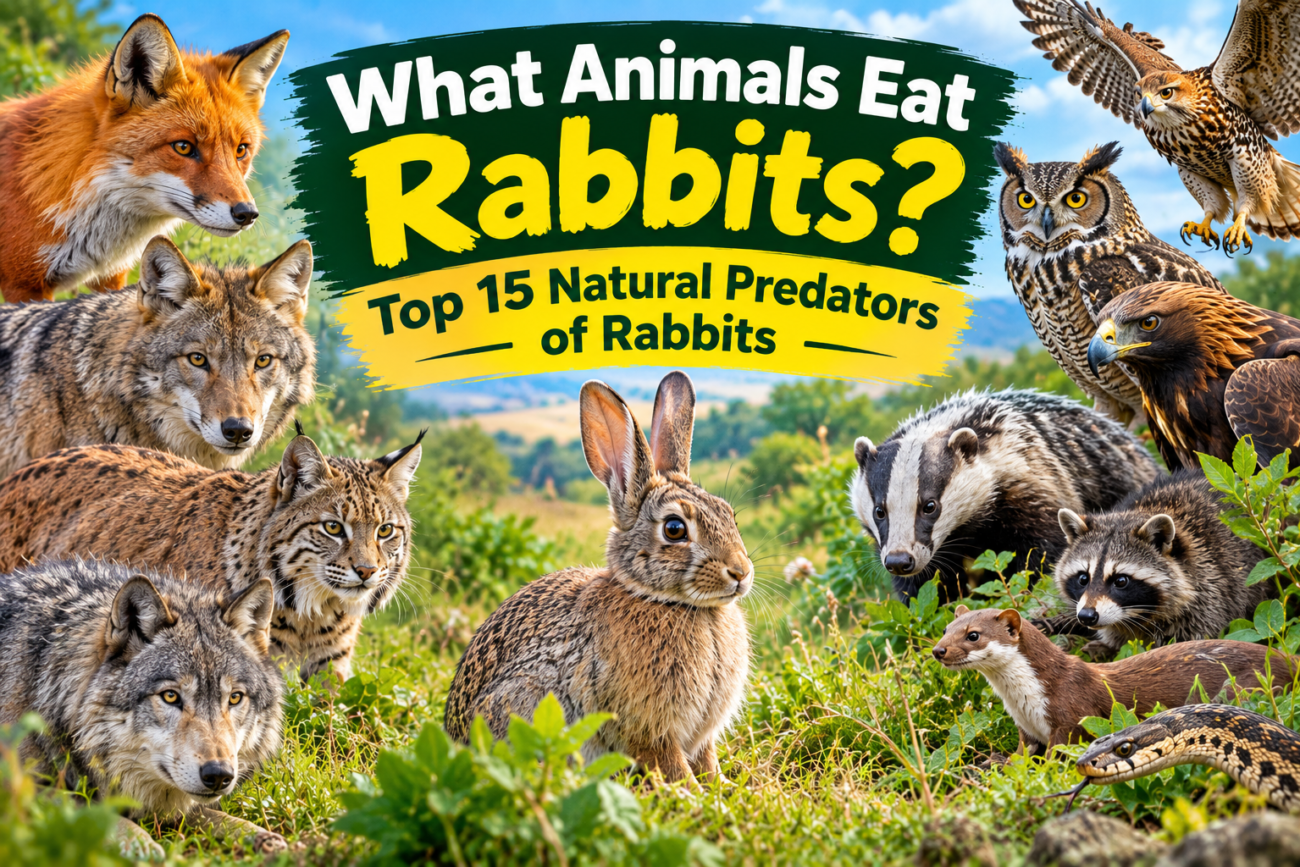
Fifteen animals that eat rabbits include red foxes, coyotes, bobcats, lynxes, gray wolves, weasels, American mink, badgers, raccoons, domestic dogs, domestic cats, great horned owls, red-tailed hawks, golden eagles, and large snakes. Foxes, coyotes, bobcats, hawks, and owls are well-known rabbit predators in many regions. Weasels and snakes can threaten young rabbits in nests, while larger predators may capture adults. The exact predators vary by location, and not every animal on this list hunts rabbits regularly.
1. Red Fox (Vulpes vulpes)
Class: Mammalia
Diet: Omnivore
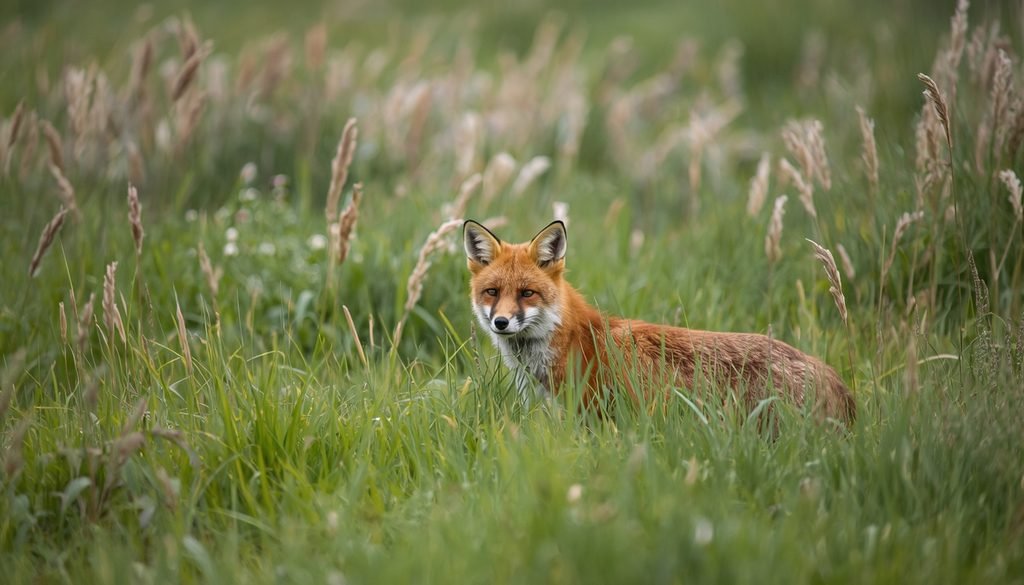
The red fox is one of the best-known natural predators of rabbits. Found across much of the Northern Hemisphere, it inhabits forests, grasslands, farmland, scrubland, and areas close to human settlements. Rabbits can provide a valuable meal when they are available.
Red foxes use their excellent hearing and sense of smell to locate prey hidden in grass or beneath vegetation. Once a fox detects movement, it may stalk quietly before making a sudden dash or pounce. This hunting technique can catch a rabbit before it reaches cover.
Foxes are adaptable hunters and also eat rodents, birds, insects, fruit, and carrion. Their varied diet helps them survive when rabbits become scarce. Young rabbits are especially vulnerable because they have less experience recognizing danger and escaping quickly.
2. Coyote (Canis latrans)
Class: Mammalia
Diet: Omnivore
Coyotes are highly adaptable predators native to North America. They live in deserts, prairies, forests, mountains, and suburban landscapes. Rabbits are a common potential food source, although coyotes adjust their diet according to local prey availability.
A coyote may stalk a rabbit through vegetation or chase it across open ground. Its speed, agility, and endurance can help it catch prey that fails to reach a burrow or dense hiding place. Coyotes usually hunt alone or in pairs for small prey, although their social behavior varies.
Rabbits are only one part of a coyote’s diet. Rodents, insects, fruit, birds, and larger mammals may also be eaten. This flexibility allows coyotes to occupy a wide range of habitats and makes them important predators in many ecosystems.
3. Bobcat (Lynx rufus)
Class: Mammalia
Diet: Carnivore
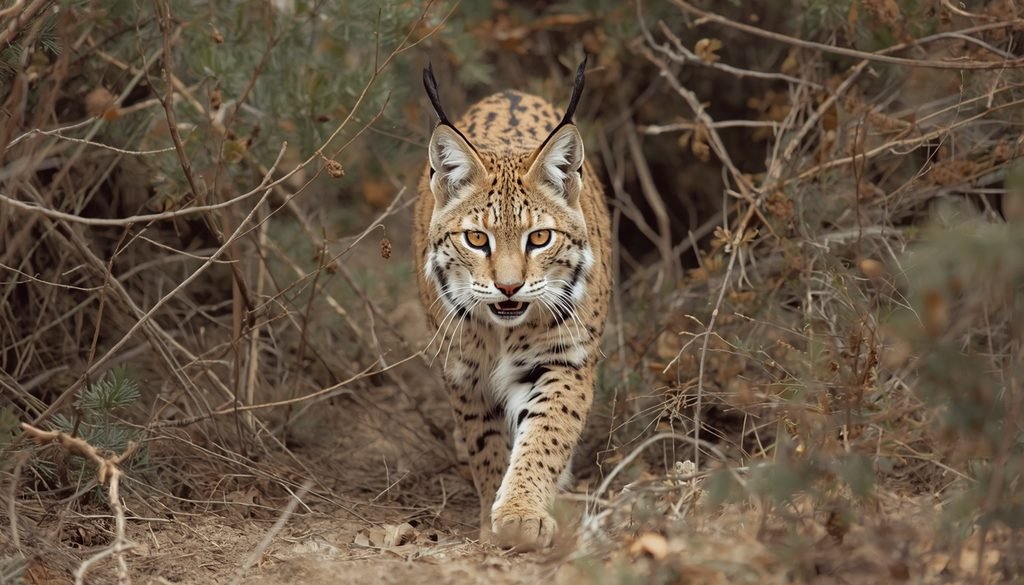
The bobcat is a medium-sized wild cat found across much of North America. Its short tail, pointed ears, spotted coat, and powerful legs help distinguish it from domestic cats. Rabbits and hares are important prey in many parts of its range.
Unlike predators that rely on long chases, bobcats usually hunt by stalking and ambushing. They move quietly through vegetation, pause to watch their surroundings, and attack when prey comes within range. Their spotted coats provide camouflage in woodland and brush.
Bobcats may also eat rodents, birds, and other small mammals. Their diet depends on the habitat and season. Because rabbits are often active near cover, areas with shrubs and brush can provide both food and hunting opportunities for bobcats.
4. Eurasian Lynx (Lynx lynx)
Class: Mammalia
Diet: Carnivore
The Eurasian lynx inhabits forests and mountainous regions across parts of Europe and Asia. It is larger than a bobcat and has long legs, tufted ears, and broad paws that help it move across snowy terrain.
Rabbits and hares may form part of its diet, depending on the region. The lynx hunts by approaching prey quietly and attacking at close range. It is a solitary animal, so stealth is particularly important when capturing food.
Larger prey, including deer, can be important to Eurasian lynxes in some areas. The availability of smaller mammals varies seasonally, meaning rabbits are not equally important in every lynx population. This is a good example of how the same predator can have different diets in different habitats.
5. Gray Wolf (Canis lupus)
Class: Mammalia
Diet: Carnivore
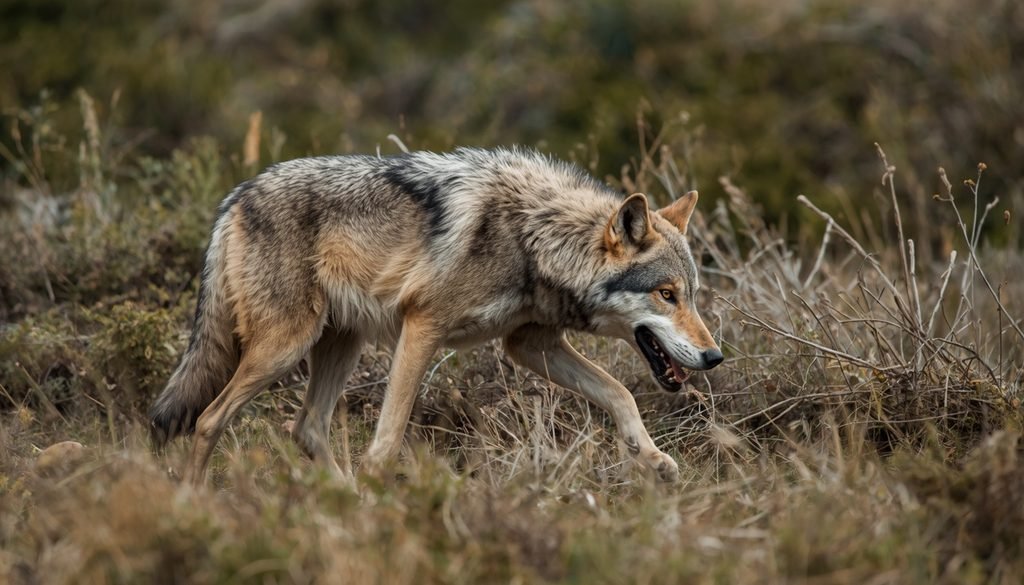
Gray wolves are powerful carnivores found in parts of North America, Europe, and Asia. They are often associated with hunting deer, elk, and other large mammals, but they can also eat rabbits and other small prey when available.
Wolves use their strong senses to locate food. A wolf may catch a rabbit encountered during travel or while searching for other prey. Although a rabbit is much smaller than the large animals wolves commonly hunt, it can still provide useful energy.
Wolves often live in family groups, but they do not need a pack to capture every meal. Individual wolves may hunt small animals alone. Their broad diet helps them survive when larger prey is less accessible, though rabbits are generally not their main food source in ecosystems rich in large mammals.
6. Weasel (Mustela species)
Class: Mammalia
Diet: Carnivore
Weasels are small, slender carnivores that can pursue prey through narrow spaces. Different weasel species occur across North America, Europe, and Asia. Despite their small size, some can kill rabbits, particularly young animals or smaller rabbit species.
Their long bodies and short legs allow them to investigate burrows, dense vegetation, and other sheltered places. Weasels mainly eat small mammals, including mice and voles, but a rabbit may become prey when the size and circumstances are suitable.
Rabbit nests can be especially vulnerable to small predators. However, a weasel’s ability to enter a burrow does not mean it can always overpower an adult rabbit. The outcome depends on the species, the size of the prey, and whether the rabbit can escape.
7. American Mink (Neogale vison)
Class: Mammalia
Diet: Carnivore
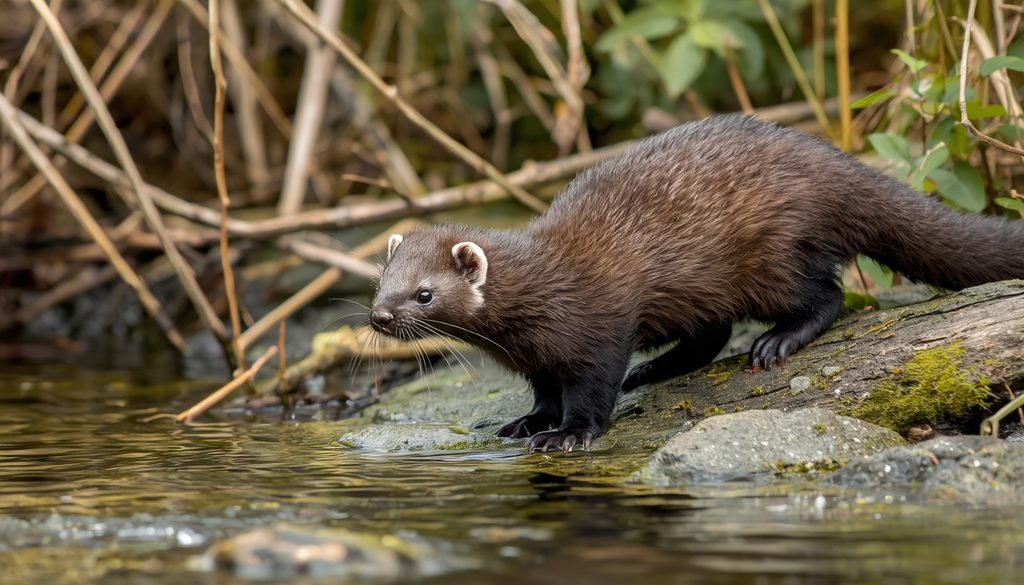
The American mink is a semi-aquatic mammal commonly associated with rivers, streams, marshes, and wetlands in North America. It has a long body, dark fur, and strong swimming ability. Fish, amphibians, and small mammals all contribute to its varied carnivorous diet.
Minks may prey on young rabbits, especially where rabbit nests or feeding areas are close to suitable mink habitat. They also hunt rodents, birds, and other small animals. Their flexible diet allows them to take advantage of different food sources throughout the year.
Minks are not usually considered the main predators of healthy adult rabbits. Instead, their importance may be greater for smaller prey or vulnerable young. This distinction helps explain why the impact of a predator can change with the age and size of the rabbit.
8. Eurasian Badger (Meles meles)
Class: Mammalia
Diet: Omnivore
The Eurasian badger is a sturdy mammal found across parts of Europe and Asia. It has a broad body, powerful digging claws, and distinctive black-and-white facial markings. Badgers eat earthworms, insects, fruit, small animals, and other foods.
Although badgers are not specialized rabbit hunters, they may raid nests or dig out young rabbits when conditions allow. Their strong forelimbs make them effective diggers, giving them access to some prey hidden underground.
Badgers usually forage at night and spend much of the day in underground setts. Their diet changes with seasonal food availability. Rabbits are one possible food source rather than a consistent staple, and badgers also obtain much of their food from invertebrates and plant material.
9. Raccoon (Procyon lotor)
Class: Mammalia
Diet: Omnivore
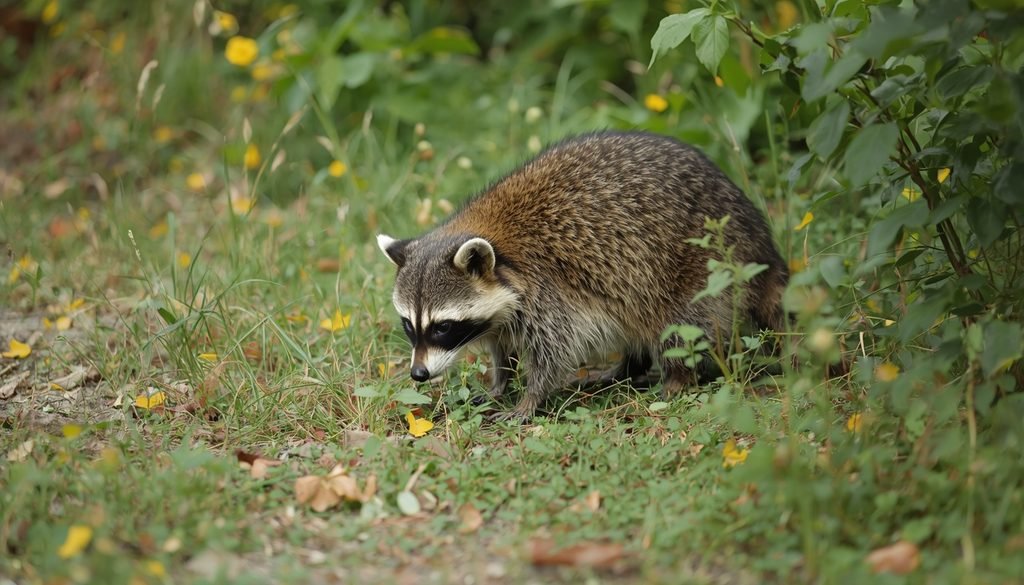
Raccoons are familiar mammals in North America, living in forests, wetlands, farmland, and urban neighborhoods. Their dark facial masks, ringed tails, and dexterous front paws make them easy to recognize.
Raccoons eat fruit, insects, eggs, fish, and small animals. They may also threaten rabbit nests, especially when young rabbits are left in shallow ground nests. Eggs and other easily accessed foods are often more typical targets than healthy adult rabbits.
Because raccoons readily explore human settlements, they may encounter domestic rabbit enclosures. A poorly secured hutch can expose young or confined rabbits to danger. For wild rabbits, thick vegetation and suitable nesting cover can help reduce exposure, although no shelter eliminates every risk.
10. Domestic Dog (Canis lupus familiaris)
Class: Mammalia
Diet: Omnivore
Domestic dogs can kill rabbits, even when they are not hungry. Many dogs have a strong instinct to chase small, fast-moving animals, and a rabbit running across a yard may trigger this behavior.
The risk depends on the dog’s size, temperament, training, and previous experience. Some dogs ignore rabbits, while others may chase or attack them quickly. A dog may injure a rabbit during play or pursuit even if it does not intend to eat it.
Pet rabbits should never be left unsupervised with dogs. Secure enclosures, strong fencing, and careful supervision are important because a rabbit can be badly injured by a single bite or chase. In the wild, free-roaming dogs can also put pressure on local rabbit populations.
11. Domestic Cat (Felis catus)
Class: Mammalia
Diet: Carnivore
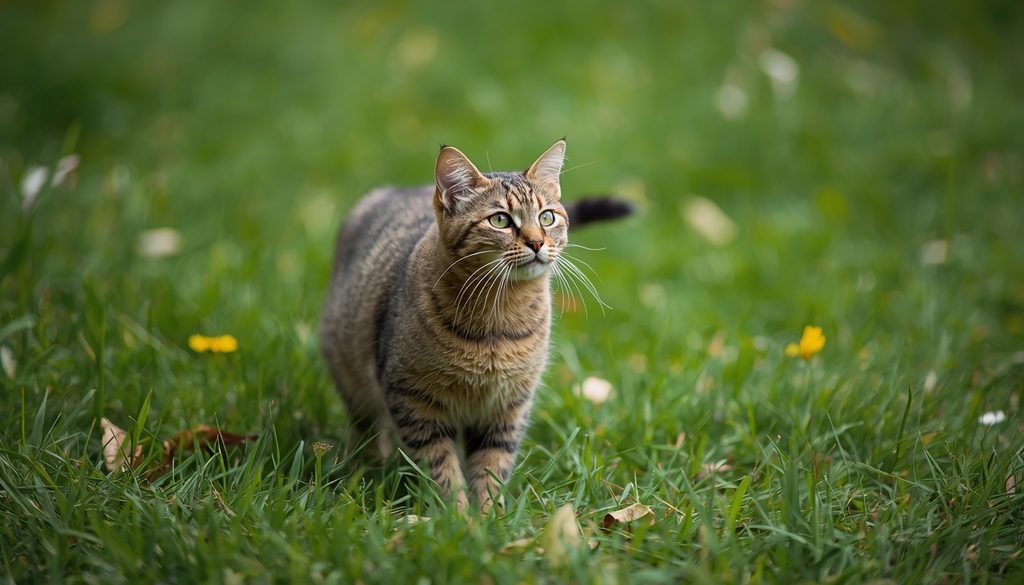
Domestic cats retain strong hunting instincts despite living in homes. They commonly catch mice and small birds, but some cats may also hunt young rabbits. Adult rabbits are often too large or difficult for many domestic cats to subdue, although outcomes vary.
Cats stalk quietly, watch for movement, and launch a sudden pounce. Their sharp claws and teeth help them capture small prey. Young rabbits that have recently left the nest may be more vulnerable than healthy adults.
Outdoor and feral cats can affect wildlife populations, particularly where small prey animals are abundant. Keeping pet cats indoors or supervising them outdoors can reduce encounters with wildlife and protect both rabbits and cats from injury.
12. Great Horned Owl (Bubo virginianus)
Class: Aves
Diet: Carnivore
The great horned owl is a powerful nocturnal bird of prey native to the Americas. It lives in forests, grasslands, deserts, farmland, and suburban areas. Rabbits and hares can be important prey, depending on local conditions.
This owl hunts mainly at night, using excellent low-light vision and highly sensitive hearing to locate animals moving through grass or brush. Its broad wings allow relatively quiet flight, helping it approach prey without creating much noise.
Once it spots a rabbit, the owl can swoop down and grasp it with strong talons. It also eats rodents, birds, and other animals. Because it hunts after dark, it can pose a threat when rabbits emerge to feed during evening or nighttime hours.
13. Red-Tailed Hawk (Buteo jamaicensis)
Class: Aves
Diet: Carnivore
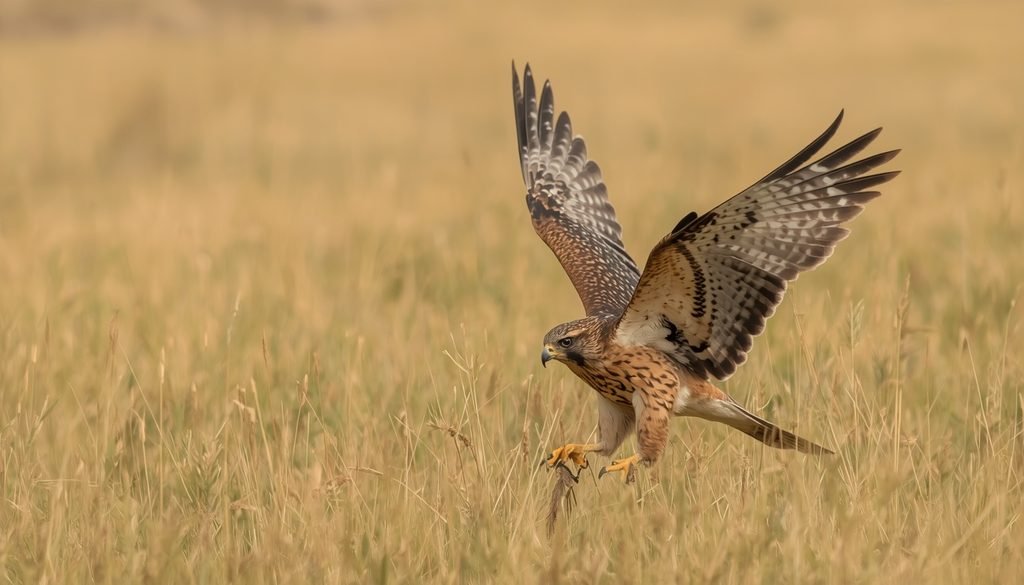
The red-tailed hawk is a widespread North American raptor commonly seen circling above fields or resting on roadside poles. It hunts small mammals and may capture rabbits when they are exposed in open terrain.
Its eyesight helps it detect movement from a perch or while flying. After locating prey, it may dive or descend quickly and use its sharp talons to seize the animal. Rabbits often rely on sudden changes of direction and nearby cover to escape such attacks.
Red-tailed hawks also eat mice, voles, squirrels, and birds. Their diet varies with season and habitat. Open fields bordered by shrubs can provide hunting opportunities for hawks while also offering rabbits places to feed and hide.
14. Golden Eagle (Aquila chrysaetos)
Class: Aves
Diet: Carnivore
Golden eagles are large birds of prey found across parts of North America, Europe, Asia, and northern Africa. They inhabit mountains, open country, and other landscapes where they can search for prey from the air.
Rabbits and hares can be part of a golden eagle’s diet, particularly in regions where these animals are abundant. The eagle uses keen eyesight to locate prey and powerful feet to capture it. Its broad wings help it soar while searching over large areas.
Golden eagles also hunt ground squirrels and other mammals, with larger prey important in many regions. They do not depend on rabbits everywhere, but they can be significant predators where small mammals are readily available.
15. Large Snakes
Class: Reptilia
Diet: Carnivore
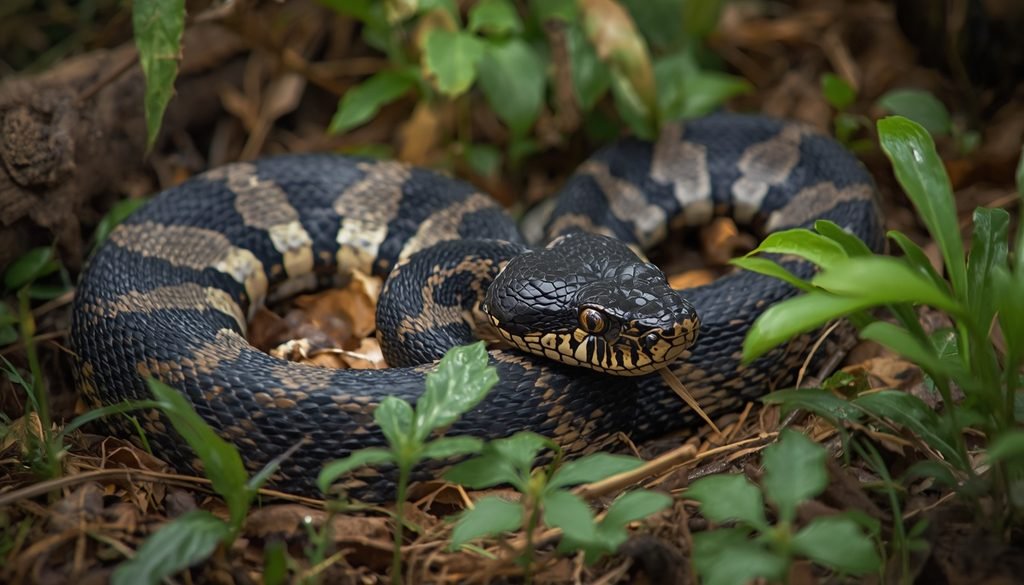
Several kinds of snakes prey on rabbits. Large constrictors, including pythons and boas, can overpower small mammals, while smaller snake species may threaten newborn rabbits in nests. The species involved depends on the continent and local habitat.
Constrictors typically ambush prey and use their muscular bodies to subdue it before swallowing it whole. They do not need to chase a rabbit over long distances. Their camouflage can make them difficult to see among grass, leaf litter, and other vegetation.
Not every snake is capable of killing a rabbit. A snake’s size, species, and hunting behavior determine what it can eat. Young rabbits are generally more vulnerable to smaller predators than adult rabbits, and snake predation varies widely by location.
How Do Rabbits Protect Themselves From Predators?
Rabbits have several adaptations that help them avoid becoming prey. Their survival depends on detecting danger early and reaching shelter quickly.
- Powerful hind legs: Rabbits can accelerate rapidly and change direction to escape a chasing predator.
- Large ears: Their hearing helps them detect approaching animals, including predators moving through vegetation.
- Camouflage: Brown, gray, and mottled fur can blend into soil, grass, and leaf litter.
- Burrows and hiding places: Many rabbits use underground burrows or dense vegetation to avoid detection.
- Alert behavior: Rabbits frequently pause to scan their surroundings and may thump their hind feet when alarmed.
- Timing: Many rabbits feed during dawn, dusk, or nighttime, although activity patterns differ among species and habitats.
These adaptations improve the chance of escape but do not guarantee safety. Young rabbits, injured animals, and individuals caught far from shelter may be especially vulnerable.
Why Are Rabbits Important in the Food Chain?
Rabbits are herbivores that consume grasses, leaves, shoots, and other vegetation. By converting plant material into animal biomass, they provide food for predators that might otherwise struggle to find enough energy.
Predation can influence rabbit numbers, but it is not the only factor controlling populations. Disease, weather, food availability, habitat loss, and human activity also affect survival. When rabbits are abundant, predators may benefit from more available prey. When rabbit populations decline, many predators switch to other food sources.
This relationship illustrates how wildlife species depend on one another. Healthy habitats support plants, rabbits, and the animals that hunt them, creating a more stable ecosystem.
Read More: What Animals Eat Monkeys
Frequently Asked Questions
What is the most common predator of rabbits?
There is no single answer for every region. Foxes, coyotes, bobcats, hawks, and owls are important rabbit predators in many places. The most common predator depends on local wildlife and habitat.
Do foxes eat rabbits?
Yes. Red foxes regularly hunt rabbits where they are available. Foxes use their hearing, smell, and stealth to locate and capture prey, but they also eat rodents, birds, insects, fruit, and carrion.
What animals eat baby rabbits?
Baby rabbits may be preyed upon by foxes, coyotes, weasels, mink, raccoons, snakes, owls, hawks, domestic cats, and dogs. The specific predators depend on the region, and nestlings are especially vulnerable because they cannot escape quickly.
Do owls eat rabbits?
Yes. Great horned owls and some other large owl species hunt rabbits. They often hunt at night and use their hearing and vision to locate prey in open fields or near vegetation.
Do snakes eat rabbits?
Some snakes eat rabbits, especially large pythons and boas. Smaller snakes may prey on newborn rabbits or other small animals. The size of the snake determines which prey it can safely capture and swallow.
Can a domestic dog kill a rabbit?
Yes. Dogs can injure or kill rabbits through chasing, biting, or rough handling, even when they are not hungry. Pet rabbits should be protected from unsupervised contact with dogs.
Conclusion
The answer to what animals eat rabbits includes a wide range of mammals, birds, and reptiles. Foxes, coyotes, bobcats, and lynxes hunt rabbits on the ground, while owls, hawks, and golden eagles can attack from above. Weasels, mink, raccoons, and some snakes may threaten young rabbits, and domestic dogs and cats can pose risks near homes.
Not every predator hunts rabbits regularly, and the danger varies with location, prey size, and habitat. These relationships are a natural part of the food web. By understanding rabbit predators and the ways rabbits avoid them, we can better appreciate the balance that helps wildlife communities survive.
