
Introduction
Animals have developed many unusual ways to catch food, chew plants, crush prey, and survive in different habitats. Teeth play an important role in these activities, but not every animal uses them in the same way. Some predators have sharp teeth for gripping prey, while other animals have rows of tiny teeth that help them scrape food from surfaces.
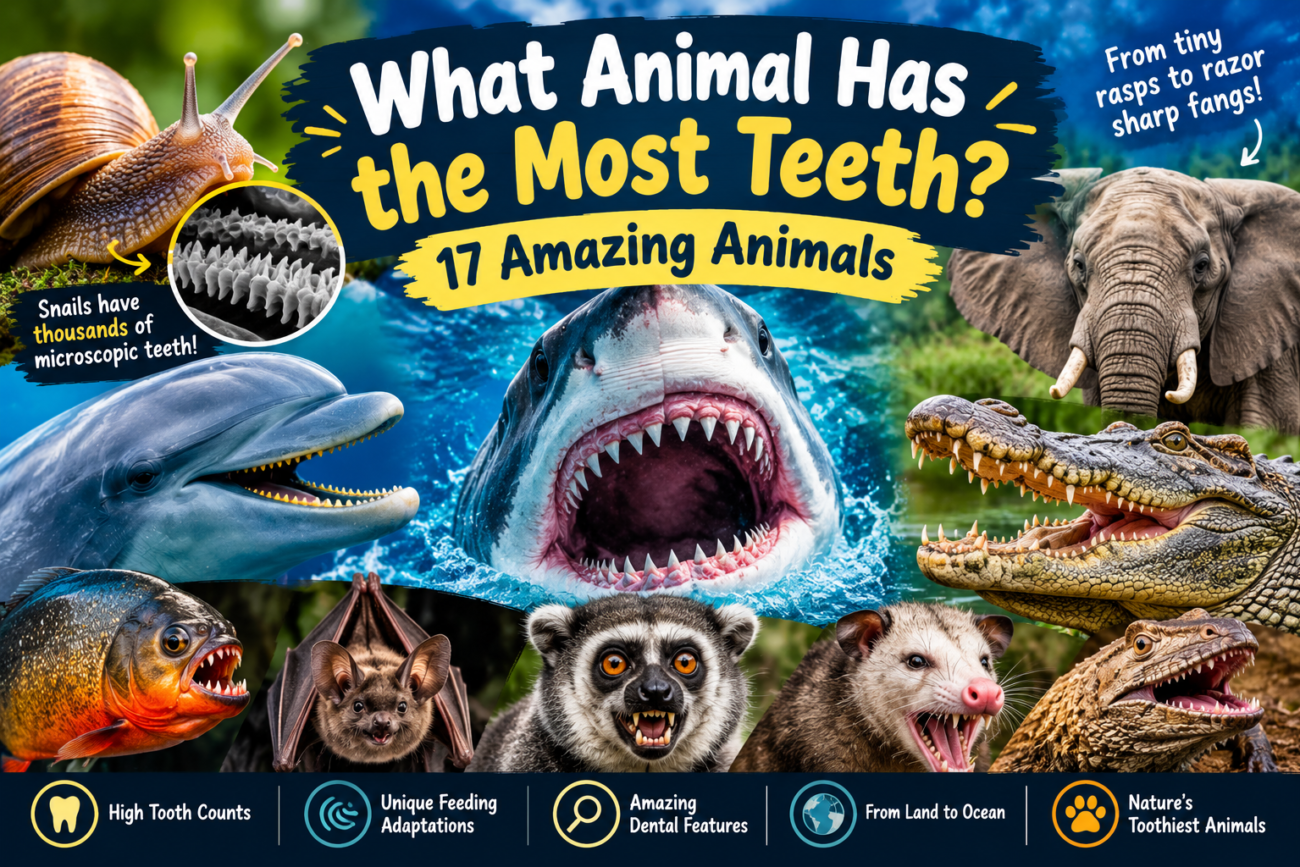
If you think sharks have the most teeth, the real answer may surprise you. Certain snails possess thousands of microscopic, tooth-like structures arranged on a flexible feeding organ. Other animals, including giant armadillos, dolphins, and some fish, have remarkably high numbers of conventional teeth.
In this guide, we will explore 17 animals with impressive tooth counts, explain how their teeth work, and discover why having more teeth does not always mean having a stronger bite.
Quick Answer: What Animal Has the Most Teeth?
Certain snails are among the animals with the most teeth, with some species possessing thousands or even tens of thousands of microscopic tooth-like structures on an organ called a radula. The exact number depends on the species and how its teeth are counted. These structures are different from the jaw-mounted teeth found in mammals, reptiles, and fish. Among mammals, the giant armadillo is especially notable, with up to about 100 simple teeth, while spinner dolphins can have as many as 260 teeth.
1. Common Garden Snail
Scientific name: Cornu aspersum
Approximate tooth count: Thousands; estimates vary by species and counting method.
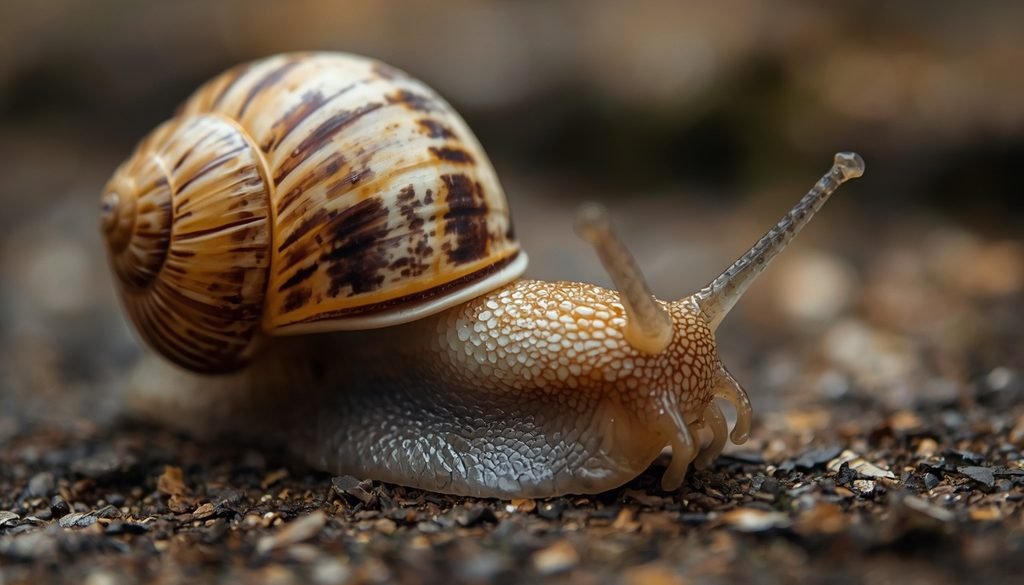
The common garden snail may look harmless, but its mouth contains a remarkable feeding tool. Instead of having teeth like humans, it uses a flexible, tongue-like structure called a radula. This ribbon carries rows of microscopic tooth-like projections that scrape food from surfaces.
Garden snails commonly feed on leaves, soft plant material, algae, and decaying vegetation. Their radula works like a tiny rasp, removing small pieces of food that the snail can swallow.
Snail tooth counts vary considerably, so the popular figure of 25,000 should not be treated as a universal number for every snail. Nevertheless, snails are excellent examples of how tiny feeding structures can outnumber the teeth of much larger animals.
2. Umbrella Slug
Scientific name: Umbraculum umbraculum
Approximate tooth count: Numerous microscopic radula teeth; exact totals vary.
The umbrella slug is a marine gastropod recognized by its broad, protective-looking shell. Like many other sea slugs and snails, it uses a radula to collect or scrape food.
Its tooth-like structures are arranged in repeated rows and help process food that would be difficult to handle with a simple mouth opening. These structures are extremely small and are best examined with magnification.
Very high tooth counts are sometimes reported for particular gastropods, but figures should be connected to a verified species rather than applied to all slugs. The umbrella slug illustrates the diversity of feeding equipment found among marine mollusks.
3. Land Slug
Scientific name: Arion species
Approximate tooth count: Thousands of microscopic structures in many species.
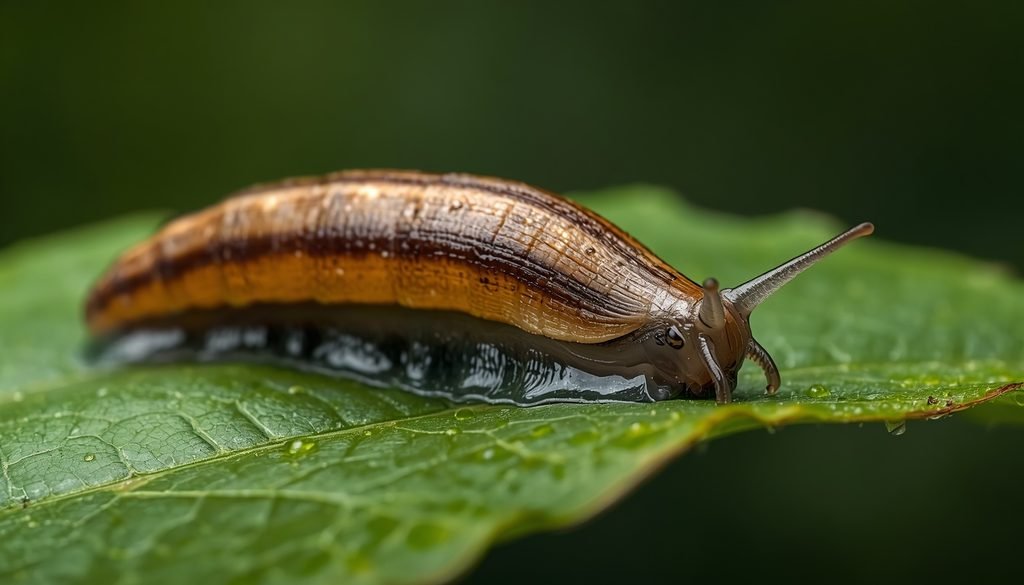
Land slugs are closely related to snails, although most lack an external shell large enough to protect their bodies. Their feeding method is surprisingly sophisticated for such small animals.
A land slug moves its radula against food, scraping away tiny particles. Depending on the species, it may eat leaves, fungi, algae, rotting plants, or other organic material. Some slugs are predators and feed on small invertebrates.
The radula’s many rows of teeth help the slug keep feeding even as individual structures wear down. New structures develop as older ones become damaged, making this system useful for animals that repeatedly scrape rough surfaces.
4. Limpet
Scientific name: Patella vulgata
Approximate tooth count: Many rows of microscopic radula teeth.
A limpet is a marine mollusk with a low, cone-shaped shell that clings tightly to rocks. It commonly grazes on algae growing across coastal surfaces.
Its radula contains rows of tiny teeth that scrape algae from rocks. Limpet teeth are especially interesting because some contain mineral-reinforced structures that make them remarkably strong for their size.
The limpet does not need large jaws to collect food. Instead, it repeatedly moves its radula over a surface, removing small amounts of algae. This specialized feeding method allows it to live in habitats where waves, changing tides, and competition for food make survival challenging.
5. Chiton
Scientific name: Chiton species
Approximate tooth count: Numerous tiny teeth on a radula; totals differ among species.
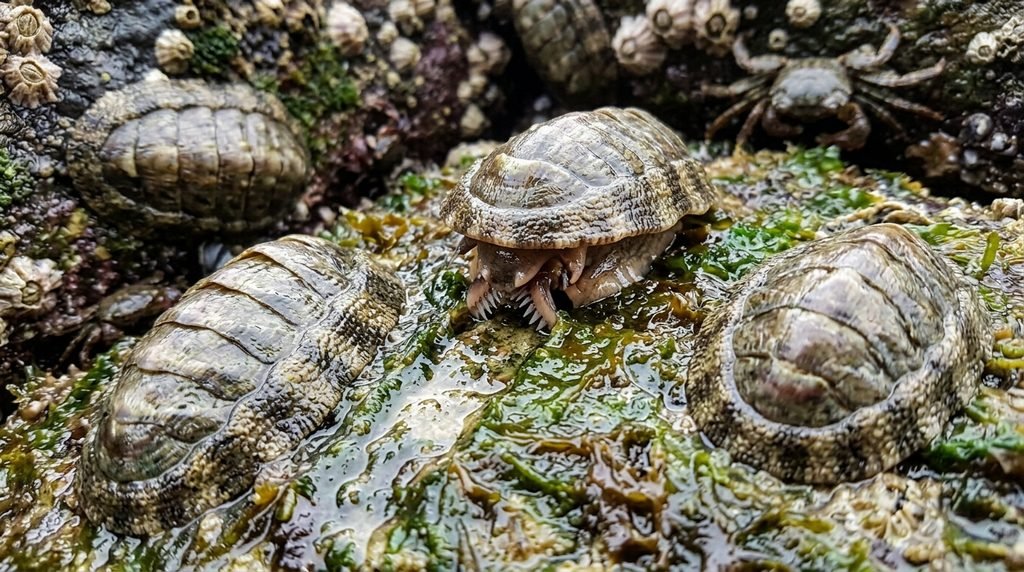
Chitons are marine mollusks with several overlapping shell plates on their backs. They often live on rocky shorelines and use their muscular feet to remain attached to surfaces.
Many chitons feed on algae, which they scrape from rocks using a radula covered in rows of teeth. Some species have teeth reinforced with iron-containing minerals, helping them resist wear during feeding.
Although a chiton’s teeth are not arranged like those of a shark or mammal, their repeated rows provide an efficient scraping system. Their unusual anatomy also interests scientists studying how biological materials achieve strength and durability.
6. Pacific Lingcod
Scientific name: Ophiodon elongatus
Approximate tooth count: Hundreds of small teeth.
The Pacific lingcod is a predatory fish found in the northeastern Pacific Ocean. It has a large mouth lined with many teeth that help it capture slippery prey.
Lingcod eat fish and other marine animals. Their teeth grip prey and reduce the chance that it will escape before being swallowed. Unlike the microscopic radula teeth of snails, lingcod teeth are conventional vertebrate teeth attached to the jaws and other parts of the mouth.
Tooth counts vary with size and counting method, but lingcod are frequently noted for having hundreds of teeth. Their mouths show how numerous small teeth can be useful when an animal regularly catches struggling prey underwater.
7. Giant Armadillo
Scientific name: Priodontes maximus
Approximate tooth count: Up to about 100.
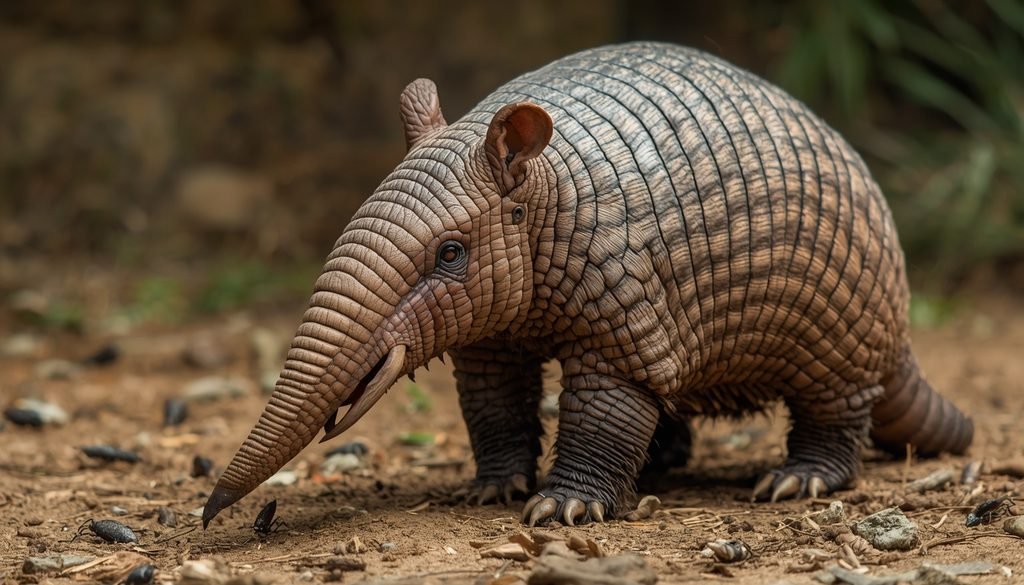
The giant armadillo is a large South American mammal known for its armored body and powerful digging claws. It is also one of the most tooth-rich mammals.
Unlike many mammals, the giant armadillo has numerous simple teeth that are relatively similar in shape. They help it process insects and other small food items, especially ants and termites.
Its teeth are not designed for slicing meat like a tiger’s canines. Instead, they suit a diet based heavily on small prey that can be collected from nests and soil. The giant armadillo demonstrates that a high tooth count can be an adaptation to feeding habits rather than a sign of a powerful bite.
8. Spinner Dolphin
Scientific name: Stenella longirostris
Approximate tooth count: Up to about 260.
Spinner dolphins are agile marine mammals famous for their spinning leaps above the water. Their long, narrow jaws contain many small, pointed teeth.
These teeth help spinner dolphins grip fish and squid. Rather than chewing food like humans, dolphins generally catch prey and swallow it whole or in manageable pieces.
Their high tooth count is particularly impressive among mammals. The teeth are arranged along both jaws, giving the dolphin many points of contact for holding slippery prey. A spinner dolphin’s dental equipment is therefore closely connected to its hunting lifestyle in the ocean.
9. Bottlenose Dolphin
Scientific name: Tursiops truncatus
Approximate tooth count: Commonly around 80–100.
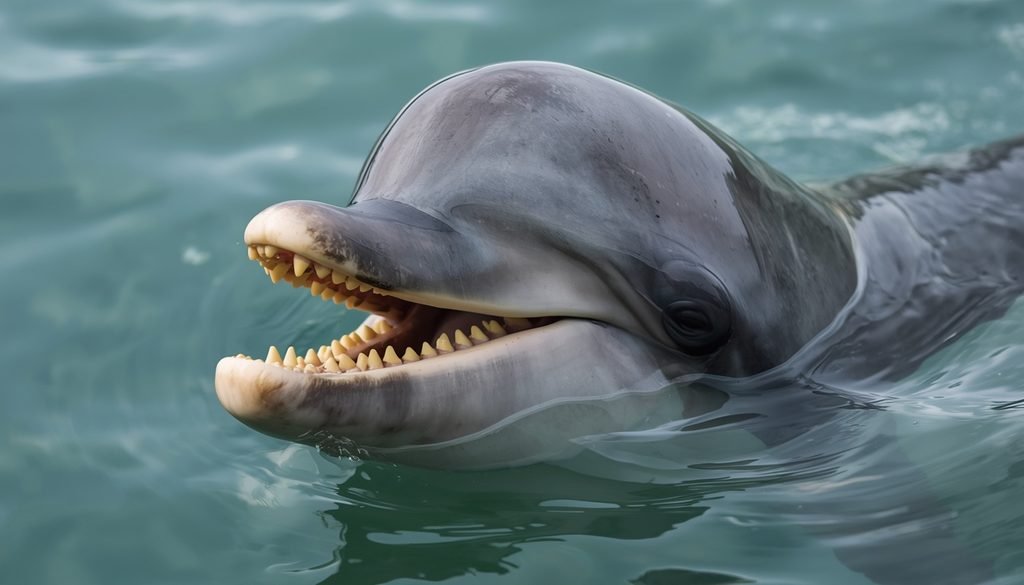
Bottlenose dolphins are intelligent marine mammals found in coastal waters and open seas. Their mouths contain rows of conical teeth that are useful for gripping fish and squid.
The teeth are generally similar in shape, unlike the different incisors, canines, premolars, and molars found in humans. This arrangement works well for capturing prey underwater.
Bottlenose dolphins rely on a combination of vision, hearing, echolocation, and cooperative hunting behavior to find food. Their teeth complete the process by securing prey once it is within reach. Although they have fewer teeth than spinner dolphins, their dental anatomy is highly suited to their diet.
10. Amazon River Dolphin
Scientific name: Inia geoffrensis
Approximate tooth count: Often reported at roughly 100 or more, depending on the individual and counting method.
The Amazon river dolphin, also called the boto, lives in freshwater rivers and flooded forests of South America. Its long snout and flexible neck help it hunt in complex underwater habitats.
Its teeth are especially useful for catching fish. Some rear teeth have distinctive shapes that may help handle prey with hard or spiny bodies. This differs from the more uniform, conical teeth seen in many other dolphins.
The Amazon river dolphin’s dental adaptations reflect the variety of prey found in river ecosystems. Its teeth help it feed in muddy water and among submerged branches, where hunting can be more complicated than in the open ocean.
11. Whale Shark
Scientific name: Rhincodon typus
Approximate tooth count: Thousands of tiny teeth, often cited at around 3,000.
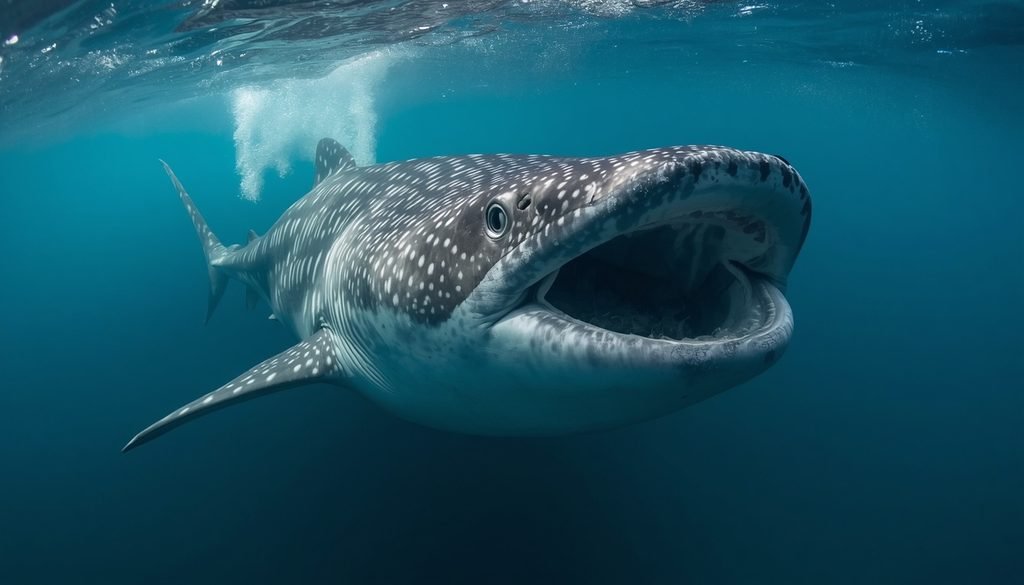
The whale shark is the largest fish in the world, yet it feeds mainly by filtering plankton and other small organisms from the water. Its enormous mouth contains many rows of tiny teeth.
These teeth are not the main tools used to collect food. Instead, the whale shark relies on its filtering system to capture suitable prey as water passes through its mouth and gill structures.
The whale shark is a useful reminder that a large tooth count does not necessarily indicate a meat-eating lifestyle. Its teeth are small compared with its body, and filter feeding—not biting—is central to its survival.
12. Great White Shark
Scientific name: Carcharodon carcharias
Approximate tooth count: Up to around 300 teeth present at one time.
The great white shark is a powerful marine predator with triangular, serrated teeth. These teeth are suited to gripping and cutting prey, including fish and marine mammals.
Unlike humans, sharks continually replace teeth throughout their lives. New teeth develop in rows behind the functional teeth and can move forward when older ones are lost.
This replacement system means that a shark can produce many thousands of teeth over its lifetime. However, that lifetime total is not the same as the number present in its mouth at one moment. Great white sharks are famous for their bite, but snails can surpass them in the number of tiny tooth-like structures they carry.
13. Frilled Shark
Scientific name: Chlamydoselachus anguineus
Approximate tooth count: Hundreds of small, three-pronged teeth.
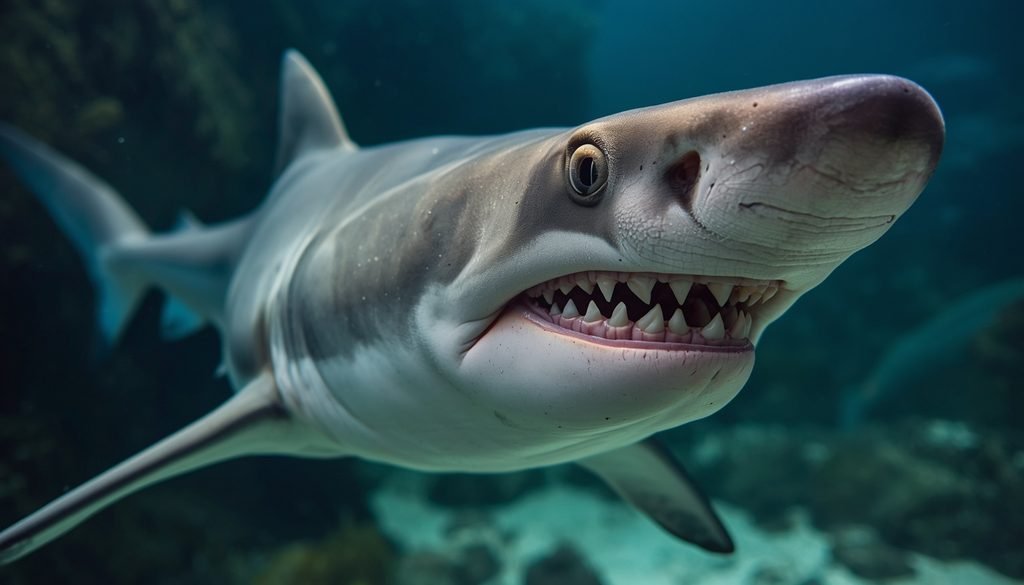
The frilled shark is a deep-water shark with a long, eel-like body and unusual gill structures. Its mouth contains rows of narrow teeth with multiple points.
These teeth help the shark grip slippery prey, including fish and squid. The shape differs from the broad, serrated teeth of a great white shark and reflects a different feeding strategy.
Frilled sharks live in deep ocean environments and are rarely encountered by people. Their unusual teeth are an example of how shark species have developed different dental designs for capturing prey in their own habitats.
14. Saltwater Crocodile
Scientific name: Crocodylus porosus
Approximate tooth count: Around 64–68.
The saltwater crocodile is the largest living reptile and has a long, powerful jaw lined with conical teeth. Its teeth are designed to grip prey firmly rather than chew it into small pieces.
When a crocodile loses a tooth, a replacement can develop beneath it. Throughout its life, it may replace individual teeth repeatedly, potentially producing many sets.
Although its tooth count is much lower than that of a snail or dolphin, the saltwater crocodile’s jaws deliver tremendous force. It illustrates an important distinction: tooth quantity and bite strength are two different measurements.
15. American Alligator
Scientific name: Alligator mississippiensis
Approximate tooth count: Around 74–80.
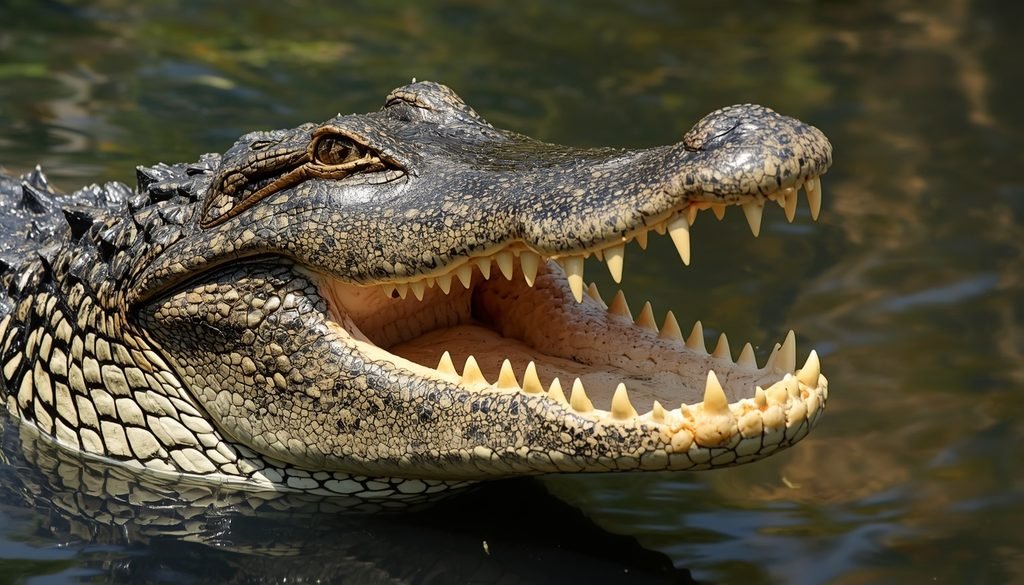
The American alligator lives in freshwater wetlands, lakes, rivers, and marshes across the southeastern United States. Its broad snout and strong jaws are equipped with teeth that help capture fish, turtles, birds, and mammals.
Alligator teeth are conical and suited to gripping prey. As teeth wear out or fall out, replacements can emerge, allowing the animal to maintain its feeding equipment over many years.
The alligator has more teeth than many familiar mammals, but its success as a predator depends on more than numbers. Jaw strength, ambush behavior, and its ability to remain hidden in water are also important.
16. Virginia Opossum
Scientific name: Didelphis virginiana
Approximate tooth count: 50.
The Virginia opossum is a nocturnal mammal native to North America. It has more teeth than most familiar domestic mammals, with a mouth containing 50 teeth.
Its dental arrangement includes sharp teeth for gripping food and flatter teeth for processing different items. Opossums are opportunistic omnivores, eating insects, fruit, eggs, small animals, and other available food.
Having a varied set of teeth helps the opossum make use of a wide range of food sources. Its tooth count is particularly notable among land mammals, although the giant armadillo can have considerably more.
17. Piranha
Scientific name: Pygocentrus nattereri
Approximate tooth count: Around 20–30, depending on species.
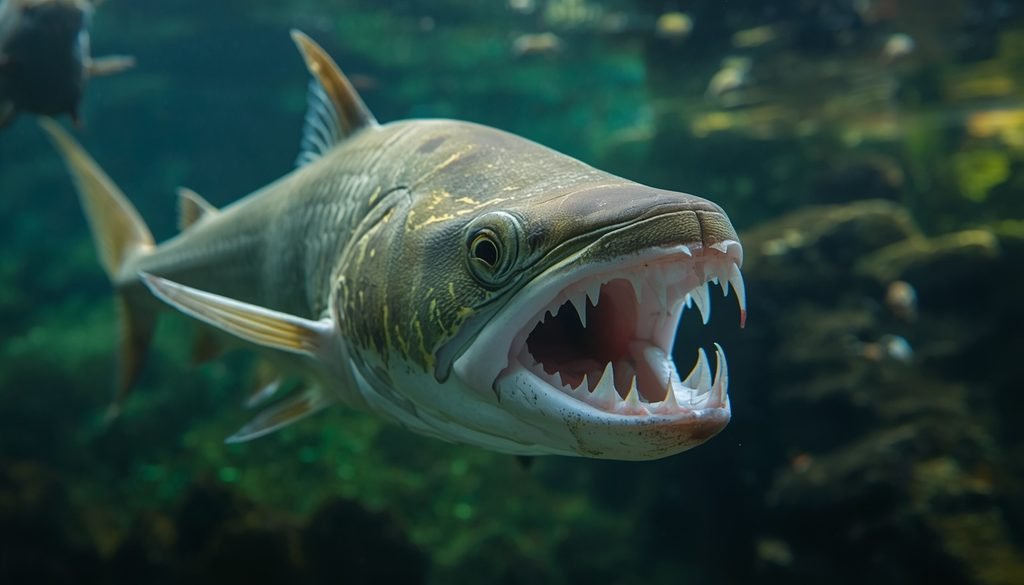
Piranhas are freshwater fish native to South American river systems. They are known for their compact jaws and sharp, triangular teeth that fit closely together.
Their teeth can cut through food efficiently, helping them eat fish, insects, crustaceans, and other available food. Some species also consume plant material or scavenge, so their diets are more varied than popular stories sometimes suggest.
Piranhas do not compete with snails in total tooth count. Their place on this list comes from their distinctive dental design, which shows how a relatively small number of teeth can be effective when their shape and arrangement match the animal’s feeding needs.
Why Do Some Animals Have So Many Teeth?
Animals develop different dental structures according to their diets, habitats, and feeding methods. Snails and slugs use radulae covered in rows of tiny structures to scrape food. Sharks replace lost teeth throughout life, while dolphins use numerous pointed teeth to grip slippery prey.
Some animals need a broad variety of tooth shapes to handle different foods. Others benefit from many similar teeth that perform one job repeatedly. In every case, tooth count is only one part of the story. Tooth shape, strength, placement, and replacement are also important adaptations.
Read More: 16 Sleepy Animals in the World
Frequently Asked Questions
What animal has the most teeth in the world?
Certain snails and other gastropods possess thousands of microscopic radula teeth, with some species having tens of thousands. Exact counts depend on the species and how the structures are counted.
Do snails really have 25,000 teeth?
Some snails are reported to have around 25,000 tooth-like structures, but this is not a fixed number for all snails. Their radula teeth are microscopic and differ from conventional teeth in vertebrates.
Which mammal has the most teeth?
The giant armadillo is notable for having up to about 100 teeth. Spinner dolphins can have as many as 260 teeth, giving them a higher count among mammals overall.
Which fish has the most teeth?
The answer depends on the species and how teeth are counted. Whale sharks have thousands of tiny teeth, while Pacific lingcod possess hundreds of teeth used to grip prey.
Do sharks grow new teeth?
Yes. Sharks continually replace teeth during their lives. Replacement teeth move forward as older teeth are lost, helping sharks maintain functional rows of teeth.
Does having more teeth mean an animal has a stronger bite?
No. Tooth count and bite force are different things. Bite strength depends on factors such as jaw muscles, skull structure, body size, and how force is applied.
Conclusion
The animal with the most teeth depends on what counts as a tooth and whether we measure structures present at one time or teeth produced over a lifetime. Certain snails stand out for their thousands of microscopic radula teeth, while the giant armadillo, spinner dolphin, whale shark, and several sharks and fish show other remarkable dental adaptations.
These animals demonstrate that teeth are not simply tools for biting. They can scrape algae, grip slippery prey, process insects, or support specialized feeding strategies. Understanding how teeth work reveals another fascinating part of animal diversity.
Explore more animal facts to discover how wildlife adapts to different diets, habitats, and survival challenges.

One thought on “What Animal Has the Most Teeth? 17 Toothiest Animals”