
Introduction
When people search for the ugliest animal in the world, they usually expect one strange-looking creature to take the title. The truth is more interesting: there is no scientific test that determines whether an animal is beautiful or ugly. What humans see as unattractive may actually be an important adaptation that helps an animal survive.
Some animals have unusual noses, wrinkled skin, enormous teeth, strange eyes, bald heads, or bodies that look completely different from familiar species. The blobfish is perhaps the most famous example, but it is far from the only unusual-looking creature.
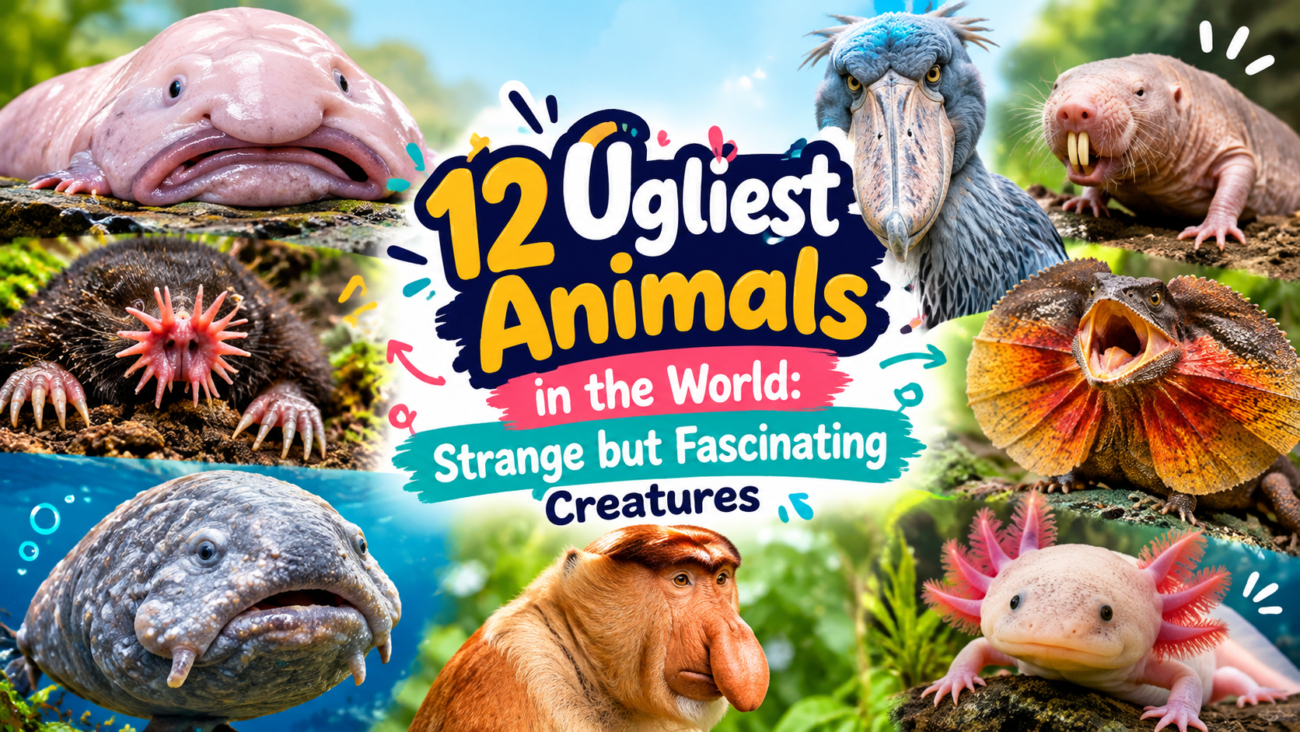
In this guide, we explore 12 animals often described as ugly, weird, or bizarre-looking. Along the way, you will learn where they live, what they eat, and why their unusual physical features can actually be useful.
What Is the Ugliest Animal in the World?
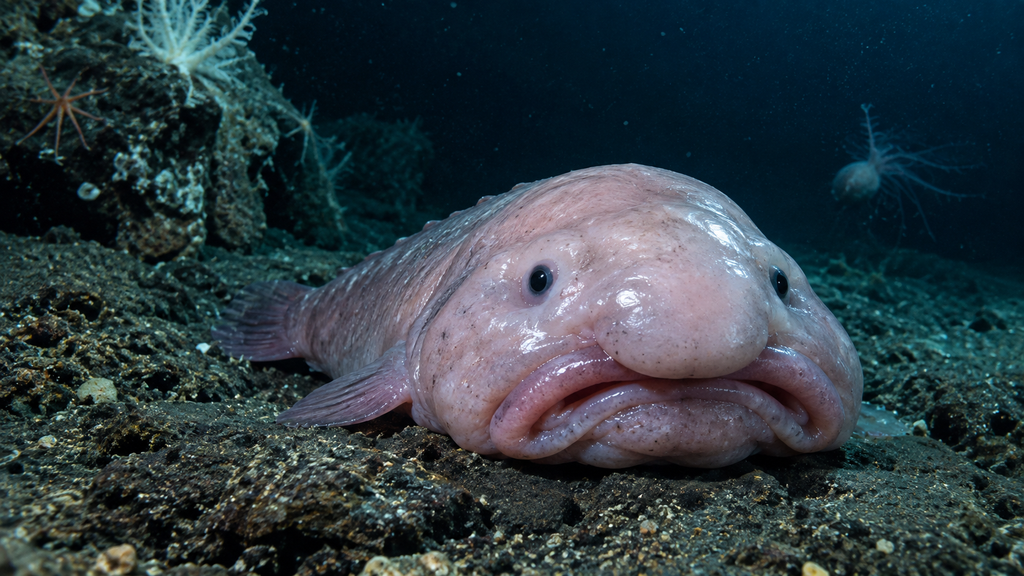
The blobfish is commonly described as the world’s ugliest animal, but “ugliest” is a subjective human label rather than a scientific ranking. The famous blobfish photograph also shows a specimen outside its normal deep-sea environment, where changes in pressure affect its appearance.
12 Ugliest Animals in the World
The animals below are included because people frequently describe them as unusual-looking, strange, bizarre, or unattractive. This is not a scientific ranking. Each species has physical characteristics shaped by its environment, behavior, feeding strategy, or survival needs.
1. Blobfish
Scientific Name: Psychrolutes marcidus
Habitat: Deep marine waters around southern Australia and Tasmania.
Diet: Small marine organisms and food material available near the seafloor.
Why Does It Look Unusual?
The blobfish has become one of the most famous ugly animals in the world because of its loose, gelatinous appearance in photographs taken after being brought to the surface. In its natural environment, however, it looks considerably more like a deep-sea fish than the famous “droopy” image suggests.
Unusual Adaptation: Its low-density, gelatinous body is suited to life under extreme deep-sea pressure. FishBase records P. marcidus from roughly 600–1,200 meters.
Why Humans May Consider It Ugly: Its rounded face, loose tissue, and unusual body shape look very different from familiar fish.
2. Naked Mole Rat
Scientific Name: Heterocephalus glaber
Habitat: Underground tunnel systems in parts of East Africa.
Diet: Mainly roots, tubers, and other underground plant material.
The naked mole rat has almost no visible body hair, wrinkled skin, large front teeth, and tiny eyes. Its appearance is very different from that of ordinary rats and mice.
Unusual Adaptation: Its large incisors are useful for digging through soil while its underground lifestyle protects it from many surface conditions.
Why Humans May Consider It Ugly: The hairless, wrinkled body and prominent teeth give it an unusual appearance.
3. Proboscis Monkey
Scientific Name: Nasalis larvatus
Habitat: Mangrove forests, wetlands, and riverine forests of Borneo.
Diet: Mainly leaves, fruits, and other plant material.
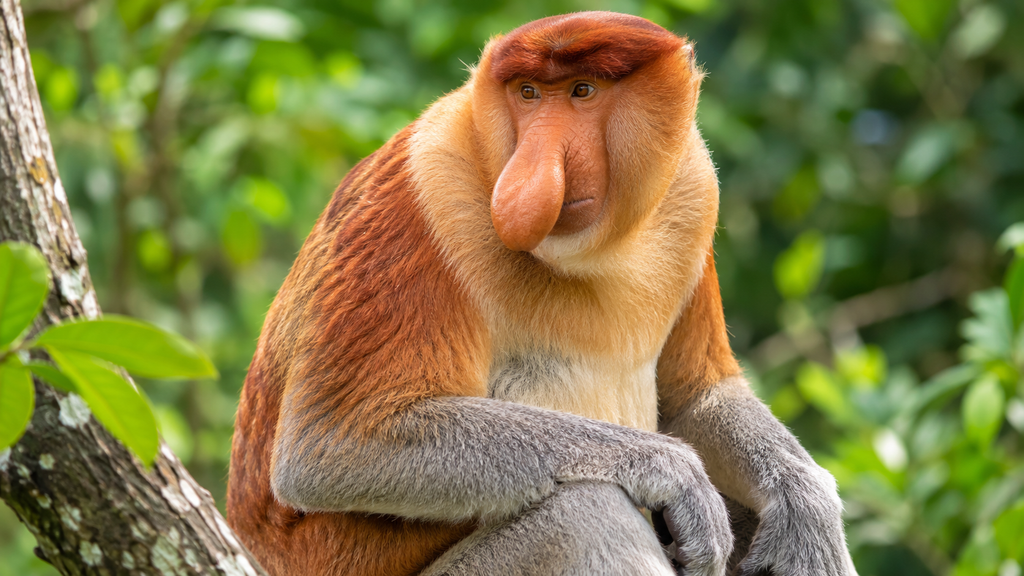
The proboscis monkey is famous for its enormous nose, especially in adult males. Its reddish-brown body, large belly, and unusual facial proportions make it one of the world’s most recognizable strange-looking mammals.
Unusual Adaptation: The large male nose is associated with vocal communication and social signaling.
Why Humans May Consider It Ugly: Its oversized nose and unusual facial structure can look exaggerated compared with other monkeys.
4. Aye-Aye
Scientific Name: Daubentonia madagascariensis
Habitat: Forests of Madagascar.
Diet: Insects, larvae, fruit, seeds, and other food found in trees.
The aye-aye looks almost like a creature from a fantasy story. It has enormous eyes, large ears, long fingers, and continuously growing front teeth.
Unusual Adaptation: Its exceptionally long middle finger helps it locate and extract food from narrow spaces in wood.
Why Humans May Consider It Ugly: Its oversized eyes, ears, fingers, and unusual facial structure create a very distinctive appearance.
5. Star-Nosed Mole
Scientific Name: Condylura cristata
Habitat: Wet soils, marshes, and other moist environments in North America.
Diet: Insects, worms, aquatic invertebrates, and other small prey.
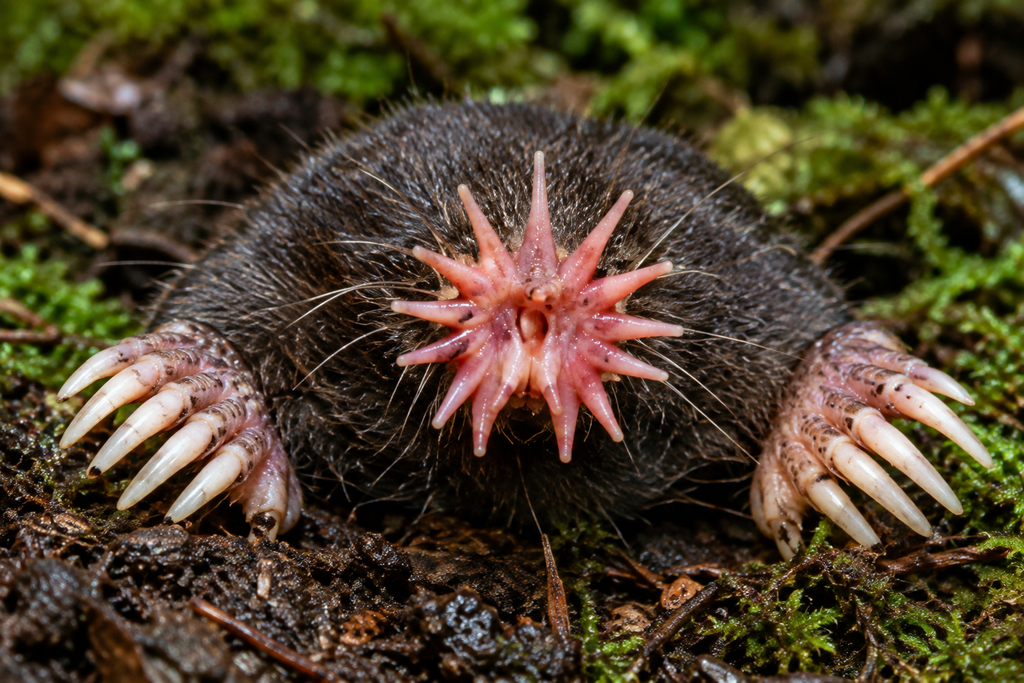
Few animals have a face as unusual as the star-nosed mole. Around its nose are 22 small fleshy structures that form a star-like shape.
Unusual Adaptation: The star-shaped nose contains highly sensitive touch receptors that help the mole locate food underground and underwater.
Why Humans May Consider It Ugly: The strange star-shaped nose looks unlike the faces of most mammals.
6. Marabou Stork
Scientific Name: Leptoptilos crumenifer
Habitat: Open habitats, wetlands, savannas, and areas around human settlements in Africa.
Diet: Carrion, fish, insects, small animals, and other available food.
The marabou stork has a bald head, long legs, a massive bill, and a loose throat pouch. Its overall appearance can seem especially unusual when compared with smaller, more colorful birds.
Unusual Adaptation: Its bald head and scavenging lifestyle are well suited to feeding around carcasses.
Why Humans May Consider It Ugly: Its bare head, long neck, and hanging throat pouch give it a distinctive appearance.
7. California Condor
Scientific Name: Gymnogyps californianus
Habitat: Mountainous and coastal regions of western North America.
Diet: Mainly carrion.
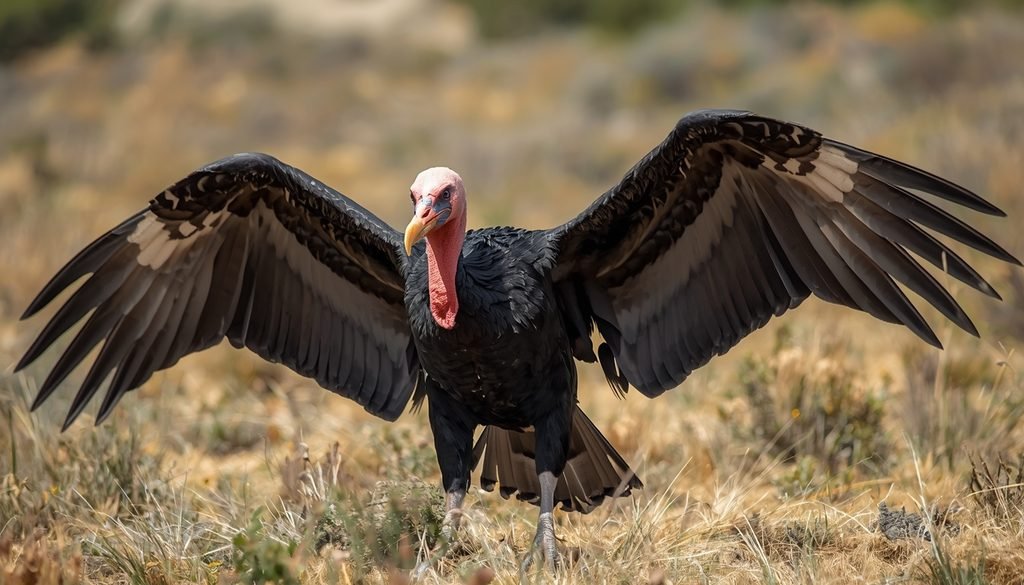
The California condor is an enormous New World vulture with a bald head and powerful bill. Although it is an impressive bird, its bare, wrinkled head can look unusual to people unfamiliar with vultures.
Unusual Adaptation: Its featherless head is practical for a bird that feeds on carcasses because it reduces the amount of feathers exposed while feeding.
Why Humans May Consider It Ugly: Its wrinkled head, bare skin, and large bill create a dramatic facial appearance.
8. Warthog
Scientific Name: Phacochoerus africanus
Habitat: Savannas, grasslands, and open woodland across parts of Africa.
Diet: Primarily grasses, roots, bulbs, and other plant material.
The warthog has a broad face, large tusks, facial bumps, sparse hair, and a body adapted to life in African grasslands. Its appearance is very different from that of domestic pigs.
Unusual Adaptation: Its tusks and facial structures provide defense, while its strong snout helps it search for food.
Why Humans May Consider It Ugly: Large facial bumps, tusks, sparse hair, and a broad snout create its distinctive look.
9. Purple Frog
Scientific Name: Nasikabatrachus sahyadrensis
Habitat: The Western Ghats of India.
Diet: Primarily small underground organisms, especially termites.
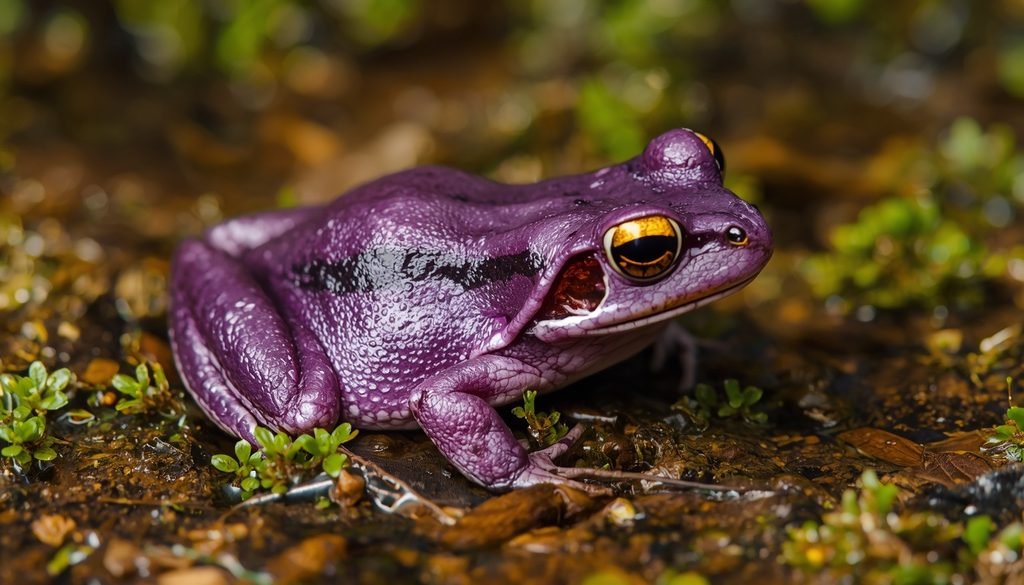
The purple frog is one of the strangest-looking amphibians. It has a rounded body, small head, unusual snout, and dark purple coloration.
Unusual Adaptation: Much of its life is spent underground, with adults appearing above ground for a short period during the breeding season.
Why Humans May Consider It Ugly: Its swollen body, tiny head, and unusual snout look very different from familiar frogs.
10. Goblin Shark
Scientific Name: Mitsukurina owstoni
Habitat: Deep marine environments.
Diet: Fish, crustaceans, and other deep-sea prey.
The goblin shark looks like something from a deep-sea horror movie. It has a long flattened snout, pale pink body, and highly protrusible jaws.
Unusual Adaptation: Its jaws can extend outward rapidly to capture prey.
Why Humans May Consider It Ugly: Its elongated nose and protruding jaws create one of the most unusual faces among sharks.
11. Southern Elephant Seal
Scientific Name: Mirounga leonina
Habitat: Southern Ocean and sub-Antarctic islands.
Diet: Fish, squid, and other marine prey.
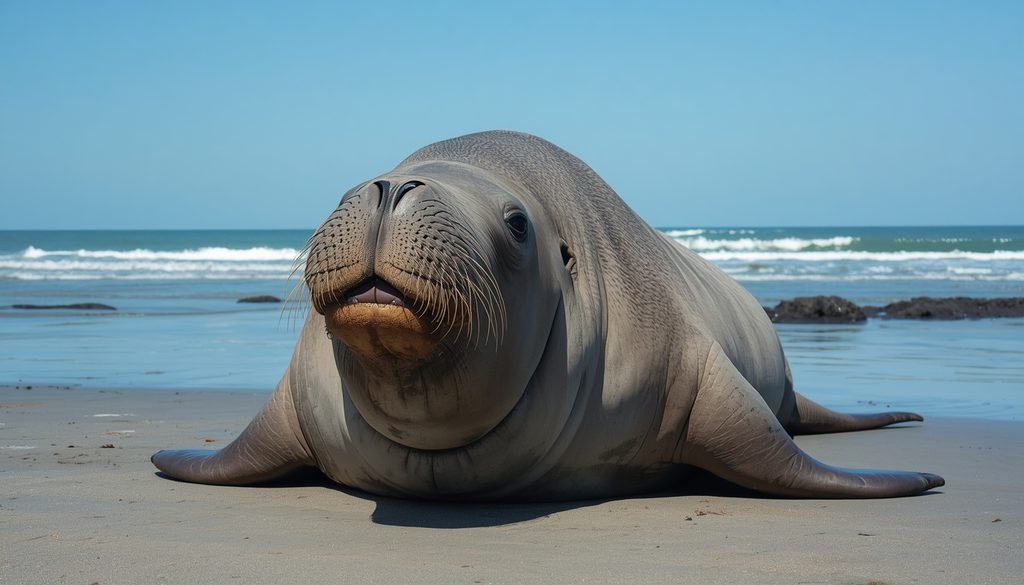
Adult male southern elephant seals have enormous bodies and a large inflatable nose called a proboscis. Their size and facial structure make them one of the more unusual-looking marine mammals.
Unusual Adaptation: Adult males use their large noses during vocal displays, particularly during breeding interactions.
Why Humans May Consider It Ugly: The oversized nose, massive body, and wrinkled skin create an unusual appearance.
12. Chinese Giant Salamander
Scientific Name: Andrias davidianus
Habitat: Freshwater streams and other aquatic environments in China.
Diet: Aquatic animals and other prey that it can capture.
The Chinese giant salamander has a broad head, small eyes, wrinkled skin, and a large flattened body. Its appearance can make it seem prehistoric.
Unusual Adaptation: Its flattened body and aquatic lifestyle are suited to life in fast-moving freshwater environments.
Why Humans May Consider It Ugly: Its wrinkled skin, tiny eyes, wide mouth, and large head look unusual compared with familiar amphibians.
Quick Comparison Table
| Animal | Scientific Name | Main Unusual Feature | Habitat | Diet |
| Blobfish | Psychrolutes marcidus | Gelatinous body | Deep ocean | Marine food |
| Naked Mole Rat | Heterocephalus glaber | Hairless body | Underground | Plant material |
| Proboscis Monkey | Nasalis larvatus | Large nose | Borneo wetlands | Plants |
| Aye-Aye | Daubentonia madagascariensis | Long finger | Madagascar forests | Omnivorous |
| Star-Nosed Mole | Condylura cristata | Star-shaped nose | Wetlands | Invertebrates |
| Marabou Stork | Leptoptilos crumenifer | Bald head | African habitats | Scavenged food |
| California Condor | Gymnogyps californianus | Bare head | Western North America | Carrion |
| Warthog | Phacochoerus africanus | Tusks and facial bumps | African savannas | Plants |
| Purple Frog | Nasikabatrachus sahyadrensis | Rounded purple body | India | Small prey |
| Goblin Shark | Mitsukurina owstoni | Protruding jaws | Deep ocean | Marine prey |
| Southern Elephant Seal | Mirounga leonina | Large male proboscis | Southern Ocean | Marine prey |
| Chinese Giant Salamander | Andrias davidianus | Wrinkled body | Freshwater | Aquatic prey |
Why Do Some Animals Look So Strange?
Animal appearances are shaped by evolution rather than human ideas of beauty. A strange nose can improve sensory abilities, a large bill can help capture food, and a bald head can be useful for scavenging.
Deep-sea animals may have bodies adapted to high pressure, while underground animals can evolve powerful teeth, sensitive noses, or unusual body shapes. In other cases, unusual features help animals communicate, attract mates, defend themselves, or find food.
What looks bizarre to humans may therefore be a highly effective biological adaptation.
Is the Blobfish Really the Ugliest Animal?
The blobfish is commonly associated with the title “world’s ugliest animal,” but the label comes from human perception and popular culture rather than scientific measurement.
Its famous appearance is also misleading. The well-known surface photograph shows what happens when a deep-sea fish is removed from its high-pressure environment. National Geographic reports that blobfish living underwater have a more recognizable fish-like shape, while the surface specimen’s tissues were affected during capture and decompression.
The species Psychrolutes marcidus naturally occurs at substantial depth, with FishBase listing a range of about 600–1,200 meters.
Are These Animals Really Ugly?
Not in any scientific sense.
There is no universal biological definition of an ugly animal. Human preferences are influenced by familiarity, facial proportions, skin texture, body shape, and cultural ideas about appearance.
For the animals in this article, unusual features often have a purpose. The star-nosed mole’s strange nose helps it sense prey. The goblin shark’s jaws help it capture food. The warthog’s tusks provide defense, while the blobfish’s body is adapted to deep water.
Their appearances tell a story about survival.
Ugliest Animal vs Weirdest Animal
The terms ugliest animal and weirdest animal are often used interchangeably, but they can describe different ideas.
An ugly animal is usually judged based on human visual preferences. A weird animal may simply have unusual anatomy, behavior, habitat, or adaptations.
For example, a goblin shark may be called weird because of its protruding jaws, while a blobfish is commonly called ugly because of its famous surface appearance. Neither description represents a scientific classification.
Read More: Animals Like Muskrats
Frequently Asked Questions
What is the ugliest animal in the world?
The blobfish is commonly called the ugliest animal in the world, especially because of its famous surface photograph. However, “ugliest” is a subjective label rather than a scientific classification. The animal’s appearance also changes dramatically when it is removed from its natural deep-sea environment.
Is the blobfish really ugly?
The blobfish’s famous appearance is partly misleading. Underwater, it has a more recognizable fish-like body. The dramatic drooping appearance associated with viral photographs occurs after the animal is brought from deep water to the surface, where the surrounding pressure changes significantly.
Why does the blobfish look so strange?
Blobfish live in deep water where pressure is extremely high. Their soft, low-density bodies are adapted to that environment. When a specimen is brought rapidly toward the surface, the pressure change affects its tissues and body shape, producing the familiar gelatinous appearance.
What animal has the strangest face?
Several animals could qualify depending on personal opinion. The star-nosed mole, proboscis monkey, aye-aye, goblin shark, and blobfish all have highly unusual facial features. Each feature serves a biological purpose, from sensing prey to feeding or communicating.
Why do some animals have unusual faces?
Unusual faces often develop because of natural selection and environmental pressures. Large noses, specialized teeth, sensitive organs, extended jaws, or unusual eyes can help animals find food, communicate, defend themselves, or survive in specific habitats.
Are ugly animals important to ecosystems?
Yes. An animal’s appearance does not determine its ecological importance. Scavengers can recycle nutrients, predators can influence prey populations, and unusual species can occupy highly specialized ecological niches. Protecting biodiversity means valuing species for their ecological roles rather than judging them by appearance.
Which animal has the strangest nose?
The star-nosed mole has one of the most unusual noses in the animal kingdom. Its nose contains 22 fleshy appendages that provide an extremely sensitive sensory surface. The proboscis monkey and elephant seal also have distinctive enlarged noses used for communication and other biological functions.
Why should we protect unusual-looking animals?
Unusual-looking animals are part of Earth’s biodiversity and often have specialized ecological roles. Their unusual features can also provide scientists with valuable insights into evolution and adaptation. Protecting habitats helps preserve these species and the ecosystems they belong to.
Final Thoughts
The idea of the ugliest animal is really a matter of human perception. The blobfish may be the most famous example, but the natural world contains many other unusual-looking animals, from the star-nosed mole and aye-aye to the goblin shark and proboscis monkey.
Their strange appearances are not failures of evolution. In many cases, those features help them survive in challenging environments, locate food, communicate, defend themselves, or reproduce.
Instead of judging these animals only by appearance, their unusual bodies can be viewed as fascinating examples of adaptation. Every strange nose, wrinkle, tusk, jaw, or body shape tells part of an evolutionary story.

One thought on “12 Ugliest Animals in the World: Strange but Fascinating Creatures”