
Introduction
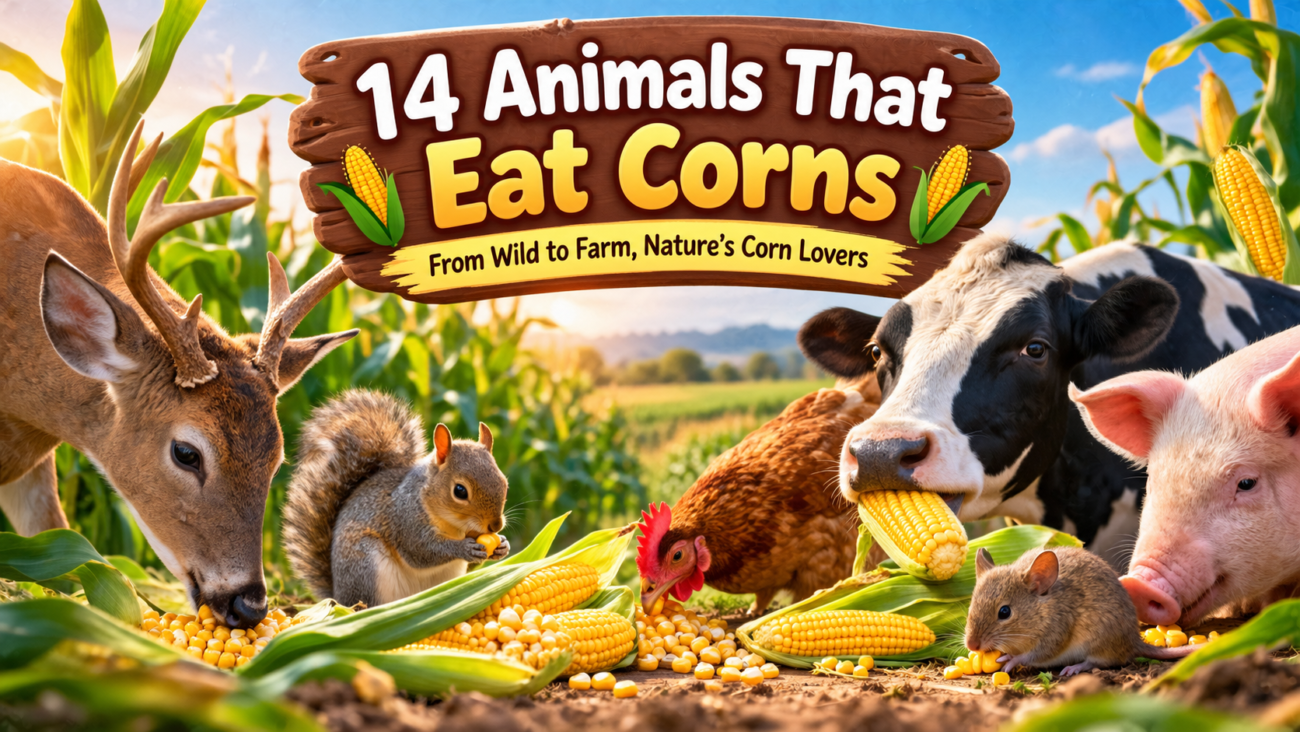
Corn, also called maize, is an important food crop for people, livestock, and many wild animals. Its kernels contain concentrated carbohydrates and energy, while corn plants, ears, and crop leftovers can provide food for wildlife in agricultural areas. Deer, squirrels, birds, rodents, and several farm animals may encounter corn as part of their normal environment or as supplemental feed.
The animals that eat corns are not all alike. Some actively search for corn kernels in fields, while others receive corn grain or corn-based feed from farmers. For certain animals, such as rabbits and guinea pigs, corn should not replace their normal high-fiber diet.
In this guide, we explore 14 animals that eat corn, how they consume it, and how corn fits into their natural or managed diets.
What Animals Eat Corn?
Many animals eat corn when it is available. Common examples include deer, squirrels, chipmunks, pigs, cows, chickens, horses, goats, crows, ravens, rabbits, deer mice, black rats, and guinea pigs.
Wild animals may encounter corn in growing fields, after harvest, around grain storage areas, or in food left accessible to them. Farm animals can receive corn as part of formulated feed, while pets may encounter small amounts of corn as an occasional food.
Corn is therefore both a wildlife food source and an agricultural feed ingredient. However, the amount and form that is appropriate depends heavily on the animal’s digestive system and overall nutritional requirements.
Quick Comparison: Animals That Eat Corn
| Animal | Scientific Name | Class | Diet | How It Eats Corn |
| Deer | Odocoileus virginianus | Mammalia | Herbivore | Kernels, ears, plants |
| Squirrel | Sciurus carolinensis | Mammalia | Omnivore | Kernels and ears |
| Chipmunk | Tamias striatus | Mammalia | Omnivore | Kernels and stored food |
| Pig | Sus scrofa domesticus | Mammalia | Omnivore | Grain and feed |
| Cow | Bos taurus | Mammalia | Herbivore | Grain, silage, stover |
| Chicken | Gallus gallus domesticus | Aves | Omnivore | Cracked or whole kernels |
| Horse | Equus caballus | Mammalia | Herbivore | Grain/feed |
| Goat | Capra hircus | Mammalia | Herbivore | Grain as supplemental feed |
| American Crow | Corvus brachyrhynchos | Aves | Omnivore | Kernels and crop leftovers |
| Common Raven | Corvus corax | Aves | Omnivore | Grain and crop foods |
| Rabbit | Oryctolagus cuniculus | Mammalia | Herbivore | May nibble fresh corn |
| Deer Mouse | Peromyscus maniculatus | Mammalia | Omnivore | Kernels and seeds |
| Black Rat | Rattus rattus | Mammalia | Omnivore | Grain and kernels |
| Guinea Pig | Cavia porcellus | Mammalia | Herbivore | Small amounts of plant foods |
1. Deer
Scientific Name: Odocoileus virginianus
Class: Mammalia
Diet: Herbivore
Habitat: Forests, grasslands, farms, and woodland edges
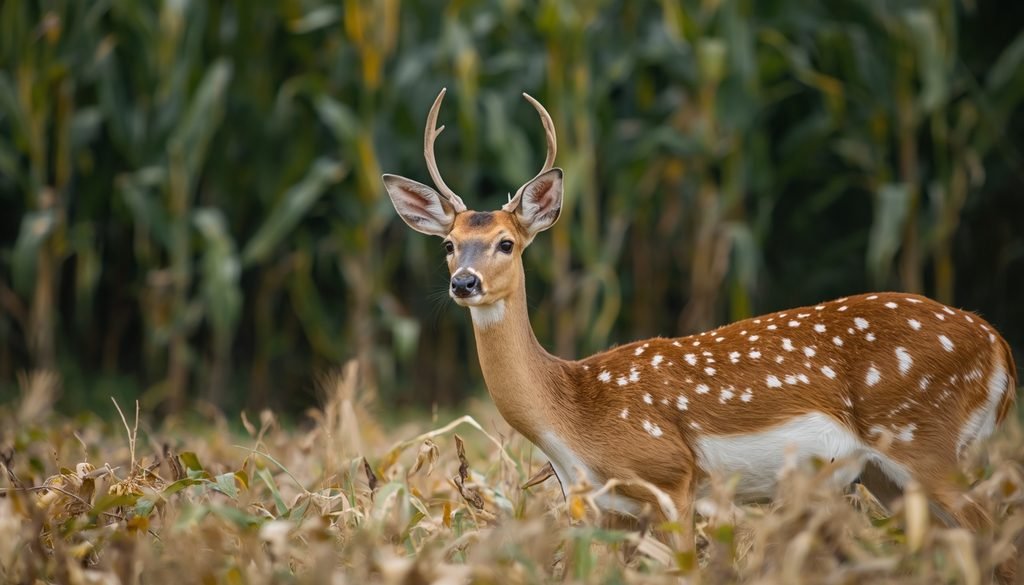
Deer are among the wild animals commonly associated with cornfields. White-tailed deer eat a wide variety of plant foods, and corn can become an attractive food source when it is available in agricultural landscapes. Deer feeding can also cause noticeable crop losses.
Why Do They Eat Corn?
Corn provides concentrated energy compared with many natural leafy foods. However, large amounts of high-carbohydrate, low-fiber foods can cause digestive problems in deer, so corn should not be viewed as an ideal unlimited food.
2. Squirrel
Scientific Name: Sciurus carolinensis
Class: Mammalia
Diet: Omnivore
Habitat: Forests, parks, gardens, and urban areas
Squirrels are well-known seed and nut foragers, and corn kernels can become another convenient food source. They may nibble kernels directly from an ear or collect loose grains.
Corn and Their Natural Diet
Corn is not their only food. Squirrels also consume nuts, seeds, fruits, fungi, and other available foods. Their flexible diet helps them adapt to changing food supplies.
3. Chipmunk
Scientific Name: Tamias striatus
Class: Mammalia
Diet: Omnivore
Habitat: Woodlands, gardens, rocky areas, and forest edges
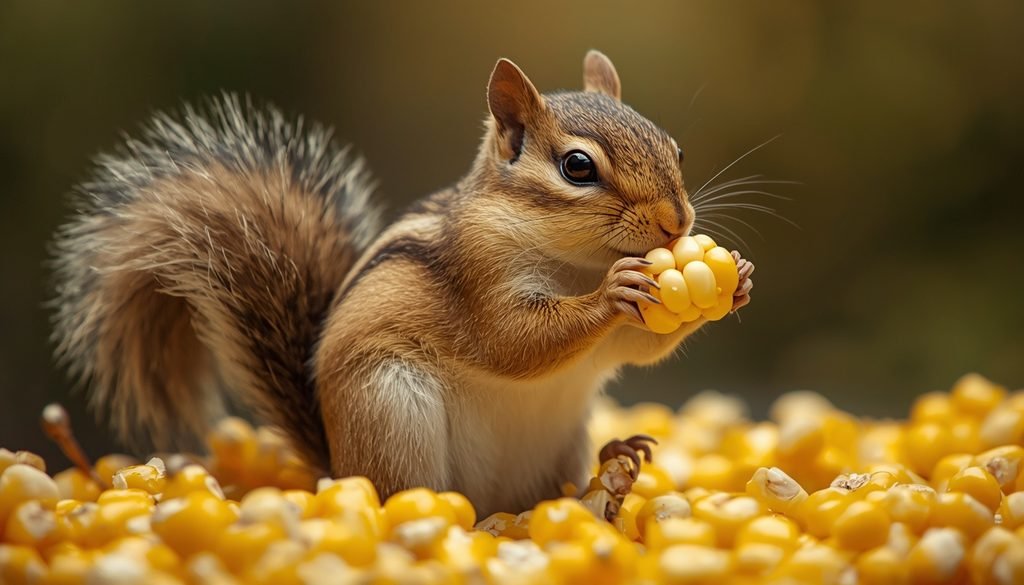
Chipmunks can eat corn kernels and may carry food away using their expandable cheek pouches. They are active foragers that collect different types of seeds and plant foods.
What Type of Corn Do They Eat?
Loose kernels, fresh corn, and other grain-like foods can be attractive when available. Corn should simply be considered one possible food among many rather than their main natural diet. Rodent nutrition references also list limited corn among foods that can be included for some squirrel and chipmunk species.
4. Pig
Scientific Name: Sus scrofa domesticus
Class: Mammalia
Diet: Omnivore
Habitat: Farms, barns, pastures, and managed agricultural environments
Pigs readily consume grains, and corn is widely used as an energy source in swine diets. Modern pig diets are normally formulated to provide the right balance of energy, protein, amino acids, minerals, and other nutrients rather than relying on corn alone.
Corn and Their Diet
Corn may be provided as grain or as part of a formulated feed. Its nutritional contribution makes it useful, but the complete diet must still meet the animal’s nutritional requirements.
5. Cow
Scientific Name: Bos taurus
Class: Mammalia
Diet: Herbivore
Habitat: Pastures, farms, grasslands, and agricultural systems
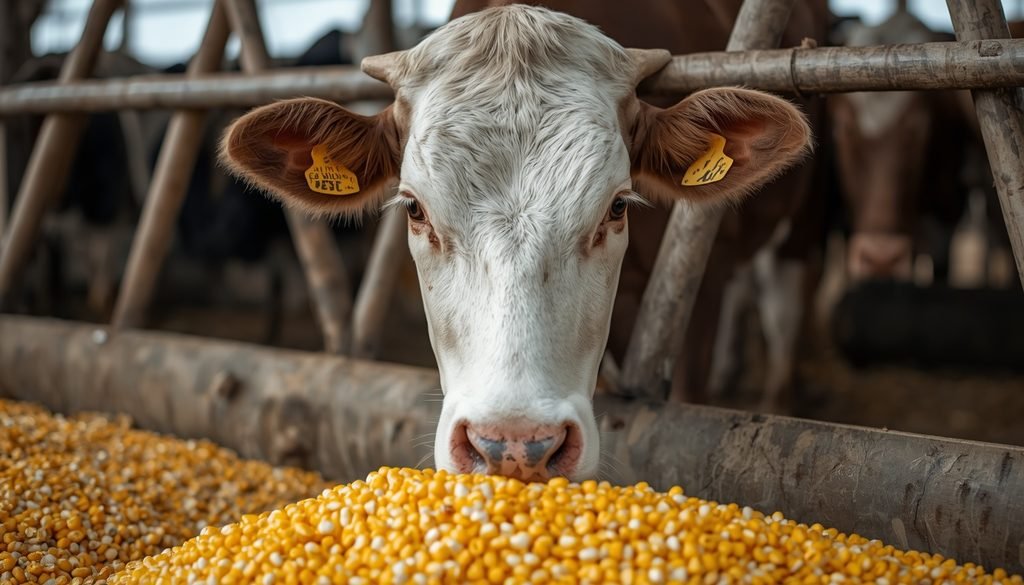
Cattle are important examples of farm animals that eat corn. Corn may be provided as grain, silage, or through other feed ingredients. Corn silage is widely used as livestock forage, although its nutritional role depends on how the complete ration is formulated.
Corn as Animal Feed
Cows still need appropriate forage and a balanced ration. Corn is an energy-rich feed ingredient, not a universal replacement for grass or hay.
6. Chicken
Scientific Name: Gallus gallus domesticus
Class: Aves
Diet: Omnivore
Habitat: Farms, backyards, grasslands, and domestic enclosures
Chickens can eat corn kernels and commonly encounter corn as part of poultry feed. They also naturally forage for seeds, insects, vegetation, and other small food items.
What Type of Corn Do They Eat?
Whole, cracked, or processed corn can appear in poultry diets. However, corn alone does not provide every nutrient chickens require, so balanced feed is important.
7. Horse
Scientific Name: Equus caballus
Class: Mammalia
Diet: Herbivore
Habitat: Grasslands, farms, pastures, and stables
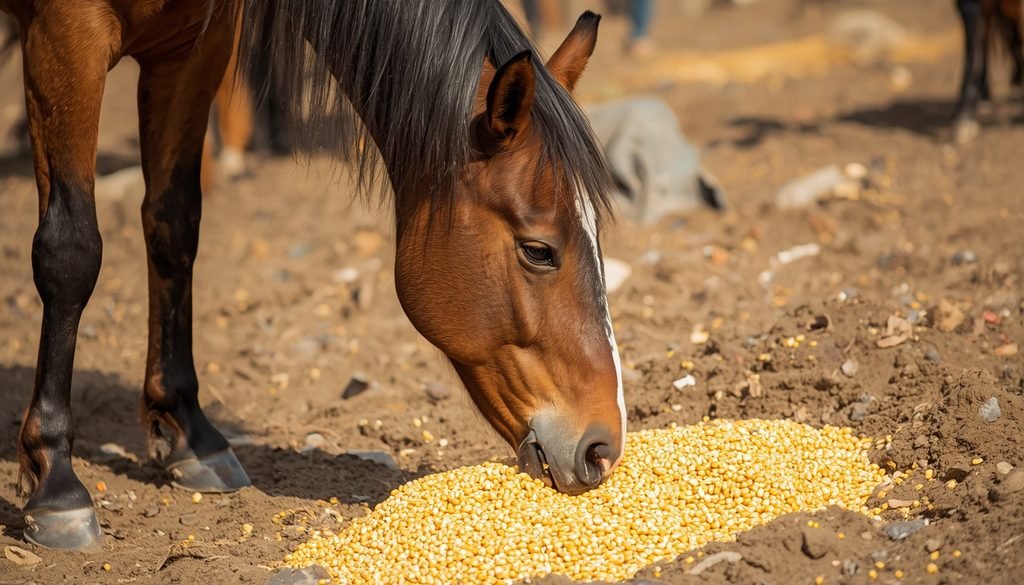
Horses can eat corn as a concentrated feed ingredient, but forage remains fundamental to their diet. Hay and pasture provide the fiber horses need for normal digestive function.
Corn and Their Natural Diet
Corn is different from the grasses and forage horses naturally consume while grazing. When used as feed, it should complement—not replace—the animal’s appropriate forage-based diet.
8. Goat
Scientific Name: Capra hircus
Class: Mammalia
Diet: Herbivore
Habitat: Farms, hills, grasslands, and scrublands
Goats can consume corn, particularly when it is offered as a concentrate or mixed feed. Corn is recognized as a carbohydrate-rich feed ingredient for goats.
Corn and Their Natural Diet
Goats naturally spend much of their feeding time browsing and selecting plants. Corn should therefore complement suitable forage rather than replace it. The correct amount depends on the goat’s age, production needs, and overall ration.
9. American Crow
Scientific Name: Corvus brachyrhynchos
Class: Aves
Diet: Omnivore
Habitat: Farmland, woodland edges, towns, fields, and cities
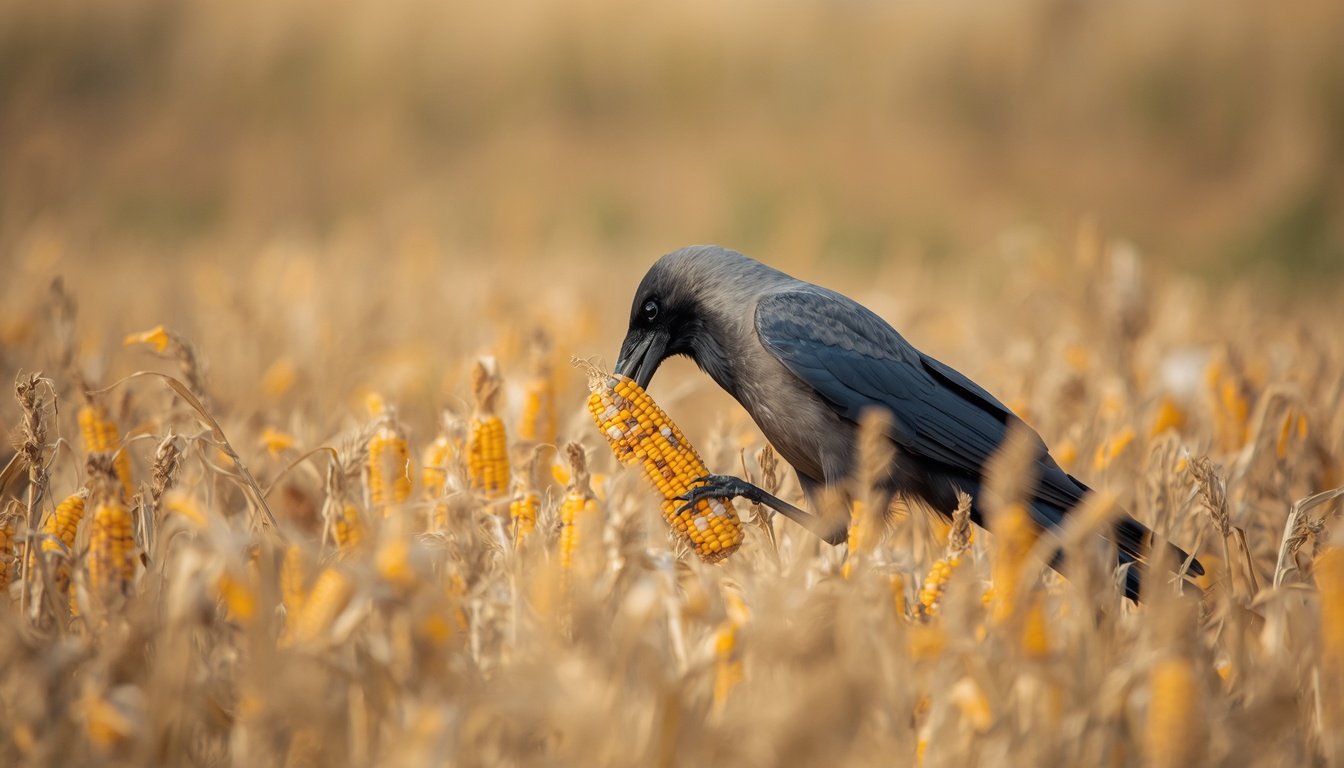
American crows are adaptable foragers that can exploit many different food sources. Corn kernels and crop leftovers may be available to them in agricultural environments.
Why Do They Eat Corn?
Easy access is a major factor. During and after harvest, birds may find exposed grain in fields, making agricultural areas useful feeding sites.
10. Common Raven
Scientific Name: Corvus corax
Class: Aves
Diet: Omnivore
Habitat: Mountains, forests, grasslands, farmland, and open country
Common ravens have flexible diets and can take advantage of grains and other agricultural foods when available. Their adaptability allows them to live in a wide variety of environments.
Corn and Their Feeding Behavior
Ravens may feed on exposed kernels or crop leftovers rather than depending on corn as a specialized food. Their broad diet also includes carrion, insects, fruits, and other available foods.
11. Rabbit
Scientific Name: Oryctolagus cuniculus
Class: Mammalia
Diet: Herbivore
Habitat: Grasslands, fields, gardens, and woodland edges
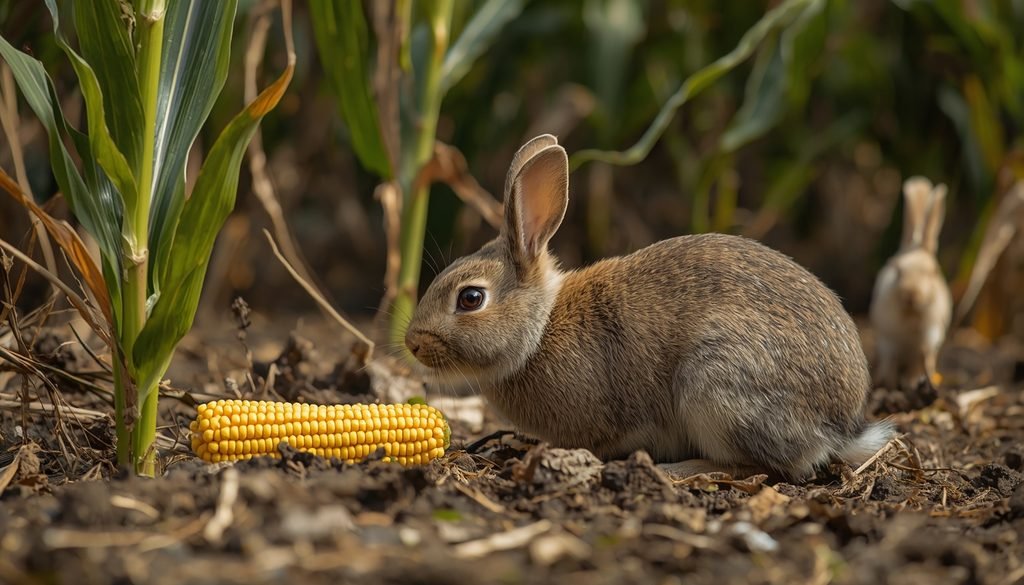
Rabbits are herbivores that rely heavily on high-fiber plant foods. They may nibble fresh corn or corn plants when they encounter them, but corn should not replace their normal fiber-rich diet.
Is Corn Good for Rabbits?
For pet rabbits, hay should form the foundation of the diet. High-starch foods should be limited, and owners should be cautious about offering corn as a regular food.
12. Deer Mouse
Scientific Name: Peromyscus maniculatus
Class: Mammalia
Diet: Omnivore
Habitat: Grasslands, forests, farms, fields, and rural areas
Deer mice eat seeds, grains, fruits, insects, and other foods. Corn kernels can become an attractive food source in agricultural landscapes, particularly where grain is exposed or stored.
Corn and Their Natural Diet
Their flexible feeding behavior helps them take advantage of seasonal food availability. This can sometimes bring them into conflict with farmers because rodents may consume stored grain or crop material.
13. Black Rat
Scientific Name: Rattus rattus
Class: Mammalia
Diet: Omnivore
Habitat: Farms, buildings, storage areas, forests, and urban environments
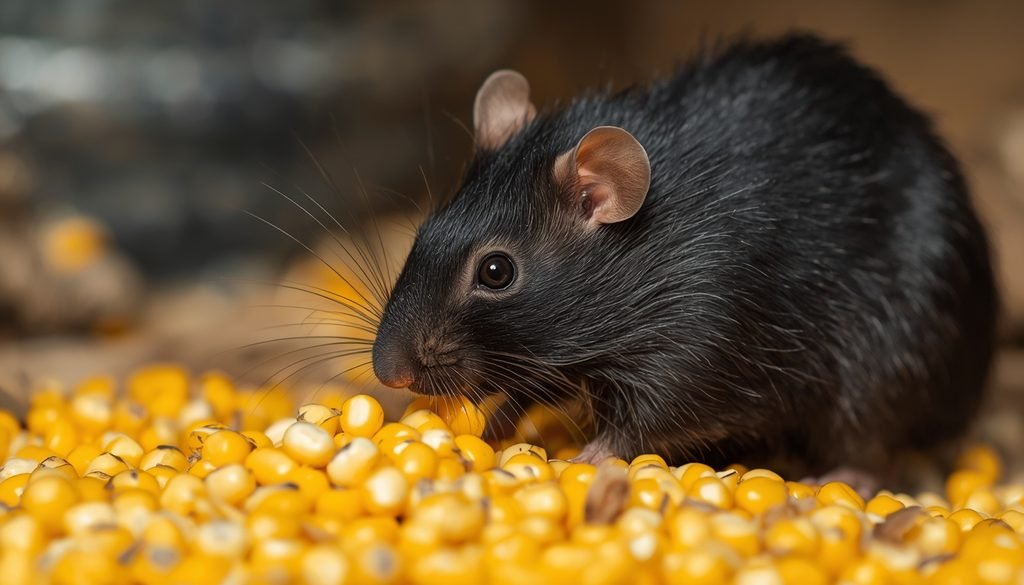
Black rats are opportunistic feeders and can consume grains such as corn. Their ability to live close to human food supplies can make stored grain and agricultural areas attractive.
What Type of Corn Do They Eat?
They may consume kernels, grain products, or exposed corn around farms and storage facilities. Their feeding can become an agricultural problem when rodents contaminate or damage stored food.
14. Guinea Pig
Scientific Name: Cavia porcellus
Class: Mammalia
Diet: Herbivore
Habitat: Domestic environments and managed enclosures
Guinea pigs can encounter fresh corn as a plant food, but corn should not be treated as the foundation of their diet. Guinea pigs need plenty of grass hay, appropriate pellets, fresh vegetables, and a reliable source of vitamin C.
Corn and Guinea Pig Nutrition
The key point is balance. Corn may be offered in limited circumstances, but high-fiber hay is much more important for digestive health and normal tooth wear.
Why Do Animals Eat Corn?
Corn attracts animals for several reasons. The kernels provide concentrated carbohydrates and energy, while the crop itself can be easy to access when large fields are available. Cornfields can also provide food and, depending on the crop stage, cover for wildlife.
For farm animals, corn has another important role: it can be incorporated into carefully formulated feeds. Swine diets, for example, commonly use corn as an energy source, while cattle may receive corn grain, silage, or crop residues depending on the production system.
Availability is especially important for wild animals. Deer, birds, rodents, and other wildlife may feed on corn because it is accessible rather than because it is their preferred natural food.
Can Animals Eat Corn on the Cob?
Some animals can eat corn directly from the cob, while others mainly consume loose kernels or processed feed. Deer, squirrels, and some farm animals may feed on whole ears or kernels. Birds and rodents often remove individual kernels.
The form of corn matters, especially for domestic animals. A food that is acceptable for one species may not be appropriate as a regular food for another. Pet rabbits and guinea pigs, for example, have specialized high-fiber dietary needs.
Is Corn Good for Animals?
Corn can be a useful source of energy, but whether it is “good” depends on the species, quantity, and form.
For livestock, corn can be part of a carefully balanced ration. For wildlife, naturally occurring corn may provide an energy-rich food source, but it does not replace the diversity of a natural diet. For pets such as rabbits and guinea pigs, high-fiber foods are much more important than making corn a staple.
The biggest mistake is assuming that because an animal will eat corn, corn must be nutritionally complete for that animal.
Wild Animals vs. Farm Animals That Eat Corn
| Wild Animals | Farm or Domestic Animals |
| Deer | Cows |
| Squirrels | Pigs |
| Chipmunks | Chickens |
| American crows | Horses |
| Common ravens | Goats |
| Deer mice | Guinea pigs |
Wild animals usually encounter corn through fields, crop leftovers, gardens, feeders, or grain-storage areas. Farm animals, in contrast, may receive corn intentionally as part of a formulated diet.
This difference is important because farmers can control the amount and nutritional balance of feed given to livestock, while wild animals make their own feeding choices based on availability.
How Corn-Eating Animals Affect Agriculture
Animals that eat corn can have both ecological and agricultural effects. Deer, rabbits, birds, and rodents may feed on corn crops at different stages, sometimes reducing yields. Penn State Extension notes that deer, rabbits, birds, and other vertebrates can consume corn crops during growth.
However, not every corn-eating animal should automatically be considered a pest. Wildlife is part of the agricultural ecosystem, and its feeding behavior reflects the availability of food and habitat.
Farmers may therefore need to distinguish between normal wildlife activity and serious crop or storage losses.
Read More: 12 Mammals That Cannot Jump
FAQs
What animals eat corn?
Many animals eat corn, including deer, squirrels, chipmunks, pigs, cows, chickens, horses, goats, American crows, common ravens, rabbits, deer mice, black rats, and guinea pigs. Their reasons for eating corn differ, ranging from natural foraging to its use as livestock or supplemental feed.
What wild animals eat corn?
Wild animals such as deer, squirrels, chipmunks, crows, ravens, and deer mice may eat corn when it is available. Cornfields, harvested fields, gardens, and grain-storage areas can all provide opportunities for wildlife to find kernels or other corn material.
Do deer eat corn?
Yes. Deer can eat corn and are commonly associated with feeding in cornfields. However, corn should not be considered their only food. Deer naturally consume a broad range of plant foods, and large amounts of high-carbohydrate, low-fiber foods can cause digestive problems.
Do squirrels eat corn?
Yes. Squirrels can eat corn kernels and may forage on corn when it is available. They also consume nuts, seeds, fruits, and other foods. Their flexible feeding habits allow them to take advantage of seasonal food sources.
Do birds eat corn?
Yes. Several birds can eat corn kernels or exposed grain. Crows and ravens are examples of adaptable birds that may use agricultural food sources. Other bird species can also damage corn crops while feeding on kernels or ears.
What farm animals eat corn?
Farm animals commonly fed corn or corn-based feed include pigs, cattle, chickens, horses, and goats. Corn can provide energy, but feeding practices differ by species. Livestock diets should be balanced around the animal’s nutritional needs rather than relying on corn alone.
Can animals eat corn on the cob?
Some animals can eat corn directly from the cob, while others mainly consume kernels. Deer, squirrels, pigs, and some livestock may consume whole ears or parts of ears. For pets, however, the safest food choices depend on the species and its normal nutritional requirements.
Why do animals eat corn?
Animals may eat corn because it is accessible, energy-rich, and easy to consume. Wild animals may find it in fields or after harvest, while farm animals can receive it intentionally as feed. Corn is therefore an important food source in both agricultural and wildlife settings.
Final Thoughts
The list of animals that eat corn includes a surprisingly wide range of wildlife, livestock, birds, rodents, and domestic animals. Deer, squirrels, chipmunks, crows, and mice may find corn in agricultural environments, while pigs, cows, chickens, horses, and goats may receive corn as part of managed feeding programs.
However, eating corn does not mean that corn should make up an animal’s entire diet. Every species has different nutritional needs. Corn can provide useful energy, but a healthy diet depends on the animal, its digestive system, its life stage, and the rest of its food.
Understanding how animals interact with corn also helps us understand the relationship between wildlife, farming, livestock, and agricultural ecosystems.

One thought on “Animals That Eat Corns: 14 Animals That Eat Corn”