
Introduction
A bushy tail can make an animal instantly recognizable. Some tails are long and fluffy, while others are thick, ringed, or covered in dense fur. These features appear in many kinds of mammals, from forest climbers and desert dwellers to small rodents and large predators.
But a bushy tail is more than an eye-catching feature. Depending on the species, it may help an animal balance while climbing, stay warm in cold weather, signal to other animals, or support movement through its habitat. Some animals also have tails that look bushy but serve a specialized purpose, such as gripping branches.
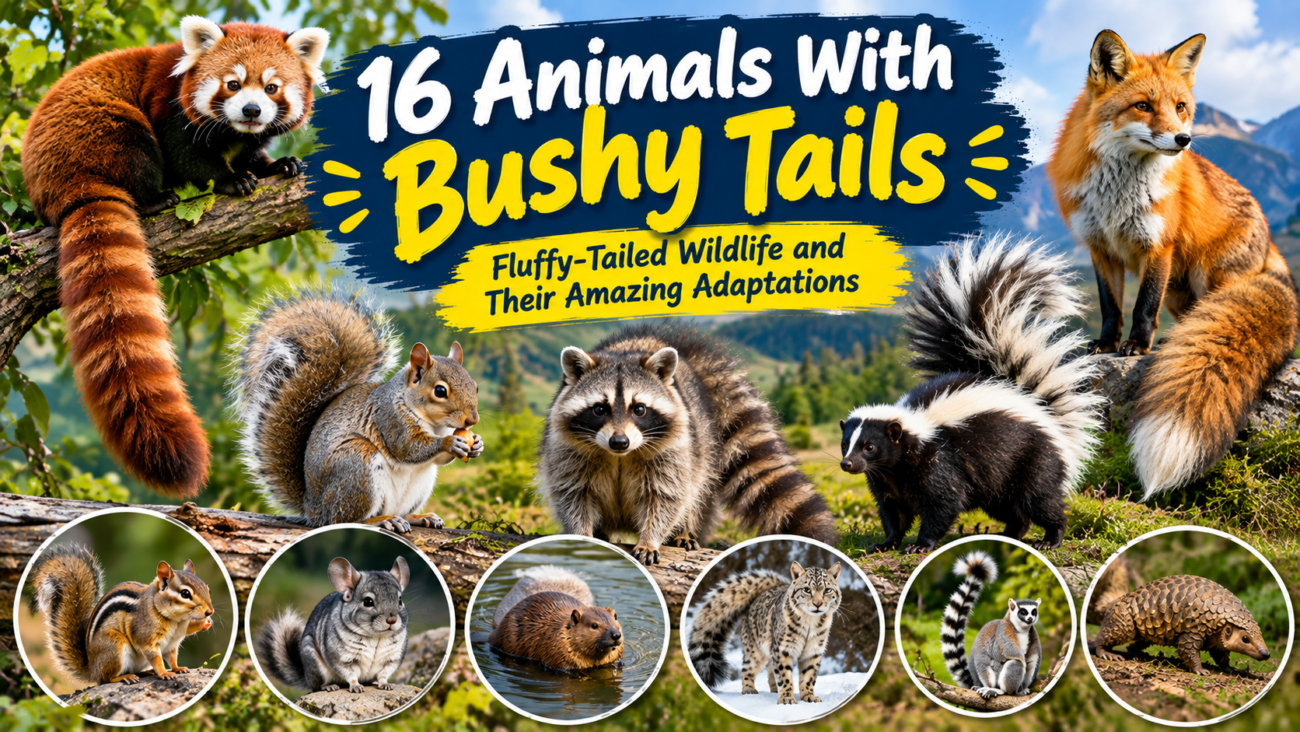
In this guide to animals with bushy tails, you’ll discover 16 fascinating species and learn about their scientific names, diets, habitats, and distinctive tail adaptations. Each animal has its own story, and its tail is only one part of how it survives in the wild.
Quick Answer: Which Animals Have Bushy Tails?
Animals with bushy tails include red foxes, squirrels, red pandas, raccoons, chinchillas, ringtails, and bushy-tailed mongooses. Their thick or fluffy tails can serve different purposes, such as helping with balance, providing warmth, or supporting movement. The function depends on the species and its habitat.
1. Chinchilla (Chinchilla lanigera)
Scientific name: Chinchilla lanigera
Class: Mammalia
Diet: Grasses, leaves, and other vegetation
Habitat: Rocky, arid mountain areas of the Andes
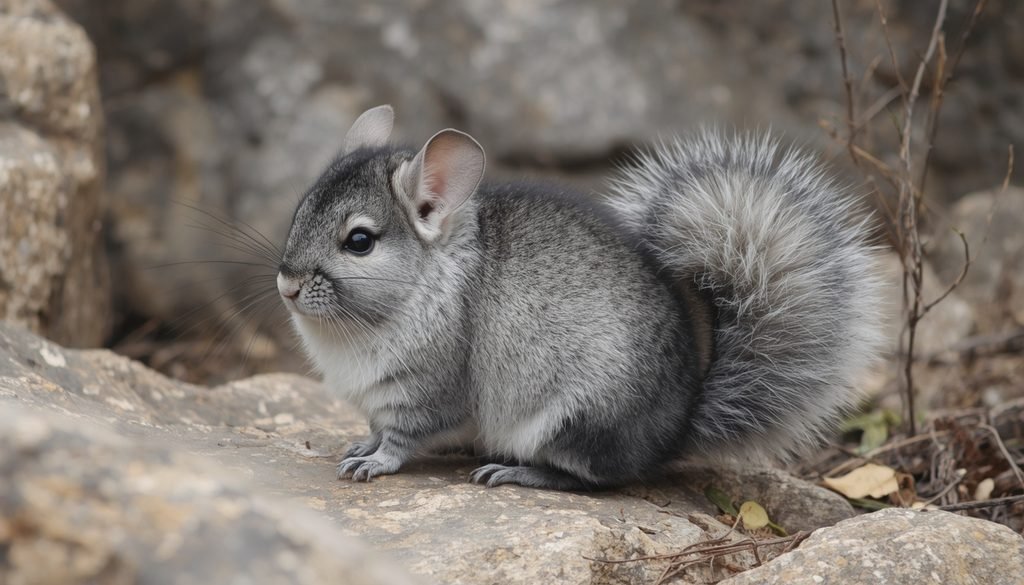
Chinchillas are small rodents native to the Andes Mountains of South America. Their exceptionally dense fur helps protect them in cool, dry mountain environments, while their bushy tails contribute to their distinctive appearance. Chinchillas are agile and can move quickly across rocky terrain, where they use their strong hind legs to leap between surfaces. They are herbivores that eat grasses, leaves, and other plant material. In captivity, they need a carefully managed diet, space to move, and dust baths to maintain healthy fur.
2. Striped Skunk (Mephitis mephitis)
Scientific name: Mephitis mephitis
Class: Mammalia
Diet: Insects, small animals, fruit, and plants
Habitat: Woodlands, grasslands, and mixed landscapes
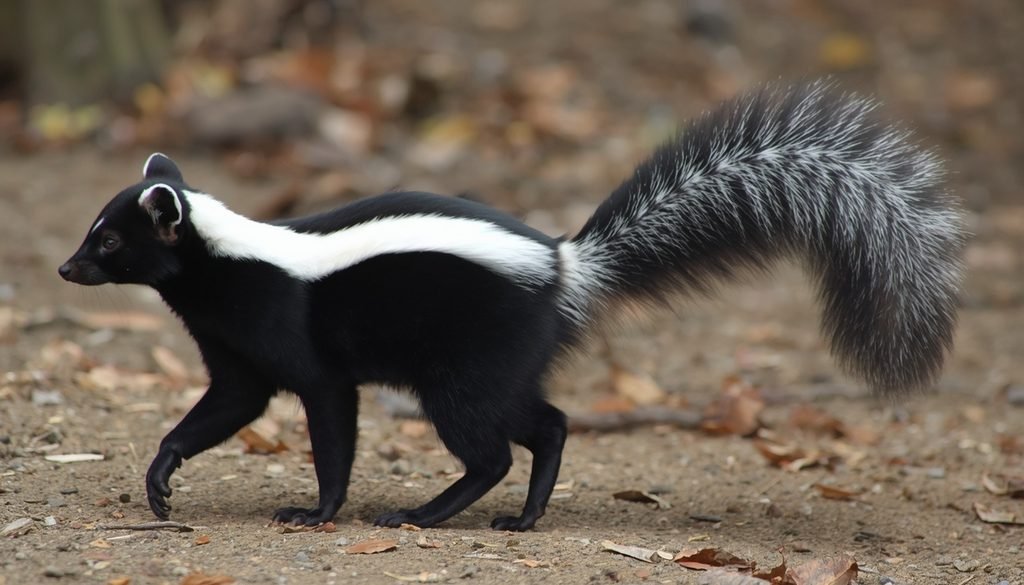
The striped skunk is a familiar North American mammal recognized by its black-and-white markings and large, bushy tail. It eats insects, small animals, fruit, and other available foods. Skunks live in varied habitats, including woodland edges, grasslands, and areas near people. When threatened, a skunk may raise its tail as part of a warning display before using its powerful defensive spray. The tail itself does not produce the spray; the chemical defense comes from glands near the base of the tail. Giving a skunk room is the safest response.
3. Red Panda (Ailurus fulgens)
Scientific name: Ailurus fulgens
Class: Mammalia
Diet: Mainly bamboo; also fruit and small foods
Habitat: Temperate mountain forests

The red panda is a tree-dwelling mammal native to forests in the eastern Himalayas and southwestern China. Its long, thick tail has reddish and pale rings, making it one of the most recognizable fluffy tails in the animal kingdom. The tail helps the red panda maintain balance as it moves along branches. It can also wrap its tail around its body while resting in cold conditions. Red pandas mainly eat bamboo, although they may also consume fruit, insects, and other small foods. Their dense fur and forest camouflage help them live in cool, wooded habitats.
4. Fisher (Pekania pennanti)
Scientific name: Pekania pennanti
Class: Mammalia
Diet: Small mammals, birds, and occasional fruit
Habitat: Forests, especially mixed and coniferous woodland
The fisher is a forest-dwelling member of the weasel family found in parts of Canada and the United States. It has a long body, short legs, and a thick, furry tail. Fishers are skilled climbers and move through forests in search of prey, including rodents, rabbits, birds, and other small animals. They may also eat fruit when it is available. Its tail contributes to the animal’s overall balance and movement, although it is not a specialized gripping tail. Fishers are generally elusive and are more often heard or glimpsed than closely observed.
5. Ringtail (Bassariscus astutus)
Scientific name: Bassariscus astutus
Class: Mammalia
Diet: Insects, small animals, fruit, and other foods
Habitat: Rocky canyons, woodland, and dry scrub
The ringtail, sometimes called the ringtail cat, is a small mammal native to southwestern North America. It has large eyes, rounded ears, and a long bushy tail marked with alternating dark and light bands. The tail helps with balance as the ringtail climbs among rocks and branches. Ringtails are agile and often use rocky crevices for shelter. Their diet includes insects, small animals, fruit, and other foods. Despite the name, a ringtail is not a true cat; it belongs to the raccoon family.
6. Giant Anteater (Myrmecophaga tridactyla)
Scientific name: Myrmecophaga tridactyla
Class: Mammalia
Diet: Mainly ants and termites
Habitat: Grasslands, savannas, and tropical forests
The giant anteater is a large mammal found in Central and South America. It has a long snout, powerful claws, and a strikingly shaggy tail that can look almost like a large plume. The tail’s long hair provides cover and insulation when the animal rests, helping it blend into its surroundings. Giant anteaters feed mainly on ants and termites, which they collect with a long, sticky tongue. They live in grasslands, savannas, and forests. Their distinctive tail is part of a body adapted for a specialized insect-eating lifestyle.
7. Bushy-Tailed Mongoose (Bdeogale crassicauda)
Scientific name: Bdeogale crassicauda
Class: Mammalia
Diet: Mainly insects; also eggs and small vertebrates
Habitat: Wooded grasslands, forests, and rocky areas
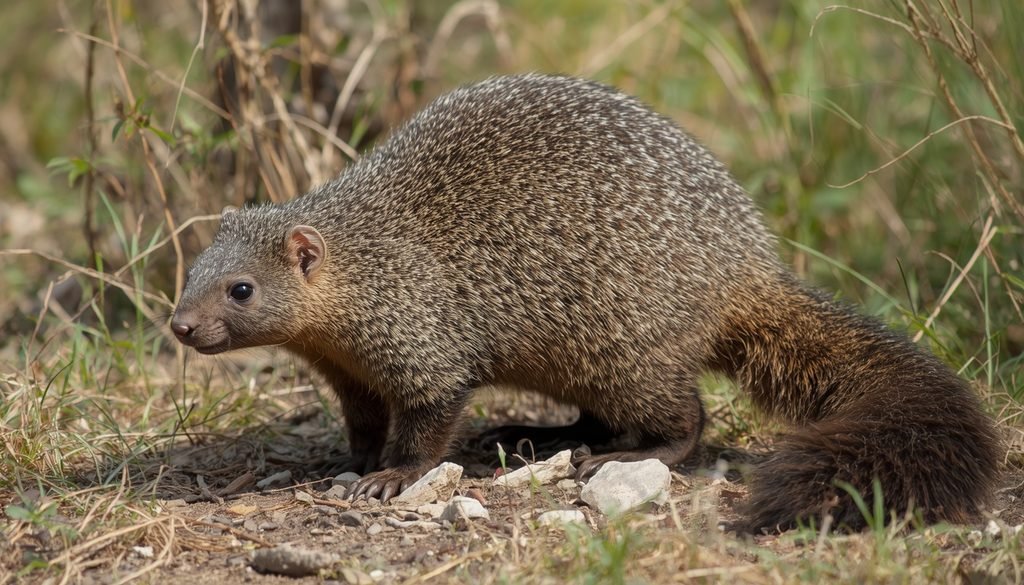
The bushy-tailed mongoose is a small carnivorous mammal native to eastern Africa. It has dense underfur, longer guard hairs, and a noticeably thick tail. It lives in a variety of habitats, including wooded grasslands, forest edges, and areas with rocky hiding places. This mongoose is mainly active at night and feeds largely on insects, although it may also eat eggs and small vertebrates. Its thick coat and bushy tail are distinctive features, but researchers should avoid assigning a specific signaling function to the tail without evidence.
8. Coyote (Canis latrans)
Scientific name: Canis latrans
Class: Mammalia
Diet: Rodents, rabbits, insects, fruit, and carrion
Habitat: Grasslands, deserts, forests, and urban edges
Coyotes are adaptable wild canids found across much of North America. Their thick, often dark-tipped tails are especially noticeable when they trot through open landscapes. Coyotes eat a varied diet that can include rodents, rabbits, insects, fruit, and carrion. They live in deserts, grasslands, forests, and even urban areas. The tail is part of their body language and may be carried differently during movement or social interactions, but its position should not be used to assign a precise emotion. Coyotes are wild animals and should never be approached or fed.
9. Tayra (Eira barbara)
Scientific name: Eira barbara
Class: Mammalia
Diet: Fruit, insects, small mammals, and birds
Habitat: Tropical and subtropical forests
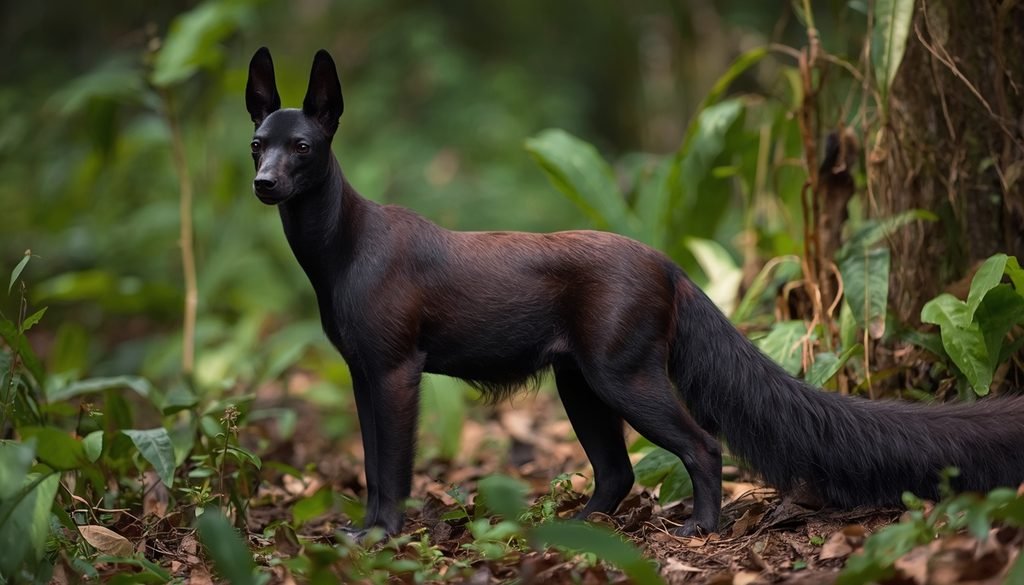
The tayra is a long-bodied member of the weasel family found in Central and South American forests. It has dark fur, a lighter-colored head in many individuals, and a long furry tail. Tayras are agile animals that climb and travel through forest vegetation while searching for fruit, insects, small mammals, and birds. Their tails contribute to their overall balance during movement, although they do not have the specialized grasping ability found in some other tree-dwelling mammals. Tayras are active, adaptable foragers that use both trees and the forest floor.
10. Binturong (Arctictis binturong)
Scientific name: Arctictis binturong
Class: Mammalia
Diet: Fruit, small animals, eggs, and other foods
Habitat: Tropical forests of South and Southeast Asia
The binturong, also called the bearcat, is an arboreal mammal found in forests of South and Southeast Asia. It has shaggy black fur, a long tail, and a strong grasping tail tip. Unlike a merely fluffy tail, the binturong’s tail is prehensile, meaning it can grip branches and help the animal move through trees. Binturongs eat fruit, small animals, eggs, and other foods. Their tail is particularly useful in their tree-dwelling lifestyle, where gripping branches can support careful movement through the canopy.
11. Bushy-Tailed Woodrat (Neotoma cinerea)
Scientific name: Neotoma cinerea
Class: Mammalia
Diet: Plant material, seeds, and other foods
Habitat: Rocky slopes, cliffs, and mountainous regions
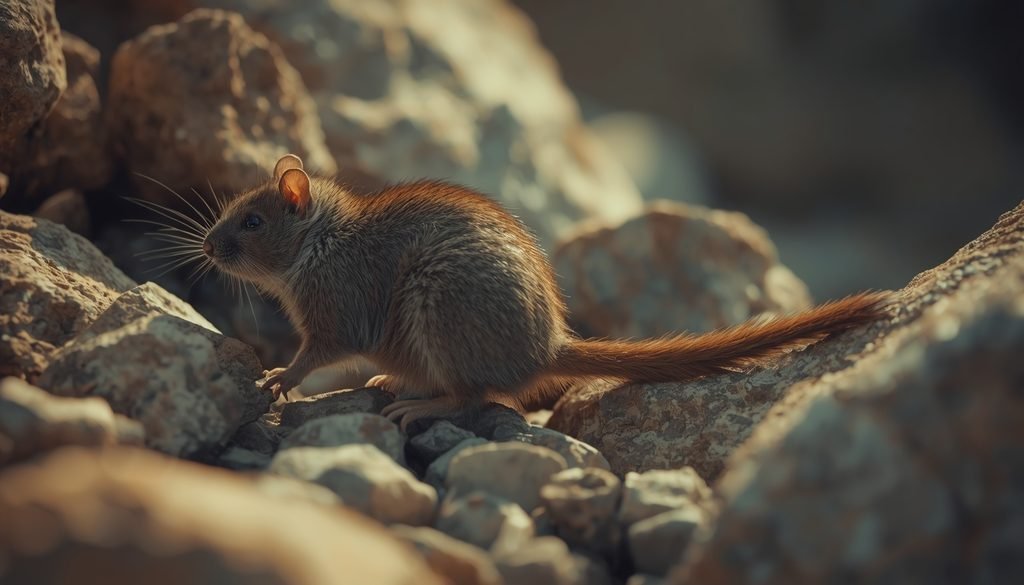
The bushy-tailed woodrat is a rodent found in western North America, especially in rocky habitats and mountainous areas. Its large ears, soft fur, and thickly furred tail give it a distinctive appearance. It eats plant material, seeds, and other available foods. Woodrats often build nests in rock crevices or sheltered spaces, collecting sticks and other materials. Their bushy tails are a clear physical feature, though it is best not to assume a specialized function beyond what is supported for the species. Their sheltered nesting habits help them use rugged environments.
12. North American Porcupine (Erethizon dorsatum)
Scientific name: Erethizon dorsatum
Class: Mammalia
Diet: Bark, leaves, twigs, and other vegetation
Habitat: Forests and woodland across North America
The North American porcupine is a large rodent covered in specialized hairs called quills. Its short, muscular tail has quills along the upper surface and bristle-like hairs underneath. These features contribute to climbing and defense. The animal uses its strong claws and tail to help stabilize itself while moving through trees. Porcupines eat bark, leaves, twigs, and other plant material. When threatened, they may turn their back toward a predator and use their quilled tail defensively. They cannot shoot their quills; the quills detach when they make contact.
13. Eastern Gray Squirrel (Sciurus carolinensis)
Scientific name: Sciurus carolinensis
Class: Mammalia
Diet: Nuts, seeds, buds, fungi, and other plant foods
Habitat: Deciduous and mixed forests, parks, and neighborhoods
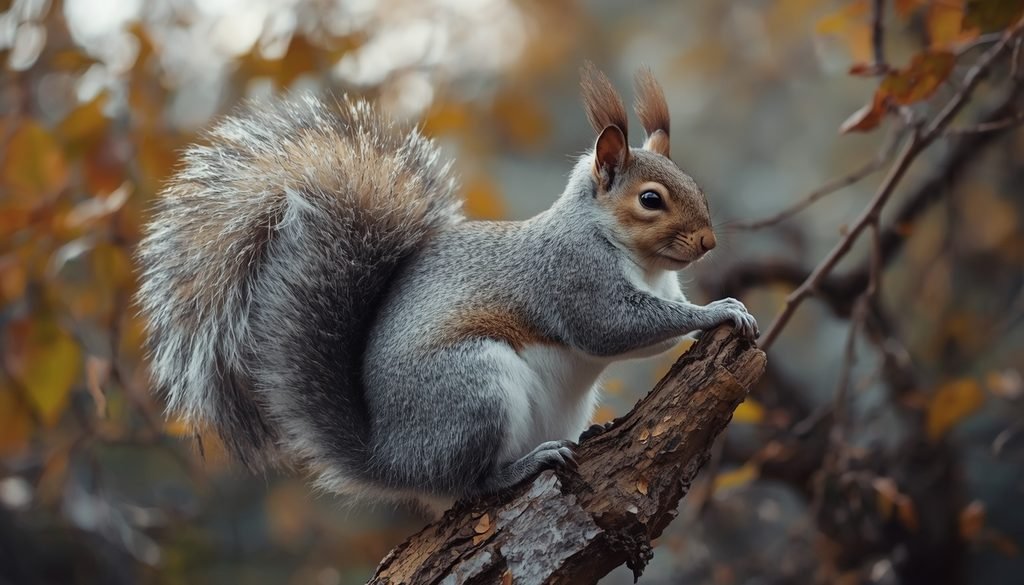
The eastern gray squirrel is a familiar tree-dwelling rodent found in eastern North America. Its large, fluffy tail is useful during movement through branches, helping with balance and stability as it climbs and leaps. Squirrels also use tail movements as visual signals, although the meaning depends on context. Their diet includes nuts, seeds, buds, fungi, and other foods. The tail’s thick fur can also provide some cover from weather when the squirrel rests. Its bushy appearance makes it one of the best-known examples of a fluffy-tailed animal.
14. Red Fox (Vulpes vulpes)
Scientific name: Vulpes vulpes
Class: Mammalia
Diet: Small mammals, birds, insects, fruit, and carrion
Habitat: Forests, grasslands, mountains, and varied landscapes
The red fox is a widespread canid recognized by its reddish coat and large, bushy tail, often called a brush. Its tail helps with balance during quick movement and can be wrapped around the body when the fox rests in cold conditions. Red foxes eat rodents, rabbits, birds, insects, fruit, and other available foods. They live in forests, grasslands, mountains, deserts, and human-modified landscapes. The tail’s thick fur is especially noticeable in winter, giving the fox its familiar fluffy silhouette.
15. Maned Wolf (Chrysocyon brachyurus)
Scientific name: Chrysocyon brachyurus
Class: Mammalia
Diet: Fruit, rodents, insects, and small animals
Habitat: Cerrado grasslands, scrublands, and open woodland
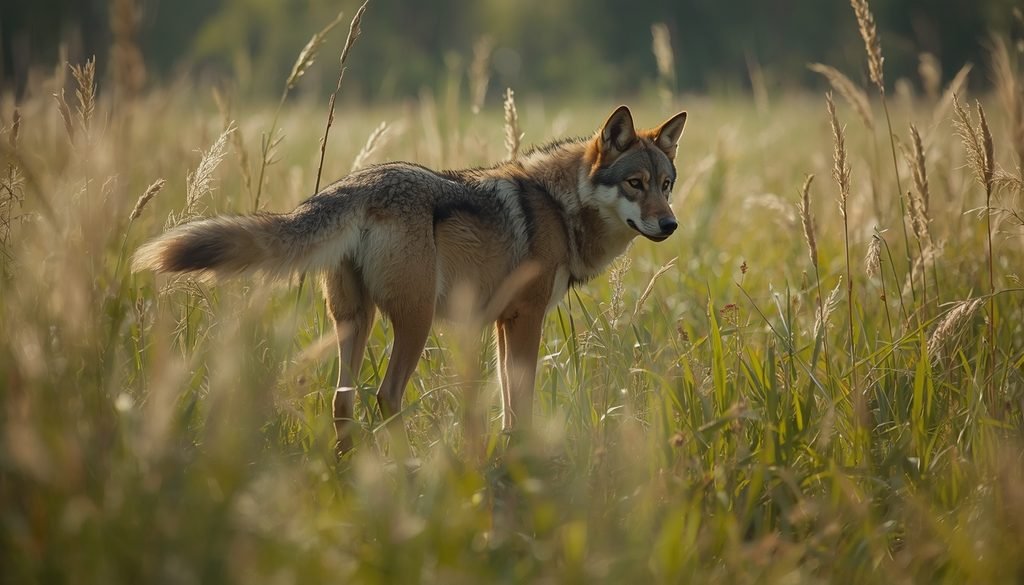
The maned wolf is a long-legged canid native to the grasslands and scrublands of central South America. Its reddish coat, dark mane, and bushy tail make it distinctive. The tail is not a primary hunting tool; instead, it is part of the animal’s overall body form and may contribute to visual signaling. Maned wolves eat fruit, rodents, insects, and other small animals. Their long legs help them move through tall grasses and see above vegetation. Despite their fox-like appearance, they are not true foxes or wolves.
16. Raccoon (Procyon lotor)
Scientific name: Procyon lotor
Class: Mammalia
Diet: Fruit, insects, eggs, small animals, and other foods
Habitat: Forests, wetlands, and urban environments
Raccoons are adaptable mammals native to North America and introduced in some other regions. Their most recognizable features include a dark facial mask and a bushy tail with alternating dark and light rings. Raccoons are omnivores, eating fruit, insects, eggs, small animals, and human-associated food when available. They live in forests, wetlands, and urban areas, often using hollow trees or other sheltered places for dens. Their sensitive front paws help them explore and handle food. The ringed tail is a striking identifying feature, although it is not a weapon.
Why Do Some Animals Have Bushy Tails?
Bushy tails are shaped by different evolutionary pressures. In some species, thick fur provides insulation. Red pandas, for example, have long bushy tails that help them balance in trees and protect them from cold conditions. In other animals, tails support movement. Squirrels use their tails to help maintain stability as they climb and leap, while porcupines have tail adaptations that assist with climbing and defense.
Tail appearance can also support visual communication or camouflage. A striped or ringed tail may make an animal recognizable, while a raised tail can be part of a defensive display in certain species. However, a bushy tail does not have one universal purpose. Its role depends on the animal’s body, behavior, and habitat.
Read More: 16 Animals With Shells
Final Thoughts
From the red panda’s balancing tail to the porcupine’s bristled and quilled tail, animals with bushy tails show how varied animal adaptations can be. Some tails help with warmth or stability, while others are notable for their appearance or specialized function.
Learning about these features helps us understand how animals fit into their environments. Whether you are interested in forest mammals, small rodents, or unusual wildlife, there is always more to discover about the natural world. Explore more animal facts on Animalfacthubz.com.
FAQs About Animals With Bushy Tails
1. What animal has the bushiest tail?
There is no single universally accepted “bushiest tail” record because tail size and fur density vary among species and individuals. Red pandas, foxes, squirrels, and chinchillas are familiar examples of animals with noticeably thick or fluffy tails.
2. Which animals have long, fluffy tails?
Red pandas, red foxes, ringtails, squirrels, and some mongooses have long or noticeably fluffy tails. Their tails differ in shape and function, with some supporting balance or warmth and others serving mainly as a distinctive physical feature.
3. Why do some animals have bushy tails?
Bushy tails can help animals with insulation, balance, movement, or visual signaling, depending on the species. Thick fur may provide warmth, while a tail used during climbing can help an animal stay stable on branches.
4. Do foxes use their tails for warmth?
Yes. A red fox can curl its bushy tail around its body while resting, helping cover exposed areas in cold weather. Its tail also contributes to balance during movement.
5. Do squirrels use their bushy tails for balance?
Yes. A squirrel’s tail helps it maintain stability while climbing and moving through branches. Tail movements can also act as visual signals, although their meaning depends on the situation.
6. Which animals use their tails for communication?
Some mammals use tail position or movement as part of visual communication. Skunks may raise their tails during warning displays, while squirrels use tail movements in social and alerting contexts. Tail signals should be interpreted cautiously rather than assigned one fixed meaning.
7. Does a bushy tail help animals survive winter?
In some species, a thickly furred tail can provide extra cover or insulation when an animal rests. Red pandas and foxes are examples. However, not every bushy tail is primarily a winter adaptation.
8. Are bushy tails found only in mammals?
Bushy tails are especially familiar among mammals because many have fur-covered tails. Other animal groups may have tail-like structures or feathered tails, but these are built differently and may serve different functions.

One thought on “16 Animals With Bushy Tails: Fluffy-Tailed Wildlife and Their Amazing Adaptations”