
Introduction
Nature has developed many clever ways to protect animals from danger. Some creatures have hard outer shells, while others carry bony armor, strong exoskeletons, or tough scales. These protective structures help animals defend soft body parts, reduce injury, and survive in challenging habitats.
When people think about animals with shells, turtles and snails often come to mind first. However, the animal kingdom includes many other examples, from ocean-dwelling nautiluses and clams to land animals with shell-like armor. Some coverings are made from calcium carbonate, while others are built from bone, chitin, or keratin.
These structures are not all technically the same. A turtle’s shell is part of its skeleton, a hermit crab borrows an empty shell, and a pangolin is covered in keratin scales rather than a true shell. In this guide, we’ll explore 16 fascinating animals and explain how their protective coverings help them live on land, in freshwater, and in the ocean.
Quick Answer: What Animals Have Shells?
Animals with shells or shell-like protective coverings include tortoises, turtles, snails, clams, oysters, nautiluses, crabs, chitons, and sea urchins. Some have true shells, while others have exoskeletons, bony armor, or scales. These structures protect vulnerable body parts and help animals survive in different habitats.
16 Animals With Shells
| No. | Animal | Scientific Name or Example | Protective Covering |
| 1 | Tortoise | Testudinidae family | Bony shell |
| 2 | Box Turtle | Terrapene carolina | Hinged bony shell |
| 3 | Sea Turtle | Chelonia mydas | Bony carapace and plastron |
| 4 | Garden Snail | Cornu aspersum | Calcium carbonate shell |
| 5 | Giant Clam | Tridacna gigas | Two-part shell |
| 6 | Oyster | Crassostrea species | Two-valved shell |
| 7 | Mussel | Mytilus species | Two-part shell |
| 8 | Scallop | Pecten species | Two-part shell |
| 9 | Chambered Nautilus | Nautilus pompilius | Chambered external shell |
| 10 | Chiton | Mopalia species | Eight shell plates |
| 11 | Hermit Crab | Pagurus species | Borrowed shell |
| 12 | Horseshoe Crab | Limulus polyphemus | Hard exoskeleton |
| 13 | Coconut Crab | Birgus latro | Hard exoskeleton |
| 14 | Armadillo | Dasypus novemcinctus | Bony armor plates |
| 15 | Pangolin | Manis species | Keratin scales |
| 16 | Sea Urchin | Strongylocentrotus species | Calcareous test and spines |
1. Tortoise
Scientific Name: Family Testudinidae
Class: Reptilia
Diet: Mostly plants, grasses, leaves, and fruits
Habitat: Grasslands, deserts, scrublands, and forests, depending on species
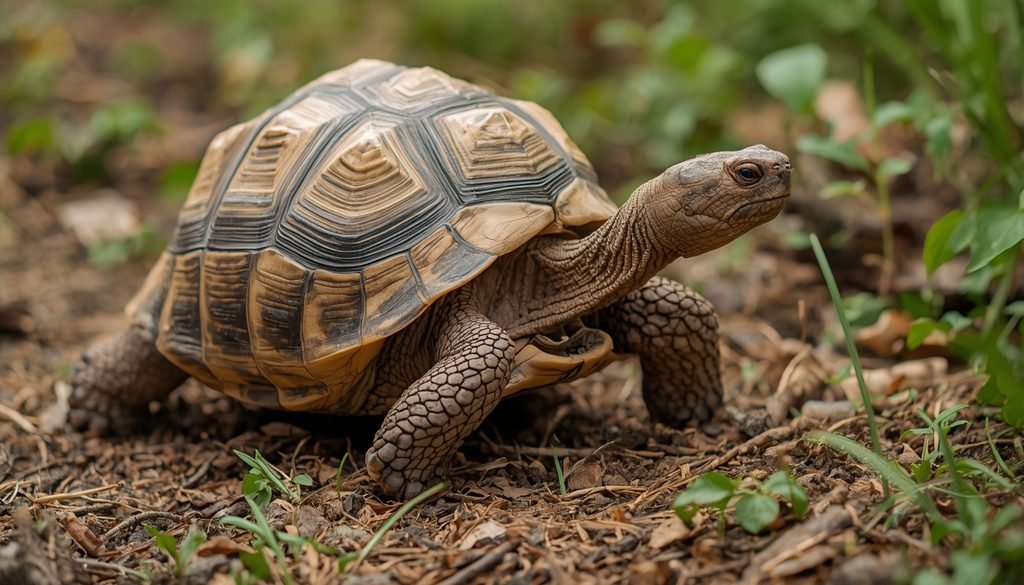
Tortoises are famous for their high-domed shells, which protect their bodies from many physical threats. A tortoise shell is not a removable house; it is connected to the animal’s skeleton and includes a top section called the carapace and a bottom section called the plastron. Many species have keratin scutes covering the outer surface. Their shells provide protection while their sturdy legs help them move across land.
Interesting Fact: A tortoise cannot leave its shell because the shell is part of its body.
2. Box Turtle
Scientific Name: Terrapene carolina
Class: Reptilia
Diet: Omnivorous; insects, worms, fruits, mushrooms, and plants
Habitat: Woodlands, meadows, and damp areas in North America
Box turtles have a rounded, domed shell and a hinged lower section called the plastron. This hinge allows many box turtles to close the shell opening tightly when threatened, protecting their head and limbs. Their shells are made of bone and are integrated with their skeletons. Box turtles live mostly on land, although they often use moist environments and may enter shallow water.
Interesting Fact: The hinged plastron gives the box turtle its common name because it can close up like a box.
3. Sea Turtle
Scientific Name: Chelonia mydas (green sea turtle)
Class: Reptilia
Diet: Mainly seagrasses and algae as adults; diets vary by species and age
Habitat: Tropical and subtropical oceans
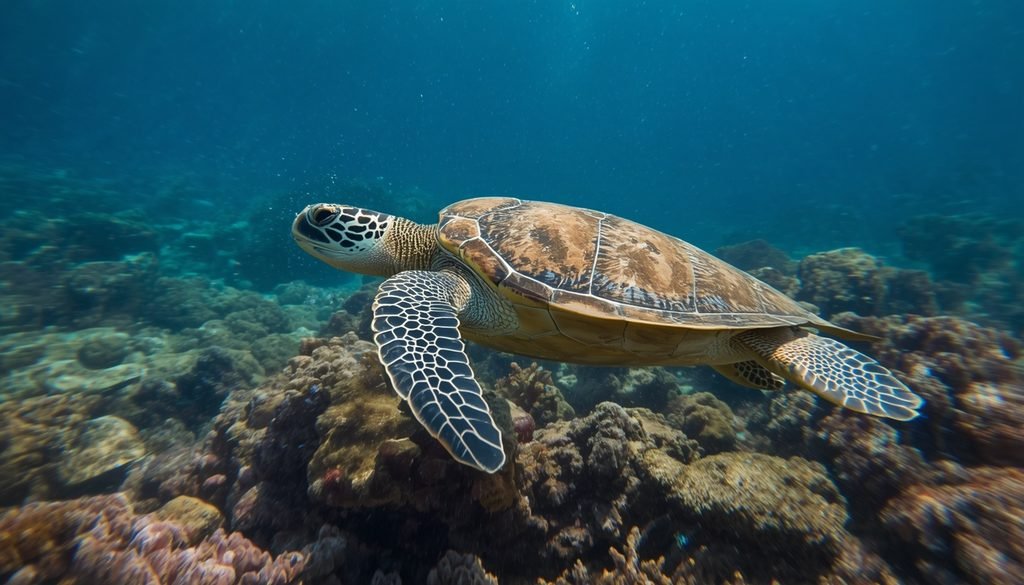
Sea turtles have a protective shell made up of a top carapace and a bottom plastron. Their shell shape supports movement through water, while their streamlined bodies and flippers help them swim. Unlike many land turtles, sea turtles cannot fully pull their heads and flippers inside their shells. Their shells still provide important protection, but their swimming ability is also essential for escaping danger.
Interesting Fact: Sea turtles return to land to lay their eggs, even though they spend most of their lives in the ocean.
4. Garden Snail
Scientific Name: Cornu aspersum
Class: Gastropoda
Diet: Leaves, fruits, vegetables, and decaying plant material
Habitat: Gardens, fields, parks, and damp environments
A garden snail carries a coiled shell made largely of calcium carbonate. The shell protects its soft body and gives the snail a place to retreat when conditions become dry or dangerous. As the snail grows, it adds material to the shell’s edge, making the structure larger. Unlike a hermit crab, a snail produces its own shell as part of its body.
Interesting Fact: A snail’s shell often has a spiral pattern that grows along with the animal.
5. Giant Clam
Scientific Name: Tridacna gigas
Class: Bivalvia
Diet: Filter-feeds on microscopic food; also receives nutrients from symbiotic algae
Habitat: Shallow tropical coral reefs in the Indo-Pacific
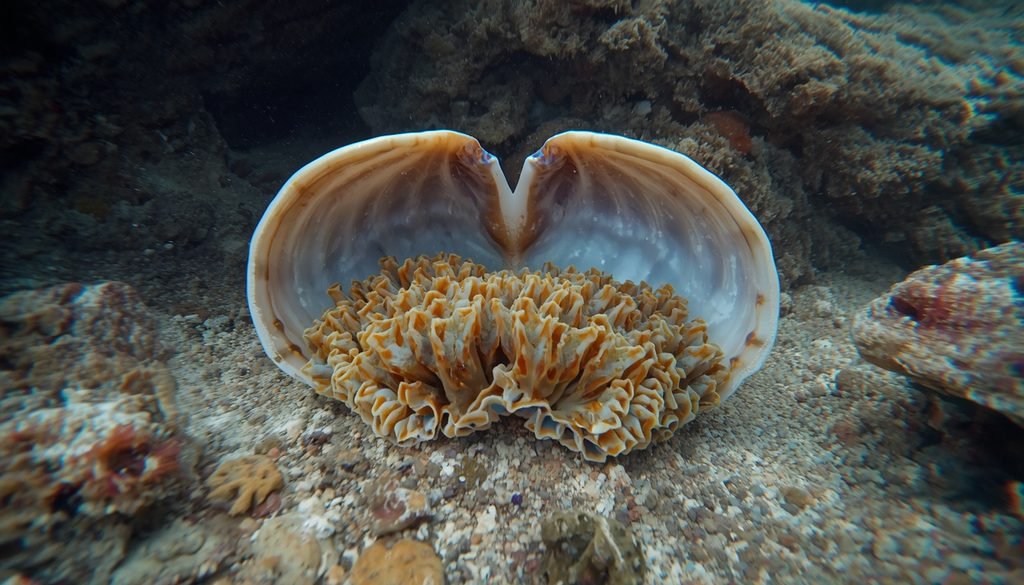
The giant clam has two large shell valves connected by a hinge. Its shell protects the soft body, while the mantle may display striking colors and patterns. Giant clams filter tiny particles from seawater and also host microscopic algae that use sunlight to produce energy. This relationship helps support the clam in clear, shallow reef environments where sunlight reaches the animal.
Interesting Fact: The giant clam is among the largest living bivalve mollusks.
6. Oyster
Scientific Name: Crassostrea species
Class: Bivalvia
Diet: Filter-feeding on plankton and organic particles
Habitat: Coastal waters, estuaries, and brackish environments
Oysters have hard, irregular shells made of two valves. The shell protects their soft bodies, while the animal often attaches to hard surfaces such as rocks or other oyster shells. Oysters feed by filtering particles from the water. In some places, groups of oysters form reefs that create shelter and habitat for other marine organisms. Their shells therefore provide protection for the oyster and contribute to complex coastal ecosystems.
Interesting Fact: Oyster reefs can provide habitat for fish, crabs, and other small marine animals.
7. Mussel
Scientific Name: Mytilus species
Class: Bivalvia
Diet: Filter-feeding on plankton and suspended particles
Habitat: Rocky shores and coastal waters; some mussel species live in freshwater
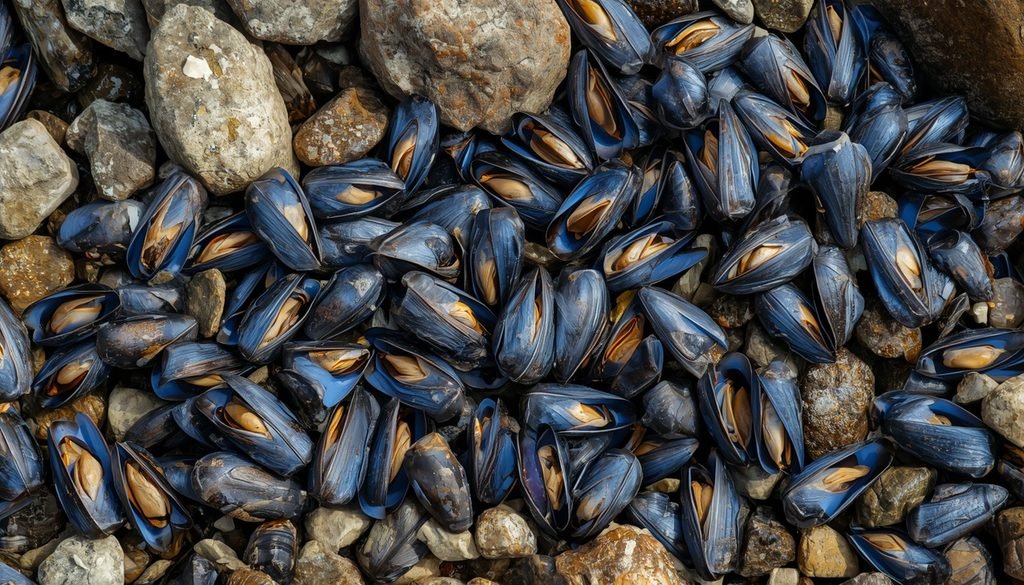
Mussels have two shell valves that protect their soft bodies. Many marine mussels attach themselves to rocks using strong fibers called byssal threads. These threads help them remain in place when waves and currents move around them. Mussels filter food from the water and may gather in dense groups, creating small habitats for other organisms. Their shells grow as the mussel develops.
Interesting Fact: Byssal threads help mussels cling to surfaces without being permanently fused to them.
8. Scallop
Scientific Name: Pecten species
Class: Bivalvia
Diet: Filter-feeding on microscopic organisms and particles
Habitat: Marine seafloors, including sandy and rocky areas
Scallops have two shell valves, often with fan-like ridges. The shell protects the soft body, and some scallops can swim by rapidly clapping their valves together to push water out. This movement can help them escape predators or shift position. Scallops feed by filtering particles from seawater, and their shell shape varies among species.
Interesting Fact: Some scallops have many small eyes along the edge of their mantle.
9. Chambered Nautilus
Scientific Name: Nautilus pompilius
Class: Cephalopoda
Diet: Small fish, crustaceans, and other animal material
Habitat: Indo-Pacific ocean waters, often along deep reef slopes
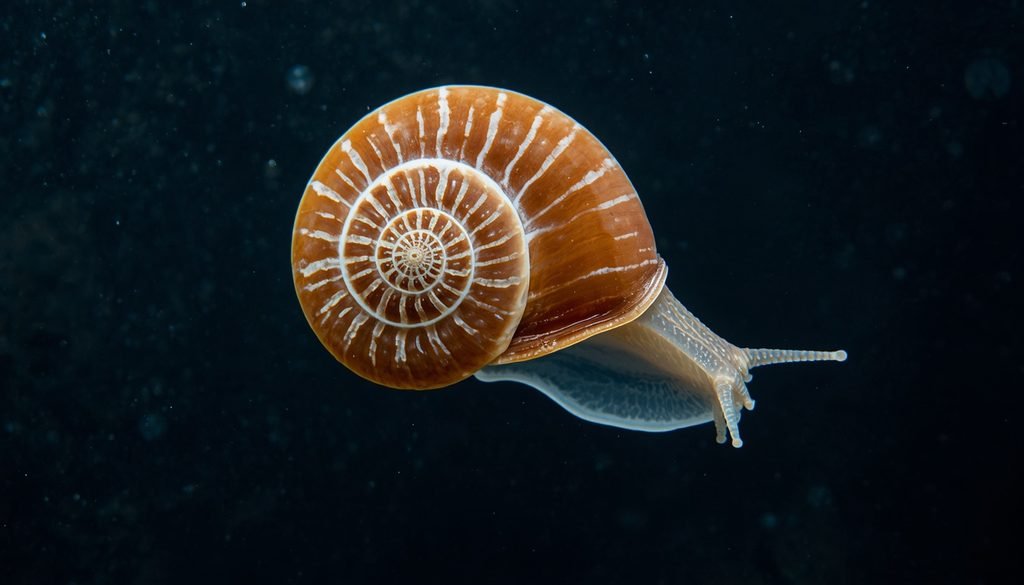
The chambered nautilus is a cephalopod mollusk with a distinctive external spiral shell. Inside the shell are chambers connected by a narrow tube. The nautilus lives in the largest chamber and adjusts fluid and gas in the others to help control buoyancy. This allows it to move through different depths. Its shell protects its soft body, while its tentacles help it explore and capture food.
Interesting Fact: The nautilus shell’s internal chambers help it regulate its position in the water.
10. Chiton
Scientific Name: Mopalia species
Class: Polyplacophora
Diet: Often algae and other material scraped from rocks
Habitat: Rocky intertidal zones and coastal shores
Chitons are marine mollusks with eight overlapping shell plates along their backs. These plates provide protection while allowing the animal to bend and cling to uneven surfaces. A muscular foot helps the chiton hold tightly to rocks as waves pass over it. Many species feed by scraping algae from surfaces. Their unusual shell arrangement combines flexibility with a strong protective covering.
Interesting Fact: A chiton can sometimes curl into a ball if it becomes detached from a rock.
11. Hermit Crab
Scientific Name: Pagurus species
Class: Malacostraca
Diet: Omnivorous scavenger; algae, small animals, and organic debris
Habitat: Coastal waters, tide pools, and marine seafloors
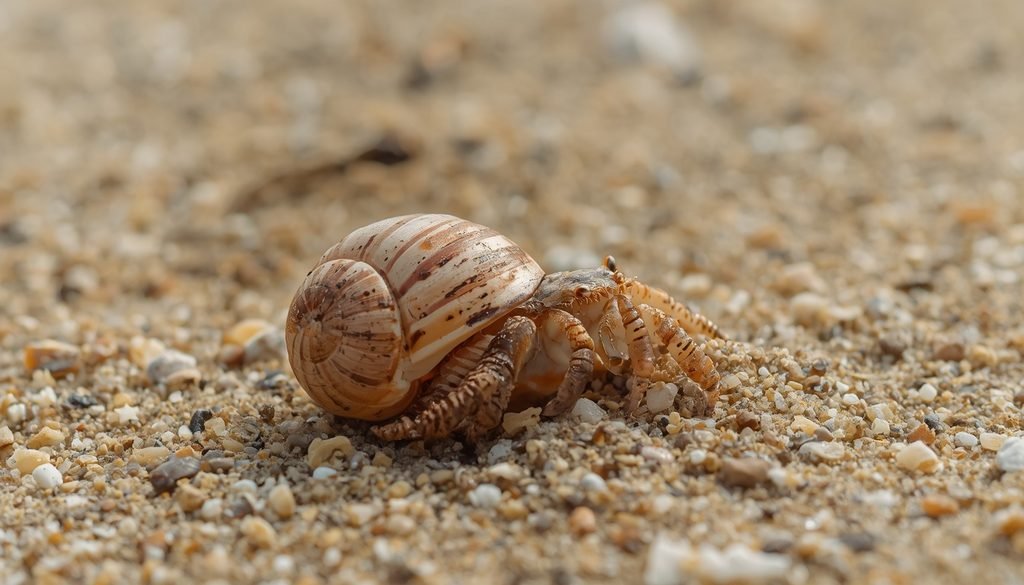
Hermit crabs have a soft, vulnerable abdomen that they protect by moving into empty shells left behind by mollusks. They do not make these shells themselves. As a hermit crab grows, it may need to find a larger shell that fits its body. The borrowed shell acts as portable protection and can help reduce the risk of injury or predation.
Interesting Fact: Hermit crabs may inspect and exchange shells when a more suitable one becomes available.
12. Horseshoe Crab
Scientific Name: Limulus polyphemus
Class: Xiphosura
Diet: Worms, small mollusks, and other bottom-dwelling organisms
Habitat: Shallow coastal waters and sandy or muddy seafloors
Despite its name, the horseshoe crab is not a true crab. It is more closely related to spiders and scorpions. Its broad, hard exoskeleton protects the body, while its long tail helps it steer in water and turn itself over if it becomes overturned. Horseshoe crabs feed on small organisms near the seafloor and are part of coastal food webs.
Interesting Fact: Horseshoe crabs have existed in forms recognizable from a very ancient fossil record.
13. Coconut Crab
Scientific Name: Birgus latro
Class: Malacostraca
Diet: Fruits, seeds, plant material, and animal matter
Habitat: Tropical islands in the Indian and Pacific oceans
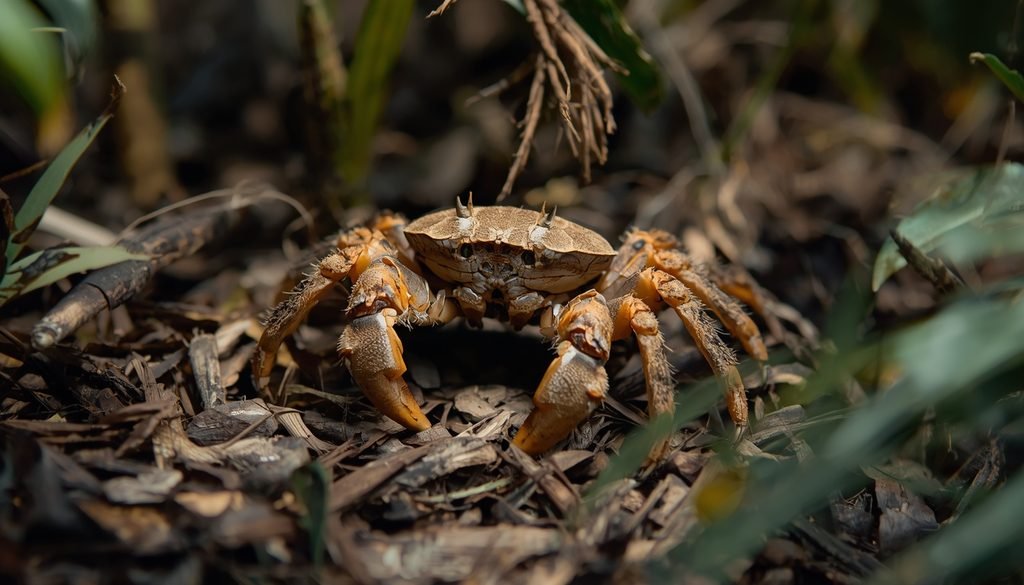
Coconut crabs have a strong external skeleton that protects their bodies. Young coconut crabs use empty shells for protection, but adults develop a hard exoskeleton and no longer rely on a borrowed shell. These large land-dwelling crustaceans use powerful claws to handle food and climb. Their protective covering supports life on land, where they must avoid injury and conserve moisture.
Interesting Fact: Coconut crabs are the largest land-living arthropods.
14. Armadillo
Scientific Name: Dasypus novemcinctus
Class: Mammalia
Diet: Insects, grubs, and other small invertebrates
Habitat: Grasslands, forests, scrublands, and open habitats in the Americas
Armadillos have protective armor made of bony plates called osteoderms beneath tough skin. These plates form a shell-like covering over parts of the body, but they are not the same as a turtle’s shell. Flexible bands allow movement while the armor provides defense. Armadillos use their strong claws to dig for food and shelter.
Interesting Fact: The number and arrangement of armor bands differ among armadillo species.
15. Pangolin
Scientific Name: Manis species
Class: Mammalia
Diet: Mainly ants and termites
Habitat: Forests, grasslands, and savannas in Africa and Asia
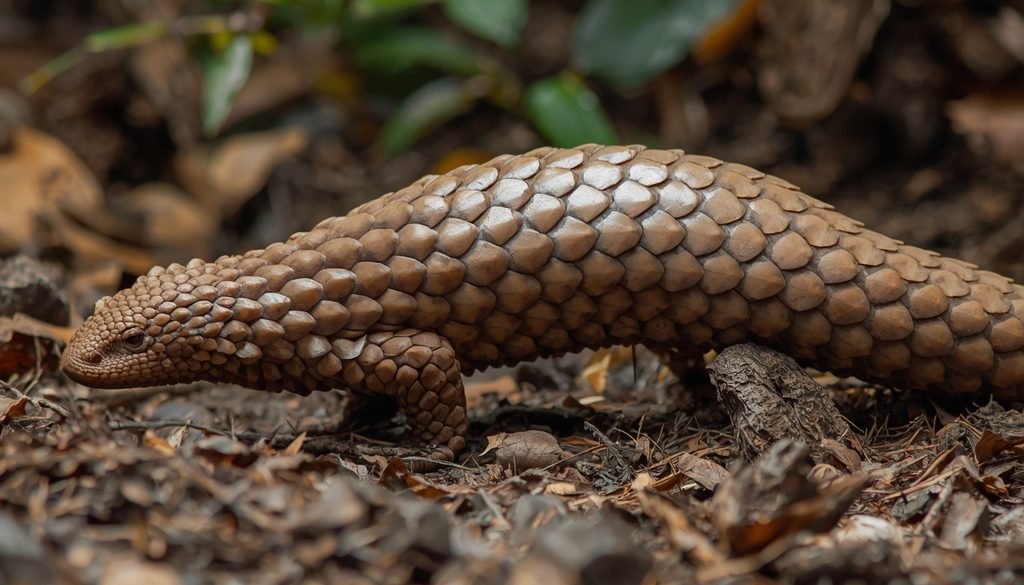
Pangolins are mammals covered in overlapping scales made of keratin, the same broad material found in human hair and nails. These scales are not a true shell, but they provide a tough protective layer. When threatened, many pangolins curl into a tight ball, presenting their scales to potential predators. Their long tongues help them collect ants and termites from nests.
Interesting Fact: Pangolins are the only mammals covered in large protective keratin scales.
16. Sea Urchin
Scientific Name: Strongylocentrotus species
Class: Echinoidea
Diet: Often algae; diet varies by species
Habitat: Rocky reefs, seagrass beds, and ocean floors
Sea urchins have a rigid internal framework called a test, made from calcium carbonate plates. Their movable spines extend outward and help deter predators while also assisting with movement. Small tube feet help the animal attach to surfaces and move across the seafloor. Although the test can look like a shell, it is a different structure from the external shells of snails and clams.
Interesting Fact: Sea urchin spines can vary greatly in length, shape, and sharpness among species.
Why Do Animals Have Shells?
Animals have shells and other protective coverings for several reasons. A hard outer structure can shield soft body parts from predators, reduce injuries, and provide support. For land animals such as tortoises and snails, a shell can also help protect the body from harsh surroundings. Some structures serve additional roles: a nautilus uses chambers inside its shell to adjust buoyancy, while a hermit crab uses an empty shell to protect its soft abdomen.
However, no shell makes an animal completely safe. Some predators can break shells, reach exposed body parts, or attack when an animal is vulnerable. Protective coverings work alongside other adaptations, including camouflage, movement, burrowing, and defensive behavior.
What Are Animal Shells Made Of?
Animal shells and armor are made from different materials. Many mollusks build shells largely from calcium carbonate, which they deposit as they grow. Turtle shells are skeletal structures made of bone and covered by keratin scutes in many species.
Crabs and horseshoe crabs have exoskeletons containing chitin and other compounds. Armadillo armor includes bony osteoderms beneath the skin, while pangolin scales are made of keratin. Sea urchins have a rigid test made from calcium carbonate plates. These structures may all provide protection, but they have different origins and functions. Understanding those differences helps explain the variety of animal adaptations.
Can All Animals With Shells Hide Inside Them?
No. Some animals, such as many snails and box turtles, can withdraw parts of their bodies into protective coverings. Sea turtles cannot fully retract their heads and flippers, while hermit crabs enter borrowed shells to protect their soft abdomens. Armadillos and pangolins have armor or scales rather than a shell they can enter. Each structure works differently, depending on the animal’s anatomy and lifestyle.
Read more: Stupidest Animal in the World
Final Thoughts
Animals with shells show how varied nature’s protective adaptations can be. Tortoises carry shells connected to their skeletons, mollusks produce hard coverings, and hermit crabs use empty shells made by other animals. Other creatures, such as armadillos and pangolins, rely on armor or scales instead of true shells.
These structures help animals protect vulnerable bodies, move through their habitats, and survive different environmental challenges. From rocky coastlines to tropical forests and ocean reefs, protective coverings play many roles in the natural world. Explore more fascinating animal facts on Animalfacthubz.com and discover how wildlife adapts to life in different environments.
FAQs
1. What animals have shells?
Animals with shells include tortoises, turtles, snails, clams, oysters, mussels, scallops, nautiluses, chitons, and some crustaceans. Other animals, such as armadillos and pangolins, have shell-like armor or scales rather than true shells.
2. What is the difference between a shell and an exoskeleton?
A shell is a hard protective structure, often produced by mollusks or integrated into a turtle’s skeleton. An exoskeleton is an external supporting structure found in arthropods such as crabs. Both can provide protection, but their anatomy and growth differ.
3. Are turtle shells part of their skeleton?
Yes. A turtle’s shell is connected to its skeleton and includes the carapace on top and the plastron underneath. It is not a separate object that the turtle can leave behind.
4. Which animals have shells on land?
Land animals with true shells include tortoises, box turtles, and land snails. Armadillos have bony armor plates, while pangolins have keratin scales. These coverings protect them in different ways but are not all technically shells.
5. Which sea animals have shells?
Marine animals with shells include sea turtles, clams, oysters, mussels, scallops, nautiluses, chitons, and some crabs. Sea urchins have a hard internal test and spines rather than a mollusk-style shell.
6. Do hermit crabs make their own shells?
No. Hermit crabs usually occupy empty shells made by mollusks, such as sea snails. Their soft abdomens need protection, so they may change to a larger shell as they grow.
7. What are animal shells made of?
Many mollusk shells are made mainly of calcium carbonate. Turtle shells contain bone and often have keratin scutes. Arthropod exoskeletons contain chitin, while pangolin scales are made of keratin.
8. Can animals grow bigger inside their shells?
Many shell-producing animals, such as snails and clams, enlarge their shells as they grow. Arthropods with rigid exoskeletons generally grow by molting and forming a larger outer covering. Growth patterns depend on the animal group.

One thought on “16 Animals With Shells: Amazing Creatures With Natural Protection”