
Introduction
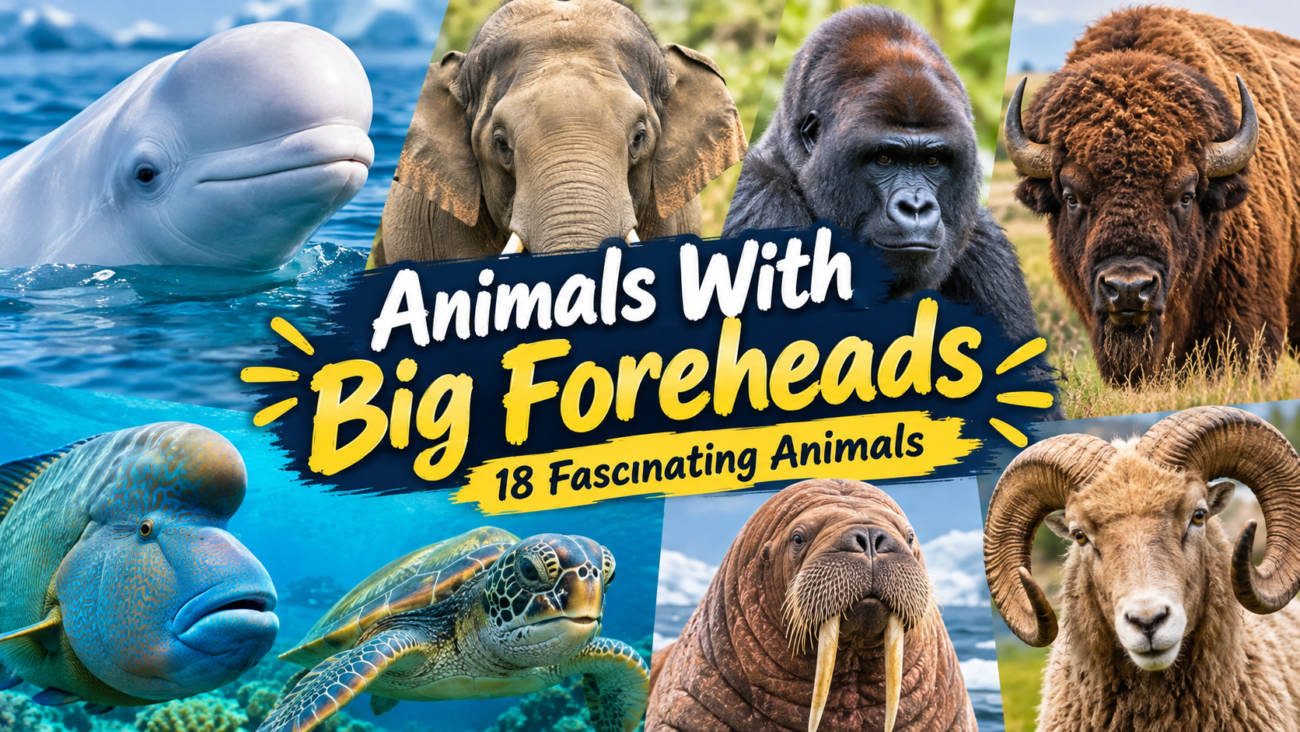
Some animals stand out because of their eyes, ears, horns, or unusually long noses. Others catch our attention because of their big foreheads and distinctive head shapes. From the rounded forehead of a beluga whale to the huge head of a sperm whale, these features can have very different biological explanations.
However, a large-looking forehead does not always mean the same thing. In some animals, the prominent area is actually a specialized organ, such as the melon of a toothed whale. In others, it may be a brow ridge, skull structure, or nuchal hump. Fish such as the humphead wrasse can develop a noticeable forehead hump, while bison and musk oxen have broad heads adapted to their lifestyles.
In this guide, we explore 18 animals with big foreheads, explaining their scientific names, habitats, diets, unusual head structures, and the biological reasons behind their distinctive appearances.
What Animals Have Big Foreheads?
Animals commonly described as having big foreheads include beluga whales, sperm whales, Asian elephants, humphead wrasses, bison, musk oxen, elephant seals, orangutans, gorillas, walruses, and bowhead whales. Some fish also develop prominent forehead or head humps. These features are not all anatomically the same, so each species needs to be considered separately.
Quick Comparison of Animals With Big Foreheads
| Animal | Scientific Name | Class | Diet | Distinctive Head Feature |
| Beluga Whale | Delphinapterus leucas | Mammalia | Carnivore | Bulbous melon |
| Sperm Whale | Physeter macrocephalus | Mammalia | Carnivore | Massive forehead |
| Asian Elephant | Elephas maximus | Mammalia | Herbivore | Broad forehead and skull |
| Humphead Wrasse | Cheilinus undulatus | Actinopterygii | Carnivore | Forehead hump |
| Midas Cichlid | Amphilophus citrinellus | Actinopterygii | Omnivore | Nuchal hump |
| Flowerhorn Cichlid | Hybrid cichlid | Actinopterygii | Omnivore | Large nuchal hump |
| Green Sea Turtle | Chelonia mydas | Reptilia | Herbivore | Broad head |
| American Bison | Bison bison | Mammalia | Herbivore | Broad forehead and skull |
| Musk Ox | Ovibos moschatus | Mammalia | Herbivore | Heavy forehead/skull |
| Elephant Seal | Mirounga leonina | Mammalia | Carnivore | Large head and male proboscis |
| Orangutan | Pongo spp. | Mammalia | Omnivore | Broad facial/skull profile |
| Gorilla | Gorilla spp. | Mammalia | Herbivore | Prominent brow region |
| Saki Monkey | Pithecia spp. | Mammalia | Omnivore | Distinctive facial profile |
| Bald Uakari | Cacajao calvus | Mammalia | Omnivore | Rounded head and bare face |
| Beluga Sturgeon | Huso huso | Actinopterygii | Carnivore | Large elongated head |
| Domestic Ram | Ovis aries | Mammalia | Herbivore | Broad forehead |
| Walrus | Odobenus rosmarus | Mammalia | Carnivore | Large rounded head |
| Bowhead Whale | Balaena mysticetus | Mammalia | Carnivore | Enormous rounded head |
1. Beluga Whale
Scientific Name: Delphinapterus leucas
Class: Mammalia
Diet: Carnivore
Habitat: Arctic and sub-Arctic marine waters
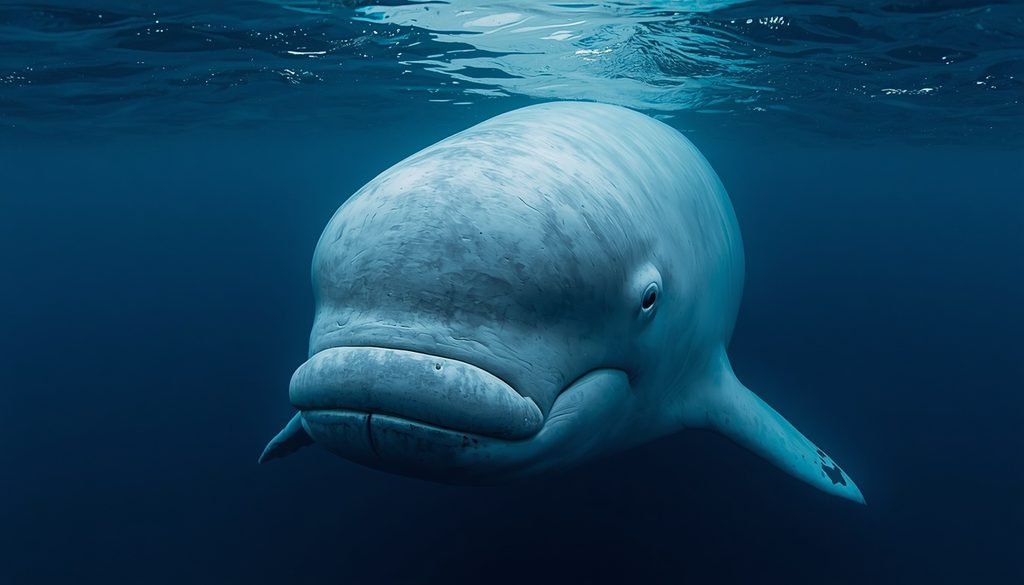
The beluga whale is one of the most recognizable animals with big foreheads. Its rounded frontal area contains a fatty structure called the melon, which is associated with echolocation. Belugas can change the shape of this structure, helping them focus sounds as they navigate and find food.
The melon is not simply a large forehead like that of a human. It is a specialized anatomical structure that gives the beluga its distinctive rounded head.
Interesting Fact: Belugas are sometimes called “sea canaries” because of their varied vocalizations.
2. Sperm Whale
Scientific Name: Physeter macrocephalus
Class: Mammalia
Diet: Carnivore
Habitat: Deep ocean waters
The sperm whale has one of the most enormous head structures in the animal kingdom. Its huge forehead contains the spermaceti organ and other specialized tissues. Research has examined how the unusual architecture of this forehead relates to sound production and other biological functions.
The massive head is particularly noticeable in mature males. Sperm whales also use powerful echolocation to hunt in the deep ocean.
Interesting Fact: The sperm whale’s enormous head can make up a substantial portion of its overall body length.
3. Asian Elephant
Scientific Name: Elephas maximus
Class: Mammalia
Diet: Herbivore
Habitat: Forests, grasslands, and wetlands of South and Southeast Asia
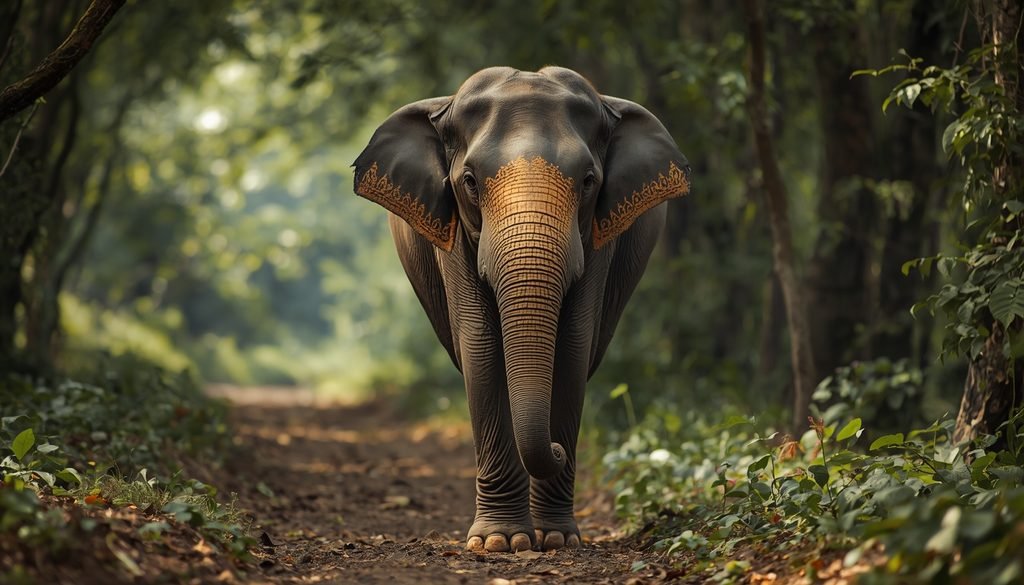
Asian elephants have broad heads and prominent foreheads that contribute to their unmistakable appearance. Their skulls support the enormous trunk, jaws, and other structures involved in feeding and daily activity.
A large forehead should not automatically be interpreted as proof of greater intelligence. Brain size and intelligence are much more complicated subjects than simply comparing the external shape of an animal’s head.
Interesting Fact: An elephant’s trunk contains thousands of muscles and is used for feeding, drinking, communication, and handling objects.
4. Humphead Wrasse
Scientific Name: Cheilinus undulatus
Class: Actinopterygii
Diet: Carnivore
Habitat: Coral reefs and reef slopes of the Indo-Pacific
The humphead wrasse is famous for the prominent hump that develops above its eyes. The feature becomes more noticeable as the fish grows, particularly in older males. It is one of the most obvious examples of a fish with a big forehead.
This species is also known by names such as Napoleon wrasse and Napoleon fish, but these names refer to the same species. The fish feeds on a variety of marine invertebrates and lives around coral reef environments.
Interesting Fact: Humphead wrasses can change sex during their lifetime.
5. Midas Cichlid
Scientific Name: Amphilophus citrinellus
Class: Actinopterygii
Diet: Omnivore
Habitat: Freshwater lakes, rivers, and streams
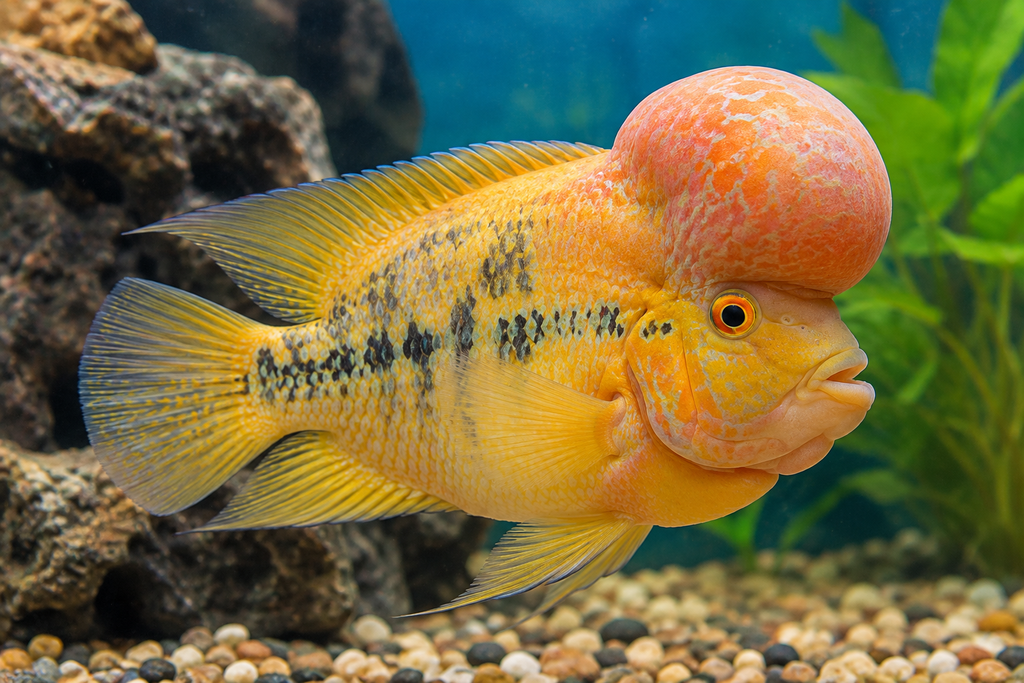
Midas cichlids can develop a noticeable nuchal hump, a rounded enlargement on the upper part of the head. This feature is particularly visible in some mature individuals and contributes to their unusual profile.
The hump is different from a human forehead. It is a specialized part of the fish’s head and can vary considerably among individuals.
Interesting Fact: Midas cichlids are popular in the aquarium hobby because of their bold behavior and striking appearance.
6. Flowerhorn Cichlid
Scientific Name: Hybrid ornamental cichlid
Class: Actinopterygii
Diet: Omnivore
Habitat: Aquarium environments
Flowerhorn cichlids are ornamental aquarium fish famous for their colorful bodies and large nuchal humps, often called “kok” by hobbyists. These fish were developed through selective breeding and are not a single naturally occurring wild species.
The size and shape of the head hump can vary among individual fish. Because of selective breeding, Flowerhorns are an interesting example of how humans can influence animal appearance.
Interesting Fact: Flowerhorns became popular in the aquarium trade during the 1990s.
7. Green Sea Turtle
Scientific Name: Chelonia mydas
Class: Reptilia
Diet: Herbivore as an adult
Habitat: Tropical and subtropical oceans

Green sea turtles have broad heads and strong jaws suited to their feeding habits. Adult green sea turtles commonly graze on seagrasses and algae, and their head shape contributes to their overall distinctive appearance.
Rather than describing the turtle’s forehead as a specialized organ, it is more accurate to discuss its broad head, skull, and jaw structure.
Interesting Fact: Green sea turtles are named for the greenish color of their body fat rather than the color of their shells.
8. American Bison
Scientific Name: Bison bison
Class: Mammalia
Diet: Herbivore
Habitat: Grasslands, prairies, and open woodland
The American bison has a broad, heavy head with a pronounced forehead and strong neck. Its large skull and muscular front end contribute to its characteristic appearance.
Bison can also use their heads to move snow while searching for vegetation during winter. Their horns and heavy head structure are important parts of their physical adaptations.
Interesting Fact: The large shoulder hump of a bison is associated with strong muscles supporting its heavy front end.
9. Musk Ox
Scientific Name: Ovibos moschatus
Class: Mammalia
Diet: Herbivore
Habitat: Arctic tundra
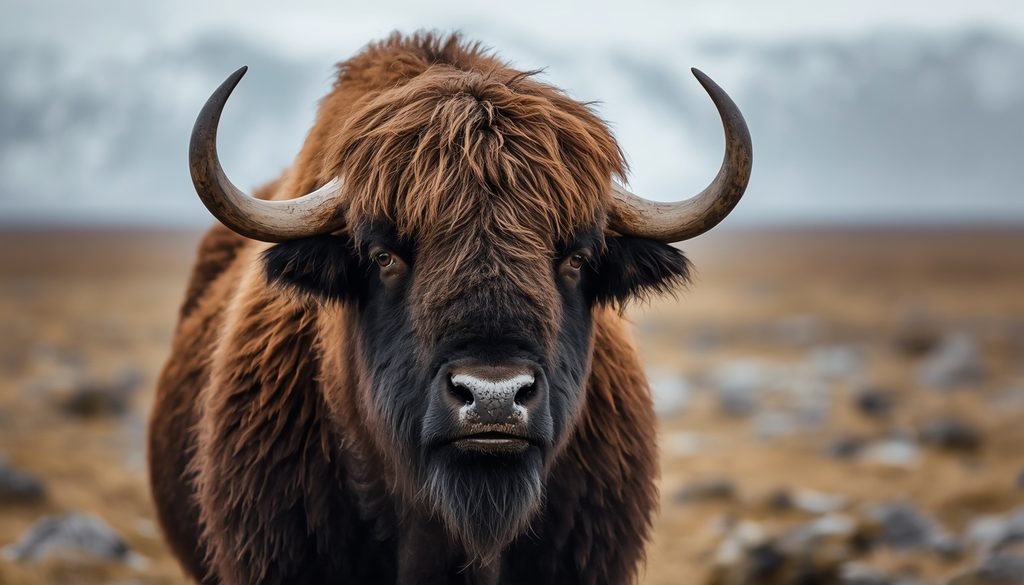
Musk oxen have heavy heads, thick skulls, and strong necks. Their horns curve around the sides of the head and create an even more imposing profile.
During competition, adult males can engage in head-to-head clashes. Their skull and neck structures are therefore important parts of their physical adaptations. Their thick coat, however, should not be confused with muscle or skull size.
Interesting Fact: Musk oxen produce exceptionally fine underwool called qiviut.
10. Elephant Seal
Scientific Name: Mirounga leonina
Class: Mammalia
Diet: Carnivore
Habitat: Southern Ocean and sub-Antarctic regions
Male elephant seals have huge bodies and large heads. Their most unusual facial feature is the inflatable proboscis, which is used during vocal displays and competition between males.
The proboscis is not technically a forehead. It is a fleshy nose structure that can make the entire head look especially large and unusual.
Interesting Fact: Southern elephant seals are remarkable deep-diving marine mammals.
11. Orangutan
Scientific Name: Pongo spp.
Class: Mammalia
Diet: Omnivore
Habitat: Tropical rainforests of Southeast Asia
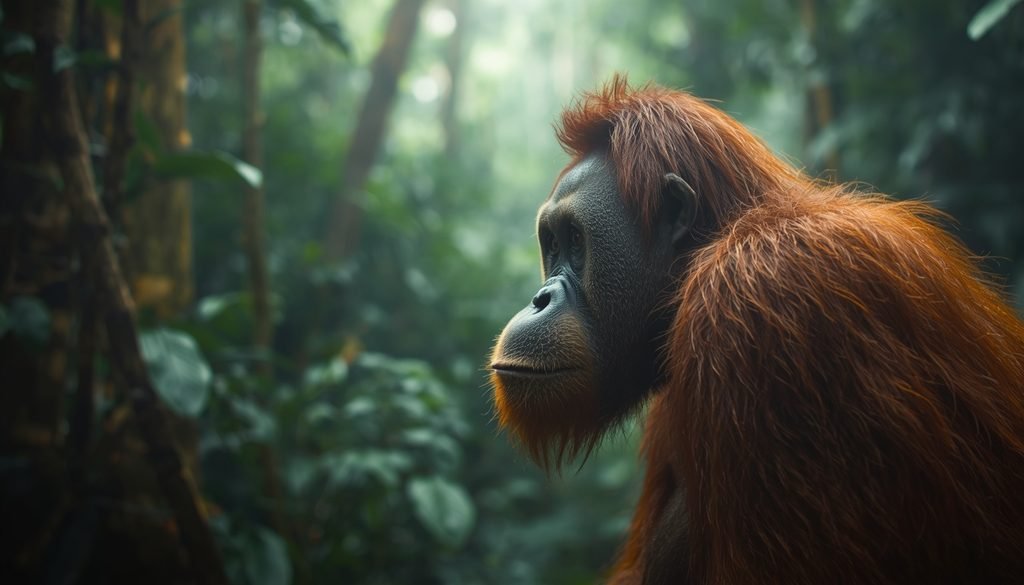
Orangutans have distinctive facial and skull shapes that can make their upper faces appear broad or prominent. Adult males can also develop large cheek pads, creating a very different facial profile from females and younger animals.
It is better to describe these structures as part of the orangutan’s facial and cranial anatomy rather than claiming that a large forehead directly indicates intelligence or social rank.
Interesting Fact: Orangutans spend much of their lives in trees and have extremely long arms suited to their arboreal lifestyle.
12. Gorilla
Scientific Name: Gorilla spp.
Class: Mammalia
Diet: Herbivore
Habitat: Tropical forests of Central Africa
Gorillas are known for their large skulls and prominent brow regions. The brow ridge is the bony area above the eyes, so it should not simply be called a forehead.
Adult male gorillas also develop powerful jaw and neck muscles, which influence the shape of the skull and face. Their heavy cranial structure gives them a distinctive profile.
Interesting Fact: Mountain gorillas and eastern lowland gorillas are among the world’s most recognizable great apes.
13. Saki Monkey
Scientific Name: Pithecia spp.
Class: Mammalia
Diet: Omnivore
Habitat: Tropical forests of South America
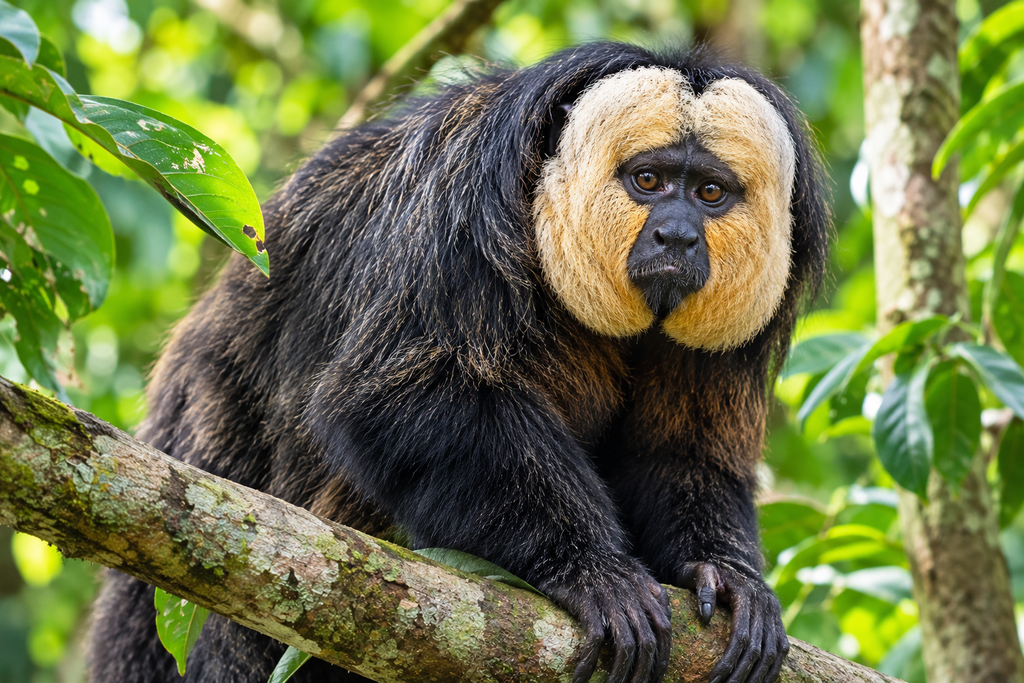
Saki monkeys have distinctive faces and head profiles that vary among species. Their dense facial hair and unusual facial proportions can make their foreheads and upper faces appear particularly prominent.
They are primarily arboreal and use their bodies, hands, and feet to move through forest vegetation. Their unusual appearance is therefore part of a broader set of adaptations to life in the canopy.
Interesting Fact: Sakis are New World monkeys found in South American forests.
14. Bald Uakari
Scientific Name: Cacajao calvus
Class: Mammalia
Diet: Omnivore
Habitat: Amazonian flooded forests
The bald uakari has one of the most unusual faces among primates. Its face is largely hairless and can appear bright red, while the rounded shape of its head makes the upper face look especially noticeable.
Its unusual facial appearance is not simply a large forehead. Facial coloration, skull shape, and the absence of facial hair all contribute to its distinctive look.
Interesting Fact: Bald uakaris are strongly associated with flooded forests in the Amazon Basin.
15. Beluga Sturgeon
Scientific Name: Huso huso
Class: Actinopterygii
Diet: Carnivore
Habitat: Caspian, Black, and Azov Sea systems and connected rivers
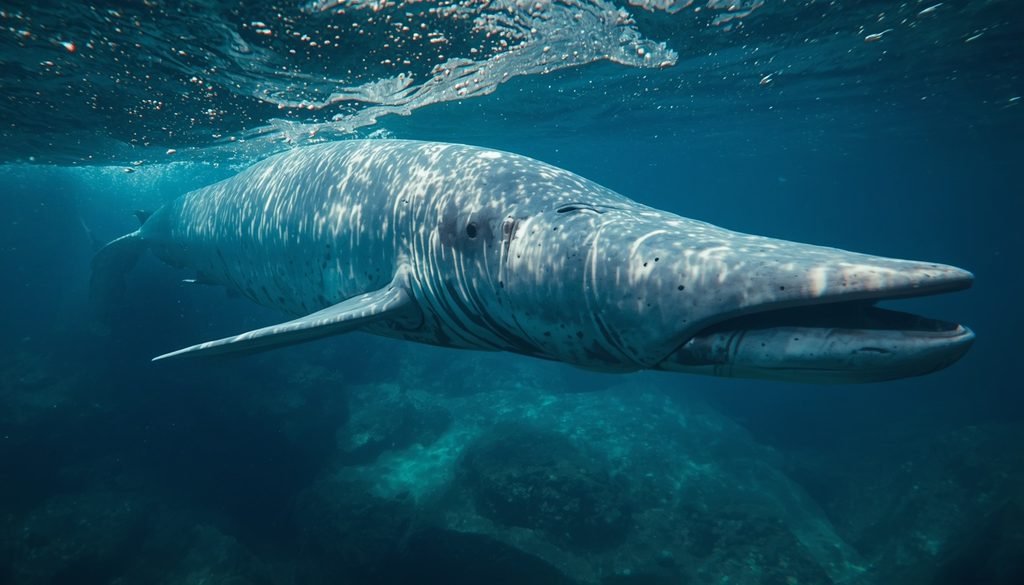
The beluga sturgeon has a large, elongated head that gives it a distinctive profile. Its mouth and sensory structures are adapted for locating and consuming prey near the bottom of aquatic environments.
This fish is very different from the beluga whale despite sharing the common name “beluga.” The two animals belong to completely different animal groups.
Interesting Fact: Beluga sturgeon populations have been heavily affected by overfishing and habitat changes.
16. Domestic Ram
Scientific Name: Ovis aries
Class: Mammalia
Diet: Herbivore
Habitat: Farms, pastures, and grasslands
Domestic rams often have broad foreheads and strong skulls, particularly in breeds with large horns. Their head and horn structure are especially noticeable in mature males.
Rams may use their heads and horns during competition with other males. However, forehead shape varies considerably among sheep breeds because selective breeding has produced many different body and horn forms.
Interesting Fact: Sheep breeds can differ dramatically in horn size, face shape, wool, and body conformation.
17. Walrus
Scientific Name: Odobenus rosmarus
Class: Mammalia
Diet: Carnivore
Habitat: Arctic and sub-Arctic marine environments
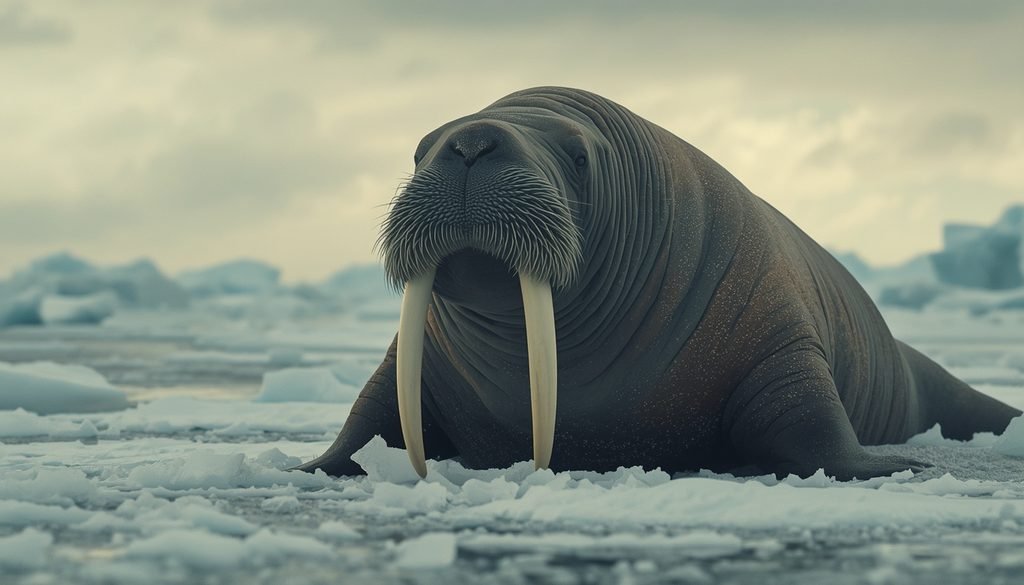
Walruses have large rounded heads with thick facial tissues, prominent tusks, and sensitive whiskers called vibrissae. Their head shape is closely connected to their feeding lifestyle.
Walruses use their vibrissae to detect food on the seafloor, while their tusks have several functions, including fighting, display, and helping with movement around ice.
Interesting Fact: A walrus can have thousands of sensitive whiskers around its muzzle.
18. Bowhead Whale
Scientific Name: Balaena mysticetus
Class: Mammalia
Diet: Carnivore
Habitat: Arctic and sub-Arctic waters
The bowhead whale is famous for its enormous, rounded head, which can make up a major portion of its body. Its thick skull and powerful head allow it to push through sea ice and support its specialized feeding anatomy.
Although commonly described as having a huge forehead, the more accurate description is an exceptionally large head. The bowhead uses baleen plates to filter tiny organisms from seawater.
Interesting Fact: Bowhead whales are highly adapted to life in icy Arctic waters.
Why Do Some Animals Have Big Foreheads?
There is no single reason why an animal may appear to have a large forehead. The feature can result from skull shape, specialized organs, feeding adaptations, sexual selection, facial structures, or evolutionary history.
For example, a beluga’s rounded forehead contains its melon, which is associated with echolocation. A humphead wrasse develops a prominent forehead hump, while some cichlids develop nuchal humps. Bison and musk oxen have heavy head and neck structures that fit their physical lifestyles.
This variety shows why a “big forehead” is better understood as a visual description than a scientific category.
Big Forehead vs. Big Head: What’s the Difference?
A forehead is only one part of an animal’s head. Some animals in this list actually have:
- Large skulls
- Prominent brow ridges
- Rounded facial structures
- Nuchal humps
- Specialized melons
- Large jaws
- Enlarged cranial regions
A beluga whale’s forehead is associated with a melon, while a gorilla’s prominent upper-face appearance includes a strong brow ridge. A Flowerhorn’s large “forehead” is actually a nuchal hump. Understanding these differences makes descriptions of unusual animal anatomy more accurate.
Are Big Foreheads Useful for Animals?
Sometimes, but not always in the same way.
A specialized head structure can help an animal feed, communicate, navigate, compete, or survive in its environment. Whales provide an excellent example because their head structures are closely connected with underwater adaptations. Fish with nuchal humps may display these features as part of their distinctive appearance and social behavior.
In other species, a large head may simply result from overall body proportions or skull anatomy. Therefore, it is better to ask what the structure does rather than assuming that every big forehead has the same function.
Read More: 14 Animals That Eat Corn
Frequently Asked Questions
What animal has the biggest forehead?
The sperm whale is one of the strongest candidates when discussing an exceptionally large forehead. Its massive forehead is a distinctive anatomical structure containing the spermaceti organ and other tissues. However, “biggest forehead” is not a standardized zoological measurement, so a universal ranking is difficult to establish.
What sea animal has a big forehead?
Several marine animals have prominent head structures. Beluga whales have rounded melons, sperm whales have enormous foreheads, and bowhead whales have exceptionally large heads. These structures differ anatomically and should not all be considered the same type of forehead.
Why do beluga whales have big foreheads?
A beluga’s rounded forehead contains a fatty structure called the melon. The melon is associated with echolocation and can change shape, helping the whale focus sounds. This specialized structure is one reason belugas have such a distinctive rounded head.
What is the forehead of a beluga whale called?
The prominent rounded structure on a beluga’s forehead is called the melon. It is a specialized fatty organ associated with echolocation. The melon is therefore more than simply an enlarged forehead and is an important part of the beluga’s sensory system.
Why does a sperm whale have such a large head?
The sperm whale’s enormous head contains specialized oil-filled structures, including the spermaceti organ and the junk. These structures are associated with the whale’s acoustic system and have been studied for their possible roles in sound production and other functions.
What fish has a big forehead?
The humphead wrasse is one of the best-known fish with a prominent forehead hump. Its hump becomes more noticeable with age, especially in older males. The species is also known by several common names, including Napoleon fish.
Do big foreheads mean animals have bigger brains?
Not necessarily. External head or forehead size cannot be used by itself to determine brain size or intelligence. Animal skulls contain many different structures, and features such as muscles, sensory organs, fat deposits, and specialized anatomy can affect the external shape of the head.
What is the difference between a big forehead and a big head?
A big forehead refers to a prominent frontal area, while a big head describes the overall size or shape of the animal’s head. Some animals commonly described as having big foreheads actually have a specialized structure such as a melon, brow ridge, or nuchal hump.
Final Thoughts
The animal kingdom contains many species with unusual head shapes, from the rounded melon of a beluga whale to the massive forehead of a sperm whale and the prominent hump of a humphead wrasse. Animals with big foreheads are not one scientific group; their appearances come from many different anatomical structures and evolutionary adaptations.
Some have specialized organs, while others have broad skulls, brow ridges, nuchal humps, or large facial regions. Looking closely at these differences makes each animal even more interesting. A big forehead may be useful for feeding, communication, competition, or other biological functions—or it may simply be part of the animal’s distinctive anatomy.

One thought on “Animals With Big Foreheads: 18 Fascinating Animals”