
Introduction
When you think about the most muscular animals, you may picture a gorilla, bear, tiger, or elephant. Many animals have impressive muscles, but they do not all use their strength in the same way. Some need powerful shoulders for digging, some rely on muscular legs for running, while others use strong jaws, necks, or entire bodies for survival.
The phrase most muscular animals does not describe an official scientific ranking. Muscle size, body weight, physical strength, speed, power, and muscle-to-body ratio are different things. A huge elephant has an enormous amount of muscle, but that does not automatically mean it is the strongest animal. Likewise, a chimpanzee has a very different muscular build from a rhinoceros or a draft horse.
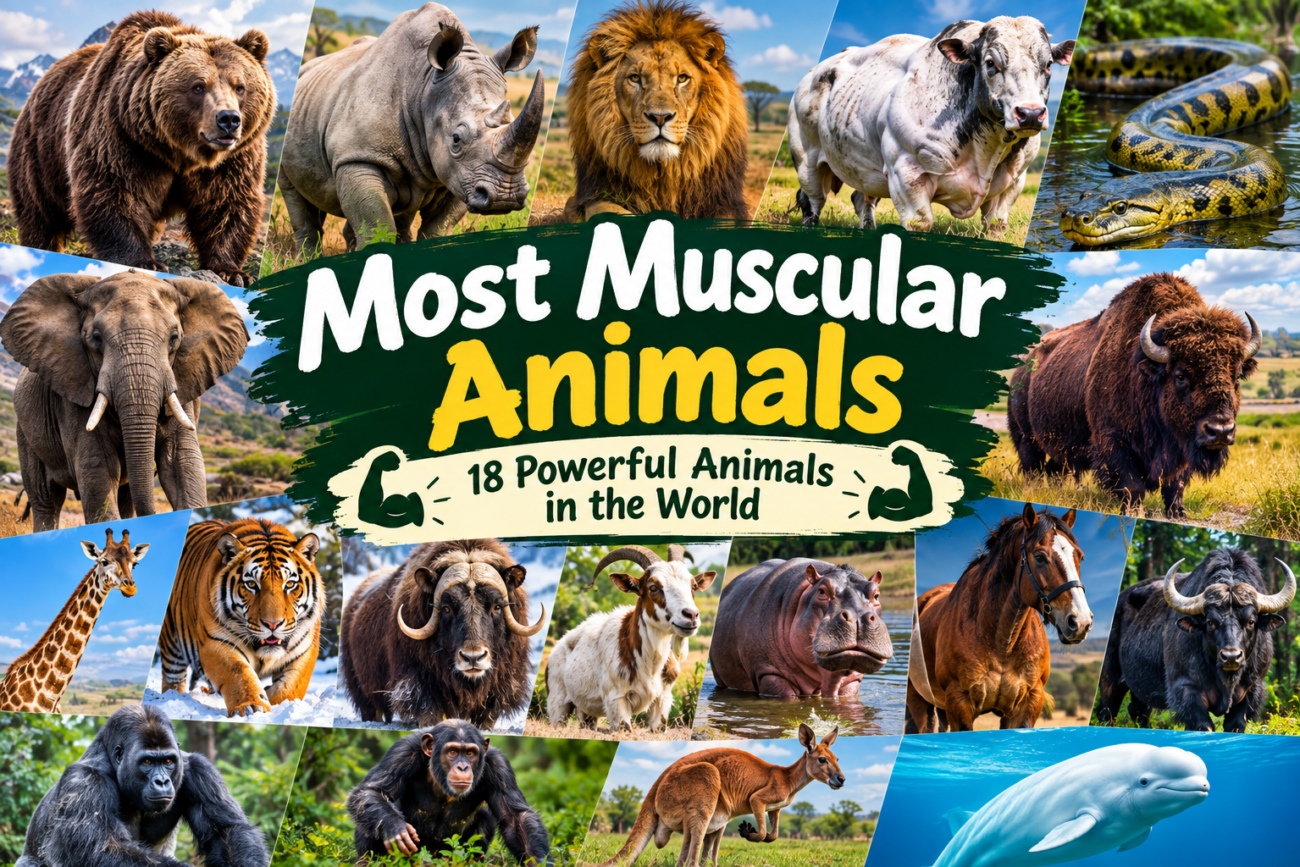
In this guide, we explore 18 muscular animals and explain the body parts and adaptations that make each one physically powerful.
What Are the Most Muscular Animals?
The most muscular animals are species or breeds known for substantial muscle development in important parts of their bodies, such as the shoulders, chest, neck, forelimbs, hind limbs, jaws, or torso.
Animals develop powerful muscles because their lifestyles demand them. Muscles work with bones, tendons, ligaments, and joints to produce movement and support the body.
Quick Comparison of Muscular Animals
| Animal | Scientific Name | Class | Diet | Main Muscular Adaptation |
| Grizzly Bear | Ursus arctos | Mammalia | Omnivore | Shoulders and forelimbs |
| Rhinoceros | Rhinocerotidae | Mammalia | Herbivore | Legs, neck, body |
| Lion | Panthera leo | Mammalia | Carnivore | Shoulders and forelimbs |
| Belgian Blue Cattle | Bos taurus | Mammalia | Herbivore | Double-muscling phenotype |
| Green Anaconda | Eunectes murinus | Reptilia | Carnivore | Whole-body musculature |
| African Elephant | Loxodonta africana | Mammalia | Herbivore | Legs, trunk, shoulders |
| American Bison | Bison bison | Mammalia | Herbivore | Shoulders and neck |
| Giraffe | Giraffa camelopardalis | Mammalia | Herbivore | Neck and legs |
| Tiger | Panthera tigris | Mammalia | Carnivore | Shoulders, legs, torso |
| Musk Ox | Ovibos moschatus | Mammalia | Herbivore | Shoulders and neck |
| Boer Goat | Capra aegagrus hircus | Mammalia | Herbivore | Shoulders and body |
| Hippopotamus | Hippopotamus amphibius | Mammalia | Herbivore | Jaws, neck and legs |
| Draft Horse | Equus caballus | Mammalia | Herbivore | Chest, shoulders and hindquarters |
| Gaur | Bos gaurus | Mammalia | Herbivore | Shoulders and neck |
| Mountain Gorilla | Gorilla beringei beringei | Mammalia | Herbivore | Arms, chest and shoulders |
| Chimpanzee | Pan troglodytes | Mammalia | Omnivore | Upper body and arms |
| Red Kangaroo | Osphranter rufus | Mammalia | Herbivore | Hind legs and tail |
| Beluga Whale | Delphinapterus leucas | Mammalia | Carnivore | Swimming muscles |
1. Grizzly Bear
Scientific Name: Ursus arctos
Class: Mammalia
Diet: Omnivore
Habitat: Forests, mountains, meadows, and tundra
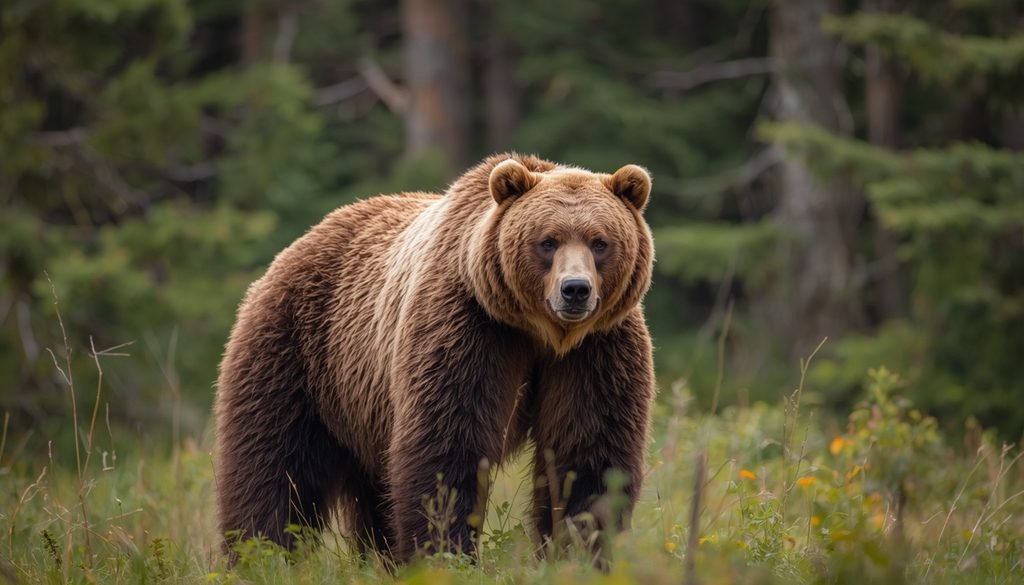
Grizzly bears have a powerful build, especially around their shoulders, neck, and forelimbs. Their muscular front end helps them dig through soil, tear apart logs, move objects, forage, and defend themselves.
Their strength is not simply the result of being large. Their skeleton and muscles work together to produce the force needed for digging and other demanding movements.
Why Is It So Muscular?
A grizzly’s lifestyle requires strong forelimbs, shoulders, and claws.
What Does Its Muscle Help It Do?
Muscle power supports digging, climbing, foraging, movement, and defense.
Interesting Fact: The large shoulder area of a grizzly is one of the most noticeable features of its powerful body.
2. Rhinoceros
Scientific Name: Family Rhinocerotidae
Class: Mammalia
Diet: Herbivore
Habitat: Grasslands, savannas, forests, and wetlands
Rhinoceroses have massive bodies supported by strong legs, neck muscles, and a powerful torso. Their heavy build helps them carry enormous body weight while moving across challenging terrain.
It is important to separate body mass from muscle mass. A rhino’s impressive size does not mean every part of its body consists of muscle.
Why Is It So Muscular?
Its large body requires strong muscles for movement and support.
What Does Its Muscle Help It Do?
Muscles help with walking, running, pushing, turning, and defensive movements.
Interesting Fact: Rhinoceroses can look heavily armored, but their physical power also comes from their underlying musculoskeletal system.
3. Lion
Scientific Name: Panthera leo
Class: Mammalia
Diet: Carnivore
Habitat: Grasslands, savannas, and open woodland
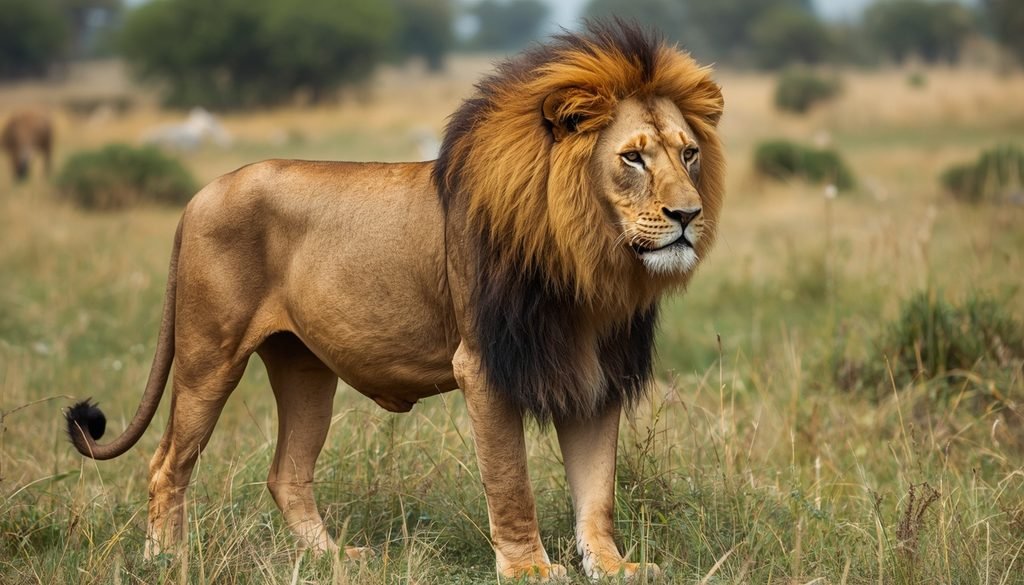
Lions are built for short bursts of powerful movement. Their shoulders, chest, forelimbs, hindquarters, and neck muscles contribute to stalking, chasing, grappling, and controlling prey.
Their muscular forequarters are particularly noticeable. Instead of relying only on endurance, lions use strength and coordinated movement during close-range hunting.
Why Is It So Muscular?
Predation requires explosive movement and physical control.
What Does Its Muscle Help It Do?
Muscles support jumping, tackling, running, grappling, and territorial behavior.
Interesting Fact: A lion’s muscular build is closely connected to its predatory lifestyle.
4. Belgian Blue Cattle
Scientific Name: Bos taurus
Class: Mammalia
Diet: Herbivore
Habitat: Agricultural environments and managed pasture
Belgian Blue cattle are famous for their unusually muscular appearance. This breed has a genetic condition associated with reduced activity of myostatin, a protein involved in regulating muscle development. The result is known as the double-muscling phenotype.
This makes Belgian Blue one of the clearest examples of extreme muscle development in domesticated livestock.
Why Is It So Muscular?
Selective breeding and genetics contribute strongly to its muscular phenotype.
What Does Its Muscle Help It Do?
Its muscle development primarily reflects its breeding and body conformation rather than a wild survival adaptation.
Interesting Fact: “Double muscling” refers to the animal’s visibly increased muscle development.
5. Green Anaconda
Scientific Name: Eunectes murinus
Class: Reptilia
Diet: Carnivore
Habitat: Swamps, marshes, slow-moving rivers, and wetlands
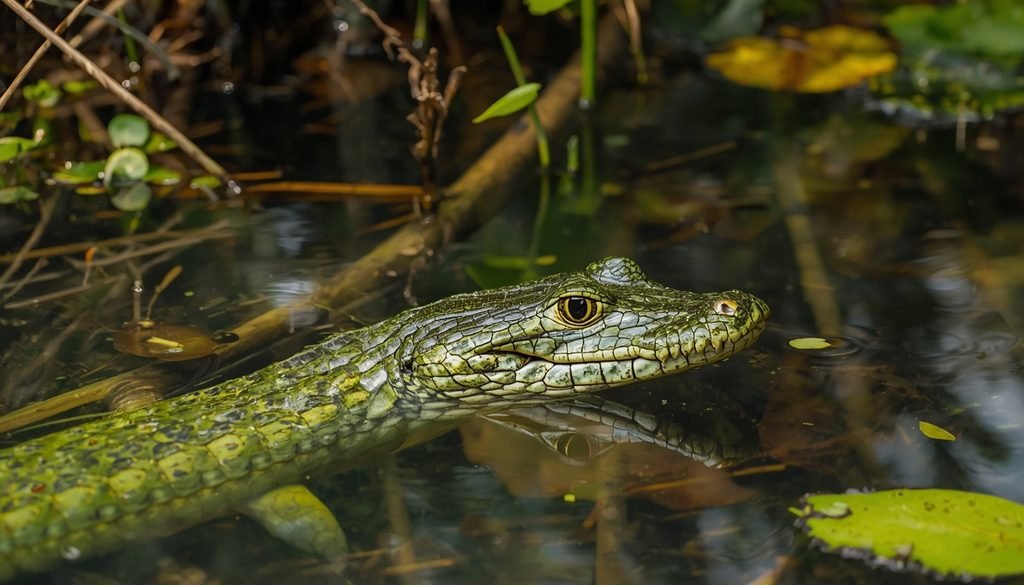
The green anaconda has an extremely powerful body made of long bands of muscle. Instead of having muscular limbs like a bear or tiger, it relies on its entire body for movement and prey capture.
Its muscles allow it to swim efficiently and coil around prey. This is a good example of how animal musculature can evolve in a completely different form.
Why Is It So Muscular?
Its elongated body requires strong muscles for swimming and prey restraint.
What Does Its Muscle Help It Do?
Muscles provide propulsion in water and help the snake maintain powerful coils.
Interesting Fact: Anacondas demonstrate that an animal does not need legs to have an extremely muscular body.
6. African Elephant
Scientific Name: Loxodonta africana
Class: Mammalia
Diet: Herbivore
Habitat: Savannas, forests, grasslands, and wetlands
African elephants have enormous bodies supported by strong legs, shoulders, and other large muscle groups. Their trunk also contains a highly complex arrangement of muscles that allows it to perform many precise movements.
Elephant size should not be confused with muscle mass. Their body contains bones, organs, connective tissue, fat, and other tissues as well as muscle.
Why Is It So Muscular?
Their huge bodies and active trunks require substantial muscular support.
What Does Its Muscle Help It Do?
Muscles help elephants walk, push, carry, manipulate objects, and use their trunks for feeding.
Interesting Fact: The trunk is one of the most versatile muscular structures in the animal kingdom.
7. American Bison
Scientific Name: Bison bison
Class: Mammalia
Diet: Herbivore
Habitat: Grasslands, prairies, and open woodland
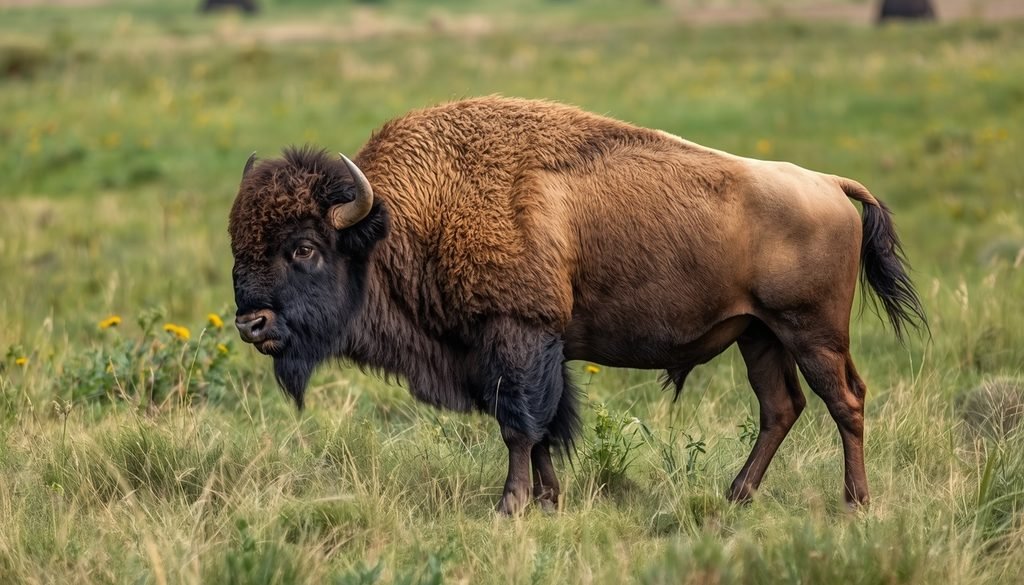
The American bison is famous for its huge shoulder hump and muscular front end. Strong muscles around the shoulders and neck help support its characteristic body shape.
This build is useful when moving through snow, traveling over rough ground, grazing, and responding to threats.
Why Is It So Muscular?
Its heavy forequarters are adapted for life on open grasslands and cold environments.
What Does Its Muscle Help It Do?
Muscles support movement, digging through snow, defense, and powerful forward motion.
Interesting Fact: The bison’s shoulder hump is largely associated with powerful muscles and supporting structures.
8. Giraffe
Scientific Name: Giraffa camelopardalis
Class: Mammalia
Diet: Herbivore
Habitat: African savannas, grasslands, and open woodland
Giraffes may look thin because of their extremely long legs and necks, but they still require substantial muscular support. Neck muscles help control the long neck, while powerful leg muscles help maintain movement and balance.
Their body demonstrates that a muscular animal does not always have a bulky appearance.
Why Is It So Muscular?
Its unusually large body dimensions require specialized muscles for posture and movement.
What Does Its Muscle Help It Do?
Muscles help the giraffe walk, run, balance, feed, and maintain its posture.
Interesting Fact: A giraffe’s long neck requires coordinated muscles and skeletal structures to remain functional.
9. Tiger
Scientific Name: Panthera tigris
Class: Mammalia
Diet: Carnivore
Habitat: Forests, grasslands, wetlands, and other Asian habitats
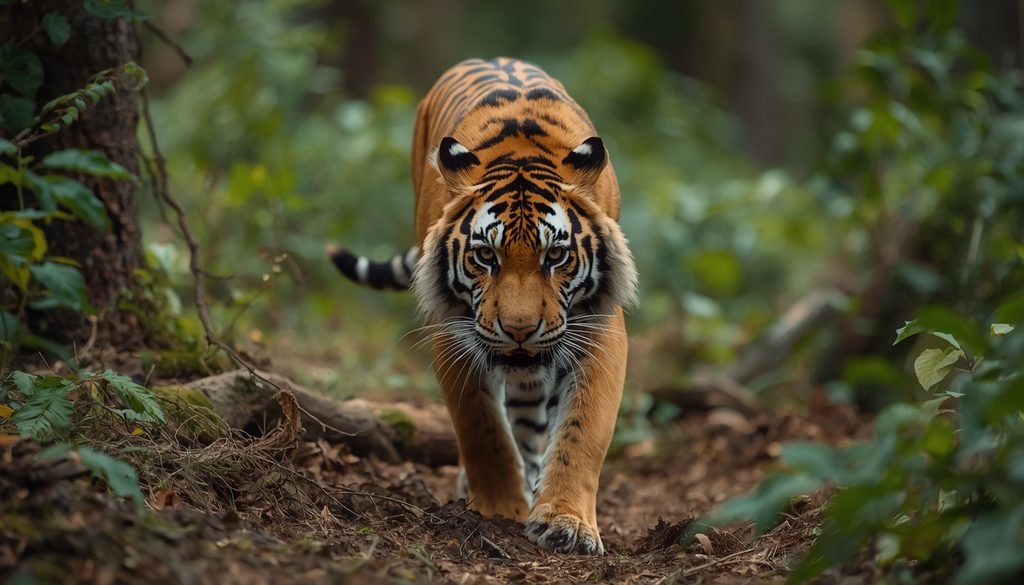
Tigers have powerful shoulders, forelimbs, hind legs, and torso muscles. Their bodies are designed for ambush hunting, where acceleration, jumping, gripping, and controlling prey are important.
Their muscular structure also supports swimming and climbing, making the tiger a highly versatile predator.
Why Is It So Muscular?
Hunting large prey requires coordinated strength and explosive movement.
What Does Its Muscle Help It Do?
Muscles help with jumping, running, gripping, dragging, swimming, and climbing.
Interesting Fact: Tigers combine powerful forelimbs with strong hindquarters rather than depending on one muscle group alone.
10. Musk Ox
Scientific Name: Ovibos moschatus
Class: Mammalia
Diet: Herbivore
Habitat: Arctic tundra
The musk ox has a compact, powerful body adapted to harsh Arctic conditions. Its shoulders, neck, and legs provide the physical strength needed to move through difficult terrain and protect itself and other herd members.
Its thick coat can make the animal appear even larger, so visible body size should not be mistaken entirely for muscle mass.
Why Is It So Muscular?
Its body is adapted for cold environments, movement, and defensive behavior.
What Does Its Muscle Help It Do?
Muscles support walking, pushing through snow, and defensive formations.
Interesting Fact: Much of the musk ox’s apparent bulk comes from its long, dense coat.
11. Boer Goat
Scientific Name: Capra aegagrus hircus
Class: Mammalia
Diet: Herbivore
Habitat: Farms, grasslands, shrublands, and dry environments
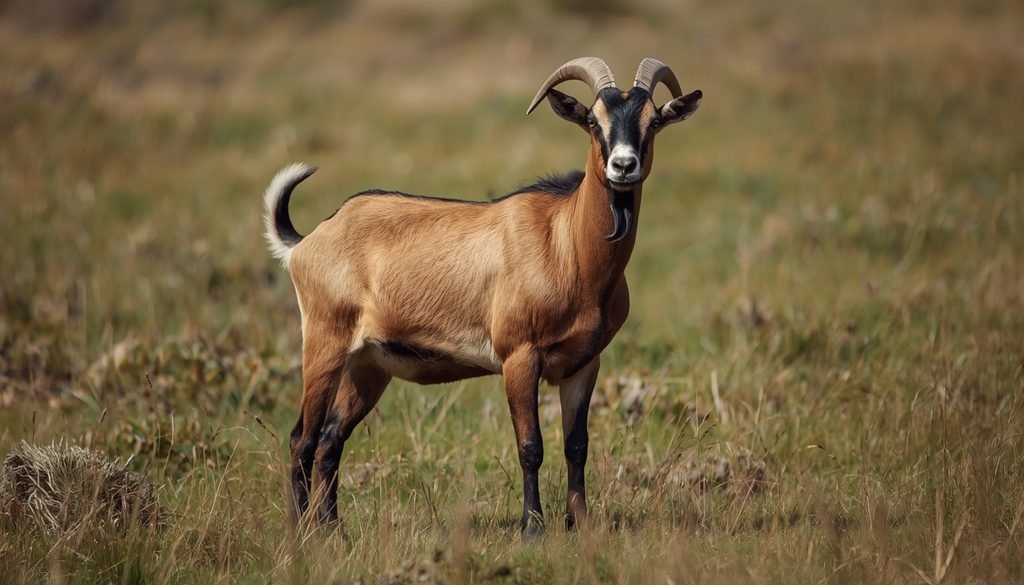
Boer goats are a meat-producing breed recognized for their strong body conformation. They commonly have developed shoulders, a broad body, and sturdy legs.
Their muscular appearance is strongly influenced by selective breeding for growth and meat production.
Why Is It So Muscular?
Breeding has favored body shape, growth, and meat-producing characteristics.
What Does Its Muscle Help It Do?
Muscles support walking, climbing, feeding, and normal physical activity.
Interesting Fact: Boer goats are one of the best-known meat goat breeds.
12. Hippopotamus
Scientific Name: Hippopotamus amphibius
Class: Mammalia
Diet: Herbivore
Habitat: Rivers, lakes, wetlands, and nearby grasslands
Hippos have thick, powerful bodies with strong legs, neck muscles, and enormous jaw muscles. Their jaws are especially important during territorial and defensive interactions.
Their large body should not simply be described as muscle, because hippos also contain substantial fat and other tissues.
Why Is It So Muscular?
Their aquatic and terrestrial lifestyle requires strong support and movement systems.
What Does Its Muscle Help It Do?
Muscles assist with walking, swimming, opening the jaws, fighting, and moving through water.
Interesting Fact: The hippo’s huge jaws are among its most striking muscular adaptations.
13. Draft Horse
Scientific Name: Equus caballus
Class: Mammalia
Diet: Herbivore
Habitat: Domestic farms, pastures, and managed environments
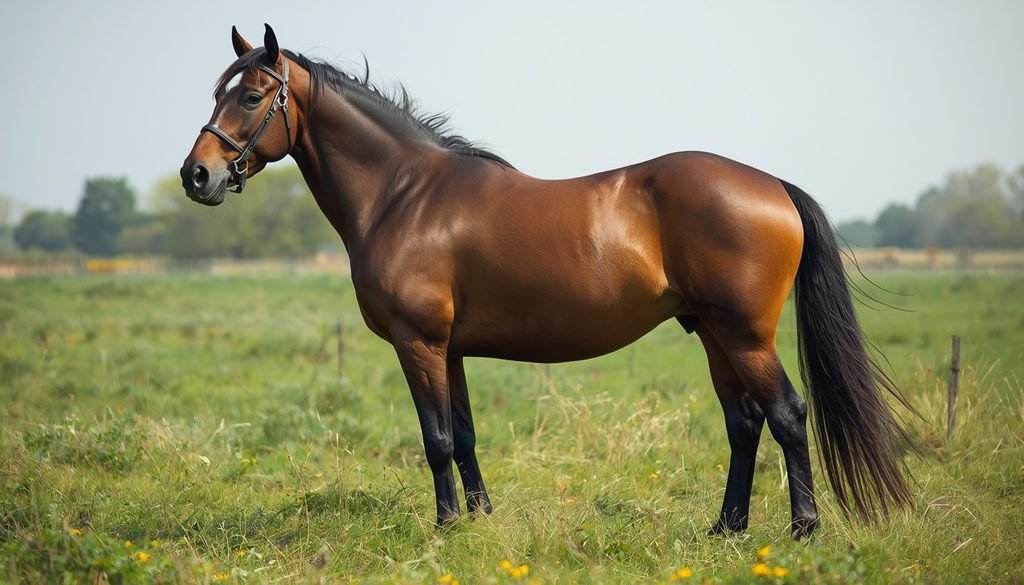
Draft horse is a general term for several types of heavy horse breeds developed for pulling and hauling. These horses typically have powerful shoulders, chests, backs, hindquarters, and legs.
Their muscular bodies reflect generations of selection for physical work.
Why Is It So Muscular?
Draft horses were developed for demanding pulling and hauling tasks.
What Does Its Muscle Help It Do?
Strong muscles support pulling, carrying, walking, and sustained physical work.
Interesting Fact: “Draft horse” describes a group of heavy horse types rather than one specific breed.
14. Gaur
Scientific Name: Bos gaurus
Class: Mammalia
Diet: Herbivore
Habitat: Forests, grasslands, and woodland edges in South and Southeast Asia
The gaur, sometimes called the Indian bison, has an impressive muscular build. Its shoulders, neck, torso, and legs create a powerful appearance that helps it move through forests and respond to threats.
Its raised shoulder region and large body give the species a particularly robust profile.
Why Is It So Muscular?
Its large body and active lifestyle require strong supporting muscles.
What Does Its Muscle Help It Do?
Muscles support movement, climbing uneven terrain, feeding, and defense.
Interesting Fact: The gaur is one of the largest living wild cattle species.
15. Mountain Gorilla
Scientific Name: Gorilla beringei beringei
Class: Mammalia
Diet: Herbivore
Habitat: Mountain forests of Central Africa
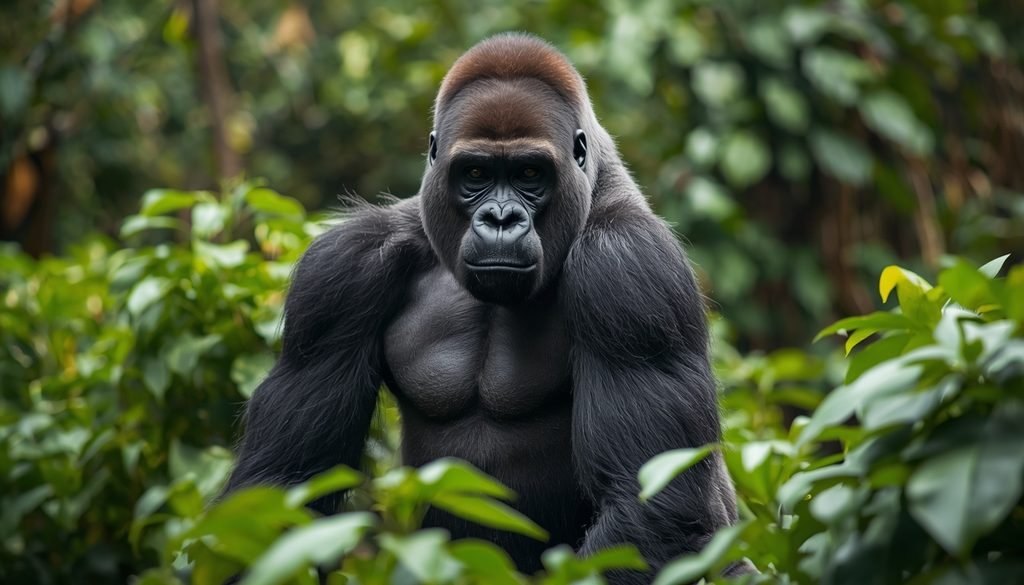
Mountain gorillas are among the most visibly muscular primates. Adult males develop broad shoulders, large arms, strong chests, and powerful upper bodies.
Their muscular anatomy supports climbing, pushing through vegetation, feeding, carrying, and physical displays or defense. Claims that gorillas are simply a certain number of times stronger than humans should be treated cautiously because strength depends on the movement and measurement used.
Why Is It So Muscular?
A gorilla’s lifestyle places significant demands on its upper body.
What Does Its Muscle Help It Do?
Muscles support climbing, movement, feeding, defense, and body positioning.
Interesting Fact: Adult male gorillas can develop especially broad and powerful upper bodies.
16. Chimpanzee
Scientific Name: Pan troglodytes
Class: Mammalia
Diet: Omnivore
Habitat: Tropical forests and woodland
Chimpanzees have strong upper bodies adapted for climbing, gripping, pulling, and moving through trees. Their arms and shoulders are especially important for their arboreal lifestyle.
Their physical abilities show why muscle mass alone is not enough to determine strength. Body structure, muscle arrangement, leverage, and movement all matter.
Why Is It So Muscular?
Tree climbing and frequent upper-body activity place major demands on the muscles.
What Does Its Muscle Help It Do?
Muscles support climbing, swinging, pulling, gripping, and ground movement.
Interesting Fact: Chimpanzees use both their upper and lower bodies in a wide range of climbing and locomotor behaviors.
17. Red Kangaroo
Scientific Name: Osphranter rufus
Class: Mammalia
Diet: Herbivore
Habitat: Australian grasslands, scrublands, and open woodland
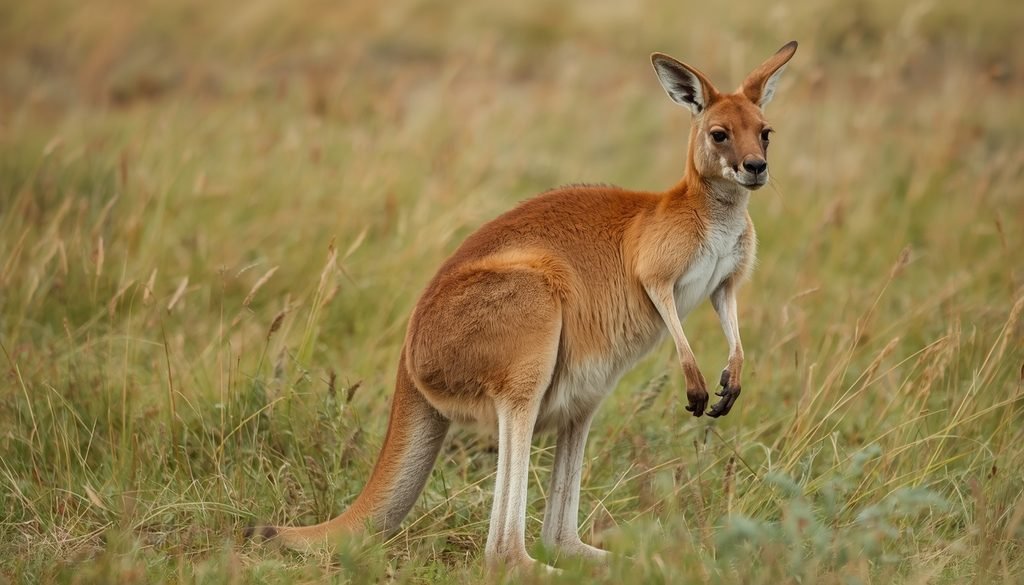
The red kangaroo has exceptionally developed hind limbs because its main form of fast movement is hopping. Large muscles in the legs work with elastic tendons to create efficient movement.
Its muscular tail also plays an important role in balance and body support.
Why Is It So Muscular?
Its locomotion depends heavily on powerful hind limbs.
What Does Its Muscle Help It Do?
Leg muscles provide hopping power, acceleration, and movement across open landscapes.
Interesting Fact: The kangaroo’s tail acts as an important balancing structure during movement.
18. Beluga Whale
Scientific Name: Delphinapterus leucas
Class: Mammalia
Diet: Carnivore
Habitat: Arctic and sub-Arctic marine waters
Beluga whales have powerful swimming muscles that work with their flexible bodies and tail flukes to produce propulsion. Their body may appear extremely rounded, but much of that appearance comes from a combination of body shape and insulating blubber.
Blubber is fat, not muscle, so it should not be confused with muscular development.
Why Is It So Muscular?
Swimming requires coordinated muscles throughout the body.
What Does Its Muscle Help It Do?
Muscles provide propulsion, maneuverability, diving ability, and efficient swimming.
Interesting Fact: Belugas have flexible necks compared with many other whales and dolphins, contributing to their distinctive movement and appearance.
Why Are Some Animals So Muscular?
Animals develop muscular bodies because muscles solve different survival problems. Predators may need explosive force to capture prey, while herbivores may need strong legs and shoulders to support large bodies.
Muscles also work with the skeleton, tendons, and joints. Together, these structures create movement, stability, and physical support.
Genetics, diet, age, activity, habitat, and natural selection can all influence an animal’s physical development. In domesticated animals such as Belgian Blue cattle, selective breeding can produce especially noticeable muscle development.
Muscle Mass vs. Physical Strength
Muscle mass and strength are not exactly the same thing.
A large animal may have a huge amount of muscle because it needs to support a massive body. Another animal may be smaller but have highly specialized muscles, favorable leverage, or a body structure that allows it to produce impressive force.
Muscle fibers, limb structure, joint position, tendons, body size, and movement patterns all influence physical performance.
This is why it is difficult to scientifically identify one animal as the single most muscular animal in the world.
Which Animal Has the Strongest Muscles?
There is no universal scientific test that ranks all animal species by “strongest muscles.” Different animals specialize in different types of force.
A gorilla is highly developed for upper-body movement. A tiger has powerful muscles suited to predation. A kangaroo has specialized hind limbs for hopping, while an anaconda relies on whole-body musculature.
Therefore, muscularity and strength should be compared according to the specific body part, movement, and measurement being considered.
How Muscles Help Animals Survive
Muscles are essential for almost every form of animal movement. They help animals walk, run, jump, climb, swim, dig, hunt, escape predators, defend themselves, and manipulate food or objects.
For example, powerful leg muscles can improve locomotion, while strong jaw muscles can help predators process prey. Some animals have specialized muscle systems for swimming, while others have powerful upper bodies for climbing.
Muscular anatomy is therefore closely connected to an animal’s ecological niche and evolutionary history.
Read More: 20 Silent Animals
Frequently Asked Questions
What are the most muscular animals?
Some of the animals known for impressive muscular development include grizzly bears, rhinoceroses, lions, Belgian Blue cattle, green anacondas, elephants, bison, tigers, gorillas, chimpanzees, draft horses, and red kangaroos.
What is the most muscular animal in the world?
There is no universally accepted scientific ranking for the single most muscular animal. Muscle mass, body size, strength, and muscle-to-body ratio are different measurements.
Which animal has the strongest muscles?
The answer depends on how strength is measured. Different animals specialize in different forms of force, including gripping, pulling, jumping, swimming, biting, and whole-body movement.
Are gorillas the most muscular animals?
Gorillas are among the most visibly muscular primates, especially adult males. Their shoulders, arms, and chest are strongly developed for their lifestyle.
Are elephants muscular?
Yes. Elephants have substantial musculature supporting their huge bodies, legs, shoulders, and highly flexible trunks. However, body weight should not be treated as a direct measurement of muscle mass.
Which animal has the strongest legs?
Different animals have highly specialized legs for different purposes. Kangaroos have powerful hind limbs for hopping, while horses have muscular legs suited to running and locomotion.
Which animal has the strongest upper body?
Gorillas and chimpanzees are notable for powerful upper bodies among primates. Other large animals, including bears and big cats, also have substantial upper-body musculature adapted to their lifestyles.
Are muscular animals always the strongest?
No. Muscle size is only one factor. Strength also depends on body structure, leverage, muscle arrangement, nervous-system control, tendons, and the type of movement being measured.
Final Thoughts
The most muscular animals come in many shapes and sizes. Some, such as Belgian Blue cattle, are known for unusually developed muscle because of genetics and selective breeding. Others, including gorillas, bears, tigers, bison, and kangaroos, have muscular adaptations closely connected to movement, feeding, hunting, defense, or survival.
There is no single scientific winner for the title of “most muscular animal.” Instead, each species has a muscular system adapted to its own lifestyle. Looking at muscle mass, body structure, movement, and function gives us a much better understanding of why these animals are so physically powerful.

One thought on “Most Muscular Animals: 18 Powerful Animals in the World”