
Introduction
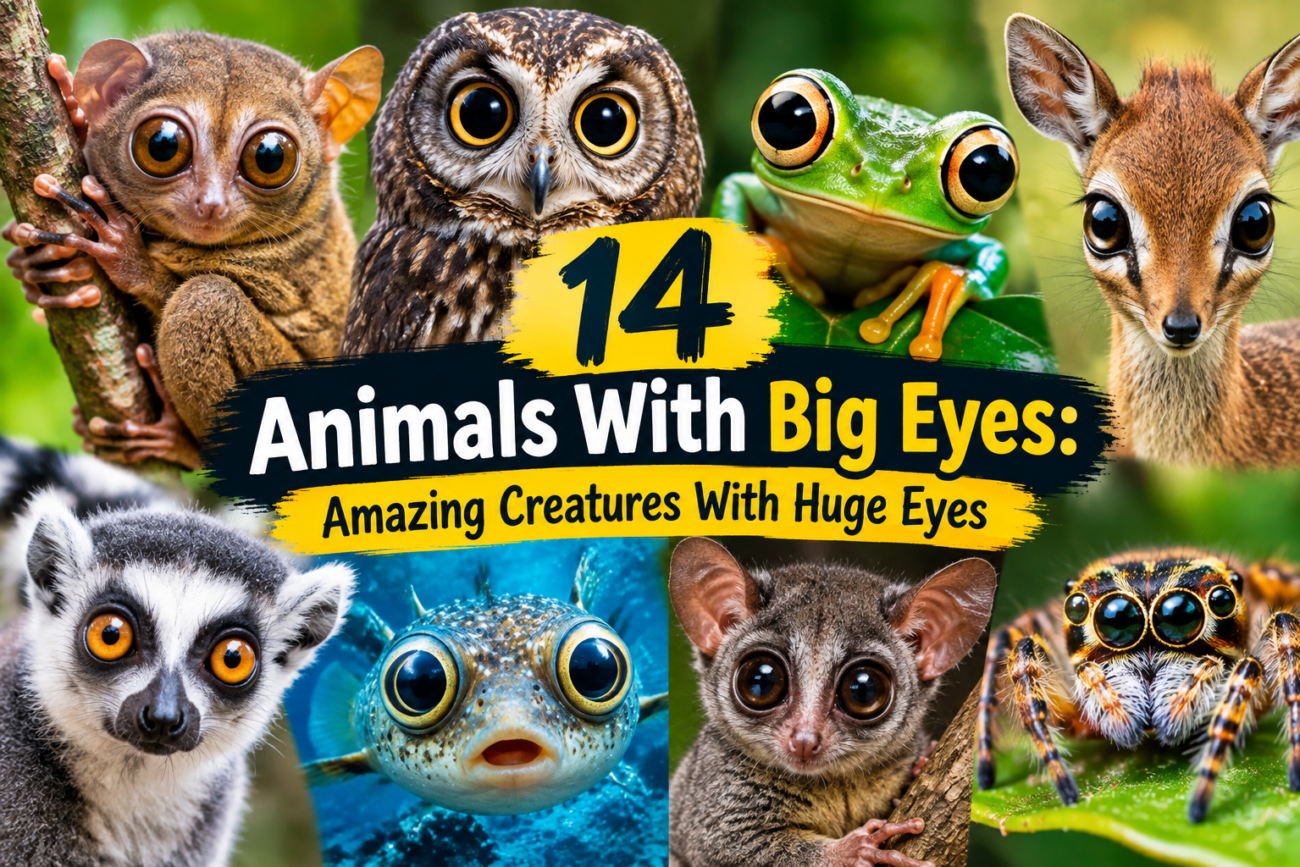
Animals come in countless shapes and sizes, but some are especially noticeable because of their enormous or unusually large eyes. From tiny forest primates to giant creatures living deep beneath the ocean, animals with big eyes have evolved remarkable visual adaptations that help them survive.
Large eyes can be useful in environments where light is limited. Nocturnal animals may rely on sensitive eyes to find food and move through darkness, while deep-sea species use enormous eyes to detect faint light and movement. Other animals have large eyes because of their body shape, hunting strategy, or need for a wide visual field.
In this guide, we’ll look at 14 fascinating big-eyed animals and explore their habitats, diets, appearance, and the reasons their eyes are so distinctive.
What Are Animals With Big Eyes?
Animals with big eyes are species whose eyes are unusually large compared with their head or body, or whose eyes are physically enormous. Large eyes can be an adaptation for collecting more light, improving low-light vision, detecting movement, or observing surroundings. However, eye size alone does not automatically mean an animal has better vision.
Quick List of Animals With Big Eyes
| No. | Animal | Main Visual Adaptation |
| 1 | Philippine Tarsier | Nocturnal vision |
| 2 | Slow Loris | Low-light vision |
| 3 | Aye-Aye | Nighttime foraging |
| 4 | Bushbaby | Night vision |
| 5 | Pygmy Marmoset | Daylight vision |
| 6 | Gray Mouse Lemur | Nocturnal activity |
| 7 | Owl | Low-light hunting |
| 8 | Ostrich | Long-distance observation |
| 9 | Red-Eyed Tree Frog | Large visual organs |
| 10 | Panther Chameleon | Wide visual field |
| 11 | Tokay Gecko | Dim-light vision |
| 12 | Giant Squid | Detecting faint deep-sea light |
| 13 | Colossal Squid | Deep-sea vision |
| 14 | Swordfish | Large eyes for hunting in deeper water |
1. Philippine Tarsier
Scientific Name: Carlito syrichta
Class: Mammalia
Habitat: Philippine forests
Diet: Insects and small animals
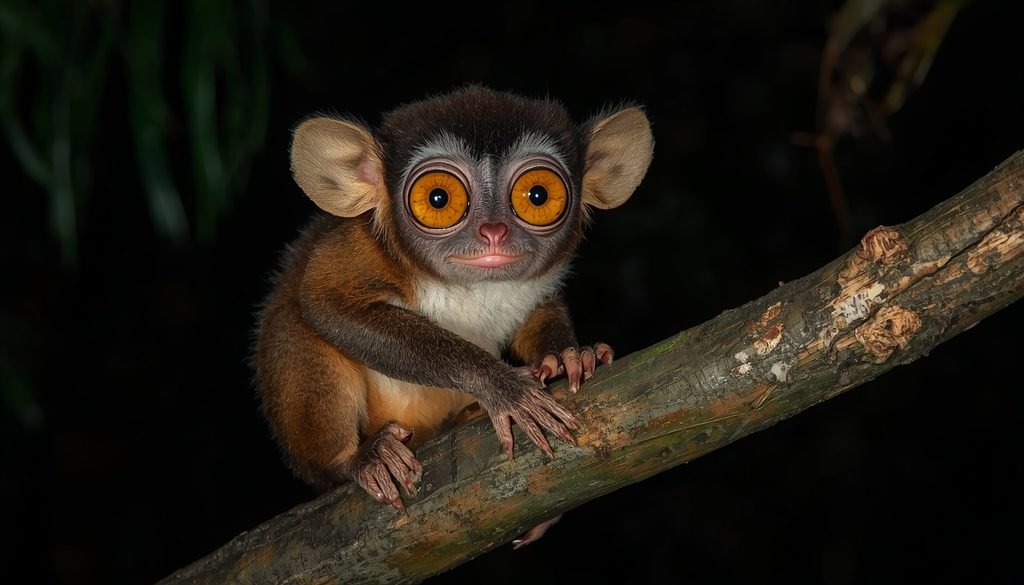
The Philippine tarsier is one of the most recognizable animals with big eyes. Its eyes are enormous compared with its tiny body and are strongly associated with its nocturnal lifestyle. Tarsiers are small primates that hunt insects and other small prey after dark. Their eyes are adapted to gather light in dim conditions. Because their eyes cannot rotate like ours, tarsiers can turn their heads dramatically to inspect their surroundings.
2. Slow Loris
Scientific Name: Nycticebus species
Class: Mammalia
Habitat: Tropical forests of Southeast Asia
Diet: Fruit, insects, nectar, and other foods
Slow lorises have round faces and strikingly large eyes. They are primarily nocturnal and spend much of their time moving through trees after sunset. Their large, forward-facing eyes support vision in low-light conditions and help them judge their surroundings while climbing. Different slow loris species occupy forests across Southeast Asia, making their big eyes an important part of their distinctive appearance and nighttime lifestyle.
3. Aye-Aye
Scientific Name: Daubentonia madagascariensis
Class: Mammalia
Habitat: Madagascar forests
Diet: Insects, fruit, seeds, nectar, and larvae
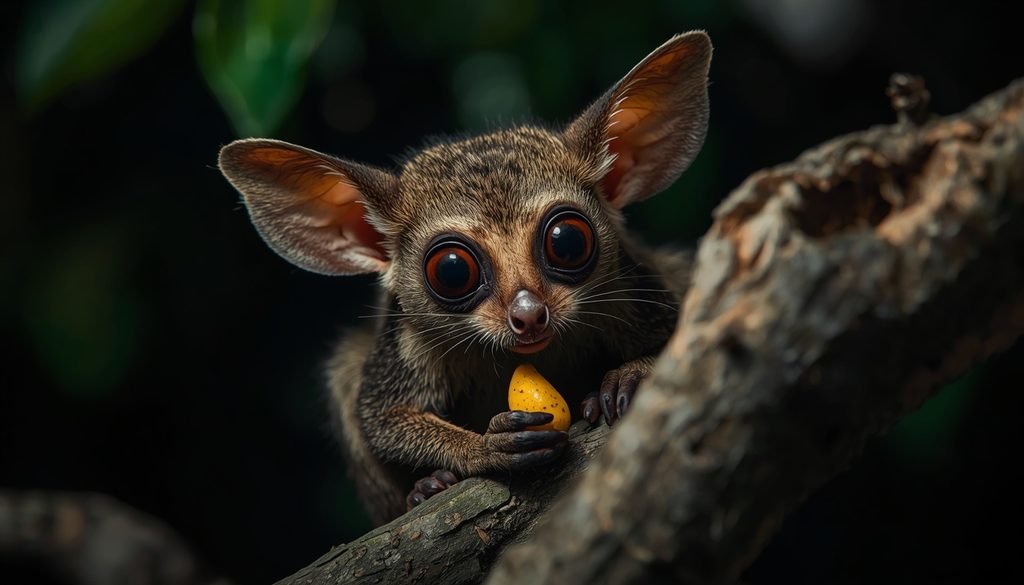
The aye-aye is a highly unusual nocturnal primate from Madagascar. It has large eyes, prominent ears, a bushy tail, and an extremely long middle finger used while searching for food. Aye-ayes are mainly active at night, when they forage for insects and other foods in trees. Their large eyes are part of a collection of sensory adaptations suited to nighttime activity.
4. Bushbaby
Scientific Name: Galago species
Class: Mammalia
Habitat: African forests and woodlands
Diet: Insects, fruit, and other foods
Bushbabies, also called galagos, are small African primates famous for their huge eyes and powerful jumping ability. They are nocturnal, so they spend much of their active period in darkness. Their eyes are adapted to low-light conditions, while their large ears help them detect sounds. Some galago species also have a reflective layer in the eye that improves light detection in darkness.
5. Pygmy Marmoset
Scientific Name: Cebuella species
Class: Mammalia
Habitat: Amazon rainforest
Diet: Tree sap, fruit, insects, and other foods
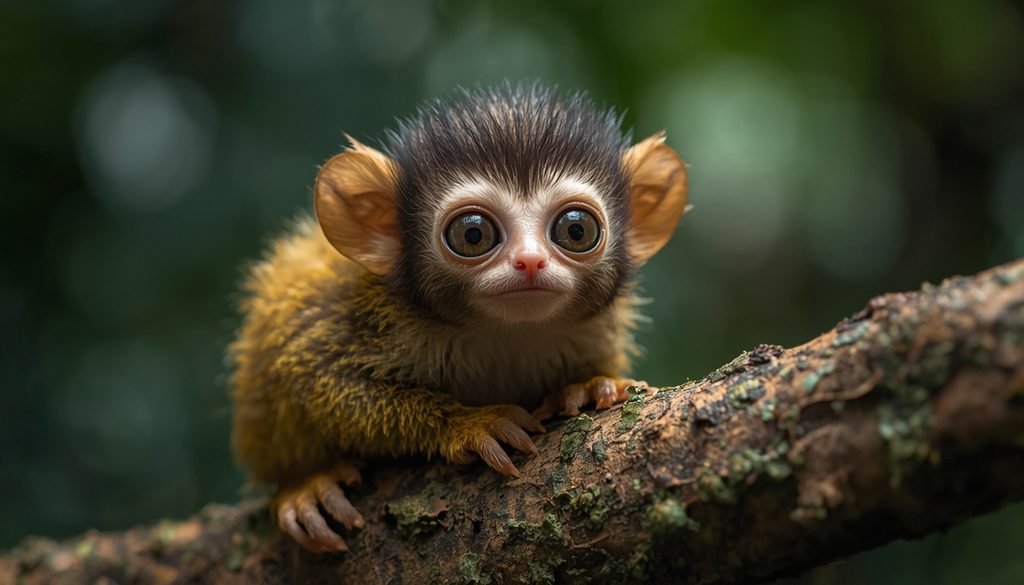
The pygmy marmoset is one of the world’s smallest monkeys. Its small face and relatively prominent eyes give it an especially expressive appearance. Unlike many animals on this list, pygmy marmosets are primarily active during the day. Their eyesight helps them navigate dense vegetation, locate food, and monitor their surroundings. They are highly adapted to life in the Amazon rainforest canopy.
6. Gray Mouse Lemur
Scientific Name: Microcebus species
Class: Mammalia
Habitat: Madagascar forests
Diet: Fruit, nectar, insects, and small prey
Gray mouse lemurs are tiny nocturnal primates from Madagascar. Their oversized-looking eyes are one of their most noticeable features and fit their nighttime lifestyle. They move through branches after dark while searching for insects, fruit, and other foods. Their large eyes help them make use of limited available light, while their small bodies allow them to move through narrow spaces in the forest.
7. Owl
Scientific Name: Strigiformes
Class: Aves
Habitat: Forests, grasslands, deserts, and other habitats
Diet: Small mammals, birds, insects, and other prey
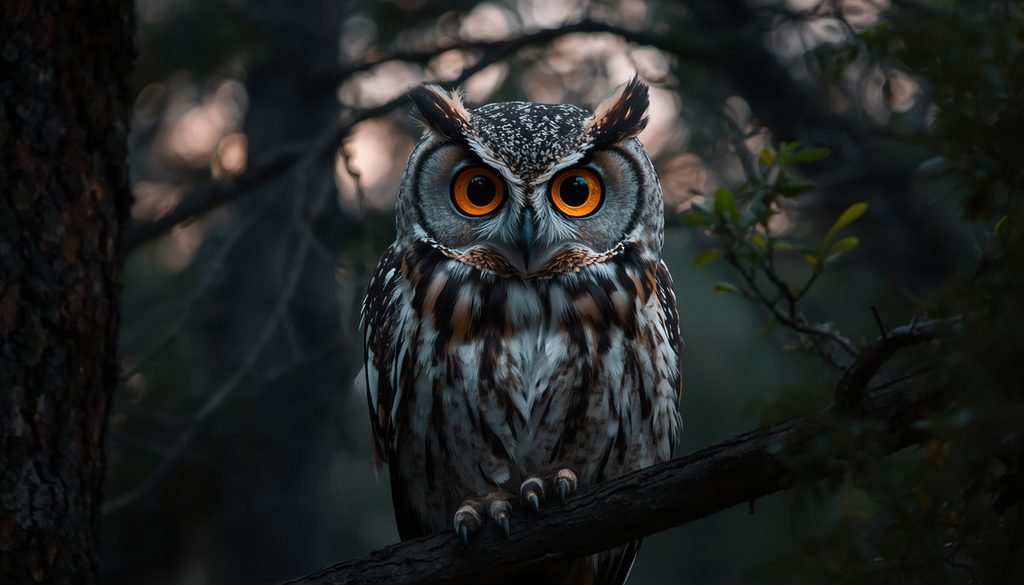
Owls are among the most famous big eyed animals. Their large, forward-facing eyes are specialized for judging distance and collecting available light. Many owl species hunt at night or during low-light periods. Their eyes are relatively fixed in their sockets, so owls rely heavily on head movement to change their viewing angle. Their facial disk also helps direct sound toward their ears, supporting nighttime hunting.
8. Ostrich
Scientific Name: Struthio camelus
Class: Aves
Habitat: African open landscapes
Diet: Plants, seeds, insects, and other foods
The ostrich is very different from tiny nocturnal primates. It has exceptionally large eyes that suit its enormous body and open-landscape lifestyle. The Natural History Museum notes that the ostrich has the largest eyes of any living land animal, with an eye measuring around five centimetres across. Its vision helps it monitor a wide, open environment and detect potential threats from a distance.
9. Red-Eyed Tree Frog
Scientific Name: Agalychnis callidryas
Class: Amphibia
Habitat: Central American tropical forests
Diet: Insects and other small prey
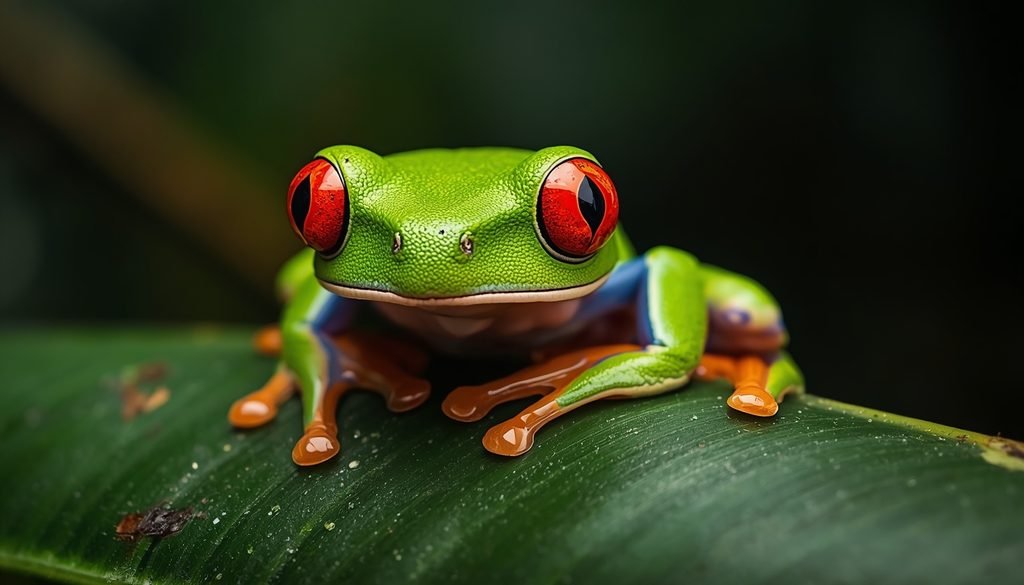
The red-eyed tree frog is famous for its bright red eyes, green body, and colorful markings. Its large eyes are particularly noticeable when the frog opens them. This nocturnal amphibian spends much of its life around vegetation and uses its vision while moving and hunting at night. Its striking eyes are also an important part of its instantly recognizable appearance.
10. Panther Chameleon
Scientific Name: Furcifer pardalis
Class: Reptilia
Habitat: Madagascar forests and coastal vegetation
Diet: Insects and other small animals
The panther chameleon has unusual eyes that can move independently, giving the reptile an impressive field of view. This allows it to monitor different directions without constantly moving its entire head. When it focuses on prey, the eyes can coordinate toward the same target. Chameleons therefore demonstrate that interesting eye adaptations are not only about size; movement and visual control are equally important.
11. Tokay Gecko
Scientific Name: Gekko gecko
Class: Reptilia
Habitat: Tropical forests and human-modified habitats in parts of Asia
Diet: Insects and other small animals
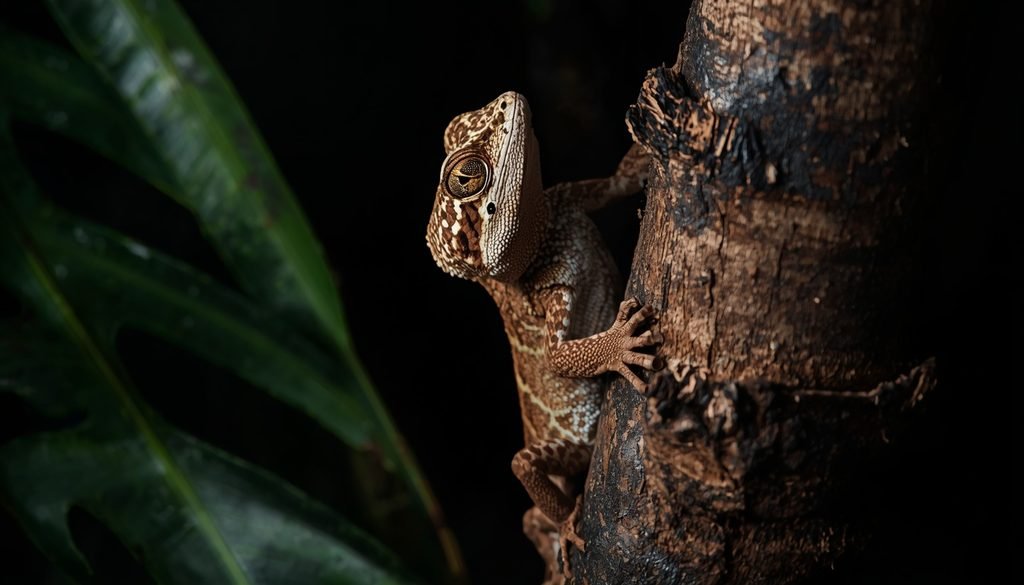
The tokay gecko has prominent eyes that suit its nighttime lifestyle. Geckos are known for strong visual abilities in dim conditions, and some nocturnal geckos can see remarkably well when light levels are low. Their eyes also lack movable eyelids in the way humans have them, so geckos use their tongues to clean the eye surface.
12. Giant Squid
Scientific Name: Architeuthis dux
Class: Cephalopoda
Habitat: Deep ocean
Diet: Fish, crustaceans, and other squid
The giant squid has one of the most remarkable eyes in the animal kingdom. Its huge eyes are adapted to the dark deep-ocean environment, where even small amounts of light can be important. Smithsonian researchers explain that large giant squid eyes can exceed 10 inches in diameter and help these animals detect faint bioluminescent light.
13. Colossal Squid
Scientific Name: Mesonychoteuthis hamiltoni
Class: Cephalopoda
Habitat: Southern Ocean
Diet: Fish and other marine prey
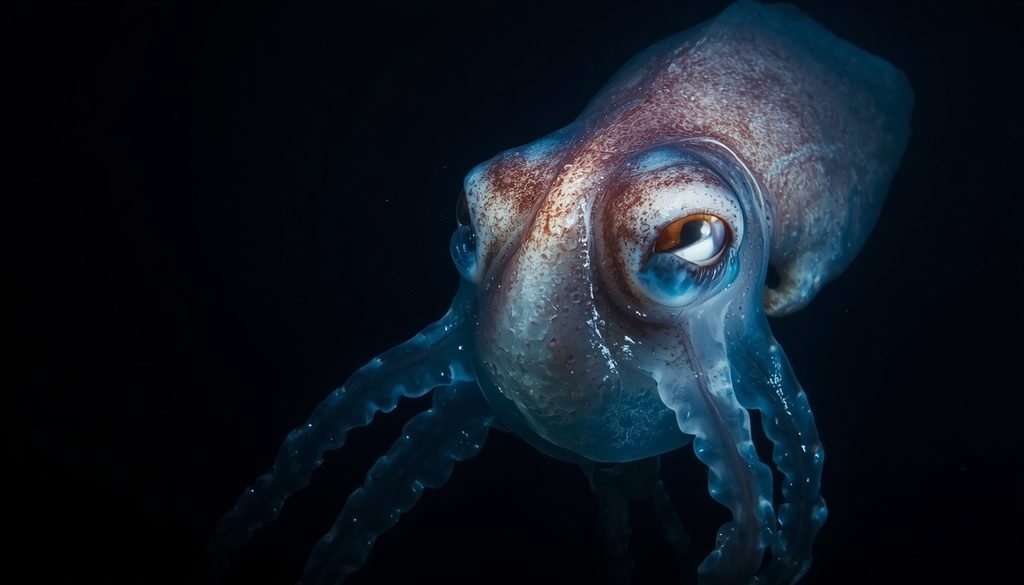
The colossal squid is another deep-sea animal with extraordinary eyes. The Natural History Museum reports that colossal squid eyes can reach at least 27 centimetres in diameter—roughly the size of a football. Such enormous visual organs are especially interesting in the dark ocean, where detecting faint sources of light can be valuable.
14. Swordfish
Scientific Name: Xiphias gladius
Class: Actinopterygii
Habitat: Open ocean
Diet: Fish and squid
Swordfish are powerful open-ocean predators with large eyes that are particularly useful when hunting in deeper or dimmer water. Their eyes are associated with their active predatory lifestyle and ability to locate fast-moving prey. Unlike the nocturnal primates in this list, swordfish demonstrate how large eyes can also be valuable in marine environments where light conditions change with depth.
Why Do Some Animals Have Such Big Eyes?
Large eyes can evolve for several different reasons, and there is no single explanation that applies to every species.
For nocturnal animals, larger eyes can help capture available light. Tarsiers, bushbabies, and slow lorises are examples of animals whose large eyes are associated with nighttime activity.
In the deep ocean, large eyes can be especially useful for detecting faint light. Giant and colossal squid live in environments where sunlight is extremely limited, and their enormous eyes are linked to detecting light and visual information in those conditions.
Eye size is also affected by body size and lifestyle. The ostrich has enormous eyes in absolute terms and is the living land animal with the largest eyes, while the tarsier is remarkable for the size of its eyes relative to its body.
So, when looking at animals with big eyes, it is important to consider both absolute eye size and eye size relative to the animal’s body.
Which Animal Has the Biggest Eyes?
The answer depends on how “biggest” is defined.
For absolute eye size among living animals, the colossal squid is widely recognized for having exceptionally large eyes, with the Natural History Museum reporting eyes of at least 27 centimetres in diameter. The giant squid is also famous for enormous eyes and has been documented with eyes exceeding 10 inches in diameter.
For living land animals, the ostrich has the largest eyes, at roughly five centimetres across.
For eye size relative to body size, tarsiers are especially remarkable among mammals. Their huge eyes are strongly associated with their nocturnal lifestyle.
Read More: Animals Like Ferrets
FAQs
What animal has the biggest eyes?
Among living animals, giant and colossal squid have exceptionally large eyes. The Natural History Museum reports colossal squid eyes reaching at least 27 centimetres in diameter, while giant squid eyes can exceed 10 inches.
Why do some animals have such big eyes?
Large eyes can help animals collect or detect light, especially in dark environments. They can also support visual awareness, hunting, and detecting movement. However, eye size is only one part of an animal’s overall visual system.
Are animals with big eyes nocturnal?
Many big-eyed animals are nocturnal, including tarsiers, slow lorises, bushbabies, and some geckos. Their eyes are adapted for low-light conditions. However, not every animal with large eyes is nocturnal.
What is the cutest animal with big eyes?
“Cutest” is subjective, but tarsiers, red-eyed tree frogs, slow lorises, and bushbabies are commonly recognizable for their large, expressive-looking eyes and unusual facial features.
Which animal has the biggest eyes relative to its body?
Tarsiers are exceptional among mammals for their eye size relative to body size. Their huge eyes are closely linked with their nocturnal lifestyle.
Do big eyes give animals better night vision?
Not necessarily by themselves. Large eyes can allow more light to reach the visual system, but night vision also depends on features such as the retina, photoreceptors, eye structure, and other adaptations.
What animals have large eyes in the ocean?
Giant squid and colossal squid are two of the best-known marine animals with enormous eyes. Their large visual organs are associated with life in the dark deep ocean.
Final Thoughts
The world is full of fascinating animals with big eyes, and their large visual organs can serve very different purposes. Tiny tarsiers and bushbabies use specialized eyes for life in low-light forests, while giant and colossal squid have enormous eyes suited to the darkness of the deep ocean. Ostriches show that exceptionally large eyes can also occur in animals living in bright, open landscapes.
These examples show why eye size should be considered alongside habitat, behavior, body size, and visual anatomy. Whether an animal uses its eyes to hunt, navigate, detect movement, or find faint light, each adaptation reflects the environment in which it evolved.

One thought on “14 Animals With Big Eyes: Amazing Creatures With Huge Eyes”