
Introduction
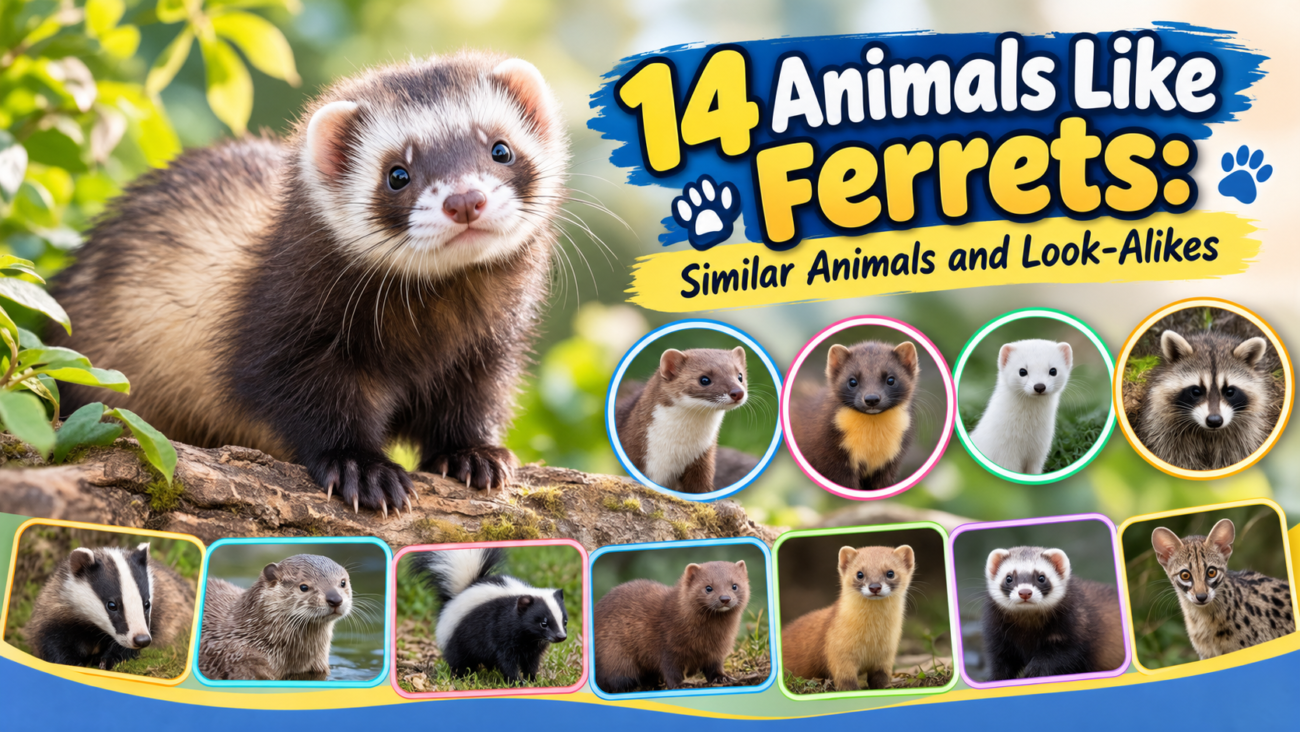
Ferrets are easy to recognize because of their long, flexible bodies, short legs, small heads, and active hunting behavior. Their unusual shape also makes them look similar to several other small mammals found in forests, grasslands, wetlands, and other habitats.
Some animals like ferrets are close relatives. Weasels, stoats, polecats, mink, martens, fishers, wolverines, and otters all belong to the Mustelidae family. Other animals may look similar without being closely related. Mongooses and skunks, for example, can have a comparable low-slung body shape but belong to different families.
In this guide, we explore 14 animals that resemble ferrets in appearance, behavior, or lifestyle and explain what makes each one similar or different.
Quick Answer: What Animals Are Like Ferrets?
Animals similar to ferrets include European polecats, weasels, stoats, American mink, black-footed ferrets, long-tailed weasels, pine martens, fishers, wolverines, river otters, grisons, tayras, mongooses, and striped skunks. Most of the closest relatives belong to the Mustelidae family, while mongooses and skunks are ferret look-alikes rather than true mustelids.
What Are Animals Like Ferrets?
Ferrets have the classic elongated mustelid body: a long torso, short legs, relatively small head, and flexible body suited to moving through narrow spaces. Many members of the mustelid family share this general shape, although larger species such as wolverines and badgers have much broader bodies.
This means an animal can look like a ferret because it is a close relative, because it has a similar hunting lifestyle, or simply because it evolved a comparable body shape.
1. European Polecat
Scientific Name: Mustela putorius
Class: Mammalia
Diet: Carnivore
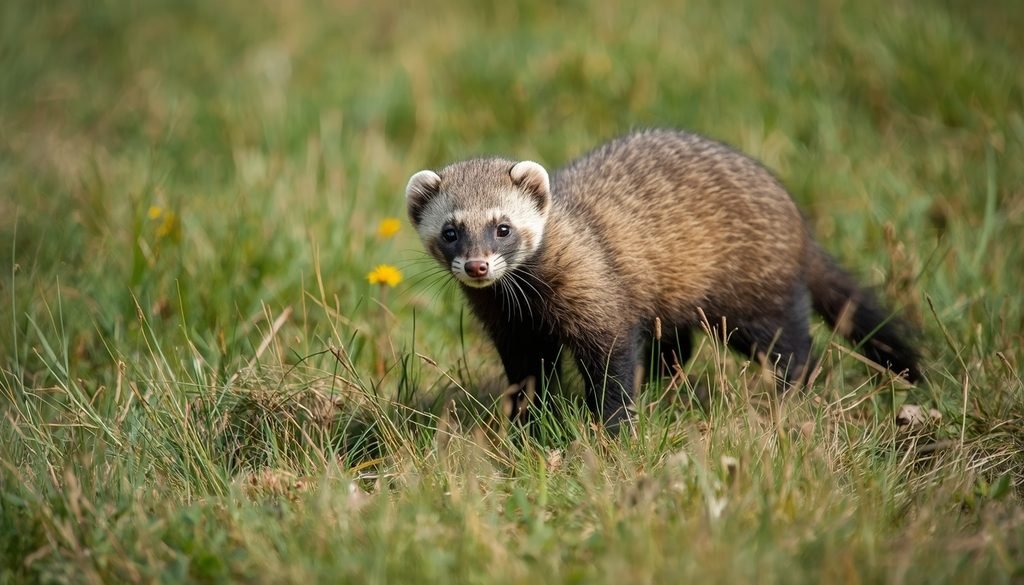
The European polecat is one of the closest animals to a domestic ferret. Domestic ferrets are generally considered to have been domesticated from European polecats, making this species especially important when discussing ferret relatives.
European polecats have long bodies, short legs, rounded ears, and dark facial markings. They are primarily nocturnal predators that hunt animals such as rodents and rabbits. Their appearance and behavior can therefore closely resemble those of a wild-looking ferret.
2. Weasel
Scientific Name: Mustela nivalis
Class: Mammalia
Diet: Carnivore
Weasels are among the smallest and most recognizable ferret relatives. Their narrow bodies, short legs, small heads, and quick movements give them a distinctly ferret-like appearance.
The least weasel is particularly adapted for chasing prey through tunnels, burrows, vegetation, and narrow spaces. Its small size separates it from the generally larger domestic ferret, but its body proportions make the relationship visually obvious.
3. Stoat
Scientific Name: Mustela erminea
Class: Mammalia
Diet: Carnivore
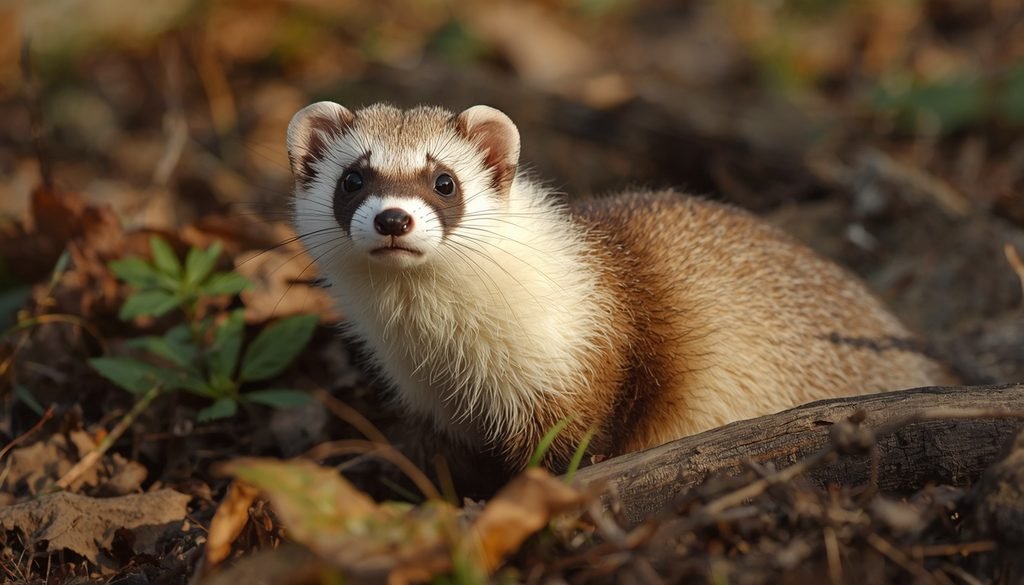
The stoat, also called the ermine, has a long slender body and short legs that make it another obvious ferret look-alike. In colder regions, some populations develop a white winter coat while retaining a distinctive dark tail tip.
Stoats are active predators that hunt rodents and other small animals. Their elongated shape, sharp face, and quick movements are strongly associated with the classic mustelid appearance shared by ferrets and weasels.
4. American Mink
Scientific Name: Neogale vison
Class: Mammalia
Diet: Carnivore
American mink have a sleek, elongated body, short legs, dark fur, and a relatively long tail. These features can make a mink look like a larger, more streamlined ferret.
Unlike domestic ferrets, mink are strongly associated with aquatic environments. They can swim well and commonly hunt around streams, rivers, ponds, and wetlands. Their diet includes fish and other small animals, reflecting their adaptable predatory lifestyle.
5. Black-Footed Ferret
Scientific Name: Mustela nigripes
Class: Mammalia
Diet: Carnivore
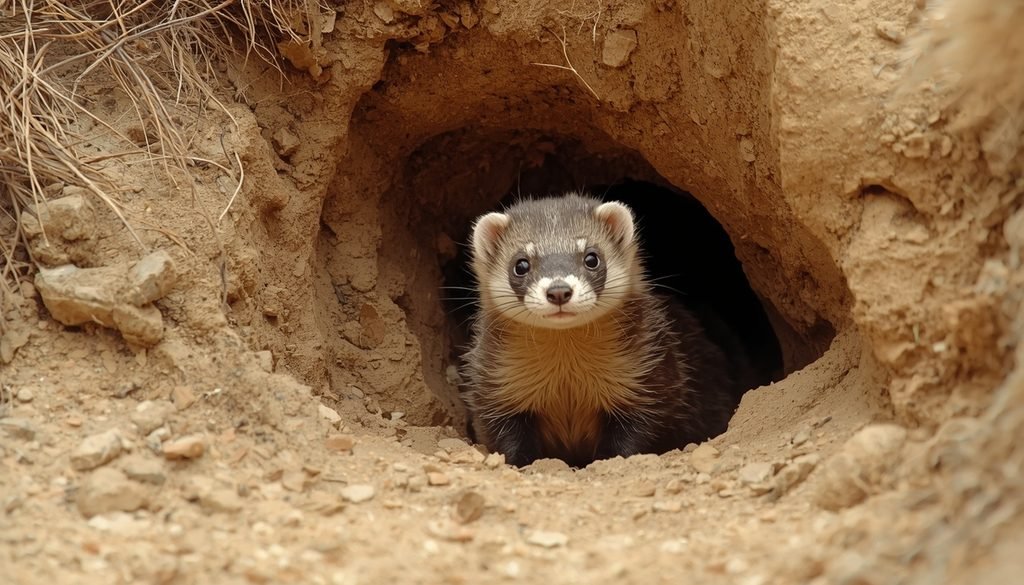
The black-footed ferret is a true ferret rather than simply a ferret look-alike. It is a North American mustelid with a slender body, dark feet, dark facial markings, and a pale coat.
Its lifestyle is closely connected with prairie ecosystems and prairie dog colonies. Black-footed ferrets use prairie dog burrows and prey heavily on prairie dogs. They are also an important conservation species and have been reintroduced into parts of their former range.
6. Long-Tailed Weasel
Scientific Name: Neogale frenata
Class: Mammalia
Diet: Carnivore
The long-tailed weasel has one of the most obvious ferret-like body shapes. It has a slender torso, short legs, a narrow head, and a long tail.
It is a capable predator of small mammals and can pursue prey in confined spaces. Its proportions make it easy to mistake for a small wild ferret, although it is a distinct species with its own range and characteristics. Mustelids such as weasels, ferrets, mink, and otters commonly share this elongated body form.
7. Pine Marten
Scientific Name: Martes martes
Class: Mammalia
Diet: Omnivore
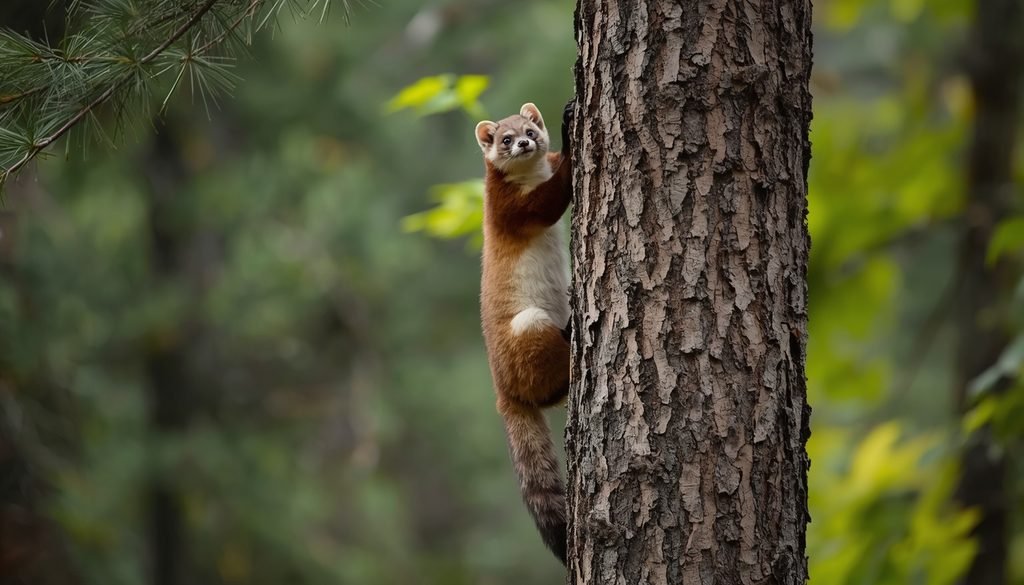
Pine martens are forest-dwelling mustelids with long bodies, relatively short legs, pointed faces, and bushy tails. They resemble ferrets in overall body proportions but are generally more adapted to climbing.
Their diet can include small mammals, birds, insects, eggs, fruit, and other available foods. The bushy tail and brown coat are useful clues when distinguishing a pine marten from a typical ferret.
8. Fisher
Scientific Name: Pekania pennanti
Class: Mammalia
Diet: Carnivore
Fishers are larger mustelids with elongated bodies, short legs, and dark brown fur. Their size makes them look less like an ordinary pet ferret and more like a large, powerful relative.
They are associated with forest habitats and are skilled hunters and climbers. Their long body and low profile are classic mustelid characteristics, but their larger size and stronger build make them easy to distinguish from ferrets.
9. Wolverine
Scientific Name: Gulo gulo
Class: Mammalia
Diet: Omnivore
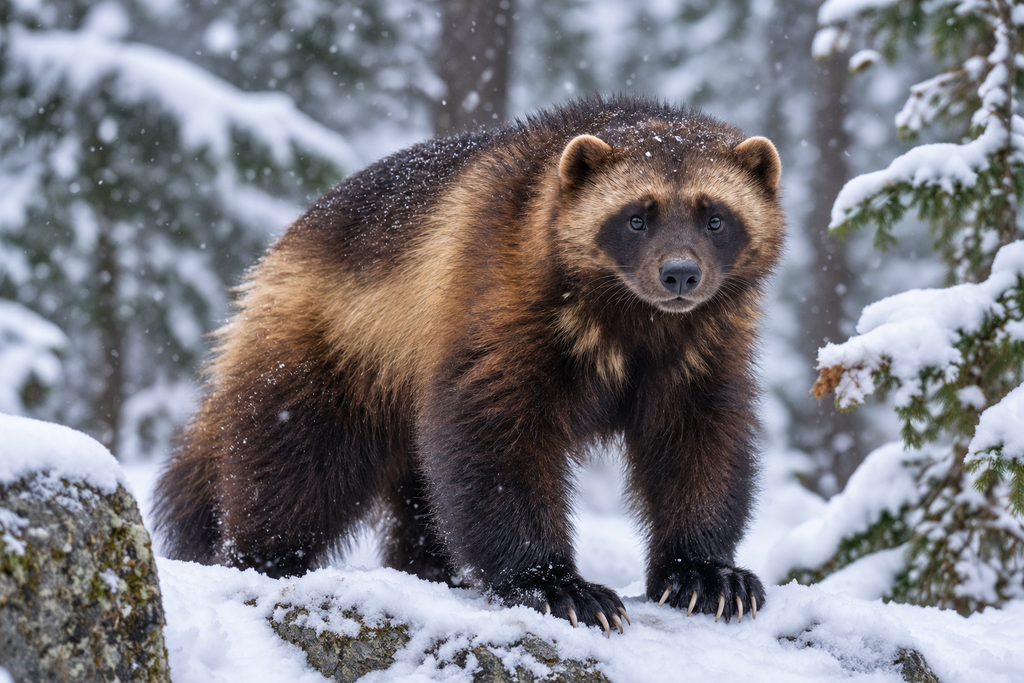
The wolverine belongs to the same broad mustelid family as ferrets, but its body is much heavier and more powerful. It has strong jaws, broad feet, dense fur, and a muscular build.
Wolverines are associated with northern and mountainous environments and can both hunt and scavenge. Although its body shape has some similarities to a ferret, the wolverine is far stockier, making it better described as a large mustelid relative than a direct visual copy of a ferret.
10. River Otter
Scientific Name: Lontra canadensis
Class: Mammalia
Diet: Carnivore
River otters are another mustelid that can initially remind people of ferrets. They have long bodies, short legs, small heads, and flexible spines.
The major difference is their strong aquatic specialization. River otters have streamlined bodies, powerful tails, and webbed feet that make them excellent swimmers. Their aquatic lifestyle separates them clearly from domestic ferrets even though both belong to Mustelidae.
11. Grison
Scientific Name: Galictis vittata
Class: Mammalia
Diet: Carnivore
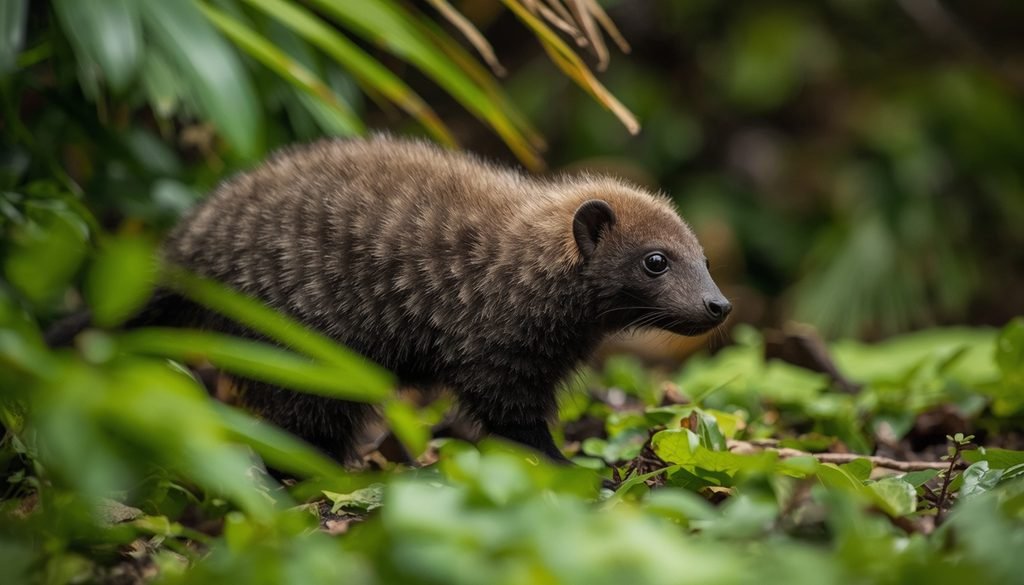
The grison is a lesser-known mustelid from Central and South America. It has a long body, short legs, a relatively small head, and contrasting facial and body markings.
These characteristics can give it a ferret-like appearance. Grisons are active predators and may hunt a variety of small animals. Their geographic range and coloration help distinguish them from domestic ferrets and North American mustelids.
12. Tayra
Scientific Name: Eira barbara
Class: Mammalia
Diet: Omnivore
The tayra is a tropical American mustelid with a long body, short legs, dark coat, and long tail. It is considerably larger than a domestic ferret and has a more powerful build.
Tayras are agile animals capable of moving through forest habitats and climbing. Their broad diet can include small vertebrates, fruit, and other foods. Their mustelid body plan explains their ferret-like appearance despite their much larger size and tropical lifestyle.
13. Mongoose
Scientific Name: Herpestes ichneumon
Class: Mammalia
Diet: Carnivore/Omnivore
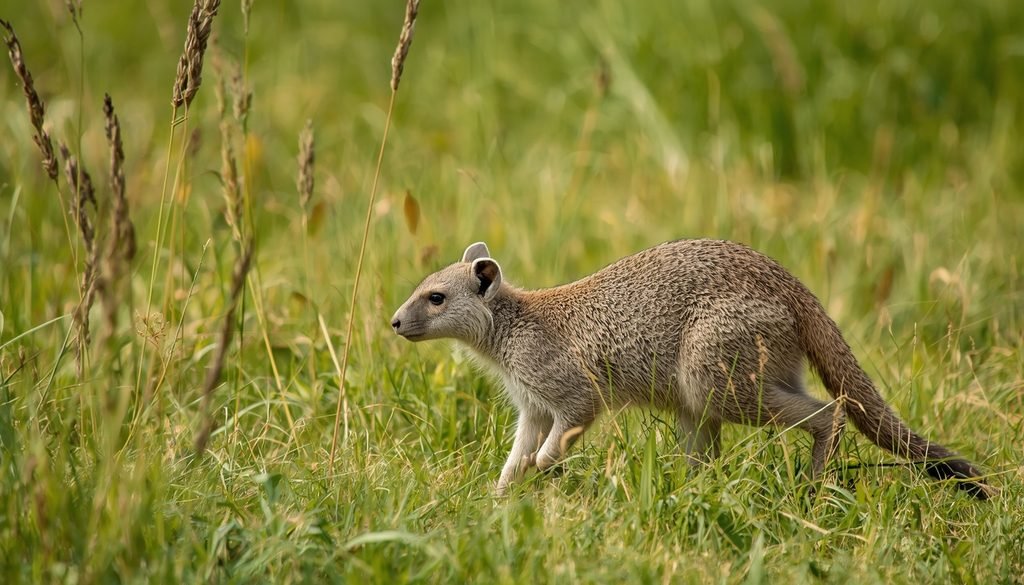
Mongooses can look somewhat like ferrets because many have elongated bodies, short legs, narrow heads, and long tails. They are active hunters and may move quickly through grassland, woodland, or other habitats.
However, mongooses are not members of the Mustelidae family. They belong to the mongoose family, Herpestidae. Their resemblance to ferrets is therefore an example of a similar body design rather than close evolutionary relationship.
14. Striped Skunk
Scientific Name: Mephitis mephitis
Class: Mammalia
Diet: Omnivore
Striped skunks have a low body, short legs, a relatively long torso, and a bushy tail. These proportions can make them look somewhat like much larger ferret-like mammals.
However, skunks are not true mustelids. Modern classification places them in the separate family Mephitidae. Their black-and-white coloration and powerful defensive spray make them much easier to distinguish from ferrets in the wild.
Quick Comparison of Animals Like Ferrets
| Animal | Scientific Name | Family | Diet | Main Similarity |
| European Polecat | Mustela putorius | Mustelidae | Carnivore | Very close body shape |
| Weasel | Mustela nivalis | Mustelidae | Carnivore | Small, slender body |
| Stoat | Mustela erminea | Mustelidae | Carnivore | Long body and short legs |
| American Mink | Neogale vison | Mustelidae | Carnivore | Sleek body |
| Black-Footed Ferret | Mustela nigripes | Mustelidae | Carnivore | True ferret |
| Long-Tailed Weasel | Neogale frenata | Mustelidae | Carnivore | Slender body |
| Pine Marten | Martes martes | Mustelidae | Omnivore | Long body |
| Fisher | Pekania pennanti | Mustelidae | Carnivore | Large ferret-like shape |
| Wolverine | Gulo gulo | Mustelidae | Omnivore | Mustelid body plan |
| River Otter | Lontra canadensis | Mustelidae | Carnivore | Long aquatic body |
| Grison | Galictis vittata | Mustelidae | Carnivore | Ferret-like proportions |
| Tayra | Eira barbara | Mustelidae | Omnivore | Long tropical mustelid |
| Mongoose | Herpestes ichneumon | Herpestidae | Carnivore/Omnivore | Similar body shape |
| Striped Skunk | Mephitis mephitis | Mephitidae | Omnivore | Low, elongated body |
Why Do Some Animals Look Like Ferrets?
Several factors can produce a ferret-like appearance. Many mustelids inherited an elongated body and short-legged design that works well for hunting small prey. A flexible body can help an animal move through vegetation, tunnels, burrows, and narrow spaces.
This is why weasels, polecats, mink, martens, and ferrets can look remarkably similar. Some unrelated animals, such as mongooses, can develop comparable proportions because they occupy similar ecological niches.
This process is known as convergent evolution. Similar environmental pressures can produce similar physical solutions even when two animals are not closely related.
Ferret Relatives vs Ferret Look-Alikes
The most important distinction is classification.
True mustelid relatives include:
- European polecat
- Weasel
- Stoat
- American mink
- Black-footed ferret
- Long-tailed weasel
- Pine marten
- Fisher
- Wolverine
- River otter
- Grison
- Tayra
These animals belong to Mustelidae, the same family that contains ferrets.
Ferret-like but not mustelid animals include:
- Mongoose
- Striped skunk
Mongooses belong to Herpestidae, while skunks belong to Mephitidae. Their similar appearance does not make them close ferret relatives.
What Looks Like a Ferret but Is Bigger?
Several animals can look like larger versions of a ferret because they share an elongated mustelid body. Fishers, wolverines, tayras, and river otters are good examples.
Fishers have a long, low body and are considerably larger than domestic ferrets. Wolverines are much heavier and more muscular. Tayras are larger tropical mustelids, while river otters have a streamlined body adapted for swimming.
What Is the Closest Animal to a Ferret?
The European polecat is the closest wild animal to the domestic ferret in this list because domestic ferrets are generally understood to have been domesticated from European polecats. The two share similar body proportions, coloration patterns, behavior, and ancestry.
Read More: Animals Like Muskrats
FAQs
What animal is most like a ferret?
The European polecat is one of the animals most similar to a domestic ferret. Domestic ferrets are generally considered to have descended from European polecats, so they share particularly close evolutionary and physical similarities. Weasels, stoats, mink, and black-footed ferrets are also close mustelid relatives.
What animal looks like a ferret but is bigger?
A fisher, tayra, wolverine, or river otter can resemble a larger ferret because each has an elongated body and relatively short legs. Fishers and tayras are especially useful comparisons because they retain the characteristic mustelid body shape while being substantially larger than domestic ferrets.
Is a ferret a type of weasel?
Ferrets and weasels are different animals, but both belong to the Mustelidae family. Domestic ferrets are classified as Mustela putorius furo, while the least weasel is Mustela nivalis. Their shared family explains why they have similar long, slender bodies and hunting behaviors.
What is the closest wild relative of a ferret?
The European polecat is generally considered the closest wild relative and ancestral form associated with the domestic ferret. Historical domestication is believed to have involved European polecats, although the relationship between wild polecats and domestic ferrets is complex.
Are mink related to ferrets?
Yes. Mink and ferrets are both members of the Mustelidae family. They therefore share a common evolutionary history, although they belong to different genera. Mink also have a more strongly semi-aquatic lifestyle, while domestic ferrets are primarily terrestrial.
Are otters related to ferrets?
Yes. Otters and ferrets are both mustelids. Their shared family explains their elongated bodies, short legs, flexible movement, and predatory lifestyles. Otters, however, have specialized adaptations such as webbed feet and streamlined bodies that allow them to spend much of their time in water.
Are mongooses related to ferrets?
No. Mongooses may resemble ferrets because of their slender bodies, short legs, and active hunting behavior, but they belong to the Herpestidae family rather than Mustelidae. Their similarities are therefore mainly physical and ecological rather than the result of being close relatives.
What animals belong to the mustelid family?
Mustelidae includes a wide range of carnivorous mammals, including weasels, stoats, polecats, ferrets, mink, martens, fishers, wolverines, badgers, and otters. Despite their differences in size and habitat, many share characteristic elongated bodies and short legs.
Final Thoughts
Animals like ferrets can be found across many habitats and continents. Some, such as European polecats, weasels, stoats, mink, martens, and otters, are genuine members of the mustelid family. Others, including mongooses and striped skunks, only resemble ferrets in certain physical characteristics.
The European polecat stands out as the closest comparison because of its relationship with domestic ferrets. Other species show how diverse the mustelid body plan can become, from tiny weasels to powerful wolverines and aquatic otters.
Understanding both appearance and scientific classification makes it much easier to identify ferret relatives and distinguish true relatives from simple look-alikes.

One thought on “14 Animals Like Ferrets: Similar Animals and Look-Alikes”