
Introduction
Foxes are easy to recognize because of their pointed ears, narrow muzzles, bushy tails, slender bodies, and agile movements. But they are not the only animals with these features. Around the world, many mammals look surprisingly similar to foxes, while others share their behavior, habitat, diet, or role as adaptable predators.
Some of the closest examples are other members of the dog family, or Canidae, such as coyotes, jackals, dholes, maned wolves, and raccoon dogs. Others, including red pandas, raccoons, bobcats, and weasels, only resemble foxes in certain physical or behavioral traits. Canid classification itself includes several distinct evolutionary groups, so looking fox-like does not always mean being a close relative.
In this guide, we will explore 16 animals like foxes, including their scientific names, diets, habitats, appearance, and the features that make each species fox-like.
Quick Answer: What Animals Are Similar to Foxes?
Animals similar to foxes include coyotes, golden jackals, dholes, maned wolves, raccoon dogs, African wild dogs, gray wolves, and Culpeos. Some are canids and therefore related to foxes, while others such as red pandas, raccoons, bobcats, and weasels are unrelated look-alikes. Similarity can come from body shape, ears, muzzle, tail, behavior, or habitat.
What Are Animals Like Foxes?
The phrase animals like foxes can describe mammals that resemble foxes in appearance, behavior, habitat, diet, or evolutionary history.
Typical fox-like features include pointed ears, a narrow muzzle, a relatively slender body, a long or bushy tail, sharp senses, and an ability to survive in different environments. However, these features occur in many unrelated mammals too.
For example, coyotes and golden jackals are canids, while bobcats belong to the cat family and weasels belong to the mustelid family. This means that a similar appearance does not automatically indicate a close relationship.
Evolution can produce similar body designs when different animals face comparable environmental pressures. This is one reason the animal kingdom contains so many fascinating fox look-alikes.
List of 16 Animals Like Foxes
- Coyote
- Golden Jackal
- Dhole
- Maned Wolf
- Raccoon Dog
- African Wild Dog
- Gray Wolf
- Red Panda
- Raccoon
- Striped Skunk
- Margay
- Bobcat
- Small Indian Mongoose
- Weasel
- Domestic Dog
- Culpeo
Quick Comparison Table
| Animal | Scientific Name | Family | Diet | Main Fox-Like Feature |
| Coyote | Canis latrans | Canidae | Omnivore | Narrow muzzle and bushy tail |
| Golden Jackal | Canis aureus | Canidae | Omnivore | Pointed ears and slender body |
| Dhole | Cuon alpinus | Canidae | Carnivore | Reddish coat and pointed face |
| Maned Wolf | Chrysocyon brachyurus | Canidae | Omnivore | Reddish coat and large ears |
| Raccoon Dog | Nyctereutes procyonoides | Canidae | Omnivore | Bushy tail and fox-like body |
| African Wild Dog | Lycaon pictus | Canidae | Carnivore | Large ears and canid shape |
| Gray Wolf | Canis lupus | Canidae | Carnivore | Muzzle, ears, and bushy tail |
| Red Panda | Ailurus fulgens | Ailuridae | Omnivore | Red coat and bushy tail |
| Raccoon | Procyon lotor | Procyonidae | Omnivore | Pointed face and bushy tail |
| Striped Skunk | Mephitis mephitis | Mephitidae | Omnivore | Bushy tail and pointed face |
| Margay | Leopardus wiedii | Felidae | Carnivore | Slender body and long tail |
| Bobcat | Lynx rufus | Felidae | Carnivore | Pointed ears and facial shape |
| Small Indian Mongoose | Urva auropunctata | Herpestidae | Carnivore/Omnivore | Slender body |
| Weasel | Mustela nivalis | Mustelidae | Carnivore | Narrow head and long body |
| Domestic Dog | Canis lupus familiaris | Canidae | Omnivore | Pointed ears and muzzle |
| Culpeo | Lycalopex culpaeus | Canidae | Omnivore | Fox-like face and thick tail |
1. Coyote
Scientific Name
Canis latrans
Class
Mammalia
Family
Canidae
Diet
Omnivore
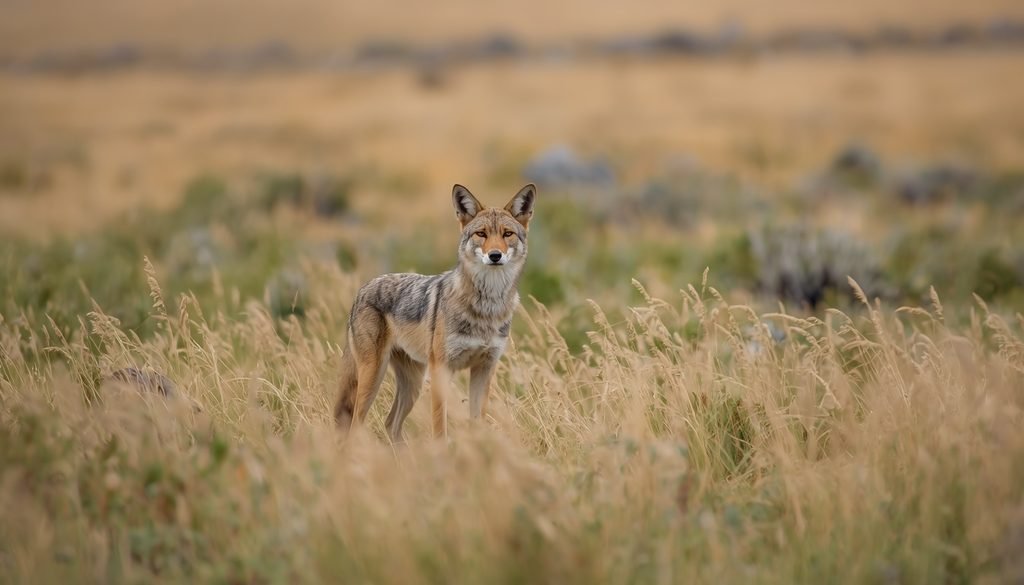
Coyotes are among the most recognizable animals similar to foxes. Their narrow muzzles, upright ears, bushy tails, and relatively slim bodies create an obvious fox-like appearance. However, coyotes are generally larger and more strongly built than many fox species. They are highly adaptable and can live in grasslands, deserts, forests, mountains, and even developed areas. Coyotes eat a flexible mixture of mammals, birds, insects, fruit, and other foods.
2. Golden Jackal
Scientific Name
Canis aureus
Class
Mammalia
Family
Canidae
Diet
Omnivore
The golden jackal has several features that remind people of foxes, including a pointed muzzle, upright ears, slender body, and bushy tail. It is a canid, but it is not a true fox. Golden jackals are adaptable predators and scavengers that can consume small mammals, birds, reptiles, insects, fruit, and carrion. Their body is generally more dog-like than a typical small fox.
3. Dhole
Scientific Name
Cuon alpinus
Class
Mammalia
Family
Canidae
Diet
Carnivore
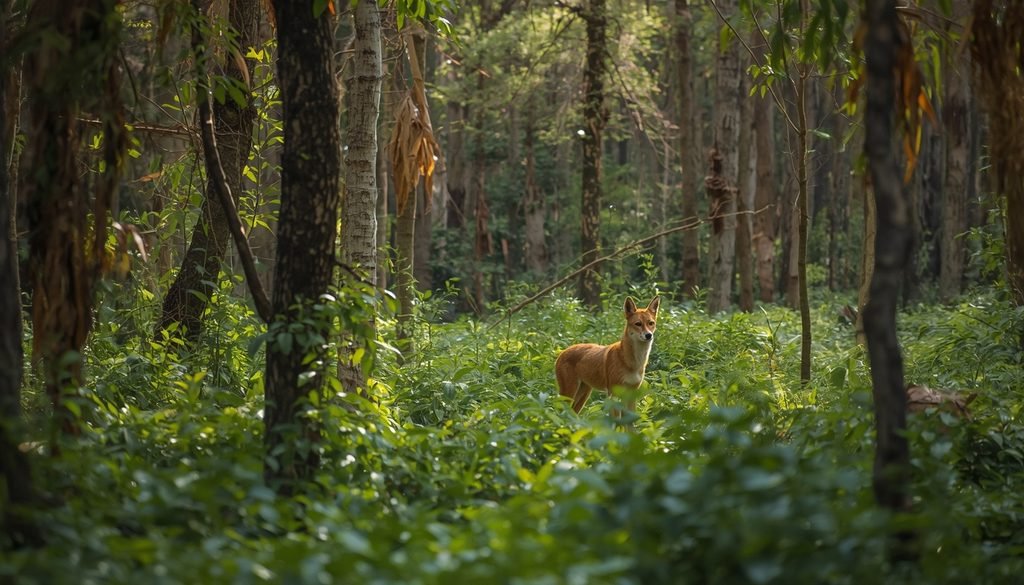
The dhole is a wild Asian canid with a reddish coat, rounded ears, long tail, and narrow face. Its facial appearance can sometimes seem fox-like, although its behavior is very different. Dholes are highly social and hunt cooperatively in groups. Unlike the mostly solitary lifestyle of many foxes, dholes depend heavily on pack cooperation when pursuing prey.
4. Maned Wolf
Scientific Name
Chrysocyon brachyurus
Class
Mammalia
Family
Canidae
Diet
Omnivore
The maned wolf has one of the strangest body shapes among canids. Its reddish coat, large ears, long muzzle, and bushy tail can create a fox-like impression, but its extremely long legs make it easy to identify. It lives mainly in open South American habitats and feeds on both animal and plant foods. Despite its name, it is neither a true wolf nor a fox.
5. Raccoon Dog
Scientific Name
Nyctereutes procyonoides
Class
Mammalia
Family
Canidae
Diet
Omnivore
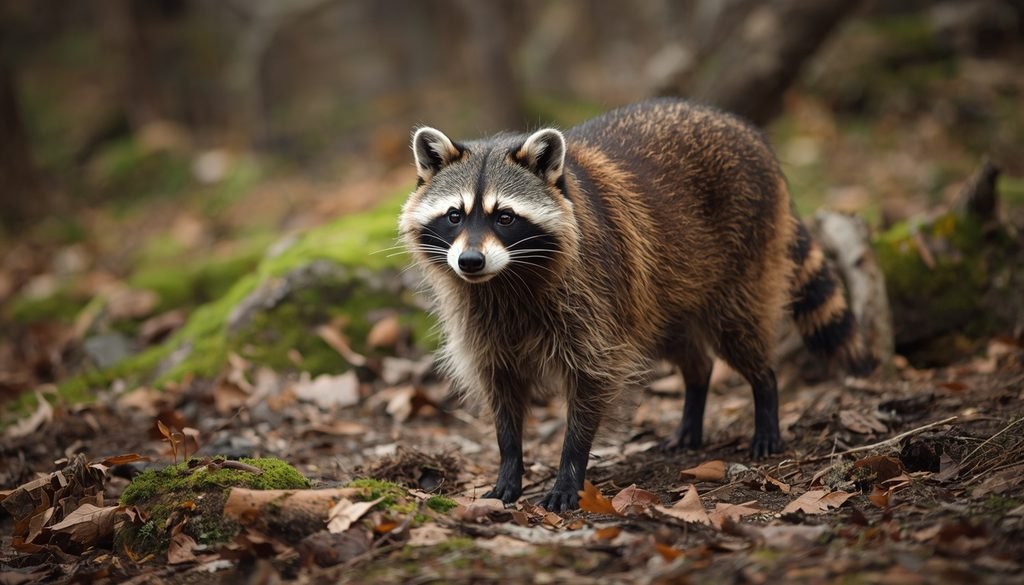
Raccoon dogs are particularly interesting fox look-alikes. They have a compact body, pointed muzzle, upright ears, and a thick tail. Their dark facial markings resemble those of raccoons, which explains their common name. Despite that name, they are canids and are closely associated with the fox-like group of canids. They eat both animal and plant foods.
6. African Wild Dog
Scientific Name
Lycaon pictus
Class
Mammalia
Family
Canidae
Diet
Carnivore
African wild dogs have large rounded ears, slender bodies, long legs, and bushy tails. These traits can give them a distant fox-like appearance, but their colorful coats and large size make them easy to distinguish. They are highly social predators that live and hunt cooperatively. Their strong pack behavior separates them from the mostly solitary lifestyle associated with many foxes.
7. Gray Wolf
Scientific Name
Canis lupus
Class
Mammalia
Family
Canidae
Diet
Carnivore
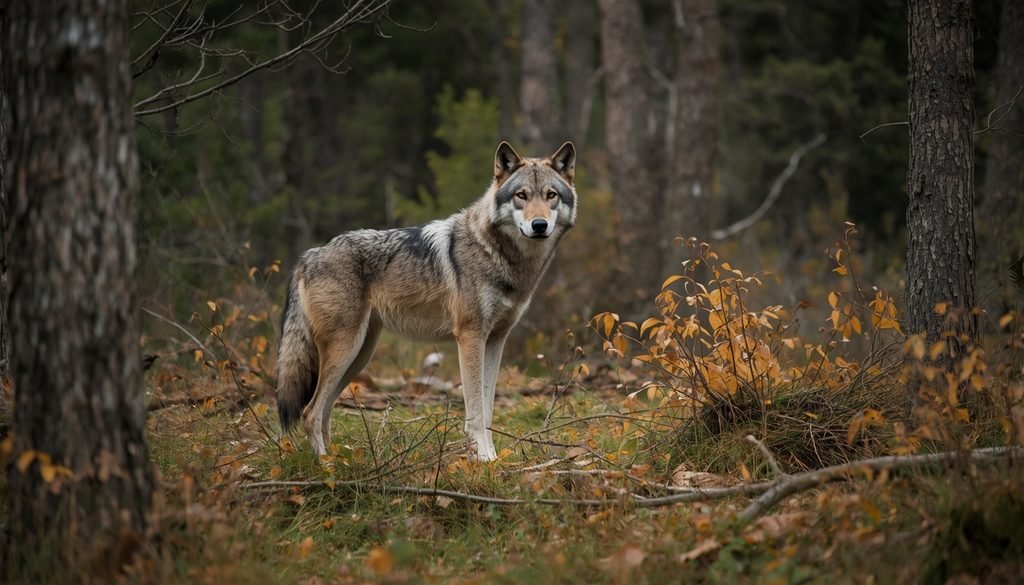
Gray wolves share the same broad dog-family classification as foxes. Their upright ears, long muzzle, thick fur, and bushy tail can create some visual similarities. However, wolves are much larger and stronger. They are also well known for their social pack structure and ability to hunt large prey. A wolf’s overall body proportions make it noticeably different from a typical fox.
8. Red Panda
Scientific Name
Ailurus fulgens
Class
Mammalia
Family
Ailuridae
Diet
Omnivore
The red panda is a classic example of an animal that looks fox-like without being a canid. Its reddish coat, pointed ears, short muzzle, and long bushy tail create a familiar fox-like appearance. Red pandas are adapted to forest life and spend considerable time in trees. They are unrelated to foxes, making their resemblance an excellent example of superficial similarity.
9. Raccoon
Scientific Name
Procyon lotor
Class
Mammalia
Family
Procyonidae
Diet
Omnivore
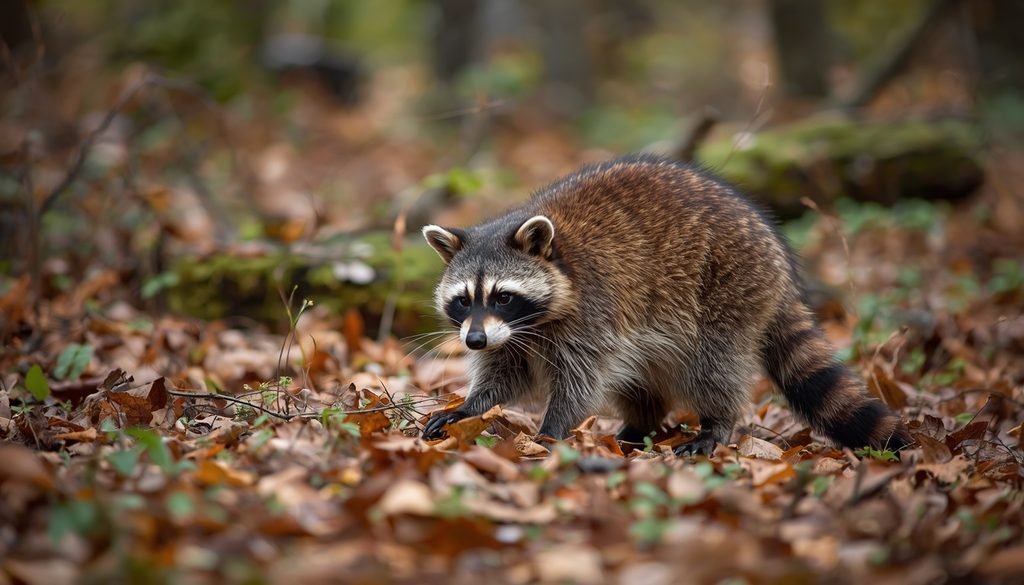
Raccoons are not close relatives of foxes, but their pointed faces, small ears, and bushy tails can make them appear similar at a glance. Their most recognizable feature is the dark facial mask and ringed tail. Raccoons are intelligent, adaptable omnivores that can live in forests, wetlands, farmland, and urban environments.
10. Striped Skunk
Scientific Name
Mephitis mephitis
Class
Mammalia
Family
Mephitidae
Diet
Omnivore
The striped skunk has a compact body, pointed face, and prominent bushy tail. Its black-and-white coat makes it very different from most foxes, but the body shape can appear fox-like from a distance. Skunks are primarily nocturnal and eat insects, small animals, fruits, and other available foods. Their defensive spray is their most famous adaptation.
11. Margay
Scientific Name
Leopardus wiedii
Class
Mammalia
Family
Felidae
Diet
Carnivore
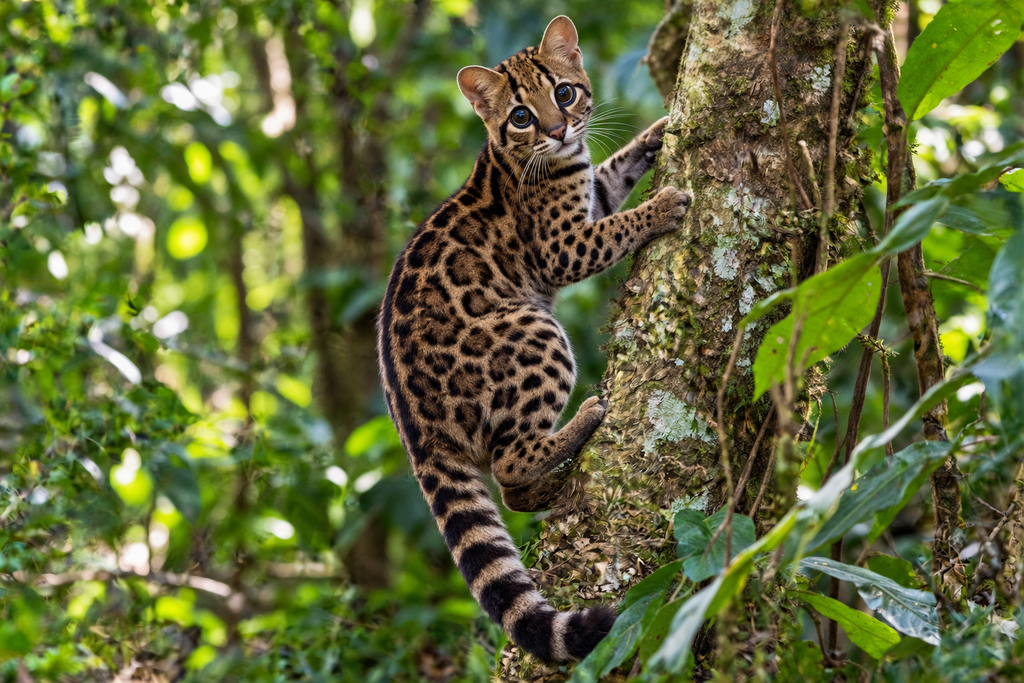
The margay is a small wild cat with a slender body, long tail, and expressive face. Its spotted coat immediately reveals its feline identity, but its size and proportions can cause a brief fox-like impression. Margays are strongly adapted to forest environments and are excellent climbers. Unlike foxes, they are felids and have the anatomy and hunting behavior of small cats.
12. Bobcat
Scientific Name
Lynx rufus
Class
Mammalia
Family
Felidae
Diet
Carnivore
Bobcats can sometimes be mistaken for fox-like mammals because of their upright ears, facial shape, and agile body. Their short tail, spotted coat, and prominent ear tufts provide important clues that they are cats rather than canids. Bobcats are solitary hunters that prey on mammals, birds, and other small animals across a variety of North American habitats.
13. Small Indian Mongoose
Scientific Name
Urva auropunctata
Class
Mammalia
Family
Herpestidae
Diet
Carnivore/Omnivore
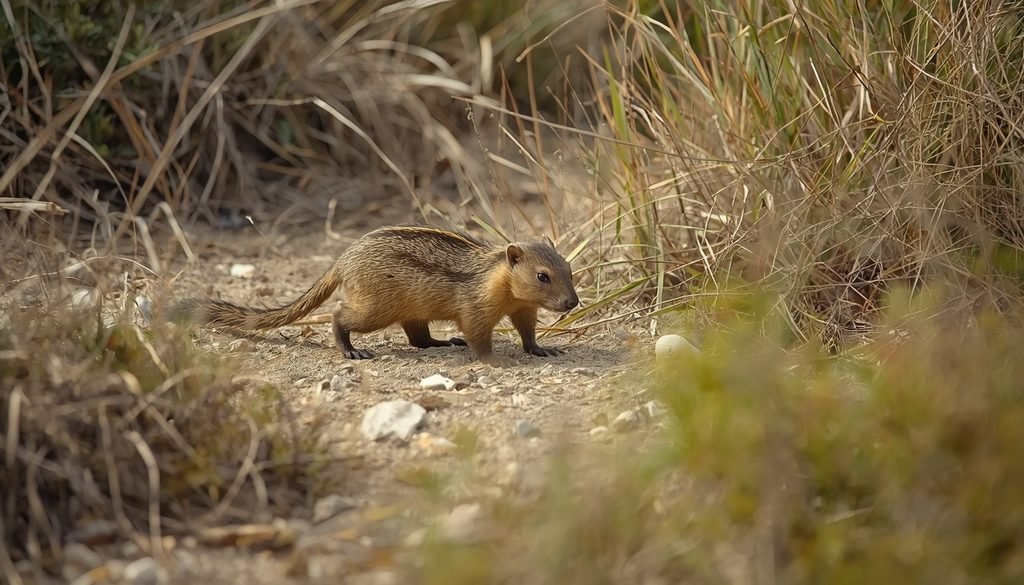
The small Indian mongoose has a narrow muzzle, small ears, slender body, and long tail. These features can make it look somewhat fox-like, especially when seen moving quickly through vegetation. Mongooses are not canids. They belong to the mongoose family and are agile predators that feed on insects, small vertebrates, eggs, and other foods.
14. Weasel
Scientific Name
Mustela nivalis
Class
Mammalia
Family
Mustelidae
Diet
Carnivore
Weasels have a very different body shape from foxes, but their narrow faces, small ears, and alert expressions can create a fox-like impression. Their bodies are extremely long and slender with short legs. Weasels are specialized predators that hunt small mammals and other prey. They belong to the mustelid family rather than the dog family.
15. Domestic Dog
Scientific Name
Canis lupus familiaris
Class
Mammalia
Family
Canidae
Diet
Omnivore
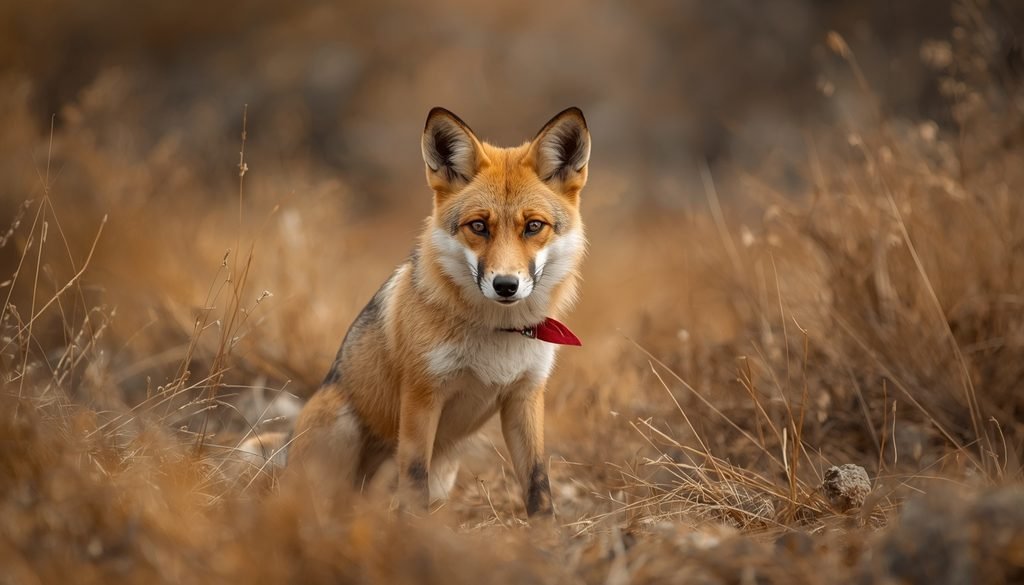
Some domestic dog breeds can look remarkably similar to foxes. Dogs with pointed ears, narrow muzzles, reddish coats, and bushy tails can be especially fox-like. Dogs share the canid family with foxes, wolves, coyotes, and jackals, but they are not descended from modern foxes. Their enormous variety in body shape makes some breeds much more fox-like than others.
16. Culpeo
Scientific Name
Lycalopex culpaeus
Class
Mammalia
Family
Canidae
Diet
Omnivore
The Culpeo is one of the most convincing fox-like animals on this list. It has a narrow muzzle, pointed ears, thick tail, and reddish-gray coat. Despite commonly being called the Andean fox or Culpeo fox, it is not a true Vulpes fox. It belongs to the South American canid genus Lycalopex and is more closely associated with other canids than true foxes.
Why Do Some Animals Look Like Foxes?
Several factors can produce a fox-like appearance.
First, many predators benefit from a streamlined body, forward-facing senses, mobile ears, and a long tail. These features can appear in unrelated species because they work well for active hunting and movement.
Second, convergent evolution can produce similar physical characteristics in different evolutionary groups. Animals living in comparable environments may face similar survival challenges and develop similar adaptations.
Finally, many canids naturally share characteristics because they have a common evolutionary history. This is why coyotes, jackals, wolves, dholes, maned wolves, raccoon dogs, and other canids may share certain facial and body features.
How Are Foxes Different From Other Fox-Like Animals?
The easiest way to separate foxes from look-alikes is to examine several characteristics rather than relying on appearance alone.
Look at:
- Body size
- Ear shape
- Tail length and shape
- Muzzle structure
- Coat pattern
- Teeth
- Feet and claws
- Hunting behavior
- Social behavior
- Geographic range
- Scientific classification
A coyote may resemble a large fox, but it belongs to Canis. A bobcat may have a fox-like face from a distance, but it belongs to Felidae. A red panda has a reddish coat and bushy tail, but it belongs to Ailuridae.
This is why scientific classification is more reliable than appearance alone.
Fox-Like Canids vs Non-Canid Look-Alikes
Fox-Like Canids
Examples include:
- Coyote
- Golden Jackal
- Dhole
- Maned Wolf
- Raccoon Dog
- African Wild Dog
- Gray Wolf
- Domestic Dog
- Culpeo
These animals belong to Canidae, although they occupy different evolutionary branches within the family.
Non-Canid Look-Alikes
Examples include:
- Red Panda
- Raccoon
- Striped Skunk
- Margay
- Bobcat
- Small Indian Mongoose
- Weasel
These animals may share one or more fox-like characteristics but belong to different mammalian families.
Read More: Birds That Eat Fish
FAQs
What animal is most similar to a fox?
There is no single answer because similarity can mean appearance or evolutionary relationship. Among non-fox canids, animals such as the raccoon dog, coyote, golden jackal, and Culpeo can appear particularly fox-like. The raccoon dog is especially notable because its body shape and facial features resemble those of foxes.
What animals look like foxes but are not foxes?
Many animals look somewhat like foxes without being true foxes. Examples include coyotes, maned wolves, raccoon dogs, Culpeos, red pandas, raccoons, bobcats, margays, skunks, mongooses, and weasels. Some are canids related to foxes, while others are from completely different mammalian families.
What dog looks like a fox?
Several domestic dog breeds can have fox-like features, particularly pointed ears, narrow muzzles, reddish coats, and bushy tails. However, dogs are domesticated canids and are not descended from modern foxes. Their fox-like appearance depends largely on breed and individual physical characteristics.
Are foxes related to dogs?
Yes. Foxes and domestic dogs are members of the family Canidae. They share an evolutionary history but belong to different branches within the dog family. Domestic dogs are classified as Canis lupus familiaris, while true foxes such as the red fox belong to the genus Vulpes.
Are coyotes related to foxes?
Yes. Coyotes and foxes are both canids, so they share a common evolutionary ancestry. However, coyotes belong to the genus Canis, while many true foxes belong to Vulpes. Their similar facial features, ears, tails, and body shapes reflect both shared ancestry and adaptations associated with active terrestrial predators.
What is a fox-like animal?
A fox-like animal is a species that resembles a fox in appearance, behavior, habitat, diet, or evolutionary traits. The term does not represent a formal scientific classification. It can describe closely related canids as well as unrelated animals that happen to have similar physical characteristics.
What animals have a fox-like face?
Animals with somewhat fox-like faces include coyotes, golden jackals, raccoon dogs, Culpeos, maned wolves, some domestic dogs, and even certain small cats and other mammals. A narrow muzzle, pointed ears, and an alert facial expression are common features that can create this resemblance.
What animal looks like a fox but is bigger?
Several animals can appear like larger versions of foxes. Coyotes are a good example because they have pointed ears, a narrow muzzle, and a bushy tail but are generally larger and more strongly built than many foxes. Culpeos and some other canids can also have a distinctly fox-like appearance while being larger.
Final Thoughts
The animal kingdom contains many fascinating animals like foxes, but not all fox-like mammals are closely related. Coyotes, jackals, dholes, wolves, maned wolves, raccoon dogs, domestic dogs, and Culpeos are canids, while animals such as red pandas, raccoons, bobcats, margays, skunks, mongooses, and weasels belong to completely different families.
Their similarities may come from shared ancestry, similar lifestyles, or convergent evolution. Looking at features such as the muzzle, ears, tail, body shape, habitat, diet, and behavior can help identify them, but scientific classification provides the clearest answer.

One thought on “16 Animals Like Foxes: Amazing Fox-Like Animals”