
When we think about animals that walk on two legs, humans are usually the first example that comes to mind. However, humans are far from the only animals capable of moving with two legs. Birds, kangaroos, some rodents, reptiles, and several primates have developed different forms of bipedal locomotion.
Some animals, such as ostriches and emus, normally move on two legs. Kangaroos and wallabies mainly use powerful hind legs for hopping, while animals such as chimpanzees and gorillas may walk upright for shorter periods. Scientific research also distinguishes between walking, running, hopping, and occasional bipedal movement.
In this guide, we’ll look at 14 animals that walk, run, hop, or otherwise move on two legs, along with their habitats, adaptations, and unique forms of locomotion.
List of Animals That Walk On Two Legs
- Penguin
- Kangaroo
- Ostrich
- Emu
- Flamingo
- Kangaroo
- RatJerboa
- Pangolin
- Gibbon
- Chimpanzee
- Gorilla
- Basilisk
- Lizard
- Meerkat
- Wallaby
1. Penguin
Scientific Name: Various species in the family Spheniscidae
Animal Group: Bird
Diet: Fish, squid, krill and other marine prey
Type of Bipedal Movement: Walking and waddling
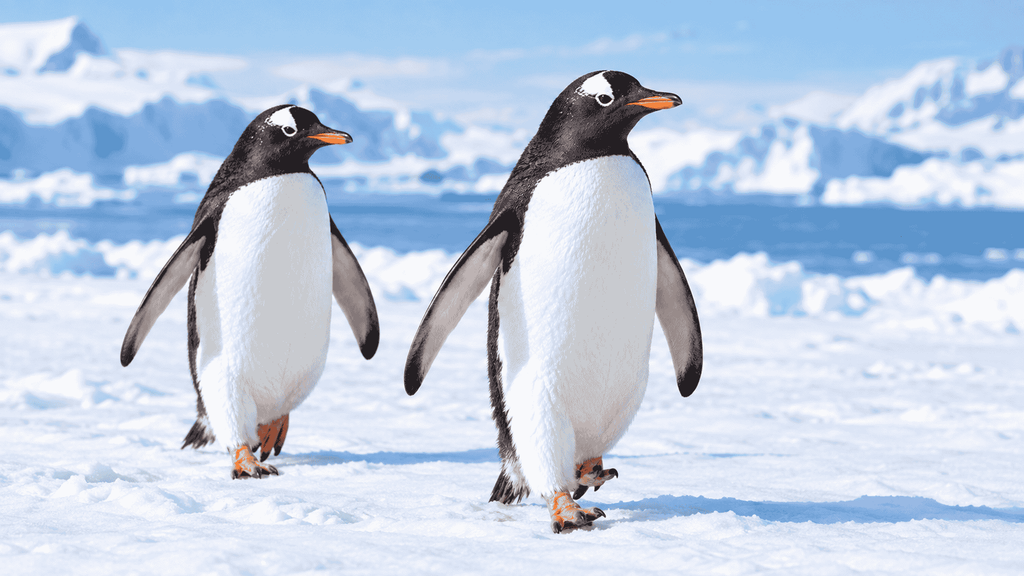
Penguins are flightless birds that use their two legs for movement on land and ice. Their upright body posture and short legs give them their familiar waddling gait.
Although penguins are much more efficient swimmers than walkers, their two-legged movement is an important part of life on land. Their feet and body position help them maintain balance while moving across beaches, rocky areas, and ice. Scientific research classifies birds as an important group of bipedal animals.
2. Kangaroo
Scientific Name: Macropus and related macropod species
Animal Group: Mammal
Diet: Mainly grasses and other vegetation
Type of Bipedal Movement: Hopping
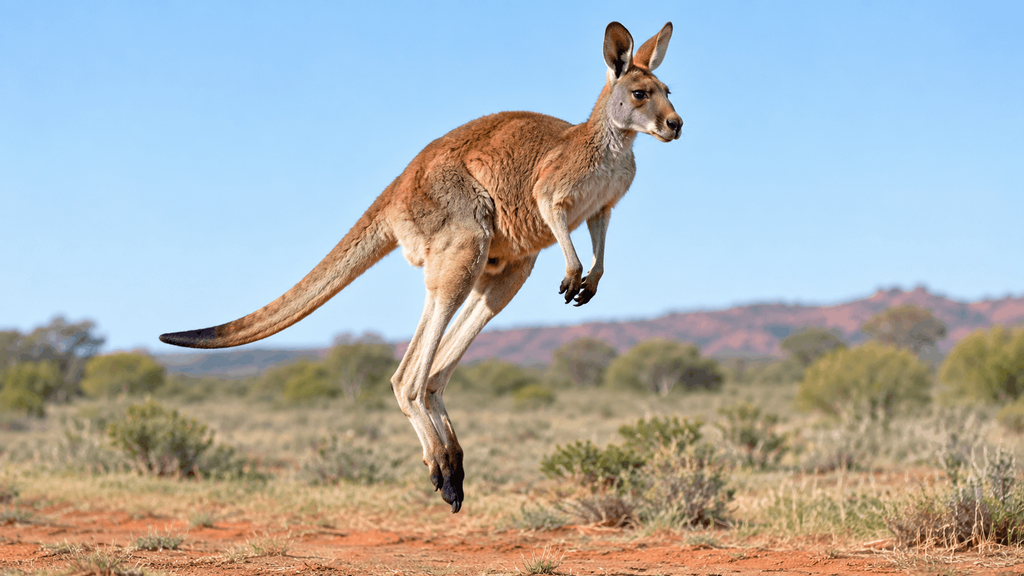
Kangaroos are among the best-known two-legged mammals. Instead of walking like humans, they primarily travel by hopping with their powerful hind legs.
Their large hind feet, strong leg muscles, and elastic tendons help make repeated hopping possible. Their long muscular tail also plays an important role in balance and movement. Bipedal hopping has evolved independently in several groups of mammals, including macropods such as kangaroos.
3. Ostrich
Scientific Name: Struthio camelus
Animal Group: Bird
Diet: Plants, seeds, insects and other foods
Type of Bipedal Movement: Walking and running
The ostrich is one of the most impressive two-legged runners in the animal kingdom. It is a large, flightless bird with long muscular legs and specialized two-toed feet.
Its powerful legs allow it to cover large distances while running across African grasslands and savannas. The ostrich’s wings are also useful while running, helping it maneuver and change direction. The Smithsonian’s National Zoo describes the ostrich as the world’s tallest and heaviest bird and the fastest two-legged animal.
4. Emu
Scientific Name: Dromaius novaehollandiae
Animal Group: Bird
Diet: Plants, seeds, fruits and insects
Type of Bipedal Movement: Walking and running
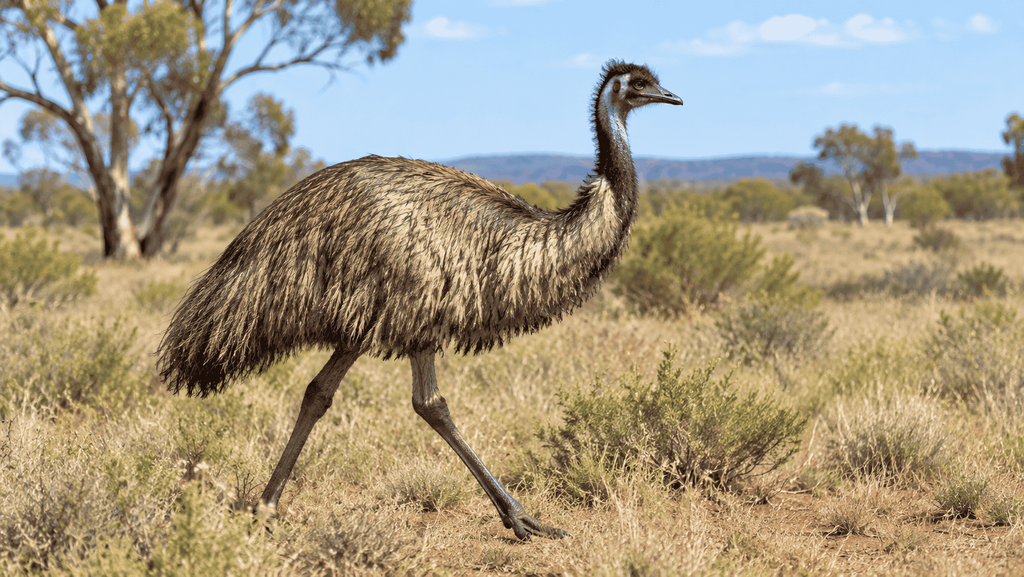
The emu is a large flightless bird native to Australia. Like other birds, it uses its two legs as its primary means of terrestrial locomotion.
Its long legs allow it to walk and run across open habitats, while its strong feet provide stability on different types of ground. Emus cannot fly, so their legs are especially important for traveling, finding food, and avoiding threats.
5. Flamingo
Scientific Name: Species of the family Phoenicopteridae
Animal Group: Bird
Diet: Algae, small aquatic organisms and other food filtered from water
Type of Bipedal Movement: Walking and wading
Flamingos are famous for their long legs and unusual one-legged resting posture, but they also walk on two legs when moving through shallow water or across land.
Their long legs allow them to wade through wetlands while keeping much of their body above the water. Their two-legged walking is particularly useful in shallow aquatic environments where they search for food.
Standing on one leg should not be confused with walking on two legs; these are different behaviors.
6. Kangaroo Rat
Scientific Name: Dipodomys species
Animal Group: Mammal
Diet: Mainly seeds and plant material
Type of Bipedal Movement: Hopping

Despite its name, the kangaroo rat is a small rodent rather than a miniature kangaroo. It has very large hind legs compared with its body and uses them for powerful hopping movements.
This specialized locomotion helps kangaroo rats move across dry and sandy environments. Their long tails provide balance during movement, while their small forelimbs remain much less important for normal locomotion. Kangaroo rats are among the mammals recognized for specialized bipedal hopping.
7. Jerboa
Scientific Name: Family Dipodidae
Animal Group: Mammal
Diet: Seeds, plants and insects depending on species
Type of Bipedal Movement: Hopping and skipping
Jerboas are small desert rodents with extremely long hind legs and relatively tiny front legs. Their unusual body proportions make them look somewhat like miniature jumping animals.
Instead of walking slowly on four legs, jerboas commonly move through their environment using powerful hops. Their long tails help stabilize the body while they jump. Scientific literature describes jerboas as using a distinctive hopping or skipping gait rather than ordinary human-like walking.
8. Pangolin
Scientific Name: Family Manidae
Animal Group: Mammal
Diet: Mainly ants and termites
Type of Bipedal Movement: Upright walking in certain situations
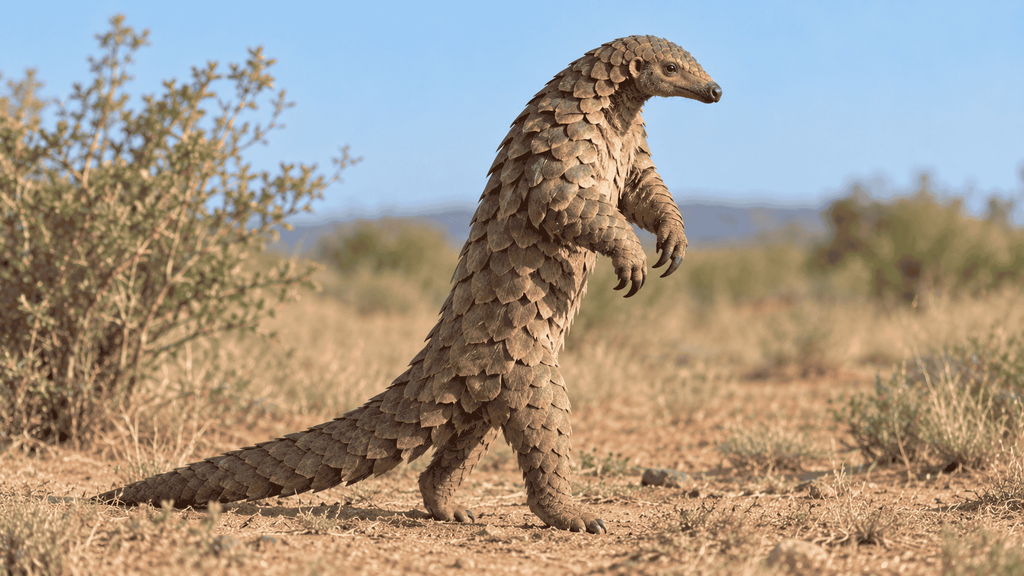
Pangolins are unusual mammals covered in protective scales. Although they normally use all four limbs for many activities, some pangolins can adopt a bipedal posture and move upright.
Their strong hind legs and long tails can help support and balance the body during upright movement. This behavior is especially interesting because habitual bipedalism is relatively uncommon among modern mammals compared with birds.
9. Gibbon
Scientific Name: Family Hylobatidae
Animal Group: Mammal
Diet: Mainly fruit, leaves and other plant material
Type of Bipedal Movement: Occasional walking
Gibbons are highly adapted for life in trees, where they commonly move using their long arms and specialized swinging abilities. However, they can also walk on two legs, particularly when moving on the ground or along suitable branches.
Their bipedal movement is therefore different from that of an ostrich or penguin. Gibbons are not full-time terrestrial bipeds; their normal lifestyle involves extensive arboreal movement.
10. Chimpanzee
Scientific Name: Pan troglodytes
Animal Group: Mammal
Diet: Fruits, leaves, seeds, insects and other foods
Type of Bipedal Movement: Occasional walking
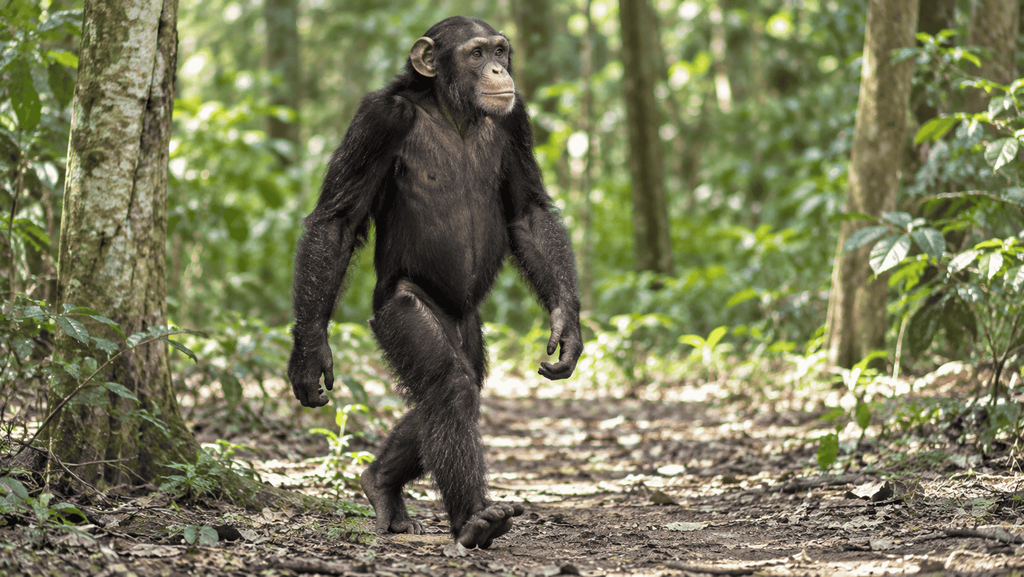
Chimpanzees normally use several forms of locomotion, including quadrupedal movement, climbing, and other movements through their forest habitat. However, they can also walk upright on two legs.
Chimpanzee bipedalism is considered facultative, meaning it occurs in certain situations rather than being their normal method of locomotion. Researchers have studied chimpanzee bipedal walking because it provides useful comparisons with human movement.
11. Gorilla
Scientific Name: Gorilla species
Animal Group: Mammal
Diet: Mainly leaves, shoots, stems and other vegetation
Type of Bipedal Movement: Occasional walking
Gorillas are powerful primates that normally use four-limbed locomotion, including their characteristic knuckle-walking behavior. However, they can stand and move upright on two legs for short periods.
This may happen while exploring, reaching, observing their surroundings, or moving through particular situations. Gorillas should therefore be described as occasional or facultative bipeds rather than animals that normally walk exclusively on two legs. Research shows that bipedal movement forms only a small part of typical gorilla locomotion.
12. Basilisk Lizard
Scientific Name: Basiliscus species
Animal Group: Reptile
Diet: Insects, small animals, fruits and vegetation depending on species
Type of Bipedal Movement: Rapid running
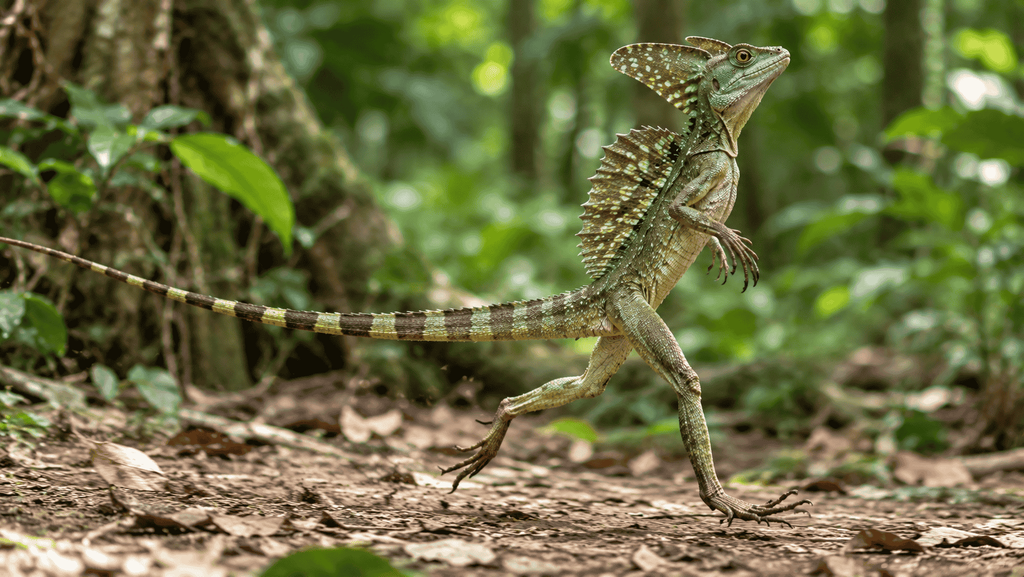
The basilisk lizard is one of the most remarkable examples of bipedal movement among reptiles. When moving rapidly, it can raise its front body and run using its hind legs.
This behavior is particularly useful during rapid escapes. The lizard’s long tail helps with balance while its hind limbs generate the main propulsion. Some lizards are known to adopt bipedal running at high speeds, making them an interesting example of facultative bipedal locomotion.
13. Meerkat
Scientific Name: Suricata suricatta
Animal Group: Mammal
Diet: Insects, small reptiles, scorpions and other small animals
Type of Bipedal Movement: Short upright movement
Meerkats are famous for standing upright while watching their surroundings. Their ability to balance on their hind legs gives them a better view over the ground around their burrows.
However, standing upright does not automatically make an animal a habitual biped. Meerkats normally use four legs for walking and running. Their upright posture is more closely associated with vigilance and observation than continuous two-legged locomotion.
14. Wallaby
Scientific Name: Family Macropodidae
Animal Group: Mammal
Diet: Mainly grasses, leaves and other vegetation
Type of Bipedal Movement: Hopping
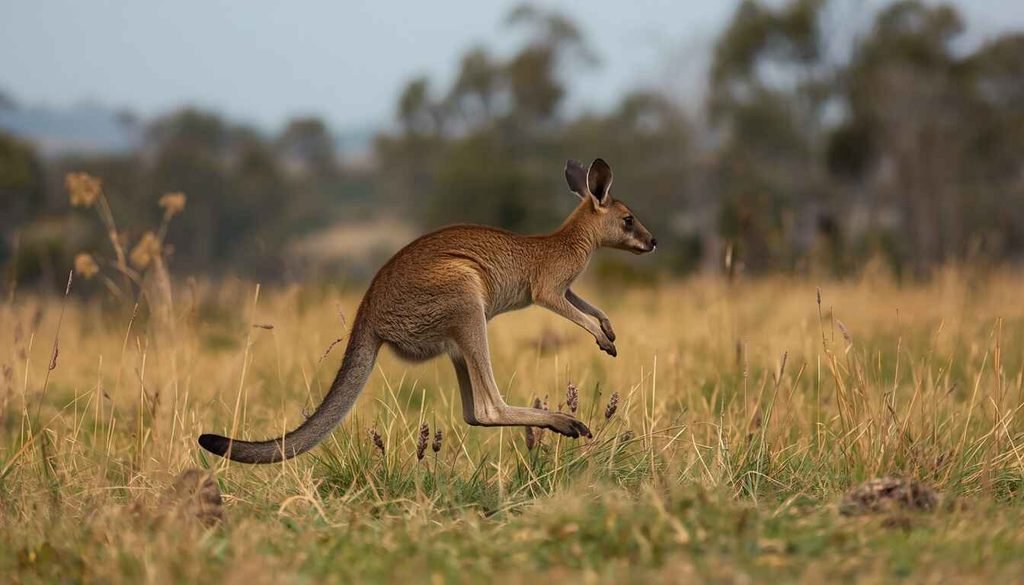
Wallabies are smaller relatives of kangaroos and share their specialized method of moving through open environments. Their powerful hind legs allow them to travel by repeated two-legged hops.
The tail helps with balance and body control during movement. Like kangaroos, wallabies demonstrate how bipedal locomotion can develop in mammals without resembling the upright walking style seen in humans.
Do All Two-Legged Animals Actually Walk on Two Legs?
Not necessarily. The phrase “animals that walk on two legs” can describe several different types of bipedal movement.
Some animals are habitual bipeds, meaning two-legged movement is their normal way of traveling. Most birds fall into this broad category, while kangaroos and kangaroo rats use specialized bipedal hopping.
Other animals are facultative bipeds. They normally use four limbs or another form of movement but can switch to two legs for a particular purpose. Chimpanzees, gorillas, gibbons, and many lizards fit into this broader category.
Why Do Some Animals Walk On Two Legs?
There is no single reason why animals evolved bipedal movement. Different species use two legs because of their unique body structures, habitats, and survival needs.
Two-legged locomotion can provide advantages such as:
- Efficient movement across open terrain
- Fast running or escape
- Specialized hopping
- Moving through shallow water
- Maintaining balance
- Getting a better view of the surroundings
- Temporarily freeing the forelimbs
- Adapting to particular environments
For example, ostriches have long, powerful legs suited to running, while kangaroos have evolved an efficient hopping system. Lizards can use bipedal running during rapid escapes, showing that similar locomotion can arise for very different reasons.
Different Types of Bipedal Movement
Walking
Bipedal walking involves alternating the two legs. Birds, humans, and some primates can use this type of movement.
Running
Running on two legs is common among birds such as ostriches and emus. Some lizards also switch to bipedal running when moving quickly.
Hopping
Kangaroos, wallabies, kangaroo rats, and jerboas demonstrate specialized forms of bipedal hopping. In hopping, the hind legs provide most of the propulsion and often work together rather than alternating like a normal walking gait.
Occasional Upright Movement
Some animals use two legs only temporarily. Primates may stand or walk upright for short distances, while animals such as meerkats frequently stand upright to observe their surroundings.
Comparison Table
| Animal | Group | Main Two-Legged Movement | Habitual or Occasional? |
| Penguin | Bird | Walking/Waddling | Habitual |
| Kangaroo | Mammal | Hopping | Habitual |
| Ostrich | Bird | Running | Habitual |
| Emu | Bird | Walking/Running | Habitual |
| Flamingo | Bird | Walking/Wading | Habitual |
| Kangaroo Rat | Mammal | Hopping | Habitual |
| Jerboa | Mammal | Hopping/Skipping | Habitual |
| Pangolin | Mammal | Upright walking | Context dependent |
| Gibbon | Mammal | Walking | Occasional |
| Chimpanzee | Mammal | Walking | Occasional |
| Gorilla | Mammal | Walking | Occasional |
| Basilisk Lizard | Reptile | Running | Occasional |
| Meerkat | Mammal | Upright movement | Occasional |
| Wallaby | Mammal | Hopping | Habitual |
FAQs
What are animals that walk on two legs called?
Animals that use two legs or limbs for locomotion are called bipeds, and their movement is described as bipedal locomotion. The term includes different movement styles, including walking, running, and hopping. Not every animal capable of standing or briefly moving upright is a habitual biped.
Which animals walk on two legs besides humans?
Many birds, kangaroos, wallabies, kangaroo rats, and jerboas use two-legged locomotion. Some primates and reptiles can also move bipedally for shorter periods. The exact movement style varies greatly between species.
Do kangaroos walk or hop on two legs?
Kangaroos primarily use bipedal hopping rather than human-like walking. Their powerful hind legs work together to produce repeated hops, while the large tail contributes to balance and movement.
Why do some animals walk on two legs?
Two-legged movement can provide different advantages depending on the species. It may support efficient running, hopping, escape, balance, wading, or movement through a particular habitat. Evolution has produced bipedal locomotion independently in several animal groups.
Are birds considered bipedal animals?
Yes. Modern birds generally use their two hind limbs for terrestrial movement because their forelimbs have become wings. Birds can walk, run, or hop depending on their species and environment.
Can four-legged animals walk on two legs?
Yes. Some animals that normally use four limbs can temporarily walk or run on two legs. Chimpanzees and gorillas, for example, can move bipedally even though their normal locomotion is not exclusively two-legged. Some lizards also switch to bipedal running at high speeds.
Final Thoughts
Animals that walk on two legs demonstrate just how diverse locomotion can be across the animal kingdom. Penguins and ostriches use two legs as birds, kangaroos and wallabies rely on specialized hopping, while kangaroo rats and jerboas use powerful hind limbs to move across dry landscapes.
Other animals, including chimpanzees, gorillas, gibbons, meerkats, and basilisk lizards, use bipedal movement only in particular situations. Understanding this difference makes the term bipedal animal much more useful than simply assuming every two-legged movement is the same.

One thought on “Animals That Walk On Two Legs: 14 Fascinating Bipedal Animals”