
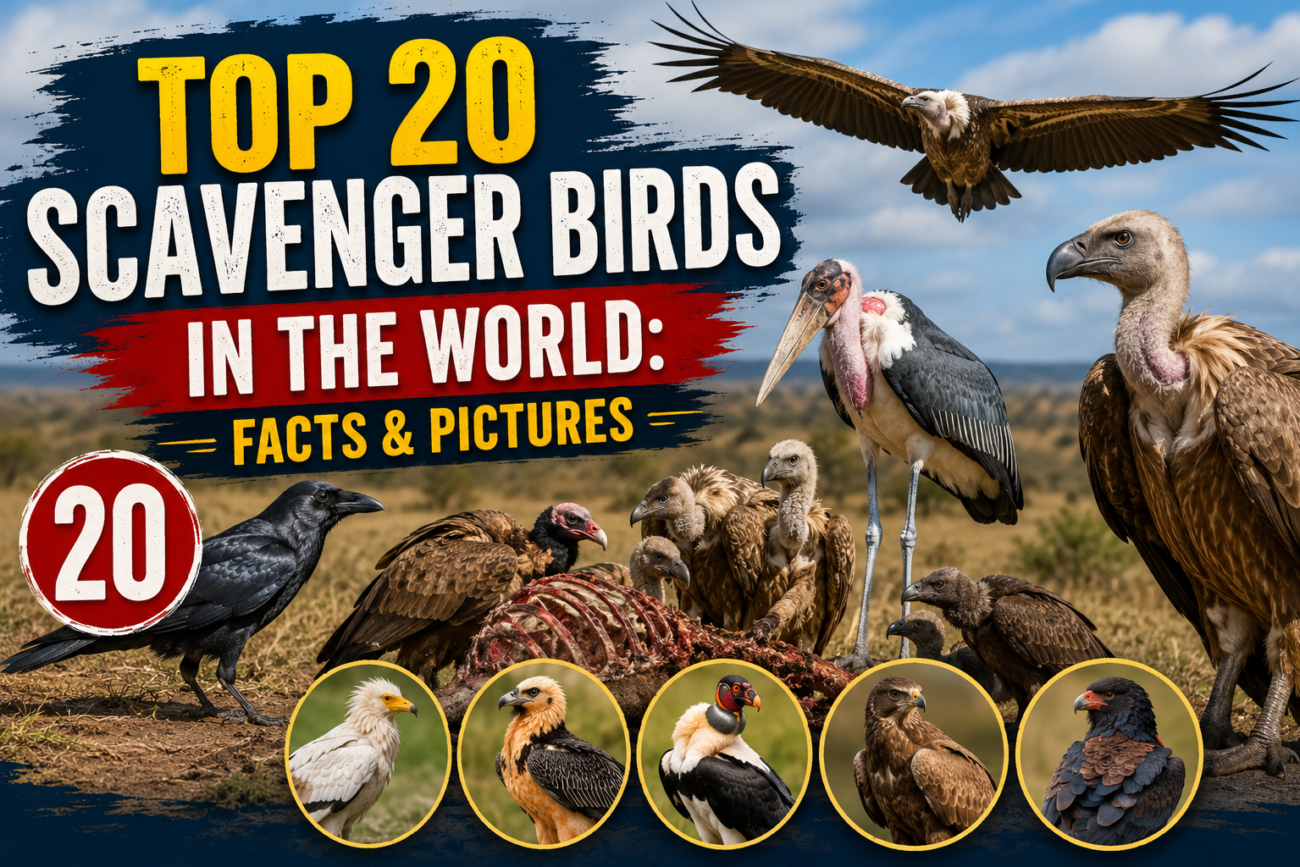
From soaring vultures and condors to clever ravens and adaptable gulls, scavenger birds have an important job in nature. These birds feed on carrion, leftover food, and other available resources, helping move nutrients through ecosystems.
Although vultures are the birds most strongly associated with scavenging, many other species also consume dead animals when the opportunity arises. Scientific research separates specialized or obligate scavengers from birds that scavenge only part of the time.
In this guide, you’ll discover 20 fascinating scavenging birds, what they eat, where they live, how they find carrion, and why these birds are essential to healthy ecosystems.
What Are Scavenger Birds?
Scavenger birds are birds that feed partly or primarily on dead animals, known as carrion. Some species depend heavily on carcasses, while others are opportunistic feeders that switch between hunting, foraging, and scavenging.
Vultures and condors are among the best examples. Their bodies and behavior are particularly well suited to finding and consuming animal remains. Other birds, including ravens, crows, gulls, eagles, kites, caracaras, and storks, may also eat carrion.
Scavenging is an important feeding strategy because a dead animal represents a concentrated source of nutrients and energy. Instead of allowing the carcass to remain unused, scavengers help return those nutrients to the food web.
Research on avian scavengers identifies both obligate scavengers and facultative scavengers. Vultures are the only obligate vertebrate scavengers, while many other birds consume carrion opportunistically.
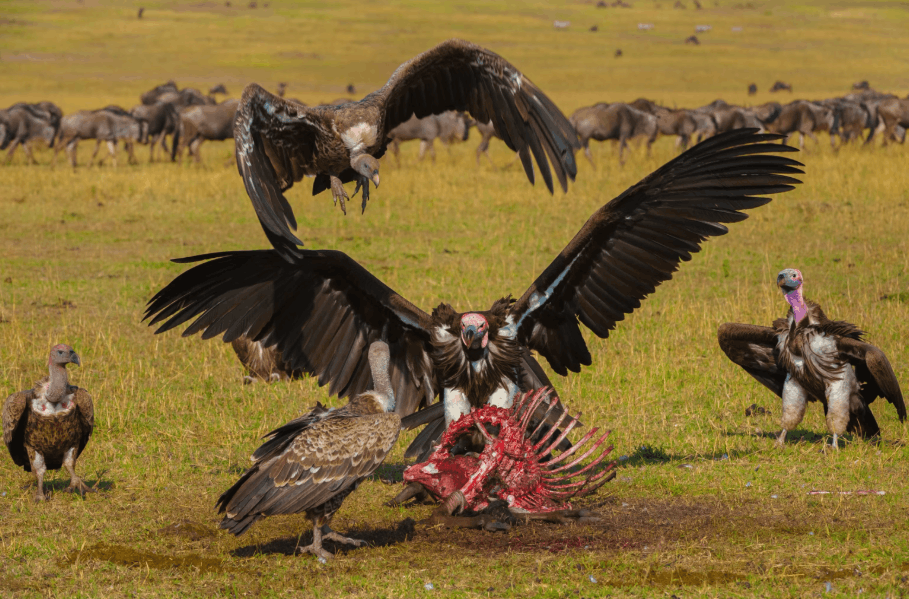
Why Do Birds Eat Dead Animals?
For many birds, scavenging is an efficient way to obtain food without spending the energy required to chase and capture live prey.
A carcass can provide meat, organs, fat, and other nutrients. Depending on the species, birds may also eat insects and other organisms associated with decomposing remains.
Some major reasons birds eat dead animals include:
- Easy access to food: A carcass cannot escape, making it a relatively low-energy food source.
- Abundant nutrients: Dead animals can provide protein and other nutrients.
- Seasonal opportunity: Scavenging becomes particularly useful when normal prey is scarce.
- Adaptability: Opportunistic birds can use many different food sources.
- Food-web connections: Carrion links predators, scavengers, decomposers, and other organisms.
Scavenging is therefore not simply a behavior associated with “dirty” food. It is a specialized ecological strategy that has evolved in many different bird groups.
List of Scavenger Birds
Here are 20 birds known for specialized or opportunistic scavenging behavior:
| # | Scavenger Bird | Scientific Name | Main Food Sources | Typical Habitat |
| 1 | Andean Condor | Vultur gryphus | Carrion | Andes |
| 2 | Turkey Vulture | Cathartes aura | Carrion | Americas |
| 3 | Griffon Vulture | Gyps fulvus | Large carcasses | Europe, Asia, North Africa |
| 4 | Crested Caracara | Caracara plancus | Carrion, small prey | South America |
| 5 | Lappet-faced Vulture | Torgos tracheliotos | Large carcasses | Africa |
| 6 | Himalayan Griffon | Gyps himalayensis | Carrion | Himalayas |
| 7 | Eurasian Jackdaw | Coloeus monedula | Carrion, insects, food scraps | Europe, Asia |
| 8 | Egyptian Vulture | Neophron percnopterus | Carrion, eggs, small food | Europe, Africa, Asia |
| 9 | Black Vulture | Coragyps atratus | Carrion | Americas |
| 10 | Marabou Stork | Leptoptilos crumenifer | Carrion, prey, scraps | Africa |
| 11 | White-backed Vulture | Gyps africanus | Carrion | Sub-Saharan Africa |
| 12 | Common Raven | Corvus corax | Carrion, prey, food scraps | Northern Hemisphere |
| 13 | King Vulture | Sarcoramphus papa | Carrion | Central & South America |
| 14 | Bearded Vulture | Gypaetus barbatus | Bones and carrion | Mountains of Europe, Africa, Asia |
| 15 | Northern Giant Petrel | Macronectes halli | Marine carrion, prey | Southern oceans |
| 16 | Red Kite | Milvus milvus | Carrion, small prey | Europe |
| 17 | Rüppell’s Vulture | Gyps rueppelli | Carrion | Africa |
| 18 | Bald Eagle | Haliaeetus leucocephalus | Fish, prey, carrion | North America |
| 19 | Herring Gull | Larus argentatus | Fish, carrion, scraps | Northern Atlantic regions |
| 20 | Carrion Crow | Corvus corone | Carrion, insects, food | Europe and parts of Asia |
Note: Not every bird in this table is an obligate scavenger. Several are facultative scavengers, meaning carrion is only one part of their broader diet. This distinction is important when discussing birds that eat dead animals.
1. Andean Condor
Scientific Name: Vultur gryphus
Common Name: Andean Condor
Habitat: Andes Mountains and surrounding regions
Diet: Mainly carrion
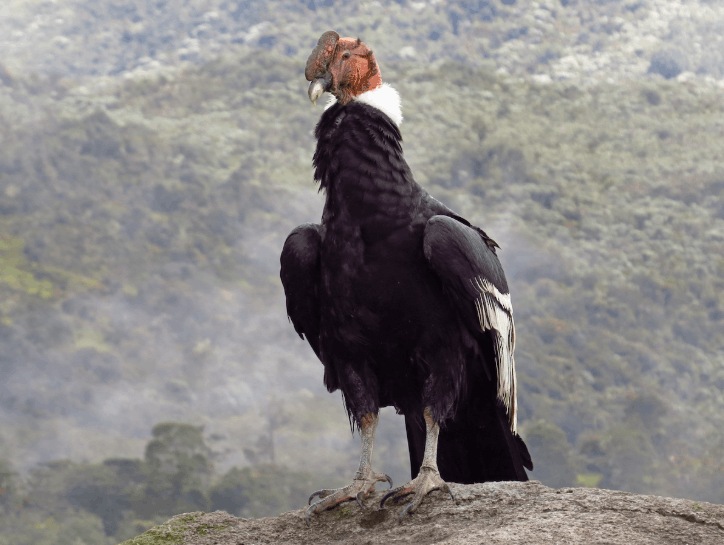
The Andean Condor is one of the most impressive scavenger birds in the world. Native to the Andes of South America, this enormous bird uses broad wings to soar over mountains and open landscapes while searching for food.
It feeds mainly on carrion rather than regularly hunting live animals. Its large hooked bill allows it to tear pieces from carcasses, while its soaring ability lets it cover large areas without constantly flapping its wings.
Andean condors can gather around carcasses with other scavengers. Research has shown that their presence can strongly influence how quickly carcasses are consumed in some Andean ecosystems.
Interesting Fact: The Andean Condor is one of the heaviest flying birds and is famous for its enormous wingspan.
2. Turkey Vulture
Scientific Name: Cathartes aura
Habitat: Much of North and South America
Diet: Carrion
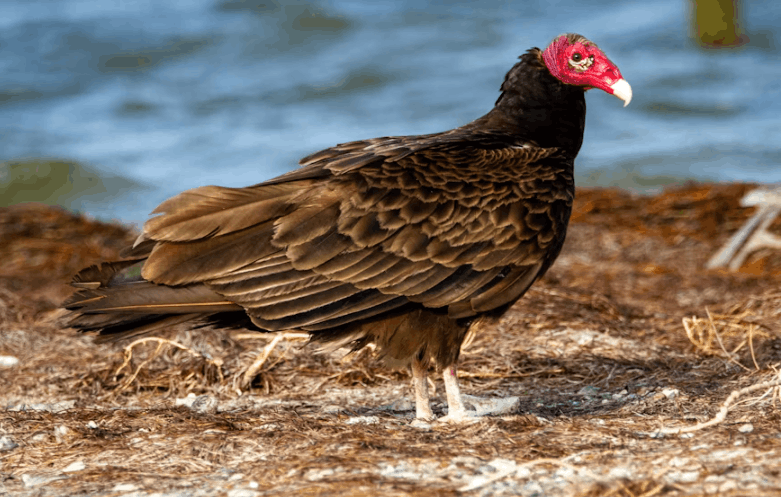
The Turkey Vulture is one of the most recognizable birds that eat dead animals in the Americas. Its dark body, reddish head, and broad wings make it easy to identify while it circles over open landscapes.
One of its most remarkable adaptations is its strong sense of smell. Unlike many other birds that primarily depend on sight to locate food, Turkey Vultures can use airborne odors to help find carrion.
They often soar for long periods while searching for food. Once a carcass is located, other scavengers may also be attracted to the feeding site.
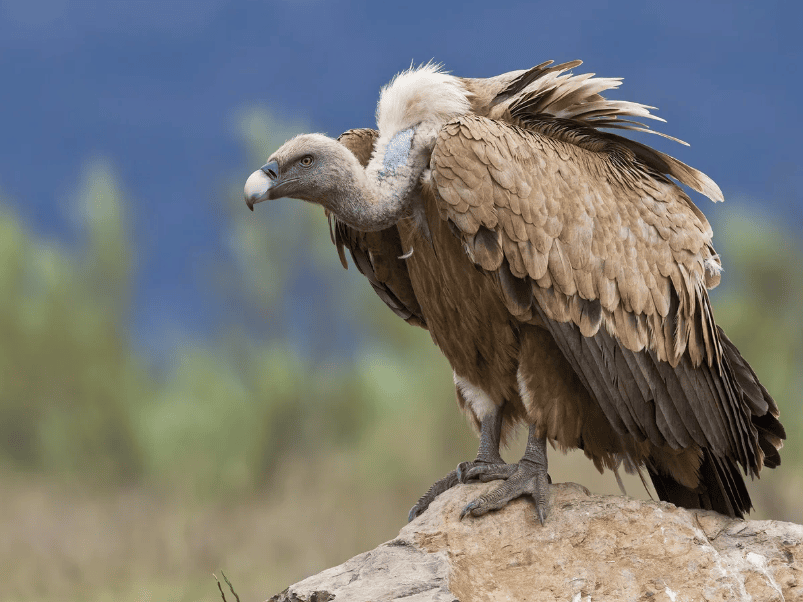
3. Griffon Vulture
Scientific Name: Gyps fulvus
Habitat: Europe, North Africa, and parts of Asia
Diet: Carrion
The Griffon Vulture is a large Old World vulture adapted for feeding on the remains of mammals and other animals. Its broad wings make it an efficient soaring bird, allowing it to search wide areas for carcasses.
Griffon Vultures commonly feed socially. Several birds may gather at a carcass, with different individuals competing for access to food.
Like other vultures, this species occupies an important scavenging niche. By rapidly consuming animal remains, vultures contribute to nutrient cycling and help process carrion within ecosystems.
Interesting Fact: Griffon Vultures can travel great distances while searching for food.
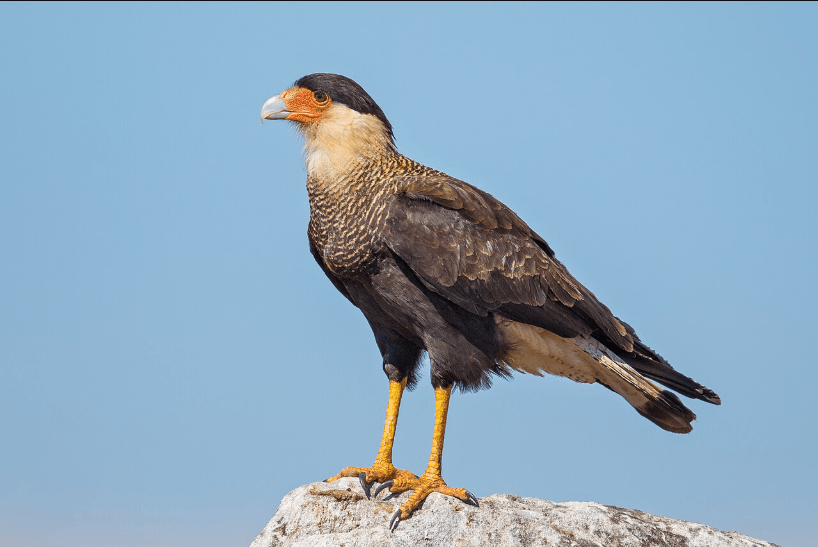
4. Crested Caracara
Scientific Name: Caracara plancus
Habitat: Open areas of Central and South America
Diet: Carrion, insects, small vertebrates, and other food
The Crested Caracara is an unusual member of the scavenger bird group because it combines hunting, foraging, and scavenging.
Rather than relying exclusively on soaring flight, it often spends considerable time on the ground. It may investigate carcasses, search for food in open areas, or take advantage of food left behind by other predators.
This flexible diet makes the Crested Caracara a good example of a facultative scavenger.
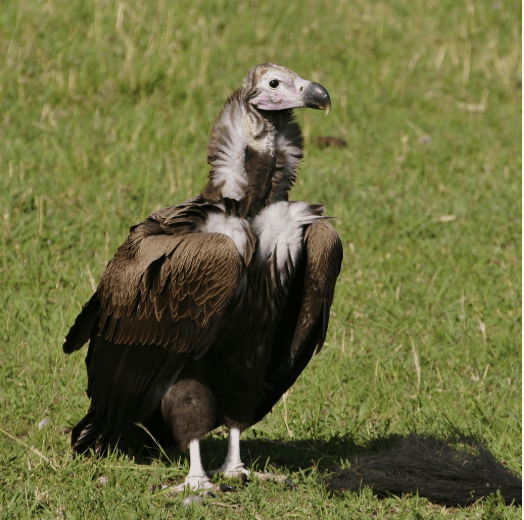
5. Lappet-faced Vulture
Scientific Name: Torgos tracheliotos
Habitat: African savannas, dry regions, and open landscapes
Diet: Carrion
The Lappet-faced Vulture is one of Africa’s largest vultures. Its powerful bill is particularly useful for tearing into tough animal remains that may be difficult for smaller scavengers to access.
This species can feed on large carcasses and interact with many other scavenging birds. Its size and feeding behavior make it an important member of African scavenger communities.
Like other vultures, it faces serious threats including poisoning, habitat changes, and reduced food availability.
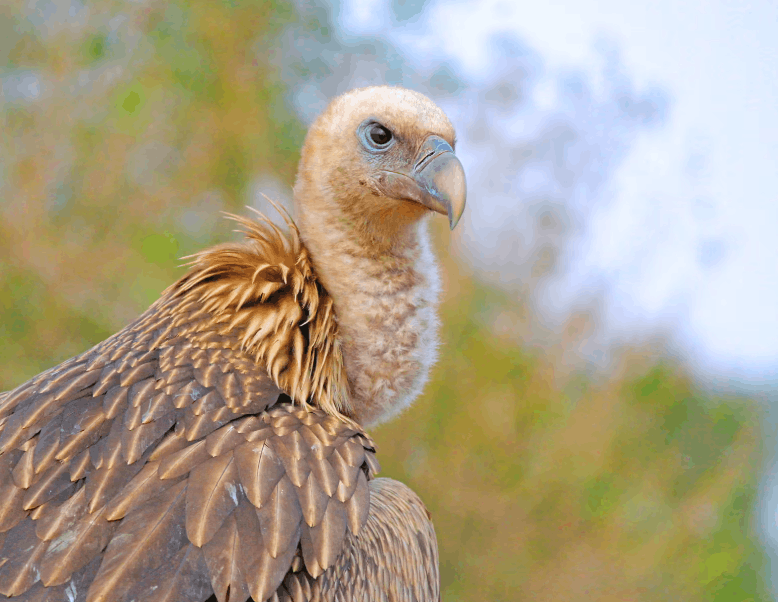
6. Himalayan Griffon
Scientific Name: Gyps himalayensis
Habitat: Himalayan mountains and surrounding high-altitude regions
Diet: Carrion
The Himalayan Griffon is a large scavenging bird adapted to mountainous environments. It can use rising air currents to soar above rugged terrain while searching for carcasses.
Its broad wings are particularly useful in landscapes where soaring can save considerable energy. When food is located, multiple vultures may gather to feed.
The species demonstrates how scavenger birds can occupy environments where locating widely scattered food requires exceptional flight efficiency.
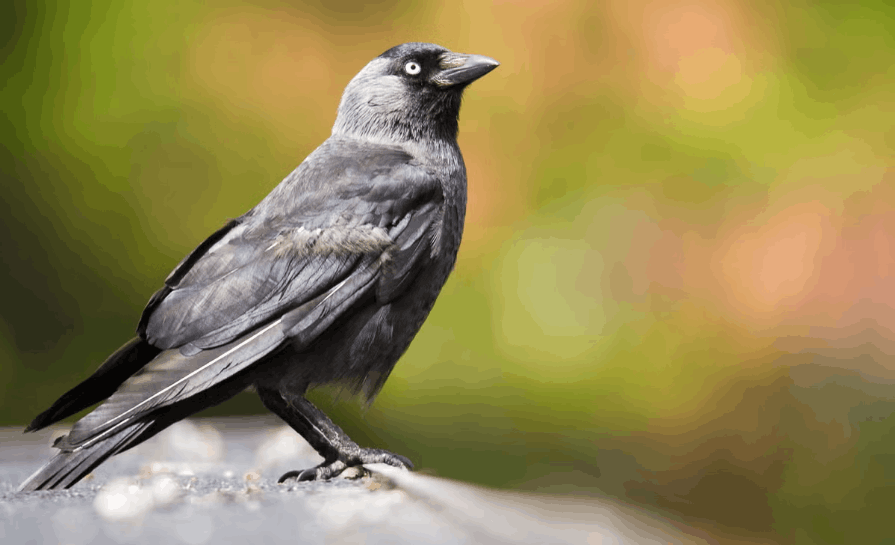
7. Eurasian Jackdaw
Scientific Name: Coloeus monedula
Habitat: Europe and parts of western Asia
Diet: Insects, seeds, food scraps, carrion, and other resources
The Eurasian Jackdaw is a small member of the crow family and is highly adaptable. Although it is not a specialized scavenger, it can consume carrion when the opportunity is available.
Its intelligence and social behavior help it exploit different food resources. Jackdaws can live around farmland, woodland edges, towns, and other human-modified environments.
This adaptability is typical of many opportunistic scavengers.
8. Egyptian Vulture
Scientific Name: Neophron percnopterus
Habitat: Parts of Europe, Africa, and Asia
Diet: Carrion, eggs, insects, and other foods
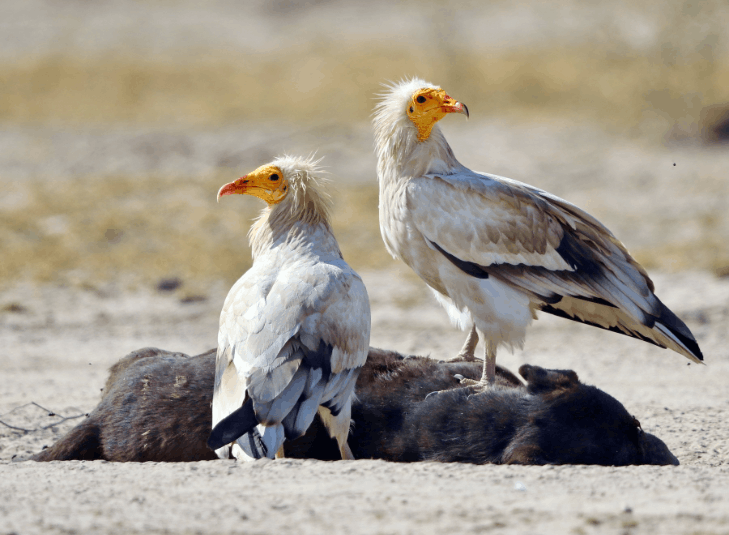
The Egyptian Vulture is a smaller Old World vulture with a distinctive appearance. Adults have mostly white plumage with dark flight feathers and a yellowish face.
It consumes carrion but also has a varied diet. One of its most famous behaviors is tool use: some Egyptian Vultures have been documented using stones to break open large eggs.
This unusual behavior makes the species particularly interesting among scavenging birds.
9. Black Vulture
Scientific Name: Coragyps atratus
Habitat: Central and South America and parts of the United States
Diet: Carrion
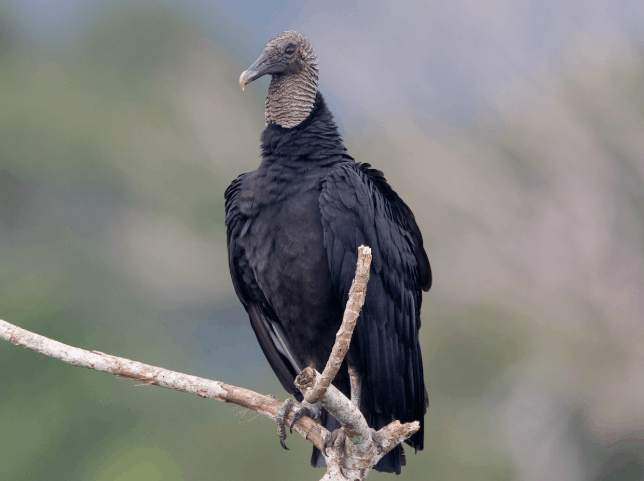
The Black Vulture is a highly social scavenger commonly seen soaring in groups. It feeds extensively on carrion and is particularly adaptable to landscapes influenced by people.
Unlike the Turkey Vulture, the Black Vulture relies less heavily on smell and more on visual detection and social cues when locating food.
Large gatherings may form around carcasses, creating intense competition between individuals and other scavenging species.
10. Marabou Stork
Scientific Name: Leptoptilos crumenifer
Habitat: Sub-Saharan Africa
Diet: Carrion, fish, insects, small animals, and scraps
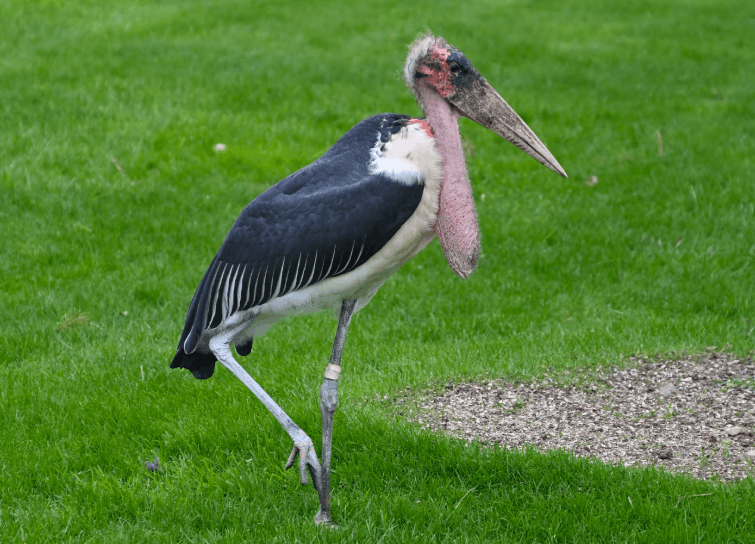
The Marabou Stork is a huge African bird with long legs, a large bill, and a distinctive appearance. It is an opportunistic feeder rather than a specialized scavenger.
Marabou Storks may gather around carcasses and can also follow predators or other animals to take advantage of food opportunities.
Their flexible feeding behavior allows them to survive in a variety of African habitats.
11. White-backed Vulture
Scientific Name: Gyps africanus
Habitat: Sub-Saharan African savannas and open woodland
Diet: Carrion
The White-backed Vulture is a highly important scavenger of African ecosystems. It often gathers with other vultures at carcasses and can consume large amounts of animal remains.
Its population declines are a major conservation concern. Poisoning, habitat loss, changes in livestock management, and other human-related pressures can threaten vulture populations.
The decline of scavenging birds can have consequences beyond the birds themselves because scavengers perform important ecological functions.
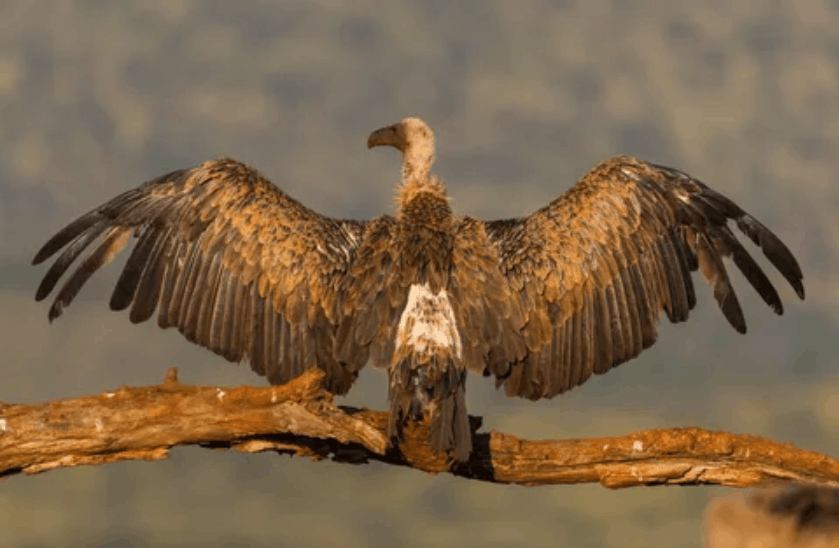
12. Common Raven
Scientific Name: Corvus corax
Habitat: Europe, Asia, North America, and northern Africa
Diet: Carrion, small animals, insects, seeds, and food scraps
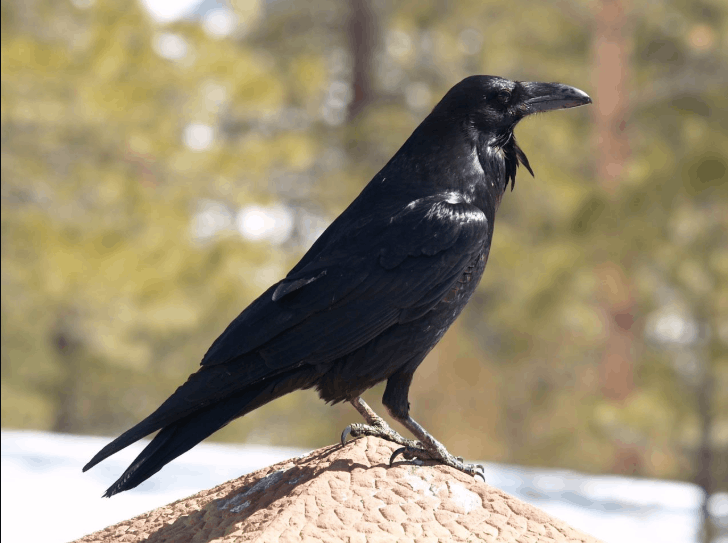
The Common Raven is one of the world’s most intelligent birds and a highly adaptable scavenger. It can locate and consume carrion but also hunts, forages, and takes advantage of many other food sources.
Ravens are famous for problem-solving, complex communication, memory, and food caching. Their intelligence is particularly useful when exploiting unpredictable food resources.
Because they are generalist feeders, ravens can live in environments ranging from forests and mountains to deserts and human-dominated landscapes.
13. King Vulture
Scientific Name: Sarcoramphus papa
Habitat: Tropical forests of Central and South America
Diet: Carrion
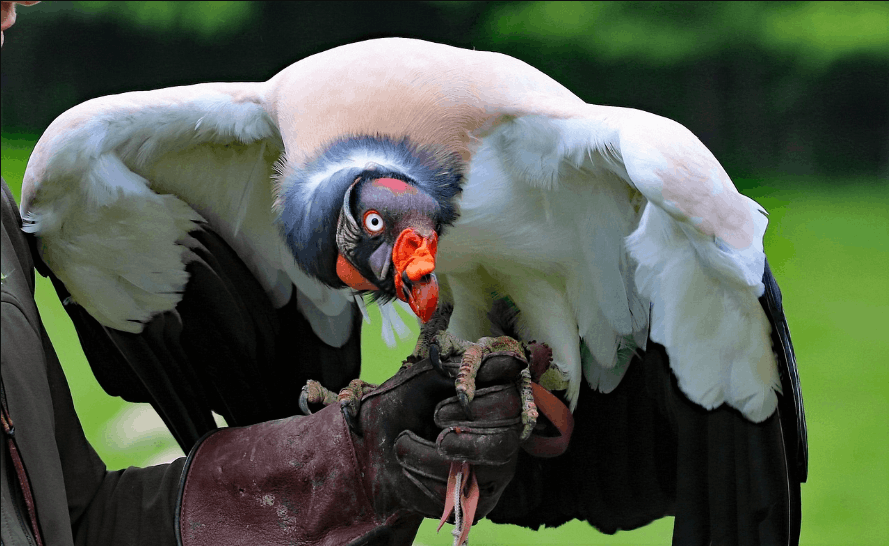
The King Vulture is one of the most colorful vultures. Its white-and-black body is contrasted by a strikingly colored head and bill.
It feeds primarily on carrion and may benefit from the feeding activities of other scavengers. Its strong bill can help it access parts of carcasses that smaller birds struggle to reach.
The King Vulture demonstrates that scavengers can be both visually spectacular and ecologically important.
14. Bearded Vulture
Scientific Name: Gypaetus barbatus
Habitat: Mountainous regions of Europe, Africa, and Asia
Diet: Bones and carrion
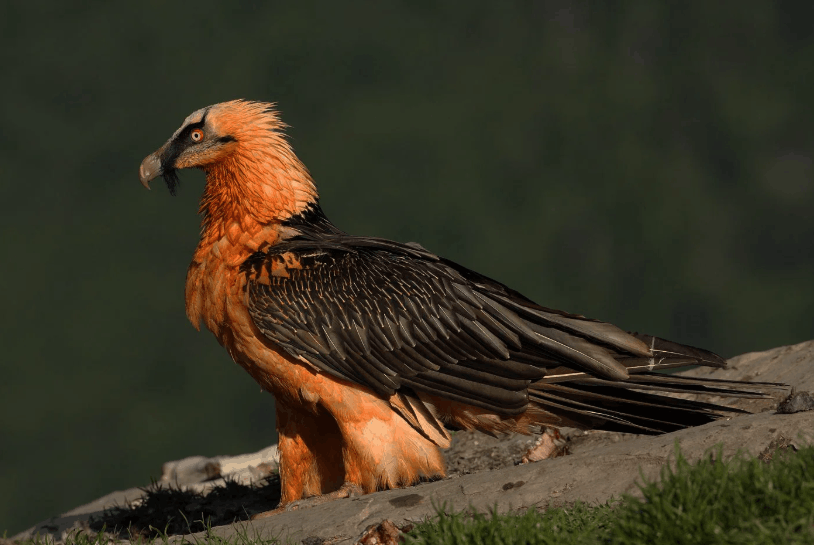
The Bearded Vulture, also called the Lammergeier, is one of the most unusual scavenging birds on Earth.
Instead of focusing mainly on soft tissue, this bird specializes in bones. It can carry large bones into the air and drop them onto rocks, breaking them into smaller pieces that can be swallowed.
This remarkable feeding strategy allows the bird to exploit a food resource that many other scavengers cannot use effectively.
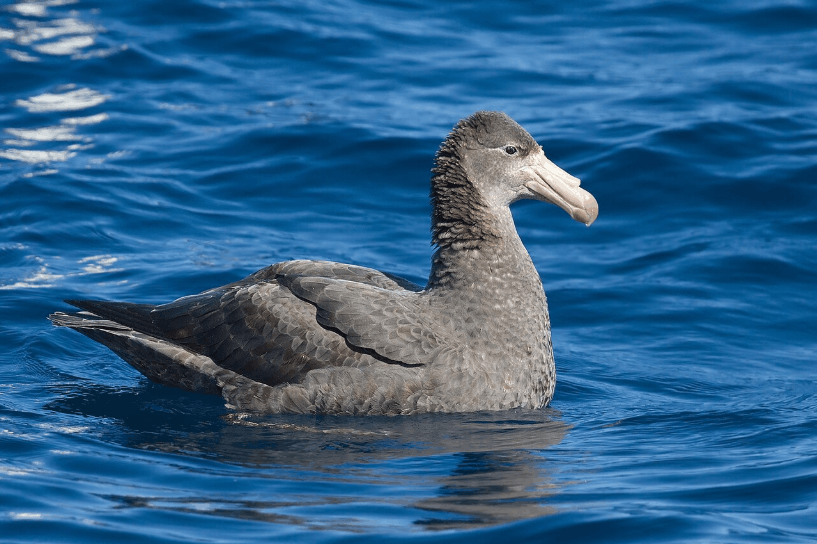
15. Northern Giant Petrel
Scientific Name: Macronectes halli
Habitat: Southern oceans and subantarctic regions
Diet: Marine animals, carrion, fish, and other food
The Northern Giant Petrel is a large seabird that combines predation, foraging, and scavenging.
At sea, it can consume dead marine animals and take advantage of carcasses or food remains. Its powerful bill is suited to handling substantial food items.
This species shows that scavenging is not limited to terrestrial ecosystems. Oceans also support communities of birds that exploit marine carrion.
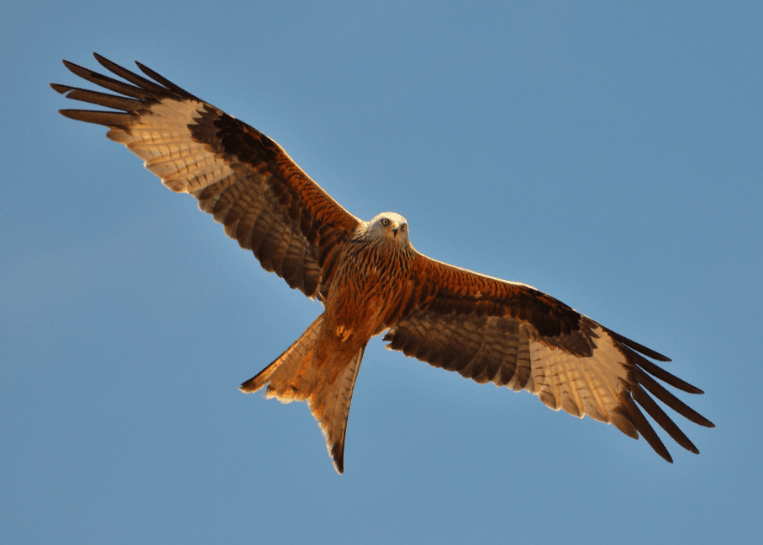
16. Red Kite
Scientific Name: Milvus milvus
Habitat: Mainly Europe
Diet: Small mammals, birds, carrion, and other food
The Red Kite is a graceful raptor recognized by its reddish plumage and deeply forked tail.
Although it can capture live prey, carrion forms an important part of its flexible feeding strategy in suitable habitats. Its ability to switch between hunting and scavenging makes it a good example of an opportunistic bird.
The Red Kite demonstrates why the term “scavenger bird” should not always mean a species eats only dead animals.
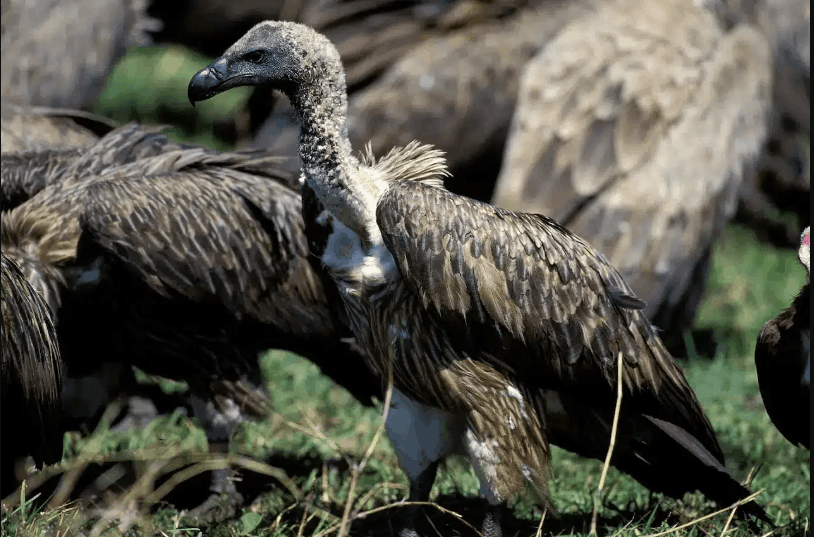
17. Rüppell’s Vulture
Scientific Name: Gyps rueppelli
Habitat: African savannas and open landscapes
Diet: Carrion
Rüppell’s Vulture is a highly specialized African scavenger. It is particularly famous for its ability to fly at extraordinary altitudes, making it one of the most remarkable high-flying birds.
Like other vultures, it can travel long distances while searching for carcasses. It often feeds socially with other vultures around large animal remains.
The species faces significant conservation pressure, particularly from poisoning and other human-related threats.
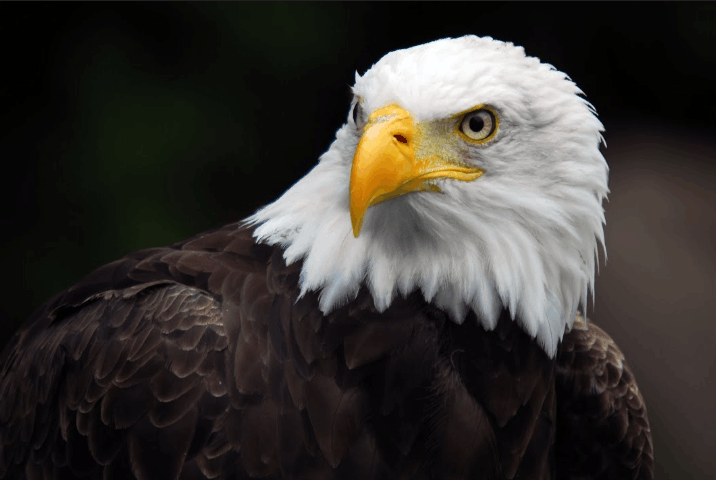
18. Bald Eagle
Scientific Name: Haliaeetus leucocephalus
Habitat: North America, especially near water
Diet: Fish, birds, mammals, carrion
The Bald Eagle is primarily a predator and fish-eating raptor, but it is also capable of scavenging.
When an easy food opportunity appears, a Bald Eagle may feed on carrion or take advantage of food captured by another animal. This flexible behavior is common among many large birds of prey.
Its scavenging behavior illustrates the difference between a predatory bird that sometimes scavenges and an obligate scavenger such as a vulture.
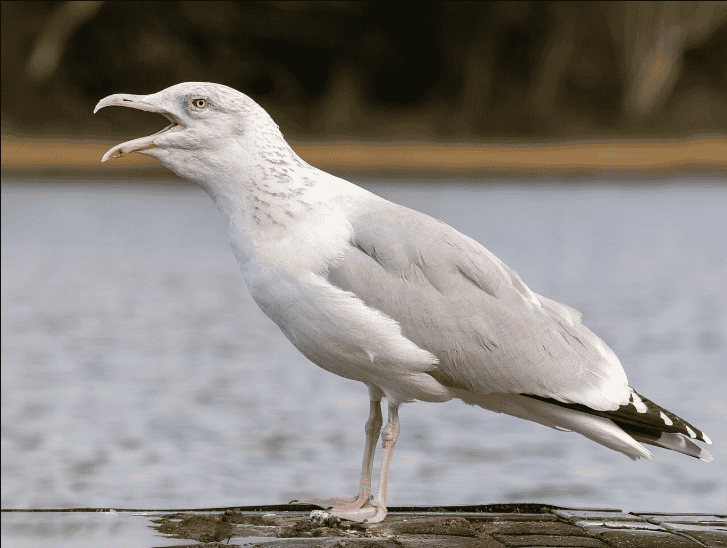
19. Herring Gull
Scientific Name: Larus argentatus
Habitat: Coastal regions and inland areas of the Northern Hemisphere
Diet: Fish, invertebrates, carrion, eggs, and human food
The Herring Gull is an adaptable generalist feeder. Along coastlines, it can exploit fish and marine organisms, while in other environments it may consume carrion and food discarded by people.
Its ability to use both natural and human-associated food sources has helped gulls occupy a wide range of habitats.
Herring Gulls are therefore better described as opportunistic scavengers rather than specialized carrion feeders.
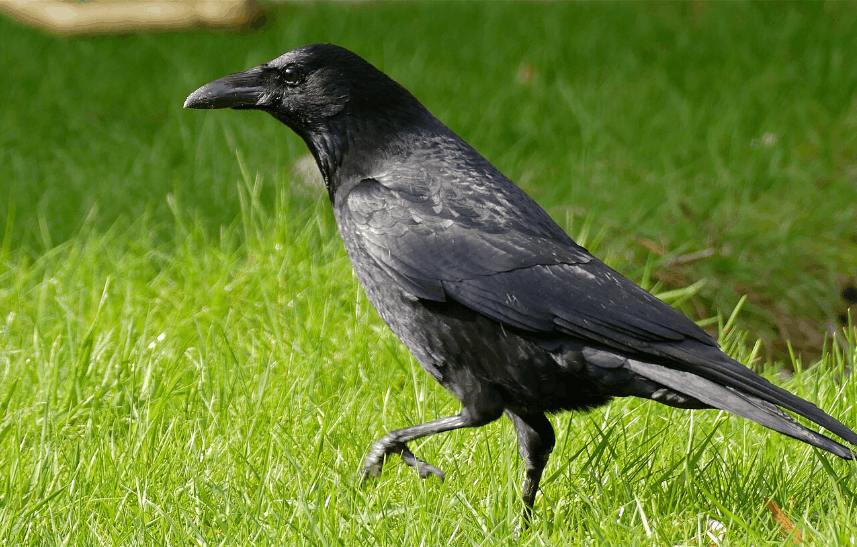
20. Carrion Crow
Scientific Name: Corvus corone
Habitat: Europe and parts of Asia
Diet: Carrion, insects, seeds, eggs, and food scraps
The Carrion Crow gets its common name from one of its most recognizable feeding behaviors. It readily consumes dead animals but also has an extremely varied diet.
Its intelligence and adaptability allow it to exploit changing food opportunities. Carrion Crows can live in farmland, woodland, cities, and other landscapes where food is available.
Like ravens, they demonstrate how corvids can combine scavenging with generalist foraging.
Types of Scavenger Birds
Scavenger birds can be broadly divided into several ecological groups.
| Type | Examples | Feeding Strategy |
| Obligate scavengers | Vultures | Depend heavily on carrion |
| Specialized scavengers | Condors, Bearded Vulture | Strong adaptations for carrion |
| Opportunistic scavengers | Eagles, kites, caracaras | Hunt live prey but also eat carrion |
| Generalist scavengers | Crows, ravens, gulls | Use many different food sources |
| Marine scavengers | Giant petrels, gulls | Exploit marine carrion and food remains |
Scientific research identifies vultures as the only obligate vertebrate scavengers, while many other avian scavengers are facultative species.
Why Are Scavenger Birds Important?
Scavenger birds perform a natural cleanup function in ecosystems.
When animals die, their bodies become resources for many organisms. Birds that consume carrion help move this energy through the food web and accelerate the removal of animal remains.
Their ecological roles include:
- Carrion removal
- Nutrient cycling
- Food-web interactions
- Supporting decomposition
- Providing food for other organisms
- Connecting predator and scavenger communities
Vultures are especially important because their digestive systems and feeding habits allow them to process carrion efficiently. Research has linked avian scavenging with ecosystem services including disease regulation and nutrient transport.
The loss of vultures can therefore affect other parts of an ecosystem. Scientists have warned that major declines in scavenger populations can produce ecological changes extending beyond the birds themselves.
Suggested Image Alt Text: Vultures performing their ecological role as scavengers
How Do Scavenger Birds Find Dead Animals?
Finding a carcass is not always easy because dead animals may be spread across enormous landscapes.
Different scavenger species use different methods.
Excellent eyesight
Many vultures and other raptors have excellent vision. From high in the sky, they can scan large areas for carcasses or signs of feeding activity.
Sense of smell
Some New World vultures, particularly Turkey Vultures, have a highly developed sense of smell that helps them locate carrion.
Following other animals
Scavengers may watch predators or other scavengers. A gathering of birds can sometimes provide a clue that food has been discovered.
Social information
Some species benefit from watching members of their own species. Once one bird discovers food, others may follow.
Ground searching
Not every scavenger searches from the air. Crows, caracaras, gulls, and storks may actively walk or forage across the ground.
The exact strategy depends on the species, habitat, weather, and availability of food.
Adaptations That Help Scavenger Birds Eat Carrion
Scavenging requires specialized physical and behavioral adaptations.
Strong hooked bills
Many vultures have powerful bills designed to tear flesh from carcasses.
Powerful digestive systems
Specialized scavengers have digestive systems suited to processing carrion. Their unusual physiology helps them exploit food that would be difficult for many other animals to consume.
Broad wings
Large scavenging birds often use soaring flight to cover huge areas while conserving energy.
Excellent eyesight
Finding small carcasses from the air requires highly effective visual detection.
Bare skin
Several vultures have sparsely feathered heads and necks, which can make feeding inside carcasses easier to manage.
Bone-breaking behavior
The Bearded Vulture takes scavenging specialization to an extreme by feeding heavily on bones and using rocks to break larger pieces.
These adaptations show that scavenging is not simply “eating leftovers.” In some species, it is a highly specialized ecological lifestyle.
Threats Facing Scavenger Birds
Many scavenger birds face serious conservation challenges.
Poisoning
Poison can kill large numbers of vultures and other scavengers at once. Poisoned carcasses may become deadly food sources for birds that arrive to feed.
Habitat Loss
Changes in grasslands, forests, mountains, and other natural habitats can reduce nesting and feeding opportunities.
Reduced Food Availability
Changes in livestock practices and wildlife populations can alter the amount of carrion available.
Hunting and Persecution
Some scavenging birds are deliberately killed because of misconceptions about their appearance or behavior.
Collisions and Electrocution
Large birds may collide with power infrastructure, vehicles, or other human-made structures.
Veterinary Drugs
Some veterinary medicines can be extremely dangerous to vultures when birds consume the carcasses of treated livestock. Toxic veterinary drugs have been identified as a major threat to threatened avian scavengers, particularly vultures.
Protecting scavenger birds therefore requires more than protecting individual nests. Conservation also needs to address poisoning, food availability, habitat, and human-wildlife interactions.
FAQs About Scavenger Birds
Which bird is known as a scavenger?
Vultures are the birds most commonly associated with scavenging. They are highly specialized for consuming carrion, and vultures are considered the only obligate vertebrate scavengers. Other birds, including condors, ravens, crows, gulls, and some eagles, can also scavenge opportunistically.
What birds eat dead animals?
Many birds eat dead animals, including vultures, condors, ravens, crows, caracaras, gulls, kites, storks, and some eagles. However, their dependence on carrion varies. Vultures are specialized scavengers, while many of the others are opportunistic feeders.
What is the largest scavenger bird?
The Andean Condor is generally regarded as one of the largest living flying scavengers. It has an enormous wingspan and feeds primarily on carrion in the Andes and surrounding regions.
Do eagles eat dead animals?
Yes. Eagles are primarily predators, but some species also consume carrion when an opportunity is available. Bald Eagles, for example, may feed on dead animals or food left by other predators.
Do crows eat dead animals?
Yes. Crows are well-known generalist feeders that readily consume carrion. They also eat insects, seeds, eggs, small animals, and human-associated food sources.
How do scavenger birds find carrion?
Scavenger birds use different methods depending on their species. Some rely heavily on vision, some use smell, and others watch predators or fellow scavengers for clues. Turkey Vultures are particularly notable for using their sense of smell to locate carrion.
Are all vultures scavengers?
Vultures are strongly associated with scavenging, and the group includes specialized carrion feeders. However, different vulture species have different diets and behaviors, so they should not all be treated as identical.
Why are scavenger birds important?
Scavenger birds help remove animal remains and transfer nutrients through food webs. Vultures in particular provide important ecosystem services related to carrion consumption and nutrient cycling.
Are scavenger birds dangerous to humans?
Most scavenger birds are not a direct danger to humans. They generally avoid people and are more interested in finding food. Like any wild animal, however, they should be observed from a safe distance.
What is the difference between a scavenger and a predator?
A predator normally obtains food by killing live prey, while a scavenger obtains at least part of its food from animals that have already died. Some birds can do both, which is why they are described as opportunistic or facultative scavengers.
Final Thoughts
Scavenger birds are some of nature’s most important cleanup specialists. From enormous Andean Condors and Griffon Vultures to intelligent ravens and adaptable gulls, these birds have developed different strategies for finding and using carrion.
Not every bird that eats a dead animal is a specialized scavenger. Some species depend heavily on carrion, while others simply take advantage of an available meal. Understanding this difference gives us a clearer picture of how scavenging works within food webs.
Vultures and other scavengers help process animal remains and contribute to nutrient cycling and other ecosystem services. Their decline can have consequences throughout ecological communities.
Protecting these birds means protecting the ecosystems they support. The next time you see a vulture, crow, raven, or another bird feeding on carrion, remember that it may be performing one of nature’s most useful jobs.

One thought on “Top 20 Scavenger Birds in the World:Fascinating Examples with picture”