
Introduction
Have you ever wondered what animal starts with Q? This letter is one of the more challenging letters of the alphabet when it comes to animal names. While animals such as lions, elephants, and zebras are easy to name, Q introduces some unusual creatures that many people have never heard of.
From the friendly-looking quokka of Australia to the colorful quetzal of Central America, animals beginning with Q include mammals, birds, reptiles, fish, and marine invertebrates. Some live in tropical rainforests, others inhabit coral reefs, and a few survive in freshwater rivers or dry grasslands.
Learning about these animals is useful for school assignments, alphabet games, wildlife research, and general knowledge. This guide introduces 16 real animals whose common English names begin with Q, along with their scientific names, habitats, diets, and distinctive characteristics.
Quick Answer: What Animal Starts With Q?
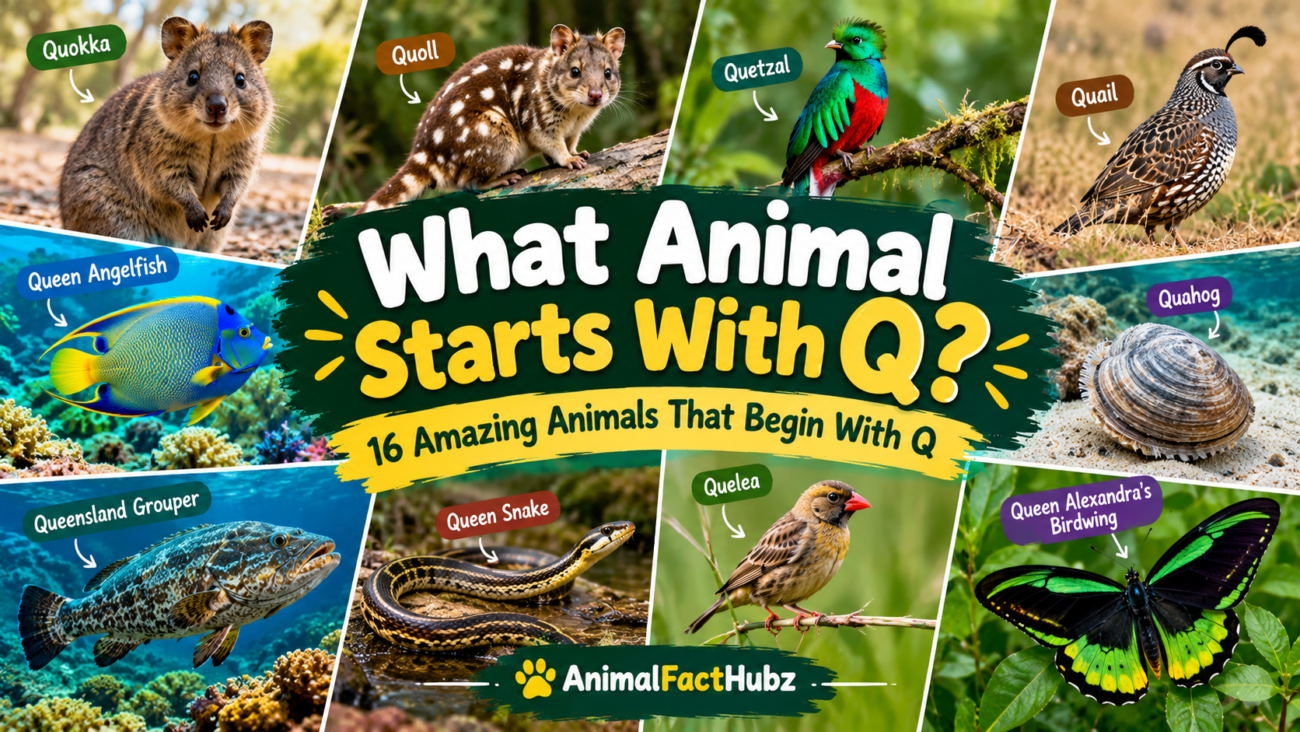
Animals that start with Q include the quokka, quoll, quetzal, quail, quahog, queen angelfish, queen snake, quelea, Queensland grouper, Queensland lungfish, quillback, queen triggerfish, Queen Alexandra’s birdwing, quaker parrot, queen conch, and quagga. These animals belong to different groups, including mammals, birds, fish, reptiles, and mollusks. Most are living species, while the quagga is extinct. They occupy diverse habitats, from Australian woodlands and African grasslands to tropical reefs, freshwater rivers, and coastal waters.
1. Quokka
Scientific name: Setonix brachyurus
Class: Mammalia
Diet: Herbivore
Habitat: Southwestern Western Australia
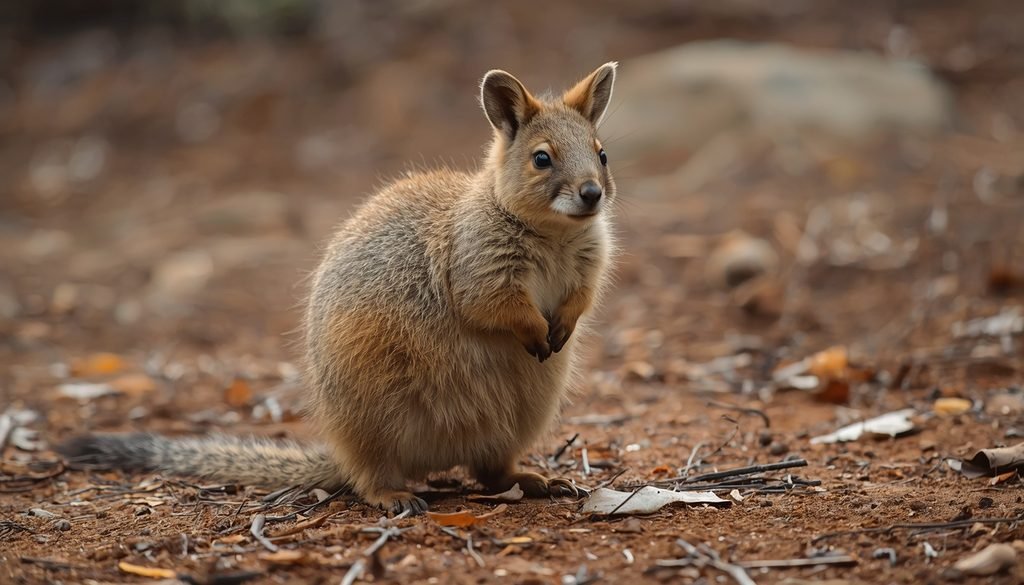
The quokka is a small marsupial famous for its rounded face and seemingly cheerful expression. Native to southwestern Western Australia, it is especially associated with Rottnest Island, although populations also occur on the mainland and other nearby islands.
Quokkas eat grasses, leaves, stems, and other plant material. They are mainly active around dusk and at night, although they can also be seen during the day. Like kangaroos and wallabies, female quokkas carry their young in a pouch.
Despite their friendly appearance, quokkas are wild animals and should not be touched or fed by visitors. Habitat loss, introduced predators, and other environmental pressures affect mainland populations. Their unusual appearance and restricted natural range make them one of Australia’s most recognizable native mammals.
2. Quoll
Scientific group: Genus Dasyurus
Class: Mammalia
Diet: Carnivore
Habitat: Forests, woodlands, and rocky areas of Australia and New Guinea
A quoll is a carnivorous marsupial with a pointed snout, sharp teeth, and a coat often covered in white spots. Several quoll species exist, including the spotted-tailed quoll, eastern quoll, northern quoll, and western quoll.
These animals hunt insects, small mammals, birds, reptiles, and other available prey. Their diet varies with species, habitat, and food availability. Some quolls climb trees, while others spend more time hunting on the ground.
Quolls are generally solitary and are often most active at night. They play an important ecological role by helping control populations of smaller animals. Habitat destruction, invasive predators, and poisoning can threaten some species, making conservation efforts important for their long-term survival.
3. Quetzal
Scientific name: Pharomachrus mocinno (resplendent quetzal)
Class: Aves
Diet: Mainly fruit, with some insects and small animals
Habitat: Central American cloud forests
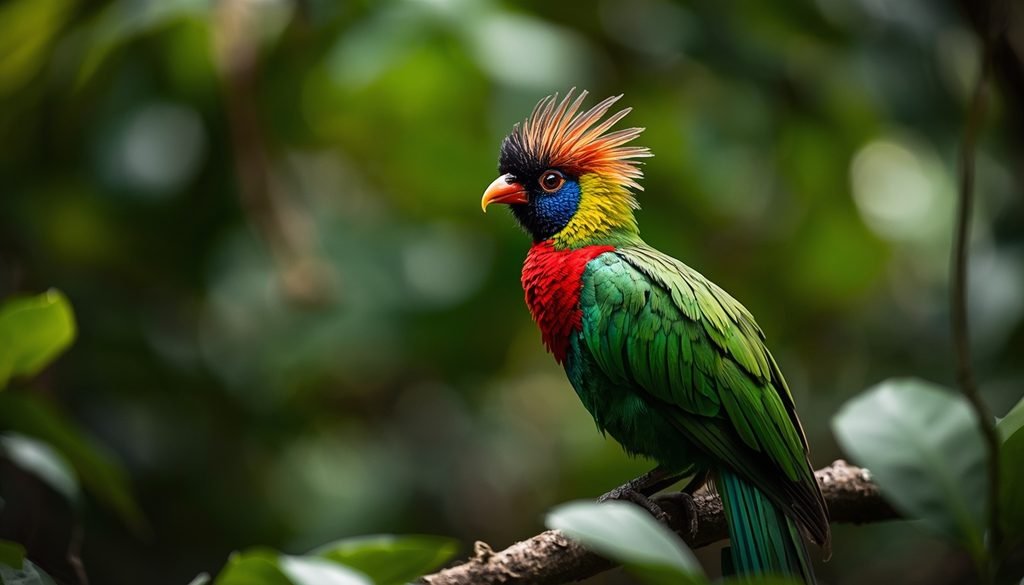
The resplendent quetzal is a striking bird known for its bright green plumage, red breast, and long tail feathers in adult males. It inhabits humid mountain forests in parts of Central America, including regions of southern Mexico and Panama.
Quetzals feed largely on fruit, including wild avocados and other forest plants. They may also eat insects and small vertebrates. By swallowing fruit and dispersing seeds, they help support forest regeneration.
These birds often use natural cavities or old woodpecker holes for nesting. Their dependence on forest habitats makes them vulnerable to deforestation and habitat fragmentation. Because of their vivid colors and cultural importance in Central America, quetzals are among the most admired birds whose names begin with Q.
4. Quail
Scientific group: Several bird genera, including Coturnix
Class: Aves
Diet: Seeds, grains, leaves, and insects
Habitat: Grasslands, farmland, scrub, and open woodland
Quail are small, ground-dwelling birds with rounded bodies, short tails, and mottled feathers that provide camouflage. Many species prefer to walk or run through low vegetation rather than fly for long distances.
Their diet commonly includes seeds, grains, shoots, and small insects. Chicks often depend heavily on insects because they need protein for rapid growth. Quail may scratch through leaf litter or soil to uncover food.
Different quail species live in Europe, Asia, Africa, the Americas, and other regions. Some are migratory, while others remain in the same general area throughout the year. Their ability to hide in vegetation helps protect them from predators, although habitat changes and intensive farming can affect some populations.
5. Quahog
Scientific name: Mercenaria mercenaria
Class: Bivalvia
Diet: Filter-feeder
Habitat: Coastal waters of the western North Atlantic
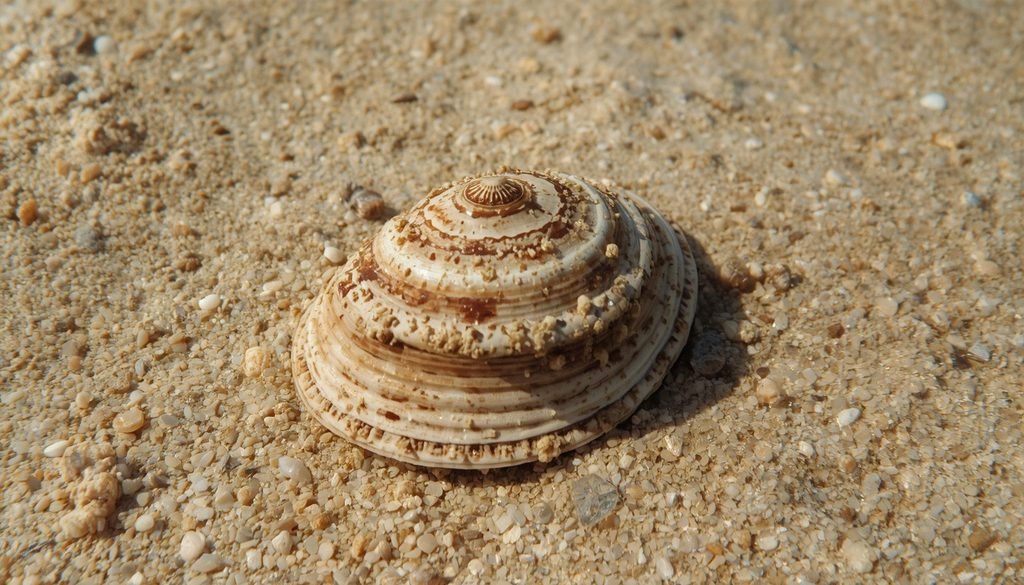
The quahog, also called the hard clam, is a marine mollusk found along the eastern coast of North America. It has a thick, rounded shell made of two hinged halves that protect its soft body.
Quahogs feed by filtering tiny organisms and particles from seawater. They often live partly buried in sandy or muddy seabeds, where they can draw water through specialized siphons.
These clams are commercially important and are widely used in seafood dishes. Some ocean quahog species, which are different from the common hard clam, can live for several centuries under suitable conditions. Quahogs also contribute to coastal ecosystems by filtering water and serving as food for marine predators.
6. Queen Angelfish
Scientific name: Holacanthus ciliaris
Class: Actinopterygii
Diet: Mainly sponges, along with other reef organisms
Habitat: Tropical western Atlantic coral reefs
The queen angelfish is a colorful marine fish recognized by its blue and yellow body and distinctive crown-like marking on its head. It lives around coral reefs in the western Atlantic, including the Caribbean Sea and waters near Florida and Brazil.
Queen angelfish feed primarily on sponges, although they may consume other small reef organisms. Their specialized feeding habits make them part of the complex food web that supports coral reef communities.
These fish often live near reef structures that provide shelter and feeding opportunities. Their bright colors make them popular among underwater photographers and divers. Like other reef species, they depend on healthy marine habitats, which can be affected by pollution, warming seas, and coral loss.
7. Queen Snake
Scientific name: Regina septemvittata
Class: Reptilia
Diet: Primarily freshly molted crayfish
Habitat: Streams and rivers in eastern North America
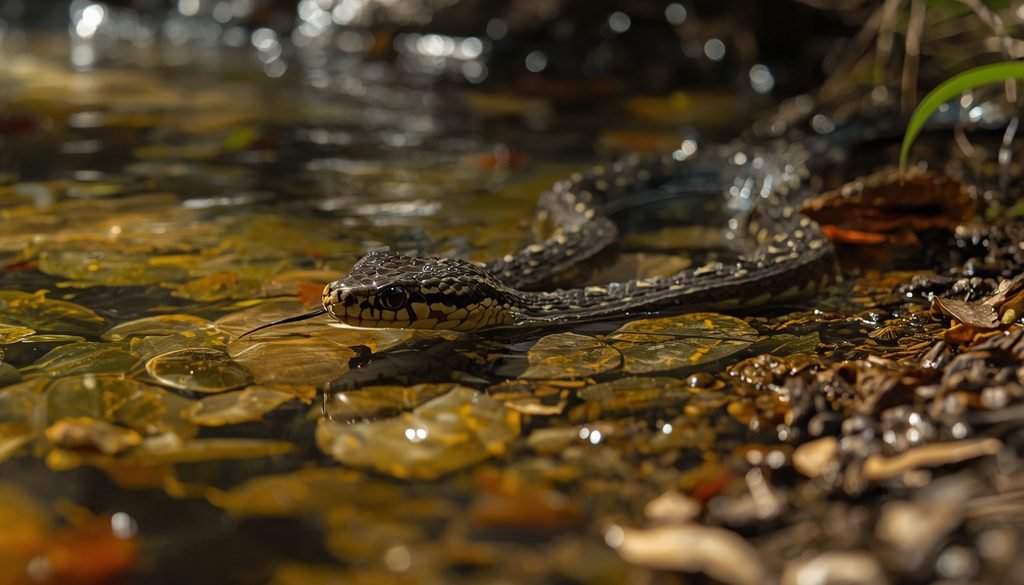
The queen snake is a slender, nonvenomous snake found near streams and rivers in parts of the eastern United States and southern Ontario. It usually has a brown or olive-colored body with pale stripes along its sides.
Unlike many snakes that eat a wide variety of prey, the queen snake specializes in crayfish, particularly those that have recently shed their hard outer shells. Newly molted crayfish are softer and easier to consume.
This dietary specialization makes the snake closely connected to the health of its freshwater habitat. Pollution, stream modification, and declining crayfish populations can affect local queen snake populations. Its narrow body and aquatic lifestyle make it well adapted to moving around rocks and vegetation along stream edges.
8. Quelea
Scientific name: Quelea quelea (red-billed quelea)
Class: Aves
Diet: Mainly grass seeds
Habitat: African savannas and grasslands
The red-billed quelea is a small, highly social bird found across large parts of sub-Saharan Africa. It has a short, thick bill suited to eating grass seeds, and its plumage can vary according to sex and breeding condition.
Queleas often gather in enormous flocks. When food is plentiful, these flocks can move across large areas in search of seeds. They usually nest in colonies, building small nests in grasses, shrubs, or trees.
Their feeding habits are important in natural grassland ecosystems, but large flocks can sometimes cause serious damage to grain crops. This makes the species both an ecological participant and an agricultural challenge in some regions. Its enormous group behavior is one of the most remarkable features of this Q animal.
9. Queensland Grouper
Scientific name: Epinephelus lanceolatus
Class: Actinopterygii
Diet: Carnivore
Habitat: Tropical Indo-Pacific reefs and coastal waters
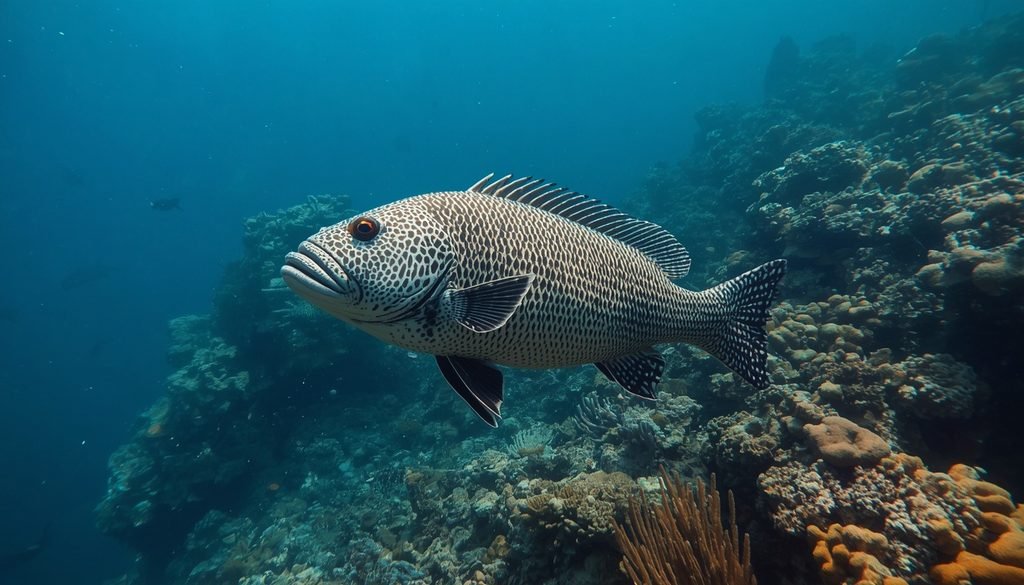
The Queensland grouper, also known as the giant grouper, is one of the largest bony reef fishes. It occurs in tropical waters across the Indo-Pacific, including areas around northern Australia.
This fish has a broad head, a powerful body, and a large mouth capable of swallowing substantial prey. Its diet includes fish, crustaceans, and other marine animals. It often waits near reef structures before making a sudden strike.
Queensland groupers may live around reefs, rocky ledges, and other underwater structures that offer shelter and hunting opportunities. Their large size makes them impressive predators, but they can be vulnerable to fishing pressure because large individuals take years to grow. Protecting reef habitats helps support their populations.
10. Queensland Lungfish
Scientific name: Neoceratodus forsteri
Class: Actinopterygii
Diet: Omnivore
Habitat: Freshwater rivers in Queensland, Australia
The Queensland lungfish is an ancient-looking freshwater fish native to parts of Queensland, Australia. It belongs to an old lineage of fishes that retain characteristics useful for understanding vertebrate evolution.
Unlike most fish, the Queensland lungfish can breathe air using a functional lung, although it also uses gills. This adaptation helps it survive in water that may have lower oxygen levels, but it still depends on suitable freshwater habitats.
It feeds on a range of foods, including aquatic plants, small animals, and other organic material. Queensland lungfish grow slowly and can live for many decades. Habitat changes, river barriers, and changes to water flow can affect their breeding and survival, making careful freshwater management important.
11. Quillback
Scientific name: Carpiodes cyprinus
Class: Actinopterygii
Diet: Small aquatic organisms and organic material
Habitat: Freshwater rivers and lakes in North America
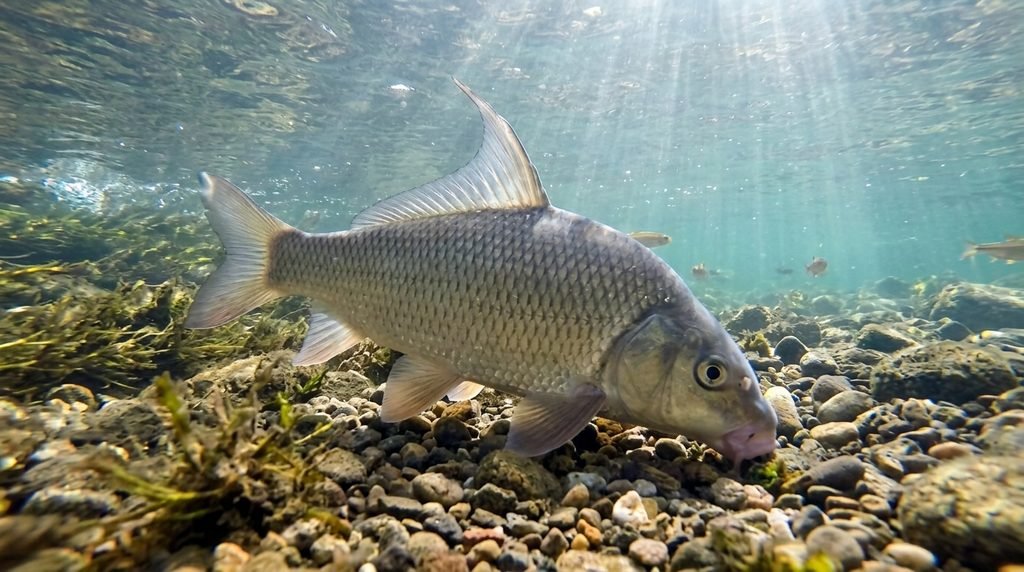
The quillback is a freshwater fish native to parts of central and eastern North America. It belongs to the sucker family, a group of fishes that often feed near the bottom of rivers and lakes.
Its body is deep and laterally compressed, and its mouth is adapted for feeding on small organisms and material found in aquatic habitats. Quillbacks may consume insect larvae, tiny invertebrates, and organic particles.
They are often found in rivers, reservoirs, and lakes with suitable water conditions. Although they are not as famous as some game fish, quillbacks contribute to freshwater food webs and provide food for larger predators. Their presence can also help indicate the condition of local aquatic ecosystems.
12. Queen Triggerfish
Scientific name: Balistes vetula
Class: Actinopterygii
Diet: Mollusks, crustaceans, and other reef animals
Habitat: Tropical western Atlantic coral reefs
The queen triggerfish is a striking reef fish with blue, green, and yellow markings. It lives in tropical waters of the western Atlantic and Caribbean, where it searches the seabed for hard-shelled prey.
Its strong jaws and teeth help it crush the shells of mollusks and other invertebrates. Like other triggerfish, it has a specialized dorsal spine that can lock into an upright position, helping the fish wedge itself into shelter.
Queen triggerfish are active foragers and can influence the small-animal communities around reefs. Their colorful appearance makes them popular with divers, but they should be observed in the wild rather than disturbed. Healthy reef ecosystems provide the food and shelter these fish need.
13. Queen Alexandra’s Birdwing
Scientific name: Ornithoptera alexandrae
Class: Insecta
Diet: Adults feed on nectar
Habitat: Lowland rainforests of Papua New Guinea
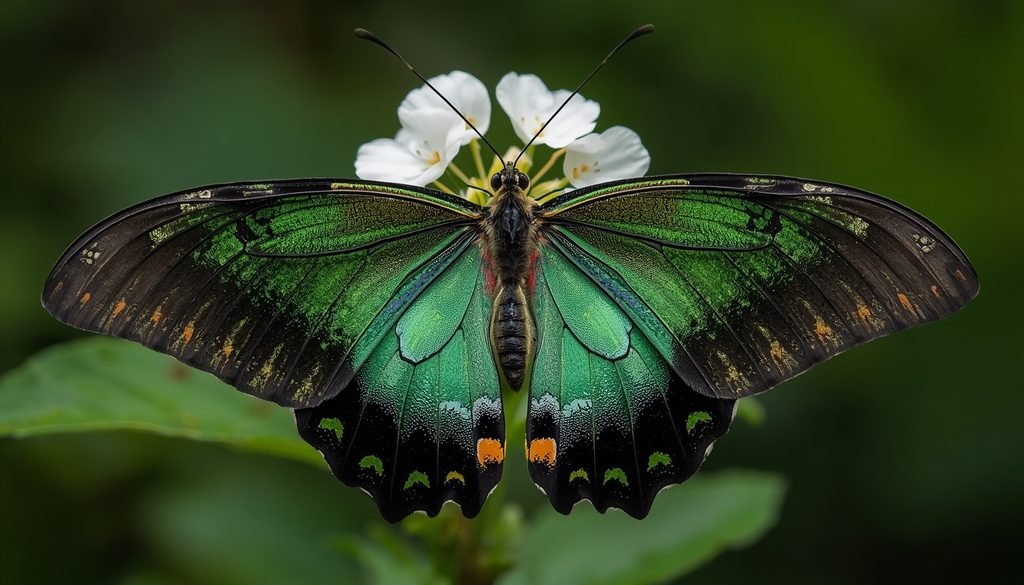
Queen Alexandra’s birdwing is widely recognized as the largest living butterfly species by wingspan. It occurs in a limited area of Papua New Guinea, where it depends on suitable rainforest habitat.
Females are generally larger than males and have different wing patterns. Adult butterflies feed on nectar, while caterpillars depend on particular host plants for food. This close relationship with specific plants makes habitat protection especially important.
The species faces threats from habitat destruction and illegal collection. Because its natural range is restricted, damage to rainforest areas can have a substantial impact on its survival. Queen Alexandra’s birdwing shows that animals beginning with Q include not only large vertebrates but also extraordinary insects.
14. Quaker Parrot
Scientific name: Myiopsitta monachus
Class: Aves
Diet: Seeds, fruits, buds, and other plant material
Habitat: South American grasslands, scrub, and open woodland
The quaker parrot, also known as the monk parakeet, is a small green parrot with a gray face and chest. It is native to parts of South America, where it lives in open habitats and often forms noisy social groups.
Unlike many parrots that nest in tree cavities, quaker parrots build large communal stick nests. These structures may contain multiple chambers and can be used by several pairs. Their nesting behavior is unusual among parrots.
They eat seeds, fruits, buds, and other plant material. In some places outside their native range, escaped or released birds have established wild populations. Their ability to adapt to urban and suburban environments has helped them survive in a variety of settings, although their introduced populations can create local management concerns.
15. Queen Conch
Scientific name: Aliger gigas
Class: Gastropoda
Diet: Algae and organic material
Habitat: Warm Caribbean seagrass beds and sandy coastal areas
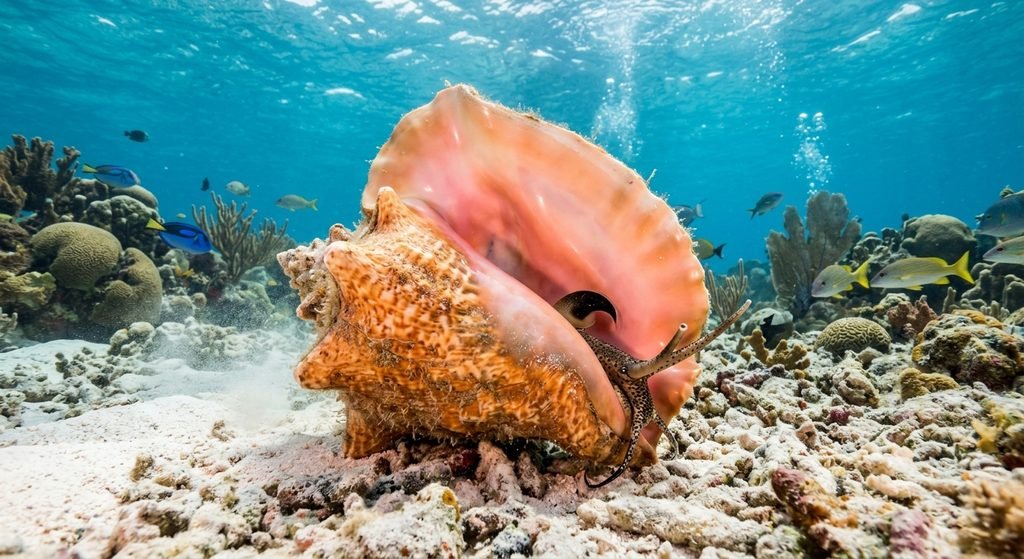
The queen conch is a large marine snail known for its heavy shell, flared lip in adults, and distinctive pink interior. It lives in shallow tropical waters of the Caribbean region, often around seagrass beds and sandy bottoms.
Queen conchs feed on algae and organic material, moving slowly across the seabed with a muscular foot. Their shells provide protection, although they remain vulnerable to predators and human harvesting.
The species has long been important to Caribbean fisheries and food traditions. Overharvesting and habitat loss have caused declines in many areas, leading to stronger conservation and trade controls. Protecting seagrass habitats and managing harvests are important steps in helping queen conch populations recover.
16. Quagga
Scientific name: Equus quagga quagga
Class: Mammalia
Diet: Herbivore
Historical habitat: Grasslands of South Africa
The quagga was an extinct subspecies of the plains zebra. It had a distinctive appearance, with strong stripes on the front of its body that became fainter or absent toward the hindquarters. This pattern made it look different from the zebras living today.
Quaggas were herbivores that grazed on grasses in South African grasslands. They lived in a landscape shared with other large mammals and were part of the region’s natural grazing communities.
Intensive hunting and other pressures caused the quagga to disappear. The last known individual died in captivity in Amsterdam in 1883. Although the quagga is extinct, it remains an important example of how human activities can eliminate a recognizable animal population. It is also a useful reminder that not every animal in an alphabet list is still alive today.
Why Are Animals That Start With Q So Unusual?
The letter Q is relatively uncommon at the beginning of English animal names. Many Q animal names come from Indigenous languages, regional names, or descriptive combinations such as queen angelfish and Queensland lungfish. This makes the list more varied than it might first appear.
These animals also demonstrate the diversity of wildlife. The quokka is a plant-eating marsupial, the quetzal is a forest bird, the queen snake is a freshwater reptile, and the quahog is a filter-feeding clam. They are not closely related simply because their names share the same first letter.
Understanding their habitats and diets helps explain how different species survive. Some depend on forests or grasslands, while others require healthy rivers, coral reefs, or coastal ecosystems. Each plays a role in its environment.
Frequently Asked Questions
1. What is the most popular animal that starts with Q?
The quokka is one of the most popular animals beginning with Q because of its rounded face and friendly-looking expression. Quail, quoll, and quetzal are other familiar examples.
2. What are five animals that start with Q?
Five examples are the quokka, quoll, quetzal, quail, and quahog. They include mammals, birds, and marine invertebrates.
3. Is there an extinct animal that starts with Q?
Yes. The quagga was an extinct subspecies of plains zebra. It disappeared in the nineteenth century, with the last known individual dying in captivity in 1883.
4. What bird starts with Q?
Several birds begin with Q, including quail, quetzal, quelea, and quaker parrot. Queen Alexandra’s birdwing also starts with Q, but it is a butterfly rather than a bird.
5. What sea animal starts with Q?
Examples include the quahog, queen angelfish, queen triggerfish, and queen conch. They live in different marine habitats and have different feeding behaviors.
6. Why are there fewer animal names beginning with Q?
The letter Q is less common at the beginning of English words than many other letters. As a result, fewer widely used animal names start with Q, although several interesting species have names beginning with this letter.
Read More: What Animal Starts With E
Conclusion
There are more interesting answers to the question “What animal starts with Q?” than many people expect. The quokka, quoll, quetzal, quail, quahog, queen angelfish, queen snake, quelea, Queensland grouper, Queensland lungfish, quillback, queen triggerfish, Queen Alexandra’s birdwing, quaker parrot, queen conch, and quagga demonstrate the variety of the animal kingdom.
From colorful tropical birds and reef fish to unusual marsupials and an extinct zebra relative, each animal has distinctive traits and survival strategies. Exploring these Q animals is a useful way to expand wildlife knowledge, improve vocabulary, and appreciate the many forms of life found around the world.

One thought on “What Animal Starts With Q? 16 Amazing Animals That Begin With Q”