
Introduction
What is the dumbest animal in the world? It sounds like a simple question, but there is no scientific test that gives every animal a single “intelligence score.” Animals have evolved different brains, nervous systems, senses, behaviors, and survival strategies for their environments.
Some creatures have no brain or nervous system at all, while others have relatively simple brains but can still learn, remember, communicate, or adapt. This is why calling an animal “dumb” can sometimes be misleading.
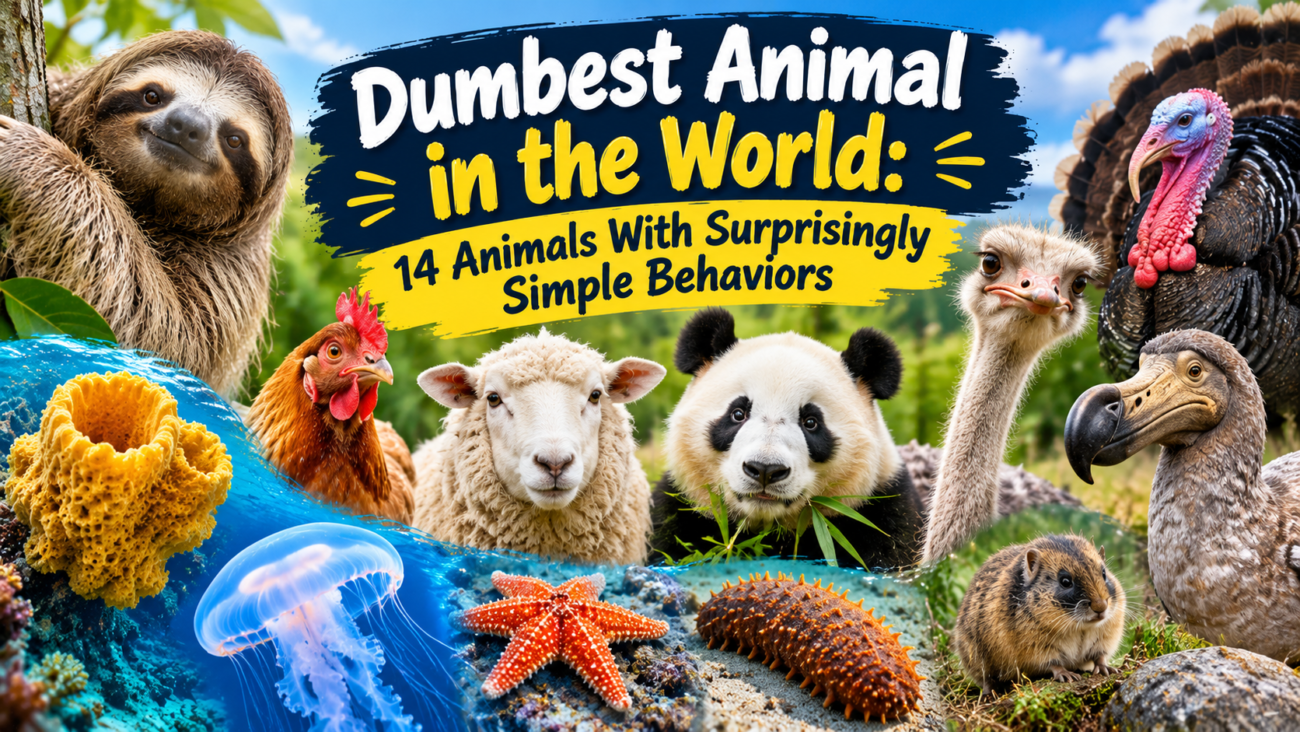
In this guide, we explore 14 animals commonly associated with low intelligence or simple behavior, from sea sponges and jellyfish to sloths, chickens, sheep, and the extinct dodo. The goal is not to insult these animals but to understand why people describe them this way and what their biology actually tells us.
What Is the Dumbest Animal in the World?
There is no universally accepted dumbest animal in the world. If we use nervous-system complexity as one way to discuss the question, animals such as sea sponges have extremely simple biological organization because they do not have a nervous system. Jellyfish also lack a centralized brain, although they have a network of neurons that helps them sense and respond to their surroundings.
For mammals and birds, the question becomes much more complicated. A slow-moving sloth, for example, is not necessarily unintelligent. Its slow lifestyle is an adaptation that helps it conserve energy.
So, rather than treating “dumbest animal” as a scientific ranking, it is more accurate to look at animal intelligence, cognition, learning ability, memory, behavior, and nervous-system complexity.
14 Animals Commonly Considered “Dumb”
| Animal | Scientific Name | Class | Diet | Why Commonly Called “Dumb” |
| Sea Sponge | Porifera | Demospongiae and other classes | Filter feeder | No nervous system |
| Jellyfish | Medusozoa | Scyphozoa and other groups | Small fish, plankton | No centralized brain |
| Starfish | Asteroidea | Asteroidea | Mollusks, crustaceans, organic matter | Decentralized nervous system |
| Sea Cucumber | Holothuroidea | Holothuroidea | Detritus, algae, organic particles | Simple nervous system |
| Koala | Phascolarctos cinereus | Mammalia | Eucalyptus leaves | Slow, sleepy lifestyle |
| Sloth | Folivora | Mammalia | Leaves, shoots, fruit | Extremely slow behavior |
| Turkey | Meleagris gallopavo | Aves | Seeds, insects, plants | Popular stereotype |
| Ostrich | Struthio camelus | Aves | Plants, seeds, insects | Small brain relative to body |
| Giant Panda | Ailuropoda melanoleuca | Mammalia | Mostly bamboo | Clumsy appearance |
| Kākāpō | Strigops habroptilus | Aves | Plants, fruits, seeds | Flightlessness and unusual behavior |
| Lemming | Lemmus spp. | Mammalia | Plants, grasses, mosses | Famous cliff-jumping myth |
| Domestic Sheep | Ovis aries | Mammalia | Grass, hay, plants | “Follow the flock” stereotype |
| Chicken | Gallus gallus domesticus | Aves | Seeds, grains, insects, plants | Common farm-animal stereotype |
| Dodo | Raphus cucullatus | Aves | Fruits, seeds, plants | Lack of fear toward humans |
1. Sea Sponge
Scientific Name: Porifera
Class: Demospongiae and other sponge classes
Diet: Plankton, bacteria, microscopic organic particles
Habitat: Oceans and some freshwater environments
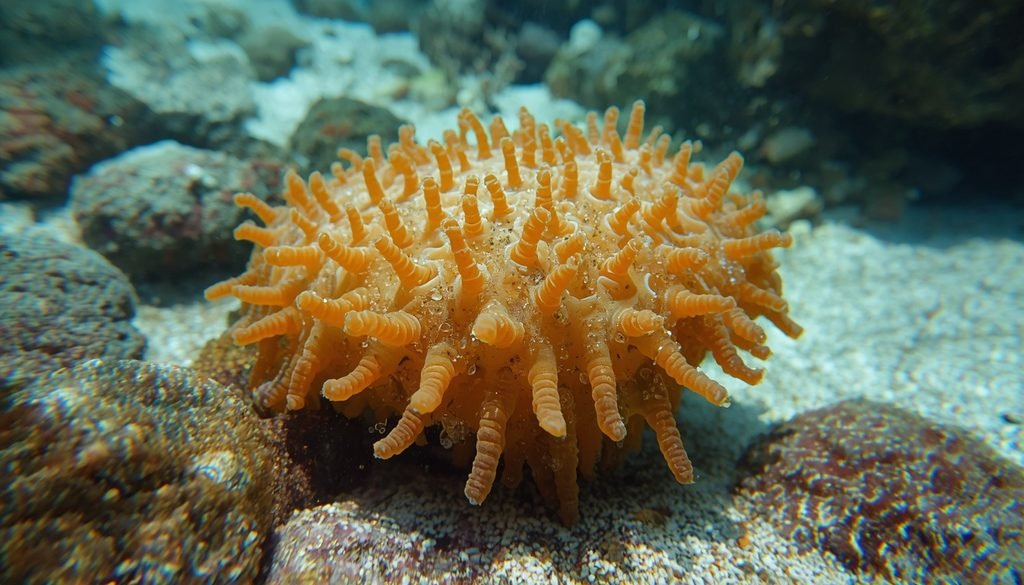
Sea sponges are among the simplest animals on Earth. They belong to the phylum Porifera and do not have a brain or nervous system.
Instead of using a brain to process information, sponges depend on specialized cells and their porous bodies to perform basic biological functions. They filter water through their bodies and capture tiny food particles.
This is why sea sponges sometimes appear in discussions about the least intelligent animals. However, calling a sponge “dumb” is not particularly useful because it does not possess the nervous system required for the type of cognition we normally associate with intelligence.
2. Jellyfish
Scientific Name: Medusozoa
Class: Scyphozoa and related jellyfish groups
Diet: Plankton, small fish, crustaceans, and other small marine organisms
Habitat: Oceans and coastal waters
Jellyfish do not have a centralized brain like mammals or birds. Instead, they have a nerve net, a basic nervous system that helps them detect and respond to changes around them.
Jellyfish can respond to touch, light, movement, and other environmental signals. Some species also have specialized sensory structures that help with balance and detecting light.
Because they lack a conventional brain, jellyfish are sometimes described as unintelligent animals. Yet their simple nervous system is well suited to their lifestyle and has helped them survive in marine ecosystems for an extremely long evolutionary period.
3. Starfish
Scientific Name: Asteroidea
Class: Asteroidea
Diet: Mollusks, small crustaceans, worms, and organic material
Habitat: Oceans, especially rocky and sandy seafloors
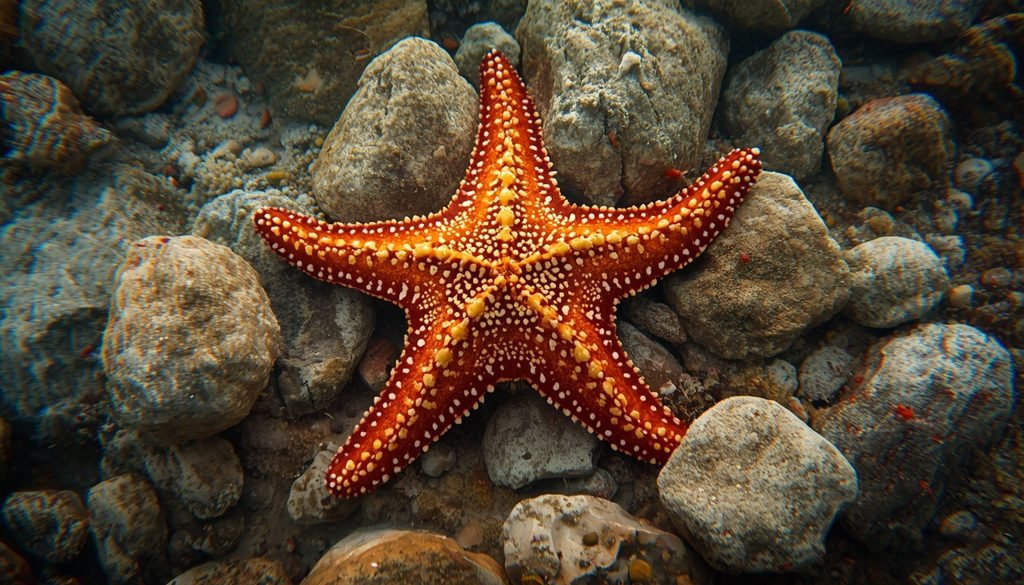
Starfish, more accurately called sea stars, do not have a centralized brain. Their nervous system is distributed around their body, including a nerve ring and radial nerves extending into their arms.
This arrangement allows sea stars to coordinate movement, feeding, and responses to their environment without having a traditional brain.
Their unusual nervous system is one reason they are sometimes included among animals with simple brains. However, their body plan is highly adapted to life on the seafloor.
4. Sea Cucumber
Scientific Name: Holothuroidea
Class: Holothuroidea
Diet: Detritus, algae, plankton, and organic particles
Habitat: Marine seafloors, reefs, sandy areas, and muddy sediments
Sea cucumbers are marine invertebrates with a relatively simple nervous system. They live on or near the seafloor and spend much of their time feeding on organic material found in sediments.
Their behavior may look simple compared with that of mammals, but their bodies are specialized for their ecological role.
Calling a sea cucumber one of the dumbest animals is therefore more of a human description than a scientific conclusion. Its survival depends on biological adaptations rather than complex problem-solving.
5. Koala
Scientific Name: Phascolarctos cinereus
Class: Mammalia
Diet: Mainly eucalyptus leaves
Habitat: Eucalyptus forests and woodlands of Australia
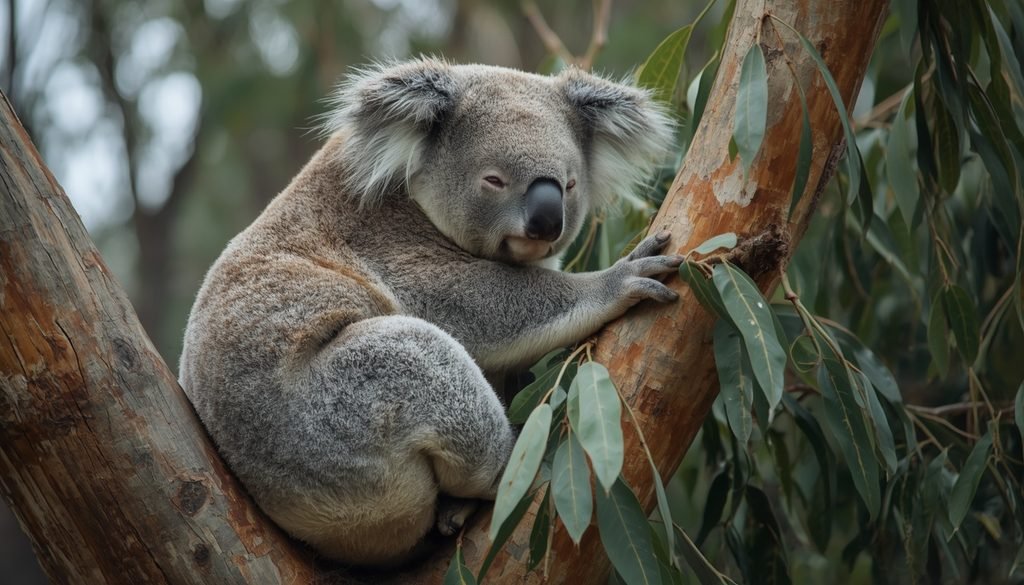
Koalas are sometimes called dumb animals because they spend many hours sleeping and have a highly specialized lifestyle. Their diet is strongly associated with eucalyptus leaves, which provide limited energy and require specialized digestion.
A sleepy appearance, however, should not automatically be confused with low intelligence. Koalas have evolved behaviors and physical traits that allow them to survive on a difficult food source.
Their slow and energy-saving lifestyle is an example of adaptation. A koala does not need to behave like a highly active predator to survive successfully.
6. Sloth
Scientific Name: Folivora
Class: Mammalia
Diet: Mainly leaves, shoots, and other plant material
Habitat: Tropical forests of Central and South America
The sloth is famous for moving slowly. Its low-energy lifestyle and slow metabolism are sometimes mistaken for a sign of poor intelligence.
Slow movement is closely connected to its lifestyle and energy requirements. Sloths spend much of their time in trees and feed mainly on leaves, which are relatively low in energy.
Being slow is therefore an adaptation rather than evidence that a sloth cannot learn or respond to its environment. This is an important example of why animal behavior should not automatically be equated with intelligence.
7. Turkey
Scientific Name: Meleagris gallopavo
Class: Aves
Diet: Seeds, grains, fruits, insects, and other plant and animal material
Habitat: Forests, grasslands, woodland edges, and agricultural areas
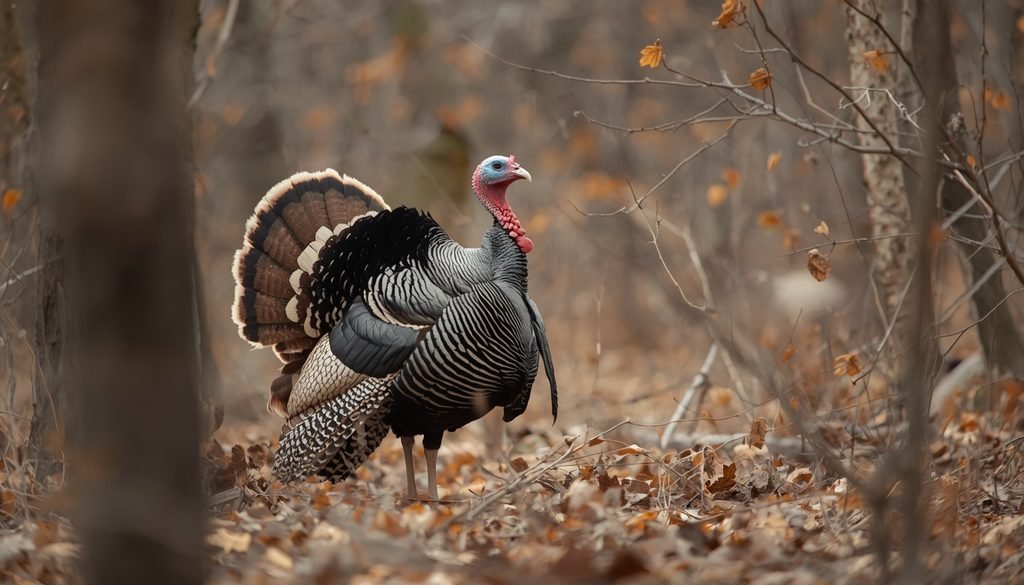
Turkeys have a long-standing reputation for being stupid or simple-minded. Popular jokes have helped reinforce this image, but animal behavior does not support treating the turkey as universally unintelligent.
Turkeys can learn from their surroundings, recognize patterns, communicate, and respond to social situations. Their behavior is more complex than the common stereotype suggests.
This makes the turkey a good example of the difference between popular animal myths and actual animal cognition.
8. Ostrich
Scientific Name: Struthio camelus
Class: Aves
Diet: Plants, seeds, flowers, fruits, and insects
Habitat: African savannas, grasslands, and semi-arid regions
The ostrich is sometimes described as a dumb animal because its brain is small compared with its enormous body. But brain size alone cannot accurately determine intelligence.
Ostriches have excellent eyesight, powerful legs, impressive running ability, and physical adaptations that help them survive in open environments.
Their survival strategy does not depend on solving human-style puzzles. Instead, they rely on strong senses, speed, awareness, and other adaptations.
The famous idea that ostriches “hide their heads in the sand” is also misleading. They may lower their heads while feeding or inspecting their surroundings, but that does not mean they deliberately hide from danger.
9. Giant Panda
Scientific Name: Ailuropoda melanoleuca
Class: Mammalia
Diet: Primarily bamboo, with small amounts of other foods
Habitat: Mountain forests of central China
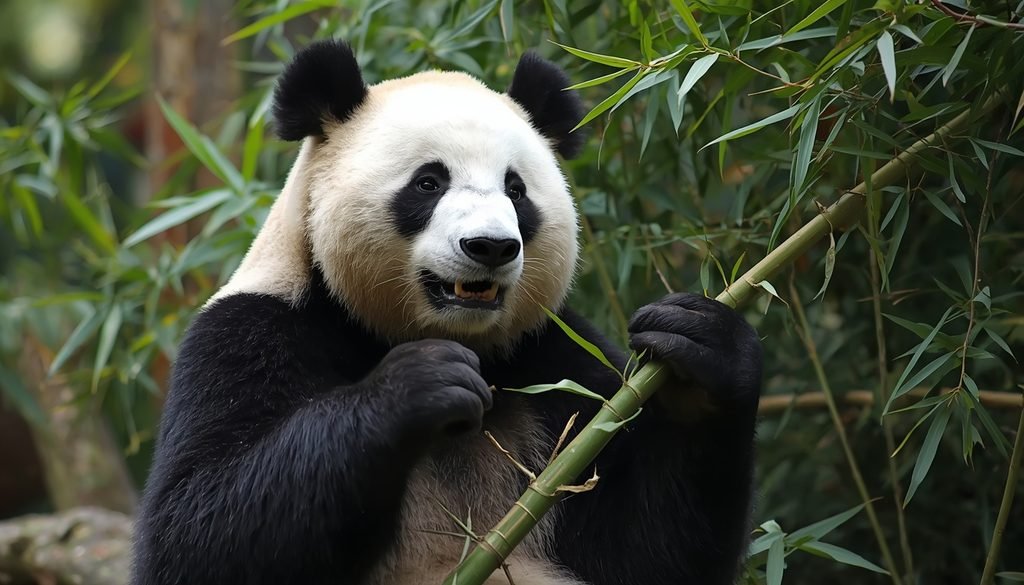
The giant panda is sometimes viewed as clumsy or unintelligent because of its slow movements, unusual diet, and relaxed appearance.
Much of a panda’s lifestyle revolves around bamboo. Because bamboo provides relatively limited energy, pandas spend large amounts of time feeding and resting.
This specialized lifestyle can look strange from a human perspective, but it is an evolutionary adaptation. Pandas also have physical features that help them grip and process bamboo.
Its behavior shows why “dumb” and “different” should not be treated as the same thing.
10. Kākāpō
Scientific Name: Strigops habroptilus
Class: Aves
Diet: Native plants, fruits, seeds, leaves, and other vegetation
Habitat: Native forests and island habitats of New Zealand
The kākāpō is a fascinating flightless parrot from New Zealand. Because it cannot fly, walks on the ground, and has unusual behavior, it has sometimes been portrayed as a strange or unintelligent bird.
Its traits developed in a very different evolutionary environment. Kākāpō evolved without many of the mammalian predators that later became major threats.
They are nocturnal, strong climbers, and capable of traveling considerable distances on foot. Their unusual behavior should therefore be understood through island evolution and adaptation rather than simply being labeled “dumb.”
11. Lemming
Scientific Name: Lemmus spp.
Class: Mammalia
Diet: Grasses, mosses, roots, leaves, and other vegetation
Habitat: Arctic and subarctic tundra
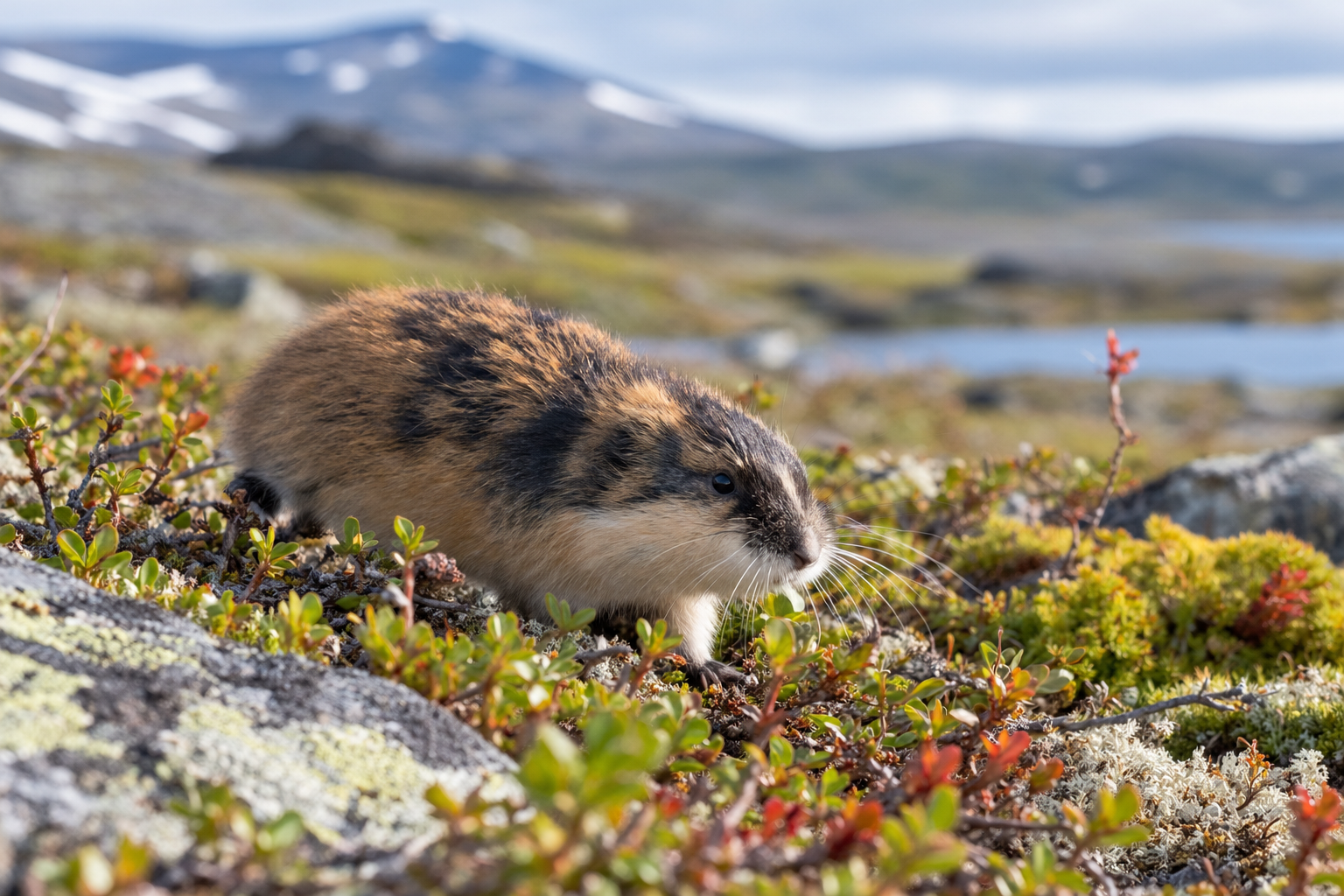
Lemmings became famous because of a widespread story that they deliberately jump from cliffs in huge numbers.
That story is misleading. Population movements can result in large groups moving across landscapes, and some animals may accidentally fall from steep terrain, but intentional mass suicide is a myth.
The lemming example demonstrates how a false story can influence the way people judge animal intelligence. Their population cycles and movements are biological behaviors, not evidence that they are stupid.
12. Domestic Sheep
Scientific Name: Ovis aries
Class: Mammalia
Diet: Grass, hay, leaves, and other vegetation
Habitat: Grasslands, farms, pastures, and managed agricultural areas
Sheep are often portrayed as animals that simply follow the group without thinking. This stereotype has contributed to their reputation as unintelligent animals.
Research into sheep behavior has shown that they can learn, recognize individuals, remember familiar faces, and respond to social relationships.
Their flocking behavior is a useful survival strategy. Staying with a group can reduce individual risk, making social behavior an advantage rather than evidence of poor cognition.
13. Chicken
Scientific Name: Gallus gallus domesticus
Class: Aves
Diet: Seeds, grains, insects, fruits, and plant material
Habitat: Farms, grasslands, woodland edges, and human-managed environments
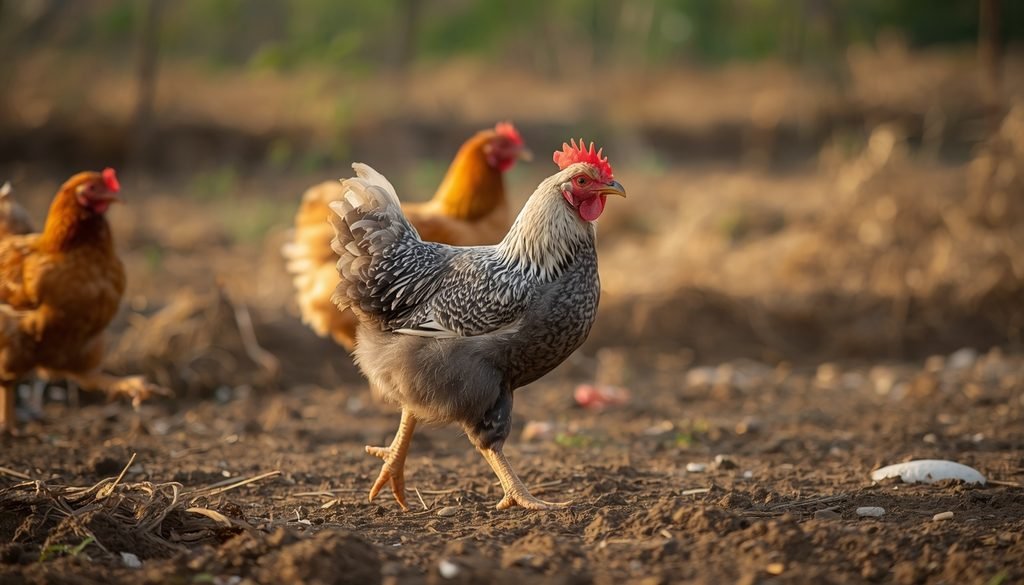
Chickens are often underestimated because they are common farm animals. Yet their behavior includes communication, social organization, recognition, and learning.
Chickens establish social hierarchies and use different vocalizations in different situations. They can also respond to their environment and learn from experience.
So, although chickens may not display intelligence in the same way as humans or highly studied problem-solving animals, calling them “dumb” oversimplifies their cognitive abilities.
14. Dodo
Scientific Name: Raphus cucullatus
Class: Aves
Diet: Fruits, seeds, roots, and other plant material
Habitat: Forests and lowland habitats of Mauritius
The extinct dodo is probably one of the most famous animals associated with stupidity. It lived on Mauritius, where it evolved without the same type of land predators found in many other ecosystems.
As a result of its island environment, the dodo apparently had limited fear of humans. Once humans and introduced animals reached Mauritius, the species faced new pressures and eventually disappeared.
However, extinction does not prove that the dodo was unintelligent. Its behavior made sense within the environment in which it evolved. The arrival of humans dramatically changed that environment.
How Do Scientists Measure Animal Intelligence?
Animal intelligence is not measured by one simple test. Researchers may study learning ability, memory, problem-solving, behavioral flexibility, communication, social cognition, tool use, and sensory processing.
This makes comparisons between species difficult. A bird, mammal, jellyfish, and sea sponge have completely different bodies and nervous systems.
For example, a jellyfish does not need a large centralized brain to perform the behaviors required for its lifestyle. Similarly, a sloth does not need to move quickly or solve complex puzzles to survive in a rainforest.
Therefore, animal cognition should be considered in the context of evolution, habitat, ecological niche, and survival strategy.
Why Are Some Animals Considered Dumb?
Humans often judge animal intelligence using human standards. We tend to value fast movement, problem-solving, tool use, communication, and memory because these abilities are important to us.
But evolution does not produce animals according to a single intelligence scale.
A simple nervous system can be highly effective for a particular lifestyle. Likewise, a slow animal can be successful if its behavior conserves energy and helps it avoid predators.
This is why the phrase least intelligent animal should be used carefully. Some animals have simpler nervous systems, while others simply behave differently from what humans expect.
Simple Nervous System vs. Complex Brain
Animals such as sea sponges have no nervous system, while jellyfish have a basic nerve net. Starfish have a decentralized nervous system rather than a centralized brain.
Birds and mammals have much more centralized nervous systems, but even among them, cognitive abilities differ considerably.
This does not mean there is a straight line from “simple nervous system” to “bad survival ability.” Every species is shaped by natural selection and the demands of its environment.
Common Myths About “Dumb” Animals
Myth: Sloths are dumb because they move slowly.
Slow movement is primarily related to their energy-saving lifestyle.
Myth: Lemmings intentionally commit mass suicide.
The famous cliff-jumping story is a myth and does not accurately describe normal lemming behavior.
Myth: Dodos went extinct because they were stupid.
Their extinction was linked to human activity and introduced pressures, not a scientifically proven lack of intelligence.
Myth: A small brain always means low intelligence.
Brain size alone is not a complete measure of cognition.
Myth: Chickens and sheep cannot learn.
Both species display learning, memory, recognition, and social behavior.
How We Research Animal Facts
Animalfacthubz aims to present wildlife information using reputable sources, scientific research, zoological organizations, conservation agencies, museums, universities, and established wildlife references.
When an animal has a popular stereotype, we distinguish that stereotype from documented behavior. We also avoid treating “dumbest” as a formal scientific ranking when the evidence does not support one.
This approach helps readers understand not only what an animal does, but also why it behaves that way.
Read More: Most Intelligent Animals
FAQs
What is the dumbest animal in the world?
There is no scientifically accepted single “dumbest animal.” Sea sponges and jellyfish have extremely simple nervous or biological systems, while some mammals and birds are sometimes considered unintelligent because of particular behaviors.
What animal has no brain?
Several animals do not have a centralized brain. Sea sponges do not have a nervous system, while jellyfish have a decentralized nerve net rather than a conventional brain.
Are jellyfish intelligent?
Jellyfish have a very simple nervous system, but they can detect and respond to environmental stimuli. Their behavior is adapted to their biology rather than based on a complex centralized brain.
Are sloths actually dumb?
No. A sloth’s slow movement and low-energy lifestyle are adaptations. Slow behavior should not automatically be interpreted as low intelligence.
Was the dodo dumb?
There is no strong scientific basis for calling the dodo universally dumb. Its lack of fear toward humans is better understood in the context of its island environment and evolutionary history.
Are chickens intelligent?
Chickens can learn, communicate, recognize individuals, and respond to social relationships. Their cognitive abilities are more complex than the common “dumb chicken” stereotype suggests.
Why are koalas considered dumb?
Koalas are sometimes labeled dumb because they sleep for long periods and have a highly specialized eucalyptus-based lifestyle. These traits are better understood as adaptations than proof of low intelligence.
What animal has the simplest nervous system?
Among the animals discussed here, sea sponges are especially simple because they lack a nervous system altogether. Jellyfish have a basic nerve net rather than a centralized brain.
Final Thoughts
The search for the dumbest animal in the world has an interesting answer: there is no single scientifically accepted winner.
Sea sponges, jellyfish, starfish, and sea cucumbers have relatively simple nervous systems, while animals such as koalas, sloths, turkeys, ostriches, pandas, sheep, chickens, and dodos are often judged through human stereotypes.
The bigger lesson is that animal intelligence is not one-size-fits-all. A species can have simple cognition yet be extremely successful in its environment. Slow movement, unusual behavior, small brains, or lack of fear do not automatically mean an animal is unintelligent.
Understanding animals through their evolution, behavior, nervous systems, habitats, and survival adaptations gives us a much more accurate picture of the natural world.

One thought on “Dumbest Animal in the World: 14 Animals With Surprisingly Simple Behaviors”