
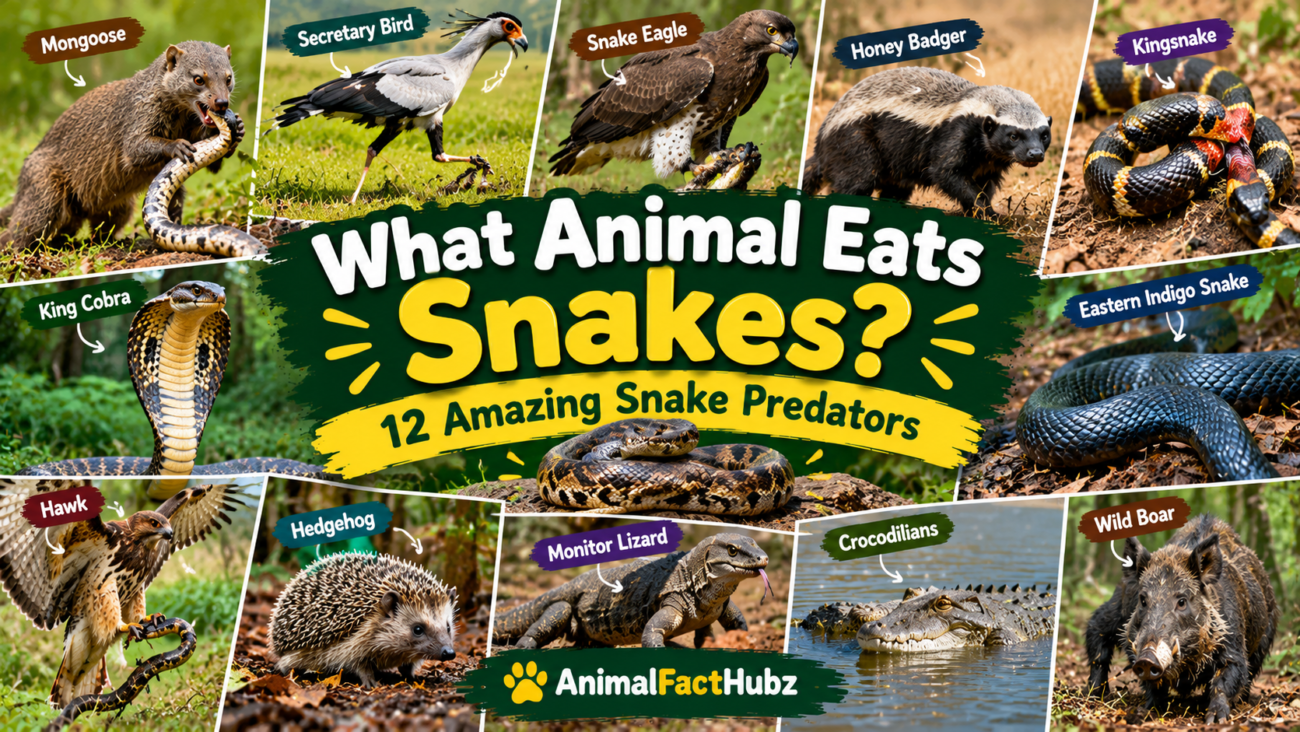
Snakes are skilled hunters, but they are not always at the top of the food chain. Many animals hunt snakes for food, including birds of prey, small mammals, reptiles, and even other snakes. Some predators rely on speed and sharp eyesight, while others use powerful claws, strong jaws, or specialized hunting techniques to catch their slippery prey.
The animals that eat snakes live in different habitats, from African grasslands and Asian forests to American wetlands and open woodlands. Some regularly hunt snakes, while others eat them only when the opportunity arises. Their diets also depend on the size of the snake, its species, and whether it is venomous.
Quick Answer: What Animal Eats Snakes?
Many animals eat snakes, including mongooses, secretary birds, snake eagles, honey badgers, kingsnakes, king cobras, eastern indigo snakes, hawks, hedgehogs, monitor lizards, crocodilians, and wild boars. Some are specialized snake hunters, while others are opportunistic predators. For example, mongooses can attack certain venomous snakes, secretary birds use powerful kicks to disable snakes, and kingsnakes regularly prey on other snakes. However, no animal is completely immune to every snake’s venom, and not every predator eats snakes as a major part of its diet.
1. Mongoose
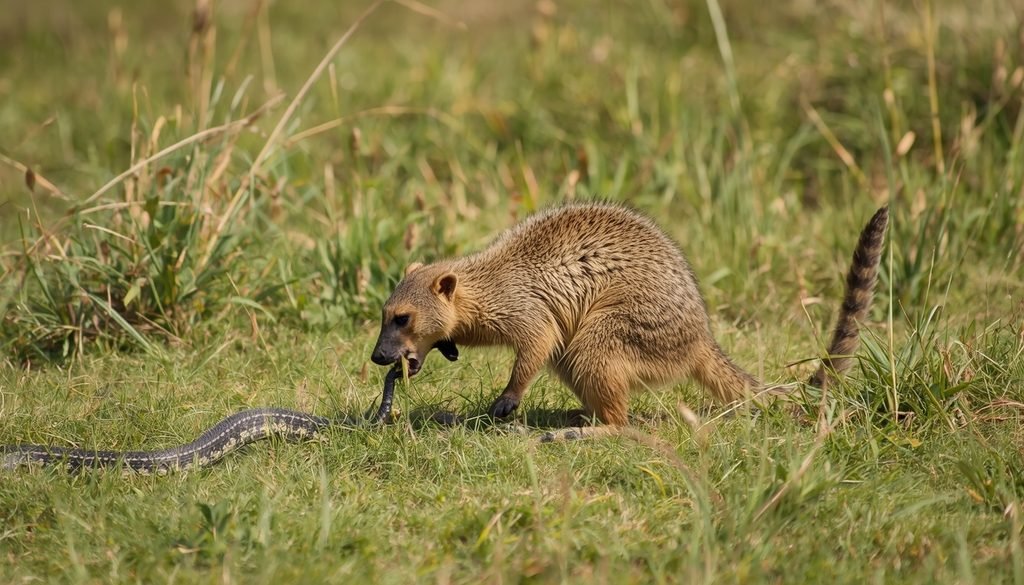
Scientific name: Herpestes edwardsii (Indian gray mongoose)
Habitat: Grasslands, scrublands, forests, and agricultural areas across parts of Asia.
Diet: Rodents, insects, birds, eggs, lizards, and snakes.
Mongooses are among the best-known animals that hunt snakes. These small, agile mammals have quick reflexes that help them avoid strikes while attempting to bite or overpower their prey. Indian gray mongooses, in particular, are famous for confronting cobras and other snakes.
A mongoose often circles its prey, watches its movements, and waits for an opportunity to attack. Its agility and thick coat can provide some protection, while resistance to certain snake venoms may improve its chances against particular species.
However, mongooses are not invincible. A successful venomous bite can still injure or kill one. They also eat many other animals, so snakes are only one part of their varied diet.
2. Secretary Bird
Scientific name: Sagittarius serpentarius
Habitat: Open grasslands, savannas, and lightly wooded areas of sub-Saharan Africa.
Diet: Snakes, insects, rodents, lizards, and other small animals.
The secretary bird is a distinctive African bird of prey with long legs, a hooked beak, and an impressive ability to hunt on the ground. Unlike many eagles and hawks, it often walks through grassland while searching for food.
When it finds a snake, the bird may strike repeatedly with its powerful feet to stun or kill it. This technique helps the secretary bird reduce the risk of being bitten before using its beak to finish the hunt.
Although secretary birds are famous for killing snakes, snakes are not their only food. Insects and small mammals can make up a substantial part of their diet. Their hunting style shows how long legs and precise movements can be effective tools against dangerous prey.
3. Snake Eagle
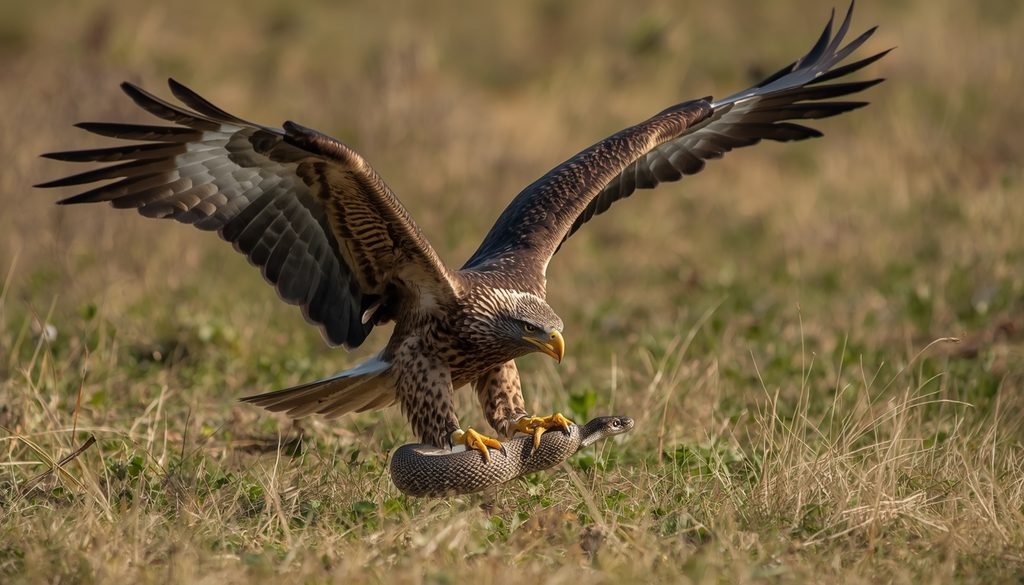
Scientific name: Circaetus gallicus (short-toed snake eagle)
Habitat: Open country, grasslands, scrublands, and woodland edges across parts of Europe, Africa, and Asia.
Diet: Snakes, lizards, and other small reptiles.
Snake eagles are birds of prey especially adapted to catching reptiles. The short-toed snake eagle is a notable example, with a diet that includes many snakes. It uses its excellent eyesight to spot prey while flying or watching from a perch.
After locating a snake, the eagle swoops down and grabs it with its feet. Strong talons and a sharp beak help the bird control its prey, although capturing a venomous snake can still be dangerous.
Some snake eagles carry captured snakes away before eating them. Their feathered legs can offer a degree of protection from bites, but they do not make the bird immune to venom.
Snake eagles are important predators in their ecosystems because they help regulate reptile populations. Their specialized hunting abilities make them some of the most recognizable snake-eating birds.
4. Honey Badger
Scientific name: Mellivora capensis
Habitat: African and Asian grasslands, savannas, scrublands, and dry forests.
Diet: Small mammals, insects, reptiles, eggs, and snakes.
The honey badger is a tough, muscular mammal known for its strong claws, thick skin, and bold behavior. Despite its name, it eats much more than honey. Snakes are among the animals it may hunt, including some venomous species.
Honey badgers use their claws and powerful jaws to dig, investigate hiding places, and seize prey. Their thick, loose skin can make it harder for an attacker to maintain a firm grip, while their sturdy bodies help them cope with challenging encounters.
Some honey badgers have shown resistance to certain snake venoms, but this ability varies by venom and does not guarantee survival after a bite.
Honey badgers are opportunistic feeders. They may eat snakes when available, but they also consume rodents, insects, and other small animals. Their adaptable diet helps them survive in a range of environments.
5. Kingsnake
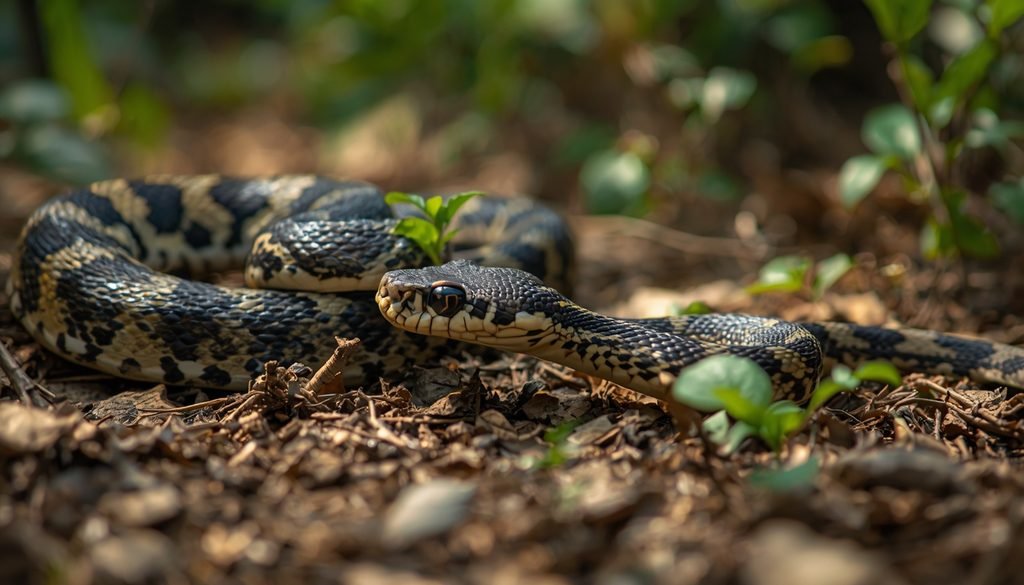
Scientific name: Lampropeltis species
Habitat: Parts of North America, including forests, grasslands, scrublands, and rocky areas.
Diet: Other snakes, lizards, rodents, birds, and eggs.
Kingsnakes are themselves snakes, but they are also predators of other snake species. Some kingsnakes regularly hunt smaller snakes, including venomous species such as rattlesnakes.
Their name reflects their position as formidable snake predators. Kingsnakes use constriction to overpower many prey animals. They grip a victim, wrap their muscular bodies around it, and tighten their coils until the prey can no longer maintain normal circulation and breathing.
Many kingsnakes have resistance to the venom of certain pit vipers, giving them an advantage in some encounters. This resistance is not universal, and a bite can still cause injury.
Kingsnakes are valuable members of their ecosystems because they feed on a variety of animals, including rodents. Their ability to prey on other snakes makes them a particularly interesting example of a predator that hunts members of its own broader animal group.
6. King Cobra
Scientific name: Ophiophagus hannah
Habitat: Forests, bamboo thickets, and other suitable habitats across parts of South and Southeast Asia.
Diet: Primarily other snakes, with some lizards and other reptiles.
The king cobra is one of the most famous snake-eating animals in the world. Its scientific name, Ophiophagus hannah, refers to its snake-eating habits. Unlike many snakes that mainly hunt rodents, the king cobra often searches for other snakes.
Its prey may include rat snakes and other snake species. King cobras can also eat venomous snakes, although the outcome of an encounter depends on the species, circumstances, and ability of each animal to avoid injury.
King cobras have highly potent venom and can deliver a large amount in a bite. Their size, defensive hood, and specialized hunting behavior make them formidable predators.
Despite their fearsome reputation, king cobras generally do not benefit from unnecessary encounters with humans. Habitat loss and persecution threaten populations in parts of their range, making conservation important for this remarkable reptile.
7. Eastern Indigo Snake
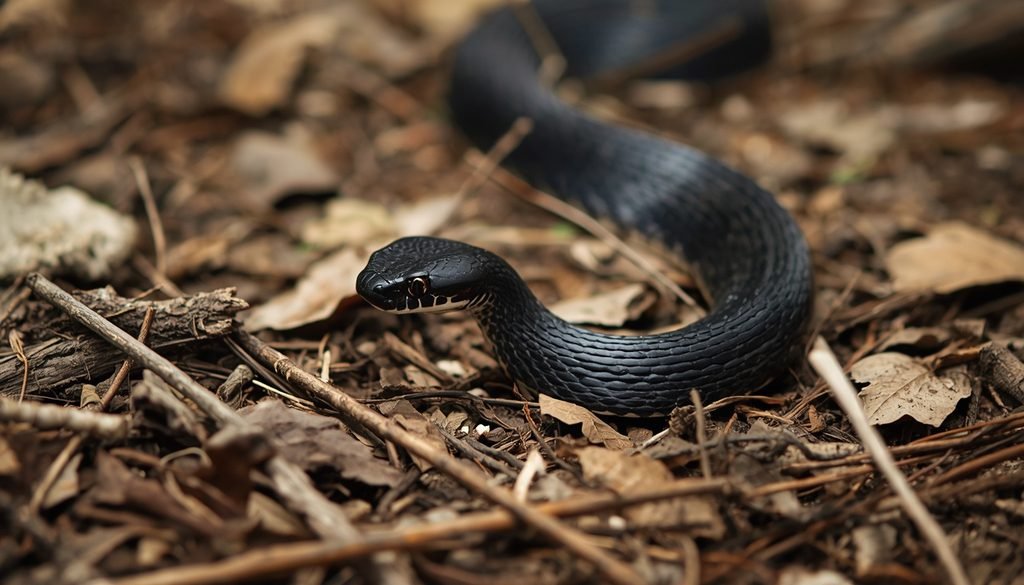
Scientific name: Drymarchon couperi
Habitat: The southeastern United States, especially suitable pine habitats, scrublands, and areas with underground burrows.
Diet: Snakes, lizards, frogs, small mammals, turtles, and other animals.
The eastern indigo snake is a large, nonvenomous snake that can prey on other snakes. It is known to eat several types of reptiles, including venomous cottonmouths and rattlesnakes.
Rather than depending on venom, this powerful snake captures prey with its jaws and uses its strength to control it. It may actively search for prey in burrows, under vegetation, or across the forest floor.
Eastern indigo snakes have a broad diet, so they do not rely entirely on other snakes for survival. Their ability to consume venomous species, however, makes them notable predators in southeastern North American ecosystems.
This species is also important from a conservation perspective. Habitat changes and the loss of suitable shelter can affect its survival. Protecting the landscapes it needs helps preserve a natural predator that contributes to a balanced food web.
8. Hawk
Scientific name: Buteo jamaicensis (red-tailed hawk)
Habitat: Open fields, grasslands, deserts, woodlands, and agricultural landscapes across much of North America.
Diet: Rodents, rabbits, birds, lizards, and snakes.
Hawks are versatile birds of prey, and several species include snakes in their diets. The red-tailed hawk is a familiar example in North America. It often watches open ground from a tree, fence post, or high perch before diving toward an animal below.
When a hawk spots a snake, it can swoop down and grab it with its talons. The bird’s sharp eyesight helps it detect movement, while its strong feet help hold struggling prey.
The type of snake a hawk can catch depends on the bird’s size, the snake’s size, and local conditions. Smaller snakes are generally easier to manage than large, aggressive, or venomous ones.
Hawks do not specialize exclusively in snakes. Rodents and other small animals are often important food sources. By hunting a variety of prey, these birds help maintain ecological balance in their habitats.
9. Hedgehog
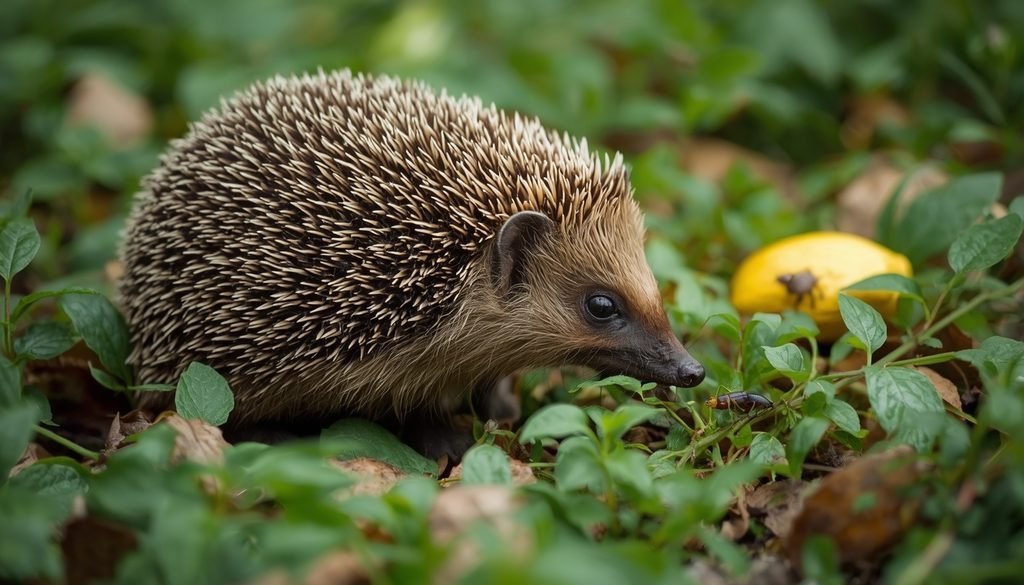
Scientific name: Erinaceus europaeus (European hedgehog)
Habitat: Gardens, hedgerows, grasslands, woodland edges, and other habitats across parts of Europe.
Diet: Insects, earthworms, slugs, and other small animals; occasionally small reptiles.
Hedgehogs are small mammals covered in protective spines. When threatened, they can curl into a tight ball, making it difficult for many predators to reach their vulnerable body parts.
Some hedgehogs may eat small snakes or young reptiles when the opportunity arises, but snakes are not a major food source for most hedgehog species. Their diet mainly consists of invertebrates and other small prey.
Hedgehogs have been reported to show some resistance to certain snake venoms, but the degree of resistance depends on the circumstances and the venom involved. Their spines do not make them immune to snakebites.
Because hedgehogs are opportunistic feeders, their exact diet changes with season, location, and food availability. They are better described as occasional snake predators than as specialized snake hunters.
10. Monitor Lizard
Scientific name: Varanus bengalensis (Bengal monitor)
Habitat: South Asia, including forests, grasslands, scrublands, and agricultural areas.
Diet: Insects, rodents, birds, eggs, frogs, and reptiles, including snakes.
Monitor lizards are active reptiles with strong limbs, sharp claws, forked tongues, and keen chemical senses. These adaptations help them search for food across the ground and investigate burrows or vegetation.
The Bengal monitor may eat snakes when it encounters suitable prey. It can use its strong jaws and claws to capture smaller reptiles, although hunting a large or venomous snake can be risky.
Monitor lizards are opportunistic predators rather than exclusive snake specialists. Their diet often includes insects, eggs, rodents, and other animals, depending on their size and habitat.
Some larger monitor species can tackle substantial prey, but not every monitor lizard has the same abilities. Species, body size, and local prey availability all influence what an individual can safely catch and eat.
11. Crocodilians
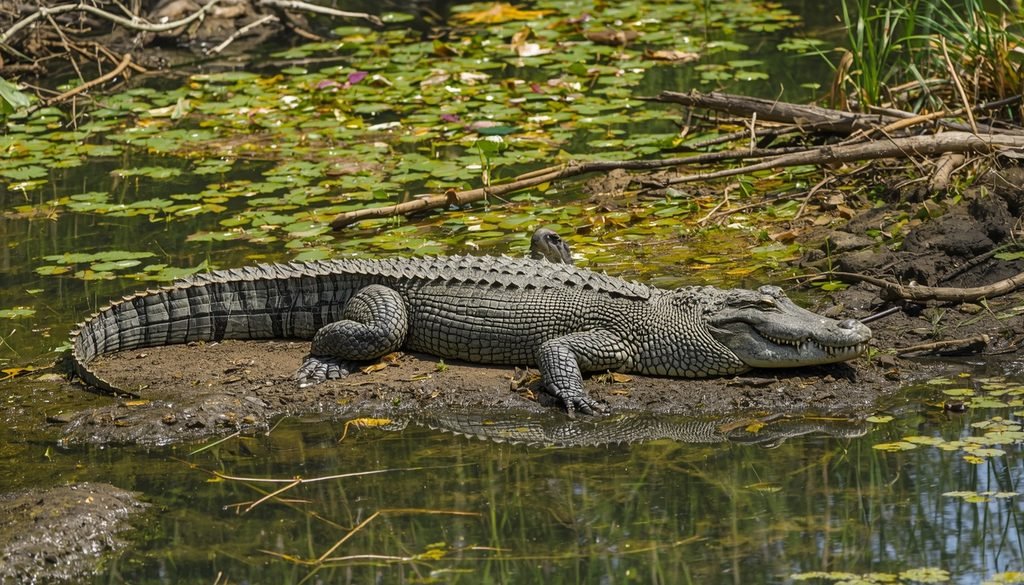
Examples: American alligator (Alligator mississippiensis) and saltwater crocodile (Crocodylus porosus)
Habitat: Rivers, swamps, wetlands, lakes, and coastal habitats, depending on the species.
Diet: Fish, birds, mammals, turtles, and other reptiles, sometimes including snakes.
Crocodilians are powerful ambush predators that spend much of their time near water. Their strong jaws allow them to capture a range of prey, and snakes that enter their territory may become a meal.
American alligators and some crocodile species eat many different animals rather than specializing in snakes. A snake swimming across a river or moving along a wetland edge may be vulnerable, especially if it is small enough for the crocodilian to overpower.
The likelihood of a crocodilian eating a snake depends on its size, habitat, and food availability. A large crocodile can capture substantial prey, but it will not necessarily attack every snake it encounters.
These reptiles illustrate an important ecological point: animals do not need to be specialized snake hunters to become snake predators. Sometimes, a snake is simply another available food source.
12. Wild Boar
Scientific name: Sus scrofa
Habitat: Forests, grasslands, scrublands, wetlands, and agricultural landscapes across parts of Europe, Asia, and other regions where wild populations occur.
Diet: Roots, fruits, seeds, insects, eggs, small animals, and carrion.
Wild boars are highly adaptable omnivores. They use their strong snouts to root through soil and leaf litter in search of food. During this activity, they may uncover snakes, eggs, and other small animals.
A wild boar may kill or eat a snake if it encounters one, but snakes are not usually the main component of its diet. Plant material and other food sources often provide much of its nutrition.
Adult wild boars can be strong animals, yet a confrontation with a venomous snake can still be dangerous. Young boars may be more vulnerable because of their smaller size.
Wild boars demonstrate how omnivores can influence food webs in several ways. They consume both plant and animal matter, disturb soil while feeding, and sometimes prey on reptiles that share their habitat.
How Do Animals Catch and Eat Snakes?
Different predators use different strategies to catch snakes. Birds of prey may grab snakes with their talons, while secretary birds use forceful kicks. Mongooses rely on agility and carefully timed attacks, and kingsnakes use constriction to overpower their prey.
Some mammals have physiological resistance to particular snake venoms, but this is not the same as complete immunity. Other predators depend more on avoiding bites, controlling the snake’s head, or overwhelming smaller prey with strength.
Snake size also matters. Eggs and hatchlings have many potential predators, whereas large adult snakes are harder to capture. A predator that can eat a small garter snake may not be able to handle a large python or a highly venomous cobra.
Why Are Snakes Important in the Food Chain?
Snakes play two roles in nature: they are predators, and they are prey. They help control populations of rodents, insects, frogs, and other animals, while providing food for birds, mammals, reptiles, and some other predators.
This relationship supports biodiversity and helps keep ecosystems functioning. Removing snakes from an area can affect other species, including animals that depend on them for food and animals whose populations snakes naturally regulate.
Snake predators also face risks. Venomous bites can cause serious injury, and hunting large prey requires energy. As a result, even experienced snake hunters often choose their targets carefully.
Read More: What Animal Starts With I
Frequently Asked Questions
What animal eats the most snakes?
There is no single animal that can be confidently identified as eating the most snakes worldwide. Snake eagles, some mongooses, and specialized snake-eating snakes can consume snakes regularly, but their diets and hunting opportunities vary by species and location.
Do mongooses eat venomous snakes?
Yes. Some mongooses hunt venomous snakes, including cobras. Their agility and resistance to certain venoms can help, but they can still be injured or killed by a bite.
Do eagles eat snakes?
Yes. Several eagles and other birds of prey eat snakes. Snake eagles are particularly adapted to hunting reptiles, while other raptors take snakes as part of a varied diet.
Do snakes eat other snakes?
Yes. This behavior is called ophiophagy, which means feeding on snakes. Kingsnakes and king cobras are well-known examples, and several other snake species also eat other snakes.
Are snakes afraid of their predators?
Snakes respond to danger in different ways. Depending on the species and situation, they may flee, hide, freeze, display defensive behavior, or bite when threatened. Their response is not necessarily the same as human fear.
Conclusion
Many animals eat snakes, from agile mongooses and ground-hunting secretary birds to snake eagles, honey badgers, monitor lizards, and other snakes. Some predators specialize in catching reptiles, while others eat snakes when an opportunity arises.
The most important factor is the relationship between the predator and its prey: body size, habitat, hunting ability, and venom all influence the outcome. These interactions show that snakes are not only skilled hunters but also an important source of food for many animals. Understanding their place in the food chain helps us appreciate the balance and complexity of the natural world.
