
Introduction
Animals communicate in many different ways, and sound is one of the most remarkable. Some creatures produce deep calls that travel through oceans, while others create piercing cries, powerful roars, or rapid clicks that can be heard across their habitats. These sounds help animals find mates, defend territory, locate prey, and communicate with members of their species.
But what is the loudest animal in the world? The answer depends partly on how sound is measured and whether it travels through air or water. A tiny marine animal can produce an explosive snap, while a giant whale can generate incredibly powerful clicks. On land, certain birds and primates are famous for their exceptionally loud calls.
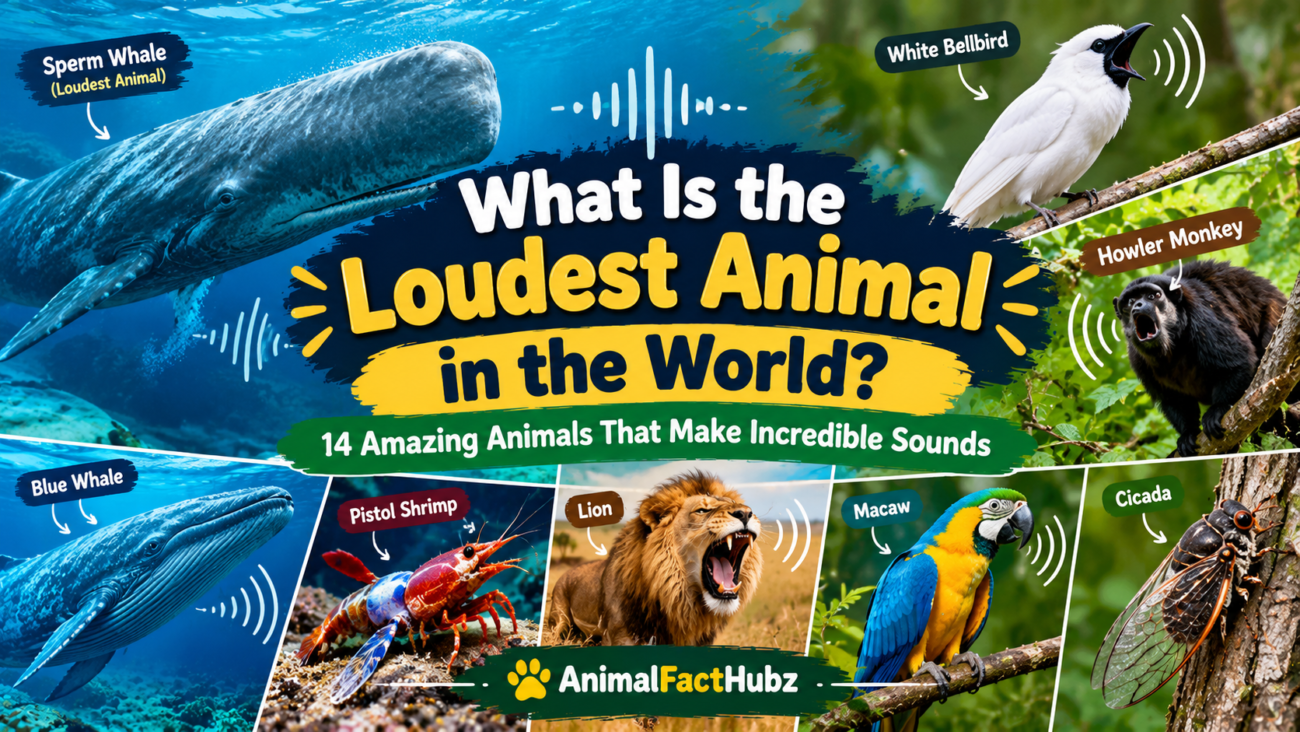
This guide explores 14 of the world’s loudest animals, explaining how they make sound, why they use it, and what makes each one special.
Quick Answer: What Is the Loudest Animal in the World?
The sperm whale (Physeter macrocephalus) is widely recognized as the loudest animal in the world, producing powerful echolocation clicks reported at up to 236 decibels underwater. These clicks help it locate prey in the dark ocean. The blue whale produces exceptionally loud, low-frequency calls, while the pistol shrimp creates a sharp snapping sound through a collapsing bubble. On land, the white bellbird is known for an exceptionally loud bird call, and howler monkeys are among the loudest primates.
Decibel figures from underwater and airborne sounds cannot be compared directly without considering differences in measurement, distance, and the medium through which sound travels.
1. Sperm Whale (Physeter macrocephalus)
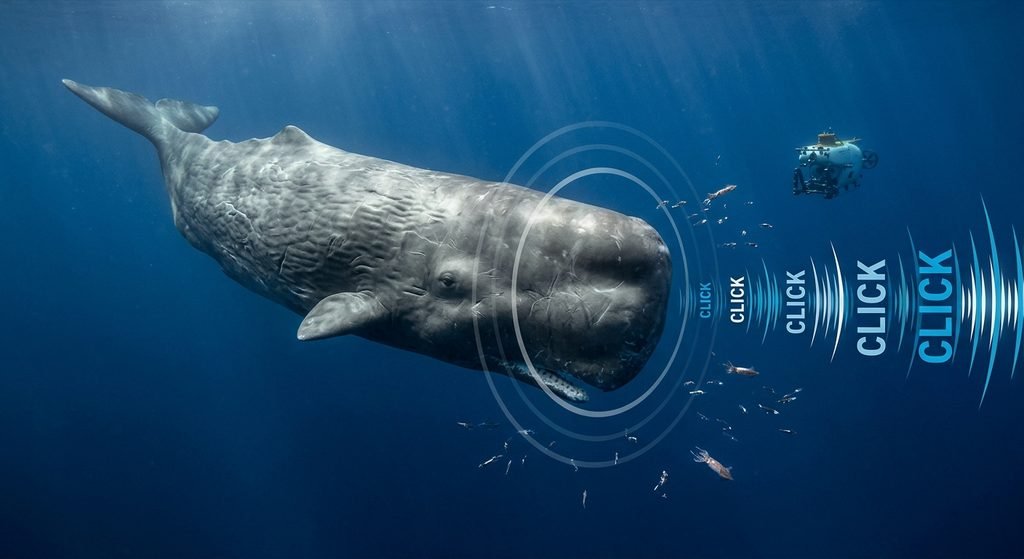
The sperm whale is famous for producing some of the most powerful biological sounds ever measured. Its short, intense clicks can reach approximately 236 decibels on an underwater source-level scale, making it the leading answer to the question of which animal makes the loudest sound.
Habitat: Sperm whales inhabit deep waters throughout much of the world’s oceans.
Diet: They primarily eat squid, including deep-sea species, and may also consume fish.
Why is it so loud?
Sperm whales produce clicks using a specialized sound-generating system in their heads. They direct these sounds into the water and listen for returning echoes, a process called echolocation. This helps them detect and track prey in dark depths where vision is limited.
Their clicks also have roles in communication. Some click patterns are associated with social interactions between whales. Although the reported decibel number is extraordinary, it uses a reference pressure designed for underwater sound, so it should not be treated as an equivalent airborne decibel reading.
2. Blue Whale (Balaenoptera musculus)
The blue whale is the largest animal known to have lived on Earth and also produces some of the loudest sustained calls in the animal kingdom. Its low-frequency vocalizations have been reported at around 188 decibels underwater under particular measurement conditions.
Habitat: Blue whales live in oceans worldwide and undertake seasonal movements related to feeding and breeding.
Diet: They mainly eat krill, tiny shrimp-like crustaceans that they filter from seawater.
Why is it so loud?
Blue whales produce deep calls that can travel long distances through suitable ocean conditions. Their low-frequency sounds are especially effective at moving through water, allowing whales to communicate across vast areas.
Scientists study these calls to learn about whale behavior, population patterns, and communication. Blue whales do not make the same type of sound as sperm whales: their sustained calls and the sperm whale’s short echolocation clicks differ in duration and purpose.
3. Fin Whale (Balaenoptera physalus)
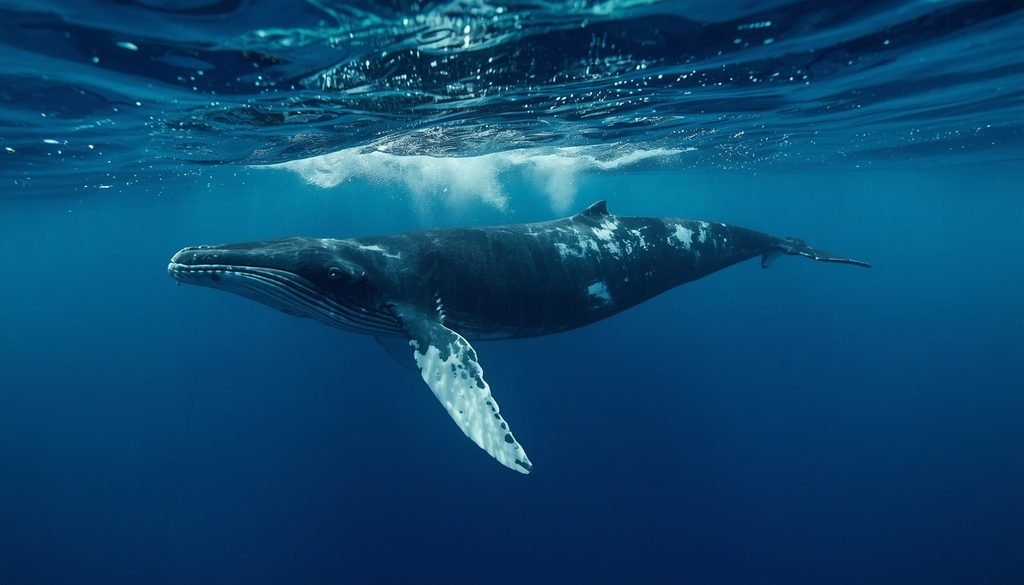
The fin whale is another giant marine mammal known for its powerful, low-frequency sounds. It is the second-longest whale species after the blue whale and can produce vocalizations that carry through deep ocean environments.
Habitat: Fin whales occur in many of the world’s oceans, from temperate waters to colder regions.
Diet: Their food includes krill, schooling fish, and other small marine animals, depending on location.
Why is it so loud?
Fin whales produce pulses and calls, some of which are extremely powerful underwater. Researchers have reported source levels around 203 decibels for particular vocalizations, although the exact value depends on the sound and measurement method.
These calls may help with communication over long distances. Like other large whales, fin whales rely on sound in an environment where visibility can be limited. Ship noise and other human-generated underwater sounds can interfere with the acoustic information marine mammals use.
4. Humpback Whale (Megaptera novaeangliae)
Humpback whales are best known for their complex songs. These vocal sequences can include moans, cries, pulses, and repeated patterns that change over time.
Habitat: Humpbacks live in oceans around the world. Many populations migrate between colder feeding grounds and warmer breeding areas.
Diet: They mainly eat krill and small schooling fish.
Why is it so loud?
Humpback whale songs can carry over considerable distances underwater. Males often produce extended songs during breeding seasons, and the patterns may change over time within a population.
The sound is not simply random noise. Repeated phrases and changing sequences make humpback songs a major subject of research into animal communication. Although they are not usually considered louder than sperm whales in peak sound output, their sustained songs are among the most recognizable sounds in the ocean.
5. Pistol Shrimp (Alpheus species)
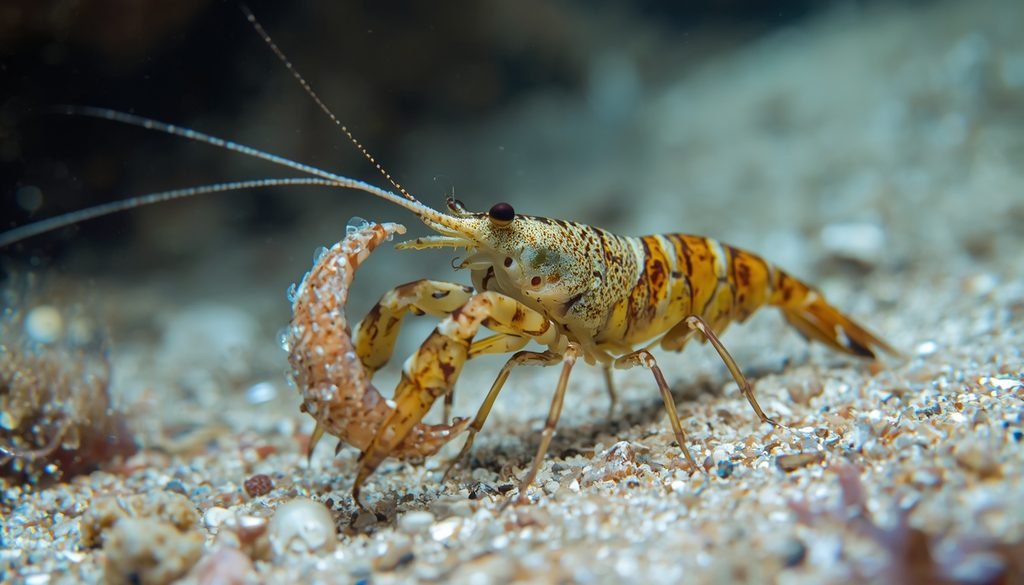
The pistol shrimp is a small marine crustacean with a disproportionately powerful snapping claw. It can produce an explosive sound without using vocal cords or another conventional vocal organ.
Habitat: Pistol shrimp live in marine environments, including coral reefs, seagrass beds, and sandy or muddy seabeds.
Diet: Depending on the species, they eat small animals, organic material, and other available food.
Why is it so loud?
A pistol shrimp rapidly closes its oversized claw, creating a fast-moving jet of water. This produces a cavitation bubble that collapses and generates a sharp acoustic pulse. The snap can stun small prey and help the shrimp defend its shelter.
Pistol shrimp are often described as some of the loudest small animals in the ocean. However, popular claims that they definitively exceed every whale in loudness can be misleading because measurement methods and acoustic mechanisms differ. Their sound is a striking example of how a tiny animal can produce a powerful physical effect.
6. White Bellbird (Procnias albus)
The white bellbird is a South American bird known for an extraordinarily loud mating call. Its metallic, bell-like sound is surprising because the bird itself is relatively small.
Habitat: It inhabits forest environments in northern South America, including parts of the Amazon region and the Guianas.
Diet: White bellbirds primarily eat fruit.
Why is it so loud?
Male white bellbirds produce piercing calls during courtship. Research has measured calls at approximately 125 decibels at close range under specific conditions, helping establish the species as a contender for the loudest bird call recorded.
The male often calls from a perch where potential mates can see and hear him. Its call is particularly notable because it can be extremely loud at close distance, rather than relying only on low-frequency sounds that travel through water. The white bellbird demonstrates how birds use acoustic displays to compete for attention during reproduction.
7. Howler Monkey (Alouatta species)
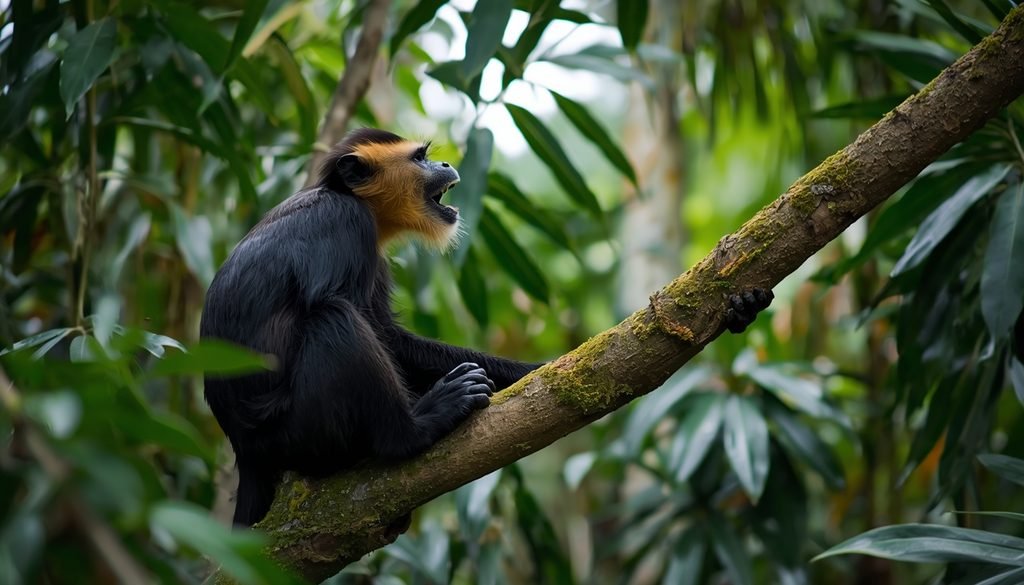
Howler monkeys are widely regarded as the loudest primates. Their deep, guttural calls can echo through tropical forests and may be heard from considerable distances in suitable conditions.
Habitat: Different howler monkey species inhabit forests in Central and South America.
Diet: They mainly eat leaves, fruits, and flowers.
Why is it so loud?
Howler monkeys possess an enlarged hyoid bone and specialized vocal anatomy that help amplify their calls. Groups often vocalize around dawn or dusk, and their calls can communicate territory and help neighboring groups maintain distance.
Their sound is often mistaken for a roar or growl. Rather than fighting constantly over territory, monkeys may use vocal displays to signal their presence. This can help reduce the need for direct physical confrontations. Their calls are among the most impressive natural sounds heard in tropical forests.
8. African Lion (Panthera leo)
The African lion is famous for its powerful roar, which can carry across open savannas and grasslands. A lion’s roar is one of the most recognizable sounds associated with large predators.
Habitat: Lions mainly inhabit African savannas, grasslands, and some open woodland areas. A small population also survives in India.
Diet: Lions are carnivores that hunt animals such as zebras, antelopes, and wildebeest.
Why is it so loud?
Lions use roaring to communicate with members of their pride and signal their presence to neighboring lions. A roar can help individuals locate one another in the dark and may discourage rivals from approaching.
A lion’s large vocal tract contributes to its deep, resonant sound. Although the roar is powerful, there is no single universally accepted decibel value that establishes lions as the loudest land animal. The distance, environment, and recording method all affect measured loudness.
9. African Elephant (Loxodonta africana)
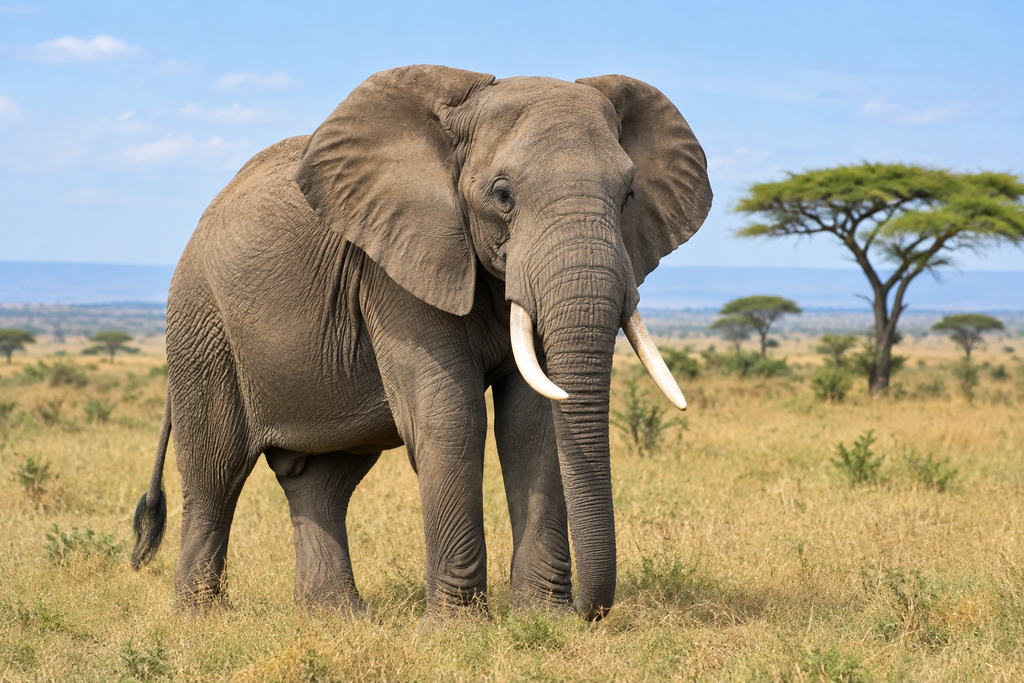
African elephants communicate using a range of sounds, from trumpets and rumbles to very low-frequency calls. Some of their vocalizations are below the lower limit of normal human hearing.
Habitat: African elephants live in habitats ranging from savannas and grasslands to forests, depending on the species and population.
Diet: They eat grasses, leaves, bark, roots, fruit, and other vegetation.
Why is it so loud?
Elephants use sound to maintain social connections, warn others, coordinate movements, and communicate across distances. Low-frequency rumbles can travel through air and, under suitable conditions, through the ground as vibrations.
Their communication system is more complex than loud trumpeting alone. Some sounds may be heard over considerable distances, especially in open landscapes. Their ability to use low-frequency calls helps herds stay connected when individuals are spread out while feeding.
10. Gulf Corvina (Cynoscion othonopterus)
The Gulf corvina is a marine fish famous for the intense sounds produced by large groups during spawning. It is one of the most notable examples of a fish generating powerful underwater noise.
Habitat: This species lives in the northern Gulf of California, particularly around coastal and estuarine waters.
Diet: Gulf corvina feed on smaller fish and other suitable aquatic prey.
Why is it so loud?
Male Gulf corvina produce drumming sounds using specialized muscles associated with their swim bladders. During spawning gatherings, many fish call at once, creating an intense underwater chorus.
Scientists have measured exceptionally high sound levels from these aggregations. The collective noise can be more striking than the call of an individual fish. This example also shows why researchers distinguish between a single animal’s sound and the combined noise of a large group.
11. Black Drum (Pogonias cromis)
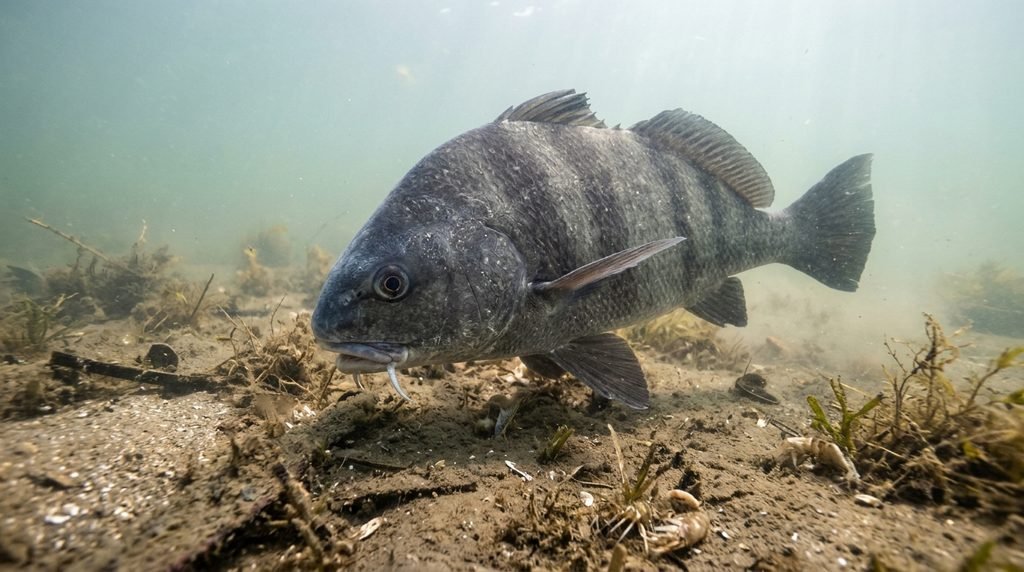
The black drum is a large fish that produces distinctive drumming or croaking sounds, especially during breeding activity. It is another important example of a loud sound-producing fish.
Habitat: Black drum occur in the western Atlantic, including coastal waters, bays, and estuaries.
Diet: They eat shellfish, crabs, worms, and other bottom-dwelling animals.
Why is it so loud?
Black drum produce sound by vibrating muscles associated with their swim bladders. These calls can help individuals communicate during spawning periods.
Research has reported high underwater sound levels for this species, although figures vary with the measurement technique and calling conditions. During breeding seasons, groups of sound-producing fish may create a noticeable underwater chorus. Their calls are important to researchers studying fish behavior and coastal soundscapes.
12. Cicada (Cicadidae family)
Cicadas are insects known for their loud, buzzing calls during warm weather. In some species, the sound becomes so intense that it dominates the background noise of a forest or neighborhood.
Habitat: Cicadas live in many regions worldwide, particularly in warm environments with trees and shrubs.
Diet: Both nymphs and adults feed on plant fluids. Nymphs usually spend much of their lives underground feeding on fluids from roots.
Why is it so loud?
Male cicadas produce sound using specialized structures called tymbals on their bodies. Rapid muscular movements make these structures buckle, producing repeated clicks that blend into a loud buzz.
Their calls attract females and can also help individuals of the same species find one another. Some cicadas are especially loud when large numbers call together. Their sound is a familiar sign of summer in many regions, though species differ considerably in pitch, volume, and calling behavior.
13. Greater Bulldog Bat (Noctilio leporinus)
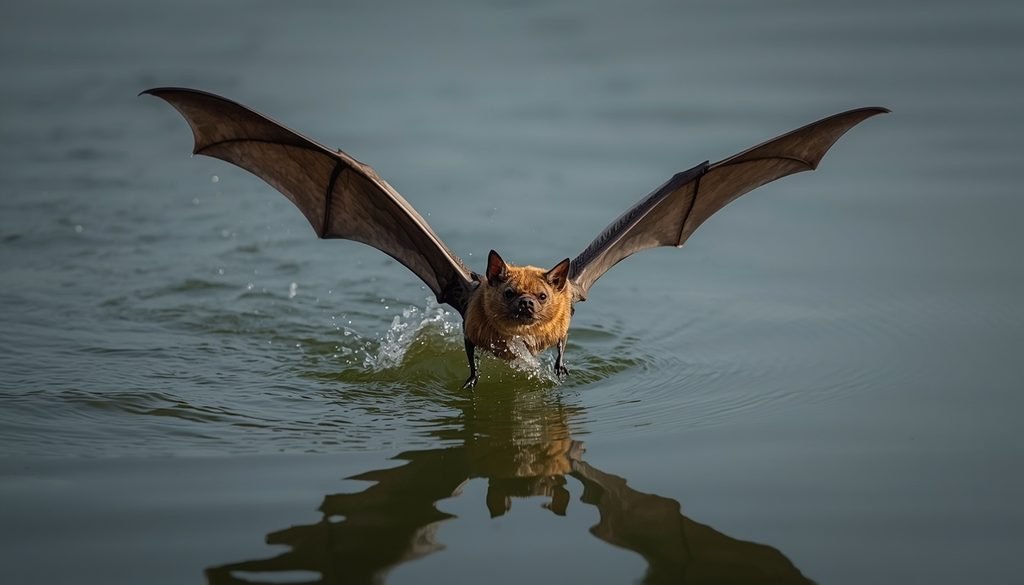
The greater bulldog bat, also called the fishing bat, uses sound to navigate and locate prey. Its echolocation calls are adapted to hunting above water.
Habitat: It occurs in tropical and subtropical regions of the Americas, often near rivers, lagoons, and coastal waters.
Diet: It mainly catches small fish and aquatic crustaceans, though its diet can vary.
Why is it loud?
Like other echolocating bats, it emits high-frequency sounds and listens for echoes returning from objects. These sounds help it detect prey and avoid obstacles in darkness.
Many bat echolocation calls are ultrasonic, meaning humans cannot normally hear them without specialized equipment. Their sound levels and frequencies are not directly comparable with whale calls or bird songs because they operate in a different frequency range and serve a different purpose.
14. Blue-and-Yellow Macaw (Ara ararauna)
The blue-and-yellow macaw is a large, colorful parrot known for loud squawks and calls. Its voice helps members of a flock stay in contact in dense forests and open woodland.
Habitat: It lives in parts of Central and South America, especially tropical forests, woodland edges, and areas near rivers.
Diet: Its diet includes seeds, nuts, fruits, and other plant material.
Why is it so loud?
Macaws use calls to communicate with mates and flock members, warn of potential threats, and maintain contact while flying or feeding. Their sharp voices can carry through the forest canopy.
They are not usually ranked above sperm whales or the loudest bird species in measured peak sound output. However, their calls can seem extremely loud to people nearby. The macaw illustrates how vocal volume supports social life in highly intelligent, group-living birds.
Why Is Measuring the Loudest Animal Difficult?
Sound measurements depend on several factors: distance from the animal, sound frequency, how long the sound lasts, and whether it travels through air or water. Underwater sound levels commonly use a reference pressure of one micropascal, while airborne measurements generally use 20 micropascals. This difference means the decibel numbers cannot be compared directly as if they used the same scale.
It is also important to distinguish a brief peak sound from a sustained call. A sperm whale’s powerful click lasts only a short time, while a blue whale or humpback whale may produce longer vocalizations. A group of fish or insects calling together can create a very different sound level from a single individual.
For these reasons, the loudest animal depends on what kind of sound is being compared. The sperm whale is the leading answer for peak biological sound output, while several birds and primates are famous for exceptionally loud calls in air.
Read More: What Animal Starts With Q
Frequently Asked Questions
What is the loudest animal in the world?
The sperm whale is generally recognized as the loudest animal, with echolocation clicks reported at up to 236 decibels on an underwater source-level scale.
What is the loudest animal on land?
There is no universally accepted winner for every type of land-animal sound. Howler monkeys are widely considered the loudest primates, while the white bellbird is known for exceptionally loud bird calls.
Is the blue whale louder than the sperm whale?
Sperm whales produce more intense peak clicks on commonly cited underwater source-level measurements. Blue whales are known for powerful, low-frequency calls that can travel long distances.
Is the pistol shrimp the loudest animal?
The pistol shrimp produces an exceptionally powerful snap by creating and collapsing a cavitation bubble. However, the sperm whale is generally recognized as the loudest animal overall when comparing reported peak biological sound levels.
Why do animals make loud sounds?
Animals make loud sounds to communicate, attract mates, defend territories, locate prey, warn others, and maintain contact with their groups. The function depends on the species and its environment.
Conclusion
The animal kingdom contains an extraordinary range of sound producers, from enormous whales to tiny insects and marine crustaceans. The sperm whale is widely recognized as the loudest animal in the world because its echolocation clicks can reach extraordinary underwater source levels. Blue whales produce powerful low-frequency calls, pistol shrimp create explosive snaps, and white bellbirds and howler monkeys are famous for their loud calls in air.
Understanding these animals also means understanding how sound works. Different environments and measurement methods make simple decibel comparisons difficult, but each species shows how sound has evolved to support survival, hunting, communication, and reproduction.
